
By Matthew Freer
Nigeria’s courts are preparing for a wave of complex competition litigation as digital transformation reshapes the legal landscape, the Chief Justice of Nigeria announced at a three-day strategic judicial training programme held from 10 to 12 March 2026 in Abuja.
Justice Kudirat Kekere-Ekun disclosed that Nigerian courts “may witness a substantial increase in the volume and complexity of cases arising from competition and consumer protection disputes” as enforcement expands across the country’s evolving economy (The Guardian, 2026). The programme was organised by the Federal Competition and Consumer Protection Commission (“FCCPC”) in collaboration with the National Judicial Institute (“NJI”).
Digital Markets Drive New Legal Challenges
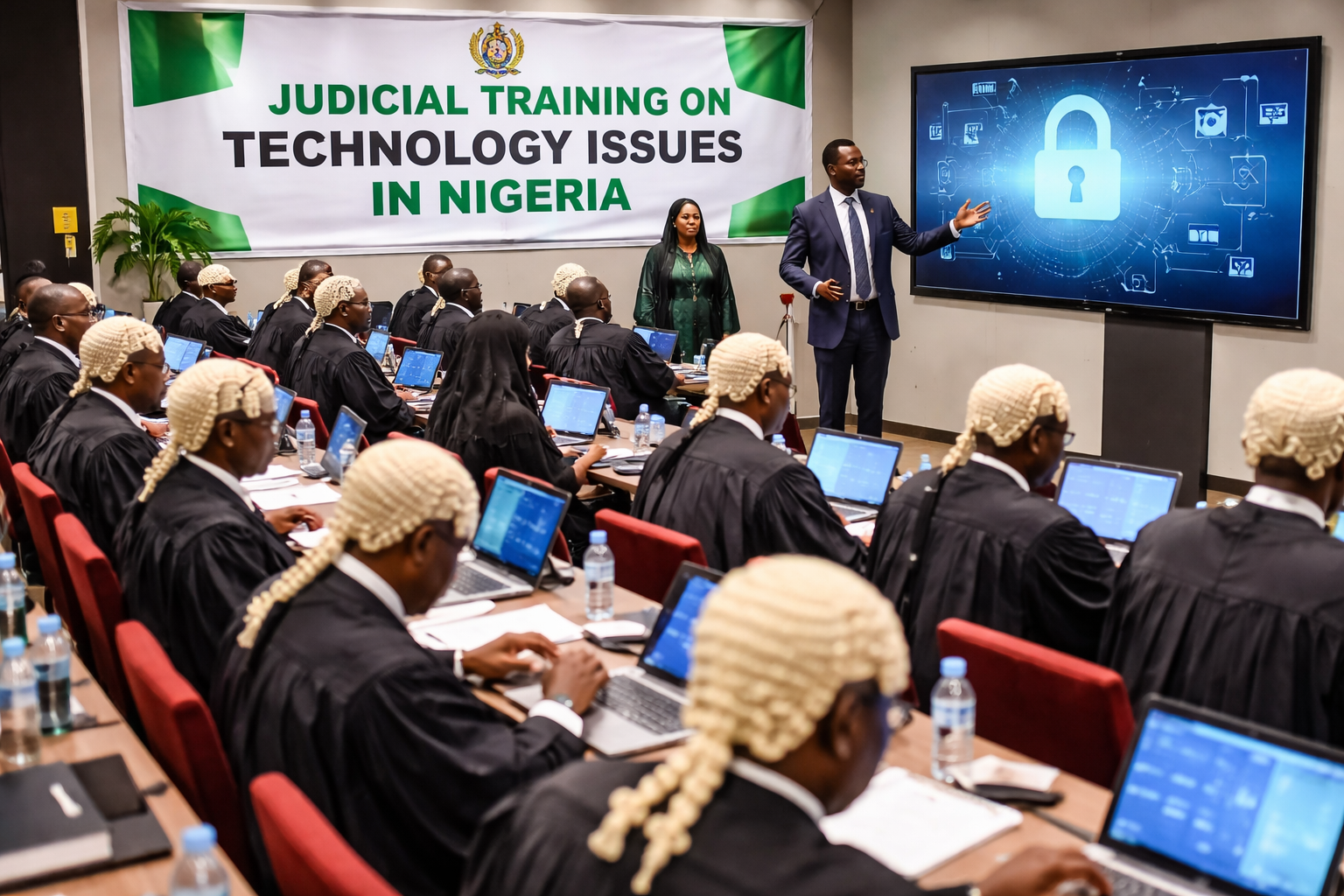
FCCPC Executive Vice Chairman Tunji Bello emphasised that “competition and consumer protection law often finds its most practical expression in the courtroom,” where legal principles governing markets are “tested, clarified and given authoritative interpretation” (Business Day, 2026).
The Chief Justice warned that the “proliferation of AI-driven systems is transforming markets in unprecedented ways,” introducing complex risks including “data exploitation, algorithmic manipulation of consumer choices, privacy infringements and the dissemination of misleading information” (Blueprint, 2026).
Bello noted that “technological innovation, digital commerce, cross-border transactions and increasingly complex corporate structures continue to reshape how markets function,” raising new questions around market dominance, restrictive agreements and consumer rights (The Whistler, 2026).
Building Capacity for Economic Evidence
NJI Administrator Justice Babatunde Adejumo explained that the training was designed to deepen judicial understanding of competition law principles, the Federal Competition and Consumer Protection Act (“FCCPA”) framework, and evidentiary standards in competition litigation, particularly regarding emerging issues in digital markets and financial technology (Blueprint, 2026).
The Chief Justice highlighted that Section 146 of the FCCPA permits consumers to approach courts directly without exhausting administrative remedies, reinforcing the need for judicial preparedness. She also emphasised strengthening alternative dispute resolution mechanisms to reduce pressure on courts (The Guardian, 2026).
Implications
The programme signals Nigeria’s proactive approach to building institutional capacity for competition enforcement. As Bello concluded, “the development of clear and principled jurisprudence in competition and consumer protection law will help shape market behaviour, strengthen investor confidence and protect the welfare of Nigerian consumers” (Business Day, 2026).
The message to multinationals operating in Nigeria is unmistakable: competition enforcement is no longer just an administrative risk but a serious legal frontier with real judicial teeth. For regulators elsewhere in Africa, the initiative offers a powerful reminder that effective antitrust systems require not just bold enforcement agencies, but judiciaries equipped to handle the technical complexity of modern digital markets.

 African Antitrust & Competition Law