Important Regulations recently published by the Department of Trade Industry and Competition to prepare for the upcoming release of the SACC’s final recommendations in respect of its various market inquiries.

By: Gina Lodolo

By way of background, the Competition Amendment Act 18 of 2018 (“Act”) included amendments to the powers of the South African Competition Commission (“SACC”) in respect of market inquiries.  In terms of the amended Section 43C of the Act, should the SACC find that there are features which have an adverse effect on competition, with particular regard to the “impact of the adverse effect on competition on small and medium businesses, or firms controlled or owned by historically disadvantaged persons”, the SACC must make recommendations, which will mitigate the adverse effects on competition.  The SACC’s remedial powers include, most notably under Section 43D(2) read with Section 60(2)(c), that the SACC can make a recommendation to the Competition Tribunal to order a divestiture in relation to such an adverse effect on competition identified in the market inquiry.

On 24 May 2023, the Minister of Trade, Industry and Competition published regulations titled ‘Regulations relating to appeals arising from market inquiries before the Competition Tribunal in terms of section 43F and Regulations relating to a divestiture recommendation by the Commission in terms of Section 43D(2) of the Competition Act, No.89 of 1998, as amended’ (“Regulations”), which took effect upon publication thereof, to govern the procedure that the SACC must follow when making such a recommendation to the Competition Tribunal to order a divestiture following a market inquiry, together with the rules for appealing a decision made by the SACC emanating from a market inquiry.  In this regard, where the SACC concludes in a market inquiry that a divestiture be recommended to the Competition Tribunal to make such an order, the SACC must file a notice of motion and affidavit providing:

  1. grounds for the recommendation;
  2. material facts;
  3. the law relied on by the SACC; and
  4. provide reasons for the divestiture being reasonable and practical.

The respondent will be provided with an opportunity to oppose the recommendation to the Competition Tribunal.

In respect of appealing a recommendation by the SACC emanating from a market inquiry, any person that is materially and adversely affected by a decision of the SACC in respect of remedial action taken by the SACC to remedy an adverse effect on competition, may appeal the decision by filing a Notice of Appeal. The Notice of Appeal must be filed within 25 business days after the affected organisation has received a notice from the SACC of the decision. While the evidence in the appeal will usually be confined to the market inquiry record, the Regulations do provide a number of exceptions.

The Regulations provide that the Notice of Appeal must contains the following:

‘(a) the determination or decision that is the subject of the appeal;

(b) whether the whole or part of the determination or decision is the subject of the

appeal;

(c) if only part/s of the determination or decision are being appealed against, which

part/s of the determination or decision are the subject of the appeal;

(d) the grounds on which the appeal is based; and

(e) the relief sought.’

For the full process governing the appeal, see here.

These Regulations are vital to be cognisant of as the SACC is currently in the process of undergoing various market inquiries, including the Fresh Produce Market Inquiry, the Media and Digital Platforms Market Inquiry, the South African Steel Industry Market Inquiry and most notably the Online Intermediation Platform Market Inquiry which is due to be completed on 30 June 2023 (after an extension was recently granted for the SACC to finalise the report and draft remedial actions and recommendations).

Primerio director, Michael-James Currie says given the SACC’s broad remedial powers following the conclusion of a market inquiry, coupled with a very different competition test to be used in market inquiries than the traditional SLC test, is likely to result in various market participants utilising the appeal procedures in the near future.
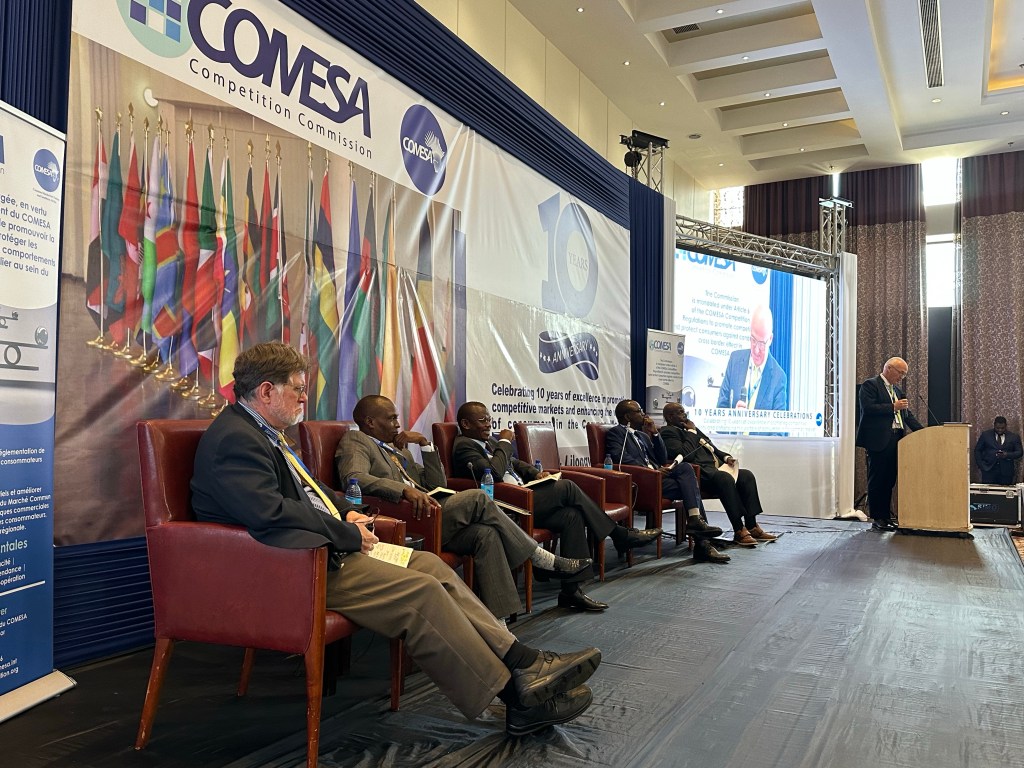
COMESA @ 10: CCC Keynote address by Bill Kovacic

The booming voice of eminent antitrust scholar and GW Law professor Bill Kovacic easily surmounted the small technical microphone glitches at COMESA’s celebration of its Competition Commission’s first 10 years in Malawi (#CCCat10years), giving the keynote address.

His accessible speech, given in front of a diverse audience comprised of senior ministers and policy makers, lawyers, enforcers, and media representatives, focused on practical examples covering three key topics of public expenditures, subsidies, and the removal of entry barriers.

On state spending, he noted the attendant “global epidemic of collusion and corruption”, in areas as simple, but important to development, as transportation infrastructure. “We don’t always need to debate ‘digital markets’ or ‘big tech’, we can also highlight the importance of basic road-building on increasing trade and measurably growing economies” across Africa. But these areas of public expenditures are invariably hampered by corrupt or collusive tendering and similar cartel conduct — important focus areas for the COMESA CCC to enforce.

In the area of public subsidies, Kovacic proposed a future collaborative working relationship between antitrust enforcers, legislators, and those ministries that allocate state subsidies, ideally to non-incumbents (giving the NASA vs. Space-X example to make his point) so as to enhance market entry.

The CCC should enhance market access by making barriers to entry “more porous” for newer small competitors, with Kovacic using the famous 1982 Bell Telephone/AT&T U.S. antitrust precedent to highlight the practical value of competition law to society and innovation of new, better, and cheaper products and services.

Breaking: COMESA expected to become suspensory merger regime by 2024

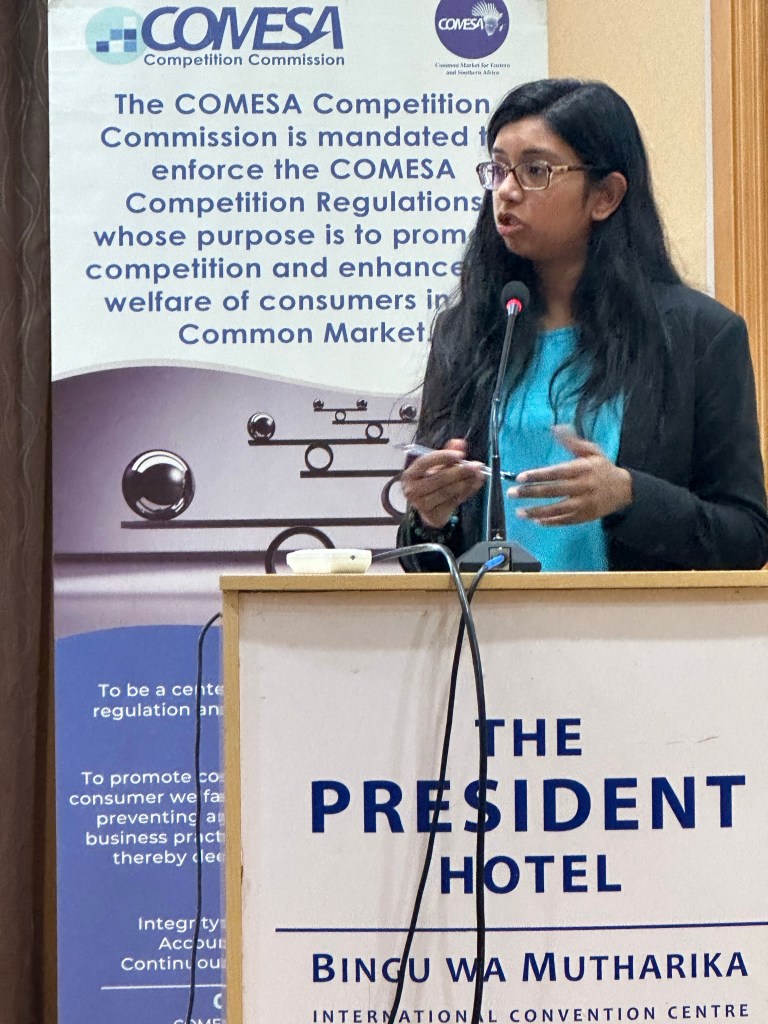
At today’s CCC Business Reporter Workshop, Senior M&A Analyst Sandya Booluck presented major plans to amend the regional trading bloc’s merger-control regime.

The most notable part of this “complete overhaul” of the CCC regime will be the likely change from the current non-suspensory to a suspensory merger notification scheme.

Says Primerio Ltd. antitrust counsel Andreas Stargard: “This change is, of course, still subject to approval by the CCC Board and the COMESA Secretariat Council of Ministers, but it is likely to pass in my personal opinion. This is especially true since, as former CCC Head Lipimile pointed out at today’s session, this change was in fact demanded by several of the NCAs of the COMESA member states, also in view of the Art. 24(8) referral procedure. It thus presumably enjoys broad support from the bloc’s leadership and will obtain a passing vote before the end of 2023!”

Ms. Sandya Booluck, Senior Analyst M&A

COMESA stats update: 367+ M&A deals, yielding a healthy revenue stream for the CCC’s operations

A brief note from the “front lines” of the COMESA Competition Commission’s 10-year anniversary event: Isaac Tausha, chief economist for research policy and advocacy, provides the following statistics — notably for the entire duration of the CCC’s life decade so far.

In short: Gone are the meager days of fledgling notifications to the CCC.

Statistics Since Inception

369 mergers and acquisitions assessed. (Total COMESA revenues of merging parties: US$210bn)

Over 40 Restrictive Business Practices assessed

Over 44 Consumer Protection cases handled

More than 12 market screenings and studies undertaken

3 businesses fined for non-compliance with the Regulations

Doing a “back of the envelope” estimate, we at AAT are calculating the total merger filing fees resulting from those 367 notified deals to be possibly north of $75 million $65 million, so on average $6.5m “income” for the CCC per year (half of which goes to the 21 member states, of course, under the Regulations). This is notably without taking into account fines, e.g., a recent $102,000+ fine for failure to notify (as in our reporting on the Helios Towers / Malawi case).

Dr. Chris Onyango (Dir. Trade, Customs and Monetary Affairs, COMESA)
Dr. Lipimile (former CCC CEO). Mary Gurure (Head of Legal, CCC). Andreas Stargard (Editor, AAT).