
Book Launch Monday: CCRED’s latest covers AAT’s bread and butter, namely the rise of regulatory antitrust frameworks across the African continent.
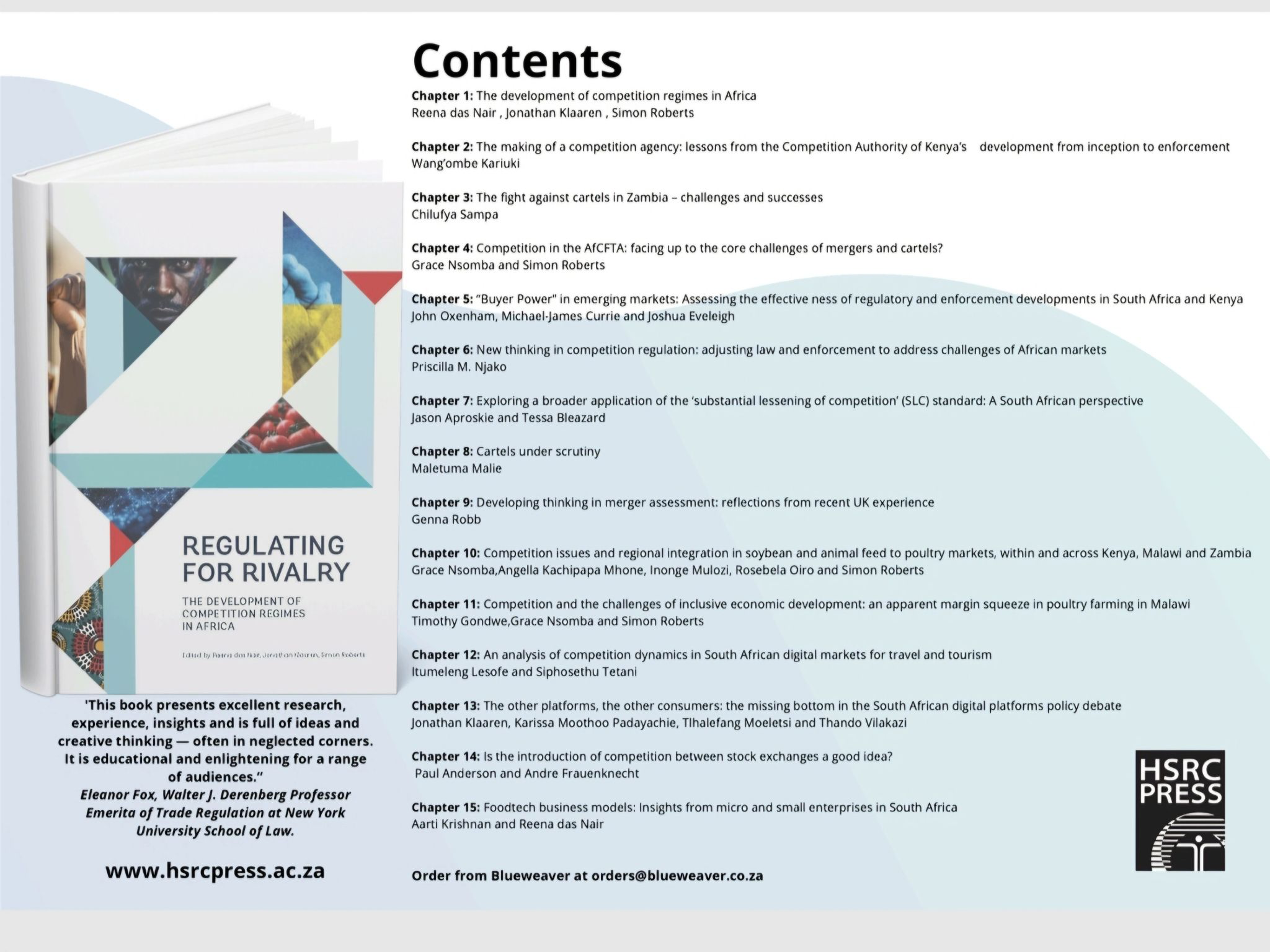
The Centre for Competition, Regulation and Economic Development (“CCRED”) has announced the launch of its latest publication: “Regulating for Rivalry: The Development of Competition Regimes in Africa”. Co-edited by Reena das Nair, Simon Roberts, and Jonathan Klaaren, this book looks to be a comprehensive compilation of cutting-edge research and analyses, bringing together the key papers presented at previous ACER Week (Annual Competition and Economic Regulation) conferences. It also includes contributions from CCRED’s ongoing work, reflecting a rich exchange of ideas aimed at fostering competitive markets and effective regulation across the African continent.
One of the notable contributions in the book is a paper written by Primerio’s John Oxenham, Michael-James Currie, and Joshua Eveleigh, titled “Buyer Power in Emerging Markets: Assessing the Effectiveness of Regulatory Enforcement Developments in South Africa and Kenya”. This paper delves into the complex dynamics of buyer power, particularly in emerging markets, and evaluates the impact of recent regulatory enforcement efforts in South Africa and Kenya. Their research provides critical insights into the challenges and successes of regulatory buyer power within these key African economies, offering valuable lessons for policymakers and regulators across the continent.
“Regulating for Rivalry” will be available in both digital and print formats towards the end of 2024. The book is expected to be an essential resource for academics, regulators, legal practitioners, and policymakers engaged in the development and enforcement of competition law in Africa. It showcases the growing maturity and innovation of competition regimes across the continent, highlighting the critical role of effective regulation in promoting economic development and inclusive growth.
 African Antitrust & Competition Law