By the Editor
COMESA’s long-delayed and much-anticipated publication of the new 2025 Competition and Consumer Protection has prompted much fanfare, and rightfully so. It represents a potential turning point and coming-of-age for the now 12-year old regional antitrust regulator.
We decided to swim against the current and, rather than focus exclusively on “COMESA 3.0,” take a look back at the past year, so as to better gauge the (now) CCCC’s future performance versus its immediate past.
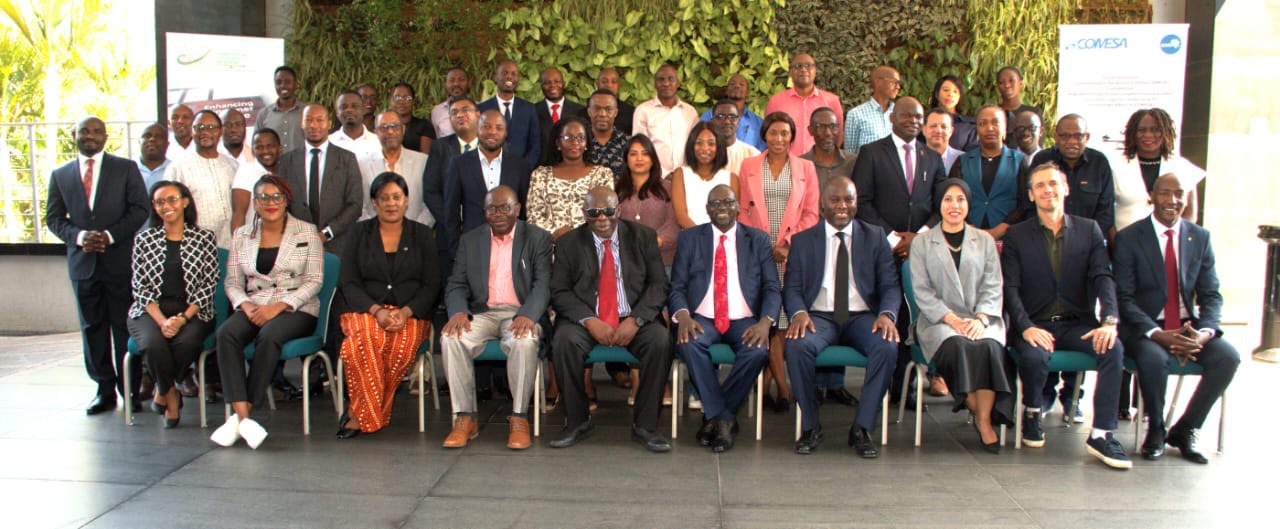
Fortuitously, our editor was present at a gathering of the ‘Fourth Estate,’ convened in Nairobi by COMESA’s Dr. Willard Mwemba. For the third consecutive time, the Commission had invited members of the press to present its successes, show off the tight relationships between its staff and that of other national authorities (of note, David Kemei, Director General CAK, chairman of the EACA and local host, was present for most of the event, as was of course the agency’s éminence grise, Dr. George Lipimile), and to remind the assembled journalists that, in the bigger picture, the agency’s AfCFTA competition protocol coordination remained ongoing — more on that another day…
Without further ado, here are the 2025 COMESA highlights, as selected by the Commission:
Mergers
The large francophone-anglophone broadcasting deal of Canal+ acquiring Multichoice presented “lots” of competitive concerns according to Dr. Mwemba. Already dominant firms merging to form an even larger entity was a serious threat to broadcast competition. Multichoice’s past behavior of refusing sublicenses and threatening to leave certain markets showed its unparalleled dominant position in various COMESA submarkets. The parties did compete head-on with head other in three jurisdictions, Rwanda, Madagascar, and Mauritius, and would have had a foreclosing position COMESA-wide in relation to super premium content, leading the (then still) CCC to seek prohibition of the merger, and at a minimum the survival of Multichoice (and its “Talent Factory”) as an independent entity and employer in the region.
The parties’ defense relied in part on arguments alleging subscriber losses, eventually resulting in a conditional approval by the CCC with several commitments of the parties.
Two failure-to-file violations stand out in the past year: The Bosch/Johnson Control deal drew a failure-to-file violation of the (much maligned and soon to be replaced under the new Regulations) “30-day rule”. Interestingly, the fine was reduced from a significant $400,000 initial amount to an almost negligible $8000, as JCI (the target and a first-time offender entitled to a 30% fine reduction) was to blame for the “inadvertent” false company statistics Bosch used to calculate whether the filing threshold was met. While challenged by the acquirer, Bosch received a symbolic $1 fine for its own negligence in failing to vet the target’s figures for purposes of determining notifiability.
In the Mauritian BRED/BFV banking transaction, the fine was significantly reduced by the acquirer’s cooperation, minority shareholding status in many subsidiaries, and first-time offender status, resulting in merely $28,005 initial F2F fines.
On a broader scale, looking to the newly established EAC competition regime and its merger notification requirements, Dr. Mwemba recognized the concern that dual notifications will occur in all likelihood for the foreseeable future.
Anticompetitive Practices
The Commission’s standout case this past year was doubtless the “beer matter”: three main areas of concern stood out in the Heineken case, in which the respondent was found to be dominant in various geographic markets. The three issues were: single-branding (foreclosing competing products at the downstream distribution level), absolute territorial restrictions (prohibiting distributors from not only active but also passive selling into unauthorized regions), and resale price maintenance (imposing a firm price — or here, a fixed profit margin — on resellers of the products). A long lasting case, from June 2021 until early September 2025, resulting in a settlement procedure, eliminating the three clauses of concern and imposing the maximum settlement amount of $900,000 on Heineken. Of note: Beer makers are also subject to an ongoing CCC investigation into the cross-shareholdings of various manufacturers.
Similarly, the Commission accused Diageo of the same types of anticompetitive practices in several COMESA member states. As the respondent had stopped one of the offending types of conduct (RPM) prior to the investigation’s commencement, the final combined fine amount was reduced to $750,000.
A further territorial restriction investigation into Toyota’s distribution practices is ongoing and “at an advanced stage”, with the CEO expecting to close the matter by Q1/2026. Finally, the CCC is evaluating the effects of, among other things, Coca-Cola’s unilateral single-branding rules against retailers stocking only its own products in branded refrigerators, which can result in effective foreclosure of competing brands, especially at small retail businesses with limited floor space allowing only a single fridge.
Consumer Protection
The airline sector did not escape the CCC’s enforcement net, as British Airways/Qatar experienced in the recently concluded investigation into Nairobi-London route collaboration among the parties, which they claimed allowed them to increase the volume of flights to 28 per week and lower ticket prices. The CCC permitted the conduct for a limited time of 5 years, requiring the parties to provide proof of the alleged efficiencies within two years.
On the consumer protection front, the CCC was heavily focused on the air travel sector over the past reporting year. It will publish, on Monday coming, a report detailing the results of its year-long airline survey and study, undertaken in conjunction with the African Union’s airline regulator.
Its signature agriculture study program, the African Market Observatory, continues to be funded and operationally supported by the Commission, having provided a key report to the COMESA Council of Ministers. This effort has also led to the ICN having awarded the running of its agriculture program to the Observatory. Dr. Mwemba proudly highlighted that the CCC assisted in averting a potential hunger crisis, namely in an (unpublished, we presume) maize case involving a sovereign engaging in absolute territorial restrictions, threatening serious food insecurity in Eswatini; it was the CCC’s advocacy efforts, as opposed to a full-fledged investigation, that yielded the positive results.
Finally, the CCC also concluded its drafting of a unified Model Consumer Protection Law, to serve as a standardized & harmonized guideline for African countries. This comes as part of an effort to eradicate the fragmentation of competition and consumer protection laws, seeking the eradication of harmful corporate conduct and non-tariff trade barriers.
Looking Ahead: What’s in Store for COMESA 3.0?
Diverging from the titular “retrospective,” it appears fitting to step forward into the present moment and look ahead, with the Commission’s recent successes under its former Regulations now firmly established. To do so, I will quote from an article Dr. Liat Davis and I recently published in the Concurrences journal, entitled “Refining Regional Rapprochement: COMESA’s Competition Enforcement Comes of Age“:
The Mwemba era (2021 – present) has both accelerated and consolidated these earlier reforms, contributing to increased confidence in the regime among international stakeholders. With the exception of a temporary pandemic-related decline, merger activity has continued to rise, surpassing 500 notifications to date and now including the Commission’s first enforcement against gun-jumping. Non-merger enforcement has also expanded, with 45 conduct investigations and at least two cartel cases initiated. In parallel, the Commission has entered into numerous Memoranda of Understanding and multilateral cooperation agreements with African and global counterparts, strengthening its external partnerships. At the regional level, the CCC has acted as a catalyst for the establishment and development of National Competition Authorities (NCAs), offering indirect financial support, training, and collaborative initiatives.
This iterative process of course correction and capacity-building is now culminating in the long-awaited revision of the primary legislation. The new CCPR, due to take effect at the end of 2025, will formalize the Commission’s expanded mandate. In light of the extensive reforms embodied in the new CCPR, and consistent with the prior informal designation of the CCC’s post-2021 period as “COMESA 2.0,” the implementation of the CCPR will mark the beginning of a third phase in the regime’s evolution. Appropriately described as “COMESA 3.0,” this stage is expected to be characterized by the following key attributes:
- Expanded unilateral-conduct enforcement, owing to increased staffing, sustained capacity-building, and growing experience in conduct and cartel cases;
- A significant rise in cartel investigations, driven principally by the forthcoming leniency regime;
- Higher merger volumes, resulting from the move to a suspensory filing regime and accompanied by a likely increase in conditional approvals (subject to wider global economic conditions); [note: the CCC’s statistical trajectory is already sloping upward, as it has reviewed approximately the same number of transactions in the past 4 years as it had in the first 8 years of its existence.]
- Strengthened consumer-protection enforcement by the ‘CCCC’, reflecting the Commission’s broadened mandate and aligning with wider African competition-law trends, including South Africa’s increasing incorporation of public-interest factors in merger analysis and Nigeria’s FCCPC using data-protection grounds to impose record fines; and
- The development and application of a carefully delineated “public interest” standard in competition cases, subject to strict guardrails to prevent politicization and adapted to the unique constraints of a multi-national enforcement regime.
 African Antitrust & Competition Law