Nigeria Flexes Regulatory Muscle: Tribunal Upholds $220 million fine against WhatsApp and Meta over data discrimination practices  

By Nicole Araujo

On 25 April 2025, almost a year after the Federal Competition and Consumer Protection Commission (“FCCPC”) imposed a hefty $220 million fine on WhatsApp and its parent company, Meta, the Competition and Consumer Protection Tribunal (“Tribunal”) delivered its landmark decision, upholding the fine and ordering a further – almost negligible, when compared to the substantive fine – $35,000 administrative penalty against the social media giants for fact-finding costs incurred during the 38-month long investigation. This regulatory win for Nigeria’s digital rights landscape has contributed to reinforcing Nigeria’s growing resolve to regulate big tech.

The decision stemmed from findings that the companies engaged in discriminatory data practices and violated Nigerian data protection laws, affecting more than 51 million users.  As Andreas Stargard, a competition-law practitioner with Primerio, notes, “not only did the FCCPC’s investigation uncover WhatsApp’s unauthorised sharing of user data and a lack of meaningful consent mechanisms, but it also revealed discriminatory practices compared to other regions – I believe this is where the differentiation in the FCCPC’s consumer-protection jurisdiction (as opposed to that of the domestic data protection authority) comes in meaningfully.  It remains to be seen what an independent, judicial review of the Tribunal decision will yield in this regard, but the FCCPC has had a comparatively strong track record so far in terms of having its novel, forceful, and ‘creative’ enforcement strategies upheld, with the B.A.T. matter perhaps being the most powerful example.  The recent Dangote matter, involving the shocking fact pattern of a lack of refining capabilities in oil-rich Nigeria, is an interesting counter-point, though, as the FCCPC lost an attempt to intervene in that matter in Abuja’s Federal High Court.”

So far, the appellate-level Tribunal has sided with the Commission, dismissing an appellate request for review by WhatsApp and Meta, which challenged the fine on 22 grounds, ranging from procedural errors to allegations of vagueness and technical impossibility in respect of the timeframe given by the FCCPC. Meta’s legal team relied on the grounds that the FCCPC’s orders were unclear, unsupported by Nigerian law, and financially impractical to comply with. However, the FCCPC argued that the penalties were not financially punitive but rather corrective and aimed at rectifying the tech giant’s alleged discriminatory practices.

In its decision, the Tribunal emphasised that the FCCPC acted within its lawful mandate and that WhatsApp and Meta were afforded a fair hearing. It further upheld that the reliance on foreign legal standards, while not binding, was appropriately persuasive in determining issues of data protection and consumer rights.

The Tribunal ordered WhatsApp and Meta to inter alia, reinstate Nigerian users’ rights to control their personal data, revert to their 2016 data-sharing policy, and immediately cease unauthorised data sharing with Facebook and other third parties without obtaining the necessary consent from users. In this regard, compliance letters must be submitted by July 1, 2025, and a revised data policy must be proposed and published. 

This case marks a significant moment in the Nigerian Authority’s forceful use of the regulatory tools available to it — as well as overall for Africa’s evolving digital economy, highlighting the demand for global corporations to acknowledge local presence and effects and adapt to robust local compliance expectations. While Big Tech companies such as Amazon, Google and Meta have been subject to significant penalties under the European Union’s General Data Protection Regulation, as one of Africa’s digital technology pioneers, Nigeria’s move could inspire similar enforcement actions across the African continent. This decision can be seen as a “gentle” reminder for multinational digital and tech firms that compliance with local data protection laws is no longer optional, it is imperative.
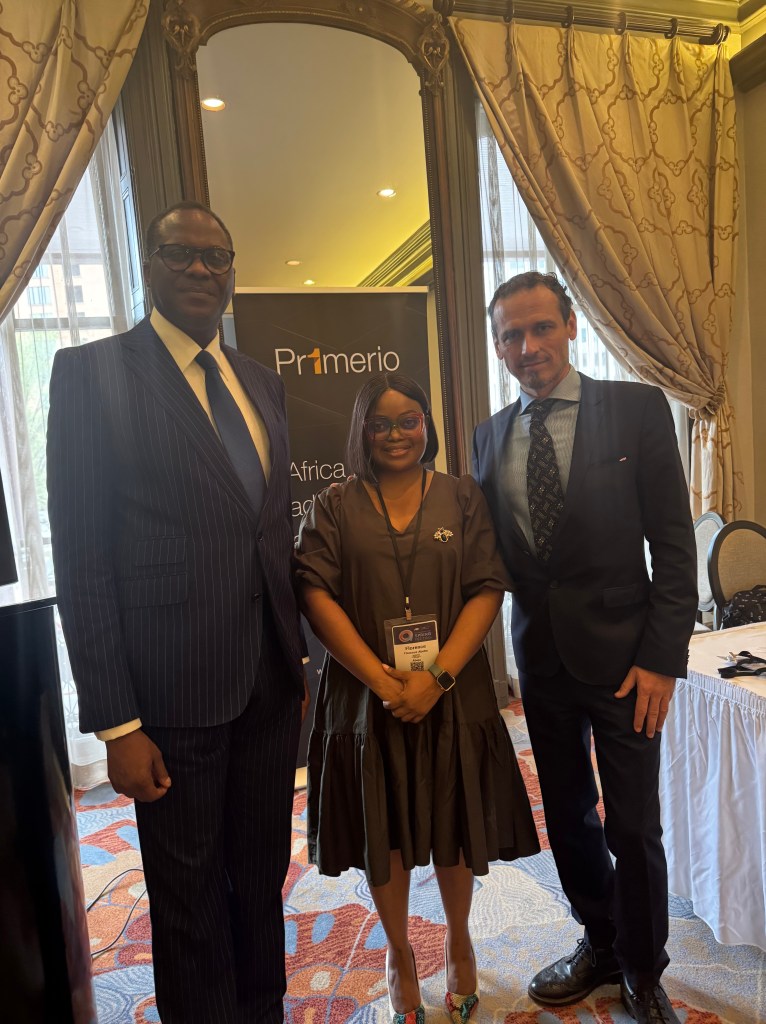
Babatunde Irukera, Florence Abebe, Andreas Stargard at the African Antitrust Salon hosted by Primerio

While more African countries are pushing back against big tech companies and are focusing on unchecked data exploitation within their borders, there is a need, however, for the continent to build towards a larger, sustainable strategy to manage the presence and power of big tech.  Says Andreas Stargard, “the quarter-billion dollar Meta fine, if upheld, would firmly cement Nigeria’s antitrust global relevance in the minds of international lawyers and businesses.  This comes as a surprise in some ways, as the FCCPC was first put on the map only fairly recently, by its inaugural Chief enforcer, Tunde Irukera: his vision for creative enforcement tools and encouragement of the agency’s staff to employ heretofore unused investigatory mechanisms and strategies – often seen only in U.S.-style civil litigation, and certainly not in many government agencies worldwide, much less among other African jurisdictions – show that the Commission potentially has the necessary intellectual capacity and investigatory stamina to pursue cases of equal or greater dimensions in the future.  It will depend on its leadership where the FCCPC’s path is charted next…”

Of course, there needs to be a balance struck between the value of personal data and that of innovation and tech adoption, which calls for a coordinated regulation policy that will strive to balance economic and non-economic features of the continent. 

As observed by Leonard Ugbajah, a competition law consultant, a balanced and pragmatic approach is essential when opting to address the regulatory landscape around big tech: 

“A common approach would harness the capabilities of countries, moderate opportunism by state and non-state actors in pursuing enforcement, recognise the economic importance of big tech, properly calibrate the various pain points (economic and non-economic) and safeguard the interests of the not-so-capable African countries.” 

The social media giants have 60 days, starting from 30 April 2025, to comply with the $220 million fine ordered by the Tribunal. Notably, following the decision, WhatsApp has indicated that it intends to seek a stay of the Tribunal’s decision and pursue an appeal. 

Sweeping Inquiry Sheds Light on Online Intermediation Platforms: Competition, Opportunity, and the Road Ahead

By Tyla Lee Coertzen and Nicola Taljaard

On 31 July 2023, the South African Competition Commission (“SACC”) released its Final Report and Decision on the Online Intermediation Platforms Market Inquiry (“OIPMI”). The OIPMI was initially launched on 19 May 2021 and after a number of requests for information, public hearings, expert reports as well as comments and engagements with stakeholders, the SACC’s findings and recommendations have finally been concluded.

The SACC is empowered to conduct market inquiries according to section 43B(1)(a) of the Competition Act 89 of 1998 (as amended) where it has reason to believe that there are market features that may impede, distort or restrict competition in a particular market; or to achieve the objects and purposes of the Act (including participation of small and medium enterprises (“SMEs”) and historically disadvantaged persons (“HDPs”).

The Inquiry: A Timeline of Discovery and Discernment

  • May 2021: The kick-off. Release of the Statement of Issues (SOI), first round of Requests for Information (RFIs), and business user survey.
  • August 2021: Heating up with the release of the Further Statement of Issues (FSOI), second round of RFIs, and a refined business user survey.
  • November 2021: The public had their say with hearings and follow-up RFIs.
  • February 2022: Expert reports and in-camera hearings added a new dimension.
  • July 2022: Provisional Inquiry Report was published, provisional findings, and recommendations were made public.
  • August to December 2022: A flurry of submissions, stakeholder engagements, and follow-up RFIs.
  • January to July 2023: Engaging stakeholders on final findings and remedial actions, sealing the deal.

What Does It All Mean?

These findings focus on the various platform categories, including the mammoth influence of Google Search. The full extent of these actions requires deep exploration, but one thing is clear: the landscape of online intermediation platforms is about to shift.

During the launch of the OIPMI, the Minister Patel of the Department of Trade, Industry and Competition (“DTIC”) commended the SACC for its great effort and the high-quality product produced in the form of the OIPMI. He further noted that the government should consider taking an inclusive response to the findings and recommendations in the OIPMI.

The findings concluded, inter alia, that Google Search is vital as a means for consumers to access all platforms, and that its paid search alongside free results business model is disproportionately advantageous to larger and more established platforms. It also found that Booking.com’s practice of restricting hotel prices on certain online networks results in a restriction of competition and allows it to make more commission by making users reliant on it. eCommerce giant, Takealot, was found to have a conflict of interest due to its retail department competing with its marketplace sellers and causing detriment to the latter. Google Play and the Apple App stores were found to charge exorbitant fees to developers and on a global level, the platforms hampered the visibility of SA-paid apps. Food delivery platforms Uber Eats and Mr D Food were found to cause difficulty to their competitors because of the lack of openness regarding the surcharges charged on menus across their platforms, as well as the limitations put on national chain franchisees. Property advertisement platforms Property 24 and Private Property were further found to have hindered their competitors by providing low interoperability to competitors in respect of listings. Property 24, together with AutoTrader and Cars.co.za were also found to have hampered small estate agents and car dealers due to the discriminatory pricing implemented by these platforms.

To combat the effects of the findings, the SACC recommended the imposition of a number of remedial actions including consumer-aiding search filters, marketing incentives to purchase local goods, the removal of restrictive pricing clauses, the segregation of internal (competing) divisions, the removal of automatically directing mechanisms to larger players, disclosure clauses to consumers and other benefits to SMEs, HDPs and consumers.

All platforms will be provided a period within which to affect the remedial actions.

A New Chapter: Where Do We Go From Here?

This OIPMI hasn’t just been about pointing fingers and exposing flaws. It’s about shaping the future of a wide range of the economy. The implications are broad, affecting everyone from big tech to the small business owner striving to make a mark in a competitive world.

Michael-James Currie, Partner at Primerio, noted “The recommendations of the OIPMI are far reaching for online platforms. Regulators need to ensure that we do not undermine those who are growing and providing significant investment the digital market in a highly competitive market where firms are competing not only with established traditional retailers but also large international players. Likewise, South Africa cannot afford to signal to international players that their business models will be substantively undermined once they establish themselves in South Africa. This is particularly so if the Commission’s remedies are not informed by objective competition concerns.”

Competition Commission Releases Online Intermediation Platform Market Inquiry Provisional Summary Report

By Nicola Taljaard

On 13 July 2022, the South African Competition Commission (“Commission”) released a Provisional Summary Report (“Report”) on the Online Intermediation Platforms Market Inquiry (“OIPMI” or “Inquiry”) which was initiated on 19 May 2021. The Commission initiated the Inquiry following reason to believe that certain features of the online intermediation platforms market could be impeding, distorting or restricting competition.

The Commission placed specific emphasis on getting small and medium enterprises (“SMEs”) and historically disadvantaged persons (“HDPs”) to participate in the relevant markets, and premised the Inquiry on the following competition and public interest considerations in relation to market features:

  • Hampering competition between the actual platforms;
  • Hindering competition between business users or undermining consumer choice;
  • Giving rise to abusive treatment of business users; and
  • Which may have disadvantageous impacts on the ability of SMEs and/or HDPs to participate in the market.

The Commission further noted a lack of participation by HDPs as a common thread which prevails in the online intermediation platforms market, which seems to languish in an untransformed state relative to the broader South African economy.

The remedial action proposed in the Inquiry ranges in severity based on the impacts which the market features have on competition, particularly in relation to SMEs or HDPs. The leading platforms on which the remedial actions are proposed are the Apple App and Google Play stores, Takealot, Property 24 and Private Property, Autotrader and Cars.co.za, Booking.com and Airbnb, Mr. Delivery and UberEats, and Google. Although the Commission did not consider it necessary to enter a dominance inquiry, it did remark that these platforms show features of dominance when considering their positions in the respective markets.

In addition to the more general constructive proposals, the Commission also suggests provisional remedies which are more robust, including against Google, stating that it plays an integral role in how consumers interact with relevant platforms. In this regard the Commission intends to further its inquiry into the viability of keeping Google Search as the default search on mobile devices in South Africa.

The OIPMI came to the provisional conclusion that the digital economy is deficient in relation the country’s transformation goals and deviates significantly from the transformation trends of other traditional industries. The lack of transformation in most of the industries investigated as part of the intermediation platforms continues to display major barriers to entry for HDP entrepreneurs. This conclusion is particularly pertinent in light of the ever-widening digital divide.  

The Commission has made all of the documents and public submissions in relation to the Inquiry, as well as the Summary Report (which can be accessed here) available on its website. The public has six weeks within which to submit comments to the Summary Report, after which the Inquiry body has committed to consider the views and incorporate changes, where appropriate, to the final report and findings which will be released in November 2022.

South African Competition Commission Prosecutes Facebook for Abuse of Dominance

By: Gina Lodolo

On 14 March 2022, the South African Competition Commission (“Commission”) referred a complaint against Meta Platforms Inc is the parent company of WhatsApp Inc (“WhatsApp”) and Facebook South Africa (hereafter jointly “Meta”), to the Competition Tribunal (“Tribunal”) for allegedly engaging in abuse of dominance.

The referral follows WhatsApp (as part of the  Meta group) attempting to off-board GovChat from the WhatsApp platform. GovChat is a chatbot service connecting government to millions of citizens on issues of public concern (e.g. information on COVID-19 vaccinations and social grants). GovChat is reliant on the WhatsApp platform to function and connect users, without which its entire existence will be prejudiced.

GovChat utilizes WhatsApp for their services due to WhatsApp’s scale and consumer reach, however, Meta has attempted to off-board GovChat by placing reliance on WhatsApp’s terms and conditions to enforce a restriction against monetisation of confidential information through the use of consumer data obtained on the platform.

In this regard, the Commissions media release notes that “Facebook has imposed and/or selectively enforced exclusionary terms and conditions regulating access to the WhatsApp Business API, mainly restrictions on the use of data”.

The selective enforcement by Meta and attempts to off-board GovChat from the WhatsApp platform, according to the Commission, potentially violates Section 8(d)(ii) of the Competition Act 89 of 1998 (as amended) (“Act”) which prohibits a dominant firm from abusing its dominance by “refusing to supply scarce goods or services to a competitor or customer when supplying those goods or services is economically feasible”. In the alternative, the Commission alleges that Meta has engaged in an exclusionary act or refused to give a competitor access to an essential facility when it is economically feasible to do so (under section 8(1)(b) or 8(1)(c) of the Act).

The Commission has requested the Tribunal to:

  1. Impose the maximum penalty permitted under the Act, being 10% of Meta’s turnover;
  2. Interdict Meta from off-boarding GovChat; and
  3. Declare void exclusionary terms and conditions that are selectively applied in a manner that prevents potential competition by restricting access to the WhatsApp platform for potential competitors.

In its media release, the Commission stated that “access to digital markets is dependent on access to digital platforms including as in this case, access to an important digital communication platform”.

Primerio Director, Michael-James Currie notes that this complaint referral follows an interim relief application whcih GovChat successfully obtained against Facebook and WhatsApp in the beginning of 2021 in terms of which WhatsApp was prohibited from off-boarding GovChat.

This case, says Currie also coincides with a very proactive drive by the Competition Commission to consider competitive effects in digital markets in South Africa.

The case also suggests that the Competition Commission considers the existing rules regarding abuse of dominance as being adequate to address competition concerns in the market.

For more background information click here

To access the Competition Commission media release, click here