FUEL AT THE BOILING POINT: Competition Commission Issues Price Gouging Warning

By Megan Armstrong and Matthew Freer

South African consumers have received warning to expect oil price hikes from 1 April 2026, at a time when households are already price-constrained and cost-conscious. Naturally, as oil prices increase, consumers can reasonably expect these hikes to be passed down through corresponding price increases on the respective goods and services. The question to business is how much of an increase is reasonably permitted within the ambit of competition law, and what should the timing of such an increase be?

The Commission’s Warning

In response to the anticipated price volatility, the Competition Commission of South Africa (the “Commission”) has issued a media statement warning of heightened risks of price gouging across several sectors. The Commission stated the following:

The risk is prevalent for unregulated fuels such as diesel retail prices and jet fuel; oil-based products such as nitrogen-based fertilisers and plastics; fuel-intensive services such as air, land and sea transport and logistics; and all other products and services that rely on these inputs, particularly food products and delivery services.”

Additionally, the Commission set out clear rules for businesses navigating the looming price increase:

  • “Businesses may not increase prices in anticipation of future fuel cost increases; they may only increase prices once they experience actual fuel cost increases.
  • Businesses that experience fuel cost increases may only increase their prices in proportion to the actual fuel cost increases they experience.
  • In effect, these two conditions mean that product or service margins after the surge in fuel prices should be no higher than the margins prior to the fuel price increase.
  • Furthermore, once fuel costs decline, product or service prices should decline immediately.”

What is Price Gouging?

Price gouging is the act of charging customers unreasonably high prices for goods or services typically in response to a crisis, natural disaster or demand shock where consumers have few alternatives and the product is a necessity. This behaviour sits at the intersection between business ethics and consumer protection in considering exploitation of a demand spike to maximise profits.

South Africa’s legal approach to this issue does not use the term “price gouging” directly in its primary statutes, rather the framework is built upon two distinct pillars. The first pillar is found in the Competition Act 89 of 1998. Section 8(1)(a) of the Act prohibits a dominant firm from charging an “excessive price to the detriment of consumers or customers”, a definition refined by the Amendment Act of 2018 to mean “higher than a competitive price” and where such a difference is “unreasonable”, targeting firms with substantial market power which abuse their dominance. The second pillar is enshrined in the Consumer Protection Act 68 of 2008. Sections 40 and 48 of this Act prohibit suppliers from engaging in unconscionable conduct and from supplying goods or services “at a price that is unfair, unreasonable or unjust”. This provision has a broader application, as it does not require a firm to be dominant. It applies to any supplier who takes unfair advantage of a consumer.

Considering the existing legislative framework on price gouging behaviour in South Africa, price gouging is then defined as the practice of increasing prices on essential goods or services during a declared disaster or crisis to a level that:

1.         Does not correspond to increased costs of providing the good or service; or

2.         Exceeds pre-crisis profit margins without justification; and

3.         Takes unfair advantage of those consumers with limited alternatives as a result of the emergency situation.

Lessons from COVID-19

The most significant development in South Africa with regards to price gouging came in response to the COVID-19 pandemic. On 19 March 2020, the Minister of Trade and Industry, Ebrahim Patel, published the Consumer and Customer Protection and National Disaster Management Regulations and Directions (the “Regulations“). They were designed to prevent an escalation of the disaster and to protect consumers from exploitative commercial practices during this period of vulnerability.

The Regulations formalised a cost-based test for determining excessive or unfair pricing, that a material price increase of an identified good or service will be considered indicative of excessive pricing if:

  • it “does not correspond to or is not equivalent to the increase in the cost of providing that good or service“; or
  • it “increases the net margin or mark-up on that good or service above the average margin or mark-up for that good or service in the three month period prior to 1 March 2020“.

Furthermore, the Commission’s 2021 Guide for Business Compliance with Price Gouging Regulations, emphasised that during a disaster, price increases must be strictly proportionate to cost increases, and businesses must not exploit temporary demand surges to inflate profit margins.

The Commission’s willingness to act was demonstrated early in the pandemic in the Babelegi case, where a firm was found liable for excessive pricing after increasing mask prices by over 1 000% while its own supply costs remained unchanged.

In essence, South Africa’s legal framework defines price gouging not by the final price itself but by seller behaviour, where an unjustified cost increase representing abuse of a temporary situation in which consumers are a captive market and desperate for essential goods and services. A framework established during COVID-19 now guides current pricing conduct and sheds some light on how the Commission would evaluate seller behaviour in relation to demand shocks arising from emergencies, natural disasters, or market disruptions.

What Businesses Should Do

Business should be mindful of not increasing prices in anticipation of the impact of the oil price increase and engage in corresponding price increases once these price increases have a clear and quantifiable impact on internal pricing mechanisms.

The wider public does have recourse available to contact the Commission, should it appear that a business is engaging in price gouging behaviour, or has responded too erratically to the market disruptions caused by the sudden spike in the oil price. The Commission has stated the following: “Given the heightened risk of price gouging during this period of oil price volatility, the Commission calls on the public and businesses to report instances where they believe price gouging is occurring so that the Commission can investigate.”

Ultimately, the lesson from COVID-19 remains unchanged in that price increases have to be justified by evident supply cost increases and not by opportunity. As the Commission has made clear, anticipation pricing and margin expansion will not be tolerated.

Nigeria Flexes Regulatory Muscle: Tribunal Upholds $220 million fine against WhatsApp and Meta over data discrimination practices  

By Nicole Araujo

On 25 April 2025, almost a year after the Federal Competition and Consumer Protection Commission (“FCCPC”) imposed a hefty $220 million fine on WhatsApp and its parent company, Meta, the Competition and Consumer Protection Tribunal (“Tribunal”) delivered its landmark decision, upholding the fine and ordering a further – almost negligible, when compared to the substantive fine – $35,000 administrative penalty against the social media giants for fact-finding costs incurred during the 38-month long investigation. This regulatory win for Nigeria’s digital rights landscape has contributed to reinforcing Nigeria’s growing resolve to regulate big tech.

The decision stemmed from findings that the companies engaged in discriminatory data practices and violated Nigerian data protection laws, affecting more than 51 million users.  As Andreas Stargard, a competition-law practitioner with Primerio, notes, “not only did the FCCPC’s investigation uncover WhatsApp’s unauthorised sharing of user data and a lack of meaningful consent mechanisms, but it also revealed discriminatory practices compared to other regions – I believe this is where the differentiation in the FCCPC’s consumer-protection jurisdiction (as opposed to that of the domestic data protection authority) comes in meaningfully.  It remains to be seen what an independent, judicial review of the Tribunal decision will yield in this regard, but the FCCPC has had a comparatively strong track record so far in terms of having its novel, forceful, and ‘creative’ enforcement strategies upheld, with the B.A.T. matter perhaps being the most powerful example.  The recent Dangote matter, involving the shocking fact pattern of a lack of refining capabilities in oil-rich Nigeria, is an interesting counter-point, though, as the FCCPC lost an attempt to intervene in that matter in Abuja’s Federal High Court.”

So far, the appellate-level Tribunal has sided with the Commission, dismissing an appellate request for review by WhatsApp and Meta, which challenged the fine on 22 grounds, ranging from procedural errors to allegations of vagueness and technical impossibility in respect of the timeframe given by the FCCPC. Meta’s legal team relied on the grounds that the FCCPC’s orders were unclear, unsupported by Nigerian law, and financially impractical to comply with. However, the FCCPC argued that the penalties were not financially punitive but rather corrective and aimed at rectifying the tech giant’s alleged discriminatory practices.

In its decision, the Tribunal emphasised that the FCCPC acted within its lawful mandate and that WhatsApp and Meta were afforded a fair hearing. It further upheld that the reliance on foreign legal standards, while not binding, was appropriately persuasive in determining issues of data protection and consumer rights.

The Tribunal ordered WhatsApp and Meta to inter alia, reinstate Nigerian users’ rights to control their personal data, revert to their 2016 data-sharing policy, and immediately cease unauthorised data sharing with Facebook and other third parties without obtaining the necessary consent from users. In this regard, compliance letters must be submitted by July 1, 2025, and a revised data policy must be proposed and published. 

This case marks a significant moment in the Nigerian Authority’s forceful use of the regulatory tools available to it — as well as overall for Africa’s evolving digital economy, highlighting the demand for global corporations to acknowledge local presence and effects and adapt to robust local compliance expectations. While Big Tech companies such as Amazon, Google and Meta have been subject to significant penalties under the European Union’s General Data Protection Regulation, as one of Africa’s digital technology pioneers, Nigeria’s move could inspire similar enforcement actions across the African continent. This decision can be seen as a “gentle” reminder for multinational digital and tech firms that compliance with local data protection laws is no longer optional, it is imperative.

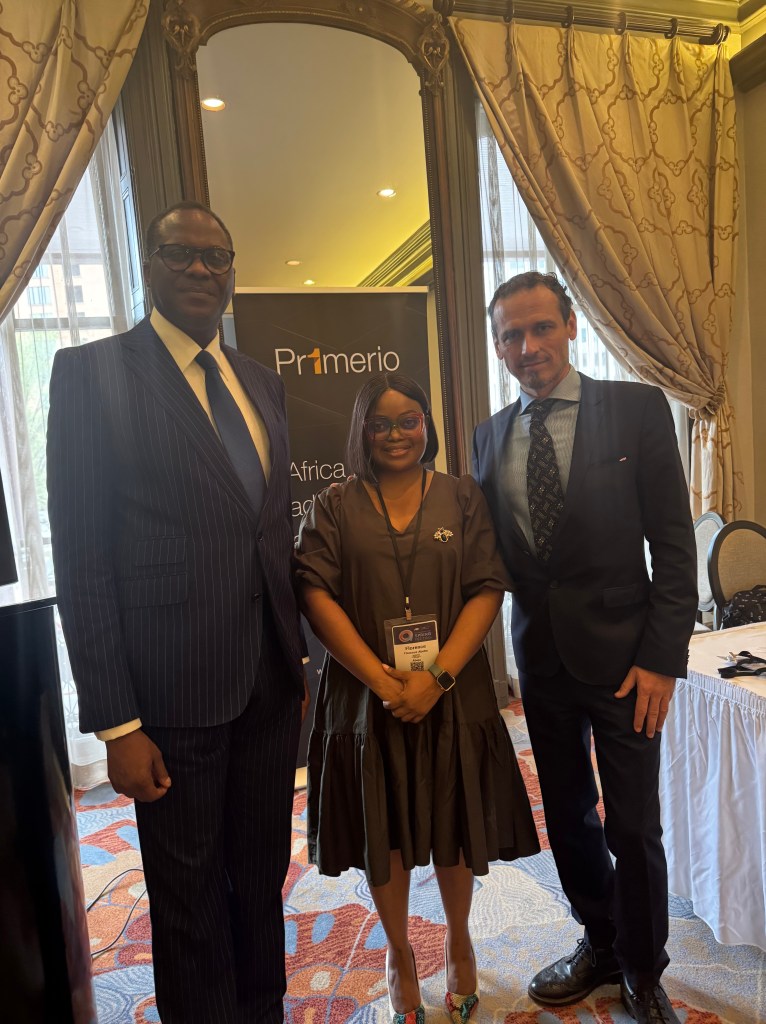
Babatunde Irukera, Florence Abebe, Andreas Stargard at the African Antitrust Salon hosted by Primerio

While more African countries are pushing back against big tech companies and are focusing on unchecked data exploitation within their borders, there is a need, however, for the continent to build towards a larger, sustainable strategy to manage the presence and power of big tech.  Says Andreas Stargard, “the quarter-billion dollar Meta fine, if upheld, would firmly cement Nigeria’s antitrust global relevance in the minds of international lawyers and businesses.  This comes as a surprise in some ways, as the FCCPC was first put on the map only fairly recently, by its inaugural Chief enforcer, Tunde Irukera: his vision for creative enforcement tools and encouragement of the agency’s staff to employ heretofore unused investigatory mechanisms and strategies – often seen only in U.S.-style civil litigation, and certainly not in many government agencies worldwide, much less among other African jurisdictions – show that the Commission potentially has the necessary intellectual capacity and investigatory stamina to pursue cases of equal or greater dimensions in the future.  It will depend on its leadership where the FCCPC’s path is charted next…”

Of course, there needs to be a balance struck between the value of personal data and that of innovation and tech adoption, which calls for a coordinated regulation policy that will strive to balance economic and non-economic features of the continent. 

As observed by Leonard Ugbajah, a competition law consultant, a balanced and pragmatic approach is essential when opting to address the regulatory landscape around big tech: 

“A common approach would harness the capabilities of countries, moderate opportunism by state and non-state actors in pursuing enforcement, recognise the economic importance of big tech, properly calibrate the various pain points (economic and non-economic) and safeguard the interests of the not-so-capable African countries.” 

The social media giants have 60 days, starting from 30 April 2025, to comply with the $220 million fine ordered by the Tribunal. Notably, following the decision, WhatsApp has indicated that it intends to seek a stay of the Tribunal’s decision and pursue an appeal. 

Insular Africa: Mauritius provides Antitrust Updates

The Mauritius Competition Commission published the 6th issue of its newsletter, dealing with the latest activities of the Commission over the past year (June 2023 – July 2024)

By Jannes van der Merwe

The Commission has undertaken a significant number of developments in the past few months, in order to increase its activity and enforcement as well as advocacy work. Most notably, the Commission has contributed to the Protocol on Competition Policy under the African Continental Free Trade Area; hosted Professor Alan Fels for three days helping the Commission with capacity building where he shared his experiences and discussed how to better enforce the law and challenges faced by the Commission; hosted Professor Pierre Régibeau to lecture, contribute and advise the Commission on various topics such as merger control, abuse of dominance, IP and competition law; the commission has been elected as the Chair of the African Competition Forum; and the Commission has been appointed as the Co-Chair of the International Competition Network Merger. Working Group, attending to educational outreaches, all while managing the competition activities within Mauritius. [1]

The Commission has made headway on several critical investigations within the Mauritian economy.

  • The Executive Director has completed its investigation in the merger of two major suppliers of snacks and drink through automated vending machines and has submitted the report for the Commission’s decision.[2]
  • The Commission completed its ports market study, led by John Davies.[3]
  • The Commission is continuing its investigation into possible cartel conduct with Third-Party Liability on Contractor’s All Risk Insurance.[4]
  • The Commission is continuing its investigation into a possible cartel, price-fixing the wholesale markup of pharmaceutical products.[5]
  • The Commission is investigating possible anti-competitive behaviour by TNS Tobacco, an importer and distributor of British American Tobacco’s brands.[6]

Completed Market Investigations

Acquisition of Engen Ltd by Vivo Group:

After the acquisition by Vivo Energy of the shares held by Engen Holding in different Engen entities in several countries, including Zimbabwe, Zambia, Gabon, Rwanda, Mozambique and other African countries in recent times, Vivo Energy turned its eyes to South Africa.

This in turn, caused the Commission to commence an investigation into the possible competition concerns the transaction between Vivo Energy and Engen Limited (South Africa) in South Africa could raise in the Mauritius’ fuel market. The Commission’s investigation found that the transaction in South Africa raises competition concerns as Engen Limited owns and operates Engen Petroleum Limited in Mauritius, while Vivo Energy competes in the Mauritius Fuel Market through its vertical integration.

The transaction that the commission then had to consider entailed the acquisition of Engen Limited (“Engen Mauritius”) by Vitol Emerald Bidco (PTY) Ltd, who is controlled by Vitol Holdings through Vitol Africa B.V. Vitol Holding proposed to transfer Vitol Emerald Bidco to Vivo Energy Emerald Holding B.V, who is part of Vivo Energy Limited.

Vivo Energy Limited has stakes in Vivo Energy Mauritius who trades under the name of Shell, a competitor to Engen Mauritius.  The commission’s concern with all of the above was that effectively, the Mauritian fuel market will be transformed from 4 dominant players to 3.

This resulted in the parties’ providing undertakings to the Commission to ensure that the fuel market in Mauritius remains competitive, which the Commission accepted as the conditions to the agreement. [7]

The parties agreed that a separate divestment business will acquire Engen Mauritius, subject to the terms as per the merging parties’ undertakings which include the majority of Engen Mauritius’ business, excluding 7 filing stations and various contracts related to the commercial operation between Engen and Vivo Group.[8]

Read more of the Mauritius Competition Commission’s news here.


[1]The Competition Commission, Competition News, Issue 6, August 2024.  https://media.licdn.com/dms/document/media/D4D1FAQFYxpZFjAS5JQ/feedshare-document-pdf-analyzed/0/1725357604620?e=1726704000&v=beta&t=f-zCi3QZ4siJdvpTtzgoGSlgFvXwUeCovjxQYtfO0Ks

[2] News letter, page 12.

[3] News letter, page 13.

[4] News letter, page 13.

[5] News letter, page 14.

[6] News letter, page 14.

[7] The Government Gazette of Mauritius, General Notice No. 668 of 2024, 1 June 2024.

[8] The Competition Commission, Competition News, Issue 6, August 2024. page 12.

Angola does Antitrust: Latest addition to world’s competition-law regimes

After its 2017 administration change, the Republic of Angola is eager to join other African nations with nascent competition-law enforcement regimes: Having been approved by a unanimous majority of 183 votes in parliament, the new Angolan competition act is expected to be enforced by the also newly-established “Competition Regulatory Authority” (“ARC”) in short order, before year’s end, according to experts.

According to reports, the Angolan law (comprising 56 articles across 8 chapters) prominently includes principles such as the public-interest criterion and “rules of sound competition in morality and ethics.”

Says Andreas Stargard, an antitrust/competition and white-collar attorney with Primerio Ltd.: “These are concepts often deemed non-traditional in the antitrust laws in the Western hemisphere.  Yet, public-interest considerations are increasingly common in African competition-law legislation and indeed often form the basis for otherwise difficult to justify pragmatic enforcement decisions we now encounter more frequently across the continent, both in merger and non-merger cases.”

Angola is a member of the African Union and the SADC (Southern African Development Community), whose most prominent member, the Republic of South Africa, has a comparatively long history of including public-interest considerations in its two decades of antitrust enforcement.  As to the general concept of Angola finally adopting a competition-law regime, it appears that a key driver was the anticipated diversification of the domestic economy:

“A functioning Angolan competition regime (meaning not only the statute but also including an effective enforcement agency) is long overdue, as recognised by the recently elected Angolan president, João Lourenço,” says attorney Stargard. “By supporting enactment of the Competition Bill, Mr. Lourenço has made good on his campaign promise from 2017 to incentivise foreign direct investment, increase domestic business growth, and — importantly for the population — encourage price competition in local consumer goods markets, as the cost of living in Angola is among the highest on the African continent”.

One of the drivers of the new government’s push for FDI and organic GDP growth is the desire to de-link the Angolan economic dependence from oil prices and production, and possibly also from China (which remains the country’s largest trading partner by far). Angolan fossil fuel and diamond exports — together by far the largest sectors of the economy, and as commodity industries, quite naturally subject to collusion risk and/or monopolistic practices, according to Mr. Stargard — have yielded at best inconsistent benefits to the country’s population at-large, and President Lourenço’s pro-competition intitiative appears to support the diversification of his country’s lopsided economy historically focused on mining and resource extraction.


Merger Control: Public Interest & SINOPEC/Chevron

When the Stick is Greater than the Carrot

While China Petroleum & Chemical Corporation (Sinopec), and global commodities trader and miner Glencore are the front runners in a bid to buy Chevron’s South African Business (Chevron SA), it appears that Sinopec has managed to edge ahead after the Chinese firm has agreed to a number of public interest conditions in an effort to placate the South African Minister of Economic Development, Ebrahim Patel (Patel) and avoid ministerial intervention before the Competition Tribunal’s (the agency responsible for approving the merger) hearing.

PublicInterestpic.jpgThe South African Competition Commission (SACC), responsible for investigating and making recommendations to the Tribunal, recently published its recommendation in relation to the proposed Sinopec-Chevron deal. Unsurprisingly, consistent with large mergers (particularly by foreign acquiring firms) – the SACC’s recommendations contain a number of non-merger specific public interest conditions. A feature of South African merger control which has become increasingly prevalent in recent years (refer to the AB-InBev/SAB or the SAB/Coca-Cola mergers) – largely as a result of Minister Patel’s ‘direct’ involvement in the merger control process.
It is not yet cast in stone that Sinopec will in fact be the acquiring entity as the minority shareholders in Chevron SA enjoy a right to first refusal. Regardless of the entity who is ultimately successful in acquiring Chevron SA (Chevron has confirmed that the proposed deal with Glencore is also currently before the SACC), the South African government has set its price for investing in South Africa, as confirmed by Minister Patel’s following statement:

Government will not choose to whom Chevron sells control of Chevron South Africa, but we will ensure that proper public interest conditions, in line with the Competition Act, should apply to whoever is the successful bidder,”

Apart from the significant Ministerial intervention and the direct influence this has on the SACC’s independent investigation and review of a merger, a particularly contentious issue in relation to the imposition of public interest conditions relates to the Minister’s comment that the public interest conditions are “in line with the Competition Act”.

Although conditions regarding employment falls within the scope of section 12A(3) of the South African Competition Act, the remainder of the recommendations made by the SACC in casu goes beyond what was envisaged by the legislature in Section 12A(3) of the Competition Act. In this regard, the conditions recommended by the SACC include inter alia the following:

  • Sinopec must set up its head office in South Africa in order for it to co-ordinate and oversee its operations in South Africa and to use South Africa as the platform to oversee its operations throughout Africa;
  • Sinopec undertakes not to retrench any of its employees, in perpetuity;
  • Sinopec agrees to invest further in Chevron’s Cape Town refinery;
  • Sinopec undertakes to make a significant investment over and above the current investment plans of Chevron South Africa;
  • Sinopec must upgrade Chevron South Africa’s operations and expand its refinery capacity in South Africa;
  • Sinopec undertakes to maintain Chevron SA’s current baseline number of independently owned petrol stations;
  • Where independently owned petrol stations are to be established, Sinopec must ensure that Chevron SA will give preference to small businesses, especially black-owned businesses;
  • Sinopec must ensure that Chevron will favour small businesses in granting rights in respect of any new retailer owned petrol stations.
  • Sinopec must also ensure that Chevron will increase its level of supplies of (liquefied petroleum gas) to black-owned businesses, following the expiration of current contractual arrangements; and
  • Sinopec must promote the export and sale of South African manufactured products for sale in China through its service stations network in China.

More specifically, Minister Patel requires that Sinopec makes a R6bn Capex investment, commits to increasing the level of BEE ownership in Chevron SA from 25% to 29% and, an all-time favourite condition, establish a development fund worth R200m.

As John Oxenham, Director of Primerio notes, the absence of merger specificity together with the imposition of public interest conditions which go far beyond the specified grounds listed in the Competition Act has been consistently criticised for resulting in uncertainty, delays and costs in the merger review process. It also sends a message to entities that South Africa is open to business… on condition (at a time when our economy could do with every bit of foreign direct investment).

Regardless of the criticism levelled against the role of public interest conditions in merger control proceedings, the prevalence of public interest conditions is set to play and even greater role in merger control (and competition enforcement more generally) should the Competition Amendment Bill be brought into effect.

John Oxenham further notes: “The Competition Amendment Bill has broadens the scope of the SACC’s powers with regards to public interest, to include the ability of small businesses to enter into, participate in and expand within the relevant market and the promotion of a greater spread of ownership.”

Practising competition law attorney, Michael-James Currie states: “The Bill has clearly sought to strengthen and codify the role of public interest conditions in merger control and expressly elevates public interest considerations to the same status as pure competition issues – the fact that the Bill specifically broadens the scope and role of public interest conditions brings into question whether the proposed conditions in the Chevron deal are in fact “in line with the (current) Competition Act”.

Competition law enforcement in South Africa is set for a significant shake-up to the extent that the Amendment Act is brought into effect – which is likely to occur in 2018. For further insight and commentary to the Amendment Bill, please see an AAT exclusive article here.

One message which business is desperately shouting across at the South African Government at the moment is “policy certainty!”  However, the SACC’s recommendation in casu and the proposed changes to the Competition Act is a move in the opposite direction as it seeks to place a great deal of discretion in the hands of a few key policy decision makers (namely the Minister of the Department of Economic Development and the SACC’s Commissioner). Discretion, exercised in a subjective manner, runs very much contrary to policy certainty – which, in light of an imminent cabinet reshuffle under new ANC President Cyril Ramaphosa’s leadership, may be of particular concern.

Although the Tribunal ultimately needs to approve the merger, the Tribunal is reluctant to intervene in proceedings which are uncontested – which Minister Patel knows all too well. Accordingly, as a crafty negotiator, Minister Patel is well aware that parties in the position of Sinopec have one of two options, agree to the public interest conditions and expedite the merger review or proceed with a contested hearing which will most likely be opposed by the Minister.

Despite calls for a more consistent, certain and transparent application of competition law in South Africa, however, there seems to be a move away from international best practice and competition law enforcement in South Africa and once the Amendment Act is brought into effect, there is a material risk that political influence will undermine the independence, impartiality and effective enforcement of competition law in South Africa to subjective, unqualified and discretion based enforcement.

[The ATT editors wish to thank Charl van Merwe for his assistance with drafting this article]

Namibian Competition Commission Conducts Dawn Raid in the Oil & Gas sector

namibiaBy AAT Senior Contributor, Michael-James Currie.
Dawn raids are gaining significant traction throughout the African agencies following the Namibian Competition Commission (NaCC) very recent (16 September 2016), raid conducted at the operations at Puma Energy in Windhoek. The raid follows the NaCC having received numerous third party complaints alleging that Puma Energy was abusing its dominance by engaging in excessive pricing practices in the aviation fuel supply market.

The NaCC had recently published Guidelines in relation to Restrictive Practices. The Guidelines focus primarily on the NaCC’s investigative powers and in particular, search and seizure operations. Africanantitrust suspected that the Guidelines would result in a move by the agency to be more proactive in its efforts to detect, prosecute and ultimately combat anti-competitive practices.

Africanantitrust had noted that search and seizure operations by competition law agencies across Africa were on the rise. The South African Competition Commission has drastically increased its utilisation of dawn raids as an investigative tool in its arsenal. The SACC has, furthermore, provided guidance and training to a number of other African jurisdictions respective agencies on search and seizure operations and how to conduct effective dawn raids under the auspices of the African Competition Forum.  Says John Oxenham, competition practitioner with Pr1merio: “2016 saw Kenya conduct its first dawn raid in the fertiliser sector as well as Zambia increasing the number of dawn raids conducted.”

The South African Competition Commission’s advocacy efforts should be considered in light of the number of recently concluded Memoranda of Understanding which the SACC has entered into with other regional agencies as well, including the NaCC.

In terms of the MoU with Namibia, it is envisaged that there will be greater cooperation in relation to information exchanges and assistance with common investigations between the NaCC and the SACC.

The NaCC is yet to prosecute an abuse of dominance case and we will ensure that Africanantrust continues to monitor this case and provide our followers with timeous updates should any significant further developments take place.

Christmas Eve Exemption: Petroleum industry seeks pass from antitrust provisions

south_africaStrategic Timing of Exemption Application?

Flying somewhat under the radar during the Christmas and year-end holiday season (but not under AAT’s radar), the South African Petroleum Industry Association (made up of BP, Shell, Chevron and other oil heavyweights) have sought a five-year renewal of their currently temporary holdover exemption from certain competition laws, which will expire in June 2016.  The application was made on Christmas Eve 2015 under section 10(6)(a) of the Competition Act.  SAPIA has not posted any news item or press release about its application on its web site to date.

SAPIA is seeking permission to allow its members to “cooperate and co-ordinate” on common industry logistics issues, as Andreas Stargard, a director with African competition-law and anti-corruption advisors Pr1merio notes.

“These include areas such as Single Buoy Mooring, port facilities, shipping, mooring, and interestingly also distribution as well as less well-defined ‘production and manufacturing plant shutdowns.'”

As Stargard observes, from an antitrust perspective, this could be of significant interest: production limitations would necessarily decrease available supply and thereby have the potential to drive up price, he notes.  Under the terms of SAPIA’s application, the plant shutdowns are both scheduled and unscheduled and supposedly relate to upgrades and safety measures only, according to the application.  In practice, however, such an exemption could give possibly provide the oil industry with carte blanche on competition issues and market manipulation.

In order to assuage concerns, the SAPIA members agree, in return for the exemption, that:

Competing participants in exempt agreements and practices may not share competitively sensitive information, except for the purposes described in the exemption application.

SAPIA and its members may not share information relating to setting of margins, imposition of levies and or approval of tariffs, unless required to do so by the DOE or NERSA.

The employees of any operating party who receive such information shall ensure that the information is held, maintained and used separately, confidentially and on need- to-know basis only.

The full text of the request for exemption is located here.  Interested parties and the public have 20 business days to comment on the application.