Prohibiting a Merger Long in the Making: CCC’s First M&A Prohibition

The COMESA Competition Commission Issues Its First Partial Refusal to Grant Merging Parties Permission to Consummate Merger

By Tyla Lee Coertzen

On 2 September 2023, the COMESA Competition Commission released its decision to prohibit the proposed acquisition by Akzo Nobel N.V (“AkzoNobel”) of Kansai Plascon East Africa Proprietary Limited (“KPEA”) and Kansai Plascon Africa Limited (“KPAL”) (the “Target Firms”). The CCC’s decision in this merger represents the first merger prohibition it has issued since its inception in 2013.

In terms of the proposed acquisition, AkzoNobel was set to acquire 83.31% of the issued share capital of KPAL and 100% of the issued share capital of KPEA from Kansai Paint Co. Ltd.

AkzoNobel is a Dutch multinational company active in the manufacture and sale of paints and coatings, with a presence in Egypt, Mauritius, Tunisia and Zambia and Zambia. In addition, AkzoNobel supplies paints to the Democratic Republic of the Congo, Eswatini, Ethiopia, Kenya, Libya, Madagascar, Rwanda, Sudan and Zimbabwe.

The Target Firms are also active in the manufacture and supply of coating products. KPEA maintains a presence in Burundi, Kenya, Tanzania, Uganda and Zanzibar and operates five manufacturing plants, four of which are located within the Common Market (namely in Burundi, the Democratic Republic of the Congo, Malawi, Rwanda and Zambia). KPAL also has manufacturing plants in the Common Market, namely in Malawi, Zambia and Zimbabwe and derives turnover in Eswatini.

This would-be transaction has a somewhat convoluted history and was, by some observers’ interpretations, many years in the making.  As Andreas Stargard notes regarding our prior reporting, “this very publication has analysed the COMESA competition troubles of the merging paints makers of the recent past.  These have included failure-to-file mandatory notifications (and also here), as well as a paints cartel-conduct inquiry by the CCC, after Akzo and Kansai’s acquisitive hunger had initially begun in 2013 with disputes over use of the Sadolin brand in Uganda and elsewhere — coincidentally the same year the CCC became functional.”

In addition, notably, the same transaction was prohibited by the South African Competition Commission in late 2022 (which decision is currently being determined by the South African Competition Tribunal). The merger is also currently being assessed by the Namibian Competition Commission.

In its assessment of the market for the manufacture and supply of decorative paints, the CCC identified several competition concerns arising from the proposed merger. Specifically, it identified that the merger would result in a combination of two strong paint brands (namely Plascon and Dulux) and that there were no effective competitors present who would pose a real ability to counter the undue market power and unilateral conduct arising thereof.

While the merging parties proffered a number of commitments, the CCC found that such commitments would not sufficiently remedy the decrease in competition in the market (particularly in Eswatini, Zambia and Zimbabwe). The CCC thus outright prohibited the merger in these three Member States.

The CCC approved the merger in certain other jurisdictions subject to conditions proffered by the parties. Specifically, the parties are obliged to divest the Sadolin brand owned by AzkoNobel to an independent third-party competitor in Uganda within 6 months of the date of the CCC’s decision. In Malawi, the CCC approved the merger subject to a condition that the merging parties continue productions in the Malawi manufacturing plant for a period of three years after the CCC’s decision, in order to remedy the plant’s potential closure and job losses resulting thereof.

The CCC’s decision over this merger is a clear indication of the approach it will take to mergers which it believes will pose significant anti-competitive harm and competitive loss within the Common Market. Thus, the decision is an indication of CCC’s powers, adjudicative authority as well as its willingness to enforce its powers.

CAK imposes highest-ever cartel fine on 9 steel producers

After about a two-year-long investigation, the Competition Authority of Kenya (CAK) has determined guilt and imposed record fines on nine steel manufacturing companies for their joint role in a price-fixing and output-restriction cartel. The fine — the highest-ever imposed by the CAK to date — was set at Ksh. 338,849,427 million (approx. U.S. $2.3m) in total.

Back in June 2022, Construction Kenya news outlet reported that the offices of 10 Kenyan steel suppliers had been ‘dawn-raided’ by the CAK on suspicion of price-fixing. “A number of senior officials at the companies, including chief executives, have been interrogated as part of the investigation triggered by builders who complained about excessive pricing of steel.” These raids in Nairobi, Mombasa and Kisumu had taken place in the preceding December, and in secret, the CAK’s investigation into the steel sector had already begun in August 2020, when the Authority conducted a sua sponte nationwide “covert field screening,” which indicated the presence of illegal coordination by the steel producers.

In their defense, the manufacturers initially claimed innocence and blamed the pandemic input-price increases, via their trade group’s spokesman, Kenya Association of Manufacturers Steel Sector Chair, Bobby Johnson: “We are bearing a huge cost to cushion consumers. The prices of billets have shot up because of the supply disruptions as well as fuel for heating the furnaces.”

However, CAK enforcement and compliance manager, Mr. Mokaya, was quoted as stating that the agency had received specific and clear evidence “of certain concerted practices including agreements on pricing. We conducted market screening and launched raids in December targeting over ten companies and the investigation is ongoing.”

Andreas Stargard, an antitrust attorney with Primerio Ltd. who frequently works on COMESA-region competition matters including Kenya with his local Nairobi colleagues, noted that “this cartel case comes on the heels of the CAK’s successful prosecution of the ‘paint cartel,’ which it brought to conclusion also during COVID, in February 2021, fining Crown Paint, Basco Products Ltd., Kansai Plascon and Galaxy Paints for price-fixing. It will not be interesting to see whether firms engaged in the construction industry — that is: direct purchasers of steel products from the cartelists — will attempt to recover any of the overcharges they were burdened with by the infringers…

In theory, a person found guilty of the offence is liable to imprisonment for a term not exceeding five years or to a fine not exceeding ten million shillings, or both. Kenyan billionaire Narendra Raval, whose steel firm Devki is among those found guilty of cartel conduct, will not have to see a (steel?) jail cell from the inside, however. As of now, only monetary fines have been imposed by the CAK.

Dr. Adano Wario, the CAK’s Acting Director-General, noted that these financial penalties were in proportion to the harm done by the offense: artificial increases in the cost of steel products harmed consumers by inflating construction costs of homes and state and local infrastructure projects, thus contributing further to the already high cost of living in the country:

“Cartels are conceived, executed, and enforced by businesses to serve their commercial interests, and to the economic harm of consumers. In this matter, the steel firms illegally colluded on prices and margins as well as output strategies. In a liberalized market like ours, the forces of supply and demand should signal prices, free from manipulative business practices. Agreements between competitors seek to defeat this fundamental facet of a free economy.”

Whether or not a “leniency” request was involved is unclear, but doubtful according to attorney Stargard: “We have seen conflicting reports as to the origins of this investigation: some sources point to construction firm, or developer, complaints that led to the CAK’s action. The Authority itself claims it conducted the industry investigation fully on its own accord, without prompting. Either way, there is no indication that one of the price-fixing group members cheated on its fellow cartelists by seeking amnesty from prosecution, which is most frequently the case in modern cartel cases.” He adds that the COMESA Competition Commission (“CCC”) may also find interest in the ongoing price hikes in various markets, as the agency had previously made cautionary remarks in the paints cartel (see article above) and was almost certainly apprised by the CAK of its ongoing investigation into the steel sector during the pendency of that matter: “We know for a fact that the CAK and the CCC are working hand-in-glove when in comes to investigating anti-competitive conduct. Indeed, this statement can be expanded to include not only East-African competition enforcement agencies, but all African authorities, and in fact many international antitrust watchdogs as well, with whom the COMESA enforcer has bi- and multi-lateral cooperation agreements and MOUs. Competition-law enforcement truly has become global, and escaping the watchful eye of the agencies is getting more difficult by the day.”

The affected companies are Devki Steel Mills, Doshi & Hardware Limited, Corrugated Steel Limited, Jumbo Steel Mills, Accurate Steel Mills Limited, Nail and Steel Products Limited, Brollo Kenya Limited, Blue Nile Wire Products Limited, and Tononoka Rolling Mills Ltd.

Sweeping Inquiry Sheds Light on Online Intermediation Platforms: Competition, Opportunity, and the Road Ahead

By Tyla Lee Coertzen and Nicola Taljaard

On 31 July 2023, the South African Competition Commission (“SACC”) released its Final Report and Decision on the Online Intermediation Platforms Market Inquiry (“OIPMI”). The OIPMI was initially launched on 19 May 2021 and after a number of requests for information, public hearings, expert reports as well as comments and engagements with stakeholders, the SACC’s findings and recommendations have finally been concluded.

The SACC is empowered to conduct market inquiries according to section 43B(1)(a) of the Competition Act 89 of 1998 (as amended) where it has reason to believe that there are market features that may impede, distort or restrict competition in a particular market; or to achieve the objects and purposes of the Act (including participation of small and medium enterprises (“SMEs”) and historically disadvantaged persons (“HDPs”).

The Inquiry: A Timeline of Discovery and Discernment

  • May 2021: The kick-off. Release of the Statement of Issues (SOI), first round of Requests for Information (RFIs), and business user survey.
  • August 2021: Heating up with the release of the Further Statement of Issues (FSOI), second round of RFIs, and a refined business user survey.
  • November 2021: The public had their say with hearings and follow-up RFIs.
  • February 2022: Expert reports and in-camera hearings added a new dimension.
  • July 2022: Provisional Inquiry Report was published, provisional findings, and recommendations were made public.
  • August to December 2022: A flurry of submissions, stakeholder engagements, and follow-up RFIs.
  • January to July 2023: Engaging stakeholders on final findings and remedial actions, sealing the deal.

What Does It All Mean?

These findings focus on the various platform categories, including the mammoth influence of Google Search. The full extent of these actions requires deep exploration, but one thing is clear: the landscape of online intermediation platforms is about to shift.

During the launch of the OIPMI, the Minister Patel of the Department of Trade, Industry and Competition (“DTIC”) commended the SACC for its great effort and the high-quality product produced in the form of the OIPMI. He further noted that the government should consider taking an inclusive response to the findings and recommendations in the OIPMI.

The findings concluded, inter alia, that Google Search is vital as a means for consumers to access all platforms, and that its paid search alongside free results business model is disproportionately advantageous to larger and more established platforms. It also found that Booking.com’s practice of restricting hotel prices on certain online networks results in a restriction of competition and allows it to make more commission by making users reliant on it. eCommerce giant, Takealot, was found to have a conflict of interest due to its retail department competing with its marketplace sellers and causing detriment to the latter. Google Play and the Apple App stores were found to charge exorbitant fees to developers and on a global level, the platforms hampered the visibility of SA-paid apps. Food delivery platforms Uber Eats and Mr D Food were found to cause difficulty to their competitors because of the lack of openness regarding the surcharges charged on menus across their platforms, as well as the limitations put on national chain franchisees. Property advertisement platforms Property 24 and Private Property were further found to have hindered their competitors by providing low interoperability to competitors in respect of listings. Property 24, together with AutoTrader and Cars.co.za were also found to have hampered small estate agents and car dealers due to the discriminatory pricing implemented by these platforms.

To combat the effects of the findings, the SACC recommended the imposition of a number of remedial actions including consumer-aiding search filters, marketing incentives to purchase local goods, the removal of restrictive pricing clauses, the segregation of internal (competing) divisions, the removal of automatically directing mechanisms to larger players, disclosure clauses to consumers and other benefits to SMEs, HDPs and consumers.

All platforms will be provided a period within which to affect the remedial actions.

A New Chapter: Where Do We Go From Here?

This OIPMI hasn’t just been about pointing fingers and exposing flaws. It’s about shaping the future of a wide range of the economy. The implications are broad, affecting everyone from big tech to the small business owner striving to make a mark in a competitive world.

Michael-James Currie, Partner at Primerio, noted “The recommendations of the OIPMI are far reaching for online platforms. Regulators need to ensure that we do not undermine those who are growing and providing significant investment the digital market in a highly competitive market where firms are competing not only with established traditional retailers but also large international players. Likewise, South Africa cannot afford to signal to international players that their business models will be substantively undermined once they establish themselves in South Africa. This is particularly so if the Commission’s remedies are not informed by objective competition concerns.”

WomenAT Launches in South Africa: Connecting and Empowering Women Professionals

African Antitrust editor

WomenAT, a platform dedicated to connecting and promoting women professionals worldwide, is set to launch in South Africa on 6 July 2023. The launch event represents a significant milestone for WomenAT as it expands its mission to empower women professionals in the field of competition policy and regulation. One of the key highlights of the event is a panel discussion centered around the role of competition policy and regulation in South Africa’s challenging economic climate. Esteemed facilitator Yasmin Carrim will lead the discussion, joined by industry experts who will provide valuable insights.

W@Competition, was initially launched in Brussels in 2016, drawing inspiration from the rich antitrust policy heritage of the city. Since then, it has successfully established national branches across Europe, including France, Germany, Italy, the Netherlands, Switzerland, Turkey, and the UK. The organization has further expanded its influence with regional branches in the CEE, Iberia, and Nordic regions. In the Americas, the Washington DC branch caters to women antitrust professionals in the US, Canada, Central, and South Americas.

Primerio South African directors, John Oxenham and Michael-James Currie says that “Primerio is a proud supporter of WomenAT and looks forward to more collaborative initiatives. We are particularly proud of the contribution and initiative demonstrated by Primerio’s Gina Lodolo and Jemma Muller, who are part of the Executive Committee of W@CompetitionZA and who contributed to making this timely event happen”.

The launch of WomenAT in South Africa signifies a major step towards empowering women professionals in the country’s competition policy and regulation sector. By facilitating connections, promoting knowledge-sharing, and advocating for gender diversity, WomenAT is poised to make a significant impact in fostering an inclusive and thriving professional community.

For those who are interesting in attending the event, please reach out to Gina or Jemma.

Nigerian antitrust regulator takes up digital money lenders

FCCPC Resumes its Digital Money Lender Registration Process 

By Nicola Taljaard 

On 26 June 2023, the Federal Competition and Consumer Protection Commission (“FCCPC”) announced the resumption of registration of Digital Money Lenders (“DMLs”) under the Joint Regulatory and Enforcement Task Force’s Limited Interim Regulatory/Registration Framework and Guidelines for Digital Lending 2022 (“Guidelines”).

In a statement signed by CEO and Executive Vice-Chairman Babatunde Irukera, the FCCPC stated that the decision to resume registration was in response to requests from both existing platforms that missed the earlier registration deadline set by the FCCPC and new businesses planning to enter the market. He explained that as part of the Joint Regulatory and Enforcement Task Force (“JRETF”), the FCCPC introduced the Guidelines to protect consumers’ rights and ensure responsible practices by digital money lenders, particularly in light of the increasing number of loan sharks and the like flooding Nigeria’s digital money market. The associated registration process/platform was also established.

The Guidelines initially required completion of the registration process by November 14, 2022, to continue operations and enjoy privileges such as access to Google Playstore and payment systems/gateways. The FCCPC, however, extended the deadline to January 31, 2023, and subsequently to March 27 of the same year.

Irukera further noted that, while the JRETF continues to work toward developing a more comprehensive and durable digital lending regulatory framework, the FCCPC remains inundated with applications for registration and thus, it will resume in accepting and approving eligible DML applications, from both businesses those that previously failed to register themselves on the basis of the initial Guidelines as well as new businesses seeking to enter the market. 

Nevertheless, Irukera cautioned that businesses that were removed from Google Playstore or halted transaction processing would only be registered after providing a statement that justifies their failure to complete the registration before the previous deadline. In addition,any late applications would be subjected to a late processing fee. 

Says Andreas Stargard, a partner with Primerio Ltd.: “This development shows that the FCCPC is not only a capable and multi-faceted (albeit young) agency, but also that it is highly attuned and quick to adapt to — in real life, and with real action taken — some of the digital-markets issues that seem to be the du jour topic of antitrust in 2023.” It shows the FCCPC’s commitment to continuously monitor the digital market and safeguard the rights of consumers against privacy violations, harassment, unconventional loan repayment strategies, and disclosed charges associated with loans.”

For the full list of DMLs that have received conditional and full approval, see here: https://fccpc.gov.ng/registration-status-for-digital-money-lenders-apps/

Competition Authority of Kenya exempts MSMEs from merger control provisions to stimulate economy

Competition Authority adds exemptions to boost economic activity

By Joshua Eveleigh and Katia Lopes

In a recent speech by Kenya’s Minister of Finance, Professor Njuguna Ndung’u, it is clear that the Competition Authority of Kenya (“CAK”) will take active steps in promoting micro, small and medium-sized enterprises (“MSMEs”) in the local economy.

Firstly, to facilitate their growth and contribution, Professor Ndung’u, noted that government plans to ease the cost of doing business and to minimize compliance costs for MSMEs.  Specifically, the CAK will exempt MSMEs from having to notify otherwise mandatorily notifiable mergers to the CAK. By removing the significant regulatory hurdle of obtaining prior merger approval, and its associated costs, it is hoped that Kenya will see a promotion of start-up and digital businesses. This development is particularly important considering that Kenyan startups ranked second, in Africa, in terms of funding raised but fell behind other African jurisdictions when it came to acquisitions of MSMEs.  Fidel Mwaki, legal practitioner based in Nairobi, observes that “this is a positive move from the CAK that should hopefully bode well for MSME’s, many of whom are battling under the strain of increased taxation, inflation, and licensing requirements and will certainly benefit from the proposed waiver on merger notification fees.”  His Primerio colleague, attorney Diana Wariara, adds that “regulating buyer power remains a challenge for the agency.  A greater emphasis on audits and investigations may help strengthen the CAK’s enforcement mandate and ensure a level playing field and fair competitive practices within these sectors.”

In addition to merger exemptions and emphasising the CAK’s position as Eastern Africa’s lodestar in the enforcement of abuses of buyer power, the CAK will monitor and conduct surveillance audits, specifically in the manufacturing and agro-processing sectors, to further protect MSMEs from incidences of abuses of buyer power. Professor Ndung’u also noted that the CAK will implement codes of practice to ensure MSMEs in the retail and insurance sectors are protected from powerful buyers.

Lastly, Professor Ndung’u highlighted that the CAK will take measures to address the issues of price fixing by professional services, ensuring that fees and the quality of professional services remain competitive.

Given the pivotal role that MSMEs play in the Kenyan economy, comprising 98% of all local business entities and contributing approximately 24% of Kenya’s GDP, their promotion will be a welcome development among the local business community. In this respect, Professor Ndung’u’s speech demonstrates the CAK’s commitment towards ensuring a competitive marketplace that is free from abuses of dominance.

Important Regulations recently published by the Department of Trade Industry and Competition to prepare for the upcoming release of the SACC’s final recommendations in respect of its various market inquiries.

By: Gina Lodolo

By way of background, the Competition Amendment Act 18 of 2018 (“Act”) included amendments to the powers of the South African Competition Commission (“SACC”) in respect of market inquiries.  In terms of the amended Section 43C of the Act, should the SACC find that there are features which have an adverse effect on competition, with particular regard to the “impact of the adverse effect on competition on small and medium businesses, or firms controlled or owned by historically disadvantaged persons”, the SACC must make recommendations, which will mitigate the adverse effects on competition.  The SACC’s remedial powers include, most notably under Section 43D(2) read with Section 60(2)(c), that the SACC can make a recommendation to the Competition Tribunal to order a divestiture in relation to such an adverse effect on competition identified in the market inquiry.

On 24 May 2023, the Minister of Trade, Industry and Competition published regulations titled ‘Regulations relating to appeals arising from market inquiries before the Competition Tribunal in terms of section 43F and Regulations relating to a divestiture recommendation by the Commission in terms of Section 43D(2) of the Competition Act, No.89 of 1998, as amended’ (“Regulations”), which took effect upon publication thereof, to govern the procedure that the SACC must follow when making such a recommendation to the Competition Tribunal to order a divestiture following a market inquiry, together with the rules for appealing a decision made by the SACC emanating from a market inquiry.  In this regard, where the SACC concludes in a market inquiry that a divestiture be recommended to the Competition Tribunal to make such an order, the SACC must file a notice of motion and affidavit providing:

  1. grounds for the recommendation;
  2. material facts;
  3. the law relied on by the SACC; and
  4. provide reasons for the divestiture being reasonable and practical.

The respondent will be provided with an opportunity to oppose the recommendation to the Competition Tribunal.

In respect of appealing a recommendation by the SACC emanating from a market inquiry, any person that is materially and adversely affected by a decision of the SACC in respect of remedial action taken by the SACC to remedy an adverse effect on competition, may appeal the decision by filing a Notice of Appeal. The Notice of Appeal must be filed within 25 business days after the affected organisation has received a notice from the SACC of the decision. While the evidence in the appeal will usually be confined to the market inquiry record, the Regulations do provide a number of exceptions.

The Regulations provide that the Notice of Appeal must contains the following:

‘(a) the determination or decision that is the subject of the appeal;

(b) whether the whole or part of the determination or decision is the subject of the

appeal;

(c) if only part/s of the determination or decision are being appealed against, which

part/s of the determination or decision are the subject of the appeal;

(d) the grounds on which the appeal is based; and

(e) the relief sought.’

For the full process governing the appeal, see here.

These Regulations are vital to be cognisant of as the SACC is currently in the process of undergoing various market inquiries, including the Fresh Produce Market Inquiry, the Media and Digital Platforms Market Inquiry, the South African Steel Industry Market Inquiry and most notably the Online Intermediation Platform Market Inquiry which is due to be completed on 30 June 2023 (after an extension was recently granted for the SACC to finalise the report and draft remedial actions and recommendations).

Primerio director, Michael-James Currie says given the SACC’s broad remedial powers following the conclusion of a market inquiry, coupled with a very different competition test to be used in market inquiries than the traditional SLC test, is likely to result in various market participants utilising the appeal procedures in the near future.

COMESA @ 10: CCC Keynote address by Bill Kovacic

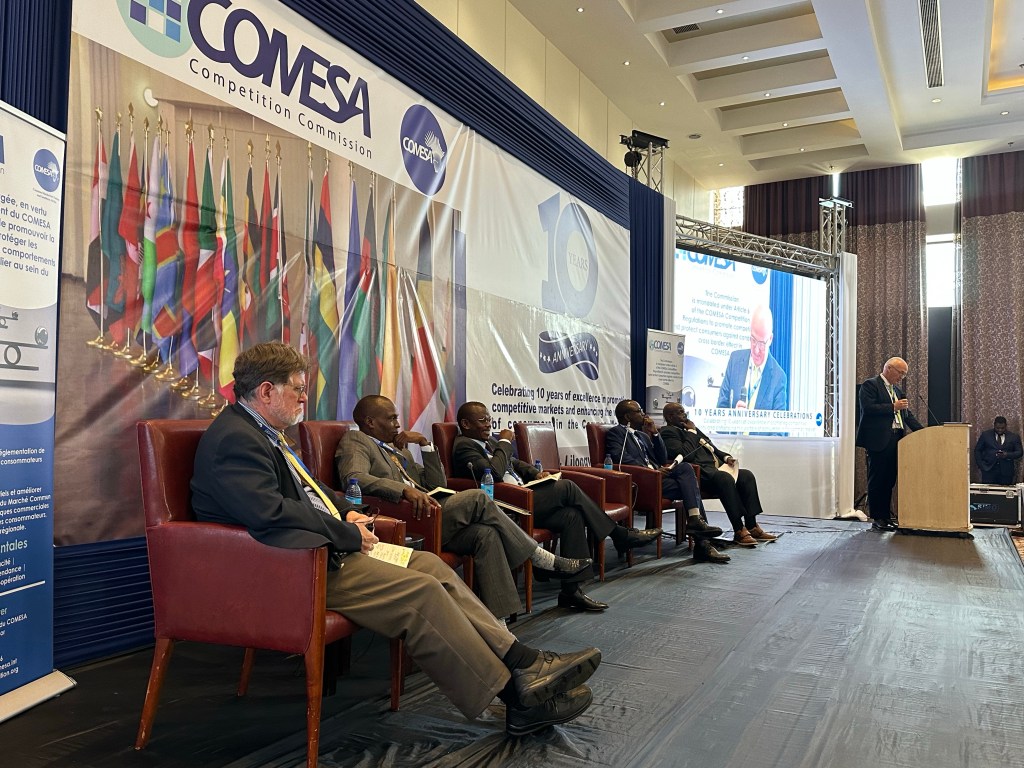
The booming voice of eminent antitrust scholar and GW Law professor Bill Kovacic easily surmounted the small technical microphone glitches at COMESA’s celebration of its Competition Commission’s first 10 years in Malawi (#CCCat10years), giving the keynote address.

His accessible speech, given in front of a diverse audience comprised of senior ministers and policy makers, lawyers, enforcers, and media representatives, focused on practical examples covering three key topics of public expenditures, subsidies, and the removal of entry barriers.

On state spending, he noted the attendant “global epidemic of collusion and corruption”, in areas as simple, but important to development, as transportation infrastructure. “We don’t always need to debate ‘digital markets’ or ‘big tech’, we can also highlight the importance of basic road-building on increasing trade and measurably growing economies” across Africa. But these areas of public expenditures are invariably hampered by corrupt or collusive tendering and similar cartel conduct — important focus areas for the COMESA CCC to enforce.

In the area of public subsidies, Kovacic proposed a future collaborative working relationship between antitrust enforcers, legislators, and those ministries that allocate state subsidies, ideally to non-incumbents (giving the NASA vs. Space-X example to make his point) so as to enhance market entry.

The CCC should enhance market access by making barriers to entry “more porous” for newer small competitors, with Kovacic using the famous 1982 Bell Telephone/AT&T U.S. antitrust precedent to highlight the practical value of competition law to society and innovation of new, better, and cheaper products and services.

Breaking: COMESA expected to become suspensory merger regime by 2024

At today’s CCC Business Reporter Workshop, Senior M&A Analyst Sandya Booluck presented major plans to amend the regional trading bloc’s merger-control regime.

The most notable part of this “complete overhaul” of the CCC regime will be the likely change from the current non-suspensory to a suspensory merger notification scheme.

Says Primerio Ltd. antitrust counsel Andreas Stargard: “This change is, of course, still subject to approval by the CCC Board and the COMESA Secretariat Council of Ministers, but it is likely to pass in my personal opinion. This is especially true since, as former CCC Head Lipimile pointed out at today’s session, this change was in fact demanded by several of the NCAs of the COMESA member states, also in view of the Art. 24(8) referral procedure. It thus presumably enjoys broad support from the bloc’s leadership and will obtain a passing vote before the end of 2023!”

Ms. Sandya Booluck, Senior Analyst M&A

COMESA stats update: 367+ M&A deals, yielding a healthy revenue stream for the CCC’s operations

A brief note from the “front lines” of the COMESA Competition Commission’s 10-year anniversary event: Isaac Tausha, chief economist for research policy and advocacy, provides the following statistics — notably for the entire duration of the CCC’s life decade so far.

In short: Gone are the meager days of fledgling notifications to the CCC.

Statistics Since Inception

369 mergers and acquisitions assessed. (Total COMESA revenues of merging parties: US$210bn)

Over 40 Restrictive Business Practices assessed

Over 44 Consumer Protection cases handled

More than 12 market screenings and studies undertaken

3 businesses fined for non-compliance with the Regulations

Doing a “back of the envelope” estimate, we at AAT are calculating the total merger filing fees resulting from those 367 notified deals to be possibly north of $75 million $65 million, so on average $6.5m “income” for the CCC per year (half of which goes to the 21 member states, of course, under the Regulations). This is notably without taking into account fines, e.g., a recent $102,000+ fine for failure to notify (as in our reporting on the Helios Towers / Malawi case).

Dr. Chris Onyango (Dir. Trade, Customs and Monetary Affairs, COMESA)
Dr. Lipimile (former CCC CEO). Mary Gurure (Head of Legal, CCC). Andreas Stargard (Editor, AAT).