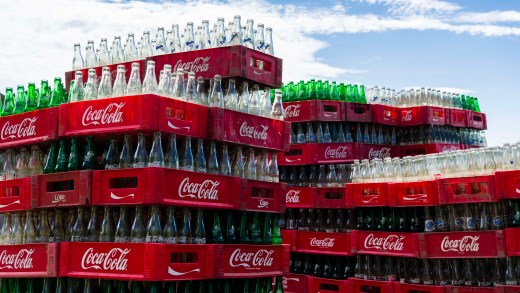
Lots of C’s: CCC(C) investigates Coca-Cola Contracts in COMESA

Coca-Cola is suspected of having engaged in anti-competitive conduct in the common market region via unlawfully restrictive distribution agreements — much is at stake, including a chance for the respondent to justify its contract provisions, and for the CCC to provide more detailed objective reasoning for its ultimate decision than it previously did in its 2018 RPM case against the soft drink giant.

By Joshua Eveleigh & Henri Rossouw

On 14 October 2024, the Common Market for Eastern and Southern Africa Competition Commission (“CCC”) announced that it will investigate The Coca-Cola Company (“Coca-Cola”) for potentially violating the current Article 16 of the COMESA Competition Regulations (the “Regulations”). The Regulations are due to be amended prior to year’s end.

The alleged conduct relates to supposedly restrictive bottler and distribution agreements considered to affect trade between COMESA Member States, thereby falling under the jurisdiction of the regional competition watchdog, akin to the European Union’s DG COMP enforcing antitrust rules across the EU.
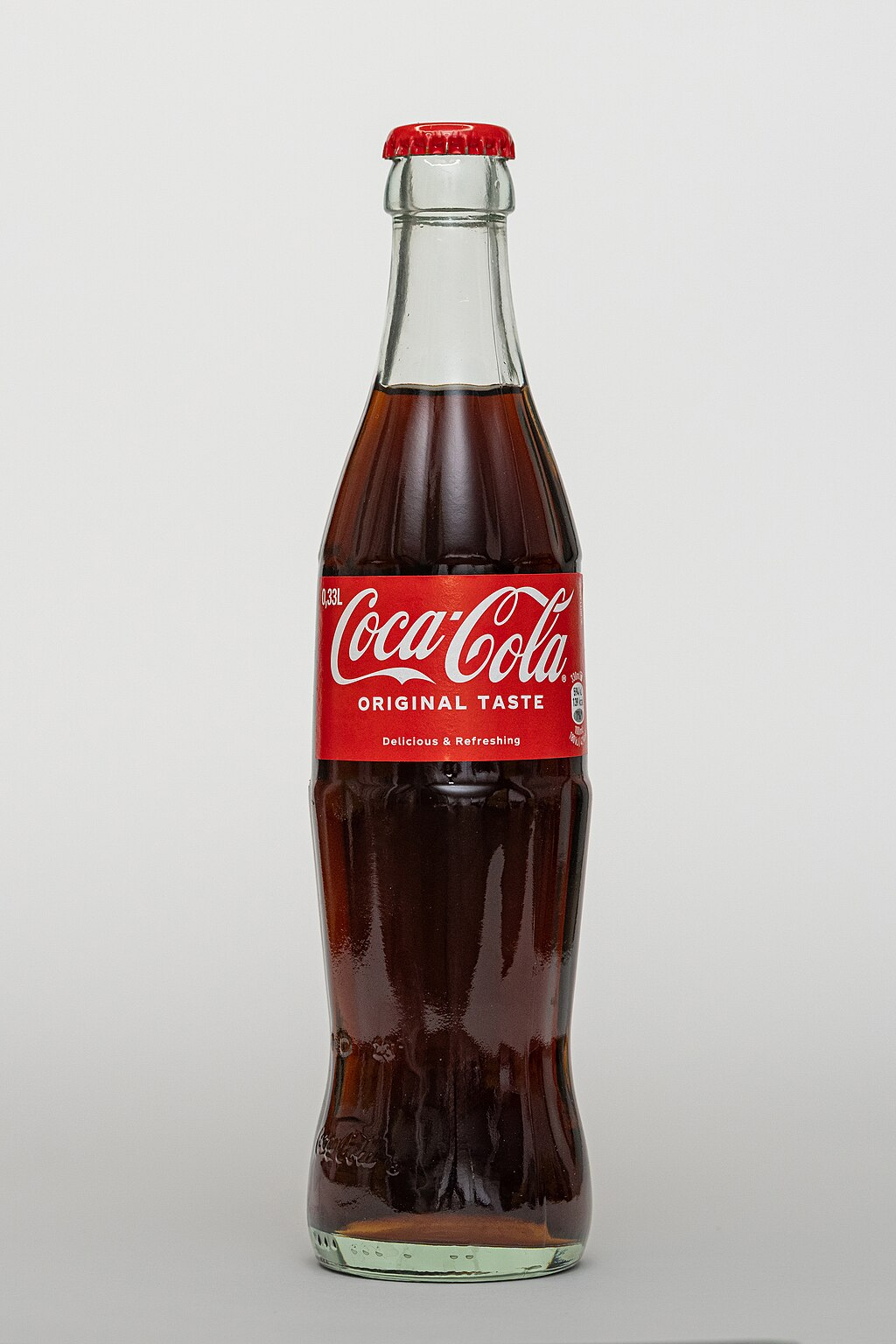
Article 16 prohibits agreements that may affect trade between Member States of COMESA, with the main object of these agreements being to prevent, restrict, distort competition in the Common Market.  The present investigation provides an example of how one of the CCC’s primary objectives is the detection and prevention of any restrictions to trade in and across the Common Market, such as the suspected “absolute territorial restrictions” at issue here.  This is notably different from a prior run-in between Coca-Cola and the CCC back in 2017-2018: the CCC’s first soft-drink salvo dealt with so-called “Resale Price Maintenance” (“RPM”) in Coke’s distribution agreements. RPM is a generally frowned-upon practice in antitrust law globally. During that case, the then-still fledgling agency had issued a curt decision, resolving the case without fines but with an injunction against the practice and a mandatory Coke compliance programme.

This new matter arises out of entirely different legal issues and with a distinct factual background. Moreover, it is now being investigated by a notably matured and dramatically advanced enforcement agency compared to the 2018 case. Says Andreas Stargard, a Primerio attorney practising before the CCC:

“The Commission is doing what COMESA was designed for — a ‘territorial-restriction’ prosecution is nothing new for a regionally-integrated community. It lies at the heart of the concept of a unified, free market area. Territorial restrictions within such an area an inimical to the entire concept of COMESA. Just look at the EU: its antitrust rules have given the European Commission a similar mandate for decades, enforcing prohibitions against sellers’ territorial limitations that impinge on the free distribution and sale of their goods across the EU. Here, in the current COMESA investigation, it appears that we are notably dealing with restrictive conduct that may be justified by the parties in the end, as opposed to a pure prohibition ‘by object’, such as a cartel agreement. So if Article 16(1)-(4) applies, a prohibition with ‘rule-of-reason’ caveats, Coca-Cola may provide arguments as to why and how the restrictive agreements benefit end-consumers.”

Interestingly, the CCC previously assessed the distribution agreements between Anheuser-Busch InBev (“ABI”) and its third-party distributors and found that the distribution agreements contained clauses that restricted distributors from selling outside of their allocated territories, infringing upon the principle of “absolute territorial protection”. Accordingly, ABI remedied the infringing provisions. “The difference there, however, was that ABI had affirmatively and preemptively applied to the CCC for an authorization under Art. 20 — it was not the subject of an investigation after the fact, as is the case with Coca-Cola,” says attorney Stargard.

“Moreover, once the case is resolved, I am curious to see whether the CCC will take into account the prior compliance programme mandate from the 2018 case against Coca-Cola. It will be interesting to read whether or not the Commission refers to this condition of the prior non-fining resolution against Coke’s RPM conduct, and if so, where the failure point was? Was the programme either inefficient, entirely scrapped, or how did it otherwise fail to avoid further violative conduct on the part of the respondent…? We will have to wait and see, but other global enforcers, such as the DOJ, have certainly used the existence or non-existence of an effective compliance programme in their ultimate fining decisions to date.”

Regardless of outcome, it will also be interesting to learn how the CCC approaches the topic of exclusive distribution agreements across the Common Market. In this regard, it is widely accepted that exclusive agreements are likely to give rise to a range of efficiencies that may be passed down to customers and end-consumers, which Coca-Cola will, of course, need to establish by objective economic evidence if it seeks to justify its contracts vis-à-vis the CCC.

The CCC has been known to be deliberate and fair in its proceedings, especially in recent years of maturity and advancements in its team strength and econometric evaluation capabilities. Mr. Stargard observes that “[e]xamples of this nuanced approach and the due process being granted to parties in distribution cases include the most recent CAF soccer cases (see, e.g., here), in which the CCC spent extensive time and clarifying documentation on why certain, but not all, practices of the affected parties were harmful to consumer welfare in the Common Market.” That said, if the CCC were to adopt an overly protective stance here, however, it may have a concomitant effect on the consumer welfare and will have significant consequences for multinationals distributing into Africa.

The case is still in its investigatory phase, and thus all interested stakeholders are invited to submit representations by 14 November 2024 and can enquire further from Mr. Boniface Makongo (Director Competition Division) at +265 (0) 111 772 466 or at bmakongo@comesacompetition.org.

“But did you really comply…?” Insights into Post-Merger Conditions

Lessons drawn from the Constitutional Court in the Coca-Cola Appeal

By Brandon Cole

In a pivotal decision issued on April 17, 2024 by the Constitutional Court of South Africa, the case of Coca-Cola Beverages Africa (Pty) Ltd against the Competition Commission has reshaped our understanding and enforcement of post-merger conditions in business transactions.  Stemming from a 2016 merger that led to the creation of “Coca-Cola Beverages South Africa” (out of four separate entities), the case underlines the complexity of adhering to merger conditions imposed to safeguard fair competition and operational continuity.

The merger was initially green-lit with certain conditions focused on preventing job losses (“retrenchments”) and on harmonizing employment terms across the new entity.  Despite these protective measures, certain challenging economic conditions, including a sugar tax and rising input costs, compelled Coca-Cola to undertake some retrenchments. This action sparked a legal challenge from the Food and Allied Workers Union (FAWU), asserting a breach of the stipulated merger conditions that underlay the transaction’s approval by the antitrust authorities.

Central to the dispute was the interpretation of how merger conditions are enforced and reviewed under the South African Competition Act.  The crux was whether Coca-Cola’s retrenchments violated the merger-specific conditions or were justified by external economic pressures. The Competition Tribunal, tasked with adjudicating the challenge, initially ruled in favour of Coca-Cola, recognizing the broader economic factors at play. However, this decision was overturned by the Competition Appeal Court, which led to Coca-Cola’s subsequent appeal to the Republic’s Constitutional Court.

The Constitutional Court’s decision clarified several crucial aspects regarding the enforcement of merger conditions:

Nature of review: The Court differentiated this review from ordinary administrative actions, focusing on whether Coca-Cola substantially complied with the merger conditions rather than strictly adhering to them without regard for external circumstances.

Causal connection: The Court criticized the narrow focus of the Appeal Court on the direct causality between the merger and retrenchments. Instead, it supported a more holistic approach that must consider all relevant factors impacting business decisions post-merger.

Implications for business strategy: The judgment emphasized the importance for businesses to thoroughly plan and document their strategies when complying with merger conditions. This is essential to demonstrate substantial compliance, especially when external economic factors might compel deviations from the expected course.

This landmark judgment highlights the dynamic nature of post-merger conditions and their enforcement, illustrating that adherence to these conditions must consider both the intended protective measures and the practical realities faced by businesses. For companies undergoing mergers, this case serves as a critical reminder of the need to balance merger obligations with agile business responses to external challenges.

The insights derived from the Coca-Cola Beverages Africa case provide valuable lessons for businesses and legal practitioners involved in mergers and acquisitions, especially in terms of planning, executing, and justifying actions taken in relation to merger conditions.

Competition Law Africa conference 2021 / this Tuesday

The Informa Competition Law Africa conference is back with a vengeance this year, albeit still held virtually due to the pandemic.

The overview can be found here, and the more detailed agenda here.

Speakers include South African enforcer Hardin Ratshisusu, COMESA chief Willard Mwemba, the OECD’s competition expert Frederic Jenny, Mahmoud Momtaz, head of the Egyptian competition authority, Lufuno Shinwana, senior legal counsel on competition issues for Anheuser-Busch Inbev, Ntokozo Mabhena, Anglo American’s Legal Advisor, and Maureen Mwanza, head of legal for the Zambian CCPC.

Primerio partner, Andreas Stargard, will host the afternoon panel on Vertical Restraints, interviewing Okikiola Litan, Senior Counsel, Commercial and Competition Law, with Coca-Cola Hellenic Bottling Company.

Competition enforcer terminates RPM investigation into Coca-Cola

COMESA’s second restrictive trade practices investigation ends inconclusively

Having now concluded two non-merger cases (the first was an exclusivity issue in football broadcasting and sponsorship agreements, see here), the COMESA Competition Commission’s (“CCC”) second investigation into restrictive vertical distribution practices engaged in by Coca-Cola and its distributors has culminated in somewhat of an indeterminate ending.

No fines were imposed, and the Coca-Cola parties agreed to eliminate the price-maintenance clause from their distribution contracts, as well as committing to implementing a generic compliance programme.

Says Andreas Stargard, a competition practitioner with Primerio Ltd., in an in-depth analysis of the short Decision (dated 6th December 2018, but only released recently):

I am very disappointed in this missed opportunity.  The Decision lacks intellectual rigour and avoids critical detail, to assist practitioners or business going forward in any meaningful way.

This investigation began in earnest well over a year ago, when the CCC opened formal Article 22 proceedings against the parties in January 2018.  In its disappointingly short 9-paragraph decision, lacking any degree of detailed reasoning, factual or legal analysis underlying its conclusions, the Commission has now determined the following:

  1. The relevant product market is the sale of non-alcoholic carbonated beverages.  I note that the wording of this definition would presumably include sparkling mineral water, which appears to be an outlier from the ‘soft drinks’ category that is actually at issue here (“Coke,” Fanta,” “Sprite,” etc.).
  2. A relevant geographic market was notably not defined at all (!).  The absence of this key dimension is unfortunate — it is not in accordance with established competition-law principles, as market power can only be measured in well-defined product and geographic markets.  While the decision mentions the countries in which the parties are active, it fails to identify whether each country was viewed as a relevant sub-market, or whether Coca-Cola’s market power (or dominance) was assessed across the entire COMESA region.  This appears to be a glaring oversight.
  3. The CCC found relatively low entry barriers, as well as apparently actual “new product” entry (NB: does “new product” imply products by a new or different competitor?).
  4. Yet, despite ‘non-prohibitive’ entry barriers, the Commission somehow views the mere fact that the respondent’s brands “continued to command a majority share of the relevant markets” (NB: where is the plural (‘markets’) coming from here? I thought there was only a single market for ‘non-alcoholic carbonated beverages’?) as leading to a finding of dominance.
  5. Crucially, the actual conduct complained-of (the vertical restraints, the alleged RPM, etc.) is barely identified and lacks any significant detail.  Paragraph 7 merely provides that there are “clauses which stipulate the profit margins to be enjoyed by the distributors, as well as the commission at different levels of the market. … [and] vertical restraints which constrain the distributors’ conduct in the relevant markets” (note the plural again).  This absence of key information — ‘what were these so-called vertical restraints’? how were distributors constrained in their conduct? — in an official ‘Decision’  by the enforcement agency wholly fails to assist businesses seeking antitrust guidance for operating within the legal boundaries in the COMESA region.
  6. Finally, the CCC’s overall conclusion is rather weak: the Decision states that the Commission merely “registered its concern that the stipulation of prices [I thought it was profit margins?] may have anti-competitive effects in the market [back to a single market?].”  To address these ‘potential’ ‘concerns’, Coca-Cola appears to have voluntarily committed to removing the offending contract language and instituting a (wholly undefined) “compliance program” that exclusively concerns Part III of COMESA’s regulations.

In sum, Coca-Cola seems to have got away easy here: no fine was imposed at all (which could have been as much as 10% of the parties’ COMESA revenues), a limited, voluntary training exercise was agreed, as was the removal of the RPM provision.

The CCC, on the other hand, missed a truly golden opportunity to draft a more well-reasoned decision.  Its 9-paragraph reasoning (which notably concludes with a finding of actual dominance nonetheless!) can literally fit on a single page… Remember: resale price maintenance is considered in many jurisdictions to be a “hard-core” offence, and is often deemed per se illegal.  In this regard, the Decision likewise fails to make any mention of the relevant legal standard under the COMESA Regulations for evaluating the RPM (and the other unidentified, vertical) conduct.

Andreas Stargard
Andreas Stargard

The flaws outlined above — from the lack of geographic market definition, missing market share data and other highly relevant details, zero explanation of why low entry barriers somehow did not preclude a finding of dominance, use of tautological and circuitous verbiage (“restraints which constrain“?) — preclude this “conduct” case,  notably already a rarity in the CCC’s portfolio, to be a lightning rod for the assent of the COMESA Competition Commission to become a respected competition enforcer.  This was a chance for the agency to be placed on the radar screen of international businesses, agencies and practitioners, to be seen together on the map with its respected peer antitrust enforcers such as the South African Competition Commission — yet, it was a chance unfortunately missed…


Resale Price Maintenance in COMESA?

Second Non-Merger Investigation Opened by COMESA Enforcer

Coca-Cola’s Africa operations — recently sold in a majority shareholder exit in late 2016 by Anheuser-Busch InBev (which owned 54.5%) — were due for a major overhaul of the company’s long-term strategic plan to grow its market presence across Africa.  Yet, it is now under investigation for restrictive trade practices by the COMESA Competition Commission (“CCC”).

This is a first, of sorts: After the CCC’s original non-merger investigation into exclusive marketing practices of broadcasting rights and sponsorship agreements in relation to football tournaments (AAT reported here) ended — or hasn’t ended — with something of a thud (nothing having been reported by way of conclusion thereof), we and the world’s largest soft drink manufacturer are bracing ourselves for the outcome, if any, of the latest COMESA salvo delivered by the CCC to prove its worth to its Board.  (We surmise so as this latest, second-ever, non-merger investigation may have been prompted at least in part by the fact that the CCC’s budget was recently slashed by the regional body, and that the Commission wishes to reestablish itself in the eyes of the COMESA directorate as a worthwhile agency to fund and to bolster).

The COMESA “restrictive practices” investigation into Coca-Cola’s distribution agreements may come on the heels of its (announced, yet likely neither begun nor concluded) market enquiry into the grocery retail sector, similar to comparable market-wide investigations undertaken in Kenya and South Africa; moreover, the South African Competition Commission has likewise undertaken past investigations into restrictive vertical distribution practices engaged in by Coca-Cola in South Africa.

Actual or would-be soft drink competitors may have also brought claims of foreclosure to the CCC’s attention — likely alleging resale price maintenance, as well as possibly lack of access to key distributors due to Coca-Cola’s exclusive or quasi-exclusive contracts and the like.  According to the official COMESA Notice, the agency is investigating allegations against The Coca-Cola Company’s African subsidiary (Coca-Cola Africa (Proprietary) Limited) in relation to its distribution agreements with downstream entities in Ethiopia and Comoros, both of which are COMESA member states, albeit historically rather inactive when it comes to competition-law enforcement.

According to the antitrust-specialist publication Global Competition Review, the CCC has stated that Coca-Cola’s alleged restrictive conduct worked as planned only rarely in practice.  Yet, the agency’s spokesperson noted that the risk of anti-competitive effects remained real: “Coca-Cola is dominant in these countries, it is important that they do not abuse that dominance through distribution agreements which frustrate competition in the relevant markets”, the spokesperson said, according to GCR‘s reporting.  The magazine also quoted Pr1merio antitrust lawyer Andreas Stargard as saying that the CCC can issue injunctions and impose fines of up to 10% of Coca-Cola’s turnover in the common market for the year prior to the conduct.

Andreas Stargard
Andreas Stargard

Stargard tells AAT further that “[a]ny agreement contravening Article 16 of the COMESA Regulations is automatically void.  In addition, while the CCC is breaking new ground here (as it has not yet successfully brought any non-merger investigation to conclusion to date), the applicable Regulations foresee not only injunctive relief (cease-and-desist orders and conduct-based injunctions forcing the party to ‘take whatever action the Commission deems necessary to remove and/or diminish the effect of the illegal conduct’) but also fines, as cited above.  However, no such fine has yet been imposed in any anti-competitive conduct investigation by the CCC.”

He continues: “Under the COMESA Competition Regulations, the agency normally has an initial ‘consultative’ time period of 30-45 days to evaluate whether or not to launch a full-fledged investigation.  This period may include meetings with the concerned party or parties, any complainant, or other stakeholders.  Thereafter, if the Commission votes to open an investigation, the latter must be concluded within 180 days from the date of receipt of the request for the investigation, if it was brought by a complainant.  Here, the official Notice provides that an investigation was in fact opened, meaning the clock has begun ticking.”

Interested stakeholders have until February 28, 2018 to issue comments.

Coca-Cola/SAB Miller merger prompts onerous conditions

Coca-Cola/SAB Miller merger prompts onerous conditions

Written by Jenna Foley, AAT contributor

The agreement between The Coca-Cola Company, SABMiller and Gutsche Family Investments to combine their soft-drink bottling operations in Southern and East Africa has been met with the proposal of onerous merger conditions. The new bottling company, Coca-Cola Beverages Africa, will bottle 40% of Africa’s Coca-Cola beverages with operations in 12 countries. Minister of Economic Development, Ebrahim Patel has, after considering the public interest issues in mergers, expressed concern on the effect of the merger on small businesses, supplier industries, employment and investment.

Section 12A(3) of the Competition Act (89 of 1998) prescribes that, “when determining whether a merger can or cannot be justified on public interest grounds, the Competition Commission or the Competition Tribunal must consider the effect that the merger will have on –

  • a particular industrial sector or region;
  • employment;
  • the ability of small businesses, or firms controlled or owned by historically disadvantaged persons, to become competitive; and
  • the ability of national industries to compete in international markets.”

The Competition Commission (the “Commission”), on the advice of Minister Ebrahim Patel, has recommended that the merger only be approved subject to a list of onerous conditions. One of these conditions stipulate that the merging parties invest R650m to support the development of black-owned retailers, small suppliers and developing farmers. Taking into account the above-mentioned section of the Competition Act it is yet to be determined how the R650m investment was calculated or the specific justification of such an onerous condition. In addition, other recommended conditions include requirements on employment and black economic empowerment (BEE) as well as allowing retailers who are given Coca-Cola branded fridges free of charge to stock the fridges with products made by rival companies.

The Commission’s concerns have arisen despite the merging parties’ consideration for public interest issues. The proposed merger, according to the Commission, is said to have a negative impact on employment and BEE. This has been expressed even though the merging parties have undertaken not to retrench employees as a result of the merger, except for 250 identified employees. In addition the parties have made a commitment to increasing their BEE shareholding. The Commission has further expressed concern about the negative effect the merger will have on suppliers, namely the weakening of their negotiating position, despite the merging parties’ undertaking to buy certain products (tin cans, glass and plastic bottles, packaging crates and sugar) from local suppliers.

In light of the above, the Commission’s recommended conditions to the Competition Tribunal, on the advice of Patel, seem far-reaching, leaving the merging parties with a heavy burden of complying with such onerous conditions.  The recommendation to apply these burdensome conditions has caused delays and the proposed merger has not yet been finalised.