4th CCC diplomatic conference on competition law places focus on inflation, food security, and poverty eradication 

Senior diplomats from the COMESA region gathered in Livingstone, Zambia, for the fourth in a series of diplomatic antitrust-focused conferences that began in 2016 but were halted due to the coronavirus pandemic in 2019.
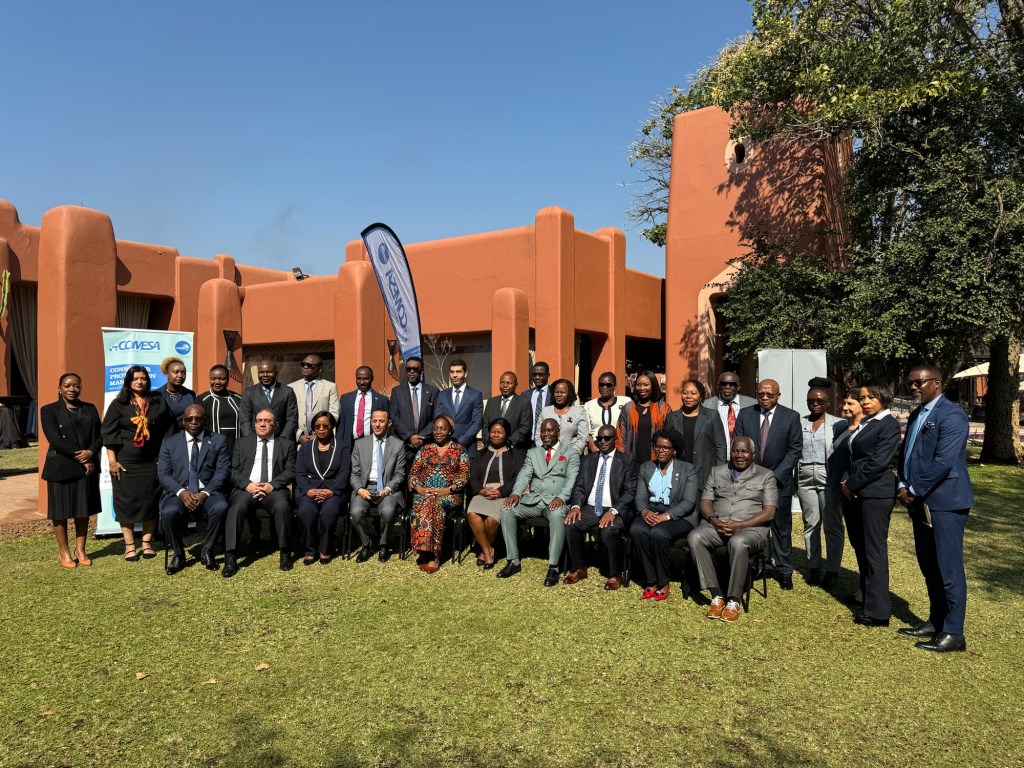
At today’s formal resumption of the recurring event, Dr. Willard Mwemba, CEO of the COMESA Competition Commission, introduced the conference session by calling out the importance of the agricultural sector to the people residing in the region, especially the very poorest of citizens.

He stated in unmistakable terms that his agency would prioritize this and related markets for heightened antitrust enforcement, to ensure the sector operates efficiently and competitively. “Accessibility (and affordability) of food is one of the most fundamental human rights. $2 per day are spent by the poorest people on average, and the majority of those two dollars is spent on food,” noted Mwemba.

Says Andreas Stargard, who attended the session, “it is clear that the view of the Commission is that agricultural markets in COMESA are not functioning as they should, based on studies the agency has undertaken with outside assistance.  The massive foodstuffs price inflation levels COMESA residents have suffered in recent years are not merely natural consequences of irreversible climate change but rather represent mostly economic profit to the manufacturers and traders, to the detriment of consumers, based on what Dr. Mwemba presented today.”

COMESA Secretary General, Chileshe Mpundu Kapwepwe, summarized the stark importance of the AG sector to the region, its people, and the economic zone in sobering statistical terms: “The agriculture sector is one of the key sectors for most Member States as it contributes more than 32% to the Gross Domestic Product of COMESA, provides a livelihood to about 80% of the region’s labour force, accounts for about 65% of foreign exchange earnings and contributes more than 50% of raw materials to the industrial sector.”

In light of this crucial importance of the agricultural and food markets, food security is high on the list of action items that COMESA must address practically and effectively, she concluded.  COMESA evaluates supply and demand levels across all 21 member states to assist with market assessment and planning.

The Diplomatic Conference’s guest of honour, Zambian Minister of Commerce, Trade and Industry, Hon. Chipoka Mulenga, noted in prepared remarks delivered by his deputy and permanent secretary to COMESA that, while “food production must be profitable for farmers, it must not be exploitative.”

In this regard, the famous Adam Smith quote referenced by Dr. Mwemba at a prior antitrust session comes to mind: “It is not from the benevolence of the butcher, the brewer, or the baker that we expect our dinner, but from their regard to their own self-interest. We address ourselves not to their humanity but to their self-love, and never talk to them of our own necessities, but of their advantages.”

Beyond the immutable wisdom of the Wealth of Nations from two and a half centuries ago, the (1) CCC’s increased competition law enforcement in the agricultural and food sectors, as well as (2) national member states are assisting the effort of ensuring wide and secure availability to all COMESA residents by creating and strengthening cross-border value chains in the food sectors with overlaps across member state borders, the Zambian minister observed.

Sweeping Inquiry Sheds Light on Online Intermediation Platforms: Competition, Opportunity, and the Road Ahead

By Tyla Lee Coertzen and Nicola Taljaard

On 31 July 2023, the South African Competition Commission (“SACC”) released its Final Report and Decision on the Online Intermediation Platforms Market Inquiry (“OIPMI”). The OIPMI was initially launched on 19 May 2021 and after a number of requests for information, public hearings, expert reports as well as comments and engagements with stakeholders, the SACC’s findings and recommendations have finally been concluded.

The SACC is empowered to conduct market inquiries according to section 43B(1)(a) of the Competition Act 89 of 1998 (as amended) where it has reason to believe that there are market features that may impede, distort or restrict competition in a particular market; or to achieve the objects and purposes of the Act (including participation of small and medium enterprises (“SMEs”) and historically disadvantaged persons (“HDPs”).

The Inquiry: A Timeline of Discovery and Discernment

  • May 2021: The kick-off. Release of the Statement of Issues (SOI), first round of Requests for Information (RFIs), and business user survey.
  • August 2021: Heating up with the release of the Further Statement of Issues (FSOI), second round of RFIs, and a refined business user survey.
  • November 2021: The public had their say with hearings and follow-up RFIs.
  • February 2022: Expert reports and in-camera hearings added a new dimension.
  • July 2022: Provisional Inquiry Report was published, provisional findings, and recommendations were made public.
  • August to December 2022: A flurry of submissions, stakeholder engagements, and follow-up RFIs.
  • January to July 2023: Engaging stakeholders on final findings and remedial actions, sealing the deal.

What Does It All Mean?

These findings focus on the various platform categories, including the mammoth influence of Google Search. The full extent of these actions requires deep exploration, but one thing is clear: the landscape of online intermediation platforms is about to shift.

During the launch of the OIPMI, the Minister Patel of the Department of Trade, Industry and Competition (“DTIC”) commended the SACC for its great effort and the high-quality product produced in the form of the OIPMI. He further noted that the government should consider taking an inclusive response to the findings and recommendations in the OIPMI.

The findings concluded, inter alia, that Google Search is vital as a means for consumers to access all platforms, and that its paid search alongside free results business model is disproportionately advantageous to larger and more established platforms. It also found that Booking.com’s practice of restricting hotel prices on certain online networks results in a restriction of competition and allows it to make more commission by making users reliant on it. eCommerce giant, Takealot, was found to have a conflict of interest due to its retail department competing with its marketplace sellers and causing detriment to the latter. Google Play and the Apple App stores were found to charge exorbitant fees to developers and on a global level, the platforms hampered the visibility of SA-paid apps. Food delivery platforms Uber Eats and Mr D Food were found to cause difficulty to their competitors because of the lack of openness regarding the surcharges charged on menus across their platforms, as well as the limitations put on national chain franchisees. Property advertisement platforms Property 24 and Private Property were further found to have hindered their competitors by providing low interoperability to competitors in respect of listings. Property 24, together with AutoTrader and Cars.co.za were also found to have hampered small estate agents and car dealers due to the discriminatory pricing implemented by these platforms.

To combat the effects of the findings, the SACC recommended the imposition of a number of remedial actions including consumer-aiding search filters, marketing incentives to purchase local goods, the removal of restrictive pricing clauses, the segregation of internal (competing) divisions, the removal of automatically directing mechanisms to larger players, disclosure clauses to consumers and other benefits to SMEs, HDPs and consumers.

All platforms will be provided a period within which to affect the remedial actions.

A New Chapter: Where Do We Go From Here?

This OIPMI hasn’t just been about pointing fingers and exposing flaws. It’s about shaping the future of a wide range of the economy. The implications are broad, affecting everyone from big tech to the small business owner striving to make a mark in a competitive world.

Michael-James Currie, Partner at Primerio, noted “The recommendations of the OIPMI are far reaching for online platforms. Regulators need to ensure that we do not undermine those who are growing and providing significant investment the digital market in a highly competitive market where firms are competing not only with established traditional retailers but also large international players. Likewise, South Africa cannot afford to signal to international players that their business models will be substantively undermined once they establish themselves in South Africa. This is particularly so if the Commission’s remedies are not informed by objective competition concerns.”

Important Regulations recently published by the Department of Trade Industry and Competition to prepare for the upcoming release of the SACC’s final recommendations in respect of its various market inquiries.

By: Gina Lodolo

By way of background, the Competition Amendment Act 18 of 2018 (“Act”) included amendments to the powers of the South African Competition Commission (“SACC”) in respect of market inquiries.  In terms of the amended Section 43C of the Act, should the SACC find that there are features which have an adverse effect on competition, with particular regard to the “impact of the adverse effect on competition on small and medium businesses, or firms controlled or owned by historically disadvantaged persons”, the SACC must make recommendations, which will mitigate the adverse effects on competition.  The SACC’s remedial powers include, most notably under Section 43D(2) read with Section 60(2)(c), that the SACC can make a recommendation to the Competition Tribunal to order a divestiture in relation to such an adverse effect on competition identified in the market inquiry.

On 24 May 2023, the Minister of Trade, Industry and Competition published regulations titled ‘Regulations relating to appeals arising from market inquiries before the Competition Tribunal in terms of section 43F and Regulations relating to a divestiture recommendation by the Commission in terms of Section 43D(2) of the Competition Act, No.89 of 1998, as amended’ (“Regulations”), which took effect upon publication thereof, to govern the procedure that the SACC must follow when making such a recommendation to the Competition Tribunal to order a divestiture following a market inquiry, together with the rules for appealing a decision made by the SACC emanating from a market inquiry.  In this regard, where the SACC concludes in a market inquiry that a divestiture be recommended to the Competition Tribunal to make such an order, the SACC must file a notice of motion and affidavit providing:

  1. grounds for the recommendation;
  2. material facts;
  3. the law relied on by the SACC; and
  4. provide reasons for the divestiture being reasonable and practical.

The respondent will be provided with an opportunity to oppose the recommendation to the Competition Tribunal.

In respect of appealing a recommendation by the SACC emanating from a market inquiry, any person that is materially and adversely affected by a decision of the SACC in respect of remedial action taken by the SACC to remedy an adverse effect on competition, may appeal the decision by filing a Notice of Appeal. The Notice of Appeal must be filed within 25 business days after the affected organisation has received a notice from the SACC of the decision. While the evidence in the appeal will usually be confined to the market inquiry record, the Regulations do provide a number of exceptions.

The Regulations provide that the Notice of Appeal must contains the following:

‘(a) the determination or decision that is the subject of the appeal;

(b) whether the whole or part of the determination or decision is the subject of the

appeal;

(c) if only part/s of the determination or decision are being appealed against, which

part/s of the determination or decision are the subject of the appeal;

(d) the grounds on which the appeal is based; and

(e) the relief sought.’

For the full process governing the appeal, see here.

These Regulations are vital to be cognisant of as the SACC is currently in the process of undergoing various market inquiries, including the Fresh Produce Market Inquiry, the Media and Digital Platforms Market Inquiry, the South African Steel Industry Market Inquiry and most notably the Online Intermediation Platform Market Inquiry which is due to be completed on 30 June 2023 (after an extension was recently granted for the SACC to finalise the report and draft remedial actions and recommendations).

Primerio director, Michael-James Currie says given the SACC’s broad remedial powers following the conclusion of a market inquiry, coupled with a very different competition test to be used in market inquiries than the traditional SLC test, is likely to result in various market participants utilising the appeal procedures in the near future.

Competition Commission Releases Online Intermediation Platform Market Inquiry Provisional Summary Report

By Nicola Taljaard

On 13 July 2022, the South African Competition Commission (“Commission”) released a Provisional Summary Report (“Report”) on the Online Intermediation Platforms Market Inquiry (“OIPMI” or “Inquiry”) which was initiated on 19 May 2021. The Commission initiated the Inquiry following reason to believe that certain features of the online intermediation platforms market could be impeding, distorting or restricting competition.

The Commission placed specific emphasis on getting small and medium enterprises (“SMEs”) and historically disadvantaged persons (“HDPs”) to participate in the relevant markets, and premised the Inquiry on the following competition and public interest considerations in relation to market features:

  • Hampering competition between the actual platforms;
  • Hindering competition between business users or undermining consumer choice;
  • Giving rise to abusive treatment of business users; and
  • Which may have disadvantageous impacts on the ability of SMEs and/or HDPs to participate in the market.

The Commission further noted a lack of participation by HDPs as a common thread which prevails in the online intermediation platforms market, which seems to languish in an untransformed state relative to the broader South African economy.

The remedial action proposed in the Inquiry ranges in severity based on the impacts which the market features have on competition, particularly in relation to SMEs or HDPs. The leading platforms on which the remedial actions are proposed are the Apple App and Google Play stores, Takealot, Property 24 and Private Property, Autotrader and Cars.co.za, Booking.com and Airbnb, Mr. Delivery and UberEats, and Google. Although the Commission did not consider it necessary to enter a dominance inquiry, it did remark that these platforms show features of dominance when considering their positions in the respective markets.

In addition to the more general constructive proposals, the Commission also suggests provisional remedies which are more robust, including against Google, stating that it plays an integral role in how consumers interact with relevant platforms. In this regard the Commission intends to further its inquiry into the viability of keeping Google Search as the default search on mobile devices in South Africa.

The OIPMI came to the provisional conclusion that the digital economy is deficient in relation the country’s transformation goals and deviates significantly from the transformation trends of other traditional industries. The lack of transformation in most of the industries investigated as part of the intermediation platforms continues to display major barriers to entry for HDP entrepreneurs. This conclusion is particularly pertinent in light of the ever-widening digital divide.  

The Commission has made all of the documents and public submissions in relation to the Inquiry, as well as the Summary Report (which can be accessed here) available on its website. The public has six weeks within which to submit comments to the Summary Report, after which the Inquiry body has committed to consider the views and incorporate changes, where appropriate, to the final report and findings which will be released in November 2022.

Online Intermediation Platforms Market Inquiry: Call for Comments

By Jemma Muller & Gina Lodolo / edits by Charl van der Merwe

The South African Competition Commission (SACC) indicated its intent to formally initiate a market inquiry in the Online Intermediation Platforms Market (Inquiry), in terms of section 43B(1)(a) of the Competition Act 89 of 1998 (as amended) (Competition Act).

In terms of the amended Competition Act, the SACC has the power to conduct a market inquiry at any time, “if it has reason to believe that any feature or combination of features of a market or any goods or services impedes, distorts or restricts competition within that market.

The SACC published its draft Terms of Reference (ToR), allowing members of the public until 12 March 2021 to submit their comments on the scope of the Inquiry.

The ToR envisage a limited scope of assessment, to include only online intermediation services and, in particular, eCommerce marketplaces; online classifieds; travel and accommodation aggregators; short term accommodation intermediation; food delivery; app stores (with the notable exclusion of ‘fintech’).

The Inquiry will be focused on both competition and public interest factors and will aim to consider:

  • market features that may hinder competition amongst the platforms themselves;
  • market features that give rise to discriminatory or exploitative treatment of business users; and
  • market features that may negatively impact on the participation of SMEs and/or HDI owned firms

According to the SACC in the ToR, these platforms have been flagged as they have the potential to self-preference and distort markets through algorithms, which is harmful to businesses who rely on these platforms to reach consumers.

The Inquiry follows shortly on the back of the SACC’s “Competition in the Digital Economy” report (Report), which was published for public comment in the final quarter of 2020. In the Report, the SACC specifically identified market inquiries are an effective tool to address market barriers (especially for Small Medium Enterprises (SME) and historically disadvantaged individuals (HDP)) and to address market feature concerns which may lead to reduced competition.

Allied to this, the ToR goes on to state, in support of the Inquiry, that the use of intermediation services can provide a manner of entry into a market for SMEs/ HDPs, but due to the potential distortions of the market, may also discriminate against them. As a result of the COVID-19 pandemic, domestic online business opportunities are vital in ensuring economic recovery as well as inclusive growth of SMEs and HDPs.

The Inquiry will be the first inquiry in terms of the Competition Act as amended. In this regard, the amended Competition Act empowers the SACC to “take action to remedy, mitigate or prevent the adverse effect on competition”.  This includes imposing structural or behavioural remedies.

It is also notable that the standard of assessment for market inquiries is a lower standard that that required in complaint proceedings. The SACC need only find that certain elements of the market may have “adverse effect on competition” (as opposed a substantial lessening of competition).

In light of these facts, firms in the relevant market cannot afford to remain passive participants in market inquiries and, instead, must consider and respond to the inquiry, as a respondent.

South African Market Inquiries: What Lies Ahead and is it Justified?

By Michael-James Currie

The South African Competition Commission (SACC) recently announced that it will be conducting market inquiries into both the Public Passenger Transport sector (Transport Inquiry) as well as investigate the high costs of Data (Data Inquiry).

These inquiries are in addition to the SACC’s market inquiries into the private healthcare sector and grocery retail sector (which are still on-going) and the recently concluded LPG market inquiry.

There are mixed feelings about the benefits of market inquiries in South Africa. Market inquiries are extremely resource intensive (both from the SACC’s perspective as well as for the key participants in the inquiry) and the outcomes of the inquiries which have been concluded (including the informal inquiry in the banking sector) are lukewarm at best. There is little evidence available which suggests that the resources incurred in conducting market inquiries in South Africa are proportional to the perceived or intended pro-competitive outcomes.

Leaving aside this debate for now, the SACC’s most recent market inquiries are particularly interesting for a variety of additional reasons.

Firstly, in relation to the Transport Inquiry, the Terms of Reference (ToR) set out the objectives and the key focus areas of the inquiry. In this regard, the ToR indicate that pricing regulation is one of the key factors which allegedly creates an uneven playing field between metered taxis for example and app-based taxi services such as Uber.

It should be noted that the metered taxi association of South Africa had previously and unsuccessfully submitted a complaint to the SACC against Uber for alleged abuse of dominance. The success of Uber in South Africa has widely been regarded as pro-competitive.

Both prior and subsequent to the complaint against Uber, however, an overwhelming number of metered taxi drivers (both legal and illegal) have resorted to deliberate violent tactics in order to preclude Uber drivers from operating in key areas (i.e. at train stations). In fear of having themselves, their passengers and their vehicles harmed, many Uber drivers oblige. It would be most interesting to see how the SACC tackles this most egregious forms of cartel conduct, namely market allocation (albeit entered into under duress).

Over and above the ‘metered taxi v Uber’ debate, there are additional issues which the Transport Inquiry will focus on – including alleged excessive pricing on certain bus routes, regulated route allocation and ethnic transformation within the industry.

What will likely become a topic (directly or indirectly) during the Transport Inquiry are the allegations, as African Antitrust (AAT) had previously reported, that ‘the “taxi and bus” industry is riddled with collusive behaviour. In light of the fact that most of South Africa’s indigent are fully dependent on taxis for transportation in South Africa and spend a significant portion of their disposal income on taxi fees, this is an issue which needs to be addressed urgently by the competition agencies by acting “without fear, favour or prejudice”’.

In this regard, the ToR indicates that “between 70% and 80% of the South African population is dependent on public passenger transport for its mobility”. The majority of these individuals would make use of ‘minibus taxis’.

The Transport Inquiry ToR do not mention this seemingly most blatant violation of competition law principles and it remains to be seen to what extent the SACC’s is prepared to investigate and assess hardcore collusion in the industry.

In relation to the second market inquiry, the SACC will also conduct an inquiry in relation to the high data costs in South Africa.

The High costs of data in South Africa seems to be key issue from the government’s perspective and the Minister of Economic Development, Mr Ebrahim Patel called for the SACC to conduct an inquiry into this sector. Further, the high costs of data in South Africa seems so important to economic growth and development that the Minister of Finance, Mr Malusi Gigaba, not only echoed Minister Patel’s calls for a market inquiry into high data costs, but identified such a market inquiry as part of his ‘14 point action plan’ to revive the South African economy.

Given that the three formal market inquiries which the SACC has commenced with to date have, only one (the LPG inquiry) has been finalized. Even the LPG inquiry took nearly three years to conclude. The private healthcare inquiry and the grocery retail inquiry which commenced in 2014 and 2015 respectively, still seem someway off from reaching any finality.

The length of time taken to conclude a market inquiry is, however, not the end of the matter from a timeline perspective. Following a market inquiry, recommendations must be made to Parliament. These recommendations may include legislative reforms or other remedies to address identified concerns with the structure of the market. Parliament may or may not adopt these recommended proposal.

Accordingly, it seems unlikely that from the date a market inquiry commences, that there will be any pro-competitive gains to the market within 5-7 years. That is assuming that the market presents anti-competitive features which can be remedies through legislative reform

While there appears to be consensus among most that data costs in South Africa are disproportionately high when compared to a number of other developing economies, the positive results envisaged to flow from a market inquiry is not only difficult to quantify, but will only be felt, if at all, a number of years down the line. Hardly a first step to revive the economy on a medium term outlook (let alone the short term).

Furthermore, and entwined with the SACC’s market inquiry into Data Costs, is that the Independent Communications Authority of South Africa (“ICASA”) decided to also conduct a market inquiry into the telecommunications sector, which includes focusing on the high costs of data.  ICASA has indicated that it will liaise with other regulatory bodies including the SACC.

It is not clear what level of collaboration will exist between the SACC and ICASA although one would hope that due to the resource intensive nature of market inquiries, there is minimal duplication between the two agencies – particularly as their objectives would appear identical.

As a concluding remark, absent evidence which convincingly supports the beneficial outcomes of market inquiries in South Africa, perhaps a key priority for the authorities is to conclude the current inquiries as expeditiously as possible and conduct an assessment of the benefits of market inquiries (particularly in the manner in which they are presently being conducted), before initiating a number of additional market inquiries.

The Big Picture: Market-Sector Inquiries in Africa

AAT the big picture

Market Inquiries in Africa – An Overview

By AAT guest author, Michael-James Currie.

Most African jurisdictions with competition laws have included provisions in their respective legislations that allow the competition authorities to conduct market inquiries.

Market inquiries have proved to be useful tools for competition agencies in numerous jurisdictions, particularly in Europe, and is becoming a common and increasingly popular tool amongst an number of African agencies as well.

Despite the benefits that may flow from a market inquiry, it is important that competition agencies appreciate and have due regard to the costs associated with such inquiries. Market inquiries are very time consuming and onerous for market participants and should be used sparingly. Having said that, the focus of market inquiries in most African jurisdictions tend to be on markets which the relevant authorities have identified as having a large impact on consumers.

In other words, socio-economic considerations appear to be a significant factor during the screening process used in deciding whether to institute a market inquiry. Sectors such as food, healthcare and banking (at an individual consumer level) are some of the common industries which have been ‘prioritised’ or identified as important sectors.

While the number of market inquiries which have been concluded on the African continent is limited, as competition agencies gain more expertise and confidence in their mandates, there is likely to be a significant increase in the number of market inquiries instituted and firms conducting business in Africa, particularly within ‘priority’ sectors, should be cognisant of this.

We set out below a brief overview of the market inquiries which are currently being conducted in the various African jurisdictions.

South Africa

There are currently three market inquiries which are underway, one into the private healthcare sector and the other into the grocery retail market. The third market inquiry is in the liquefied petroleum gas sector.

The private healthcare inquiry was launched on the basis that cost of private health care in South Africa is a concern to the competition authorities. A revised statement of Issues for public comment was announced on 11 February 2016 and comments are to be submitted by 11 March 2016.

The grocery retail inquiry is focussed largely on the stricture of the market and the ability of smaller or informal retailers to compete, but will also address issues such as “long term lease” clauses (which has already been adjudicated upon by the Competition Tribunal).

The third market inquiry is into the LPG which was launched in August 2014 is expected to conclude in March 2016.

The only previous market inquiry concluded in South Africa was into the banking sector. This inquiry was conducted on an informal basis as there were no formal legislative powers bestowed on the competition authorities to conduct market inquiries.

Swaziland

The Swaziland Competition Commission (SCC) announced in January 2016 that a market inquiry has been launched into the retail banking sector. The SCC stated that retail banking service offered to consumers, micro and medium enterprises remained the most important sub-sector of banking. It is, however, the ‘current account’ which is the central product to be used as the starting point for the inquiry.

Zambia

On 1 February 2016, the Zambian Competition Authority (CCPC) announced that it will be conducting a market inquiry into the vehicle towing industry. While the CCPC indicated that it wishes to understand the “conditions of competition in the market”, although the inquiry came about as the CCPC had received numerous complaints from consumers that emergency towing operators were charging high prices. It remains to be seen whether this inquiry is focused predominantly on competition-law issues, or rather consumer-protection laws.

Botswana

The Competition Authority in Botswana (CA) is currently underway with a market inquiry into the grocery retail sector, focusing on shopping malls and in particular, the impact of long term exclusivity leases on competition in the market.

COMESA

Consistent with the competition authorities of South Africa and Botswana, the COMESA Competition Commission (“CCC”) has also launched an investigation into the impact that shopping malls have on competition. The CCC announced that it will carry out their inquiry by taking samples from the member states.

We have previously published articles on the announcement of this market inquiry on AAT which can be accessed by clicking on the following link: https://africanantitrust.com/category/market-study/

Second market inquiry focuses on energy sector (LPG)

south_africa

“Highly regulated” liquefied petroleum gas at center of second sectoral Commission inquiry

According to the South African Competition Commission, the agency has issued “Terms of Reference for the market inquiry into the Liquefied Petroleum Gas sector”:

The Commission has today issued the Terms of Reference (ToR) for the LPG market inquiry. The ToR formally launches and outlines the scope of the inquiry.
The Commission is initiating the inquiry because it has reason to believe that there may be features of the sector that prevent, distort or restrict competition. The Commission hopes that the inquiry will assist in understanding the state of competition in the LPG sector.

It comes on the heels of the first market inquiry into private healthcare, on which AAT has reported extensively.

The full Terms of Reference are available online here.  The market inquiry is expected to begin this month and is expected to be completed by October 2015.

According to the Terms of Reference, the objectives of the market inquiry include:

  • Analyzing the current regulatory pricing framework with the aim of determining whether regulation could be improved in order to limit the exercise of substantial market power by market participants;
  • Examining whether the supply bottlenecks in the liquefied petroleum gas industry may serve to create circumstances or incentives that serve to distort, prevent or lessen competition;
  • Determining whether features currently prevalent in the market increase costs of switching to a prohibitive level when customers seek to switch between resellers of liquefied petroleum gas;
  • Assessing the extent of the barriers to entry and general competition dynamics at various levels of the supply chain within the industry; and
  • Making recommendations that may serve to improve the state of competition.

The Commission has identified the participants in the market inquiry process as including business enterprises within the liquefied petroleum gas chain, such as manufacturers, wholesalers, distributors and retailers, other related enterprises, end-users, government departments, public entities, regulatory authorities, industry associations and any other stakeholders that may be able to provide information relevant to the market inquiry.

BDLive reports that approximately “300,000 tons of LPG is manufactured in SA annually, generating turnover of about R1.5bn. Six refineries, Sapref, Sasol Synfuels, PetroSA Synfuels, Enref, Chevref and Natref produce and supply LPG.

Major resellers such as Afrox, Easigas, BPSA and Total Gas distribute it bulk or in a repackaged form. Afrox, Easigas and Sapref also imported at least 6,100 tons of LPG through facilities in Richards Bay, Port Elizabeth and Durban.”

The Gambian take on the benefits of market studies

the_gambia

The Gambian Competition Authority’s commitment to investigating all prohibited practices in markets of any size

Shortly after the renaming of The Gambia Competition Commission to include consumer protection issues earlier this year, the Gambian Minister of Trade, Integration and Employment, Abdou Kolley, endorsed the ability of The Gambia Competition and Consumer Protection Commission (“GCCPC”) to continue pursuing any evidence of cartels, abuses of dominance and other illegal anti-competitive activities in any sector of the economy, as mandated by the the Competition Act 2007.


Minister Kolley

In its Strategic Plan over the next 3 years, the GCCPC indicates that it purposefully did not identify any priority sectors, to allow it to commit to investigating prohibited practices regardless of the market or its size. The Minister endorsed this approach given the need for independent agencies like the GCCPC to ensure that the competition playing field is leveled, that barriers to entry are low and that “the rules of the game” are reasonable. The Minister continued that simply having competition regime cannot produce or ensure competition in the market unless this is facilitated by government policies and enforcement.

Sectoral Market Inquiries: As in South Africa, whose Competition Commission has launched its first-ever market inquiry into the state of competition in the healthcare sector in terms of the Competition Amendment Act of 2009, the GCCPC is also empowered to launch “market studies” under section 15(k) of the Gambian Competition Act. A market study enables the GCCPC to consider both policies and enforcement simultaneously, thereby promoting competition in the economy, according to the Minister. The Minister explained that the aim of the market study was to assess competition in a particular area and recommend ways of improving it to the benefit of the economy and consumers in general.

As noted in our prior reporting, the Minister spoke at the opening of a workshop on the “Tourism Market Study” and to bring the concept of competition law closer to home, he placed emphasis on the increasing awareness about competition law within the tourism fraternity, forums such as the workshop will contribute substantially to the spread of competition culture and improving levels of compliance of the Competition Act, which would be beneficial both for the economy as well as individual businesses.

Gambian competition enforcer discusses tourism market inquiry

Gambia in the antitrust headlines twice in past week

7 days ago, it made news because of its changed name and dawn of a broader enforcement agenda, now including consumer protection matters.  Today, we are covering meeting by Gambia Competition and Consumer Protection Commission (GCCPC) with tourism industry stakeholders, as reported by AllAfrica.

Abdou Kolley, Minister of Trade and Employment, gave a Tuesday speech addressing his competition agency’s tourism market study, undertaken according to section 15(k) of the Competition Act, attempting to garner support for the benefits of free-market competition.  “Competition does not emerge on its own”, noting that the GCCPC’s enforcement and oversight activities were necessary to lower entry barriers and assure the absence of illegal price-fixing and other illicit conduct.

“The GCCPC is mandated by the competition Act 2007 to pursue any evidence of cartels, abuses of dominance and other illegal anti-competitive activities in any sector of the economy and I am confident that they will continue to do so.”

Minister Kolley

The Director General of the Gambia Tourism Board, Benjamin Robert, was quoted as agreeing with the minister, saying that the GCCPC’s report was “timely” and noted that the domestic tourism industry possessed certain characteristics of dominance in some sectors, with over 50% market share by some market players.