‘Antitrust-Adjacent’: Kenya’s Artificial Intelligence Bill, 2026: Building a Practical and Coherent Framework for AI Regulation and Governance

In this new series, entitled “Antitrust-Adjacent,” AAT covers relevant developments of interest & adjacent to competition-law issues. Our first installment on AI Regulation is co-authored by Kenya Primerio Partner Fidel Mwaki and Alfred Nyaga.

By Fidel Mwaki & Alfred Nyaga

Introduction
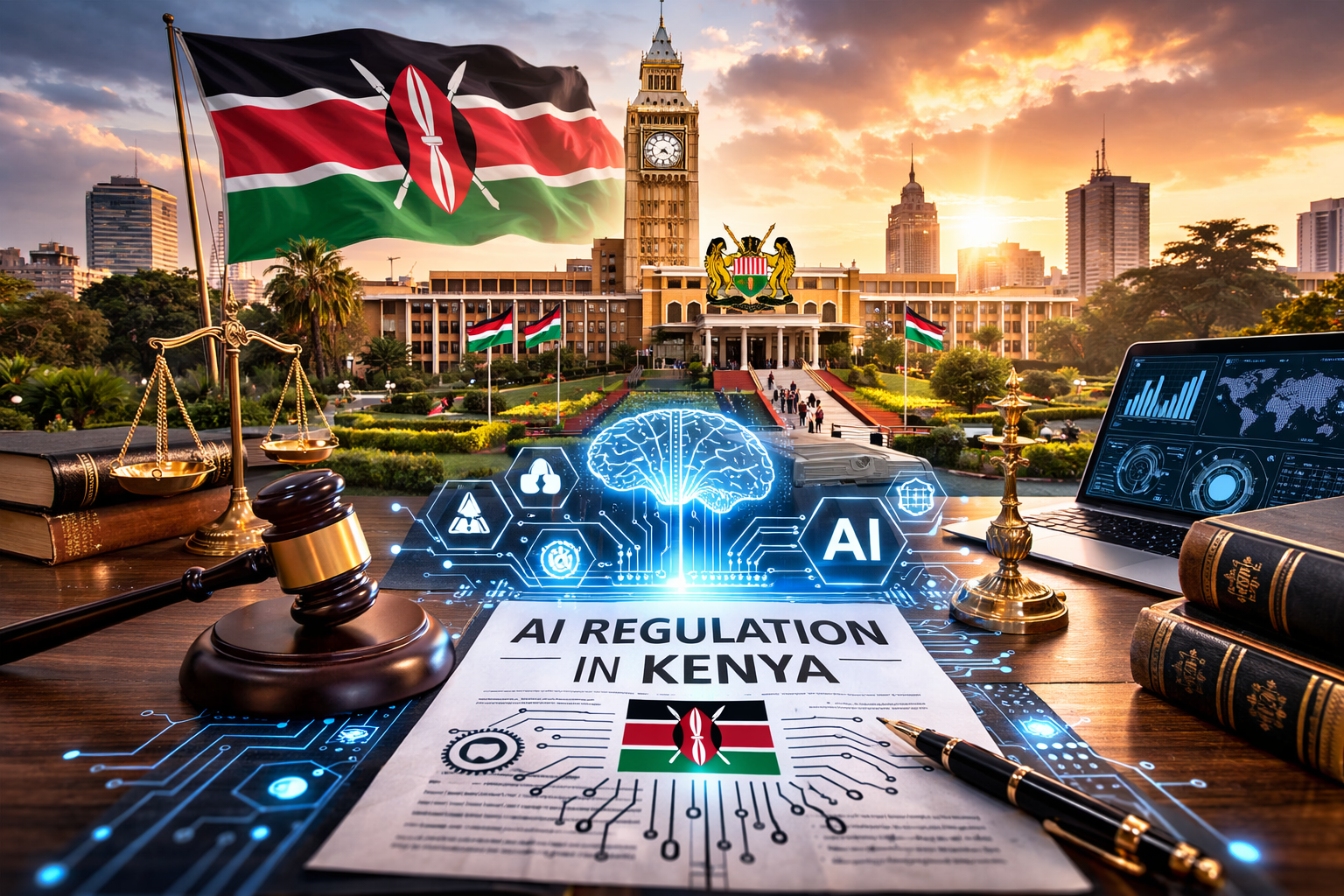
Artificial Intelligence (AI) is rapidly reshaping Kenya’s digital economy. From financial services and telecommunications to healthcare, logistics and digital platforms, AI systems increasingly underpin critical decision-making and service delivery across both the public and private sectors.

The introduction of Kenya’s Artificial Intelligence Bill, 2026 (the Bill) marks a significant milestone as the country seeks to articulate a comprehensive regulatory and governance framework for AI.

However, as Kenya moves toward formalising this framework, several foundational questions arise. Does the Bill effectively regulate AI systems? How should institutional oversight be structured? What would a practical regulatory model look like in the Kenyan context? And what governance architecture is required to ensure responsible, transparent and innovation-friendly deployment of AI?

Key Recommendations for Policymakers and Industry

To strengthen the effectiveness and practicality of Kenya’s Artificial Intelligence Bill, 2026, the following considerations may be useful:

  1. Establish clear and operational risk classification criteria


Define objective and measurable criteria for determining what constitutes a high-risk AI system. This should enable developers and deployers to assess compliance obligations at the design stage and reduce regulatory uncertainty.

  • Introduce a framework for general-purpose AI (GPAI) models


Recognise the growing role of GPAI models as foundational infrastructure and consider tailored obligations around transparency, accountability and safe deployment.

  • Adopt a sector-sensitive regulatory approach


Different sectors present different AI risks. The framework should enable coordination with sector regulators such as finance, telecommunications and healthcare to ensure context-specific oversight.

  • Clarify liability and accountability across the AI lifecycle


Establish a clear allocation of responsibility between developers, deployers and users of AI systems, particularly where systems are used in decision-making with real-world consequences.

  • Strengthen institutional coordination mechanisms


Provide clear guidance on how the proposed AI Commissioner will coordinate with existing regulators, including the ODPC, CA, CBK, CAK and other sector bodies, to avoid duplication and regulatory fragmentation.

  • Provide for independent oversight and audit mechanisms


Introduce provisions for AI audits, documentation standards and oversight processes, particularly for high-risk systems and sensitive applications.

  • Embed flexibility through phased and adaptive regulation


Allow for the framework to evolve through secondary regulations, guidelines and regulatory sandboxes, ensuring responsiveness to technological developments without creating uncertainty.

These measures would help ensure that Kenya’s AI regulatory framework is practical, coordinated and capable of supporting both innovation and responsible deployment.

Understanding the Regulatory Gaps: Does the Bill Effectively Regulate AI Systems?

The Bill places considerable emphasis on high-risk AI systems. While this approach mirrors developments in jurisdictions such as the European Union, it is not immediately clear how developers or deployers are expected to determine whether an AI system falls within that category.

In practice, this classification becomes one of the most important compliance questions for organisations building or deploying AI systems. Without clear and predictable criteria, organisations may struggle to assess their obligations. This uncertainty has the potential to affect both compliance and innovation.

Equally important is the treatment of AI systems that fall outside the high-risk category. AI technologies can generate meaningful societal and economic risks even where they are not formally classified as high risk. Issues such as misinformation, manipulation, algorithmic bias and systemic economic disruption may arise from such systems.

The Bill also appears to focus significantly on public sector deployment of AI systems, yet much of the development and deployment of AI in Kenya currently occurs in the private sector. Industries such as financial services, telecommunications, logistics and digital platforms already rely heavily on AI-driven systems. A balanced regulatory approach should therefore account for both domains.

A further gap is the absence of a clear framework addressing general-purpose AI (GPAI) models, including systems capable of generating text, code, images and other forms of content. These models increasingly serve as foundational infrastructure for a wide range of downstream applications and may require tailored regulatory treatment.

Globally, regulators are beginning to address these issues more directly. The EU AI Act introduces detailed risk classification frameworks and obligations for developers and deployers of high-risk systems, while also addressing GPAI models. China’s evolving regulatory framework similarly addresses algorithmic transparency, registration of AI deployers and security assessments prior to deployment.

The Governance Question: How Should AI Oversight Be Structured?

The Bill introduces an important institutional feature through the establishment of an AI Commissioner, tasked with overseeing AI development and deployment, monitoring compliance and issuing guidance on the responsible use of AI technologies in Kenya.

The creation of a dedicated oversight authority reflects an important recognition that AI presents regulatory challenges that extend beyond traditional legal frameworks.

However, the Bill raises a broader governance question: how should this oversight function interact with Kenya’s existing regulatory institutions?

Kenya already has several regulators whose mandates intersect with AI governance, including the Office of the Data Protection Commissioner (ODPC), the Ministry of ICT and Digital Economy, the Communications Authority of Kenya (CA), the Kenya Bureau of Standards (KEBS), the Competition Authority of Kenya (CAK), the Central Bank of Kenya (CBK), and various sector-specific regulators.

The Bill does not yet clearly define how the proposed AI Commissioner will coordinate with these institutions. In practice, effective governance of AI will require structured collaboration across multiple regulators rather than reliance on a single oversight authority.

There are also broader concerns around transparency and accountability across the AI lifecycle. AI systems typically involve multiple actors, including developers, deployers and organisations relying on system outputs. A coherent framework must therefore clearly allocate responsibility when AI systems produce harmful or unintended outcomes.

In addition, several aspects of operational governance are left to future regulations. These include independent AI audits, organisational governance frameworks, model transparency requirements and coordination mechanisms. While this approach provides flexibility, it also means that the governance architecture remains only partially defined at the legislative stage.

Designing a Practical Regulatory Framework for Kenya

These gaps point to a broader question: what would a practical and workable AI regulatory framework look like in the Kenyan context?

AI regulation globally is still evolving. Jurisdictions such as the European Union, China and Singapore are adopting different approaches, creating an opportunity for Kenya to design a framework that reflects both international best practice and local priorities.

A practical regulatory framework would benefit from several structural elements:

  1. A clear and predictable risk classification approach


Regulatory obligations should be tied to well-defined categories, enabling developers and deployers to assess their obligations at the design stage and reducing uncertainty.

  • Recognition of general-purpose AI models


These systems increasingly function as foundational infrastructure and may require tailored transparency, accountability and safety obligations.

  • Sector-sensitive regulation


Algorithmic risks vary significantly across industries, and systems deployed in sectors such as healthcare, financial services or critical infrastructure raise different regulatory concerns. Coordination with sector-specific regulators will therefore be necessary.

  • Clear allocation of responsibility across the AI lifecycle


AI systems often involve multiple actors, and a coherent framework must assign responsibility across this lifecycle to prevent regulatory gaps.

  • Building an Effective Governance Architecture for AI Oversight

Beyond identifying the governance gaps in the Bill, a key question is how Kenya can structure an effective and coordinated AI governance architecture in practice.

The introduction of an AI Commissioner is an important step toward institutionalising AI governance. However, effective oversight will require more than the creation of a single regulatory office.

AI intersects with multiple regulatory domains, including data protection, financial regulation, competition policy, communications regulation and consumer protection. Governance of AI systems will therefore require coordination across multiple institutions.

Organisational transparency and accountability will also be critical. As organisations increasingly rely on AI in decision-making, internal governance structures such as AI risk frameworks, audit mechanisms and oversight committees may become necessary.

At the same time, governance frameworks must ensure that regulation does not unintentionally discourage innovation. Mechanisms such as regulatory sandboxes and collaborative oversight models may help strike a balance between risk management and technological development.

Conclusion

Kenya now stands at a defining moment in shaping its AI regulatory and governance framework. The Artificial Intelligence Bill, 2026 provides an important starting point. However, its effectiveness will ultimately depend on whether the regulatory and governance framework is sufficiently clear, coordinated and capable of evolving alongside technological development.

The framework will need to reflect Kenya’s economic context and development priorities, while drawing from comparative approaches where relevant.

As the Bill moves forward, the upcoming public participation process presents an important opportunity for policymakers, technologists, legal practitioners and industry stakeholders to engage constructively with these issues and help shape a framework that supports both innovation and the responsible deployment of AI in Kenya.

  • Fidel Mwaki is the Managing Partner of FMC Advocates LLP (Kenya) and In-Country Partner (Kenya) at Primerio. He advises on corporate, regulatory and governance matters, with a focus on emerging issues in digital regulation and AI governance.
  • Alfred Nyaga is a Director at Digital Ethics Hub, a platform focused on shaping policy and practice in digital rights and AI regulation.
When power meets accountability: What the Directline fine signals for Kenya’s business landscape

By Michael-James Currie and Nicole Araujo

In May 2024, two Nairobi-based small and medium-sized automobile repair centres (the “garages”) lodged separate complaints with the Competition Authority of Kenya (“CAK”) against Directline Assurance Company Limited (“Directline”). The complaints alleged persistent delays in the payment of invoices for contracted repair work that had already been completed.

The complaints were supported by authorisation letters, invoices, customer satisfaction notes, and related correspondence. On this basis, the CAK initiated an investigation into the commercial relationship between Directline and the two garages to assess:

(i) whether Directline possessed superior bargaining power; and

(ii) whether such superior bargaining power, if established, had been abused.

At the time the complaints were filed, Directline owed the garages KSh 7.6 million and KSh 5 million, respectively. After the CAK initiated its investigation, Directline made partial payments to each garage. However, it did not respond to the CAK’s formal requests concerning the remaining outstanding balances of KSh 4.7 million and KSh 1.3 million.

Directline initially attributed the delayed payments to inaccessible bank accounts. While in the commercial world late payments are often downplayed as administrative hiccups, such as cash-flow challenges or temporary constraints, for small and medium-sized enterprises (“SMEs”) these delays translate into serious financial and operational strain. CAK Director-General David Kemei stressed that the misuse of buyer power can devastate small businesses, threatening their ability to pay staff, pay suppliers, and ultimately participate fully in the economy. Such practices not only endanger individual SMEs but also undermine broader economic inclusion.

The CAK concluded that Directline had misused its superior bargaining power position to delay payments without reasonable justification. In this regard, the CAK imposed a total penalty of Ksh85 million for two counts of abuse towards the garages. The CAK additionally ordered Directline to settle the outstanding payments in full, including the remaining balances due; amend its supplier contracts to include provisions for interest on late payments and other protections for small suppliers; and cease engaging in conduct that violates the Competition Act.

While abuse of dominance cases have traditionally focused on powerful sellers, this matter highlights the growing regulatory attention on buyer power and the risks it poses to SMEs operating in highly dependent commercial relationships. Beyond the significant administrative penalty imposed, the case raises broader questions about how buyer power should be assessed, when commercial pressure crosses the line into abuse, and whether enforcement in this area adequately balances efficiency, bargaining strength, and supplier protection.

Reshuffling deck chairs in Kenya: S. Kariuki out, C. Mahinda in

Shaka Kariuki Ousted As Non-Exec CAK Chair

President Ruto has removed Shaka Kariuki as Non-Executive Chairperson of the Competition Authority of Kenya (CAK) early, instead installing Charles W. Mahinda in the role, effective December 11, 2025.

The appointment was made under Section 10(1)(a) of the Competition Act and Section 51(1) of the Interpretation and General Provisions Act and will last three (3) years.

Mr. David Kibet Kemei, by now an established face for the competition watchdog, will continue to be the Director-General of the agency.

Kenya Tribunal Upholds CAK’s Steel Cartel Sanction on Appeal

By Michael Williams

Kenya’s Competition Tribunal (the “Tribunal”) has upheld the Competition Authority of Kenya’s (the “CAK”) steelcartel decision, dismissing individual appeals brought by seven manufacturers and affirming the penalties and remedies imposed in 2023. The Tribunal rejected appeals by Tononoka Rolling Mills, Blue Nile Wire Products, Devki Steel Mills, Accurate Steel Mills, Nail & Steel Products, Corrugated Sheets and Jumbo Steel Mills, cementing the CAK’s finding of price-fixing, coordinated price adjustments and output/ import restrictions in the steel value chain. 

This ruling was handed down in two tranches: on 9 July 2025 (Accurate, Blue Nile, Devki, Nail & Steel, Tononoka) and on 11 September 2025 (Corrugated Sheets, Jumbo Steel), each time siding with the Authority. In total, the Tribunal affirmed KES 287.9 million in penalties for the seven appellants. The Tribunal further held that the CAK had afforded the parties due administrative process under Article 47 of the Constitution, the Fair Administrative Action Act and the Competition Act. 

The decision handed dawn on 15 October 2025 is a natural sequel to the CAK’s 23 August 2023 decision, when the CAK imposed record penalties of KES 338.8 million on nine steel producers for a cartel that, per the CAK, distorted construction-input pricing. Five firms reached settlements with the CAK, while the seven above pursued and have now lost their appeals. 

Notably, during the appeal phase Doshi & Company (Hardware) Ltd and Brollo Kenya Ltd concluded out-of-court settlements with the CAK, illustrating the CAK’s willingness to resolve matters via settlement and compliance undertakings, even mid-litigation. 

For context, the AfricanAntitrust 2023 coverage highlighted that the CAK’s original fines constituted the highest cartel penalties in the CAK’s history to that date, following a twoyear investigation that drew on search-and-seizure and market-intelligence evidence. With the Tribunal now endorsing the CAK’s analysis and process, the core liability findings stand, and the fine levels (for the seven appealing firms) are confirmed. 

Why this matters:

i) The Tribunal’s decisions strengthen precedent on price-fixing/ output restrictions in Kenya’s construction-inputs sector and validate CAK’s investigative toolkit and evidence assessment. 

ii) Appellants remain bound to cease collusion and implement internal competition-law compliance programmes.

iii) The CAK links steel-cartel conduct to higher housing and infrastructure costs, this outcome supports the CAK’sbroader enforcement narrative across the building materials market

The breakdown of the KES 287,934,697.83 penalties, as concurred by the Tribunal are as follows: 

Corrugated Sheets (86,979,378.53); Tononoka Rolling Mills (62,715,074.03); Devki Steel Mills (KES 46,296,001.25); Jumbo Steel Mills (KES 33,140,459.40); Accurate Steel Mills (KES 26,826,344.31); Nail & Steel Products (KES22,816,546.01); Blue Nile Wire Products (KES9,160,894.30). 

What’s next

Unless pursued further on points of law, the Tribunal’s decision bring this enforcement chapter close to closure. Penalties, compliance obligations remain, and CAK’s leniency and Informant Reward Schemes continue to beckon for future cartel detection. 

In conclusion, and by quoting the CAK’s Director-General, Mr. David Kemei, “The Tribunal’s findings affirm the CAK’s unwavering commitment to protect Kenyan consumers and businesses from the damaging effects of cartel conduct, and the veracity and completeness of our evidence-gathering, analysis and decision-making processes.”

“So Much Abuse”: Overhaul of Competition Law Shifts from ‘Buyer Power’ to ‘Superior Bargaining Position’ Abuse

AAT discusses how the Kenyan antitrust watchdog, CAK, is seeking input on its recently released draft amendments

By Joshua Eveleigh

On 28 May 2024, the Competition Authority of Kenya (“CAK”) published a request for public comment on its ‘Draft Competition (Amendment) Bill, 2024’ (the “Amendment Bill”). The Amendment Bill seeks, most notably, to broaden the scope of the Competition Act to include ‘digital activities’ and to replace the recently included ‘abuse of buyer power’ prohibition with an ‘abuse of superior bargaining position.

Digital Activities

The Amendment Bill defines ‘digital activities’ as:

the provision of a service by means of the internet, or provision of digital content, for the benefit of business consumers or other consumers (whether paid for or otherwise and whether or not such activity is multisided), and may include —

  • online intermediation services, including online marketplaces and app stores;
  • online search engines;
  • online social networking services;
  • video-sharing platform services;
  • independent interpersonal communication services;
  • operating systems;
  • cloud computing services; and
  • online advertising services”

Moreover, the new law would broaden the assessment for effects on competition or a firm’s dominance provided for in the Competition Act to include the following:

  • in the context of digital activities, where dominance can be established even with market shares below forty percent, the Authority shall consider factors that typically grant significant market position, whether they arise from the digital activity being performed in one or multiple markets;
  • direct and indirect network effects and the entry barriers arising in connection with those network effects;
  • economies of scale and scope enjoyed by the undertaking, including with regard to the undertaking’s access to data relevant for competition;
  • switching costs for users and the ability and propensity for users to multihome; and
  • competitive pressure driven by innovation;
  • the importance of the intermediary services provided by the undertaking for accessing supply and sales market, including with reference to the size of the undertaking and the number of business and individual users it has and the period over which that level of importance has been held.

Says Andreas Stargard, a partner in Primerio’s competition-law group, “[e]vidently, the CAK is joining the global trend in regulating online marketplaces and firms. Our Kenyan colleagues expect more enforcement against firms that are active within the digital space – particularly given the CAK’s focus on the online sector in its past market studies and investigations.”

The inquiries mentioned include:

Abuse of Superior Bargaining Position

The Amendment Bill also seeks to remove the ‘abuse of buyer power’ prohibition, despite it only being included subsequent to recent amendments to the Competition Act in 2019. Interestingly, this change also comes after the CAK’s recent success in enforcing the newly-implemented buyer power provision, including:

  • the CAK’s announcement that it was able to recover reneged payments worth KES38 million from twenty motor vehicle repairers and five motor vehicle assessors in favour of 1, 000 Kenyans;[1]
  • its settlement with Unilever Kenya Limited resulting in the revision of payment terms for a number of its suppliers; and
  • the High Court of Kenya’s recent finding that Majid Al Futtaim Hypermarkets Limited had abused its buyer power in respect of its commercial relationship with Orchards Limited, confirming the finding of Kenya’s Competition Tribunal.

Now, in lieu of the perhaps more narrowly perceived Buyer-Power clause, the Amendment Bill seeks to include an entirely new section 40A to the Competition Act, prohibiting the abuse of a ‘superior bargaining position’, defining it as:

“the ability of an undertaking to control, direct, define or determine the conditions of business operations with counterparties which are favourable to itself without reference to the undertaking’s dominant market position or market power in the relevant market;” (our emphasis)

While the proposed definition is clear in that a firm need not be dominant or have market power to have a ‘superior bargaining position’, the Amendment Bill provides that the CAK must consider the following factors in determining whether a superior bargaining position in fact exists:

  • the degree of dependence by the affected undertaking or undertakings on transactions with the party under investigation;
  • the position of the undertaking in the market;
  • the possibility of the affected undertaking to change its business counterpart; and
  • whether the party under investigation is an unavoidable trading partner or a critical business partner in the relevant market.

Additionally, the Amendment Bill looks to broaden the conduct which would trigger an abuse of a superior bargaining position from what is already included in what may trigger an abuse of buyer power. These additional categories include, inter alia:

  • unilateral variation of contractual terms, conditions, or other rules associated with the transaction or service without prior notification to the counterparties;
  • unreasonable collection and/or processing of data of the counterparty;
  • imposing unduly difficult conditions for the termination of service; and
  • obstruction of business activities or interference in the counterpart’s management of its business.

Notably, an abuse of superior bargaining position attracts the same penalties as the current abuse of buyer power provision, that being a period of imprisonment not exceeding five years or a fine not exceeding KES 10 million shillings, or both.

Looking Ahead

“It is clear that the CAK is looking to broaden the ambit of its enforcement initiatives. In this regard, we note that the ‘abuse of superior bargaining position’ is largely identical to the current abuse of buyer power framework. It is likely, therefore, that the CAK is looking to translate its recent success against ‘buyers’ to firms at all levels of the supply chain, irrespective of whether they in a position of supplier or purchaser,” says Mr. Stargard.

Following this approach, it appears to us that the abuse of dominance provisions in the Competition Act have been given something of a ‘downgrade’. Specifically, it is not apparent to the author why a disgruntled firm (or the investigating CAK) would rely on the existing abuse of dominance provisions (and thereby needing to actually establish a firm’s dominance) when the would-be plaintiff could rely solely on the incredibly broad superior bargaining position provision — which notably does not require a showing of dominance or market power.

We are also interested to see whether the proposed superior bargaining provision will have an ‘opening the floodgates’ type effect if and when implemented. In this regard, it appears that an economic dependence argument would be relevant in determining whether a firm has a superior bargaining position. Absent a dominance requirement, the CAK may well be inundated with complaints from disgruntled contracting parties. 


[1] CAK, Newsletter Issue No.9 (2022), at 3. Available at: https://cak.go.ke/sites/default/files/2022-06/CAK%20Newsletter%20Issue%209.pdf

Whose interest is it anyway? CAK stresses ‘public interest’ in merger control

Competition Authority of Kenya emphasises the role of public interest in M&A reviews

By Joshua Eveleigh

On 05 January 2024, the Competition Authority of Kenya (“CAK”) approved Nava Apparels L.L.C-FZ acquisition of the assets of Mombasa Apparel (EPZ) and Ashton Apparel (EPZ) on the condition that Nava retains all of EPZ’s 7019 employees on terms that are no less favourable than their current terms of employment.

Notably, post-transaction the merged entity would have an insignificant market share of only 3.83% in the market for the manufacture of clothing apparel for export. Accordingly, the merged entity would still face significant competitive restraint from various other market players post-transaction and, against this, the CAK found that the transaction would not result in any substantial lessening or prevention of competition in the relevant market.

Similar to South Africa’s merger control regime, the CAK is mandated to conduct a public interest assessment, in addition to the conventional competition assessment, during its merger review process. As part of its public interest assessment, the CAK has particular regard to the enhancement and sustainment of employment; the ability of SMEs to enter into and compete into a particular market; and the ability of national industries to compete in international markets. Where the CAK has a credible basis to conclude that a notified transaction will result in a public interest concern, it may prevent that particular transaction.

What is interesting in this instance, however, is that the merger decisions do not appear to include any particular period within which the retrenchment moratorium must be adhered to. Without guidance, the acquirer may find itself in the invidious position of not being able to retrench any of the 7019 employees for an extended period of time.

The CAK’s recent decision emphasises the agencies’ commitment to preventing merger specific retrenchments. Parties intending to conclude mergers in Kenya must proactively consider the effect of the proposed transaction on the public interest, as is the case in other African jurisdictions such as South Africa and be able to meaningfully engage with the CAK to proffer public interest commitments.

Fidel Mwaki, Kenyan lead partner of Primerio International, says: “An interesting decision by the CAK that highlights the need for businesses to seek legal and regulatory guidance on public interest factors that may affect their workforce retrenchment timelines when looking to conclude mergers.”

Kenyan competition watchdog launches inquiry into Animal Feeds Value Chain

By Joshua Eveleigh

On 29 September 2023, the Competition Authority of Kenya (“CAK”) announced that it will be conducting a market inquiry into the Kenyan animal feeds market (“Animal Feeds Market Inquiry”) to assess the various factors affecting competition in the animal feeds value chain.

The animal feed market is particularly important due to its impact on the pricing of essential food items, such as chicken. In this respect, the recent Essential Food Price Monitoring Report published by the South African Competition Commission found:

The poultry industry is also the largest consumer of animal feed in the local market. Any shocks in the feed market, therefore, have a tangible and direct effect on broiler and chicken production costs and ultimately prices paid by consumers.”

Provided that there ought to be differences between the South African and Kenyan markets, the economic principles would be largely identical in that the increase of animal feed products would have an adverse impact on farmers and, ultimately, on the consumer welfare as a result of reduced supply and/or increased purchase prices.

In light of the above, the CAK has identified the following objectives of the Animal Feeds Market Inquiry:

  • the prices, costs and quantities produced, supplied and purchased at different levels from inputs supply to production and sale of different animal feed products;
  • the market shares, concentration, ownership relationships, joint ventures and marketing agreements for the different products and services related to animal feeds and its inputs;
  • different terms and conditions of supply for feed producers of different sizes;
  • barriers to entry and growth of smaller feed producers;
  • information availability, information sources, and any information exchange practices by companies, associations, and other formal or informal groupings relating to animal feed and its inputs;
  • arrangements, including licensing and other supply terms, which may affect the sourcing and supply of animal feed including breeding stock and animal feed;
  • trade flows of feed constituents, including maize, soybeans and derived products, and what may be affecting the flows from other countries in the Common Market for Eastern and Southern Africa (“COMESA”) and East African Community (“EAC”) regions, taking into account standards, permits, and other requirements in light of the existing trade agreements; and
  • the flows of demand and supply of products and services along the value chain for the main animal feed products.

In conducting the market inquiry and to gain an understanding of the above items, the CAK shall arrange and hold meetings and Key Informant Interviews (“KIIs”) and may also receive oral and/oral submissions from industry stakeholders. Importantly, section 18(6) of the Competition Act provides that “every person, undertaking, trade association or body shall be under an obligation to provide information requested by the [CAK] in fulfilment of its statutory mandate for conducting an inquiry.”

Upon the conclusion of a market inquiry by the CAK, its findings shall be used to inform policy considerations. In this respect, however, the policy recommendations of the CAK are non-binding and are handed to the Minister for appropriate legislative action.

Industry stakeholders may submit their oral or written submissions to the CAK by 20 October 2023.

Michael-James Currie, Partner at Primerio, noted: “Market inquiries are powerful investigative tools available to competition authorities and are becoming increasingly utilised across the continent. For instance, South Africa’s Competition Commission has announced its intention to conduct three market inquiries in three separate sectors in 2023 alone. While market inquiries may be disruptive for industry stakeholders, they are undoubtedly necessary for competition authorities to understand the structure, functioning and nuances of particular markets before initiating protracted and complex investigations into allegations of anticompetitive conduct”

CAK imposes highest-ever cartel fine on 9 steel producers

After about a two-year-long investigation, the Competition Authority of Kenya (CAK) has determined guilt and imposed record fines on nine steel manufacturing companies for their joint role in a price-fixing and output-restriction cartel. The fine — the highest-ever imposed by the CAK to date — was set at Ksh. 338,849,427 million (approx. U.S. $2.3m) in total.

Back in June 2022, Construction Kenya news outlet reported that the offices of 10 Kenyan steel suppliers had been ‘dawn-raided’ by the CAK on suspicion of price-fixing. “A number of senior officials at the companies, including chief executives, have been interrogated as part of the investigation triggered by builders who complained about excessive pricing of steel.” These raids in Nairobi, Mombasa and Kisumu had taken place in the preceding December, and in secret, the CAK’s investigation into the steel sector had already begun in August 2020, when the Authority conducted a sua sponte nationwide “covert field screening,” which indicated the presence of illegal coordination by the steel producers.

In their defense, the manufacturers initially claimed innocence and blamed the pandemic input-price increases, via their trade group’s spokesman, Kenya Association of Manufacturers Steel Sector Chair, Bobby Johnson: “We are bearing a huge cost to cushion consumers. The prices of billets have shot up because of the supply disruptions as well as fuel for heating the furnaces.”

However, CAK enforcement and compliance manager, Mr. Mokaya, was quoted as stating that the agency had received specific and clear evidence “of certain concerted practices including agreements on pricing. We conducted market screening and launched raids in December targeting over ten companies and the investigation is ongoing.”

Andreas Stargard, an antitrust attorney with Primerio Ltd. who frequently works on COMESA-region competition matters including Kenya with his local Nairobi colleagues, noted that “this cartel case comes on the heels of the CAK’s successful prosecution of the ‘paint cartel,’ which it brought to conclusion also during COVID, in February 2021, fining Crown Paint, Basco Products Ltd., Kansai Plascon and Galaxy Paints for price-fixing. It will not be interesting to see whether firms engaged in the construction industry — that is: direct purchasers of steel products from the cartelists — will attempt to recover any of the overcharges they were burdened with by the infringers…

In theory, a person found guilty of the offence is liable to imprisonment for a term not exceeding five years or to a fine not exceeding ten million shillings, or both. Kenyan billionaire Narendra Raval, whose steel firm Devki is among those found guilty of cartel conduct, will not have to see a (steel?) jail cell from the inside, however. As of now, only monetary fines have been imposed by the CAK.

Dr. Adano Wario, the CAK’s Acting Director-General, noted that these financial penalties were in proportion to the harm done by the offense: artificial increases in the cost of steel products harmed consumers by inflating construction costs of homes and state and local infrastructure projects, thus contributing further to the already high cost of living in the country:

“Cartels are conceived, executed, and enforced by businesses to serve their commercial interests, and to the economic harm of consumers. In this matter, the steel firms illegally colluded on prices and margins as well as output strategies. In a liberalized market like ours, the forces of supply and demand should signal prices, free from manipulative business practices. Agreements between competitors seek to defeat this fundamental facet of a free economy.”

Whether or not a “leniency” request was involved is unclear, but doubtful according to attorney Stargard: “We have seen conflicting reports as to the origins of this investigation: some sources point to construction firm, or developer, complaints that led to the CAK’s action. The Authority itself claims it conducted the industry investigation fully on its own accord, without prompting. Either way, there is no indication that one of the price-fixing group members cheated on its fellow cartelists by seeking amnesty from prosecution, which is most frequently the case in modern cartel cases.” He adds that the COMESA Competition Commission (“CCC”) may also find interest in the ongoing price hikes in various markets, as the agency had previously made cautionary remarks in the paints cartel (see article above) and was almost certainly apprised by the CAK of its ongoing investigation into the steel sector during the pendency of that matter: “We know for a fact that the CAK and the CCC are working hand-in-glove when in comes to investigating anti-competitive conduct. Indeed, this statement can be expanded to include not only East-African competition enforcement agencies, but all African authorities, and in fact many international antitrust watchdogs as well, with whom the COMESA enforcer has bi- and multi-lateral cooperation agreements and MOUs. Competition-law enforcement truly has become global, and escaping the watchful eye of the agencies is getting more difficult by the day.”

The affected companies are Devki Steel Mills, Doshi & Hardware Limited, Corrugated Steel Limited, Jumbo Steel Mills, Accurate Steel Mills Limited, Nail and Steel Products Limited, Brollo Kenya Limited, Blue Nile Wire Products Limited, and Tononoka Rolling Mills Ltd.

Competition Authority of Kenya exempts MSMEs from merger control provisions to stimulate economy

Competition Authority adds exemptions to boost economic activity

By Joshua Eveleigh and Katia Lopes

In a recent speech by Kenya’s Minister of Finance, Professor Njuguna Ndung’u, it is clear that the Competition Authority of Kenya (“CAK”) will take active steps in promoting micro, small and medium-sized enterprises (“MSMEs”) in the local economy.

Firstly, to facilitate their growth and contribution, Professor Ndung’u, noted that government plans to ease the cost of doing business and to minimize compliance costs for MSMEs.  Specifically, the CAK will exempt MSMEs from having to notify otherwise mandatorily notifiable mergers to the CAK. By removing the significant regulatory hurdle of obtaining prior merger approval, and its associated costs, it is hoped that Kenya will see a promotion of start-up and digital businesses. This development is particularly important considering that Kenyan startups ranked second, in Africa, in terms of funding raised but fell behind other African jurisdictions when it came to acquisitions of MSMEs.  Fidel Mwaki, legal practitioner based in Nairobi, observes that “this is a positive move from the CAK that should hopefully bode well for MSME’s, many of whom are battling under the strain of increased taxation, inflation, and licensing requirements and will certainly benefit from the proposed waiver on merger notification fees.”  His Primerio colleague, attorney Diana Wariara, adds that “regulating buyer power remains a challenge for the agency.  A greater emphasis on audits and investigations may help strengthen the CAK’s enforcement mandate and ensure a level playing field and fair competitive practices within these sectors.”

In addition to merger exemptions and emphasising the CAK’s position as Eastern Africa’s lodestar in the enforcement of abuses of buyer power, the CAK will monitor and conduct surveillance audits, specifically in the manufacturing and agro-processing sectors, to further protect MSMEs from incidences of abuses of buyer power. Professor Ndung’u also noted that the CAK will implement codes of practice to ensure MSMEs in the retail and insurance sectors are protected from powerful buyers.

Lastly, Professor Ndung’u highlighted that the CAK will take measures to address the issues of price fixing by professional services, ensuring that fees and the quality of professional services remain competitive.

Given the pivotal role that MSMEs play in the Kenyan economy, comprising 98% of all local business entities and contributing approximately 24% of Kenya’s GDP, their promotion will be a welcome development among the local business community. In this respect, Professor Ndung’u’s speech demonstrates the CAK’s commitment towards ensuring a competitive marketplace that is free from abuses of dominance.

“We won’t compete on price!” — Telco CEO makes blatant antitrust admission

Today, the East African reported on a stunning admission by the Chief Executive Officer of Kenyan mobile telco heavyweight Safaricom (itself no stranger to AAT telco competition reporting and proprietor of the massive M-Pesa mobile money network across East Africa). In the article, fittingly entitled “Safaricom rules out price war in Ethiopian market“, the business report quotes Mr. Peter Ndegwa as saying:

“From a pricing perspective, our pricing strategy is generally to be either in line or just slightly at a premium, but not to go for any price competition. The intention is actually generally to be closer to what the main operator is offering, especially on voice.”

Safaricom’s senior exec made his curious confession on a recent investor call. Says Andreas Stargard, a competition attorney with Primerio: “On these investor conference calls, there are usually several analysts and reporters on the line, listening in, and they commonly are also recorded. This would mean there exist clear prima facie evidence and several witnesses to these statements, as reported by the East African source.” He adds: “It remains to be seen whether any of the several competent authorities will investigate Safaricom’s express statement of a de facto ‘non-compete’ between the Ethiopian incumbent and the Kenyan upstart,” with the former (Ethiotel) boasting 54m subscribers, as opposed to the latter’s mere 1m users in-country.

POSSIBLE INVESTIGATIONS

When asked which government authorities would be authorized to investigate Safaricom’s “no price war” policy expressed by Mr. Ndegwa, according to the newspaper, Mr. Stargard noted that, beyond the domestic Ethiopian telecoms regulator, there existed at least two (2) competent antitrust bodies with jurisdictional authority: “For any potentially anti-competitive conduct occurring in Ethiopia that may have a cross-border effect (as mobile telephony usually does — especially with a foreign, here Kenyan, operator involved as well), I could see either the Ethiopian Trade Competition and Consumer Protection Authority (“TCCPA”) or the supra-national COMESA Competition Commission (“CCC“) under Dr. Mwemba’s reinvigorated leadership stepping in.”

As the latter has made clear in several public pronouncements recently, the CCC is poised to continue its non-merger enforcement streak, that is: investigating and prosecuting restrictive business practices, such as cartels and cartel-like behaviour. “We call it, CCC 2.0,” Stargard adds half-jokingly. He notes that both the TCCPA and CCC have all the necessary legislative instruments in hand to proceed with a preliminary investigation on the basis of the above quotes published by the East African:

In Ethiopia, the TCCPA could argue that “expressly avoiding a price war” is possibly in violation of Article 7(1) of the Ethiopian Trade Competition and Consumer Protection Proclamation (“Article 7(1)”), which provides that “(1) An agreement between or concerted practice by, business persons or a decision by association of business persons in a horizontal relationship shall be prohibited if:…(b) it involves, directly or indirectly, fixing a purchase or selling price or any other trading condition, collusive tendering or dividing markets by allocating customers, suppliers territories or specific types of goods or services”.

For COMESA, the CCC has conceivably two legislative tools at its disposal: First, Art. 16 of the Regulations (“Restrictive Business Practices”) prohibits all agreements between undertakings, decisions by associations of undertakings and concerted practices which (i) may affect trade between member states, and (ii) have as their object or effect the prevention, restriction or distortion of competition. Provision is then made (in Art. 19(4)) for the Article to be “declared inapplicable” if the agreement, decision or concerted practice gives rise to efficiencies and the like. Importantly, even though Art. 16 also applies to by-object practices, provision is made for an efficiency defence. Second, the CCC could resort to Art. 19 (“Prohibited Practices”), which focusses on “hard-core” cartel-like practices. Art. 19(2) provides that Art. 19 applies to agreements, arrangements and understandings, while sub-sections (1) and (3) provide that it is an offence for (actual or potential competitors) to fix prices, to big-rig or tender collusively, to allocate markets or customers, and the like. 

DEFENCES

Safaricom and its domestic competitor (the government-owned, former absolute monopolist, Ethiotel) may of course offer — preemptively or otherwise — a pro-competitive explanation for their alleged “non-compete” agreement. However, in attorney Stargard’s view, such defences must be well-founded, non-pretextual, and they would be well-advised to have contemporaneous business records supporting any such defences at the ready, should an antitrust investigation indeed ensue.

“Indeed, it may appear to the authorities that Mr. Ndegwa’s quoted concession of ‘We won’t compete on price’ may be a sign of capitulation or at least a ‘truce’ between Safaricom and Ethiotel,” he surmises, “because as recently as mid-December [2022], the incumbent monopolist [Ethiotel] had threatened legal action against the Kenyan newcomer, claiming that Safaricom had ‘harrassed’ the incumbent’s customers and caused loss of service due to its actions.” An incoming competitor’s attempt at avoiding a civil lawsuit between it and would-be competitors would, of course, not constitute a legal defence to forming a (formal or informal) non-compete agreement on pricing, he adds.

“We have extensive experience counseling clients on how to successfully — and aggressively — defend against accusations of price-fixing, whether the allegations involve tacit collusion or express price or market-allocation cartel behaviour. While the parties here would likely not have a formalistic statute-of-limitations argument at their disposal, given the recent nature of the conduct at issue, I could imagine there being eminently reasonable ways of showing the harmless nature of the conduct underlying the, perhaps misleading, investor-call statements made by the executive,” he concludes.