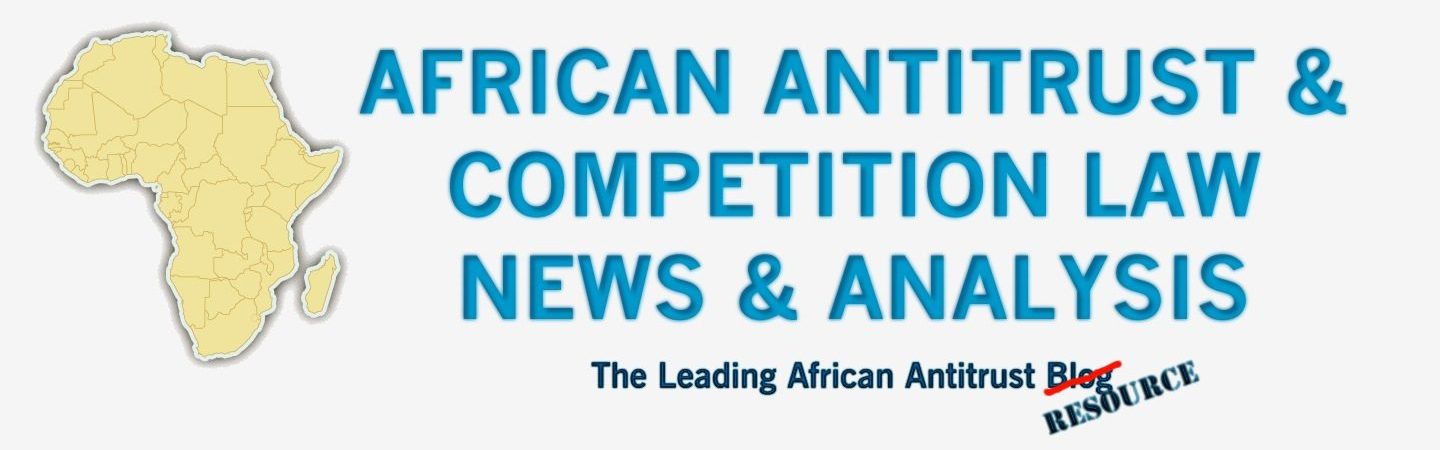
Coca-Cola is suspected of having engaged in anti-competitive conduct in the common market region via unlawfully restrictive distribution agreements — much is at stake, including a chance for the respondent to justify its contract provisions, and for the CCC to provide more detailed objective reasoning for its ultimate decision than it previously did in its 2018 RPM case against the soft drink giant.
By Joshua Eveleigh & Henri Rossouw
On 14 October 2024, the Common Market for Eastern and Southern Africa Competition Commission (“CCC”) announced that it will investigate The Coca-Cola Company (“Coca-Cola”) for potentially violating the current Article 16 of the COMESA Competition Regulations (the “Regulations”). The Regulations are due to be amended prior to year’s end.
The alleged conduct relates to supposedly restrictive bottler and distribution agreements considered to affect trade between COMESA Member States, thereby falling under the jurisdiction of the regional competition watchdog, akin to the European Union’s DG COMP enforcing antitrust rules across the EU.
Article 16 prohibits agreements that may affect trade between Member States of COMESA, with the main object of these agreements being to prevent, restrict, distort competition in the Common Market. The present investigation provides an example of how one of the CCC’s primary objectives is the detection and prevention of any restrictions to trade in and across the Common Market, such as the suspected “absolute territorial restrictions” at issue here. This is notably different from a prior run-in between Coca-Cola and the CCC back in 2017-2018: the CCC’s first soft-drink salvo dealt with so-called “Resale Price Maintenance” (“RPM”) in Coke’s distribution agreements. RPM is a generally frowned-upon practice in antitrust law globally. During that case, the then-still fledgling agency had issued a curt decision, resolving the case without fines but with an injunction against the practice and a mandatory Coke compliance programme.
This new matter arises out of entirely different legal issues and with a distinct factual background. Moreover, it is now being investigated by a notably matured and dramatically advanced enforcement agency compared to the 2018 case. Says Andreas Stargard, a Primerio attorney practising before the CCC:
“The Commission is doing what COMESA was designed for — a ‘territorial-restriction’ prosecution is nothing new for a regionally-integrated community. It lies at the heart of the concept of a unified, free market area. Territorial restrictions within such an area an inimical to the entire concept of COMESA. Just look at the EU: its antitrust rules have given the European Commission a similar mandate for decades, enforcing prohibitions against sellers’ territorial limitations that impinge on the free distribution and sale of their goods across the EU. Here, in the current COMESA investigation, it appears that we are notably dealing with restrictive conduct that may be justified by the parties in the end, as opposed to a pure prohibition ‘by object’, such as a cartel agreement. So if Article 16(1)-(4) applies, a prohibition with ‘rule-of-reason’ caveats, Coca-Cola may provide arguments as to why and how the restrictive agreements benefit end-consumers.”
Interestingly, the CCC previously assessed the distribution agreements between Anheuser-Busch InBev (“ABI”) and its third-party distributors and found that the distribution agreements contained clauses that restricted distributors from selling outside of their allocated territories, infringing upon the principle of “absolute territorial protection”. Accordingly, ABI remedied the infringing provisions. “The difference there, however, was that ABI had affirmatively and preemptively applied to the CCC for an authorization under Art. 20 — it was not the subject of an investigation after the fact, as is the case with Coca-Cola,” says attorney Stargard.
“Moreover, once the case is resolved, I am curious to see whether the CCC will take into account the prior compliance programme mandate from the 2018 case against Coca-Cola. It will be interesting to read whether or not the Commission refers to this condition of the prior non-fining resolution against Coke’s RPM conduct, and if so, where the failure point was? Was the programme either inefficient, entirely scrapped, or how did it otherwise fail to avoid further violative conduct on the part of the respondent…? We will have to wait and see, but other global enforcers, such as the DOJ, have certainly used the existence or non-existence of an effective compliance programme in their ultimate fining decisions to date.”
Regardless of outcome, it will also be interesting to learn how the CCC approaches the topic of exclusive distribution agreements across the Common Market. In this regard, it is widely accepted that exclusive agreements are likely to give rise to a range of efficiencies that may be passed down to customers and end-consumers, which Coca-Cola will, of course, need to establish by objective economic evidence if it seeks to justify its contracts vis-à-vis the CCC.
The CCC has been known to be deliberate and fair in its proceedings, especially in recent years of maturity and advancements in its team strength and econometric evaluation capabilities. Mr. Stargard observes that “[e]xamples of this nuanced approach and the due process being granted to parties in distribution cases include the most recent CAF soccer cases (see, e.g., here), in which the CCC spent extensive time and clarifying documentation on why certain, but not all, practices of the affected parties were harmful to consumer welfare in the Common Market.” That said, if the CCC were to adopt an overly protective stance here, however, it may have a concomitant effect on the consumer welfare and will have significant consequences for multinationals distributing into Africa.
The case is still in its investigatory phase, and thus all interested stakeholders are invited to submit representations by 14 November 2024 and can enquire further from Mr. Boniface Makongo (Director Competition Division) at +265 (0) 111 772 466 or at bmakongo@comesacompetition.org.
 As we reported earlier this week, the previously granted extension of the competition authorities’ review was “widely suspected that the request for the extension is due to


 African Antitrust & Competition Law