CAK imposes highest-ever cartel fine on 9 steel producers

After about a two-year-long investigation, the Competition Authority of Kenya (CAK) has determined guilt and imposed record fines on nine steel manufacturing companies for their joint role in a price-fixing and output-restriction cartel. The fine — the highest-ever imposed by the CAK to date — was set at Ksh. 338,849,427 million (approx. U.S. $2.3m) in total.

Back in June 2022, Construction Kenya news outlet reported that the offices of 10 Kenyan steel suppliers had been ‘dawn-raided’ by the CAK on suspicion of price-fixing. “A number of senior officials at the companies, including chief executives, have been interrogated as part of the investigation triggered by builders who complained about excessive pricing of steel.” These raids in Nairobi, Mombasa and Kisumu had taken place in the preceding December, and in secret, the CAK’s investigation into the steel sector had already begun in August 2020, when the Authority conducted a sua sponte nationwide “covert field screening,” which indicated the presence of illegal coordination by the steel producers.

In their defense, the manufacturers initially claimed innocence and blamed the pandemic input-price increases, via their trade group’s spokesman, Kenya Association of Manufacturers Steel Sector Chair, Bobby Johnson: “We are bearing a huge cost to cushion consumers. The prices of billets have shot up because of the supply disruptions as well as fuel for heating the furnaces.”

However, CAK enforcement and compliance manager, Mr. Mokaya, was quoted as stating that the agency had received specific and clear evidence “of certain concerted practices including agreements on pricing. We conducted market screening and launched raids in December targeting over ten companies and the investigation is ongoing.”

Andreas Stargard, an antitrust attorney with Primerio Ltd. who frequently works on COMESA-region competition matters including Kenya with his local Nairobi colleagues, noted that “this cartel case comes on the heels of the CAK’s successful prosecution of the ‘paint cartel,’ which it brought to conclusion also during COVID, in February 2021, fining Crown Paint, Basco Products Ltd., Kansai Plascon and Galaxy Paints for price-fixing. It will not be interesting to see whether firms engaged in the construction industry — that is: direct purchasers of steel products from the cartelists — will attempt to recover any of the overcharges they were burdened with by the infringers…

In theory, a person found guilty of the offence is liable to imprisonment for a term not exceeding five years or to a fine not exceeding ten million shillings, or both. Kenyan billionaire Narendra Raval, whose steel firm Devki is among those found guilty of cartel conduct, will not have to see a (steel?) jail cell from the inside, however. As of now, only monetary fines have been imposed by the CAK.
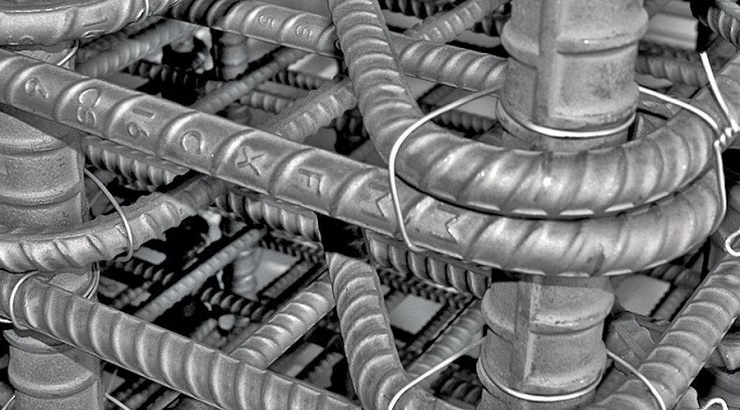
Dr. Adano Wario, the CAK’s Acting Director-General, noted that these financial penalties were in proportion to the harm done by the offense: artificial increases in the cost of steel products harmed consumers by inflating construction costs of homes and state and local infrastructure projects, thus contributing further to the already high cost of living in the country:

“Cartels are conceived, executed, and enforced by businesses to serve their commercial interests, and to the economic harm of consumers. In this matter, the steel firms illegally colluded on prices and margins as well as output strategies. In a liberalized market like ours, the forces of supply and demand should signal prices, free from manipulative business practices. Agreements between competitors seek to defeat this fundamental facet of a free economy.”

Whether or not a “leniency” request was involved is unclear, but doubtful according to attorney Stargard: “We have seen conflicting reports as to the origins of this investigation: some sources point to construction firm, or developer, complaints that led to the CAK’s action. The Authority itself claims it conducted the industry investigation fully on its own accord, without prompting. Either way, there is no indication that one of the price-fixing group members cheated on its fellow cartelists by seeking amnesty from prosecution, which is most frequently the case in modern cartel cases.” He adds that the COMESA Competition Commission (“CCC”) may also find interest in the ongoing price hikes in various markets, as the agency had previously made cautionary remarks in the paints cartel (see article above) and was almost certainly apprised by the CAK of its ongoing investigation into the steel sector during the pendency of that matter: “We know for a fact that the CAK and the CCC are working hand-in-glove when in comes to investigating anti-competitive conduct. Indeed, this statement can be expanded to include not only East-African competition enforcement agencies, but all African authorities, and in fact many international antitrust watchdogs as well, with whom the COMESA enforcer has bi- and multi-lateral cooperation agreements and MOUs. Competition-law enforcement truly has become global, and escaping the watchful eye of the agencies is getting more difficult by the day.”

The affected companies are Devki Steel Mills, Doshi & Hardware Limited, Corrugated Steel Limited, Jumbo Steel Mills, Accurate Steel Mills Limited, Nail and Steel Products Limited, Brollo Kenya Limited, Blue Nile Wire Products Limited, and Tononoka Rolling Mills Ltd.

Gun-jumping in Morocco, Switzerland-style

In a relatively rare northwestern excursion on the continent, we are reporting today that the Moroccan competition authority (the Competition Council, or “CC”) based in Fez, which has operated only since late 2018, issued its first-ever gun-jumping fine to Swiss construction/chemicals firm Sika Aktiengesellschaft. Sika will have to pay (unless it exercises its right to a judicial appeal of this inaugural MCC decision, which it appears the company has waived and agreed to pay the) approx. $1m in fines, per the recent Article 19 fining decision made on April 28, 2022.

The underlying conduct consisted of Sika’s May 2019 acquisition of 100% of the capital and voting rights of its French competitor, Financière Dry Mix Solutions SAS, with business activities in and economic ties to Morocco, via its “Sodap” in-country subsidiary. Sika – the largest construction chemicals firm worldwide, according to its own marketing materials – likewise conducts business in Morocco, in addition to 100 other countries globally.

According to the MCC, the parties purportedly failed to notify the transaction pursuant to the mandatory provisions in Arts. 12-14 of the Moroccan competition act (Loi no. 104-12 of 2014) and thus caused the MCC to open its first gun-jumping investigation, leading to this — not insignificant — fine that has now been issued by the Council. The original liability finding was made previously, in MCC decision n°134/D/2021 (dated 6th December 2021).

Under the domestic merger-control regime, a notifiable transactions exists when:

  1. two or more previously independent undertakings merge;
  2. one or more persons, already controlling at least one undertaking, acquire, directly or indirectly, whether by purchase of securities or assets, by contract or by any other means, control of the whole or parts of one or more undertakings; and
  3. one or more undertakings acquire, directly or indirectly, whether by purchase of securities or assets, by contract or by any other means, control of the whole or parts of one or more other undertakings.

To avoid similar mishaps from happening in the future, the MCC — in collaboration with the General Confederation of Moroccan Enterprises (CGEM) — held a conference and issued a legal compliance guide for businesses active in Morocco in January 2022. The MCC’s president, Ahmed Rahhou, expressed his hope that the Guidebook would “allow companies to avoid being in breach of the law and to know their rights and duties especially in terms of competition law.”

Drastic price increase could be sign of collusion or dominance: Dangote in Nigeria

Close-knit trade group and dominant cement manufacturer prove to be (price-)explosive combination

 Our friends at Songhai Advisory, a business intelligence firm covering key parts of Africa, have released a brief market-intel note addressing the 44% price hike of cement in Nigeria, led by the country’s (and indeed soon also the continent’s) dominant manufacturer, the Dangote group.

Any discussion of Nigeria — still Africa’s largest economy measured by GDP — in the competition-law context must begin with the surprising fact that the country’s political leadership still has failed to institute any antitrust regime.  Says Andreas Stargard, an attorney with Africa-focused Pr1merio law group:

“As the continent’s economic leader, Nigeria is a lone beacon of failure to police anti-competitive practices, whereas a multitude of significantly smaller African jurisdictions have had competition laws for years or even decades.  The recent price developments of Nigerian concrete are merely one example of the negative impact on consumers where there are no antitrust rules in effect.  Notably, an industry trade association also appears to be involved here, so from the competition point of view, we are dealing not only with one dominant entity (Dangote) but also an efficient and time-tested mechanism of information-sharing among direct competitors (trade groups).


The price increase covered the entire Nigerian cement market, according to Songhai and other media reports: cement prices of the members of the Cement Manufacturers Association of Nigeria (CMAN) rose over the course of a month by 44% from US$5 to $7 per 50kg.  Adds Stargard, “any competent antitrust enforcer would look into such a price hike.  Given the absence of competition law enforcement in Nigeria, it is likely that no investigation will take place, and civil suits are highly unlikely, in light of the lack of antitrust laws and the political connections at play here.”  In the words of Songhai’s reporting: “When Dangote decides to push its price up or down, others tend to follow.”  Yet, the researchers also quote a source at Sokoto Cement, one of Dangote’s main rivals, as describing power generation costs and foreign-exchange fluctuations as the actual drivers behind the drastic recent cement price increases.


Kenya: Lafarge faces possible price-fixing penalties due to cross shareholding

kenya

East Africa back on antitrust enforcer’s mat in hybrid unilateral / collusion case

The Competition Authority of Kenya (“CAK”) has alleged that Lafarge has engaged in price-fixing due to the company’s cross-shareholding in cement producer Eastern African Portland Company and Bamburi Cement. (Interestingly, http://www.lafarge.co.ke links to Bamburi Cement’s site).

The CAK is investigating whether Lafarge is responsible for an unwarranted concentration of economic power, given that Lafarge has a 41.7% interest in Eastern African Portland Company and a 58.9% interest in Bamburi Cement. A ruling as to whether Lafarge has “unwarranted concentration of economic power” is expected in June 2014.  In the event that Lafarge is found guilty of the charge against it, the Kenyan Competition Authority could direct the Lafarge to sell assets in one of the two businesses.  Furthermore, the directors could also be forced to pay up to USD115,000 in penalties or serve five years in prison if found guilty of price-fixing.

The CAK report comes four months after the Kenyan government, which together with the Kenyan National Social Security Fund, has a controlling stake of 52.3% in Eastern African Portland Company alleged that Lafarge tried to destabilise Eastern African Portland Company to protect Lafarge’s interests in Bamburi, the report noted. The CAK indicated that “cross-directorship could lead to price-fixing since this creates a position where a competitor is privy to the strategic decisions of another competitor. However, it is not conclusive that there is price-fixing going on.”  Lafarge has stated its minority interest in Eastern African Portland Company is insufficient to enable Lafarge to exert control over it.

This allegation comes at an interesting time given the spotlight on Lafarge due to its proposed merger with cement producer Holcim, which has already triggered insider-trading investigations elsewhere.  The proposed transaction will likely require notification in the European Union, United States, Russia, China, India, Morocco, South Africa and multi-national enforcer COMESA (which includes Kenya and would presumptively take priority over the CAK’s domestic review authority, although a jurisdictional fight between the two agencies would not be unheard of).


Soccer fields, SRAM, and Sotheby’s? Fast-track settlements in ZA construction probe yield €113m

south_africa

What do soccer stadiums, LCD panels, and lysine** have in common?  Price-fixing might be one answer.  Record antitrust fines might be another, closely related, response.

The South African Competition Commission (“Commission”) has obtained settlements of 1.5 billion rand or about €113 million with up to 15 construction companies.  This constitutes, by our reckoning, a new record for the Commission.

The fast-track settlement procedure used by the agency (in all but 3 cases, in which the accused firms chose not to pursue fast-tracking) shortened the time necessary to reach finality on the deals.  It also allows the Commission to free up its manpower resources to work on other matters, since maintaining full-fledged investigations in all of the now-settled cases would have been a long and arduous process for all parties involved — as we reported previously on AfricanAntitrust.com here and here, the scope of the ZA construction-sector bid-rigging investigation has ballooned beyond even the wildest dreams of enforcers.

The Commission’s press release sheds further light on the breakdown of the fines per party, covering conduct since September 2006 in over 300 instances of bid-rigging:

constructionfines

Post-scriptum: The fines, although record-setting, are lower than expected by investors.  Consequently, shares in the affected undertakings have soared 1-3%, as reported by BusinessReport here.

** Sorry – I strayed a bit from the original alliterative title here.  (Otherwise, I could not have made the “record fines” point…)