Reshuffling deck chairs in Kenya: S. Kariuki out, C. Mahinda in

Shaka Kariuki Ousted As Non-Exec CAK Chair

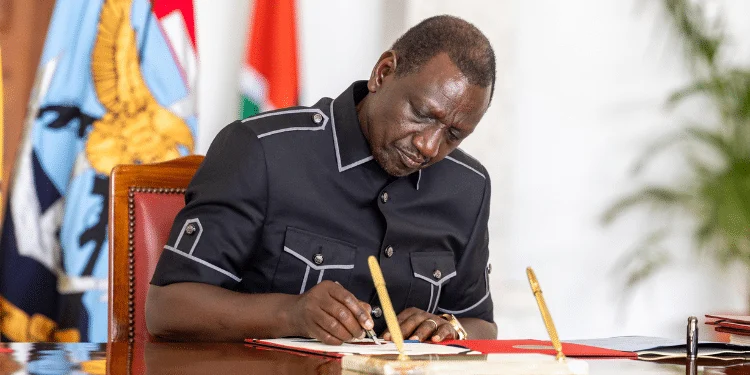
President Ruto has removed Shaka Kariuki as Non-Executive Chairperson of the Competition Authority of Kenya (CAK) early, instead installing Charles W. Mahinda in the role, effective December 11, 2025.

The appointment was made under Section 10(1)(a) of the Competition Act and Section 51(1) of the Interpretation and General Provisions Act and will last three (3) years.

Mr. David Kibet Kemei, by now an established face for the competition watchdog, will continue to be the Director-General of the agency.

Mergers, Markets & a New Mandate: Zimbabwe’s Competition Regulator in Conversation with Primerio

By Megan Armstrong and Amy Shellard

On 5 June 2025, Primerio hosted the latest instalment of its African Antitrust Agencies – in Conversation series. This session featured Primerio’s Managing Associate, Joshua Eveleigh, alongside Carole Bamu, Primerio’s in-country lead partner for Zimbabwe, and Calistar Dzenga, Head of Mergers at the Zimbabwe Competition and Tariff Commission (“CTC”). Their wide-ranging conversation offered a rare window into Zimbabwe’s merger control regime, recent enforcement developments, and anticipated legislative reforms, thus providing valuable insight into how the regulator is intensifying oversight and sharpening enforcement.

Calistar Dzenga explained that any transaction meeting the combined turnover or asset threshold of USD 1.2 million in Zimbabwe is notifiable under the Competition Act [Chapter 14:28]. Notably, this includes foreign-to-foreign mergers, the activities of which have an appreciable effect within Zimbabwe’s market, a critical point as Zimbabwe becomes an increasingly active jurisdiction in African dealmaking. The CTC’s review process starts with notification and payment of fees capped at USD 40,000, followed by detailed engagement including market research and stakeholder consultations.

Mergers are classified as either “small” or “big,” with smaller transactions typically decided within 30 days, while larger or complex deals taking up to 90 to 120 days. 

While the CTC uses indicators like the Herfindahl-Hirschman Index (HHI) as screening tools, the CTC confirmed that market shares are not determinative on whether a transaction will have anticompetitive effects. Instead, the CTC focuses on, and considers, barriers to entry, countervailing buyer power, and the historical context of collusion. Zimbabwe’s framework embeds public interest considerations within competition analysis, differing from South Africa’s dual-stream approach.

Public interest concerns, particularly employment protection and local industry support, are increasingly central to merger decisions. These conditions often require maintaining junior-level employment for at least 24 months post-merger and increasing local procurement. Industrial development goals also shape decisions, including mandates for mineral beneficiation in sectors such as lithium processing.

One of the most significant recent cases involved CBZ Holdings’ attempt to acquire a controlling stake in ZB Financial Holdings. The proposed merger raised alarms over market concentration in banking, reinsurance, and property, as well as risks to consumer choice. After extensive engagement, the Commission proposed strict conditions, from divestitures in related markets to commitments to maintain separate brands. Ultimately, the merging parties walked away, demonstrating that Zimbabwe’s regulator has the resolve to stand firm even on high-profile deals.

Joshua and Carole explored how Zimbabwe’s CTC collaborates with other African authorities. Calistar highlighted the strong relationships the CTC has with theCOMESA Competition Commission, the South African Competition Commission, as well as the relevant competition authorities in Zambia and Botswana. Such cross-border collaboration plays a crucial role in ensuring that mergers do not slip through regulatory gaps and that decisions are coordinated across the region. The CTC also uses memoranda of understanding with other national regulators, such as the Zimbabwe Stock Exchange and the Reserve Bank, to detect transactions which have not been notified to the CTC.

A major theme of the conversation was the long-awaited Competition Amendment Bill, which is set to overhaul Zimbabwe’s 1996 Act. As Calistar explained, the Amendment Bill will:

(i) give the CTC powers to impose harsher administrative penalties for restrictive practices and cartels;

(ii) introduce clearer rules on public interest considerations;

(iii) allow the CTC to conduct proactive market inquiries rather than just reactive investigations;

(iv) enable anticipatory decisions for failing firms to speed up urgent cases; and 

(v) provide leniency frameworks for companies disclosing collusion. 

The reforms are expected to give the CTC more enforcement capability and help align Zimbabwe with international practices. Joshua mentioned that these changes would give the CTC “more teeth to bite,” a phrase Calistar repeated, showing how the regulator wants to align with global standards.

Right now, Zimbabwe is seeing more merger activity, especially in the financial services and manufacturing sectors. This is predominantly due to consolidation pressures, along with large infrastructure projects. With regulatory scrutiny picking up speed, companies really have to stay on the front foot when it comes to managing clearance risks and be ready for stricter enforcement.

Joshua also pointed out that it’s an exciting period for competition law in Zimbabwe. He believes businesses should start preparing now for the significant changes that are on the horizon. For Primerio’s African antitrust team, this conversation really highlights how important it is to guide clients through an evolving and complex enforcement landscape.

To view the recording of this session, please see the link here.
Eswatini’s new chief antitrust enforcer hails from COMESA body

AAT notes that Eswatini, a member nation of COMESA, has appointed its new Director of Competition and Consumer Protection at the Eswatini Competition Commission (“ESCC”), namely Ms. Siboniselizulu Simelane Maseko. According to the Commission, her background in economics and law will help ensure the agency is prepared for continuing its path ‘towards fairer markets and consumer welfare’. Her previous role within the ESCC as an analyst, and senior analyst, and her experience at the COMESA Competition Commission are set to equip her to spearhead the ESCC’s efforts to maintain a competitive and transparent market environment within eSwatini.

The Commission’s portfolio has expanded since I left. We now have a Policy and Research Department as well as a fully staffed Consumer Protection Department. With young, energetic teams, the commission is well-positioned to support the national development goals and positively impact Eswatini’s economy.”

In her new role, Maseko will oversee competition enforcement, mergers and consumer protection. She emphasizes the importance of preventing anti-competitive outcomes and promoting innovation to safeguard economic stability.

Eswatini’s economy is facing several structural challenges, including slow growth, high unemployment, poverty, and fiscal pressures. While there are opportunities for improvement through reforms and diversification, the country needs to address both domestic and external challenges to achieve sustainable economic growth in the long run. The recent appointment of leaders like Maseko to impactful regulatory roles may signal a focus on creating a fairer, more competitive economic environment, which could contribute to long-term recovery and growth.

Maseko’s international experience, including her exposure to African regional competition authorities and work with global regulatory bodies, positions her well to drive the ESCC’s competition law policies. She has underscored the need for robust enforcement mechanisms and active collaboration with regional and international bodies such as COMESA and the African Continental Free Trade Agreement (“AfCFTA”) to foster fair competition practices.

I have had the privilege of working with enforcement agencies beyond the COMESA region, including those from South Africa, the European Commission and the United States. These networks are crucial, particularly as the Commission participates in regional and continental competition enforcement initiatives.”

Observers of Eswatini’s regulatory landscape note that her leadership, and the support by a talented team, is set to bolster the ESCC’s efforts in ensuring markets remain fair and beneficial to consumers while encouraging business innovation.

Says Andreas Stargard, a competition practitioner with Primerio, “I know Siboni from her longe time working at the COMESA Competition Commission, where she assisted greatly in getting that agency off the ground, helping Willard Mwemba and his staff to catapult the CCC from a fledgling entity to an antitrust enforcer one must reckon with across Africa. This experience will be of value to Siboni’s coming leadership in Eswatini, and I wish her the best!”

Ms. Maseko echoed the description of her career trajectory in her statement: “After having been at regional level for 8.5 years, I have come full circle – back to where I started my journey as a young analyst in 2011. I’m delighted by the opportunity to share what I’ve learnt at regional level and support the Commission’s mandate to contribute to economic growth through fair competition!”

South Africa’s New Cabinet Under the GNU: A Shift Towards Business-Friendly Policies?

By Megan Friday

On Sunday, 30 June 2024, President of South Africa, Cyril Ramaphosa announced South Africa’s new cabinet under the newly-formed Government of National Unity (‘GNU’).  The Government of National Unity is “a government that brings together a number of rival leaders and political parties in order to promote national unity and political stability” (Cheeseman, N., Bertrand, E., and Husaini, S. (2019). A Dictionary of African Politics, Oxford University Press). The Democratic Alliance, South Africa’s main opposition party, is generally considered to be more business friendly than other, rival parties.

From the new cabinet announcement, it has been revealed that Parks Tau is the new Minister of the Department of Trade, Industry, and Competition (‘DTIC’), with Zuko Godlimpi and Andrew Whitfield serving as Deputy Ministers. Mr. Tau, the former Mayor of Johannesburg, is seen as a more business-friendly appointment than his predecessor, Ebrahim Patel.

We anticipate that the aggressive approach taken by the South African Competition Commission in driving an industrial policy agenda will be moderated in favour of a more business-friendly approach. A more balanced implementation of public interest objectives is expected, aiming to stimulate economic growth, business development, job creation, and more.

Any potential changes to the structure and mandate of the Commission remain to be seen.

Nigeria appoints new chief antitrust enforcer: is it a pure consumer-protection play?

Nigerian president, Bola Tinubu, yesterday appointed Mr. Tunji Bello to become the new Chief Executive Officer and Executive Vice-Chairman of the Federal Competition and Consumer Protection Commission (“FCCPC”), subject to review and a vote by the Senate, which is expected to pass without issue.

Observers are noting the relative lack of competition-law / antitrust experience of Mr. Bello (whose prior credentials include State Secretary and Environment Commissioner, both in Lagos State). Mr. Bello, a former journalist, is an unknown to most, if not all, competition-law practitioners. His Wikipedia entry describes him primarily in terms of his career as a journalist, which included international stints as “a Staff Writer with [the] St. Petersburg Times, Florida, US, and also [] US News & World Report, Washington DC in 1992.”

The formal press release (see below) seems to support this sentiment of a purely political appointment without any regard to prior competition-law or economics experience, as it appears to focus solely on “consumer protection” and the “safety of goods and services,” while failing to mention competition or antitrust even once.

We note that some commentators have pointed out, at the cynical end of the spectrum, that this appointment may be due to the FCCPC’s past successes in garnering massive fines (e.g., the $110 million fine imposed against BAT), under recently-dismissed predecessor Babatunde Irukera. Such financial windfalls for the government coffers have, these observers believe, turned the agency’s CEO job, into a highly coveted executive post, which had been temporarily held in an interim capacity by Dr. Adamu Abdullahi between January and Mr. Bello’s appointment yesterday.

AAT is hopeful that this is not the case, and that Mr. Bello will not turn the young and so-far highly-regarded FCCPC into a mere means to an end of generating revenue for the Nigerian government. We trust that the Commission will continue to uphold its mandate of competition-law enforcement and its high standard of excellence, thanks in large part to the leadership of Mr. Bello’s predecessor and the quality of the senior team members he had assembled to run the agency.

Press release:

FCCPC leadership shake-up: Farewell to a Nigerian antitrust legend

AAT is sad (but not surprised) to report that the new Nigerian government under President Bola Tinubu has sacked the legendary head of its competition-law enforcer, the Federal Competition and Consumer Protection Commission (FCCPC), Babatunde Irukera. His termination is with immediate effect. His pro tempore replacement at the agency will be Dr. Adamu Ahmed Abdullahi, as the next-in-command Executive Commissioner of Operations.

While it is certainly not a shocking revelation that incoming administrations frequently shake up their senior agency leadership, it is nonetheless an objective loss to the burgeoning FCCPC, which — under Irukera’s leadership — invariably gained international respect and, indeed, won an award for Nigeria’s most effective government institution.

The reactions of those with personal knowledge of the outgoing FCCPC CEO were almost invariably gloomy. Says Andreas Stargard, a partner with competition firm Primerio Ltd.: “This is a real loss to the Commission, which was literally brought into existence under the aegis of Babatunde. The antitrust community views his departure with dejection and a real concern for the future trajectory of the otherwise blossoming young agency, with which we had nothing but positive experiences so far. Babatunde is a real leader, and I wish him well in his future endeavours — I have a feeling that this is not the last we have seen of him in Nigerian antitrust.

Messrs. Babatunde Irukera (outgoing FCCPC CEO) and Ali Kamanga (COMESA Competition Commission, CCC) at the first IBA competition-law conference in Lagos, Nigeria (photo: A. Stargard, November 2023)

Other industry voices echoed similar sentiments, with academic Vellah Kigwiru opining that Irukera “had so much to offer for the continent,” while the FCCPC’s Chief Legal Officer, Florence Abebe, stated poignantly:

He is such an icon. FCCPC cannot be the same. The sadness is real. He took the then-CPC from a T-shirt and face cap wearing council with disgruntled incapacitated staff to what it is today on the continent and globally. Staff welfare was paramount, he prioritised capacity development like no other, he demanded excellence and professionalism from staff; he folded his sleeves and did the work, he wasn’t just directing operations, he was handling himself. While we were preparing, this guy was thinking on his feet. He is a genius, unpredictable, humble, compassionate, patient to the core, and didn’t accept failure. He is an institution!”

Mr. Irukera’s departure comes on the heels of the FCCPC’s record-setting multi-million dollar single-firm conduct settlement with British American Tobacco, on which AAT reported previously.

10 January 2023 update:

After widespread criticism and backlash against the manner in which Mr. Irukera’s departure from the Commission was announced by the new(ish) Nigerian government, the administration revised its statements to the effect of having “relieved [him] of his duties,” as opposed to “dismissed” the CEO. From a tweet: “I have followed the concerns in the media on the report that President Bola Ahmed Tinubu dismissed Babatunde Irukera EVC/CEO, Federal Competition and Consumer Protection Commission (FCCPC) and Alexander Ayoola Okoh — Director-General/CEO, Bureau of Public Enterprises (BPE). The President’s directive did not intend a dismissal. The two men who have served our country were relieved of their duties by the President, as he scouts for their successors. The connotations implied in using the word dismissal were clearly not intended in the statement issued. President Tinubu thanks the two men for their services and wishes them well in their future endeavours.”

CCC Celebrates ’10’ — a Decade of COMESA Competition Law

Anniversary of CCC’s 2013 Creation to be Celebrated, Developments Discussed

Next week, African heads of state, ministers of trade and commerce, the secretary general of the 21-member state COMESA organization, Commissioners, and several heads of various competition agencies across the region, from Egypt to Eswatini & from Mauritius to Malawi, will join antitrust practitioners, legal experts, business people, and journalists in celebrating the occasion of the 10-year anniversary of the COMESA Competition Commission in Lilongwe, where the agency is headquartered.

Of course, AAT will be there to cover it.

As leaders of this august publication will know by now, our authors have followed the development of the CCC since its very beginning: from the nascent stages of having only a rudimentary staff and foundational rule documents, lacking sufficient guidance for practitioners and businesses alike, to the significant developmental stage under its first chief executive officer, Dr. Lipimile, who built out his enforcement team to coincide with the stellar growth of the CCC’s “one-stop-shop” merger notification statistics and attendant agency reviews (hiring economists and lawyers alike from across COMESA member nations) — and culminating, so far at least, in what we have come to call “CCC 2.0”: the latest iteration of the vastly successful multi-jurisdictional antitrust body, now led by its long-term member Dr. Willard Mwemba.

Under Mwemba’s aegis, the Commission has advanced well beyond a mere ‘rubber-stamping’ merger review body, as some had perceived the fledgling agency in its very early years (approx. 2013-15). The triple-C has since then begun to launch serious investigations into price-fixing, monopolization, attempted monopolization, gun-jumping, as well as market allocation schemes and secretly implemented transactions that parties had failed to notify.

While ‘antitrust is on our minds’, we note here for the record that, beyond its “competition” ambit that mostly remains in our focus at AAT, the CCC’s enforcement mission also includes a fairly large “consumer protection” brief, and the agency’s dedicated unit has investigated areas of consumer concern as broad as airline practices, imported faulty American baby powder, online ‘dark’ practices, pay-TV, and agricultural product quality disputes (milk and sugar come to mind) between Uganda and Kenya, to name only a few…

Our publication, together with several of the business journals and newspapers across the southeastern region of Africa, will report in great detail on the events, and possible news, to take place next week. Says Andreas Stargard, a competition practitioner with Primerio International:

“I look forward to hearing from these leaders themselves what they have accomplished in 10 years, and more importantly what they wish to accomplish in the near to mid-term future. In addition, I have a feeling that we may be treated to some truly newsworthy developments: I could imagine there being either confirmation or denials of the circulating rumour that the COMESA merger regime will soon become not only mandatory, but also suspensory. As most attorneys practicing in this arena know by now, the current Competition Regulations are not suspensory, which may be deemed too restrictive by the group’s Secretariat and its agency leadership in terms of its enforcement powers. After all, it is much more difficult to unscramble the egg than to never let it drop in the pan from the get-go!

Also, the CCC may reveal its plans in relation to a leniency programme for cartel conduct, which is plainly in order!”

Beyond that, Stargard surmises, participants at the almost week-long event may be treated to news about the CCC’s thoughts on digital markets, sectoral investigations, and the Commission’s upcoming “beyond-mere-merger” enforcement activities.

Zambia: New Board of Commissioners Signals Possible End of Increased Enforcement

By Joshua Eveleigh and Shivaan Naicker

The Board of Commissioners of the Zambian Competition and Consumer Protection Commission (“CCPC”) recently fined Airtel Money and Avian Ventures Ltd (trading as Farm Depot Zambia) each 3% of their annual turnovers in Zambia.

The CCPC’s investigation found that Airtel Money had increased its cash collection and cash disbursement fees among different sports betting companies, in contravention of section 16 of the Competition and Consumer Protection Act (the “Act”). Airtel was found to have imposed differing transaction conditions to differing parties for identical transactions, a type of price discrimination akin to U.S. Robinson-Patman Act violations that may be falling back into favor across the pond.

Additionally, Farm Depot Zambia was found to have contravened sections 15 and 16 of the Act by engaging in product tying by requiring customers to purchase certain brands of chicken feed when they intended on only purchasing Day-Old Chicks, with the Board of Commissioners of the CCPC emphasising that product typing places a particular strain on small and medium-sized businesses.

More recently, the Zambian Minister of Commerce, Trade and Industry, Chipoka Mulenga, announced a new Board of Commissioners comprised of:

  1. Mrs. Angela Kafunda;
  2. Mr. Fredrick Imasiku;
  3. Mr. Stanford Mtamira;
  4. Mr. Sikambala M. Musune;
  5. Mr. Emmanuel M. Mwanakatwe;
  6. Mrs. Sambwa Simbyakula Chilembo; and
  7. Mr. Derrick Sikombe.

While the sanctions against Airtel Money and Farm Depot Zambia may have emphasised the steady investigation of, and enforcement against, anti-competitive conduct under the previous Board of Commissioners, the new Board of Commissioners does not appear to consist of any competition law practitioners. Various local counsel in Zambia have raised concerns in this regard for the future of the CCPC’s competition enforcement initiatives.

Doris Tshepe to lead Africa’s major antitrust enforcer as of September 2022

On 9th June 2022, the Minister of Trade, Industry and Competition, Mr Ebrahim Patel, announced his decision to appoint Ms. Doris Tshepe as the new Commissioner of the South African Competition Commission (“SACC”). Ms Tshepe will succeed outgoing Commissioner Tembinkosi Bonakele.

Minister Patel’s announcement comes as somewhat of a surprise to observers, given Commissioner Bonakele’s nine-year tenure and instrumentality in increasing merger and cartel enforcement within South Africa, whilst also advocating and advancing the role of the ‘public interest’ in both of these aspects. Under the leadership of Commissioner Bonakele, the SACC has been considered widely as an agency of international importance.

Andreas Stargard and Outgoing Commissioner Tembinkosi Bonakele (South Africa)

Commissioner Bonakele’s successor, Ms Doris Tshepe, is a well-regarded attorney with extensive experience. Her legal practice spans over 20 years, during which she specialised in constitutional and administrative law, legislative drafting, media and communication law, commercial law, competition law and employment law.  Additionally, Ms Tshepe has significant investigatory experience, having been involved in the SACC’s previous market inquiries into the Liquid Petroleum Gas and Grocery Retail sectors as well as being a panel member for the recent Online Markets Inquiry. In addition to her investigative experience, Ms Tshepe also has legislative chops, having sat on a 2019 panel considering the recent amendments to the South African Competition Act.  Says John Oxenham, a South African antitrust attorney: “Future Commissioner Tshepe’s long history of working with the SACC and others to shape the current enforcement approach of the agency (as well as its trajectory for the future) indicates that the Commission’s focus will remain steady and sharp. I do not foresee any wavering in the course of the SACC’s currently robust operations, due to the transition in its leadership.”

Bearing Ms Tshepe’s investigative history in mind, we can generally expect her to continue Commissioner Bonakele’s strong enforcement initiatives. Having been appointed to the panel on the amendment of the Competition Act, there is also a reasonable likelihood that we will see the SACC continue implementing, if not increasing, its long-standing public-interest agenda – particularly given the transformative socio-economic objects of South African legislation, say the competition practitioners at Primerio Ltd.

Lastly, we note that not all is over at the SACC for “Tembi” — Minister Patel has stated that there are discussions with outgoing Commissioner Bonakele regarding the delegation of an appropriate set of responsibilities that would allow him to utilize his skills and experience in competition and public policy after his departure. Again, although the details of these responsibilities are unknown, Minister Patel’s statement emphasizes the increased shift towards a public-policy centric competition regime. 

Ms Tshepe is expected to assume her position as Commissioner of the Competition Commission during the course of September 2022.

Incoming Commissioner Doris Tshepe

Dr. Willard Mwemba confirmed as CEO

APPOINTMENT OF DR WILLARD MWEMBA AS THE DIRECTOR AND CHIEF EXECUTIVE OFFICER OF THE COMESA COMPETITION COMMISSION

 November 15th, 2021  Competition CommissionFacebookTwitterShare

PRESS RELEASE

 APPOINTMENT OF DR WILLARD MWEMBA AS THE DIRECTOR AND CHIEF EXECUTIVE OFFICER OF THE COMESA COMPETITION COMMISSION

 The COMESA Competition Commission (the “CCC”) wishes to inform the general public that the COMESA Council of Ministers at its 42nd Meeting held on 9th November 2021 appointed Dr Willard Mwemba as its Director and Chief Executive Officer.

The Commission’s Board, Management and Staff members wishes to congratulate Dr Mwemba on his well-deserved appointment. Dr Mwemba has been with the CCC since January 2013 being its first Head of the Mergers and Acquisitions Department until his appointment as the Acting Director and Chief Executive Officer on 1 February 2021. He has acted in this capacity until 9 November 2021 when his appointment was confirmed. Prior to joining the CCC, Dr Mwemba was the Director of Mergers and Monopolies at the Competition and Consumer Protection Commission (CCPC), Zambia.

Dr Mwemba has been instrumental in the enforcement of competition and consumer laws both at national and regional level. At national level, he has assisted a number of national competition authorities in developing and operationalising their mergers and restrictive business practices divisions. At regional level, he has been instrumental in implementing and reforming the COMESA Competition Law regime.  He has written extensively on competition law and is widely consulted on the subject at global level.

Dr Mwemba holds several qualifications among them Bachelor’s degrees in Economics and Law from the University of Zambia. He also holds a Master’s degree in Competition Law from Kings College London. He further holds a PhD from the University of Cape Town specializing in competition law.

The Board of Commissioners, Management and Staff members of the CCC have great confidence in Dr Mwemba’s capabilities and wishes him well as he executes the mandate of enhancing intra-COMESA trade through the creation of competitive markets.