Malawi: More than CCCC HQ. A short Retrospective on Mergers in Malawi.

Updated Malawi Merger Control Thresholds

By Michael Williams

Malawi’s new Competition and Fair Trading Act came into effect in 2024 (“2024 Act”).[1]  While this lags behind one of the best-known competition authorities in Malawi, namely COMESA’s Competition and Consumer Protection Commission (“CCCC”) headquartered in Lilongwe to the tune of over a decade, the domestic antitrust regime is being reinforced, as this legislative update shows. And with this latest edition, it is firmly in place when it comes to those national merger-control matters that escape the one-stop-shop of the CCCC. The Competition and Fair Trading Commission of Malawi (“CFTC”) stated that the goal of the 2024 Act is to:

  1. supplement certain areas that the previous Act lacked; and
  2. improving effective enforcement.

Several notable changes were included in the 2024 Act, particularly in respect of the introduction of a suspensory merger control regime. 

The 2024 Act also introduces a public interest test that the CFTC must apply when evaluating whether a proposed merger can or cannot be justified. This public interest test includes several factors including the effect of the potential transaction on:

  • specific industrial sectors or regions; 
  • employment levels; and 
  • the saving of a failing firm.

The CFTC has also been granted the power to impose administrative orders on parties who violate the 2024 Act, which include administrative penalties of up to 10% of a firm’s annual turnover or 5% of an individual’s income. 

The CFTC can also levy orders to redress wrongdoing, such as instructing refunds, exchange or return of defective products, and termination of unfair and exploitative contracts.

These increased powers come after the High Court of Malawi Civil Division ruled in the 2023 case of CFTC v Airtel Malawi that the CFTC lacked the authority to impose fines under the 1998 Act.[2]

To supplement the 2024 Act, the Minister recently published a Government Notice[3] that provides for the financial thresholds for mandatory merger notifications as well as an overview of other fees payable to the CFTC.

THE FINANCIAL THRESHOLDS FOR MANDATORY MERGER NOTIFICATIONS

Any transaction exceeding the following financial threshold will require prior approval from the CFTC before implementing:

  1. The combined annual turnover or combined value of assets whichever is higher, in, into, or from Malawi, equals to or exceeds MWK 10 billion (approximately USD 5 800 000); or
  2. The annual turnover of a target undertaking, in, into, or from Malawi, equals to or exceeds MWK 5 billion (approximately USD 3 000 000).

FEES PAYABLE TO CFTC FOR COMPETITION FILINGS 

The Government Notice sets the merger application fee payable at 0.5% of the combined annual turnover or total assets whichever is higher of the merging parties derived from Malawi. It is important to note that the Government Notice does not specify a maximum fee payable.

OTHER FEES PAYABLE TO THE CFTC

  1. Application for an Authorization of an Agreement at MWK 10 million (approximately USD 5 800) an agreement, a class of agreements under section 24(1) of the 2024 Act or an agreement which, any person who proposes to enter into, or carry out an agreement which, in that person’s opinion, is an agreement affected or prohibited by the 2024 Act. Importantly, an ‘agreement’ is defined in the 2024 Act, being: “any agreement, arrangement or understanding, whether oral or in writing, or whether or not the agreement is legally enforceable or is intended to be legally enforceable”
  2. Application for Negative Clearance at MWK 10 million (approximately USD 5 749,49) for any party to a merger transaction seeking clarification as to whether the proposed merger requires the formal approval of the CFTC or whose proposed merger is subject to review by the CFTC.
  3. Training on Competition & Consumer Protection at MWK 5 million per training package (approximately USD 3 000);
  4. Non-Binding Advisory Opinions for SMEs: MWK 200 000,00 (approximately USD 115); Micro-enterprises: MWK 100 000,00 (approximately USD 58); Other businesses: MWK 500 000,00 (approximately USD 300).

CONCLUSION

This supplementation by the Government Notice to the 2024 Act is of utmost importance for businesses and competition law practitioners operating within the jurisdiction of Malawi to ensure smooth transactions and to avoid statutory sanctions.


[1] Competition and Fair Trading Act No. 20 of 2024

[2] Competition and Fair Trading Commission v Airtel Malawi Ltd. & Anor. (MSCA Civil Appeal 23 of 2014) [2018] MWSC 3

[3] Government Notices No. 76 and No. 77 of 2024

4th CCC diplomatic conference on competition law places focus on inflation, food security, and poverty eradication 

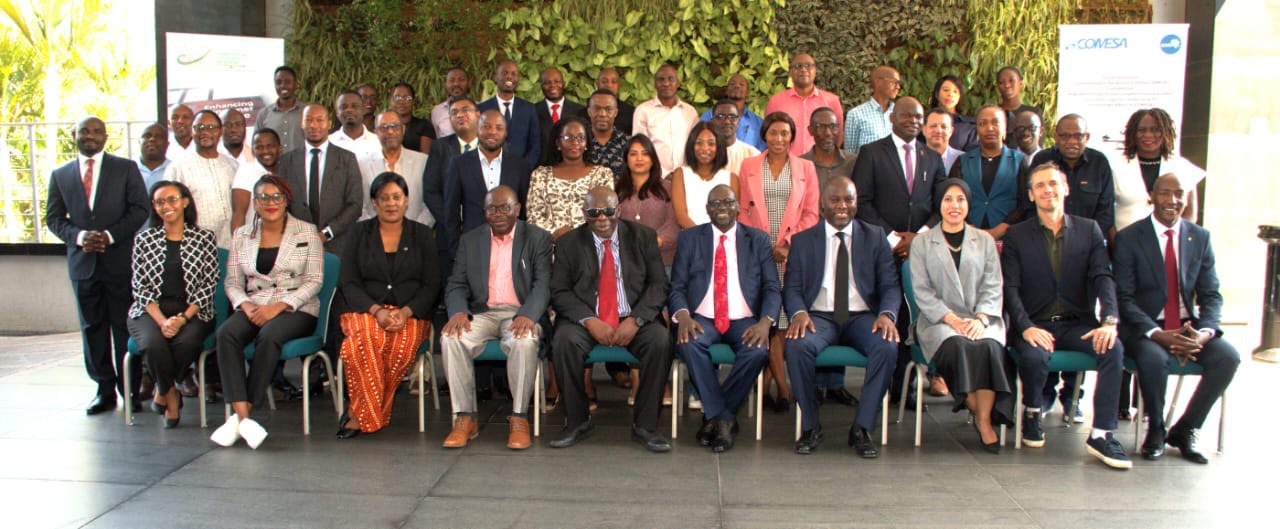
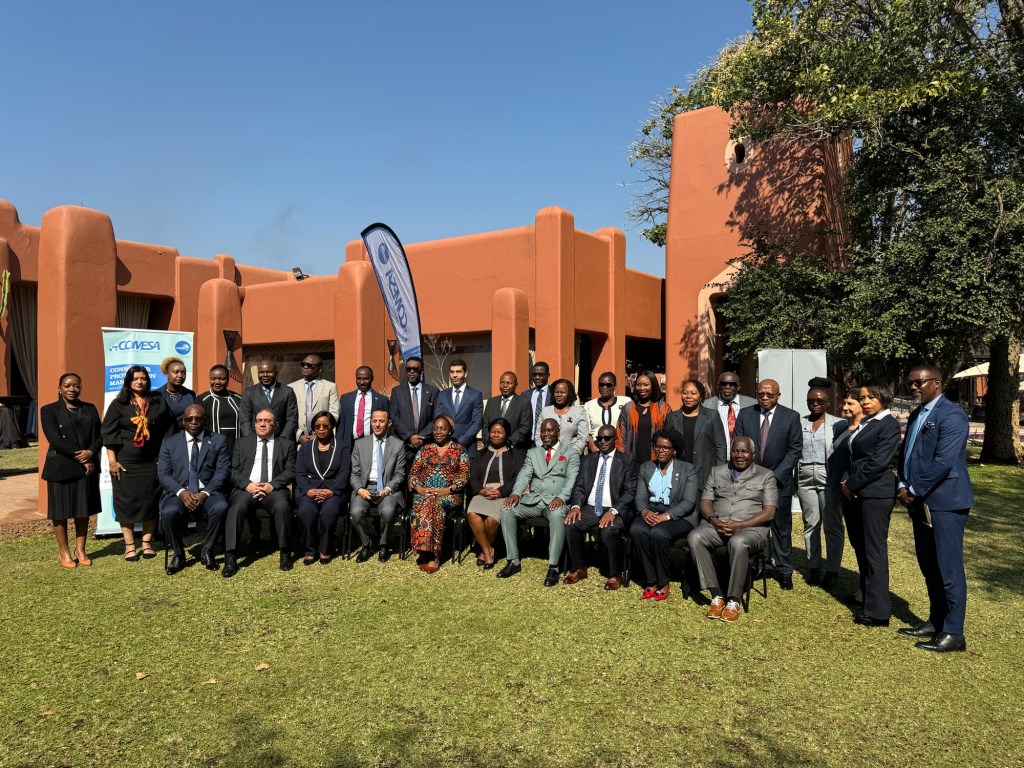
Senior diplomats from the COMESA region gathered in Livingstone, Zambia, for the fourth in a series of diplomatic antitrust-focused conferences that began in 2016 but were halted due to the coronavirus pandemic in 2019.

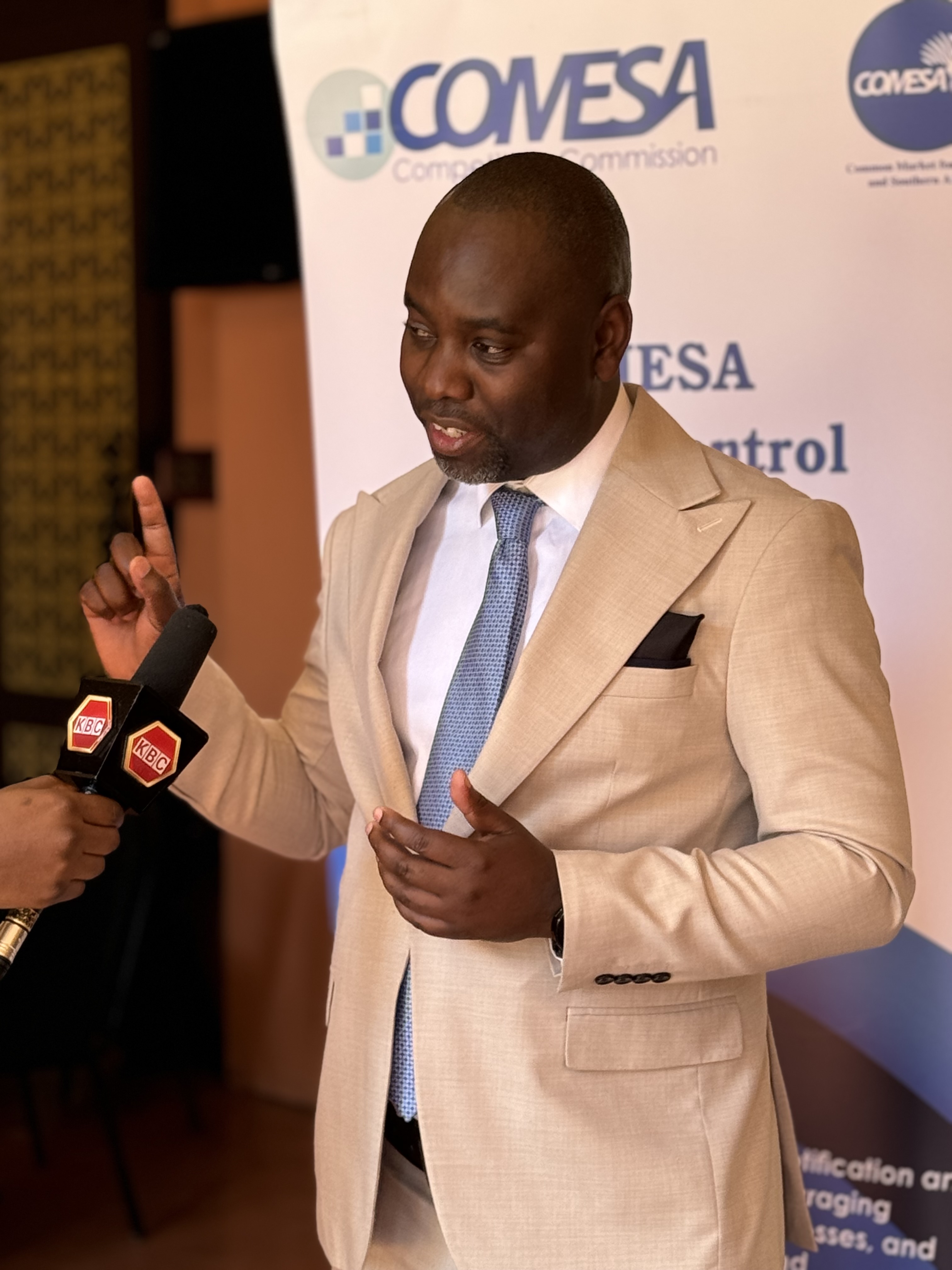
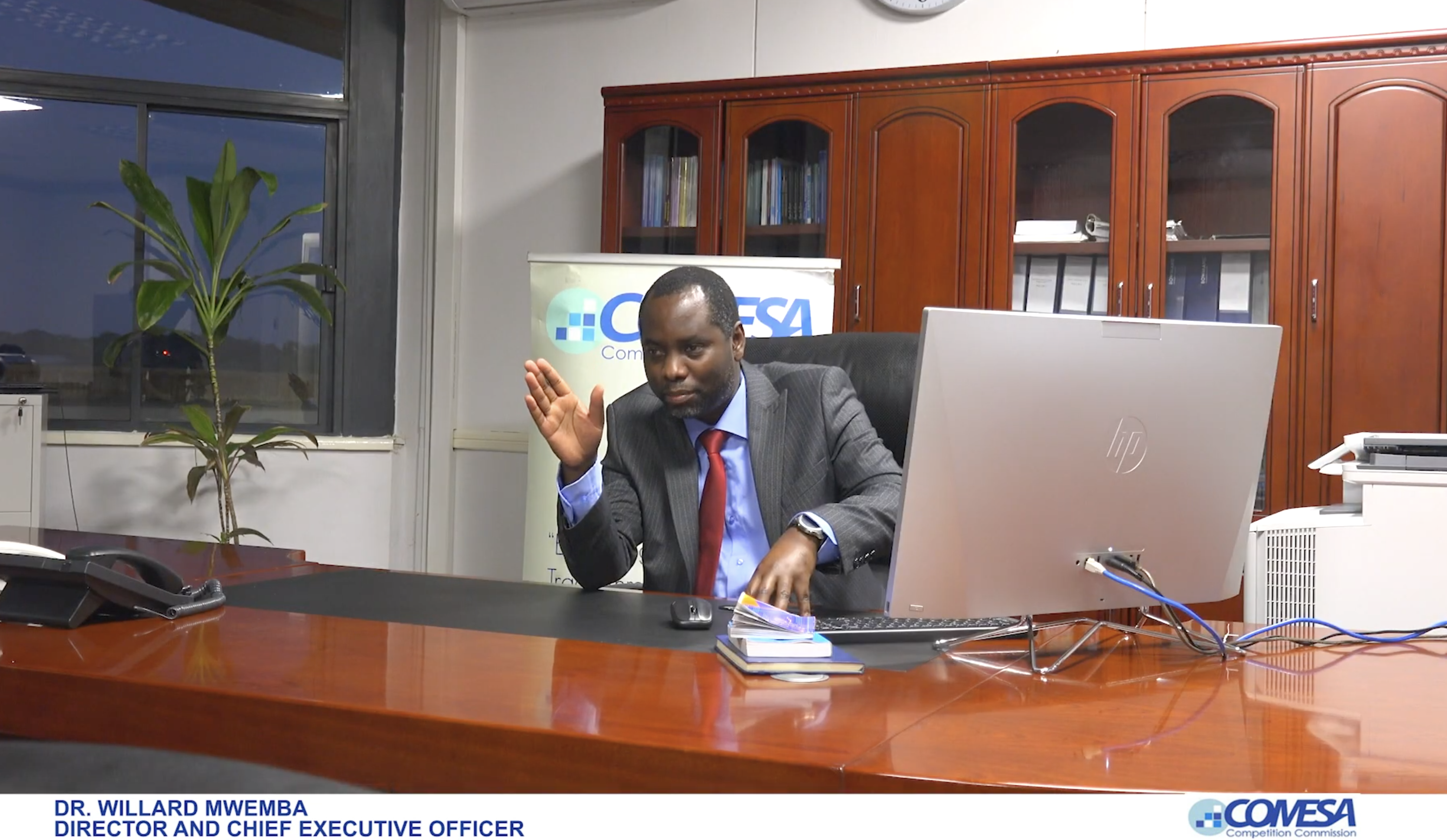
At today’s formal resumption of the recurring event, Dr. Willard Mwemba, CEO of the COMESA Competition Commission, introduced the conference session by calling out the importance of the agricultural sector to the people residing in the region, especially the very poorest of citizens.

He stated in unmistakable terms that his agency would prioritize this and related markets for heightened antitrust enforcement, to ensure the sector operates efficiently and competitively. “Accessibility (and affordability) of food is one of the most fundamental human rights. $2 per day are spent by the poorest people on average, and the majority of those two dollars is spent on food,” noted Mwemba.

Says Andreas Stargard, who attended the session, “it is clear that the view of the Commission is that agricultural markets in COMESA are not functioning as they should, based on studies the agency has undertaken with outside assistance.  The massive foodstuffs price inflation levels COMESA residents have suffered in recent years are not merely natural consequences of irreversible climate change but rather represent mostly economic profit to the manufacturers and traders, to the detriment of consumers, based on what Dr. Mwemba presented today.”

COMESA Secretary General, Chileshe Mpundu Kapwepwe, summarized the stark importance of the AG sector to the region, its people, and the economic zone in sobering statistical terms: “The agriculture sector is one of the key sectors for most Member States as it contributes more than 32% to the Gross Domestic Product of COMESA, provides a livelihood to about 80% of the region’s labour force, accounts for about 65% of foreign exchange earnings and contributes more than 50% of raw materials to the industrial sector.”

In light of this crucial importance of the agricultural and food markets, food security is high on the list of action items that COMESA must address practically and effectively, she concluded.  COMESA evaluates supply and demand levels across all 21 member states to assist with market assessment and planning.

The Diplomatic Conference’s guest of honour, Zambian Minister of Commerce, Trade and Industry, Hon. Chipoka Mulenga, noted in prepared remarks delivered by his deputy and permanent secretary to COMESA that, while “food production must be profitable for farmers, it must not be exploitative.”

In this regard, the famous Adam Smith quote referenced by Dr. Mwemba at a prior antitrust session comes to mind: “It is not from the benevolence of the butcher, the brewer, or the baker that we expect our dinner, but from their regard to their own self-interest. We address ourselves not to their humanity but to their self-love, and never talk to them of our own necessities, but of their advantages.”

Beyond the immutable wisdom of the Wealth of Nations from two and a half centuries ago, the (1) CCC’s increased competition law enforcement in the agricultural and food sectors, as well as (2) national member states are assisting the effort of ensuring wide and secure availability to all COMESA residents by creating and strengthening cross-border value chains in the food sectors with overlaps across member state borders, the Zambian minister observed.

CCC Celebrates ’10’ — a Decade of COMESA Competition Law

Anniversary of CCC’s 2013 Creation to be Celebrated, Developments Discussed

Next week, African heads of state, ministers of trade and commerce, the secretary general of the 21-member state COMESA organization, Commissioners, and several heads of various competition agencies across the region, from Egypt to Eswatini & from Mauritius to Malawi, will join antitrust practitioners, legal experts, business people, and journalists in celebrating the occasion of the 10-year anniversary of the COMESA Competition Commission in Lilongwe, where the agency is headquartered.

Of course, AAT will be there to cover it.

As leaders of this august publication will know by now, our authors have followed the development of the CCC since its very beginning: from the nascent stages of having only a rudimentary staff and foundational rule documents, lacking sufficient guidance for practitioners and businesses alike, to the significant developmental stage under its first chief executive officer, Dr. Lipimile, who built out his enforcement team to coincide with the stellar growth of the CCC’s “one-stop-shop” merger notification statistics and attendant agency reviews (hiring economists and lawyers alike from across COMESA member nations) — and culminating, so far at least, in what we have come to call “CCC 2.0”: the latest iteration of the vastly successful multi-jurisdictional antitrust body, now led by its long-term member Dr. Willard Mwemba.

Under Mwemba’s aegis, the Commission has advanced well beyond a mere ‘rubber-stamping’ merger review body, as some had perceived the fledgling agency in its very early years (approx. 2013-15). The triple-C has since then begun to launch serious investigations into price-fixing, monopolization, attempted monopolization, gun-jumping, as well as market allocation schemes and secretly implemented transactions that parties had failed to notify.

While ‘antitrust is on our minds’, we note here for the record that, beyond its “competition” ambit that mostly remains in our focus at AAT, the CCC’s enforcement mission also includes a fairly large “consumer protection” brief, and the agency’s dedicated unit has investigated areas of consumer concern as broad as airline practices, imported faulty American baby powder, online ‘dark’ practices, pay-TV, and agricultural product quality disputes (milk and sugar come to mind) between Uganda and Kenya, to name only a few…

Our publication, together with several of the business journals and newspapers across the southeastern region of Africa, will report in great detail on the events, and possible news, to take place next week. Says Andreas Stargard, a competition practitioner with Primerio International:

“I look forward to hearing from these leaders themselves what they have accomplished in 10 years, and more importantly what they wish to accomplish in the near to mid-term future. In addition, I have a feeling that we may be treated to some truly newsworthy developments: I could imagine there being either confirmation or denials of the circulating rumour that the COMESA merger regime will soon become not only mandatory, but also suspensory. As most attorneys practicing in this arena know by now, the current Competition Regulations are not suspensory, which may be deemed too restrictive by the group’s Secretariat and its agency leadership in terms of its enforcement powers. After all, it is much more difficult to unscramble the egg than to never let it drop in the pan from the get-go!

Also, the CCC may reveal its plans in relation to a leniency programme for cartel conduct, which is plainly in order!”

Beyond that, Stargard surmises, participants at the almost week-long event may be treated to news about the CCC’s thoughts on digital markets, sectoral investigations, and the Commission’s upcoming “beyond-mere-merger” enforcement activities.

Breaking: CCC withdraws its recent Merger Practice Note

An AAT-exclusive first report on this — somewhat stunning — development follows below. More details to be published once they become available in a new post…

On August 8th, 2022, the CCC officially announced the formal withdrawal of its Practice Note No. 1 of 2021, which had clarified what it meant for a party to “operate” in the COMESA common market. The announcement mentions that it will (soon? how soon?) be replaced with a revised Practice Note — a somewhat unusual step, in our view, as the revised document could have, or should have, been published simultaneously with the withdrawal of the old one. Otherwise, in the “interim of the void,” legal practitioners and commercial parties evaluating M&A ramifications in the COMESA region will be left with no additional guidance outside the bloc’s basic Competition Regulations and Rules.

Of note, “this clarifying policy document did not stem from the era of Dr. Mwemba’s predecessor (CCC 1.0 as we are wont to call it), but it was already released under Willard’s aegis as then-interim director of the agency,” observes Andreas Stargard, a competition lawyer at Primerio Ltd. He continues: “Therefore, we cannot ascribe this most recent abdication to a change in personnel or agency-leadership philosophy, but rather external factors, such as — perhaps — the apparently numerous inquiries the CCC still received even after implementation of the Note.”

To remind our readers, we had previously reported on AAT as to this (now rescinded) note as follows (Feb. 11, 2021):

The COMESA Competition Commission (“CCC”) issued new guidance today in relation to its application of previously ambiguous and potentially self-contradictory merger-notification rules under the supra-national COMESA regime. As Andreas Stargard, a competition practitioner with Primerio notes:

“This new Practice Note issued by Dr. Mwemba is an extremely welcome step in clarifying when to notify M&A deals to the COMESA authorities. Specifically, it clears up the confusion as to the meaning of the term ‘to operate’ within the Common Market.

Prior conflicts between the 3 operative documents (the ‘Rules’, ‘Guidelines’, and the ‘Regulations’) had become untenable for practitioners to continue without clear guidance from the CCC, which we have now received. I applaud the Commission for taking this important step in the right direction, aligning its merger procedure with the principles of established best-practice jurisdictions such as the European Union.”

Toyota’s distribution & pricing agreements under COMESA scrutiny

Regional bloc’s antitrust enforcer further steps up investigations in the Common Market

By Gina Lodolo
On 16 June 2022, the Common Market for Eastern and Southern Africa (“COMESA”)’s Competition Commission (“CCC”) provided notice, as required by Article 22 of the COMESA Regulations (“Regulations”), that it launched an investigation into Toyota Tsusho Corporation (“Toyota”) in case no. CCC/ACBP/NI/3/2022.


Where the CCC has reason to believe that competition in the Common Market has been restrained, Article 22 of the Regulations requires the entity involved to be notified of the investigation, and further requires the investigation to be completed within 180 days of the notification. In this regard, the Toyota investigation was launched following allegations that the company contravened Article 16 of the Regulations. Article 16 (generally covering ‘restrictive business practices’) prohibits agreements that “may affect trade between Member States; and have as their object or effect the prevention, restriction or distortion of competition within the Common Market”.


The specific conduct referred to by Dr. Willard Mwemba, the Director and Chief Executive Officer of COMESA — who has revitalised the relatively young antitrust authority’s conduct investigations and increased its caché internationally by following best practices and engaging competition practitioners globally in the agency’s development and capacity-building process — includes Toyota’s distribution agreements with its authorised distributors. These vehicle distributors sell Toyota cars, trucks, and spare parts across the region, within their contractually designated territories. In this regard, the CCC is now investigating suspicions that the distribution agreements violate Article 16 of the Regulations in various ways — they may:
• Provide prohibitions on authorised distributors to sell outside of allocated geographic areas;
• Prohibit authorised distributors from indirectly selling outside of allocated geographic areas through selling to third parties, who they suspect will sell or transfer to another territory; and
• Indicate resale price maintenance by providing prices of Toyota products in the Common Market.

Andreas Stargard, a competition partner at Primerio Ltd. said, “this development shows how ‘CCC 2.0’ is truly emerging as a fully-fledged African antitrust enforcement authority and not a mere merger ‘toll booth’ regulator, which it essentially was for the first few years of its existence. The CCC has come a long way from the early days and is now pursuing abuse-of-dominance cases that it would not have had the capacity to tackle a decade ago”. Stargard observes that the Toyota case is “now the 3rd announced anticompetitive-business practice investigation of the year 2022 so far,” which is an absolute record for the CCC. “We’re talking proper grey-market / parallel-export restriction and RPM investigations here, this is no longer just a merger-fee collections agency.”

The agency invites public comment and further insight into Toyota’s dealings by 30th of July. Interested parties are invited to make comments to the Commission by 30 July 2022.

COMESA antitrust workshop addresses AfCFTA

The COMESA Competition Commission (CCC), under the leadership of its CEO and Director Dr. Mwemba, organised its first “Emerging Trends in Competition and Consumer Law Enforcement in the Wake of Regional and Continental Integration” workshop in Zambia, targeting legal practitioners across and outside Africa. Its objective is to discuss various issues in competition and consumer protection law enforcement at national, regional and continental level including emerging issues such as the African Continental Free Trade Area (AfCFTA).

Michael Currie, a competition partner at Primerio, said of the event, “Great to be participating at the COMESA Competition Commission’s first Workshop dedicated specifically to legal practitioners, hosted here in Livingstone. It was informative, and simply good to be travelling, meeting old friends and colleagues and seeing world heritage sights all in a few days work. This is an important initiative by the CCC as it expands its advocacy and enforcement initiatives across the Common Market. Important topics on the agenda including updates on the CCC’s approach to penalties, settlement procedures and investigations as well as the more robust merger regime in place. Thank you Willard Mwemba for the invitation and congrats on a well-organised event!”

New CCC Chief addresses World Competition Day, lays out future of COMESA antitrust policy

As we previously reported, long-time COMESA Competition Commission executive, Dr. Willard Mwemba, was recently promoted to his new role of permanent CEO of the CCC, after having been appointed Acting Director in February of this year. In this new capacity, he recently gave a thus-far unreported speech on the occasion of “World Competition Day” on December 5th, 2021.

In his short address, Dr. Mwemba lays out the mid-term future he envisions for the antitrust policy under his aegis in the Common Market, as follows.

Highlighting the importance of competition law for efficient and fair markets, with the goal of benefiting businesses (as opposed to being perceived as an impediment to business interests), Mwemba mentions key building blocks of the CCC’s enforcement going forward. These include resale-price maintenance and exclusive-dealing enforcement (around 1-1:30 in the little-known video, which has thus far only garnered two dozen views on the YouTube platform and is not yet published on the CCC’s own web site). He then moves on to merger regulation (2:45 onward), and further discusses the importance of the effectiveness of the actual competition law itself — noting that the CCC plans to amend its Regulations and Guidelines within the next year (3:40). Noting that the CCC cannot undertake this process very well alone, Mwemba highlights the cooperative approach of the Commission, partnering with and relying on other groups and stakeholders (such as the COMESA Women in Business group, OECD, and others).

Mwemba notes that the CCC’s “focus for the year 2022 will be on strict enforcement, especially against blatant anti-competitive conduct and blatant violations of the COMESA Competition Regulations, and in this case I mean cartels.  It is said that cartels are the supreme evil of antitrust … because it robs consumers, government, and businesses of huge sums…  So in line with this theme, our focus for 2022 shall be on cartels, and we shall make sure that we weed out all possible or potential cartels operating in the Common Market.”

The CCC chief concludes his address by saying that competition authorities “are not there to frustrate businesses, we are not the enemy of business”; instead, he sees the CCC’s role to ensure that markets operate fairly for all — a welcome reminder to the southern and eastern African business community to understand and embrace the precepts of antitrust law as an efficiency-enhancing mechanism for trading in the Common Market.

Dr. Willard Mwemba confirmed as CEO

APPOINTMENT OF DR WILLARD MWEMBA AS THE DIRECTOR AND CHIEF EXECUTIVE OFFICER OF THE COMESA COMPETITION COMMISSION

 November 15th, 2021  Competition CommissionFacebookTwitterShare

PRESS RELEASE

 APPOINTMENT OF DR WILLARD MWEMBA AS THE DIRECTOR AND CHIEF EXECUTIVE OFFICER OF THE COMESA COMPETITION COMMISSION

 The COMESA Competition Commission (the “CCC”) wishes to inform the general public that the COMESA Council of Ministers at its 42nd Meeting held on 9th November 2021 appointed Dr Willard Mwemba as its Director and Chief Executive Officer.

The Commission’s Board, Management and Staff members wishes to congratulate Dr Mwemba on his well-deserved appointment. Dr Mwemba has been with the CCC since January 2013 being its first Head of the Mergers and Acquisitions Department until his appointment as the Acting Director and Chief Executive Officer on 1 February 2021. He has acted in this capacity until 9 November 2021 when his appointment was confirmed. Prior to joining the CCC, Dr Mwemba was the Director of Mergers and Monopolies at the Competition and Consumer Protection Commission (CCPC), Zambia.

Dr Mwemba has been instrumental in the enforcement of competition and consumer laws both at national and regional level. At national level, he has assisted a number of national competition authorities in developing and operationalising their mergers and restrictive business practices divisions. At regional level, he has been instrumental in implementing and reforming the COMESA Competition Law regime.  He has written extensively on competition law and is widely consulted on the subject at global level.

Dr Mwemba holds several qualifications among them Bachelor’s degrees in Economics and Law from the University of Zambia. He also holds a Master’s degree in Competition Law from Kings College London. He further holds a PhD from the University of Cape Town specializing in competition law.

The Board of Commissioners, Management and Staff members of the CCC have great confidence in Dr Mwemba’s capabilities and wishes him well as he executes the mandate of enhancing intra-COMESA trade through the creation of competitive markets.

Competition Law Africa conference 2021 / this Tuesday

The Informa Competition Law Africa conference is back with a vengeance this year, albeit still held virtually due to the pandemic.

The overview can be found here, and the more detailed agenda here.

Speakers include South African enforcer Hardin Ratshisusu, COMESA chief Willard Mwemba, the OECD’s competition expert Frederic Jenny, Mahmoud Momtaz, head of the Egyptian competition authority, Lufuno Shinwana, senior legal counsel on competition issues for Anheuser-Busch Inbev, Ntokozo Mabhena, Anglo American’s Legal Advisor, and Maureen Mwanza, head of legal for the Zambian CCPC.

Primerio partner, Andreas Stargard, will host the afternoon panel on Vertical Restraints, interviewing Okikiola Litan, Senior Counsel, Commercial and Competition Law, with Coca-Cola Hellenic Bottling Company.

Chief enforcer departs CCC, Mwemba takes on role

February 17th, 2021: TODAY, the COMESA Competition Commission (“Commission”) released the following statement, wishing “to inform the general public that the tenure of office of Dr George Lipimile who was the Director and Chief Executive Officer of the Commission for the past ten years, came to an end on 31st January 2021.

Dr Lipimile was appointed by the COMESA Council of Ministers as the first Director and Chief Executive Officer of the Commission in February 2011. He served in this capacity at the Commission for ten years during which time he played a pivotal role in the establishment of the Commission as the first fully operational regional competition authority in Africa and the second fully functional regional competition authority in the world after the European Commission. Dr Lipimile tirelessly worked towards the enforcement of the COMESA Competition Regulations and Rules. He dedicated his time at the Commission in strengthening the institution with but not limited to:

  • Growth in its staff compliment;
  • Creating sound legal framework;
  • Processes and Procedures for enforcement of the Regulations;
  • Advocacy and technical assistance to COMESA Member States; and
  • Setting up the necessary corporate governance systems.

Further, the Commission wishes to announce to the general public that Dr Willard Mwemba has been appointed as the Acting Director and Chief Executive Officer of the Commission from 1st February 2021 until such time the substantive Director of the Commission is recruited. The Commission wishes to congratulate Dr Mwemba on his appointment as the Acting Director and Chief Executive Officer of the Commission.

Incoming Mwemba & outgoing Lipimile

Andreas Stargard, a Primerio competition lawyer who knows both men from having notified transactions to the CCC as well as socially, says that “an era is now concluded — namely the ‘Genesis Era’ of the CCC, as George was its very first, and thus formative, leader. That said, I am deeply assured by the appointment of Dr. Mwemba to his post as acting Director, as he is of utmost competence and I have no doubt will guide the Commission in the right direction in this new ‘CCC 2.0 Era’ after Dr. Lipimile’s departure.”