Competition Law conference provides most in-depth look at the state of Cameroonian antitrust law
Event organised by Dr. Patricia Kipiani and Prof. Tchapga of Primerio & CEMAC, the Cameroon school of business and its competition law section
What follows is an article that appeared in French in the Le Droit journal, written by Stéphane Ngoh, reprinted here with permission. An English translation is below. An interview with Dr. Kipiani related to the conference can be found here. In it, she discusses the planned creation of a “Competition Observatory” for the country.
 Le cabinet Primerio International a organisé un séminaire de sensibilisation aux enjeux du droit et de la politique de la concurrence au Cameroun et dans l’espace de la CEMAC. L’évènement lancé par le ministre du Commerce, M. Luc Magloire Mbarga Atangana s’est déroulé le 7 juillet 2016 au siège du GICAM à Douala.
Présenter la concurrence comme « un bien commun » à la collectivité et « renforcer la pédagogie de la concurrence dans ses dimensions juridiques et politiques» tels peuvent être les maitres mots du premier « rendez-vous de la concurrence» au Cameroun et en CEMAC impulsé par le cabinet d’expertise Primerio International et placé sous le thème «Du droit et de la politique de la concurrence au Cameroun et dans l’espace CEMAC ». Comme pour en souligner toute l’importance, le ministre du Commerce du Cameroun, Luc Magloire Mbarga Atangana, a fait le déplacement de la capitale économique dans l’optique d’en présider le lancement officiel. Le Docteur en droit et avocate au barreau de Bruxelles, Mme Patricia Kipiani, qui représentait le cabinet Primerio International pour l’occasion a expliqué combien cette première édition des « rendez-vous de la concurrence », se voulait sérieuse. Toute chose ayant justifié l’association aussi bien des universitaires de tous bords, du groupement inter-patronal du Cameroun (Gicam) que des autorités publiques camerounaises. Les Chercheurs de l’Université de Paris 1 Panthéon-Sorbonne en France et les spécialistes du droit de la concurrence, le Professeur des universités Martine Behar-Touchais et l’enseignant-chercheur Laurent Vidal ont fait le déplacement du Gicam.
 Le ministre du Commerce, qui intervient comme l’autorité publique de tutelle du secteur de la concurrence, a tenu à préciser que les rendez-vous de la concurrence ne pouvaient mieux tomber dans un contexte communautaire et camerounais situé à « la veille de l’entrée en vigueur des Accords de partenariat économique « APE », entre les pays ACP et l’UE dont le Cameroun est partie », ces accords qui impliquent une ouverture de l’économie imposent donc qu’un certain accent soit mis sur le droit et la politique de la concurrence. Au demeurant, le représentant de l’Etat du Cameroun à ce rendez-vous a tenu à réaffirmer la place reservée jusqu’ici à la concurrence, « notre conviction, a –t-il expliqué, est que le commerce a besoin d’un environnement sain et c’est la raison pour laquelle un arsenal des textes législatives ou règlementaires existe au Cameroun et cela témoigne de la volonté de l’état de réguler le secteur ». A l’appui de son affirmation, M. Luc Magloire Mbarga Atangana a soutenu que la volonté et la détermination du Cameroun à faire du droit de la concurrence un enjeu de poids, se traduit depuis des années. Pour s’en féliciter, il souligne que les premières velléités d’encadrement de la concurrence remontent aux années1990 et qu’autant les lois ont créé la Commission nationale de la concurrence (Cnc) autant des décrets en ont fixés les contours organisationnels et structurels. Le président de ladite Commission Léopold Boumsong, qui était dans la suite du Mincommerce, a été appelé à présenter les aspects nationaux de la concurrence et précisément le rôle de la Commission nationale de la concurrence. Ce rôle, comme l’a martelé le ministre, doit s’attacher à « poursuivre et sanctionner les pratiques anticoncurrentielles, en s’appuyant sur des textes datant et nouveau à l’instar de la loi cadre protection sur la consommation, de la nouvelle loi portant organisation des activités commerciales ainsi que la loi sur commerce extérieur ».
TROIS GRANDES PRATIQUES ANTICONCURRENTIELLES
 Le président de la Cnc a précisé à l’égard des chefs d’entreprises qui emplissaient la salle du Gicam qu’il existe sommairement 3 types de pratiques qui ont « pour effet d’empêcher, de fausser ou de restreindre de manière sensible, l’exercice de la concurrence au niveau du marché intérieur » au sens de la loi n°98/013 du 14 juillet 1998 relative à la concurrence. Il s’agit des abus d’une entreprise ou d’un groupe d’entreprises en position dominante sur le marché, des fusions et acquisitions d’entreprises et aussi des accords anticoncurrentiels. L’un dans l’autre, il est apparu que les pratiques anticoncurrentielles au Cameroun sont constatées par procès-verbal dressé par les membres de la Commission suite aux enquêtes consécutives à une plainte d’une personne physique ou morale ou à celles initiées par eux-mêmes.
Par la suite, les aspects multilatéraux de la concurrence ont été évoqués au travers de la présentation du rôle de la Conférence des Nations Unies sur le Commerce et le Développement (CNUCED) en matière l’accompagnement des politiques de concurrence. L’économiste de la CNUCED, Yves Kenfack a découvert le code CNUCED de la concurrence dont il a salué la pertinence tout en regrettant que celui-ci ne soit pas contraignant pour les Etats signataires.
 Un autre moment des échanges a porté sur les aspects croisés entre le point de vue de l’économiste et celui du juriste quant à la concurrence. C’est M. Flavien Tchapga, économiste, consultant lui aussi à Primerio International et professeur associé à l’Université Senghor d’Alexandrie, qui s’y est attelé face à l’auditoire de la salle des conférences du Gicam. L’intervention de ce dernier peut se ramener à une suggestion forte faisant suite à l’interrogation suivante : « peut-on réussir la sensibilisation sur la concurrence si l’on ne tient pas compte des spécificités de l’environnement local ? ». Réponse, en effet, dans un contexte où 9 entreprises sur 10 sont individuelles, il faut se méfier des formules des juristes qui sont souvent larges et complexifiées pour les économistes plus proches du terrain.
Au cours du rendez-vous de la concurrence, une table-ronde a été ouverte pour asseoir la dimension didactique de la rencontre. Les débats et les questions étaient placés sous la houlette de M. Martin Abega, administrateur de sociétés, ancien membre de la Commission nationale de la concurrence et Consul honoraire du Royaume des Pays-Bas au Cameroun.
En dernière analyse, les expériences pratiques de règlementations et de politiques de la concurrence en Europe et au Cameroun ont clairement été croisées par le biais de Martine Behar-Touchais et Laurent Vidal d’une part et de Me Abdoul Bagui d’autre part. Etant entendu qu’au Cameroun, la régulation est émiettée par secteur d’activités.
Ce sont concrètement toutes les difficultés liées au libre exercice de la concurrence qui ont été passées au crible. La contrebande, la persistance des monopoles dans certains domaines ou encore la contrefaçon relèvent de ces écueils épluchés par les soins des experts internationaux et locaux à l’instar des représentants du CNUCED, de CEMAC, de l’OHADA et surtout des entreprises camerounaises. Le Dr. Patricia Kipiani a expliqué qu’il était important que « les réflexions et les échanges reviennent sur les difficultés auxquelles se heurtent les entreprises, sur les difficultés liées à la concurrence déloyale, à leur impact sur le secteur informel et autres activités informelles des entreprises formelles. Et aussi qu’ un accent soit mis sur la réglementation et sur les politiques économiques susceptibles de promouvoir notre espace économique ».
Stéphane Ngoh
For our English readers, below is a Google Translate version in English of the article:
The international firm Primerio organized an awareness seminar on issues of law and competition policy in Cameroon and in the CEMAC zone. The event launched by the Minister of Trade, Luc Magloire Mbarga Atangana Mr. took place July 7, 2016 at the headquarters of GICAM in Douala.
Introduce competition as a “common good” to the community and “strengthen the teaching of competition in its legal and political dimensions” — such are the watchwords of the first “meeting competition” in Cameroon and driven CEMAC by the consultancy firm Primerio International and under the theme “from the law and competition policy in Cameroon and in the CEMAC.” As if to emphasize the importance, the trade minister of Cameroon, Luc Magloire Atangana Mbarga, made the trip from the economic capital with a view to chair the official launch. The Doctor of Law and lawyer at the Brussels Bar, Patricia Kipiani, who represented the firm Primerio International for the occasion explained how this first edition of “appointments of competition”, was meant seriously. Anything that justified the association both academics of all stripes, the inter-group employers of Cameroon (Gicam) that the Cameroonian public authorities. The researchers from the University of Paris 1 Panthéon-Sorbonne in France and specialists from the competition law, the University Professor Martine Behar-Touchais and Laurent Vidal teacher-researcher made the trip from Gicam.
Minister of Commerce, which acts as a public authority supervising the sector to competition, has insisted that the appointment of the competition could not get better in a community and Cameroonian context located “on the eve of the entry into force of the economic partnership agreements ‘EPAs’, between the ACP countries and the EU which Cameroon is a party “, these agreements which involve opening up the economy therefore require that a certain emphasis on law and the competition policy. Moreover, the representative of the State of Cameroon to this appointment held to reaffirm the place reserved far in the competition, “our conviction has -t he explained, is that the trade needs a healthy environment and that is why an arsenal of legislative and regulatory texts exist in Cameroon and it demonstrates the willingness of the state to regulate the sector. “ In support of its contention, Luc Magloire Atangana Mbarga argued that the will and determination of Cameroon to the competition law of a weight issue, resulting in years. To be welcomed, he stressed that the first framework for competition ambitions date back to the 1990’s and that so many laws created the National Competition Commission (CNC) as decrees have laid the organizational and structural contours. The president said Leopold Commission Boumsong, who was later in the MINCOMMERCE, was called to present the national aspects of competition and specifically the role of the National Competition Commission. This role, as insisted the minister, must strive to “prosecute and punish anti-competitive practices, based on texts dating and new like the law under protection on consumption, the new law on the organization of business and the foreign trade Act. “
THREE MAJOR ANTI-COMPETITIVE PRACTICES
The president of the CNC said against business leaders who filled the room Gicam there summarily 3 types of practices which have “the effect of preventing, distorting or restricting significantly, the year of competition in the internal market “under law No. 98/013 of 14 July 1998 on competition. This is abuse of a company or group of companies in a dominant market position, mergers and acquisitions as well as anti-competitive agreements. One the other, it appeared that anti-competitive practices in Cameroon are recorded in minutes drawn up by the Commission of the members following the investigations following a complaint from a natural or legal person or those initiated by them -Same.
Thereafter, the multilateral aspects of competition were discussed through the presentation of the role of the United Nations Conference on Trade and Development (UNCTAD) in support for competition policy. The economist of UNCTAD, Yves Kenfack discovered the UNCTAD code of competition which he praised the relevance while regretting that it was not binding on the signatory states.
Another moment of trade covered the Crusaders aspects between the views of the economist and that of the lawyer about the competition. It was Mr. Flavien Tchapga, economist, consultant also to Primerio International and associate professor at the Senghor University of Alexandria, which it is harnessed facing the audience of the Gicam conference room. The intervention of the latter can be reduced to a strong suggestion in response to the following question: “can we succeed awareness on competition if it does not take into account the specificities of the local environment? “. Response, in fact, in a context where 9 out of 10 companies are individual, beware formulas lawyers who are often larger and more complex to the nearest economists ground.
During the appointment of the competition, a panel discussion was opened to establish the educational dimension of the encounter. The debates and issues were under the leadership of Mr. Martin Abega, corporate director, former member of the National Competition Commission and Honorary Consul of the Kingdom of the Netherlands in Cameroon.
Ultimately, the practical experiences of regulations and competition policies in Europe and Cameroon have clearly been crossed through Martine Behar-Touchais and Laurent Vidal one hand and Mr. Abdul Bagui other. It being understood that in Cameroon, regulation is broken by sector.
These are all practical difficulties related to the free exercise of competition that were screened. Smuggling, the persistence of monopolies in certain areas or counterfeiting within these pitfalls peeled for the service of international and local experts like the representatives of UNCTAD, CEMAC, OHADA and especially Cameroonian companies. Dr. Patricia Kipiani said it was important that “the reflections and exchanges back on the difficulties firms face, the difficulties related to unfair competition, their impact on the informal sector and other informal activities formal businesses. And also that an emphasis on regulation and economic policies that promote our economic space. “
 Ten prominent authors offer eleven contributions that provide their varying perspectives on the subject of consumer choice. Various aspects of consumer choice are covered, such as the concept of freedom of choice in the application of EU competition law; the antitrust enforcement application of consumer choice by agencies; the historical origin of consumer choice as a concept grounded in German ordoliberalism; the economic approach adopted as well as the use of consumer welfare and consumer choice in competition law to reconcile it with intellectual property law; consumer choice as a mean to facilitate convergence between varying jurisdictions, and so on.
 The Competition Authority of Kenya (CAK) has recently announced that a number of proposed amendments to the Competition Act are currently pending before the National Assembly for consideration and approval.

 About half of these fees (approximately $1.5 million) were allocated to the national competition authorities in various COMESA states. However, competition authorities in COMESA member states – including Kenya, Zambia and Zimbabwe – continue to insist that merging parties lodge separate merger filings in their jurisdiction. This can add significant transactional costs – the filing fee in Kenya alone for a merger in which the merging parties combined generate more than KES 50 billion (about US $ 493 million) in Kenya is KES 2 million (nearly US $ 20 000). Since Kenya is one of the Continent’s largest economies, significant numbers of global transactions as well as those involving South African firms investing in African businesses are caught in the net.

 This week, the South African Competition Commission and Minister Patel explained to the country’s National Assembly why they decided not to take any enforcement action against alleged collusion in the fisheries industry.
 At issue in the present SA case was Sekunjalo Investments Limited, Sekunjalo Marine Services Consortium, Premier Fishing SA (Pty) Ltd, and Premier Fishing Consortium. They were alleged to have entered into an agreement to collude by discussing and coordinating the preparation of their respective bids to the Department of Agriculture, Forestry and Fisheries in respect of a tender to supply marine patrol services to DAFF. In light of their nature as a single economic entity, no further investigation or enforcement is recommended.
 The attendees ranged from the SA Minister of Economic Development, Ebrahim Patel, and the Commissioner of the Competition Commission, Tembinkosi Bonakele, to their Russian and Kenyan counterparts. Kenya Competition Authority director general Francis Kariuki emphasised the officials’ desire to remove barriers to trade. He was quoted as saying he looked forward to exchanging information on cross-border cartels, which affect both the South African and Kenyan economies:
 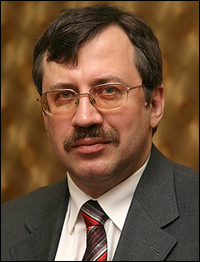 “We have regional economic communities and regional trade. There are some infractions in South Africa which are affecting Kenya and vice versa. We want to join hands to do market enquiries and do research. This will inform our governments when they come up with policies.”
 Mister Patel’s keynote address showed the glass half-full and half-empty, focussing in part on the need to “scale” the South African agency activity up to the level of the “success story” of domestic competition enforcement and its large caseload (quoting 133 new cartel cases initiated in the past year).
 The SACC has not provided an indication of the period over which conduct took place and whether this investigation relates to historical or on-going conduct. This is an important consideration in light of the introduction of criminalisation of cartel conduct, which came into effect as of 1 May 2016. In terms of the Section 73A of the Competition Amendment Act, any director or person with management authority may be held criminally liable for ‘causing’ or ‘knowingly acquiescing’ in cartel conduct.
 African Antitrust & Competition Law