
AfCFTA Anchors Aweigh: Novel Pan-African Antitrust Regulator Takes Shape

Having reported on the promise and challenges of the African Continental Free Trade Area (“AfCFTA”) and its regulatory ambitions previously here, our Editor was fortunate to attend the inaugural AfCFTA conference of competition-law experts this week. Reporting from Lomé, Togo, he relayed an excellently-planned and executed meeting — cleverly scheduled adjacent to the massive annual Biashara Afrika 2026 convention taking place in the Togolese capital this year, drawing thousands of attendees from the trade and commerce world. Together, under the broader umbrella of “Powering Africa’s Economic Transformation through the AfCFTA,” the two events convened policy-makers and business leaders to push for a single market and boosting Africa’s trading position on the global stage.

Over 200 participants attended the antitrust conference, with its theme of “Harnessing Competition as a Catalyst for African Market Integration,” assembled by the leadership of Malick Diallo, Head of AfCFTA’s Competition Division and his Ghana-based team of organizers. The competition-focused meetings at the five-star Hôtel 2 Février were well attended throughout both days, covering topics ranging from the tricky subject of multi-jurisdictional mergers with regional overlaps to digital-market regulation and, importantly, listening to the private bar for their input.

In total, the meeting comprised 5 sessions and 3 keynotes over the course of two days, including speeches by NYU’s Prof. Eleanor Fox, the FCCPC legend Babatunde Irukera, Leonard Ugbajah of ERCA, and the European Commission’s DG COMP as well as OECD. Participants notably took in lessons learned from other regional enforcers (Dr. Willard Mwemba and Alexia Waweru from COMESA, Simeon Koffi, and Mor Backhoum from ECOWAS, the EAC, WAEMU and the AU) as well as National Competition Authorities. The latter ranged from Kenya, Egypt, Tanzania, Nigeria, Mauritius, South Africa, Tunisia, and others to the European Union and delegates from Switzerland and the World Bank. While David Kemei (CAK) and Florence Abebe (FCCPC) spoke on behalf of their agencies, notably absent from the discussion were representatives from the United States enforcement agencies, belying a further retrenchment of the DOJ and FTC’s prior capacity-building activities and international involvement under the current administration.
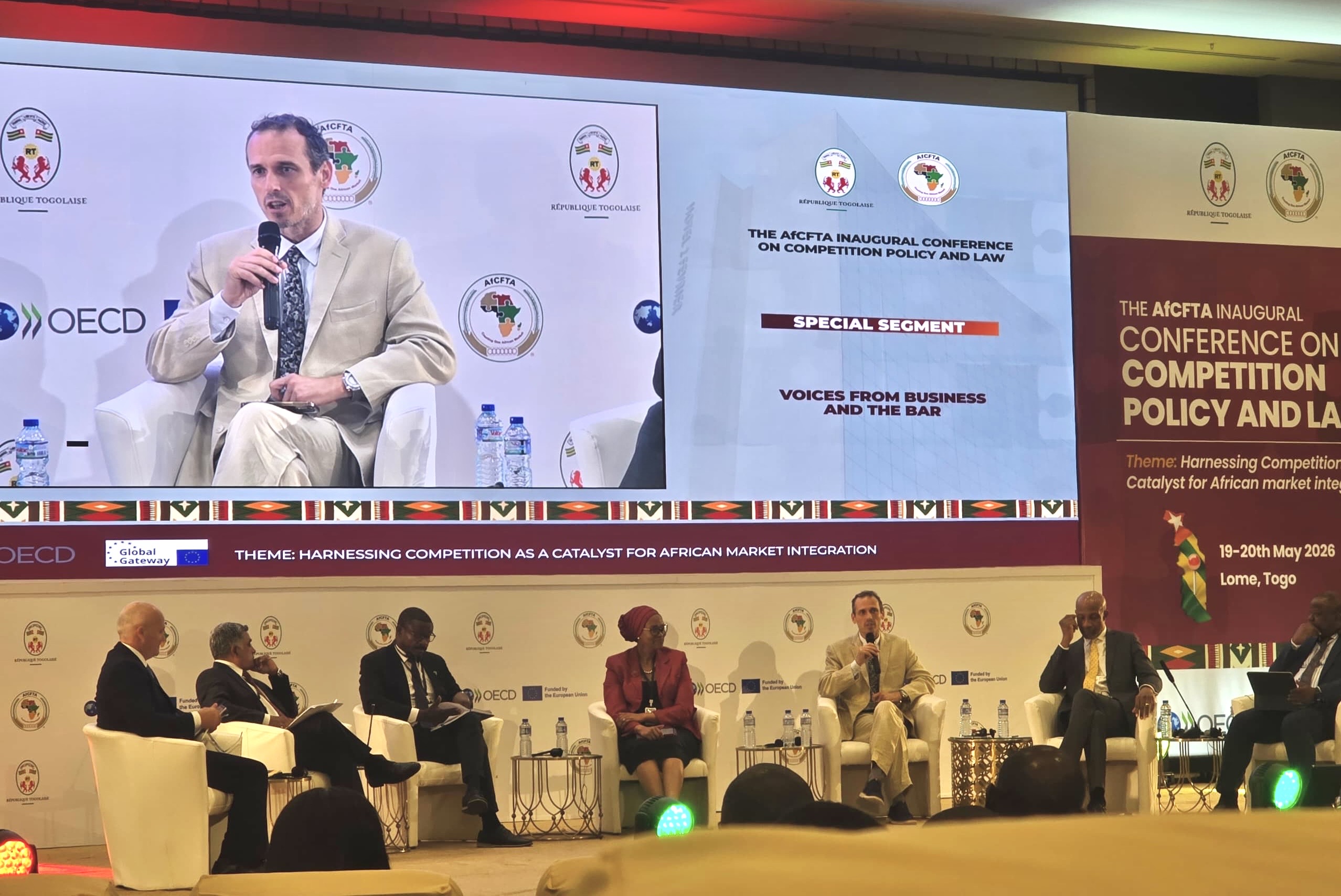
“I see the AfCFTA as perhaps the single most important building block for a truly cohesive, pan-African trade and commerce community so far,” says AAT’s Editor, Andreas Stargard, who attended the conference in his capacity as a practitioner with Primerio International. “Coming from quite a bit of EU and COMESA multi-national experience, I believe that managing those clearly unavoidable  jurisdictional conflicts in a regional body from the get-go will be crucial to its success, lending credence to the ‘Competition as Catalyst’ theme of the conference…”.

Below is the AfCFTA’s Concept Note, outlining further details surrounding the event:

THE AfCFTA INAUGURAL CONFERENCE ON COMPETITION POLICY AND LAW

A joint initiative of the AfCFTA Secretariat, the Organisation for Economic Co-operation and Development (OECD) and the European Union (EU)

Theme: 

“Harnessing Competition as a Catalyst for African market integration”

Lome, Togo                                                                                  19-20th May 2026

Introduction

  • Africa is entering a new phase of its economic integration journey. The African Continental Free Trade Area (AfCFTA) — the largest free trade area in the world by number of participating countries — has set in motion a transformation of the continent’s economic architecture. With a combined market of over 1.4 billion people and a GDP approaching USD 3.4 trillion, the AfCFTA offers an unprecedented opportunity to deepen intra-African trade, accelerate industrialisation, and position Africa as a global economic force. Realising that opportunity, however, requires more than the removal of tariffs and border barriers. It requires markets that are genuinely open, contestable, and fair — markets where competition determines outcomes, not the power of incumbents or the distortions of anti-competitive conduct.
  • That is where competition policy comes in. A dynamic, well-enforced competition framework is not a regulatory luxury; it is a foundational condition for the AfCFTA to deliver. It ensures that the gains of trade liberalisation are not captured by dominant incumbents, cartels, or anti-competitive mergers. It creates the conditions for new entrants, innovative businesses, and African SMEs to compete on merit. It underpins consumer welfare, productive investment, and the structural transformation that Africa’s integration agenda demands.
  • To support this vision, the Assembly of Heads of State and Government of the African Union, at its 36th Ordinary Session held in Addis Ababa, Ethiopia, on 18–19 February 2023, adopted the Protocol to the Agreement Establishing the African Continental Free Trade Area on Competition Policy (the “AfCFTA Competition Protocol”). The Protocol establishes a continental competition regime aimed at enhancing competition within the AfCFTA for improved market efficiency, inclusive growth, and the structural transformation of the African economies.
  • At the same time, African competition authorities and policymakers are being asked to grapple with increasingly complex issues: how to manage overlapping national, regional, and continental competition regimes; how to align competition, trade, and industrial policy objectives; how to tackle long‑standing competition problems in transport and logistics; and how to respond to the rapid rise of powerful digital platforms and new forms of market power in the digital economy. Despite significant progress, important gaps remain. A recent survey of competition frameworks conducted by the AfCFTA Secretariat and the OECD found that while 76.2% of surveyed African jurisdictions have a competition law framework in place, significant disparities persist in enforcement capacity, institutional design, and coherence between national, regional, and continental regimes.
  • The AfCFTA Conference on Competition Policy and Law  2026 is conceived as a practical, forward‑looking response to these challenges. Jointly convened by the AfCFTA Secretariat, the Organisation for Economic Co‑operation and Development (OECD) and the European Union, it provides a continental platform where competition authorities, trade and industrial policymakers, sector regulators, business leaders, legal practitioners, academics and development partners can think together about how competition policy can best support Africa’s integration and development ambitions.
  • The inaugural edition focuses on four interconnected themes that are shaping the continent’s competition agenda today, namely:
  • the emerging architecture of an integrated African competition regime which discusses the interplay between national, regional, and continental competition frameworks;
  • the interaction between competition, trade and industrial policies;
  • competition in the transport and logistics sector as a cornerstone of trade facilitation; and
  • competition and regulation in digital markets.

The Conference is designed not only to exchange experiences, but to generate concrete ideas on how to make these frameworks work in practice for a dynamic and integrated African market.

Conference Theme

  • The theme of the inaugural Africa Competition Conference is “Harnessing Competition as a Catalyst for African market integration”.
  • The theme captures a core belief of the Conference: that competition policy is not simply a compliance obligation, but a powerful driver of economic integration, productive investment, consumer welfare and sustainable development. It challenges participants to reflect on how competition law and enforcement can be shaped, implemented and coordinated across Africa to unlock the full integration gains of the AfCFTA.

Objectives and target audience

  • The overall objective of the Conference is to foster high-level, practical dialogue among competition authorities, regulators, policymakers, business practitioners, academics, and international experts on the key challenges and opportunities in African competition policy; and to generate concrete ideas that can inform future work under the AfCFTA.
  • More specifically, the Conference aims to:
  • Build a shared understanding of how the AfCFTA continental competition framework interacts with existing national and regional regimes, and how overlapping jurisdictions and enforcement responsibilities can be managed effectively;
  • Examine the interaction between competition, trade, and industrial policy under the AfCFTA, with a focus on practical approaches for ensuring coherence and managing tensions in key sectors;
  • Identify priority enforcement and regulatory actions to improve competition in Africa’s transport and logistics sector, with a view to reducing trade costs and facilitating intra-African trade;
  • Advance the understanding and implementation of Article 11 of the AfCFTA Competition Protocol in digital markets, including approaches to economic dependence, gatekeeper designation, and the interpretation of gatekeeper obligations;
  • Solicit practical perspectives from business leaders, legal practitioners, and in-house counsel on how African competition frameworks operate and how they can be strengthened; and
  • Lay the groundwork for a programme of future cooperation, technical work, and capacity-building under the AfCFTA, in partnership with the OECD, EU, regional economic communities, and other partners.

Conference Sessions: Background, Key Issues and Structure

Session 1: The triangle of policies – Competition, trade and industrial policy in Africa

  • Africa’s development strategy relies on an active industrial policy to build productive capacity and accelerate structural transformation, trade policy to manage market access across borders, and competition policy to discipline anti-competitive conduct. These three policy strands share the overarching goal of improving economic performance but can generate significant tensions, particularly at the sectoral level. The way in which these policies interact depends both on their underlying objectives as well as on the way in which they are designed and implemented.
  • Industrial policy instruments such as state aid, sector-specific incentives, special economic zones, and strategic procurement can create market distortions when poorly designed or captured by incumbents. Trade measures such as anti-dumping duties may protect domestic industries at the cost of consumer welfare. Conversely, aggressive competition enforcement, if not carefully attuned to development context, can undermine legitimate scale‑building and coordination efforts that industrial policy seeks to foster. Getting the balance right is one of the defining policy challenges for African integration.
  • This session draws on case studies from Africa and comparative experiences from other regions to explore practical approaches workable within the AfCFTA framework. It will examine:
  • Where competition, trade, and industrial policy are consistent and reinforce each other — and where tensions arise in practice;
  • The role of competition authorities as institutional voices  supporting a pro-competitive design or implementation of industrial and trade policy processes;How State Parties, RECs and the AfCFTA can promote policy convergence across the three domains; and
  • Lessons from jurisdictions that have successfully balanced competition and industrial policy goals.
  • Critical issues: Can African industrial policy ambitions be pursued without sacrificing the competitive market structures that drive long-term productivity? What role should competition authorities play in designing and reviewing industrial policy measures and what policy instruments should be considered to ensure industrial policies are pro-competitive? What level of convergence in competition, trade and industrial policy is realistic and desirable under the AfCFTA, and how can State Parties, RECs and AfCFTA institutions sequence this convergence over time? Which concrete experiences from other regions in aligning industrial strategy with competition rules are most transferable to African conditions, and what adaptations are required to make them fit the AfCFTA context?

Session 2: Towards an integrated African continental competition regime – The interplay between national, regional, and continental competition frameworks

  • Africa’s competition landscape is being reshaped by the AfCFTA Competition Protocol, which adds a continental layer to existing national laws and regional regimes such as those of COMESA, ECOWAS, the EAC and WAEMU. This deepens the integration architecture but also raises practical questions about overlapping jurisdictions, potentially conflicting obligations and greater regulatory complexity for businesses operating across borders. A central concern for practitioners, authorities and policymakers is how these interlocking regimes will function day to day.
  • This session will explore the emerging architecture of an integrated African competition regime. Discussions will cover:
  • The distinct features of existing supranational frameworks and their interaction with national laws and the AfCFTA regime;
  • The opportunities and challenges of cross-border enforcement, including coordinated investigations, merger control, and cooperation between national and regional bodies;
  • How businesses can navigate an evolving multi-level regulatory landscape;
  • Lessons from comparable supranational architectures, including the EU; and
  • The status of AfCFTA competition regulations and the roadmap to operationalisation.
  • Critical issues: How can concurrent jurisdiction be managed to minimise conflict and duplication, while fostering consistent outcomes? What institutional and procedural mechanisms are needed to coordinate enforcement between national authorities, REC bodies, and the future AfCFTA Competition Authority? How can the continental regime support, rather than burden, smaller jurisdictions with nascent competition frameworks?

Session 3: Levelling the playing field – Competition in Africa’s transport and logistics sector

  • The transport and logistics sector constitutes a cornerstone for the development of an integrated internal market in Africa. However, transport and logistics costs are among the highest globally, operating as a de facto tariff on intra‑African trade. Regulatory shortcomings and anti‑competitive conduct in this sector are a major part of the problem: restrictive and onerous licensing and access regimes, fragmented multi‑modal regulation across borders, cartels in road freight, concentrated control over ports and terminals and gaps in essential infrastructure access all depress trade, push up prices and undermine the competitiveness of African producers.
  • As the AfCFTA deepens tariff liberalisation, the relative importance of logistics costs as a constraint on trade increases. Sector-specific regulatory assessment and reform, complemented by robust competition enforcement, is therefore a necessary companion to trade liberalisation. This session brings together competition authorities, transport regulators, corridor agencies, and industry representatives to identify the main sources of competitive harm, share enforcement and regulatory experience, and discuss targeted reforms.
  • The session will address:
  • How existing regulatory frameworks (licensing, concessions, access rules, corridor agreements) shape market structure and entry, and where they unintentionally hinder access, increase discretionary powers and entrench monopolies or cartels;
  • The main patterns of anti‑competitive conduct in key transport and logistics markets (road freight, ports and terminals, aviation, multimodal logistics), and how they affect prices, service quality and reliability;
  • The Yamoussoukro Decision and Single African Air Transport Market (SAATM) from a competition perspective;
  • Practical cooperation models between competition authorities, transport regulators and corridor institutions for investigating and remedying harmful practices;
  • The role of competition assessments and market studies in informing transport and logistics reform under the AfCFTA; and
  • How to incorporate competition objectives into ongoing regional infrastructure initiatives and corridor development programmes.
  • Critical issues: How can competition authorities and transport regulators coordinate to address practices that span their respective mandates? Which regulatory reforms would most effectively improve contestability in key transport markets? How can the AfCFTA regime support an effective and coordinated approach to removing competition barriers in logistics?

Session 4: Competing in the digital age – Digital trade, platform markets, and Article 11 of the AfCFTA Competition Protocol

  • Digital trade is reshaping African markets and will increasingly determine whether African businesses and consumers participate competitively in the broader global economy. Africa’s digital economy is characterised by fast-growing platform markets, expanding mobile and fintech ecosystems, and the rapid penetration of digital intermediaries into commerce, payments, logistics, and communications. This creates new opportunities but also new forms of market power and dependence.
  • Article 11 of the AfCFTA Competition Protocol is the continent’s primary legal tool for tackling competition concerns in digital markets. It introduces the notion of “economic dependence”, prohibits abuses of that dependence that significantly harm competition in the AfCFTA market, sets out a detailed list of forbidden practices for core platforms (such as self‑preferencing, certain parity and anti‑steering arrangements, tying, and unjustified limits on data portability and interoperability), and mandates the development of a Regulation to identify and subject “gatekeeper” platforms to these obligations.
  • At the same time, the AfCFTA Digital Trade Protocol, adopted in February 2024, sets harmonised rules on e‑commerce, data flows and digital identities, making coherence between competition and digital trade rules an important implementation challenge.
  • The session will explore:
  • Defining and assessing economic dependence in African digital markets in practice; what indicators and evidence are relevant, and how this differs from standard dominance analysis;
  • The specific prohibited practices in Article 11; how they should be interpreted, which are most relevant to African market realities, and what enforcement challenges they present;
  • Options for a gatekeeper designation framework under Article 11(5), drawing on the EU Digital Markets Act and other international experience while calibrating criteria and thresholds to African conditions;
  • The enforcement capacity and institutional tools that authorities need to investigate digital platform conduct under Article 11; and
  • The interface between Article 11 and the Digital Trade Protocol on data portability, interoperability, and access to data.
  • Critical issues: How should economic dependence be assessed where multi-homing is possible but switching costs are high? What designation criteria would be both rigorous and proportionate for African digital markets? How can authorities with limited resources build capacity to investigate platform conduct? How can coherence between Article 11 and the Digital Trade Protocol be ensured?

Special Segment: The Lome Roundtable: Voices from business and the bar

  • This special segment departs from the formal panel format to provide an open forum where business leaders, legal practitioners, and in-house counsel engage directly with competition authorities and policymakers. The Lome Roundtable is designed to bring out the day‑to‑day concerns and realities of dealing with African competition regimes: compliance costs, merger clearance timelines, enforcement unpredictability, market access barriers, and the challenges of navigating multi-level competition regimes, that may not be fully visible from a purely institutional perspective.
  • The Roundtable reflects the Conference’s commitment to ensuring that competition law serves not only as an enforcement instrument but as a framework that enables businesses to operate, grow, and trade across African borders with confidence. Open and structured dialogue between enforcers and the business community is a hallmark of mature competition systems, and the Lome Roundtable is designed to institutionalise this practice at the AfCFTA level.
  • It will address:
    • Practical experience with African competition regimes: what works, what creates uncertainty, and what imposes disproportionate compliance costs;
  • How authorities can improve transparency, predictability, and responsiveness including in merger review, guidelines, and stakeholder engagement;
  • The specific challenges of operating across multiple overlapping competition jurisdictions; and
  • Practical suggestions for how the relevant stakeholder can improve competition frameworks from a business perspective.
  • Critical issues: What are the most significant compliance and enforcement challenges for businesses operating across African borders? How can merger review be made more streamlined and predictable? What kinds of guidance, tools or platforms would most help businesses navigate overlapping competition regimes?

Expected Outcomes

  • The expected outcomes of the Conference include:
  • A shared, practical understanding of how the AfCFTA continental competition framework interacts with regional and national regimes and the roadmap for its operationalisation;
  • Concrete insights and practical approaches for managing the interaction between competition, trade, and industrial policies at the national, regional, and continental levels;
  • A set of regulatory actions and priority enforcement to identify and address regulatory barriers and anti-competitive practices in Africa’s transport and logistics sector, with concrete suggestions for cooperation between competition authorities and sector regulators;
  • Key questions, indicators, and options for implementing Article 11 of the AfCFTA Competition Protocol in digital markets — including ideas for a gatekeeper designation framework and priority areas for guidance and capacity-building; and
  • Practical suggestions from business leaders and legal practitioners on improving the clarity, predictability, and accessibility of African competition frameworks.
African Antitrust — the Big Picture: 2025 in Review & Outlook for ’26

Competition-law specialists at Primerio have compiled the following snapshot of 2025.

Competition law enforcement across Africa continued its market trajectory of expansion throughout 2025, with early signals in 2026 enforcing a continent-wide shift towards more assertive, coordinated and policy-driven antitrust regulation. At both a national and regional level, authorities have increasingly moved beyond traditional enforcement and investigative tools.

A defining feature of 2025 has been the growing institutional confidence of African regulators. From the introduction and strengthening of regional regimes to the imposition of significant sanctions against multinational digital market players, African Antitrust enforcement bodies have demonstrated both technical capacity and willingness to ensure compliance with regional and national legislation. At the same time, legislative reform and increases in guidance notes and clarificatory tools signal an increasingly sophisticated regulatory environment, however, one which is more complex for multi-jurisdictional transactional and conduct risk.

This Snapshot spans the key developments we have previously reported on across Southern Africa, the Common Market for Eastern and Southern Africa (“COMESA”), the Economic Community of West African States (“ECOWAS”) and the East African Community (“EAC”), highlighting recent enforcement trends, institutional milestones and new policy innovations that shaped 2025 and which we anticipate will define the African Antitrust landscape as we move further into 2026.

Southern Africa

In South Africa, 2025 and early 2026 have been characterised by increasing interventions in mergers as well as continued use of exemptions and industrial policy.

Digital platform regulation was a defining theme in 2025. The South African Competition Tribunal’s (“SACT”) interim relief order in the Lottoland / Google Ads case signalled a willingness to ensure enforcement over exclusionary conduct in online advertising. This assertiveness was echoed in the GovChat v Meta ruling, where the SACT’s approach to platform access and data inoperability signalled the intention to rest the outer bounds of abuse of dominance enforcement against global big-tech firms.

In parallel, South Africa saw emerging scrutiny from the consumer protection angle, with the South African National Consumer Commission probing e-commerce platforms’ data practices and compliance frameworks, highlighting the convergence between competition and consumer protection enforcement in digital markets.

The South African Competition Commission’s (“SACC”) media and digital platforms market inquiry outcomes, as well as the Google’s agreement to pay ZAR 688 million to South African media, have further illustrated how negotiated remedies and sectoral interventions are being deployed to rebalance digital value chains.

Exemptions and block exemptions have remained a central tool available to parties in South Africa. The granting of Transnet’s 15-year exemption raised significant debate about the appropriate balance between enabling infrastructure coordination and preserving competitive neutrality. Subsequent developments in exemptions, including the block exemption in respect of Phase 2 of the Sugar Master Plan and corridor-based logistic exemptions, confirm that exemptions are being embedded as a long-term sector restructuring tool rather than temporary measures to allow coordination as well as a means to attain specific public interest and industrial policy goals.

Procedural and evidentiary developments have also shaped the landscape. The SACT’s decision granting absolution in the X-Moor tender cartel case clarified the evidentiary burden in collusive tendering prosecutions, reinforcing the need for robust inferential and documentary proof.

In relation to developments in merger control proceedings in South Africa, intervention dynamics were tested in Lewis Stores application to intervene in the merger between Pepkor Holdings Limited and Shoprite Holdings Limited. The South African Constitutional Court permitting Lewis’ intervention have raised much debate as to whether intervention by third parties frustrates and unduly delays the finalisation of merger hearings in South Africa.

The SACC had introduced a number of guidelines in relation to treatment of confidential information, as well as gatekeeper conduct with respect to pre-merger filing consultation processes, online intermediate platforms, notifications of internal restructures meeting the definition of mergers, and price-cost margin calculations. More recently, there have been proposed revisions to the SACC’s merger thresholds and filing fees, signalling a move towards greater ease in deal negotiation.

COMESA

2025 was a landmark year for both regulatory and enforcement developments in the COMESA region.

Most significantly, 2025 saw the introduction of the newly renamed ‘COMESA Competition and Consumer Commission” (“CCCC”) and the publication of the much anticipated COMESA Competition and Consumer Protection Regulations (2025). Early 2026 has also brought subsequent clarifications released by the CCCC with regard to its new suspensory merger regime in order to provide further insight into the CCCC’s approach in regulating mergers now brought to its attention.

The COMESA Court of Justice’s decision regarding the legality of safeguard measures imposed by Mauritius on edible oil imports from COMESA Member States demonstrated continued willingness of regional bodies policing activities of individual Member States.

Regional integration has been further reinforced through a number of cooperation initiatives, including formalised engagement between COMESA and the EAC on competition and consumer protection enforcement.

At Member State level, national competition regimes continue to interact dynamically with the regional system – this has been demonstrated by merger control retrospectives in Malawi, and regulatory developments in Zimbabwe. The Egyptian Competition Authority has, through recent guidance, also sought to provide further clarity with respect to its merger control regime and align with international best practice.

When considered alongside reflections on enforcement trajectory more broadly throughout the COMESA Common Market, the CCCC appears to be consolidating a far more assertive and procedurally sophisticated authority.

EAC

The operational launch of merger control marked a structural milestone for the East African Community Competition Authority (“EACCA”). The EACCA’s confirmation that it would begin receiving merger notifications from November 2025 introduced yet another operational regional authority on the African continent.

National enforcement has remained active alongside this regionalisation. Tanzania’s merger control developments and enforcement strategy signal a regulator seeking sharper investigative tools and clearer procedural pathways. Institutional cooperation is also deepening, as evidenced by alignment initiatives between the Tanzania Fair Competition Commission and the Zanzibar Fair Competition Commission, aimed at reducing jurisdictional fragmentation.

Kenya has also provided some of the region’s most visible enforcement signals. The upholding of cartel sanctions in the steel sector confirms judicial backing for robust cartel penalties. Leadership transitions at the Competition Authority of Kenya may also influence enforcement measures leading into the new year. More recently, the fine imposed in the Directline decision underscores the reputational and financial stakes attached to non-compliance with Kenya’s competition regime.

ECOWAS

Nigeria has been at the forefront of digital enforcement measures in Africa. The Nigerian Competition and Consumer Protection Tribunal’s landmark decision upholding the Federal Competition and Consumer Protection Commission’s $220 million fine on WhatsApp and Meta for discriminatory practices signals both the scale of sanctions now at play.

Regionally, the Economic Community of West African States Regional Competition Authority (“ECRA”) merger control regime gained operational depth in 2025, having been launched in late 2024. Early analysis framed the regime as a foundational shift towards increased regional review, while subsequent approval decisions demonstrated increasing practical application and institutional learning.

Legislative reform also remains underway at Member State level. The Gambia’s draft competition bill reflects a move towards more proactive market inquiry and enforcement powers, suggesting that more novel African national regimes are evolving in tandem with regional frameworks.

Conclusion and Outlook for 2026

Across the African continent, several cross-cutting themes have emerged. First, in line with global antitrust enforcement, digital market investigations and enforcement remains a focus point. From South Africa’s media and digital platform market inquiries and exclusionary investigations to Nigeria’s abuse of dominance sanctions and COMESA’s recent investigation into Meta, it is apparent that African competition authorities are increasingly asserting jurisdiction over digital platforms. Second, exemptions and public interest tools, particularly in South Africa, are being normalised as structural industrial policy instruments.

Regionalisation is also accelerating. COMESA’s long-awaited regulatory overhaul, the introduction and operationalisation of the EACCA’s merger regime and ECOWAS’ expanding enforcement collectively point towards a multi-layered African merger control framework requiring often complex, parallel and overlapping multi-jurisdictional navigation. Institutional cooperation agreements and memorandums of understanding further reinforce this trajectory, suggesting more coordinated enforcement and increased risk of detection.

Looking ahead, we note three developments which merit close attention. First, the practical implementation of new regional regulations, specifically those of the CCCC in COMESA, will test capacity, compliance as well as appropriateness of new regulatory hurdles in the global M&A space. Hand in hand with these, overlapping regional bodies will likely lead to jurisdictional disputes.  Second, Digital market remedies are likely to evolve. Finally, in line with recent developments elsewhere, the continued blending of competition, consumer protection, and industrial policy objectives suggest that African antitrust enforcement will remain uniquely pluralistic.

ECOWAS: ERCA Approves first Merger with Conditions

By Jannes van der Merwe

Since the election of the Council for the Economic Community of West African States’ (“ECOWAS”) competition authority, the ECOWAS Regional Competition Authority (“ERCA”) on 1 October 2024, the ERCA has taken significant strides in bolstering the region’s M&A presence.

The council of the ERCA approved its first merger with conditions on 8 August 2025 when the council approved the acquisition of MultiChoice Group Limited by the Canal+ Group SAS. This decision follows a detailed assessment carried out under the ECOWAS Community Competition Rules and the regulatory framework governing mergers and acquisitions within the common market. The transaction was formally notified to the Authority on 24 March 2025 and was declared complete on 2 May 2025 after all procedural requirements and conditions were satisfied.

The operation involves Canal+ increasing its shareholding in MultiChoice from an existing minority position of c.45.2%, to full control. Both companies are competitors in the distribution of audiovisual services in the ECOWAS region.

The Authority examined the structure of the regional audiovisual market which includes wholesale content supply and retail audiovisual services delivered through satellite digital terrestrial television and online streaming. Although the market is highly concentrated and characterized by strong players the analysis showed limited overlap between the parties due to linguistic segmentation. While the combined entity would hold a significant share at the community level the merger was not expected to substantially reduce competition within national markets. The presence of alternative providers including regional and global digital platforms also contributes to ongoing competitive pressure.

The Council of the ERCA acknowledged concerns expressed by stakeholders and consumers regarding potential risks of market dominance price increases and reduced content diversity. As a result, the acquisition was approved subject to conditions. The first of its kind in the common market.

The Council of the ERCA imposed the following conditions on Canal+:

  1. Canal+ is required to maintain a diverse range of audiovisual offerings for French and English speaking audiences;
  2. Canal+ to preserve existing distribution networks; and
  3. Comply strictly with competition rules and to also annually report to the Authority and notify any price changes to enable effective monitoring.

Michael-James Currie, director at Primerio, states: “This conditional merger is evidence that the ERCA intends to strike a balance between promoting investment into the region, while also considering the effects on the market and consumers.”

African Merger Control Regulation: A Look At Recent Developments

Megan Armstrong and Jenna Carrazedo

Michael-James Currie, director at Primerio, hosted an insightful webinar alongside Primerio’s in-country Partners, Mweshi Bunda Mutana for Zambia, Hyacinthe Fansi for Cameroon, and Cris Mwebesa for Tanzania. The conversation provided an extensive look into recent developments in merger control across Africa’s principle regional competition authorities and can be accessed here.

This deep dive showed a significant shift towards a more prominent enforcement, lower notification thresholds and stronger coordination between national and supranational regulators. Africa’s merger landscape has vastly changed over the past four to five years which has resulted in more complexity in multi-jurisdictional merger control, increased detection risk for non-notified transactions and a widened the set of jurisdictions that must now be considered for compliance.

This webinar session contained a slightly different focus as the inspiration for the session was to feature a more pragmatic approach that stems from how merger control has changed significantly in Africa over the past few years. There has been a very clear shift in merger regulation and an increase of agencies that have adopted merger control or antitrust laws more generally. The rules and regulations surrounding merger control have become more sophisticated, and these developments are important for the agencies that make use of merger control, antitrust compliance and enforcement. As a result, it was highlighted that the CEMAC merger control has evolved from a basic framework to a more formalised and substantive merger control regime. This is evident in how the system now imposes mandatory filings when both turnover and market share thresholds are met, even for foreign deals without substantial local operations. The system does remain very paperwork-heavy, and a growing concern is the high filing fee cap that is c. USD 70 million.

COMESA was described as Africa’s most advanced and prominent regional regulator in respect of merger control and is now preparing to make substantial amendments to its merger regulators which are expected to take effect in the beginning of 2026. These changes will include mandatory notification for greenfield joint ventures, provisions on digital markets, provisions relating to public interest considerations and questions regarding how regional and national priorities will be remedied.

The East African Community Competition Authority has now operationalised its merger control system, effective as of 1 November 2025. This regime has exclusive jurisdiction over mergers with cross-border effects involving at least two partner states, stated by Cris Mwebesa, and meeting a certain asset or turnover threshold of USD 35 million. The system includes a 120-day review period and filing fees, however several Member States have not domesticated this regional law which means that filings at a national level in parallel to the regional level should be expected. This means that there will be overlaps with COMESA and there is a lack of clarity on how the public’s interest will be prioritised which creates further confusion and uncertainty. Confusion can arise when, for example, Zanzibar’s separate competition authority adds an additional filing requirement for merger control.

The ECOWAS Competition Authority has been operational for around one year and has demonstrated steady progress in handling non-contentious mergers. This authority considers transactions at certain turnover levels and individual thresholds which renders the regime broad in scope. The jurisdictional thresholds for an ECOWAS filing remain low, which may result in challenges around when a dual filing is appropriate and delaying decision making by the respective authorities.

Evidently, across many jurisdictions there are varying levels of institutional maturity that influence regional merger control. This is seen in how Zambia has strengthened its relationship with COMESA, following recent domestic legislative amendments, whilst Tanzania’s national authority co-exists with emerging EAC obligations, creating an emphasised need for coordination. These national-regional intersections will continue to influence filing strategies, especially in sectors where public interest or national sensitivities are emphasised.

These insightful discussions highlighted that merging parties now face a more complex and differentiated compliance across Africa. Although procedural clarity continues to develop, the direction of development is clear in that African merger regimes are growing more enlightened, more interrelated and more aligned with global standards.

Africa’s Merger Control Regulation: A Look At Recent Developments

Megan Armstrong and Jenna Carrazedo

Michael-James Currie, director at Primerio, hosted an insightful webinar alongside Primerio’s in-country Partners, Mweshi Bunda Mutana for Zambia, Hyacinthe Fansi for Cameroon, and Cris Mwebesa for Tanzania. The conversation provided an extensive look into recent developments in merger control across Africa’s principle regional competition authorities and can be accessed here.

This deep dive showed a significant shift towards a more prominent enforcement, lower notification thresholds and stronger coordination between national and supranational regulators. Africa’s merger landscape has vastly changed over the past four to five years which has resulted in more complexity in multi-jurisdictional merger control, increased detection risk for non-notified transactions and a widened the set of jurisdictions that must now be considered for compliance.

This webinar session contained a slightly different focus as the inspiration for the session was to feature a more pragmatic approach that stems from how merger control has changed significantly in Africa over the past few years. There has been a very clear shift in merger regulation and an increase of agencies that have adopted merger control or antitrust laws more generally. The rules and regulations surrounding merger control have become more sophisticated, and these developments are important for the agencies that make use of merger control, antitrust compliance and enforcement. As a result, it was highlighted that the CEMAC merger control has evolved from a basic framework to a more formalised and substantive merger control regime. This is evident in how the system now imposes mandatory filings when both turnover and market share thresholds are met, even for foreign deals without substantial local operations. The system does remain very paperwork-heavy, and a growing concern is the high filing fee cap that is c. USD 70 million.

COMESA was described as Africa’s most advanced and prominent regional regulator in respect of merger control and is now preparing to make substantial amendments to its merger regulators which are expected to take effect in the beginning of 2026. These changes will include mandatory notification for greenfield joint ventures, provisions on digital markets, provisions relating to public interest considerations and questions regarding how regional and national priorities will be remedied.

The East African Community Competition Authority has now operationalised its merger control system, effective as of 1 November 2025. This regime has exclusive jurisdiction over mergers with cross-border effects involving at least two partner states, stated by Cris Mwebesa, and meeting a certain asset or turnover threshold of USD 35 million. The system includes a 120-day review period and filing fees, however several Member States have not domesticated this regional law which means that filings at a national level in parallel to the regional level should be expected. This means that there will be overlaps with COMESA and there is a lack of clarity on how the public’s interest will be prioritised which creates further confusion and uncertainty. Confusion can arise when, for example, Zanzibar’s separate competition authority adds an additional filing requirement for merger control.

The ECOWAS Competition Authority has been operational for around one year and has demonstrated steady progress in handling non-contentious mergers. This authority considers transactions at certain turnover levels and individual thresholds which renders the regime broad in scope. The jurisdictional thresholds for an ECOWAS filing remain low, which may result in challenges around when a dual filing is appropriate and delaying decision making by the respective authorities.

Evidently, across many jurisdictions there are varying levels of institutional maturity that influence regional merger control. This is seen in how Zambia has strengthened its relationship with COMESA, following recent domestic legislative amendments, whilst Tanzania’s national authority co-exists with emerging EAC obligations, creating an emphasised need for coordination. These national-regional intersections will continue to influence filing strategies, especially in sectors where public interest or national sensitivities are emphasised.

These insightful discussions highlighted that merging parties now face a more complex and differentiated compliance across Africa. Although procedural clarity continues to develop, the direction of development is clear in that African merger regimes are growing more enlightened, more interrelated and more aligned with global standards.

The Evolution of ECOWAS Merger Control: A Review of ERCA’s Latest Approvals

By Simone dos Santos and Megan Armstrong

Throughout November 2025, ERCA has examined and approved four merger transactions in Liberia. Liberia is a Member State of the Economic Community of West African States (“ECOWAS”), which was established in 1975 when the Heads of State and Heads of Government of fifteen Western African Countries signed the ECOWAS Treaty. As of 29 January 2025, Burkina Faso, Mali, and Niger officially withdrew from ECOWAS. The current Member States of ECOWAS include Benin, Cabo Verde, Côte d’Ivoire, The Gambia, Ghana, Guinea, Guinea Bissau, Liberia, Nigeria, Sierra Leone, Sénégal, and Togo; the headquarters of ECOWAS is in Abuja, Nigeria. The aim of ECOWAS is to promote cooperation and integration among Member States in order to raise the standard of living, maintain economic stability, foster relations, and contribute to the development of Africa.

Article 26(3)(a) ECOWAS Treaty sets out the priority sectors of the economy of Member States which include Food and Agriculture Industries, Building and Constructions Industries, Metallurgical Industries, Mechanics Industries, Electrical, Electronic and Computers Industries, Pharmaceutical, Chemical and Petrochemical Industries, Forestry Industries, Energy Industries, Textile and Leather Industries and the Transport and Communications Industries

In each of these sectors, there are mergers and acquisitions that take place, which are regulated by the ECOWAS Regional Competition Authority (“ERCA”).  ERCAS merger control regime became operational on 1 October 2024, and for any merger and acquisition that takes place, a notification must be submitted to ERCA for prior authorisation (See: Regulation C/REG.23/12/21). The four recent merger approvals centred around the following priority sectors: Mechanics Industries, Food and Agriculture Industries, as well as one of the Treaty’s aims, which is to ensure harmonisation in terms of education. The decisions have been made as follows:

ACQUISITION OF IVECO GROUP N.V. BY TATA MOTORS LIMITED COMMERCIAL VEHICLE HOLDINGS

On 19 August 2025, TML CV Holdings Ltd (“TMLCVH”), a company incorporated in Singapore, notified ERCA of its intention to acquire 100% of the shares issued in Iveco Group N.V., excluding its Defence Business Unit. The proposed merger would result in the full integration of both TMLCVH and Iveco Group N.V. commercial vehicles and powertrain divisions under the control of Tata Motors Limited. They are formally known as TML Commercial Vehicles Limited. The relevant market definition in this decision is the “global design, production and distribution of commercial vehicles (trucks and buses), as well as the supply of engines and related components to end customers and third-party manufacturers (OEMs).” The ERCA Council concluded that the merger is unlikely to reduce competition and the acquisition is authorised unconditionally, effective from 3 November 2025.

ACQUISITION OF TOYOTA GHANA LIMITED COMPANY (TGLC) BY TOYOTA TSUSHO MANUFACTURING GHANA CO. LIMITED (TTMG)

On 29 August 2025, Toyota Tshusho Manufacturing Ghana Co. Limited (“TTMG”) and Toyota Ghana Limited Company (“TGLC”) notified ERCA of TTMG’s intention to acquire the distribution business, assets, and operations of TGLC. The relevant market definition includes “new passenger cars, commercial vehicles such as buses and trucks, and the spare parts and after-sale services.” The ERCA Council concluded that the merger is unlikely to reduce competition and it promotes local industrialisation and regional trade integration. Additionally, it provides benefits to consumers as the service standards have been improved. The ERCA Council authorised this acquisition as unconditional. Despite the overlap in segments, the combined market share remains below the dominance threshold (Article 11 of the ERCA Manual on Market Dominance Thresholds). The authorisation of this acquisition is effective from 4 November 2025.

ACQUISITION OF HONORIS HOLDING LIMITED BY K2025283350 (SOUTH AFRICA) PROPRIETARY LIMITED (SA BIDCO), JOINTLY CONTROLLED BY OMPE SPV AND MANGRO HOLDINGS PROPRIETARY LIMITED

On 4 September 2025, SA BidCo notified ERCA of its intention to acquire 100% of the share capital of Honoris Holding Limited (“HHL”). After the merger, SA BidCo will be jointly controlled by an entity of the Old Mutual Group, OMPE SPV, as well as Mangro Holdings Proprietary Limited. This merger furthermore forms part of a broader restructuring and investment initiative led by Old Mutual Private Equity. The relevant market definition in this decision related to the “provision of private higher (tertiary) education services, including foundation-level preparatory programmes”. The ERCA Council concluded that the merger is unlikely to reduce competition and is expected to improve capacity, attract investment, and enhance the quality of education in Nigeria. The acquisition of HHL was authorised as unconditional and effective as from 6 November 2025.

ACQUISITION OF SIERRA LEONE BREWERY LIMITED BY AFRICAN BOTTLING GROUP ABG LIMITED

On 12 September 2025, African Bottling Group ABG Limited notified ERCA of its intention to acquire 98.07% of the share capital of Sierra Leone Brewery Limited (“SLBL”). This share capital was previously held by Heineken International B. The aim of this acquisition is to integrate SLBL’s brewing operations and distribution network into ABG’s beverage operations across the ECOWAS Member States. The relevant market definition in this decision is the “production and distribution of alcoholic and non-alcoholic beverages”. In this instance, this includes beer, other alcoholic beverages including beer, malt-based non-alcoholic beverages and carbonated soft drinks, juices or energy drinks. The ERCA Council concluded that the merger may lead to enhanced production efficiency, quality, and provide potential benefits to consumers. This merger is unlikely to reduce competition, however, it may moderately impact competition in Sierra Leone negatively. It is possible for this impact to be mitigated through appropriate remedies and therefore the Council concluded that the merger be authorised, subject to certain conditions, and is effective from 6 November 2025.

These four merger approvals highlight the Executive Directorate and Councils’ continuous effort to clear the docket before the end of 2025. In addition, the ERCA Council took this opportunity to visit Liberia’s Minister for Commerce and Industry to follow up on the progress of Liberia’s new Competition and Consumer Protection Bill. AAT looks forward to seeing developments and merger approvals made by the ERCA Council in 2026.

Game On for Regional Merger Control: EACCA to Start Receiving Merger Notifications from November 2025

By Megan Armstrong

In a long-anticipated move towards deeper regional integration and harmonised competition oversight, the East African Community Competition Authority (“EACCA”) has formally announced that it will begin receiving and reviewing merger and acquisition notifications with cross-border effects as of 1 November 2025

This marks a significant implementation milestone under the East African Community Competition Act, 2006, which established the EACCA as the supranational body responsible for enforcing competition policy among the eight EAC Partner States. These Partner States are the Republic of Burundi, the Democratic Republic of Congo, the Federal Republic of Somalia, the Republic of Kenya, the Republic of Rwanda, the Republic of South Sudan, the Republic of Uganda and the United Republic of Tanzania. 

Notably, on 10 June 2025, the COMESA Competition Commission (“CCC”) and the EACCA signed a Memorandum of Understanding (“MOU”) aimed at strengthening collaboration between the two agencies. With six of the eight East African Community (“EAC”) Partner States also being members of COMESA, the MOU seeks to minimise potential duplication in enforcement, while promoting joint advocacy efforts and an enhanced legal certainty and predictability for businesses operating across the region. 

Under the newly effective merger control framework, a transaction must be notified to the EACCA if the combined turnover or assets (whichever is higher) of the merging entities in the EAC equals or exceeds USD 35 million, and at least two of the undertakings have a combined turnover or assets of USD 20 million in the EAC, unless each achieves at least two-thirds of its aggregate turnover or assets in the same Partner State. 

Importantly, once a qualifying transaction is notified to the EACCA, there is no requirement to file with national competition authorities, thereby streamlining the merger review process for regional transactions. Merger notifications will be subject to fees ranging from USD 45 000 to USD 100 000, based on the size of the transaction. 

While the EACCA’s enforcement powers have been active in areas such as restrictive business practices, the operationalisation of merger control fills a long-standing gap in this regional competition regime. It also brings the EAC in line with other regional economic communities like the CCC and ECOWAS Regional Competition Authority (“ERCA”), which already exercise merger control functions. 

Firms with pending or planned transactions in the region should prepare to engage with the Authority under this new regime, ensuring timely filings and compliance from November onwards.

The ECOWAS Merger Control Regime: A New Chapter in Regional Competition Law

By Matthew Freer 

Introduction

The Economic Community of West African States (“ECOWAS”) marked a significant step toward deeper regional integration and market regulation with the formal activation of its merger control regime on 1 October 2024. This regime, now operational under the ECOWAS Regional Competition Authority (“ERCA”), brings a unified, supranational dimension to competition enforcement across the 15 ECOWAS member states. These member states are Benin, Burkina Faso, Cabo Verde, Cote d’Ivoire, The Gambia, Ghana, Guinea, Guinea-Bissau, Liberia, Mali, Niger, Nigeria, Senegal, Sierra Leone, and Togo.[1] This new framework aims to safeguard the regional market against anti-competitive mergers and acquisitions, foster economic development, and ensure fair competition. It also positions ECOWAS among the growing number of African regional economic communities introducing comprehensive competition oversight mechanisms.

Established on 28 May 1975 through the Treaty of Lagos, ECOWAS was conceived to promote economic integration across the West African sub-region. Its initial vision was to foster a large economic and trading bloc through cooperation in industry, transport, telecommunications, energy, agriculture, commerce, monetary and financial policy. Over time, ECOWAS has evolved to address broader governance issues, including political stability, security, and economic justice, making its merger control regime a natural extension of its mandate to build a fair and efficient regional economy.

Legal Foundations and Institutional Framework

The legal foundations and institutional framework for the ECOWAS merger control regime are built on a series of key legal instruments that establish the rules for competition within the region. The key foundational document is the Supplementary Act A/SA.1/12/08, adopted in 2008, which introduced the ECOWAS Competition Rules and established ERCA as the institutional mechanism to implement them.[2] This Act was followed by Regulation C/REG.23/12/21, which laid down the procedural rules for merger notification and review within the region.[3] In early 2024, Implementing Regulation No. 1/01/24 was promulgated to clarify notification thresholds, filing requirements, and review timelines.[4] These instruments collectively define the substantive and procedural contours of the regime and signal a shift toward rules-based governance of regional competition policy. 

Scope and Jurisdiction

The scope of the ECOWAS merger control regime is broad and designed to capture transactions with cross-border implications within the Community. The regime is both mandatory and suspensory in nature, meaning that parties must notify qualifying transactions and obtain clearance before implementation. Specifically, a merger must be notified if the parties involved operate in at least two ECOWAS member states and meet certain financial thresholds. The primary thresholds relate to turnover or asset value within the region: the combined turnover or relevant balance sheet total of the merging parties must exceed 20 million West African Units of Account (“WAUA”), roughly equivalent to $26.8 million, and at least two of the parties must individually exceed 5 million WAUA, or approximately $6.7 million.[5] Importantly, these thresholds are based on regional economic activity, rather than global figures, ensuring that the rules are directly tailored to the regional market context in which the member states operate. Still, companies operating primarily in a single large ECOWAS economy, such as Nigeria, may wonder whether regional thresholds fairly reflect domestic realities. 

Definition of Mergers and Control

Under the ECOWAS rules, the term “merger” includes a range of transactions such as acquisitions of control, the creation of joint ventures, or other forms of consolidation between entities.[6] “Control” is broadly defined to include not just the legal ownership of a majority of shares or voting rights but also de facto control—meaning the capacity to exert decisive influence over an enterprise’s strategic commercial behaviour.[7] In simpler terms, this means the ability to influence or decide a company’s major decisions and actions, even without owning it outright. This broad interpretation of control is similar to that used by both the Common Market for Eastern and Southern Africa (“COMESA”) and South Africa, which consider influence beyond shareholding, including through management or policy direction.[8]This mirrors a growing understanding across Africa that control can be exerted in subtle but decisive ways, not unlike influence in boardrooms or state-linked enterprises.

Procedural Review Timelines

Once a notification is submitted, ERCA’s Executive Director is tasked with the initial review of the merger, which must be concluded within 60 working days. If further information is required, the Director may extend this deadline by another 30 working days. After the completion of the initial review, the ERCA Council is granted an additional 30 working days to make a final decision on the transaction. This period may be extended by a further 15 days where necessary. Therefore, the total possible days for a final decision from the date of the initial notification is 135 working days. Although the legislation provides these timelines, it does not clarify the frequency of Council meetings, raising possible questions about potential procedural delays and administrative backlog. 

Understandably, given the novelty of the regime, there is a risk that administrative capacity may initially lag behind its procedural ambitions—though this is a challenge that is likely to diminish as institutional experience and capacity builds over time.

Notification Fees and Enforcement Penalties

The financial obligations imposed on notifying parties also deserve attention. A notification fee is payable and may amount to 0.1% of the combined annual turnover or asset value—whichever is higher—of the companies involved within ECOWAS. This fee structure, notably, has no statutory ceiling, which could render compliance particularly costly for large-scale mergers. Such uncapped fees introduce a level of uncertainty into the merger planning process and may discourage investment or create disparities between firms of different sizes. Given this, it might be worth considering a sliding scale or a cap to ensure that start-ups and small and medium enterprises (“SMEs”) are not unfairly burdened by compliance costs. Nevertheless, this mechanism reflects a growing trend among African competition authorities to align filing fees with the potential market impact of a transaction. 

If parties fail to notify a qualifying merger, or proceed with implementation before clearance is granted, ERCA may impose fines of up to 500,000 WAUA per day. These penalties, which equate to approximately $660,000 daily, are designed to ensure compliance and deter strategic non-disclosure.[9] This is notably harsher than COMESA’s flat $500,000 fine.[10] Such a stringent approach is consistent with the practices of more established jurisdictions and signals ERCA’s intent to enforce its mandate robustly. However, in a region where the ability to enforce regulations and the private sector’s understanding of competition law are still developing, this tough enforcement model could cause problems and require ongoing efforts to build capacity.

Substantive Assessment and Public Interest Considerations

In terms of substantive assessment, ERCA is empowered to block a merger that substantially lessens or is likely to substantially lessen competition within the ECOWAS common market. However, the authority also retains the discretion to approve otherwise anti-competitive mergers if they are deemed to serve a compelling public interest. This approach being similar to other African jurisdictions, particularly South Africa. Factors that may justify such exceptions include the promotion of socio-economic development, the protection of SMEs, and broader regional development goals.[11] This public interest override introduces a layer of flexibility to the competition assessment, but also demands careful balancing to ensure that economic efficiency is not sacrificed in pursuit of political or social objectives. Used wisely, this discretion can empower regional development—but overuse however could compromise the credibility of competition law as a neutral economic tool.

Appeals Mechanism and Judicial Review

The possibility of judicial review also reflects ECOWAS’s commitment to transparency and the rule of law. Parties aggrieved by ERCA’s decisions may appeal to the ECOWAS Court of Justice. This appeals mechanism is essential in safeguarding procedural fairness and offers a vital check on the Authority’s exercise of power.[12] However, the ECOWAS Court’s experience and ability to handle competition law cases are still developing, and it’s unclear how actively and effectively it will deal with these disputes. Building a body of jurisprudence will take time, but even a few early decisions could establish helpful precedent for future cases.

Emerging Challenges

Despite its promise, the implementation of the ECOWAS regime is not without its challenges. First among these is the potential for jurisdictional overlap with national competition authorities and with the West African Economic and Monetary Union (“UEMOA”), which also exercises competition law functions within several ECOWAS states. This duplication may result in regulatory uncertainty, forum shopping, and increased compliance costs for businesses operating in the region. In the East, COMESA faced similar early coordination challenges, and ECOWAS would do well to draw lessons from that experience in harmonising efforts with UEMOA. Moreover, the regime enters into force at a time of political uncertainty in West Africa, with three ECOWAS member states—Burkina Faso, Mali, and Niger—currently suspended or in the process of exiting the Community. The regional political context may complicate the regime’s uniform application and threaten its credibility as a pan-West African legal instrument.

Conclusion

Notwithstanding these concerns, the ECOWAS merger control framework represents a landmark moment in the evolution of African competition policy. It brings the region into alignment with global and continental trends, offering a platform for increased regulatory convergence and cross-border cooperation. For legal practitioners and multinational corporations operating in the region, the message is clear: compliance with ECOWAS merger rules is no longer optional, and legal due diligence must include early engagement with ERCA’s requirements. While aspects of the regime may still require some clarification and refinement, particularly in relation to thresholds, procedures, and enforcement modalities, the overall architecture provides a strong foundation for fostering competitive regional markets.

The operationalisation of the ECOWAS merger control regime is a welcome development for those advocating deeper economic integration and regulatory harmonisation in West Africa. As the Authority gains experience and jurisprudence begins to develop, ERCA is likely to become a central actor in shaping the competitive landscape of the region. For this to succeed, continued engagement between regional institutions, national authorities, and the private sector will be essential. The challenge ahead lies not only in enforcing the rules but in embedding a culture of compliance and competition across ECOWAS’s diverse and dynamic member states. In time, perhaps ECOWAS could even serve as a model for other African regions where economic integration is still at a conceptual stage.


[2] Economic Community of West African States (ECOWAS), Regulation C/REG.23/12/21 on the Implementation of the ECOWAS Competition Rules by the ECOWAS Regional Competition Authority (ERCA), December 2021

[3] Regulation C/REG 23/12/21 on the Rules of Procedure for Mergers and Acquisitions in ECOWAS

[4] Regulation C/REG.1/01/24 on the Procedural Manuals on Thresholds for Mergers and Acquisitions in ECOWAS. 

[5] Manual of Threshold for Mergers and Acquisitions and Threshold Indicating a Dominant and Monopolistic Position.

[6] Manual of Threshold for Mergers and Acquisitions and Threshold Indicating a Dominant and Monopolistic PositionAt page 3.

[7] Supplementary Act A/AS.1/12/08 Adopting Community Competition Rules and the Modalities of their Application within ECOWAS.

[8] COMESA Merger Guidelines (2014), sec. 2.3.


[10] COMESA Competition Rules, Art. 24.

[11] Economic Community of West African States (ECOWAS), Regulation C/REG.23/12/21 on the Implementation of the ECOWAS Competition Rules by the ECOWAS Regional Competition Authority (ERCA), December 2021.

[12] ECOWAS Regional Competition Authority (ERCA), Welcome to ECOWAS Regional Competition Authority, available at: https://www.arcc-erca.org/ (accessed 25 April 2025).

More Regional Antitrust: Competition law in West Africa at the hands of ECOWAS

After the successful launch (and by now, first decade) of its Eastern regional counterpart, the COMESA Competition Commission, as of today, West Africa’s ECOWAS body likewise boasts a supra-national antitrust enforcement regime. AAT will be following its path closely.

By Jannes van der Merwe

The Economic Community of West Africa States (“ECOWAS”) was established by fifteen West Africa countries (“member states”) in 1975 when the member states signed the ECOWAS Treaty, with the aim and objectives to maintain and enhance economic stability and development in Africa.[1] The member states signed the revised treaty in 1975, currently governing the member states.

The current member states are Benin, Burkhina Faso, Cabo Verde, Côte d’Ivoire, The Gambia, Ghana, Guinea, Guinea Bissau, Liberia, Mali, Niger, Nigeria, Senegal, Sieera Leone and Togo.

Authority Established in 2008

In 2008 ECOWAS implemented two pieces of legislation through the authority of the treaty to steer the competition framework within the member states. The first was the Supplementary Act A/SA.1/12/08, and the second Supplementary Act A/SA.2/12/ 08.

Supplementary Act A/SA.1/12/08:

The purpose of this piece of legislation (known as the Community Competition Rules) nutshell is to promote competition, enhance economic efficiency, prohibit anti-competitive conduct that restricts or distorts competition, ensure consumer welfare and to expand opportunities for domestic enterprises of the member states. [2]

Supplementary Act A/SA.2/12/ 08:

The purpose of this piece of legislation was to establish a regional body to be known as the ‘ECOWAS Regional Competition Authority’ (“the Commission”) to govern, oversee and implement the Community Competition Rules.

The Commission

The formal launching of the Commission took place in May 2019. In December 2021, together with further enactment of legislation, the Council of Ministers of ECOWAS amended Supplementary Act A/SA.2/12/ 08 to, inter alia, enhance article 2, governing the bodies of the ERCA[3].

The amendment established two formal bodies of the ERCA, being the Council and the Executive Board of the ERCA, together with the Executive Directorate who is the administrative, investigative and implementing body of the Council’s decisions[4].

On 2 October 2024 the newly elected Council of the Commission will be sworn in at Banjul, the capital of the Republic of Gambia. See photo below.

This event will mark the dawn of a new day for competition in West Africa, whereby the Commission, through the Council, will become fully functional in order to administrate and give effect to the Competition Rules to member states.

Legal Framework

The Commission, through the Council, will be able to give effect to the preamble of the Treaty and align a vitally important piece that was missing from the practical application of the treaty.

The Community Competition Rules will be the governing legislation providing the umbrella under which the Commission will operate.

During December 2021, the Council of Ministers for ECOWAS further enacted regulations to govern the rules and procedures to give effect to the articles of the Community Competition Rules established in 2008.

A brief description of all the relevant legal framework will be discussed below.

 The Competition Community Rules

The Competition Community Rules will regulate, inter alia, Agreements and Concerted Practices in Restraint of Trade; Abuse of Dominant Position; Mergers and Acquisitions; State Aid; Public Enterprises; Compensation for Victims of Anti-Competitive Practices; Authorisation and Exemptions; Agreements Concluded by Member States and the Application and Implementation of the Community Competition Rules[5].

ERCA’s Rules of Procedure in Competition Matters

Regulation C/REG.24/12/21[6] was established to set out the rules and procedures of the ECRA in competition matters and by doing so, harmonising competition laws, procedures, cooperations, investigations, exchange of information, decision making, enforcement, sanctions and compensation[7].

Supplementary Act A/SA.3/12/21

The amended act’s new article 3 provides a positive duty on the Commission to represent ECOWAS wherever necessary in matters of competition and consumer protection[8].

Mergers and Acquisitions in ECOWAS

Regulation C/Reg. 23/12/21[9] was established to set out the rules and procedures for mergers and acquisitions.

This regulation requires that merging parties of member states that meets the threshold will have to obtain prior approval before implementing. The merger threshold is governed by enabling Rule PC/REX.1/01/2024[10]

Leniency and Immunity Proceedings in Competition within ECOWAS

Regulation C/REG.22/12/21[11] was established to set out the rules, conditions and procedures of leniency and immunity applications to the Commission. Simultaneously, this regulation is a guide to the Commission in the exercise of its investigative and prosecutorial discretion in illegal cartels who, through their cooperation, help to reveal Cartel conduct[12].

Regulation C/REG.22/12/21 is accompanied with enabling Rule PC/REX.1/01/24[13] containing the manual for leniency and immunity applications and what leniency and immunity the Commission may grant for enterprises of member states which are engaged in anti-competitive behavior and who voluntarily disclose information to facilitate the Community Competition Rules.

Final Word

The operational ECOWAS Regional Competition Authority and the implementation of a functioning Council for the ECOWAS Regional Competition Authority is a leap forward in the West Africa competition sphere and will protect enterprises and enhance competition within the West Africa markets, providing benefits for entrepreneurs, enterprises and consumers.


[1] Article 3, ECOWAS Revise Treaty, 24 July 1993 (‘the treaty;’).

[2] Supplementary Act A/SA.1/12/08, Article 3.

[3] Supplementary Act A/SA.3/12/21 Relating to the Amendments of Supplementary Act A/SA.2/12/08.

[4] Article 2(new), Supplementary Act A/SA.3/12/21 Relating to the Amendments of Supplementary Act A/SA.2/12/08.

[5] Article 5-13, Supplementary Act A/SA.1/12/08.

[6] Regulation C/REG.24/12/21 on the ERCA’s Rules and Procedures in Competition Matters.

[7] Article 3, Regulation C/REG.24/12/21 on the ERCA’s Rules and Procedures in Competition Matters.

[8] Article 3(new), Supplementary Act A/SA.3/12/21 Relating to the Amendments of Supplementary Act A/SA.2/12/08.

[9] Regulation C/Reg.23/12/21 on the Rules of Procedure for Mergers and Acquisitions in ECOWAS.

[10] Enabling Rule PC/REX.1/01/24 on Manuals of the Procedures of the ECOWAS Regional Competition Authority.

[11] C/REG.22/12/21 on the Rules on Leniency and Immunity Procedures in Competition within ECOWAS.

[12] Article 1, C/REG.22/12/21 on the Rules on Leniency and Immunity Procedures in Competition within ECOWAS.

[13]  Enabling Rule PC/REX.1/01/24 on Manuals of the Procedures of the ECOWAS Regional Competition Authority.

Common Markets & the Race for Power in Africa: a Podcast Interview

Africa is a continent of 1.2 billion people.  From a consumer potential standpoint it matches China or India.  Yet historically, it has suffered from the lingering shadows of its colonial past, in addition to its current fractures, hostility, and ever-present corruption.

The continent is emerging fast, however, and is quickly accelerating into the 21st Century marketplace both from an investment and growth opportunity. From the digital revolution and increased free trade, to innovation in various industries, Africa may be the next market frontier to unfold into accelerated multinational presence.

In this podcast episode (available gratis on Apple, Spotify, and Sheppard Mullin‘s web site), Michael P.A. Cohen is joined by Africa competition and markets expert, Andreas Stargard, as he shares his insight to help multinationals navigate the African landscape.

What we discuss in this Podcast episode:

  • What do the Africa markets look like from a multinational business opportunity perspective?
  • Which countries in Africa have established markets? Which ones have growth potential?
  • How and why has China’s investment and influence across Africa intensified over the last couple of decades?
  • What type of digital revolution is taking place in Africa?
  • Is there a huge opportunity for mobile money on the continent?
  • How is free trade shaping up across the African continent? How do the AfCFTA’s goals tie in?
  • What Free Trade cooperation agreements exist among the East, West and South African nations? Will they succeed?
  • Where is Africa leading innovations?
  • How will African wars and corruption impact its ability to grow a multinational marketplace?

Who’s speaking:

Michael Cohen is the creator of the Nota Bene podcast. He began his career as an Assistant Special Prosecutor, investigating and prosecuting organized crime involvement with the failure of local financial institutions in the early 1990s, and has since practiced globally at several top law firms. In 2015, Michael joined Sheppard Mullin’s storied antitrust practice with a goal of putting his 25 years experience to work to complement the firm’s longstanding antitrust litigation group, helping to bridge government antitrust enforcement in Washington, D.C. to the firm’s strengths in Brussels, San Francisco and Los Angeles.

A co-founding senior member of Primerio, a business advisory firm helping companies do business within Africa from a global perspective, Andreas Stargard is legal, strategic, and business advisor to companies and individuals across the globe.  He focuses on antitrust and competition advice, white-collar counseling, contract dispute and negotiation, and resolution of global business disputes, including cartel work, corruption allegations and internal investigations, intellectual property, and distribution matters.  He has written and spoken extensively on these topics and many others.  Andreas also advises clients on corporate compliance programmes that conform to local as well as global government standards, and has handled key strategic merger-notification questions, including evaluation of filing requirements, avoidance strategies, cross-jurisdictional cooperation, and the like.

Beyond Pure Competition Law – Is Africa Leading the Way Forward in Antitrust Enforcement?

To all our Africanantitrust followers, please take note of the upcoming American Bar Association webinar on 2 July 2019 (11amET/4pmUK/5pm CET) titled:

“Beyond Pure Competition Law – Is Africa Leading the Way Forward in Antitrust Enforcement?”

In what promises to be a highly topical (telecon) panel discussion, Eleanor Fox, Andreas Stargard, John Oxenham, Amira Abdel Ghaffar and Anthony Idigbe will:

  • provide critical commentary of the most recent developments in antitrust policy across the African continent;
  • highlight the most significant legislative amendments and enforcement activities in Africa; and
  • analyze some of the key enforcement decisions.

South Africa, Nigeria, Egypt, COMESA and Kenya are among the key jurisdictions under the microscope.

Practitioners, agency representatives, academics and anyone who is an antitrust enthusiast will find this webinar to be of great interest. Not to mention companies actually active or looking to enter the African market place.

For details on how to participate, please follow this Link