Philips & innovation in Africa: Driving worldwide growth

Philips’ CEO Frans van Houten recognizes untapped potential, invests in Africa

new multi-part series

In February, AAT launched its multi-part series on innovation & antitrust as a thematic collection focusing on the concept of innovation markets and how competition and IP laws are able to address the, by definition, novel issues that arise.  Recently, and timely so, Philips has joined this debate.

Philips & the future of African innovation: From “things” to “ideas”

For one, Frans van Houten, its President and CEO, has been quoted as saying: “Innovation is our lifeblood and will be the main driver of profitable growth going forward. … I intend to drive innovation with more intensity to help us win new customers.”

Notably, Philips changed its official company slogan from “We make things better” to “We create better ideas.

Mr. van Houten (source: Philips)

Even more pertinent, Mr. van Houten not only recognizes the crucial forward-looking importance of innovation.  Unlike many Western corporate leaders, he positively links it with the economic growth prospects of Africa.  In an insightful piece entitled “How Africa’s innovation will change the world” (published on the Davos World Economic Forum blog), Mr. van Houten discusses the promises, challenges, and realities of African innovation and resulting economic growth.

The article highlights the intuitive, yet elusive, insight that challenges become opportunities when looked at with an inventive spirit.  It also addresses the importance of multi-disciplinary approaches (such as the one at the foundation of our #AntitrustInnovation series, combining law, economics, and business innovation) and that of partnerships:

Seven years ago, millions of Kenyans were struggling to access basic financial services such as a bank account; they were unable to transfer money or receive microcredit. Then, a locally developed mobile payment system called M-Pesa [see AAT coverage here; — Ed.] radically changed everything. Today, more than two-thirds of Kenya’s population uses M-Pesa to make and receive payments and an estimated 43% of the country’s GDP flows through the system. This is transforming life in the country, increasing income in rural households and spawning a range of start-ups.

This speedy adoption of mobile payments captures the enterprising spirit of African innovation. It reflects the resourcefulness with which people in Africa find local solutions to local issues. It also shows how Africa’s challenges are opportunities in disguise and how the continent can bypass development stages without paying for their replacement. Mobile phones, for example, were rapidly adopted in Africa because of the lack of fixed telecom infrastructure. And solar panels are being adopted faster than in other parts of the world, because kerosene is so expensive that the payback time for investments in solar power is months rather than years.

Healthcare is another exciting area. According to a report from the World Economic Forum, Africa faces 28% of the global disease burden with only 3% of the world’s healthcare workforce. In response, Africa is adopting new operating models and technologies. By training health extension workers to focus on education, family planning and sanitation, Ethiopia achieved a 32% drop in child mortality and 38% drop in maternal mortality. In Kenya, e-learning has taught 12,000 nurses how to treat major diseases such as HIV and malaria, compared to the 100 nurses a year that can be taught in a classroom.

Africa is also embracing new business models that tap into the vitality of the country’s communities. Philips, for example, teamed up with Inyenyeri, a Rwandan NGO, to give families access to an innovative cookstove. Crucially, the cookstove is given away for free and families pay for the stove by harvesting twigs, leaves and grass. This biomass is compressed into fuel pellets, half of which are returned to the family for personal use and half of which are sold by the NGO. The cookstove is produced in Africa, highly energy efficient and, because it is smoke free, significantly healthier.

This example also shows the power of partnerships, without which many African innovations would not come to fruition. Solar-powered light centres, for example, increase the social activity and productivity of communities by generating light after sundown. These communities, however, are often unable to invest in a light centre, so this technology is rolled out through NGOs and governments. Sometimes these light centres are used to power medical equipment such as an ultrasound, or refrigerators that store vaccines. This type of cooperation ensures that innovation generates both financial and social value.

The complexity of Africa’s challenges also requires a multidisciplinary approach to innovation. Kenya, for example, is investing in systems that encourage open innovation. This sees local universities and small and medium enterprises join forces with NGOs, governmental organizations and foreign multinationals such as IBM and Philips, which have set up regional research and innovation centres in Nairobi. Nairobi is also home to iHub, a booming community of local entrepreneurs, investors and some of the world’s leading technology firms.

For innovation to really succeed in Africa, other factors need to be addressed, too. There is a lack of prototyping equipment and workshops, so local innovators depend on Europe or China, making the process costly and cumbersome. And while there are good patent laws in place, there are still too many counterfeit versions of successful products. Also, international firms should source locally and work with local distributors, whenever possible. And governments should focus their development money on stimulating entrepreneurship and innovation.

While in Africa millions of people still live on less than $2.50 a day, the continent looks set to have a brighter future thanks to local solutions for finance, healthcare and energy that could become globally relevant. M-Pesa, for example, has already been rolled out in other African countries, India, Afghanistan and Eastern Europe. Perhaps sooner than we think, African innovations will help the rest of the world create lasting social and economic value.

[Frans van Houten, President and CEO, Royal Philips, emphasis and links added, How Africa’s innovation will change the world” published on Davos World Economic Forum blog.]

Investment: done

More than just writing op-ed pieces, Philips’ leadership has put its money where it matters: On March 20, 2014, the company (with 23-plus billion Euros in annual revenue) announced that it was establishing a “Research & Innovation Hub” in Nairobi, Kenya.  The full Philips statement says:

  • The Philips Africa Innovation Hub in Kenya will be the center for developing innovations “in Africa-for Africa” in the areas of healthcare, lighting and healthy living

  • Hub underlines Philips’ commitment to invest in Africa and provide Africa-relevant innovations to address key challenges facing the continent

 Nairobi, KenyaRoyal Philips (NYSE: PHG, AEX: PHIA) today announced the establishment of its Africa Innovation Hub in Nairobi, Kenya, which underlines the company’s commitment to invest in Africa. The Philips Africa Innovation Hub will work both on the creation of new inventions, as well as bringing these inventions to the market.

The Philips Africa Innovation Hub will do application-focused scientific and user studies to address key challenges like improving access to lighting and affordable healthcare as well as developing innovations to meet the aspirational needs of the rising middle class in Africa.

The Philips Africa Innovation Hub will be located at the Philips East African Headquarters in Nairobi, where African talents and international researchers will operate on the concept of “open innovation” and will work in close collaboration with the R&D ecosystem of Kenya and Africa. Philips is in discussions with local organizations and Universities on R&D collaborations to co-create meaningful solutions for Africa.

“We welcome the establishment of Philips’ Innovation Hub in Kenya; Philips is a globally recognized innovation powerhouse and their selection of Nairobi as the site to establish their African Innovation hub is a testament to the Kenyan government’s commitment to nurture the drive for research and innovation in the region”, says, Hon’ble Adan Mohammed, Cabinet Secretary for Industrialization. “We lend our full support to the investment being made by Philips and look forward to the outcomes of their Africa-specific research and projects that can contribute to transforming society, business and government across the continent”.

JJ van Dongen, Senior Vice President & CEO Philips Africa states: “Philips is passionate to invent, apply technology and partner to help people succeed. Our ambition is to create impactful innovations that matter to people and address the key challenges that confront society. With Kenya as a leader in the continent in science and entrepreneurship as well as a hub of collaboration on technology and innovation, Nairobi, is the ideal location to establish Philips’ African research presence. We want to tap into the city’s vibrant R&D eco-system and contribute to the process of co-creating new solutions, new business models and meaningful partnerships to provide innovations that make an impact.”
Enhancing people’s lives in Africa though meaningful innovations
Some innovations that Philips was already working on have now become part of the Innovation Hub, hence, the Philips Africa Innovation Hub will kick-off with ventures that are under development as well as in the pilot phase; these include:

Respiratory rate Monitor to support pneumonia diagnosis: Pneumonia is the leading cause of death among children under the age of five, resulting in 1.1 million deaths worldwide annually¹. Of these, 99% of deaths occur in developing countries in low-resource settings, which typically entail rural areas with very limited or poor healthcare facilities or with low-skilled health workers. The current diagnostic tools in such settings are not easy to use, can easily distract the workers from an accurate conclusion, and thus lead to a poor diagnosis.

The Innovation hub is working on the development and clinical testing of a robust and affordable Automated Respiratory Rate Monitor that aims to support the diagnosis of pneumonia among infants and children, using smart sensing technology on the body which is intended to be more accurate and reliable compared to manual processes being currently observed. This device will be specially designed for use by community health workers and nurses in rural areas. In Kenya, discussions are on with the Kenya Medical Research Institute (KEMRI) to further develop this project and co-create an effective solution tailored to circumstances in rural Africa.

Community care services: The development and testing of a work-flow innovation designed to reduce the number of avoidable maternal and child deaths. The purpose of the workflow is to enable remote area health centers to diagnose, triage, treat, stabilize and (prepare for) transport expectant mothers that come in for a check-up and treatment.

Smokeless cook stove: Philips has designed and is manufacturing this innovative stove to improve the lives of those who rely on wood or biomass for their daily cooking. These specially designed stoves are extremely efficient and significantly reduce the use of wood as fuel. The cook stove can reduce smoke and carbon monoxide emissions by more than 90% compared to an open fire² thus reducing the health risks of indoor cooking. The contribution of the innovation hub is to create new go-to-market models for these stoves.

Consumer solar solutions: Today an estimated 560 million Africans live without electricity; Philips is committed to improving access to lighting in Africa, for the majority of the population that lives in off-grid communities. The Innovation hub is designing and developing new consumer products using the combination of solar power and energy efficient LED technology. New go-to-market models are also being established to ensure these solutions become accessible to people that would not be able to afford them otherwise.

The Philips Africa Innovation Hub while headquartered in Kenya, will be responsible for pan-African research and projects and will have operations across Africa, linked to the Philips regional offices across the continent; the hub will be headed by Dr. Maarten van Herpen and will work in close collaboration with the Philips research labs in Bangalore, Shanghai and Eindhoven.

¹ Source : Unicef  www.unicef.org/media/media_70890.html
² Reference source:  Water boiling test version 4.2.2 done at accredited stove laboratory, Aprovecho Research Center, Oregon, USA.


Investment in Africa: Changing landscape, new hurdles

Questioning African antitrust growth prospects: Slowdown in economic investment (both organic and outside investment) may affect functioning of competition law on the continent

Recent developments in Africa have many scratching their heads and wondering whether the formerly wondrous economic-growth engine of the vastly resource-rich and otherwise economically still undervalued continent will soon experience a slowdown, if not come to a halt altogether.

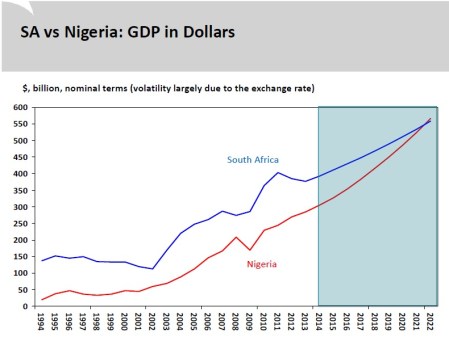
For one, in April 2014, Nigeria surpassed South Africa as the continent’s largest economy (see Economist Apr. 12, 2014: “Africa’s New Number One“).  This is a significant milestone for the former, and a setback for the latter — an economy that was 8 times the size of the Nigerian economy only 20 years ago, yet is now suffering from stagnating GDP, reeling from corruption allegations amongst its current leadership, undergoing a closely-watched presidential election process, and whose ruling ANC party is facing a heretofore unprecedented backlash and torrent of criticism.

Source: The Economist

Not only South Africa has weakened, politically and economically, however.  Events such as the Northern Nigerian wave of violence – with sectarian Boko Haram forcefully displaying the impotence of the central Nigerian government of a weakened president Goodluck Jonathan – fuel the fire of outside investors’ mistrust of African stability and their concomitant reluctance to make good on prior investment promises.  As The Economist notes in the article quoted above: “it is not a place for the faint-hearted” to invest, even though it highlights the successful Nigerian business ventures of outsiders such as Shoprite, SABMiller, and Nestlé.  Bloomberg BusinessWeek quotes Thabo Dloti, chief executive officer of South Africa’s fourth-largest insurer Liberty Holdings Ltd. (LBH), as saying: “It does slow down the plans that we have, it does put out the projections that we have by a year or two.”

http://www.stanlib.com/EconomicFocus/Pages/InterestingChart112SouthAfricaneconomyvsNigerianeconomy.aspx
Nigerian vs. RSA GDP
Source: http://www.stanlib.com

Likewise, multi-national organisations such as COMESA and its competition enforcement body, are undergoing significant changes (such as, currently, an opaque process of raising the heretofore insufficient merger-filing thresholds), shockingly successful web attacks on their data, and a resulting dearth of transactions being notified.  Elsewhere in developing economies, recent political turmoil has likewise led observes to comment on the negative spillover effect from political & social spheres into the economy (e.g., Financial Times, May 8, 2014: “Political crisis further dents prospects for Thai economy“).

Impact on antitrust practice

The upshot for competition-law practitioners and enforcers alike is rather straightforward, AAT predicts: more hesitation around African deals being done means fewer notifications, less enforcement, and overall lower billings for firms.

The flip side of the coin – as is usually the case in the economic sine curve of growth and slowdowns – is the commonly-observed inverse relationship of M&A and criminal antitrust: while we may see fewer transactions in the short term, the incidence of cartel behaviour and commercial bribery & government-contract fraud cases will likely increase.

Continental Divide: Revisiting the GE/Honeywell merger saga

A Merger Denied, 13 years later: The GE/Honeywell Saga

Through COMESA, a regional organization on which this resource has published extensively, African countries have made a significant foray into cross-border merger control.

As the world’s competition regimes continue to proliferate, a global understanding and international cooperation are becoming increasingly essential to a coherent worldwide merger-control scheme and parties’ concomitant legal strategy.

(Originally published by Thomson Reuters Limited in: Sophia A. Vandergrift and Josselin J. Lucas, “The GE/ Honeywell Saga? Ehh, What’s Up Doc? A comparative approach between US and EU merger control proceedings almost 15 years after”, [2014] 35 E.C.L.R. 172 – reproduced with permission [1])

By Sophia A. Vandergrift (FTC) & Josselin J. Lucas (Paul Hastings LLP) [2]

Introduction

Almost 15 years ago, on the eve of Independence Day, on July 3, 2001, the EU Commission decided to prohibit the acquisition of Honeywell by General Electric.[3] The EU Commission’s decision to block this transaction was subject to a firestorm of criticism as the U.S. Department of Justice previously decided not to challenge the transaction. As noted at that time by Ms. Deborah Platt Majoras,[4] then Deputy Assistant Attorney General, Antitrust Division, U.S. Department of Justice:

“The U.S./EU divergence on the GE-Honeywell decision underscores the need to continue working cooperatively and constructively (…). The Antitrust Division has been open, both in private discussions with our counterparts at the European Commission and in appropriate public fora, in our disagreement with the EU’s decision and the bases for it. Indeed, we have been criticized by some as being overly critical. We respectfully disagree. In our view, for cooperation to be meaningful, i.e., for it to contribute significantly to effective global antitrust enforcement, it must include honest discussion of areas of agreement and disagreement, and careful dissection of divergent decisions”.[5]

In a recent speech delivered in Washington, D.C., Joaquin Almunia, Vice-President of the European Commission responsible for Competition Policy stated:

“I believe that, almost 15 years after the GE/ Honeywell saga, a lot has been made to ensure that our respective authorities understand each other’s concerns when they arise”.[6]

In this regard, 2013 was a distinct year for the EU and U.S. Agencies. Several cases provoked strong cooperation between them, notably in the aviation industry (General Electric/Avio[7]and American Airlines/US Airways[8]) and in advertising activities (Publicis/Omnicom[9]). Mr. Almunia also pointed out that cooperation does not mean identical decisions “because of the different features of our respective markets” (e.g., see the EU Commission’s prohibition decision in NYSE Euronext/ Deutsche Börse in February 2012, a transaction that was previously cleared by the U.S. DOJ).

Almost 15 years after the “GE/Honeywell Saga”, the purpose of this article is to analyze the similarities and differences between EU and U.S. merger control proceedings. Several aspects are dealt with, including the legal framework (I.), the preliminary analysis (II.), the notification process (III.) and the procedural aspects (IV.). The funding principles of the cooperation between the EU and U.S. agencies are also detailed (V.).

I.        Legal Framework

Applicable Rules

The first EU Merger Control Regulation was adopted in December 1989 and entered into force in September 1990.[10] The current EU Merger Control Regulation n°139/2004 became effective on May 1, 2004.[11] In the United States, two primary statutes govern the merger control review process, namely: (i) §. 7A of the Clayton Act of 1914; and (ii) the Hart-Scott-Rodino Improvements Act of 1976.

Enforcement Agencies

Merger control review is divided in Europe between two types of agencies, depending upon whether applicable thresholds are met. At the EU level, the Directorate General for Competition of the EU Commission (DG Comp) has jurisdiction over EU-dimension cases. At the national level (i.e., where EU thresholds are not met but local thresholds are met), National Competition Authorities have jurisdiction to review the transactions.

In the United States, merger review is divided between two agencies: the Department of Justice (DOJ) and the Federal Trade Commission (FTC). Parties proposing a deal submit pre-merger notification filings to both agencies.[12] Pursuant to a pre-merger notification and clearance process, the deal is assigned to the agency with the greatest historical experience in the relevant commercial sector. Allocating mergers between the agencies by industry ensures that any given merger is reviewed by the enforcers with the greatest resources and depth of expertise concerning the relevant industry. Moreover, this process is efficient in that it allows the agencies to avoid duplication of expertise and promotes consistent outcomes.

Judicial Review

The EU Commission has powers of decision.[13] In practical terms, it can block any transaction that would seriously restrict competition within the EU (e.g. UPS/TNT Express in January 2013,[14] NYSE Euronext/ Deutsche Börse in February 2012,[15] General Electric/Honeywell in July 2001[16]). When the EU Commission issues a decision prohibiting a transaction that has already been implemented, the EU Commission may require the Parties in question to take steps to restore conditions for effective competition, including divestiture. Parties can file an application for annulment against the EU Commission’s administrative decision to the General Court of the EU.

In the United States, only Federal Courts have ultimate authority regarding whether to block a transaction. But before a merger reaches such ultimate disposition, the agencies’ processes for pursuing a remedy meaningfully diverge according to the agencies’ differing statuses and authorizing statutes. For instance, the FTC is an independent agency led by five politically-appointed commissioners who must authorize enforcement action. In contrast, the DoJ is an executive branch agency lead by an Assistant Attorney General. The agencies face slightly different standards when seeking preliminary relief from a federal district court.[17] Further, Congress vested the FTC with authority to conduct a full agency merits trial in the first instance, only after which the merging parties can appeal to the commission and then to a federal court. Based on the diverging processes, parties pursuing a merger against agency efforts to block the transaction face different time and resource requirements depending on which agency is reviewing the deal.

Is the Requirement to Comply With Local Merger Control Rules Limited to “Change Of Control”

As for EU merger control and at this stage, the answer is clearly positive. Basically, the EU Merger Control Regulation applies to “concentrations”, a concept which is widely defined to cover various operations that bring about a “change of control on a lasting basis”.[18] Two kinds of change of control, either on a de jure or on a de facto basis, may be subject to merger control proceedings: sole control[19] or joint control.[20] Sole control is usually acquired as a result of the acquisition of the majority of the voting rights in a company (de jure control). A substantial minority shareholder may be regarded as having de facto control, if for example, it is highly likely that the shareholder will achieve a majority of the votes cast at shareholders’ meetings (de facto sole control). Joint control exists where several entities have the ability to exercise decisive influence over another entity.

From a European perspective, the answer to this question has always been crystal clear. In this regard, minority shareholdings that do not lead to a change of control are currently not subject to EU Merger Control Regulation. However, the EU Commission would want to extend the scope of the EU Merger Control Regulation and have jurisdiction over those non-controlling minority shareholdings,[21] which would imply a significant modification of the above founding principles. Mr. Almunia recently stated that Europe is “looking at the experience of some EU countries and of other jurisdictions such as the U.S., where merger-control rules already cover this type of acquisition”.[22]

In the United States, the requirement to comply with the HSR Act is not limited to transactions that involve a “change of control”. Any acquisitions that results in the acquiring person holding more than US$75.9 million worth of voting securities of another company may require a filing, even if the amount represents a very small percentage of the total outstanding stock of the Target company. However, acquisitions of less than 50% of a non-corporate entity are not reportable. The agencies have authority to, and indeed, sometimes do, challenge non-reportable transactions that raise competitive concerns.[23]

II.     Preliminary Analysis

Notification Thresholds

In both the European Union and the United States, transactions are reviewed by the local agencies if local thresholds are met.

At the EU level, only turnover/revenues threshold exist and have not been modified since May 1, 2004. More precisely, there are two series of alternative thresholds: primary thresholds or secondary thresholds. Primary thresholds[24] are met where: (i) the combined aggregate worldwide turnover/revenues of all the undertakings concerned exceed €5 billion; (ii) the aggregate EU-wide turnover/revenues of all the undertakings concerned exceeds €250 million. Alternatively, secondary thresholds[25] are met where: (i) worldwide turnover/revenues of the undertakings concerned exceed €2.5 billion; (ii) the aggregate EU-wide turnover/revenues of each of at least two of the undertakings concerned exceed €100 million; and (iii) in each of at least three Member States of the EU (a) the combined aggregate turnover/revenues of all the undertakings concerned is more than €100 million and (b) each of at least two of the undertakings concerned achieves a turnover of more than €25 million (in each of the same three Member States identified). However, even if the above alternative primary or secondary thresholds are met, a concentration does not have a EU dimension if each of the undertakings concerned achieves more than two-thirds of its aggregate EU-wide turnover within one and the same Member State of the EU.

In the United States, three different types of thresholds, which are updated annually in order to take into account inflation, exist. These thresholds are not only based on local revenues. In order to be subject to U.S. Merger Control Rules, a transaction has to meet the commerce test (i.e. either the acquiring or acquired person is engaged in U.S. commerce or in any activity affecting U.S. commerce) and the size-of-the-transaction test (i.e., transactions over US$75.9 million) and the size-of-the-parties test. One party must have worldwide assets or sales over US $151.7 million and the other party must have worldwide assets or sales over US$15.2 million. Where the size-of-the-party test is not satisfied, the size-of-the-transaction threshold is US$303.4 million.

Specificities as for Foreign-to-Foreign Transactions

In the European Union, there are no specific thresholds for Foreign-to-Foreign Transactions.

On the contrary, in the United States, the basic test is whether the acquired person or assets generated at least US$75.9 million in sales in the United States in the last year. A limited additional exemption for certain transactions with values under US$303.4 million also exists.

Exemptions

In the European Union, if there is a change of control (or a change in the quality of control) and applicable thresholds are met by the undertakings concerned, a notification is required. There is no exemption.

In the United States, an important step at the very beginning of the process is to determine whether the contemplated transaction qualifies for any of the exemptions set forth in the HSR Act or the Rules. There are lots exemptions (e.g., the acquisition of goods or realty in the ordinary course of business; certain acquisition of voting securities “solely for the purpose of investment”).

III.   Notification Process

Deadline to File

In both jurisdictions, notification is mandatory for transactions meeting applicable thresholds and there is no specific deadline to file. However, transactions cannot be closed until approval is obtained.

Who Must Notify

In any cases, the EU Commission only receives one filing for each transaction. However, two scenarios can be distinguished. In case of acquisition of sole control, only the Acquirer has to fill out a Form. In case of acquisition of joint control, the joint controllers have to fill out one and the same Form.

In the United States, in most cases, two filings are received by the U.S. Agencies – one from the Acquiring Person and one from the Acquired Person. In 2012, a total of 1,429 transactions were reported to the U.S. Agencies representing 2,829 filings received.[26]

Language of the Notification

The EU Commission must receive a notification in one of the 24 official languages of the EU, which becomes the language of the proceedings or all notifying Parties.[27] Other parties, including the Target Company, as well as Third Parties involved in the proceedings may use another official language of the EU if they wish. In the United States, the notification is in English only.

Filing Fee

At the EU level, there is no filing fee. In some Member States of the EU, National Competition Authorities may receive a fee (e.g., Austria, Germany, Italy).

In the United States, the filing fee depends upon the size of the transactions. The filing amounts is US$45,000 for transactions valued in excess of US$75.9 million but less that US$151.7 million. For transactions up to US$758.6 million, the filing fee is US$125,000. For transactions over US$758.6 million, the filing fee is US$280.000.

Voluntary Notification

In both jurisdictions, there is no procedure for “voluntary” filing for transactions that do not meet thresholds that are exempt. In the EU, if a transaction meets local thresholds in three Member States of the EU, Parties can ask the EU Commission to review the case instead (“the one-stop-shop principle”). Likewise, in both jurisdictions, transactions that are not notified can be investigated even after they are closed.

As for transactions for which a notification is not required, the U.S. Agencies can and do investigate. It is also possible in the EU but not on the basis of EU Merger Control Rules and would be probably conducted on the basis of antitrust regulations.

Penalties for Failure to File

The EU Commission may impose fines of up to 10% of the worldwide revenues of the Parties. Electrabel was fined €20 million in June 2009 by the EU Commission for failure to file and observe the waiting period for the period from 23 December 2003 to 9 August 2007.[28] Electrabel brought an action for annulment before the General Court of the EU, which confirmed the fine in December 2012.[29]

The HSR Act aims to preserve the pre-merger competitive status quo until the agencies investigate the potential effects of a merger. In the U.S., only Federal Courts may impose fines up to US $16,000 a day for violation of the HRS Act, either for complete failure to file, or for premature integration known informally as “gun jumping.” In short, the HRS Act prohibits merging parties from transferring beneficial ownership of assets, or otherwise effectively consolidating operations pending termination of the HSR waiting period. In May 2013, Biglari Holdings was ordered by the U.S. District Court for the District of Columbia to pay an US$850,000 civil penalty to settle the charge (the complaint alleged that Biglari failed to file and observe the waiting period prior to closing as for certain acquisitions of shares of Cracker Barrel in June 2011).[30]

What Goes in the Notification

In both jurisdictions, information to be furnished in the Notification Form is similar: description of the contemplated transaction, corporate information on the Ultimate Parent Entity, owners, affiliates, and subsidiaries, prior acquisitions, production, and sales data by product or service category.

Likewise, the documents to be submitted at the same time as the Notification Form are also of the same nature. It includes: transaction documents (e.g., copy of the merger or acquisition agreement), government/ financial documents (last annual reports and annual audit reports), analytic documents (i.e., documents prepared for management to analyze the transaction, including documents discussing synergies or efficiencies, which include those prepared by third-party advisors like investment bankers, consultants, etc.).

IV.    Procedural Aspects

Timeline for Most Investigations

Most merger control investigations handled by the EU Commission are closed within « Phase I » (i.e., within 25 working days which could be extended to 35 working days). In the United States, most investigations are closed within the first 30 day period. In both jurisdictions, when the waiting period has expired and the agencies have taken no action (U.S.) or no formal decision (EU), the transaction may be consummated.

Procedural Aspects During the Initial Waiting Period/Phase I

After filing, the antitrust agencies have to review the transaction. In both jurisdictions, the Parties may request that the Agencies terminate the waiting period before it has run its full course. The agencies may, at their discretion, grant such requests.

Outcomes of Initial Waiting period/Phase I

In the European Union and the United States, there are basically three possible outcomes. The investigation may expire, in which case the Parties are free to close. It may be early-terminated by the U.S./ EU agencies in which case the Parties are free to close. It may alternatively be extended by a request for additional information (commonly referred to as a “Second Request” in the U.S. and “Article 6.1(c)” decision in the EU, opening an in-depth investigation “Phase II”).

In-Depth Investigation

If they think that the contemplated transaction presents serious antitrust concerns, the U.S. and EU agencies can issue a Second Request and an art.6(1)(c) decision, respectively.

In 2012, 10 transactions were subject to Phase II investigation by the European Commission out of a total of 283 transactions that were notified to the EU Commission.[31] Meanwhile, 49 transactions were subject to a Second Request by the U.S. Agencies out of a total of 1,429 reported transactions that were reported to the U.S. Agencies (representing 2,829 filings received).

Timetable of In-Depth Investigation

The EU timetable of the in-depth investigation is extremely different from the U.S. timetable.

As for European Merger Control Rules,[32] the EU Commission has 90 working days (after the date on which the in-depth investigation was initiated), which can be extended to 105 working days where commitments are offered by parties within 55 working days of the commencement of Phase II. An extension of the Phase II time limit is also possible at the request of the parties, for a period of up to 20 further working days. Several detailed questionnaires are usually sent by the EU Commission. Economic analysis is required very early in the process. The volume of requested documents is usually much smaller than in the United States.

In the United States, the waiting period clock is stopped until both Parties certify compliance with the Second Request. After certification of compliance, the agency has another 30 days of review, unless the agency negotiates a timing agreement that alters this timeline. Second Requests typically demand ordinary-course-of-business documents, data, and interrogatory answers. Second Requests may require extensive production of party materials, sometimes requiring that the Parties produce hundreds of thousands or even millions of documents from numerous company employees and from their operations all over the world. If the requested documents are not in English, the Parties must prepare and submit translations. The parties and the agencies negotiate regarding the necessary number of document custodians, investigational hearings, or investigatory depositions. In many cases, compliance takes months to achieve.

Fundamental Differences in the In-Depth Investigation Approach

The EU Commission can block any transactions (e.g. UPS/ TNT Express in January 2013; NYSE Euronext/ Deutsche Börse in February 2012; Olympic Airways/Aegean Airlines in 2011; and Ryanair/Aer Lingus in 2007). The EU Commission will not have to sue in EU Courts and demand an injunction to block the transaction. For procedural infringements, the EU Commission can itself impose periodic penalty payments or fines (up to 1% of the aggregate worldwide revenues of the Parties) where Parties, intentionally or negligently:[33] (i) supply incorrect or misleading information in a submission, certification, or notification or in response to a RFI, or product incomplete books or records during an inspection or refuse to submit to an inspection, or (ii) do not supply information within the required time limit, (iii) fail to rectify within a time limit set by the EU Commission an incorrect, incomplete, or misleading answer, or (iv) break seals affixed by the EU Commission or other authorized persons in the course of inspections. Where the Parties have subsequently satisfied the obligation that the periodic penalty payment intended to enforce, the EU Commission may fix itself the definite amount of the periodic penalty payments at a figure lower than that which would arise under the original decision.

V.       Cooperation Between EU Commission and U.S. Agencies

The list of cases in which the EU Commission and U.S. Agencies have closely cooperated in the past 10 years is long and includes: Oracle/PeopleSoft (2004); Sony/BMG (2004); Johnson & Johnson/Guidant (2005); Panasonic/Sanyo (2009); Cisco/Tandberg (2010); Intel/McAfee (2011); Western Digital/Hitachi (2011); NYSE Euronext/Deutsche Börse (2012); and UTC/Goodrich (2012)[34]. In 2013 specifically, several cases were subject to significant discussions between the EU and U.S. Agencies, e.g., General Electric/Avio, American Airlines/US Airways and Omnicom Publicis. The U.S. /EU Merger Working Group’s ongoing policy dialogue, together with regular informal contacts, allows the EU and U.S. agencies to advance inter-agency cooperation and consistency.

Two documents provide directives and parameters for cooperation between the EU and U.S. regimes.

First, the U.S.-EU Competition Laws Cooperation Agreement (adopted in 1991 and subject to periodic amendment) “promote[s] cooperation and coordination and lessen[s] the possibility or impact of differences between the [U.S./ EU] in the application of their competition laws”.

The Agreement requires each jurisdiction to notify the other when its enforcement activities may affect “important interests” of the other jurisdiction.

As for merger control proceedings, the EU Commission shall give such notifications to the U.S. Agencies once notice of the Phase I investigation is published in the EU Official Journal and if it decides to initiate Phase II proceedings. This enables the views of the U.S. Agencies to be taken into account before a decision is adopted. Conversely, the U.S. Agencies shall notify the Commission if a Second Request is issued and if they decide to file a complaint challenging the transaction. This enables the views of the EU Commission to be taken into account before the entry of a consent decree.

Second, the U.S.-EU Best Practices On Cooperation In Merger Investigations (published in October 2011)[35] aims to enhance coordination on the timing of reviews (e.g., joint conferences and joint interviews with party executives), collection and evaluation of evidence (e.g., discussions about their respective analyses regarding tentative market definitions, assessment of competitive effects, efficiencies, theories of competitive harm, economic theories, and empirical evidence), and communication between the reviewing agencies (especially regarding remedy offers). The Best Practices are a useful framework for cooperation, particularly by indicating critical points in the process where contacts between the respective Agencies could be productive.

Basically, consultations between the U.S./EU Agencies occur: (a) before the U.S. closes its investigation without taking action; (b) before the U.S. issues a Second Request; (c) no later than three weeks following the initiation of a Phase I investigation in the EU; (d) before the EU opens a Phase II investigation or clears the merger without going to Phase II; (e) before the EU closes a Phase II investigation without issuing a Statement of Objections or approximately two weeks before the EU anticipates issuing its SO; (f) before the relevant U.S. DOJ/ FTC section/division investigating the merger makes its case recommendation to the relevant director; and (g) at the commencement of remedies negotiations with the merging parties. Consultations between senior competition officials can also be set up.

U.S. and EU officials may attend certain key events in the other’s investigative process (e.g., the EU’s Oral Hearing and the merging parties’ presentations to the Assistant Attorney General/Director of the Competition Bureau at which the Parties present their arguments prior to the agency’s decision as to whether to take enforcement action). In practical terms, waivers of confidentiality executed by merging Parties are necessary. In this regard, the Best Practices are also of great importance in order to clarify the application of the attorney privilege, which is significantly different in the EU and the U.S. It is accepted that the Parties can exclude from the scope of their waiver evidence given to the EU Commission that is properly identified by them as, and qualifies for, the in-house counsel privilege under U.S. law.[36]

Conclusion

The U.S. Agencies’ role has shifted in the last 10 years. Prior to the “GE/Honeywell Saga”, the U.S. Agencies tended to be the world’s primary antitrust regulator. After GE/Honeywell, the EU Commission became much more active. In practical terms, massive analysis required for EU Form CO at a very early stage now tends to drive initial process.

The landscape is still in flux. Future merger practice will have an even greater global focus, and multinational merging parties will need to be proactive in multiple jurisdictions outside the U.S. and the EU.

The Chinese MOFCOM is taking an increasingly active role. In Baxter Inc./Gambro AB, the transaction was cleared by the EU Commission on 22 July 2013[37] and on 8 August 2013 by the MOFCOM.[38] As for the contemplated transaction, EU and Chinese Agencies required similar structural remedies. However, the U.S. and EU analysis is not always accepted by the MOFCOM. In Seagate/Samsung in 2011, the MOFCOM imposed significant remedies that contrasted with the unconditional approvals granted by the EU[39] and U.S. Agencies.

The cooperation between the Chinese MOFCOM and the U.S. Agencies, on the one hand, and the EU Commission, on the other hand, is being strengthened. Although fairly modest in terms of content, two Memoranda of Understanding were signed by the MOFCOM with the U.S. Agencies and the EU Commission respectively in July 2011[40] and September 2012.[41] Other major jurisdictions are ramping up their merger review regimes, including Brazil[42] and India.[43] Through COMESA, a regional organization, African countries have made a foray into merger control, too.[44] As the world’s competition regimes continue to proliferate, cross-border understanding and cooperation will become increasingly essential to a coherent global merger control scheme.

———————————-

If you have any questions concerning these developing issues, please do not hesitate to contact the authors.


Footnotes:

[1]   This material was first published by Thomson Reuters Limited in Sophia A. Vandergrift and Josselin J. Lucas, “The GE/ Honeywell Saga? Ehh, What’s Up Doc? A comparative approach between US and EU merger control proceedings almost 15 years after”, [2014] 35 E.C.L.R. 172 and is reproduced by agreement with the Publishers.

[2]   The views expressed by the authors in this article are their own and not those of the FTC or any individual Commissioner and/or of Paul Hastings LLP or any of its clients. The authors would like to thank Michael Stevens for his advice and assistance with this article.

[3]   European Commission, GE/Honeywell, Case COMP/M.2220, Decision of 3 July 2001.

[4]   Ms. Platt Majoras was appointed to serve as Chairwoman of the Federal Trade Commission in 2004 until she stepped down in 2008.

[5]   Deborah Platt Majoras, “GE-Honeywell: The US Decision, Remarks of Deborah Platt Majoras, Deputy Assistant Attorney General, Antitrust Division, US Department of Justice, Before the Antitrust Law Section, State Bar of Georgia”, November 29, 2001.

[6]   Joaquin Almunia, “EU competition policy, relations with the U.S., and global business”, Georgetown University Law Center, 7th Annual Global Antitrust Enforcement Symposium, Washington, D.C. (USA), 25 September 2013, speech n°13/749.

[7]   European Commission, GE/Avio, Case COMP/ M.6844, Decision of 1 July 2013.

[8]   European Commission, US Airways/American Airlines, Case COMP/ M.6607, Decision of 5 August 2013.

[9]   European Commission, Publicis/Omnicom, Case COMP/M.7023, Decision of 9 January 2014, not yet published. Press release n°IP/14/10. In his speech dated 25 September 2013 delivered in Washington DC (op.cit.), Mr. Almunia noted: “As to the near future, I expect our dialogue to continue – among other cases – on the transactions between the US advertising group Omnicom and its French competitor Publicis; a deal that would create the world’s biggest advertising group”.

[10] Council Regulation (EEC) No 4064/89 of 21 December 1989 on the control of concentrations between undertakings.

[11] Council Regulation (EC) No 139/2004 of 20 January 2004 on the control of concentrations between undertakings.

[12] Premerger Notification Program, FTC, http://www.ftc.gov/enforcement/premerger-notification-program (last viewed Jan. 14, 2014).

[13] Article 8 of Council Regulation (EC) No 139/2004 of 20 January 2004.

[14] European Commission UPS/TNT Express, Case COMP/M.6570, Decision of 30 January 2013, not yet published. Press release n° IP/13/68.

[15] European Commission, Deutsche Börse/NYSE Euronext, Case COMP/M.6166, Decision of 1 February 2012.

[16] European Commission, General Electric/Honeywell, Case COMP/M.2220, Decision of 3 July 2001.

[17] 15 U.S.C. § 53(b) (for the FTC a preliminary injunction is warranted with “a proper showing that… [issuances of a preliminary injunction] would be in the public interest.”). The DOJ must meet the federal courts’ traditional, and perhaps more stringent, standard for a preliminary injunction.

[18] Article 3.1 of Council Regulation (EC) No 139/2004 of 20 January 2004.

[19] European Commission Consolidated Jurisdictional Notice under Council Regulation (EC) No 139/2004 of 20 January 2004, § 54-61.

[20] European Commission Consolidated Jurisdictional Notice under Council Regulation (EC) No 139/2004 of 20 January 2004, § 62-82.

[21] European Commission Staff Working Document, “Towards more effective EU merger control”, 25 June 2013, see especially part II on merger control for the acquisition of non-controlling minority shareholdings (“structural links”).

[22] Joaquin Almunia, “EU competition policy, relations with the US, and global business”, Georgetown University Law Center, 7th Annual Global Antitrust Enforcement Symposium, Washington DC (USA), 25 September 2013, op.cit.

[23] See, e.g., FTC v. St. Luke’s Health Sys., Ltd., 1:13-CV-00116-BLW, (D. Id. Mar. 26, 13); United States v. Twin America, LLC et. al, 12-cv-8989 (S.D.N.Y. Dec. 11, 2012).

[24] Article 1.1 of Council Regulation (EC) No 139/2004 of 20 January 2004.

[25] Article 1.2 of Council Regulation (EC) No 139/2004 of 20 January 2004.

[26] Hart-Scott-Rodino Annual Report, Fiscal Year 2012, Appendix B.

[27] Article 3.4 of Commission Regulation (EC) No 802/2004 of 7 April 2004 implementing Council Regulation (EC) No 139/2004 on the control of concentrations between undertakings.

[28] European Commission, Decision of 10 June 2009 imposing a fine for putting into effect a concentration in breach of Article 7(1) of Council Regulation (EEC) No 4064/89 (Case COMP/M.4994 Electrabel/Compagnie Nationale du Rhône).

[29] General Court of the European Union, Judgment of 12 December 2012, T-332/09, Electrabel v. European Commission. An appeal is pending before the European Court of Justice (C-84/13 P).

[30] US v. Biglari Holdings, Final judgment, 30 May 2013, US District Court for the District of Columbia, Civil Action No. 1:12-cv-01586.

[31] EU Commission statistics available at http://ec.europa.eu/competition/mergers/statistics.pdf.

[32] Article 10 of Council Regulation (EC) No 139/2004 of 20 January 2004.

[33] Article 14 of Council Regulation (EC) No 139/2004 of 20 January 2004.

[34] European Commission, UTC/Goodrich, Case COMP/ M.6410, Decision of 26 July 2012.

[35] US-EU Merger Working Group, Best practices on cooperation in merger investigations, 14 October 2011, and FAQs on the US-EU Merger Working Group’s Best practices on cooperation in merger investigations, available on the EU Commission’ website: http://ec.europa.eu/competition/mergers/legislation/best_practices_2011_en.pdf

[36] US-EU Merger Working Group, Best practices on cooperation in merger investigations, 14 October 2011, footnote n°10 and FAQs on the US-EU Merger Working Group’s Best practices on cooperation in merger investigations, §11.

[37] European Commission, Baxter International/Gambro, Case COMP/ M.6851, Decision of 22 July 2013.

[38] MOFCOM Announcement No. 58 of 2013 on Approval of Decisions on Anti-monopoly Review Against Concentration of Undertakings in the Acquisition of Gambro AB by Baxter International Inc. with Additional Restrictive Conditions.

[39] European Commission, Seagate/HDD Business of Samsung, Case COMP/ M.6214, Decision of 19 October 2011.

[40] Memorandum of Understanding on Antitrust and Antimonopoly Cooperation Between the US Department of Justice and Federal Trade Commission and the People’s Republic of China National Development and Reform Commission, Ministry of Commerce and State Administration for Industry and Commerce, 27 July 2011.

[41] Memorandum of Understanding on Cooperation in the area of anti-monopoly law between the EU Commission (Directorate General for Competition) and the National Development and Reform Commission and the State Administration for Industry and Commerce of The People’s Republic of China, 20 September 2012.

[42] A memorandum of understanding was signed on 8 October 2009 between the Directorate General for Competition of the EU Commission and the Brazilian Authorities. An agreement between the US and Brazilian Governments regarding cooperation between their competition authorities in the enforcement of their competition laws were signed on 26 October 1999.

[43] Memoranda of understanding were signed by the Competition Commission of India with the US Agencies on 27 September 2012 and, separately, with the Directorate General for Competition of the EU Commission on 21 November 2013. See Joaquin Almunia, “Competition, innovation and growth: an EU perspective on the challenges ahead”, Third BRICS International Competition Conference, New Delhi, 21 November 2013, speech n°13/958: “Only a few years ago, our dialogue was limited to some authorities, such as the FTC and the DOJ from the US”.

[44] The Common Market for Eastern and Southern Africa (COMESA) Competition Commission, http://www.comesacompetition.org (last viewed Jan. 14, 2014).

Competition Law in Cameroon: Prof. Tchapga

Professor Flavien Tchapga, AAT contributor and associate economics professor at Université de Versailles Saint-Quentin-en-Yvelines (France), recently published an UNCTAD paper on Competition (Law) in the Cameroonian Economy (“La concurrence dans l’économie du Cameroun”).

Prof. Tchapga’s research focuses on the market-institutions gap in the economic liberalization process in sub-saharan African countries, aiming to bridge the gap for efficient markets, private-sector development and poverty reduction.

His excellent paper is available here in PDF United Nations; in French).

Below is a succinct abstract of the paper (again, in French):

La complexité d’une politique de la concurrence est généralement reconnue, que ce soit dans la phase de conception que dans celle de la mise en oeuvre. Il est aussi admis que le développement d’une telle politique et son efficacité sont des travaux de longue haleine, en particulier dans des pays n’ayant pas traditionnellement une approche libérale en matière de gestion de l’économie. C’est pour cette raison qu’un accompagnement par des programmes de renforcement des capacités dans le domaine du droit et de la politique de la concurrence, est généralement proposé à ces pays par des institutions comme la CNUCED. Ainsi, l’évaluation des progrès réalisés s’inscrit dans la recherche de l’efficacité souhaitée pour la mise en oeuvre d’une politique de la concurrence dans un contexte donné.

Afin d’établir un bilan d’étape sur la mise en oeuvre de la politique de la concurrence au Cameroun, la CNUCED a commandité cette étude d’orientation institutionnelle et organisationnelle, présentant un diagnostic stratégique du dispositif camerounais de promotion et de surveillance de la concurrence. L’objectif de l’étude est de formuler, sur la base du diagnostic stratégique réalisé, des propositions nécessaires pour le renforcement de l’efficacité de la politique de la concurrence au Cameroun, cette efficacité étant mesurée à l’aune de la capacité du dispositif à constituer une voie de progrès pour le consommateur camerounais, et plus généralement pour l’économie camerounaise.

Pour ce faire, le consultant mandaté a participé aux réunions et échanges organisés à cette fin par la CNUCED. L’orientation institutionnelle et organisationnelle souhaitée pour l’étude ne rendait pas indispensable un déplacement au Cameroun afin de rencontrer les principaux acteurs de la concurrence. Au demeurant, le budget alloué à l’étude ne l’aurait pas permis. Aussi, le présent rapport se fonde sur les ressources documentaires disponibles et accessibles à savoir, les rapports et travaux de la CNUCED, ceux des autorités camerounaises ou de leur démembrement. Ces deux sources documentaires sont complétées par des ressources bibliographiques universitaires spécialisées.

La politique de la concurrence est un moyen au service d’une fin qui elle-même dépend des orientations des politiques économiques et sociales définies par les pouvoirs publics dans un contexte et à un moment donnés. Ainsi, l’étude met en évidence, dans un premier temps, les spécificités du contexte socioéconomique camerounais, explique ensuite la nécessité de promouvoir les marchés concurrentiels et d’encadrer le déroulement de la concurrence, et relève enfin les défis auxquels est confrontée la mise en oeuvre de la concurrence avant de formuler, pour terminer, des recommandations.


Regulation & Innovation in Africa: A licence to innovate?

Our popular Innovation & Antitrust series continues on its popular path to its 3rd installment, in which its author, Ass’t Professor Sofia Ranchordas, deals with regulation.  Prior pieces included the topics of ‘convergence or customization?’ and the deeply inquisitive ‘in the eye of the beholder…?’  The series continues.

Regulation and Innovation in Africa: licence to innovate?

 new multi-part series

Ass’t Prof. Sofia Ranchordás (Tilburg Univ. Law School)

In part II of the African Antitrust Innovation Series, Sofia Ranchordás discussed the relevant concept of ‘innovation’ underlying the discourse on innovation/competition/IP in African countries.  She concluded that in the African context, the advancement of economic growth may imply adopting a context-specific concept of ‘innovation’, where more attention is paid to incremental improvements performed by local innovators. Before analyzing whether competition laws can play a role in the advancement of innovation in the African context, it is important to take two steps back in this third part of the Innovation and Antitrust Series and:

(i) Analyze the African innovation policy context and its challenges;

(ii) Question whether regulation can and should play a role in the advancement of innovation.

(i) Wanted: Innovation in Africa

Up until recently, COMESA did not adopt an interventionist approach towards innovation in its member states, however it was expected that African governments would devote at least one per cent of GDP to R&D. Year after year, member states failed to achieve this objective and COMESA soon realized that in Africa only the South African government (ironically, a non-member) was in state to successfully pursue such goal. In 2012, the COMESA Committee of Ministers of Science and Technology recommended the creation of an Innovation Council and setting up an Innovation Fund, promoting efforts to harmonize intellectual property rights, and continued infrastructure development to facilitate regional trade. The creation of the COMESA Innovation Council in April 2013 evidenced a clear awareness of the importance of enhanced technological innovation for the competitiveness of African countries. This council was conceived mainly ‘to provide advice to member states relating to existing and new knowledge and innovations and best ways of applying it in the member states’.[1] The COMESA Innovation Council departed from the premise that the late adoption of technological innovation would be an advantage for cost effective developments due to the limited negative effects. Besides COMESA, other organizations have been supporting African countries investment in R&D. This is the case of UNESCO which has been coordinating the UN Science & Technology cluster and the African Union through the African Observatory of Science, Technology and Innovation (AOSTI).[2]

While an Innovation Council is much needed in Africa, the question that needs to be posed here is whether these countries really know what it takes to effectively promote innovation. Are African governments enacting the most adequate rules to foster investment and terminating the dispositions that contribute to the innovation chasm that characterizes a number of African countries?

While national governments have been trying to develop their own innovation policies and programmes, it has also been argued that innovation in Africa faces a significant hurdle:  donor nations are the ones setting the tone. Perhaps to ensure that African governments are able to define their own innovation priorities, the COMESA Innovation Council is solely composed by eminent scientists of member countries. However, this may not be enough. In the 2013 African Economic Outlook report,[3] it was underlined that despite Africa’s ‘impressive growth over the past fifteen years (…) institutions and regulations for private sector activity must be further improved. Addressing infrastructure bottlenecks increasing access to key public services (…) would put countries on a durable high growth path and reduce poverty and inequality’.[4] In the specific case of extractive-resource exploration and exploitation, this report explicitly states that more regulations that provide incentives for investment are needed. The 2009 African Economic Outlook had earlier verified that the ineffective African regulatory systems were one of the reasons why African was seriously lagging behind. This 2009 report concluded that ‘African regulators need more muscle’ and particular attention should be paid to telecoms regulators who tend ‘too often favor incumbent fixed-line operators, who have typically problems to make profits, over new entrants (…) [impeding] competition and private investment.’[5]

Willingness to innovate, investment and know-how are certainly essential elements of innovation, but any policy initiatives may be jeopardized by an ineffective regulatory framework. Stating that African regulatory systems must be improved seems to be stating almost the obvious. Explaining why may actually shed more light on how this should be done.  Does regulation really matter for innovation?

(ii) Innovation: law gives, and law may take it away

National laws and regulations can act as ‘licences to innovate’. But they can equally be regarded as obstacles to innovation, should they be excessive, costly and/or cause regulatory delays. Regulation and innovation can either be ‘friends’ or ‘foes’. Regulators can hinder it by imposing too many regulatory requirements with which companies must comply; or instead, facilitate it by providing a rapid and flexible regulation of innovations, and ensuring that novelties are quickly introduced in the market. The mentioned destinies depend notably on how well lawmakers know the nature and dynamics of the innovation process.[6] The relationship between law and regulations and innovation has often been underestimated in the literature and the study of the impact of the former on the latter is often vaguely justified and not supported by empirical evidence.[7] However, this is far from being an unimportant topic: regulation can impede or even facilitate innovation, depending on the type, timing, duration and the dispositions in question.

Regulation as a ‘foe’ to innovation

Legislative or regulatory instruments have been traditionally regarded as obstacles to innovation: the bureaucratic impositions of law are quickly accused of stifling creativity and commercial success, contributing to the image of ‘law as the bogeyman’.[8] This is explained, for example, by the multiple regulatory burdens imposed by regulators that often outweigh the harms they intended to prevent. High compliance costs may have a negative impact on investment, particularly in the case of smaller innovators with more limited capital. In addition, regulation has been regarded as an impediment to innovation because ‘entrepreneurs and government regulators see the world quite differently’: while the first see flexibility and risk as parts of the business, regulators are often risk-averse, preferring stability and long-term predictable outcomes.[9]  Moreover, the lack of experience with the private sector, the growing bureaucracy and entrenchment in agencies led to the enactment of stricter regulation aimed to avoid future problems. This need to regulate the unpredictable generated uncertainty, conflicting regulations, and had counterproductive effects, since the very same rules which aimed at stimulating innovation ended up frustrating it. [10]

Although excessive regulation may stifle regulation, innovation cannot be left unregulated. Innovative products can potentially endanger a number of significant social and economic values (e.g. public health, environment, or fair competition). The regulation of innovation should perform multiple tasks: regulate the risks inherent to novel products and services; ensure that innovators do not innovate beyond and against law; facilitate and even promote the development and implementation of innovations, by creating a legal order adapted or adaptable to the characteristics of the innovation process.[11]

Regulation as a ‘friend’ to innovation

Regulators all over the world are aware of the importance of innovation for a country’s competitiveness and have tried to actively encourage firms to innovate. This was visible in the well-known case of the U.S. Department of Justice’s command on Microsoft to sell its Internet Explorer as a separate product from its Windows operating system.[12] This idea that authorities should actively intervene, can be indirectly derived from the ‘Porter hypothesis’,[13] according to which public authorities, and specifically competition authorities, should guarantee that market forces drive firms to innovate, notably through the implementation of stringent competition policy.[14] The concretization of legislative or administrative interventions in this field does not always need or can be reduced to an aggressive implementation of competition law.[15] Innovation is essential to increase the competitiveness of firms, but the regulation of the former goes beyond competition concerns and requires a comprehensive regulatory approach.

Legal rules do not necessarily stifle innovation, by discouraging entrepreneurs from investing in R&D. Instead, regulation can equally assume a paternalist role and have a positive effect on behavior—as argued by behavioral law and economics scholars—and ultimately influence (‘nudge’) entrepreneurs to make the desired investing decisions.  The general impact of legislation and regulation on human behavior has been studied in the last decades by the behavioral law and economics literature.[16] A behavioral approach to law and economics proceeds to a study of legal rules informed by knowledge about human behavior and attempts to discover how law can be used to achieve particular ends. Behavioral law and economics aims to ‘regulate so as to improve economic welfare by more closely aligning each individual’s actual choices with his “true” or unbiased preferences without reducing his liberty.’[17] There are reasons to believe that this behavioral approach has been shaping policy and rulemaking in the United States, notably under the Obama Administration,[18] which has been particularly interventionist as far as the advancement of innovation is concerned.[19] If this interventionist approach has been successfully implemented in different countries, one can and should ask whether African governments should not also try to ‘nudge’ innovation, exempting innovators from complying with unnecessary burdens, providing better legal protection to investments, and improving the overall transparency of its legal system.

(iii) A regulatory recipe for more innovation

The role played by regulation in the advancement of innovation deserves more attention from most African countries and international organizations operating in this continent. Governmental innovation policies and the regulation of innovation should be elected as priority concerns in the quest for more innovation. [20] African governments could try to combat the innovation chasm that characterizes their systems if they create ‘innovation-friendly’ regulatory frameworks that make their legal systems attractive to investors and innovators. I leave you with a draft of a partial recipe to this ‘friendship’:

1. A solid legal and procedural framework, characterized by transparent and accountable regulatory authorization procedures;

2. Bonuses and prizes for innovators;

3. Innovation waivers,[21] i.e., regulation can facilitate innovation, notably by granting entrepreneurs exemptions from complying with certain rules as long as these companies substantially invest in R&D or authorizing companies to develop certain activities without further requirements;

4. Tax credits for companies investing in R& D projects and cooperating with local universities;

5. Subsidies to R&D projects partially financed by international organizations;

6. Termination of unnecessary regulatory burdens by inserting sunset dispositions in a number of regulations regarding innovative fields;

7. Attractive start-up visa regulations for innovators with concrete business plans involving local natural or human resources that may result in the creation of jobs;

8. Development of clear competition policies and better enforcement of competition laws. This last suggestion shall be further developed in part IV of the Innovation & Antitrust Series.

FOOTNOTES:


[1] Press release of the Office of the Prime Minister of Uganda, April 12th, 2013, available at http://www.opm.go.ug/news-archive/comesa-innovation-council-inaugurated.html

[2] See African Observatory of Science, Technology and Innovation, Assessing Best Practices of Science, Technology and Innovation, AOSTI Working Papers, No.1 (African Union 2013), available at http://aosti.org/index.php/working-papers/finish/6-working-papers/9-aosti-workingpapers1-executivesummary/0

[3] The African Economic Outlook is an initiative funded by a number of international organizations, including the African Devepment Bank Group, the OECD, the UN Economic Commission for Africa and the UN Development Programme for Africa. For more information, see http://www.africaneconomicoutlook.org/en/

[4] African Economic Outlook 2013, Special theme: Structural Transformation and Natural Resources, pocket edition, available at http://www.africaneconomicoutlook.org/fileadmin/uploads/aeo/PDF/Pocket%20Edition%20AEO2013-EN.web.pdf

[5] See African Economic Outlook 2009, summary available at http://www.africaneconomicoutlook.org/en/in-depth/ict-africa/

[6] For an interesting overview of the dynamics of innovation throughout time, see François Caron, Dynamics of Innovation: The Expansion of Technology in Modern Times (Oxford: Berghahn Books, 2013)

[7] This concern is far from being a recent one, see Wesley A. Magat, ‘The effects of Environmental Regulation on Innovation’ (1979) 43 Law & Contemporary Problems 4.

[8] Wolfgang Hoffmann-Riem, Rechtswissenschaftliche Innovationsforschung als Reaktion auf gesellschaftlichen Innovationsbedarf, Überarbeite Fassung eines Vortrages aus Anlass der Überreichung der Universitätsmedaille am 19.12.2000 in Hamburg, available at <http://www2.jura.uni-hamburg.de/ceri/publ/download01.PDF>.

[9] James T. O’Reilly, ‘Entrepreneurs and Regulators: Internet Technology, Agency Estoppel, and the Balance of Trust’ (2000) 10 Cornell Journal of Law & Public Policy 63.

[10] Aryeh S. Friedman, ‘Law and the Innovative Process: Preliminary Reflections’ (1986) Columbia Business Law Review 1.

[11] Robert Cooter, Aaron Edlin, Robert E. Litan, George L. Priest, ‘The importance of law in promoting innovation and growth’ in The Kauffman Task Force on Law, Innovation and Growth, Rules for Growth (Kauffman 2011) 6.

[12] Lawrence B. Landman, ‘Competitiveness, Innovation Policy, and the Innovation Market Myth: A Reply to Tom and Newberg on Innovation Markets as the “Centerpiece” of “New Thinking” on Innovation’ (1998) 13 Saint John’s Journal of Legal Commentary 223.

[13] Michael Porter, ‘The Competitive Advantage of Nations’ (1990) Harvard Business Law Review April-March 75.

[14]For a critical perspective on the Porter’s hypothesis, see Lawrence B. Landman, ‘Competitiveness, Innovation Policy, and the Innovation Market Myth: A Reply to Tom and Newberg on Innovation Markets as the “Centerpiece” of “New Thinking” on Innovation’ (1998) 13 Saint John’s Journal of Legal Commentary 223, 231-232.

[15] This topic shall be thoroughly analyzed in part IV of Innovation & Antitrust Series.

[16]For an overview, see Christine Jolls, Cass R. Sunstein, Richard Thaler, ‘A Behavioral Approach to Law and Economics’ (1998) 50 Stanford Law Review 1471.

[17] Joshua D. Wright, Douglas H. Ginsburg, ‘Behavioral Law and Economics: Its Origins, Fatal Flaws, and Implications for Liberty’ (2012) 106 Northwestern University Law Review 1033.

[18] Joshua D. Wright, Douglas H. Ginsburg, ‘Behavioral Law and Economics: Its Origins, Fatal Flaws, and Implications for Liberty’ (2012) 106 Northwestern University Law Review 1033, 1053.

[19] See the September 2009 Strategy for American Innovation, combining a number of programs focused on the promotion of innovation and Obama’s speech, available at Speech of Barack Obama, August 5, 2009, available at http://www.whitehouse.gov/blog/Spurring-Innovation-Creating-Jobs. A Strategy for American Innovation: Driving Towards Sustainable Growth and Quality Jobs, White Paper, 2009, available <http://www.whitehouse.gov/administration/eop/nec/StrategyforAmericanInnovation>

[20] Stuart Minor Benjamin, Arti K. Rai, ‘Fixing Innovation Policy: a Structural Perspective’ (2008) 77 George Washington Law Review 1.

[21] Wolfgang Hoffmann-Riem, ‘Rechtswissenschaftliche Innovationsforschung als Reaktion auf gesellschaftlichen Innovationsbedarf’, Überarbeite Fassung eines Vortrages aus Anlass der Überreichung der Universitätsmedaille am 19.12.2000 in Hamburg, available at <http://www2.jura.uni-hamburg.de/ceri/publ/download01.PDF>.

Antitrust & Innovation series, part II: “Innovation: in the eye of the beholder?”

Two weeks ago, assistant Professor of Law (Tilburg Univ.) Sofia Ranchordas gave us a first glimpse into Innovation & Antitrust – a hot topic especially in the developing BRICS economies – in the opening salvo of her ongoing series of posts on the issue.

By: Sofia Ranchordás (Tilburg Univ. Law School)

new multi-part series
A multi-part series on Innovation & Antitrust

‘Innovation’: is it in the eye of the beholder?

In my first short working paper (‘Innovation, competition and IP in developing countries: convergence or customization?’) I questioned whether the globalization of competition and IP laws was pushing developing countries in the sense of convergence, and whether this tendency was beneficial for these countries’ quest for innovation. I also posed five guiding questions and invited the reader to think about the trichotomy ‘innovation/IP/competition laws’ in the context of developing countries. This second post addresses the first question and the point of departure of this analysis:

What is innovation?

A mere definition of ‘innovation’ does not provide a satisfactory answer to this question. Therefore, I will also discuss a number of topics and try to provoke further discussion on (i) the concept of innovation, (ii) the context-specificity of the concept; (iii) and some key drivers of innovation in developing countries.

Let’s ‘begin at the beginning’ and ‘go till we come to the end:[1] the ‘innovation’ that should be stimulated or safeguarded by competition or IP laws (or both) in African countries.

(i) Innovation: what’s in a name?

In the legal literature, ‘innovation’ is often imprecisely associated with the development of ‘something significantly new’: [2] what ‘does something new’ mean? New to whom? How new is new enough? ‘Innovation’ should be distinguished from ‘invention’: the conception of a new idea, a discovery or a unique finding. [3] A genius idea or a cutting-edge invention cannot be automatically qualified as ‘innovations’ before they are introduced in the marketplace. In simple terms, innovation is the ‘process of putting ideas into useful form and bringing them to the market’.[4] The innovator is the one that successfully manages to successfully concretize an idea, commercialize it, or in the case of social innovation, externalize it to society. The innovative ideas included in the concept of ‘innovation’ refer to new products, processes, services and public policies, which may have either a commercial goal or simply an altruistic aim to solve social problems. The core element of the concept of ‘innovation’ I would like to point out is therefore (a) the successful externalization and concretization of ideas. However,  an innovation must also be the (b) first concretization of these ideas.

(ii) Innovation: a context-specific concept?

How can we measure the newness element of innovation? Must this be the first externalization ever of a new idea translated into the commercialization of a new product? From an IP rationale, the answer would be yes: the first ever. However, we should ask ourselves whether this makes sense in Africa. Is the concept of ‘innovation’ context-specific? Is it in the ‘eye of the beholder’? Can we really expect poor countries to develop cutting-edge technology while their R&D spending is limited? We surely want to stimulate and safeguard the same type of innovation present in developed countries, but from a policy point of view, is this realistic?

 Innovation as a relative concept?  According to Srinivas/Schutz, innovation is contextual/sector-specific, i.e., innovation depends on the socioeconomic conditions it is embedded in and should therefore ‘meet the needs of the most people, especially in countries where innovation and poverty reside side by side’.[5] If we reflect upon this topic from the perspective of the stimulation and diffusion of the ‘innovation spirit’ and good innovation policies to African countries, we might want to adopt a less strict concept of innovation and content ourselves with a relative concept of innovation for these developing countries.

Inspired in the literature on policy diffusion, we might perhaps want to perceive innovation here as something that ‘it is new to the states adopting it, no matter how old the program may be or how many other states have adopted it’.[6] The facilitation of innovation in a different context might still pose important challenges to a developing country even if it has been implemented elsewhere. According to this perspective, the ‘newness’ of the innovation in question is not assessed in absolute terms but related to the experience and knowledge of the jurisdiction in question. This may mean that African innovators are allowed to stand in the shoulders of other innovators, ‘imitate them’ (?) and concretize their ideas within a circumscribed territory. This is perhaps easily applicable to innovative programs or policies, but should African countries not be stimulated to develop innovative products with their own resources and adapted to their local characteristics, even if they are similar to existing products in developed countries? (Potential IP concerns shall be discussed a few weeks in one of my next posts) While this less ambitious perspective of innovation takes into account the socioeconomic conditions of developing countries, it almost goes against the globalization trend that is fighting for convergences of laws and policies. In addition, a relative concept of innovation opens the door to free-riding and may not give incentives to the development of truly innovative products and processes.

Leaving IP and other legal concerns aside for now, I would like to introduce briefly some of the relevant incentives or favorable conditions to the emergence of innovation.

(iii) The drivers of innovation

Ashford/Hall argue that innovation is determined by three decisive factors that should be present at the firm and governmental levels: (a) willingness to innovate; (b) opportunity/motivation to do so; and (c) capacity to innovate.[7] I would like to mention an additional external driver: competition.

(a) Willingness to innovate refers to how firms and individuals perceive changes in production, understand technological or social problems, develop and assess alternative solutions for it. While this ambition may easily be found in developed countries, underdevelopment, limited capacity of higher education, and profound scarcity may affect this willingness to innovate.

(b) Opportunity and (c) capacity to innovation are influenced by external factors, including the regulatory conditions faced by firms. Ashford has claimed that regulation, by taking these elements into account, can create ‘an atmosphere conducive to innovation’.[8] Innovators in African countries face however here significant hurdles. Although governments are aware of the need to enhance their R&D spending, they still have not been able to find the adequate mix of regulatory instruments that can create a sound regulatory environment for innovation.[9]

(d) Competition: in simplistic terms, it is often argued that competition drives innovators because companies feel, on the one hand, the pressure to be more cost-efficient notably through the development of innovative production processes; on the other, to stand out of the crowd of competitors, differentiating their products from the existing ones and offering consumers innovative and better products. Innovative companies are those that leave their comfort zone and strive for better products and processes. However, leaving your comfort zone implies taking risks that developing countries might not be willing to embrace. Although ‘necessity is the mother of invention’, innovators in African countries might need a helping hand from their governments to solve the ‘innovation chasm’ that often characterizes them.[10] This ‘innovation chasm’ is currently affecting these last three drivers of innovation. Can law—particularly Antitrust & Competition laws—play a role here? Can laws provide wings to African innovators to fly in the direction of innovation? Or will innovators feel prisoned and palsied by these giant wings?[11]

This discussion will continue in the next post of this series: in the meantime, keep reading, discussing and searching for innovation…


[1] Adapted quote from Lewis Carroll, Alice’s Adventures in Wonderland (1865)

[2] Stefan Müller, ‘Innovationsrecht—Konturen einer Rechtsmaterie’ (2013) 2 Innovations- und Technikrecht 58, 60.

[3] Joseph Schumpeter, Capitalism, Socialism and Democracy (first published in 1939, Harper, 1942) Luke A. Stewart, ‘The Impact of Regulation on Innovation in the United States: A Cross-Industry Literature Review’, Information Technology & Innovation Foundation, 2010, paper commissioned by the Institute of Medicine Committee on Patient Safety and Health IT, available at www.iom.edu, 1.

[4] Eugene Fitzgerald; Andreas Wankerl; Carl J. Schramm, Inside Real Innovation: How the Right Approach Can Move Ideas from R&D to Market and Get The Economy Moving (Kauffman Foundation, World Scientific Publishing 2011) 2.

[5] Smita Srinivas, Judith Schutz, ‘Developing Countries and Innovation: Searching for a New Analytical Approach’ (2008) 30 Technology in Society 129.

[6] Jack L. Walker, ‘The Diffusion of Innovations among the American States’ (1969) 63(3) The American Political Science Review 880, 881.

[7] Nicholas A. Ashford; Ralph P. Hall, ‘The Importance of Regulation-Induced Innovation for Sustainable Development’ (2011) 3 Sustainability 270, 279.

[8] Nicholas A. Ashford; Christine Ayers; Robert F. Stone, ‘Using Regulation to Change the Market For Innovation’ (1985) 9 Harvard Environmental Law Review419, 422.

[9] See, for exemple, the Report by the SA Department of Science and Technology, ‘A knowledge-based economy. A ten-year plan for South Africa (2008-2018)’ available at http://www.esastap.org.za/download/sa_ten_year_innovation_plan.pdf

[10] Department of Science and Technology, ‘A knowledge-based economy. A ten-year plan for South Africa (2008-2018)’ available at http://www.esastap.org.za/download/sa_ten_year_innovation_plan.pdf

[11] Inspired in the English translation of ‘L’ albatros’ by Charles Baudelaire (Les Fleurs du Mal), by Jacques Le Jacques LeClercq, Flowers of Evil  (Mt Vernon, NY: Peter Pauper Press, 1958). The original verse is ‘Le Poète est semblable au prince de nuées (…) ses ailes de géant l´empêchent de marcher’.

AAT launches multi-part “@innovation & #antitrust” series

Philips changed its company slogan from “We make things better” to “We create better ideas”

new multi-part series

Philips is but one of the companies – albeit a pioneer – that recognizes the crucial forward-looking importance of innovation.  Its CEO, Frans van Houten, has been quoted as saying: “Innovation is our lifeblood and will be the main driver of profitable growth going forward. … I intend to drive innovation with more intensity to help us win new customers.”

The U.S. Department of Commerce published a 2010 report claiming that 75% of U.S. economic growth since the end of World War II is attributable to innovation in technology.

Antitrust law is likewise cognizant of the uniqueness of ideas — the result of innovation — rather than old-fashioned brick-and-mortar “products & services”.  For instance, how do you define the relevant market for a merger of ideas-based companies?  The agencies have come to accept the existence of innovation markets almost two decades ago, in the mid-1990s (based on the original “R&D markets” concept of the 1980s, and driven in no insignificant part by the advent and meteoric rise of biotechnology patents).  The 2010 U.S. Horizontal Merger Guidelines now expressly incorporate the concept of innovating as a relevant metric of competitiveness into their language, notably at section 1 of the HMG: A transaction may have anti-competitive effects if it strengthens a firm’s market power by encouraging market participant(s) “to raise price, reduce output, diminish innovation, or otherwise harm customers as a result of diminished competitive constraints or incentives.”

We at AAT are now previewing a series of posts on innovation & antitrust to be published during the spring and summer of 2014. They will be hash-tagged #AntitrustInnovation on Twitter.

You can read our first installment of the thematic collection here (last post on innovation, competition and IP in developing countries), written by contributing author and Tilburg University scholar Sofia Ranchordás.

We expect the series to engender active discussions with, and within, our readership, either via comments on this site or on Twitter.

Innovation, competition and IP in developing countries: convergence or customization?

Innovation, competition and IP in developing countries: convergence or customization?

Advance africanantitrust.com publication of working paper

By: Sofia Ranchordás (Tilburg Univ. Law School)

new multi-part series
new multi-part series on Innovation & Antitrust

Innovation: a path to long-term economic growth,[1]hope for economic recovery,[2] and a vital opportunity for economies in developing countries.[3] Innovation is the Holy Grail we would all like drink from. Individuals dedicate their lives to its pursuit, governments invest significant amounts of money in R&D, but despite decades of research on ‘the wealth of nations’, we remain with a poor perception of innovation as a ‘complex and mysterious phenomenon’[4] that should be stimulated, although no one knows very well how.[5]

Government intervention in itself is insufficient and it might rather have costly results, if incorrectly targeted.[6] This is particularly true when it comes to the inevitable relationship between legal conditions and innovation since the lack of an effective legal framework is in the poorest countries the main obstacle to innovation and consequently to economic growth.[7] In this context, during many years, law was simply told to stay away and admire it from a distance to avoid impeding innovation. However, beyond laboratories, laborious inventions and serendipitous discoveries, law can play a greater role than a mere walk-on in the ‘innovation film’. In fact, law can act as a ‘brakeman’ or ‘a driver’ of innovation.[8] Competition and IP law have been competing for the supporting role of ‘drivers of innovation’. Here this ‘innovation film’ does not take place in the EU or in the US, but in developing countries trying to promote domestic innovation while adopting competition laws and being forced to respect IP rights that incentivize innovation in the Western world. In such context, and before the audition starts, five questions must be posed: (i) What is innovation and what type of innovation do governments aim to promote? (ii) Should and can law in general interfere in the regulation of innovation? (iii) How can competition law play a role in the promotion of innovation? (iv) Should competition law not remain in the shadow of Intellectual Property (IP’) laws that are already designed to provide innovators with incentives or should it be the other way around? (v) Last but not the least, in the context of the problematic trichotomy antitrust/IP/innovation, should a customized approach be conceived for developing countries characterized by different socioeconomic conditions or should one plea for convergence?

In this article (and subsequently, expanded paper), I reflect upon the role of law, and particularly competition laws, in the promotion of innovation in developing countries and the problematic relationship between IP, competition laws and innovation. Up until now, (competition) law’s potential to drive innovation has been either closely associated with patent law[9] or analyzed on a mere casuistic basis in the setting of specific antitrust or mergers cases.[10] However, the enforcement of competition laws against unlawful monopolizing conduct plays in general an undeniable role in the promotion of innovation.[11] Competition law promotes innovation by removing barriers to freedom of choice, trade and market access and prevents the formation of monopolies or conditions in the marketplace susceptible of stifling the development of new products. This implies however analyzing the connection between the market structure and the ability to influence undertakings to innovate:[12] while in some cases, a large number of companies on the market may slow down innovation, in others, the lack of competitive pressure may reduce the incentives to innovate (e.g. international market of derived financial products).[13]

Although the debate on the promotion of innovation has been restricted to developed countries, the promotion of innovation is equally vital for developing countries, notably in Africa.[14] These countries are looking up to the EU and US and trying to adopt similar competition laws and policies.[15] What’s more, a number of developing countries have been deriving their antitrust legal frameworks from Western countries, as a result of trade agreements. Globalization appears to push developing countries in the sense of convergence, but is this tendency beneficial for these countries quest for innovation? Absolute convergence of antitrust enforcement might not suit the current economic stage of most developing countries, particularly in Africa. A ‘Western’ design of antitrust laws and policies might not fit the socioeconomic conditions of these countries. This might be particularly problematic when governments are struggling to promote local innovation but face inevitable IP constraints.

Reconciling the difficult relationship between antitrust and patent law can be particularly complex in African countries since patent policy has a significant impact on development. Although one might at first think that developing countries should emphasize patent policy, as they are considerably behind the global technological frontier and are craving domestic innovation, they cannot afford the short-term consumer welfare loss that must be incurred to generate patentee reward.[16] Some African countries like South Africa have been developing a solid IP regulatory framework so as to incentivize innovation,[17] but many lack the technological and financial capacity to invest in R&D. In such cases, access to protected technologies on reasonable terms may be the key to more domestic innovation. What does this mean for the trichotomy innovation-IP-competition? Although developing countries urgently require innovation,[18] should their competition authorities look less up to Western models and rather question whether they should sacrifice consumer welfare by upholding patent exploitation practices?

Instead of pushing developing countries toward convergence of global competition policy, the specific socioeconomic conditions of these countries should be taken into consideration. Thomas Cheng argues, rightly so one might say, that ‘antitrust principles and doctrines need to be tailored to domestic economic circumstances. Markets and economies function differently in developing countries and antitrust laws should reflect these differences.[19] This is a particularly important lesson for African countries as they are prone to imitate the approaches of developed countries without the required customization. Different suggestions have been advanced in the literature, such as the reduction of patent protection in developing countries, allowing even the imitation of foreign technology so that domestic innovators possess a technological basis they can further develop,[20] or the expansion of compulsory licensing beyond certain drugs for developing countries.[21]

This contribution aimed to draw attention to the challenging role of law as the driver (or at least guardian) of innovation in developing countries. Competition and IP laws both wish to share a supporting role in this ‘innovation film’ taking place in developing countries. Should they be granted this part in a context of convergence of laws and policies or should IP remain in the shadow in order to ensure that the innovation film can successfully be produced and released in the theaters? You decide who gets the part at this audition; however, recalling Eleanor Fox’ words ‘antitrust should not be used to protect David from Goliath, but it may be used to empower David against Goliath’.[22]

To be continued…


[1] Richard S. Whitt, ‘Adaptive Policymaking: Evolving and Applying Emergent Solutions for U.S. Communications Policy’ (2009) 61(3) Federal Communications Law Journal 485.

[2] BERR, ‘Regulation and Innovation: evidence and policy implications’, BERR Economics Paper No.4, 2008, iv.

[3] Jean-Eric Aubert, ‘Promoting Innovation in Developing Countries: A Conceptual Framework’ (2004) World Bank Institute, available at http://siteresources.worldbank.org/KFDLP/Resources/0-3097AubertPaper[1].pdf

[4] D. Augey, ‘Les mystères de l’innovation: le regard contemporain de l’économie et de la gestion’ (2013) In J. Mestre, & L. Merland, Droit et Innovation (Aix-en-Provence: Presses Universitaires d’Aix-Marseille) 89, 91.

[5] Joshua D. Sarnoff, ‘Government choices in Innovation Funding (with Reference to Climate Change)’ (2013) 62 Emory Law Journal, 1087.

[6] B. Frischmann, ‘Innovation and Institutions: Rethinking the Economics of U.S. Science and Technology Policy’ (2000) 24 Vermont Law Review, 347.

[7] Robert Cooter, ‘Innovation, Information, and the Poverty of Nations’ (2005) 33 Florida State University Law Review 373.

[8] W. Hoffmann-Riem, ‘Zur Notwendigkeit rechtswissenschaftlicher Innovationsforschung’, in D. Sauer, Christa Lang (Eds.), Paradoxien der Innovation: Perspektiven sozialwissenschaftlicher Innovationsforschung (Campus Verlag 1999). Wolfgang Hoffmann-Riem, ‘Rechtswissenschaftliche Innovationsforschung als Reaktion auf gesellschaftlichen Innovationsbedarf’, überarbeite Fassung eines Vortrages aus Anlass der Überreichung der Universitätsmedaille am 19.12.2000 in Hamburg, available at <http://www2.jura.uni-hamburg.de/ceri/publ/download01.PDF>.

[9] Atari Games Corp. v. Nintendo of Am., Inc., 897 F.2d 1572, 1576 (Fed. Cir. 1990). See Christine A. Varney, ‘Promoting Innovation Through Patent and Antitrust Law and Policy’ (2010), Department of Justice, Remarks as Prepared for the Joint Workshop of the U.S. Patent and Trademark Office, the Federal Trade Commission, and the Department of Justice on the Intersection of Patent Policy and Competition Policy: Implications for Promoting Innovation, available at http://www.justice.gov/atr/public/speeches/260101.pdf.

[10] David Bosco, Marie Cartapanis, ‘Droit de la concurrence et innovation’ (2013) in Jacques Mestre, Laure Merland (Eds.), Droit et Innovation (Presses Universitaires d’Aix-Marseille), 69. Pierre Larouche, ‘The European Microsoft Case at the Crossroads of Competition Policy and Innovation’ (2009) 75 (3) Antitrust Law Journal 933. François Lévêque, ‘Innovation, Leveraging and Essential Facilitaties: Interoperability Licensing in the EU Microsoft Case’ (2005) 28 World Competition 71.

[11] Douglas Rosenthal, ‘Do Intellectual Property Laws Promote Competition & Innovation?’ (2006) 7 Sedona Conference Journal 143.

[12] David Bosco, Marie Cartapanis, ‘Droit de la concurrence et innovation’ (2013) in Jacques Mestre, Laure Merland (Eds.), Droit et Innovation (Presses Universitaires d’Aix-Marseille), 69.

[13] COMP/M.6166, NYSE Euronext / Deutsche Börse.

[14] Smita Srinivas, Judith Sutz, ‘Developing countries and innovation: Searching for a new analytical approach’(2008) 30 Technology in Society 129.

[15] Thomas K. Cheng, ‘A Developmental Approach to the Patent-Antitrust Interface’ (2012) 33 Northwestern Journal of International Law and Business 1.

[16] Thomas K. Cheng, ‘A Developmental Approach to the Patent-Antitrust Interface’ (2012) 33 Northwestern Journal of International Law and Business 1, 3.

[17] Alexis Apostolidis, ‘IP Law in South Africa: Key Cases and Issues’ (2009) ASPATORE WL 2029096.

[18] There is a significant body of literature arguing that IP does not necessarily promote innovation. For an overview, see, e.g., B. Frischmann, ‘Innovation and Institutions: Rethinking the Economics of U.S. Science and Technology Policy’ (2000) 24 Vermont Law Review, 347. Julie E. Cohen, ‘Copyright, Creativity, Catalogs: Creativity and Culture in Copyright Theory’ (2007) 40 U.C. Davis L. Review 1151.

[19] Thomas K. Cheng, ‘A Developmental Approach to the Patent-Antitrust Interface’ (2012) 33 Northwestern Journal of International Law and Business 1’, 79.

[20] Thomas K. Cheng, ‘A Developmental Approach to the Patent-Antitrust Interface’ (2012) 33 Northwestern Journal of International Law and Business 1’, 4.

[21] Colleen Chien, ‘ Cheap Drugs at What Price to Innovation: Does the Compulsory Licensing of Pharmaceuticals Hurt Innovation?’ (2003) 18 Berkeley Technology Law Journal 853.

[22] Eleanor M. Fox, ‘ Economic development, Poverty and Antitrust: the Other Path’ (2007) 13 Southwestern Journal of Law and Trade in the Americas 211.

Competition policy: economic necessity vs. budgetary constraint

Prof. Flavien TCHAPGA (Versailles)

Competition policy: economic necessity vs. budgetary constraint

Professor Flavien TCHAPGA (Economics, University of Versailles, France) published an intriguing paper on developing effective competition policies in Africa and on the inherent tension this effort faces: their economic necessity on one hand vs. the realpolitik of budgetary constraints on the other hand.  His analysis — available in full PDF to our valued [francophone] readers here — focuses on the member countries of CEMAC and WAEMU.

Abstract:

Because of the promises of efficient markets (protection of consumer interests, reduction of poverty, innovation and economic dynamism), competition policy is an attractive issue for Central African Economic and Monetary Community (CEMAC) and West African Economic and Monetary Union (WAEMU) countries. However, appropriate financial resources are essential for its effectiveness. This paper assesses the competition policy implementation in these two regions. In particular, it focuses on the balance between the issues at stake and dedicated financial resources since this could signal governments’ commitment to ensure effective implementation of competition legislation for better market outcomes.

NOTE: This article was originally published in HORIZONS / Concurrences Law Journal (vol. 01-2013) Institute of Competition Law, re-published here under author’s licence.  Original title (in French): “La politique de la concurrence dans la CEMAC et l’UEMOA  : Entre urgences économiques et contraintes budgétaires

Cartel regulation in S.A. – 2014 Oxenham

south_africa

In addition to his highlights of the latest developments in the ZA cartel sphere, AfricanAntitrust.com editor John Oxenham recently published an excellent overview of Cartel Regulation in South Africa.

A must-read.

We are making the full PDF available to our blog readers.  The piece was originally published by Global Competition Review.

John Oxenham, editor
John Oxenham, AAT editor