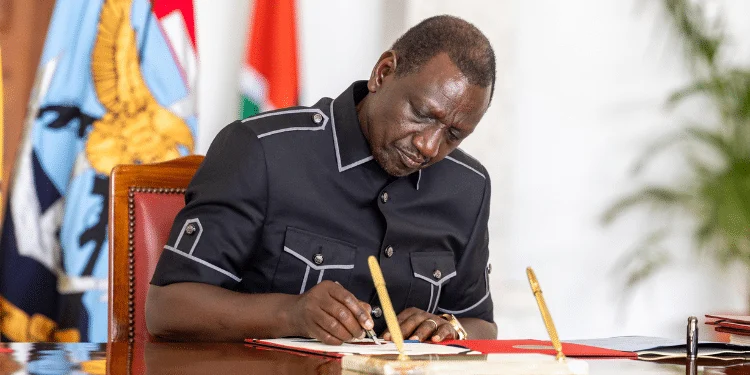
President Ruto has removed Shaka Kariuki as Non-Executive Chairperson of the Competition Authority of Kenya (CAK) early, instead installing Charles W. Mahinda in the role, effective December 11, 2025.
The appointment was made under Section 10(1)(a) of the Competition Act and Section 51(1) of the Interpretation and General Provisions Act and will last three (3) years.
Mr. David Kibet Kemei, by now an established face for the competition watchdog, will continue to be the Director-General of the agency.
The Competition Commission of South Africa (“the Commission”) released a Cost-of-Living Report (“The Report”) on 4 September 2025, setting out a structured, data-driven assessment of affordability pressures faced by South African households, with particular focus on those low-income consumers predominantly impacted by consistently high inflation rates. Its aim is to provide insights into the affordability of basic goods and services so that individuals, households, businesses, and policymakers can assess financial capacity and understand how price movements affect living standards. This is in alignment with the Presidency’s Strategic Plan that identifies tackling the high cost of living as a priority.
The current cost-of-living crisis is framed against entrenched domestic challenges, rising food, fuel and electricity prices against the backdrop of an ongoing energy crisis and interest rate increases that have lifted debt servicing costs in an environment where growth in household income has maintained the same pace.
Background and Goal of the COL Report
The COL Report stems from the Commission’s earlier Essential Food Price Monitoring(“EFPM”) programme, first published in July 2020 to track the prices of staple foods across the value chain, from farm to retail, and to analyse price transmission between producers, processors and retailers. Recognising shifting expenditure patterns and growing inequality, the Commission has expanded the scope of the EFPM, rebranding it as the COL Report. The new format retains essential food price monitoring while including those key non-food items that have a significant impact on lower income households.
As James Hodge, the chief economist at the Commission said:
“This analysis plays a crucial role in identifying the economic pressures various socio-economic groups, particularly low-income households, experience in a time of fluctuating prices and growing inequality.”[1]
The COL Report’s overarching intent is to highlight the affordability of basic goods and services in South Africa and to identify the underlying drivers of the cost-of-living crisis.
The COL Report tracks non-food necessities (e.g., electricity, water, rentals, healthcare, minibus taxi fares and petrol, funeral policies, public school fees, and internet usage costs) alongside essential food items such as pilchards, eggs, IQF chicken, brown bread, sunflower oil, maize meal. It further illustrates interest-rate effects by comparing owner’s rent as an equivalent to bond repayments on a standard mortgage. This structured monitoring enables the Commission to highlight where inflation is concentrated, where pricing appears sticky during cost reductions, and where spreads are widening.
COL Report and South African competition law
While the COL Report does not draw conclusions in respect of anticompetitive conduct, it does have notable implications for competition oversight by continuing to apply the Consumer’s International Early-Warning System (“Early-Warning System”) and evidentiary baseline for price transmission across essential value chains.[2] Several features are salient for competition law practice and policy, as drawn directly from the Report’s findings and methodology:
A broadened monitoring mandate across non-food essentials, expands the EFPM’s food focus to include electricity, water, rentals, transport, primary healthcare, funeral policies, education, and internet costs, the Commission positions itself to trackpersistent inflation drivers where administered pricing or sectoral structures may entrench affordability constraints. Assisting in the prioritisation and policy engagement across markets that shape consumer welfare, even where formal competition enforcement is not immediately implicated.
It presents clear analytical boundaries that respect competition law standards. It expressly cautions that the analysis of spreads (aggregate spread between retail and producer prices) is not an inference of anticompetitive conduct. Instead, spreads are diagnostic of price transmission and places in the chain where margins are expanding. The Commission’s reliance on the Early-Warning System underscores that the COL Report is an intelligence and monitoring tool, useful for triage and prioritisation, rather than a determinative finding of collusion or abuse. This delineation aligns with competition law’s evidentiary requirements while still highlighting areas that may merit closer scrutiny.
The Report identifies pricing patterns relevant to oversight, documenting patterns in essential staples where input costs fell or stabilised, but retail prices remained elevated. An example of this is, for instance, the discussion of eggs, sunflower oil, and maize meal, where price stickiness and widening retail margins are observed at various points. In brown bread, producer-level margins rose as wheat prices declined, and retail margins fluctuated as retailers alternated between absorbing and passing through cost movements. Such documented patterns inform areas where the Commission may, in being consistent with its mandate, monitor for potential strategic pricing behaviour over time.
The contextualisation of administered prices as structural inflation drivers, by the Report identifies evidence that electricity prices rose 68% and water prices rose 50% over the last 5 years. This is well above headline inflation and provides a policy context for sustained consumer-facing cost pressure. Although administered tariffs are not set through ordinary market dynamics, persistent increases affect downstream markets and household welfare, which are central concerns of the Commission’s broader public-interest and competition policy ecosystem.
The Report recalls that, following the Commission’s Data Services Market Inquiry in 2019, mobile data prices fell significantly in 2020 and 2021 and have remained comparatively stable. This illustrates how evidence-based monitoring and market inquiries can produce effective outcomes, a tool that the Commission may use in other sectors flagged by the COL Report.
The Report uses an interest rate lens to complement the Consumer Price Index (“CPI”) measures of housing costs, by comparing bond repayments (up 28% over the period 2022 to March 2025) with owner’s equivalent rent, shows how debt-servicing costs meaningfully diverge from CPI’s treatment of owner-occupied housing. This perspective assists competition authorities and policymakers to understand consumer budget constraints that can interact with the market.
Collectively, these features show that the COL Report is intended to guide monitoring and policy dialogue, highlight potential risk zones, without asserting contraventions and maintain an evidentiary base for any future work within the Commission’s statutory toolkit such as market inquiries.
Key Findings Highlighted in the Report
To ground the above effects in the Report’s data, the COL Report records the following notable movements over the past 5 years for the period of 2020 to March 2025:
Key non-food items:
Administered prices: Electricity up 68% and water up 50%, both outpacing headline inflation.[3]
Rentals: Actual rentals for houses and flats up 12%, well below headline inflation (28%).[4]
Primary healthcare (General Practitioners): Cumulative increase 33%, with the latest 6.6% annual rise noted against slowing general inflation.[5]
Transport: Minibus taxi fares increased sharply in mid-2022 following the petrol price spike; fares have been “sticky downwards”, though subsequent increases have trailed CPI, narrowing the gap.[6]
Funeral policies: Up 9% over the period, significantly below headline inflation.
Public education: Primary +37% and secondary +42%, both above headline inflation. [7]
Internet usage costs: Wireless +1%; wired +14%, with a notable step-up in 2022 linked to certain higher priced fibre offerings.[8]
Interest rates vs CPI housing proxy: Bond repayments +28% versus more moderate owner’s equivalent rent growth, illustrating the load from higher interest rates on household budgets.[9]
Essential foods:
Pilchards: Retail margins declined over time; early 2025 spreads narrowed to 15% as retailers showed restraint amid rising producer prices.[10]
Eggs: Producer prices fell into early 2025 but retail prices were slow to normalise; later producer-price increases reduced retail margins, with the Report monitoring recovery trajectories post-avian flu.[11]
IQF chicken: Producer prices stable and retail margins held under 40% in 2025 after earlier pressure. [12]
Brown bread: Farm-to-producer spread 77% in 2025 (above historic highs); retail margins fell to 15%, as retailers absorbed later producer increases.[13]
Sunflower oil: Producer margins settled around 25% since late 2023; retail margins elevated (40–45%) due to slow pass-through of producer-price declines.[14]
Maize meal: Producer margins rose rapidly in late 2023 after white maize price drops; retail prices increased in 2025 despite relatively stable producer prices, pushing retail margins to the high end of historic levels.
These findings supply concrete price-formation signals, where margins compress, where they expand, and how quickly costs are transmitted, which are central to the Commission’s ongoing monitoring orientation.
In Conclusion, the COL Report documents a pronounced squeeze on South African households, especially the poorest, driven by elevated inflation in essential services and persistent cost pressures. It demonstrates that while certain categories (e.g., rentals, funeral policies) have increased less than headline inflation, others (e.g., electricity, water, education, and several staple foods) are coming down hard on budgets. In parallel, the COL Report records instances of sticky pricing and widening spreads, and it maintains a clear line between diagnostic monitoring and legal inference.
For competition law and policy, the COL Report delivers three practical gains, by widening the scope to include key essentials beyond food, showing the spreads and pass through clearly, and a continuation of the Early-Warning System. Furthermore, it assists the Commission in fulfilling its mandate by flagging areas which may need attention, guiding debate on administered prices, and grounding future market work in carefully, publicly sourced data.
On Sunday, 30 June 2024, President of South Africa, Cyril Ramaphosa announced South Africa’s new cabinet under the newly-formed Government of National Unity (‘GNU’). The Government of National Unity is “a government that brings together a number of rival leaders and political parties in order to promote national unity and political stability” (Cheeseman, N., Bertrand, E., and Husaini, S. (2019). A Dictionary of African Politics, Oxford University Press). The Democratic Alliance, South Africa’s main opposition party, is generally considered to be more business friendly than other, rival parties.
From the new cabinet announcement, it has been revealed that Parks Tau is the new Minister of the Department of Trade, Industry, and Competition (‘DTIC’), with Zuko Godlimpi and Andrew Whitfield serving as Deputy Ministers. Mr. Tau, the former Mayor of Johannesburg, is seen as a more business-friendly appointment than his predecessor, Ebrahim Patel.
We anticipate that the aggressive approach taken by the South African Competition Commission in driving an industrial policy agenda will be moderated in favour of a more business-friendly approach. A more balanced implementation of public interest objectives is expected, aiming to stimulate economic growth, business development, job creation, and more.
Any potential changes to the structure and mandate of the Commission remain to be seen.
As one of two key West African nation states (the other being Nigeria), Ghana still lacks functioning competition legislation at the close of 2018. Adding to the chorus of calls for the introduction of a Ghanaian antitrust act, the local branch of the global advocacy group CUTS (“Consumer Unity and Trust Society”), has now asked the government to ensure a currently pending draft competition bill becomes law in 2019. The bill is, at present, before the Ministry of Justice and the Attorney General’s Department for further consideration, prior to being presented to Parliament.
Speaking on the topic of “Competing Without Market Rules” at the annual U.N. World Competition (Antitrust) Day, CUTS’ local director is quoted as deploring the absence of any competition policy or law, allowing unscrupulous firms to engage in conduct that would be deemed illegal virtually anywhere else and impeding the proper functioning of the Ghanaian market in the process.
Notably, Ghana’s Minister of Trade and Industry, Alan Kyeremanten, provided a written statement, noting that the country’s government was formulating its approach to competition policy with an eye toward enacting a law that would go beyond the relatively ineffectual Protection Against Unfair Competition Act, dating back to 2000 (Act 589). Goals of enacting a more effective competition legislation would be to promote private sector development, economic growth, poverty reduction and increasing Foreign Direct Investment.
As AAT has reported on extensively, the South African Competition Amendment Bill, currently pending in Parliament, is likely to be adopted in short order in its current draft form.
It carries with it significant, and in our view, adverse, effects that will burden companies trying to conduct business or invest in South Africa. These burdens will be particularly onerous on foreign entities wishing to enter the market by acquisitions, as well as any firm having a market share approaching the presumptive threshold of dominance, namely 35%
On Wednesday, 17 October 2018, the law firms of Primerio and Norton Incorporated held an in-depth seminar and round-table discussion on the ramifications of the Competition Amendment Bill. The setting was an intimate “fireside chat“ with business and in-house legal representatives from leading companies, active across a variety of sectors in the South African economy.
Moderated and given an international pan-African perspective by Primerio partner Andreas Stargard, the panel included colleagues John Oxenham and Michael-James Currie, who delved into the details of the proposed amendments to the existing Competition Act, covered extensively by AAT here.
As of today, 18 October 2018, the Bill appears set to be promulgated. The SA Parliament’s committee on economic development has rubber-stamped the proposed amendments after a prior committee walk-out staged by the opposition Democratic Alliance (DA), in opposition to the Bill. DA MP and economic development spokesperson Michael Cardo states:
“The ANC rammed the Competition Amendment Bill through the committee on economic development, and adopted a report agreeing to various amendments. To make sure they had the numbers for a quorum, the ANC bussed in two never-seen-before members to act as pliant yes men and women. Questions from the DA to the minister… This bill is going to have far-reaching consequences for the economy. It gives both the minister and the competition authorities a great deal of power to try and reshape the economy. It is unfortunate that the ANC, and the committee chair in particular, have suspended their critical faculties to force through this controversial bill and behaved like puppets on a string pulled by the minister of economic development.”
The Amendment Bill introduces significant powers for ministerial intervention and bestows greater powers on the Competition Commission, the investigatory body of the competition authorities in South Africa.
The panel discussion provided invaluable insights into the driving forces behind the Bill and ultimately what this means for companies in South Africa as it certainly won’t be business as usual if the Amendment Bill is brought into effect – particularly not for dominant entities.
[If you attended the panel discussion and would like to provide feedback to the panelists or would generally like to get in touch with the panelists, please send an email to editor@africanantitrust.com and we will put you in touch with the relevant individuals]
If one looks at the 2011Preferential Procurement Policy Framework Act (PPPFA) Regulations, the Regulations provide two ratios to be used in determining a tender award. The two point systems are the 90/10 and the 80/20 ratios. The 90/10 ratio indicates that 90 out of 100 points are to be awarded based on the price of the bidder and 10 out of 100 points are to be awarded based on “special goals”[1]. Since the commencement of the 2011 PPPFA Regulations, special goals have primarily been allotted to BEE status levels.
Turning to the 2017 PPPFA Regulations, in which the above-mentioned ratios have been maintained, regulation 4 provides for pre-qualification criteria for preferential procurement. Interestingly, according to regulation 4(1)(a) of the 2017 Regulations, an organ of state may stipulate a minimum B-BBEE status level for tenderers. Furthermore, regulation 4(2) deems any tender in contravention of pre-qualification criteria unacceptable. In essence, the pool of bidders can be reduced significantly by requiring all bidders to possess as a B-BBEE Contribution level 1 despite primary legislation only allowing B-BBEE to be taken into account at a maximum threshold of 80/20. Therefore, it is hard to understand why the allocation of points to special goals is capped at 20 points whereas there is no maximum level allocated to the minimum pre-qualification criteria. Arguably, pre-qualification criteria in this regard are open to abuse in oligopolistic markets with few suppliers.
If one views this legal framework holistically, it may seem that the points allocation in the PPPFA is capable of being somewhat circumvented. In other words, the importance attached to a tenderer’s B-BBEE status level may be increased immensely if a level 1 or 2 B-BBEE status level is stipulated as a minimum pre-qualification criterion. On the other side of the coin, the significance of price may be undermined, rendering a competitive tendering process ineffective in securing value-for-money. This suggests the 2017 Regulations are misaligned in that the purpose of the 80/20 split is unclear when read with regulation 4.
In an effort to restrain pre-qualification criteria restricting a large pool of bidders, a bidder may ask whether a dominant public entity, for example, a monopolistic entity such as Eskom, would contravene section 8(c) of the Competition Act if the pre-qualification B-BBEE status level is set too high. Does it qualify as an exclusionary act which is likely to affect competition in the particular market? This falls part of a larger looming question, at what point does pre-qualification criteria by dominant parastatals become anticompetitive in terms of the Competition Act and how will Competition Law interact with procurement? Section 217 of the Constitution of South Africa does not provide a clear answer but it does suggest that competition may have an important role to play going forward.
[1] section 2(1)(e) of the Preferential Procurement Policy Framework Act Regulations 2011
South Africa: Driving Force behind Enforcement of Criminal Sanctions for Cartelists?
By AAT Senior Contributor, Michael-James Currie
In May 2016, precisely a year ago, criminal liability for directors or persons with management authority who cause a firm to engage in cartel conduct was introduced in South Africa by way of amendments to the Competition Act.
The introduction of criminal liability caught most of the South African competition law community off-guard, including the competition authorities, despite the relevant legislative provisions having been drafted and presented to Parliament for approval in 2009.
A major reason why there was such a delay in the enactment of the relevant legislation were concerns raised about the practicality and legality in enforcing the criminal liability provisions, at least in the manner currently drafted. These concerns, however, were never addressed and the Minister of Economic Development, Minister Patel, proceeded to bring into effect the criminalising provisions. The Minister has openly taken a view that current administrative penalties, which to date have been the most prominent form of sanctions imposed on firms for engaging in cartel conduct, do not provide a sufficient deterrent.
Criminal sanctions are, however, by nature a rather retributive liability, and there have been limited instances in which firms that have previously found to have contravened the Competition Act are repeat offenders. Administrative penalties coupled with reputational damage would appear to be a substantial deterrent.
Regardless, the sentiments of Minister Patel were recently echoed by the head of the National Prosecuting Authority, Shaun Abrahams, who recently indicated that anti-corruption task team (ACTT) has been briefed to treat ‘collusion’ in the same vein as corruption. The ACTT was formulated in 2010 to target high profile cases of corruption.
While it is understood that the Competition Commission (SACC) and the National Prosecuting Authority (NPA) having been working on a memorandum of understanding between the two enforcement agencies for over a year, it appears that such a MoU is still some way off from being finalised.
It is not yet clear whether the NPA envisages a more active role in cartel investigations with a view to institute criminal proceedings in terms of the Competition Act, or whether Mr Abrahams envisages holding those accountable by other pieces of anti-corruption legislation such as the Prevention and Combatting of Corrupt Activities Act (PACCA).
Mr Abrahams has indicated that he has been trying to set up a meeting with the Commissioner of the South Africa Competition Commission, Tembinkosi Bonakele, in order to discuss recent investigations by the SACC, most notably in the banking sector.
Of particular interest is that the Black Empowerment Forum (BEF) had laid criminal charges at the South African Police against Citibank following Citibank’s R69 million settlement agreement with the SACC. The BEF had indicated that they would write to the President and the NPA in an effort to elevate and expedite this case.
The recent banking referrals have been politically charged with many of the view that there has been political interference in the manner in which the banking investigation has been handled. A number of reports have linked the BEF which was allegedly only established in April 2017, to the President’s son, Edward Zuma.
This does raise queries as to the motivation behind the BEF’s criminal complaint and also whether it was the BEF’s criminal complaint that has sparked Mr Abrahams’ recent comments.
The timing of the BEF criminal complaint and Mr Abrahams’ expressed interest in pursuing cartelists for criminal liability, the allegations of political interference in the banking referrals and the lack of any formal arrangement between the SACC and the NPA regarding the enforcement of the criminal sanctions (as far as we are aware) may all be unrelated issues. This, however, seems doubtful.
Having recently hosted a national sensitisation workshop on COMESA competition policy in Harare, as we reported here, Zimbabwe is expected to enact a revised competition law. The country’s Cabinet has reportedly approved the National Competition Policy. One element of the NCP is to reduce the time it takes the Zimbabwean Competition and Tariff Commission (CTC) to review mergers and acquisitions from 90 to 60 days, thereby encouraging “brownfield” investments, according to a minister.
Zimbabwean Industry and Commerce Minister Dr. Mike Bimha spoke at the mentioned workshop, emphasising the need for “a level playing field”: “We are now working to ensure that we have a new Competition Law in place which will assist the CTC in dealing more effectively with matters related to abuse of dominant positions and cartels,” he said.
The NCP is part of a larger project to encourage investment and is closely linked with the country’s industrial and trade policies, known as Zimbabwe Agenda for Sustainable Socio-Economic Transformation(a.k.a. “Zim-ASSET”).
The Zimbabwean NCP is not merely domestically focussed, however. Andreas Stargard, a competition-law practitioner, highlights the more international aspects that also form part of the revised competition bill awaiting enactment by the President:
Not only does the NCP contain the usual focus of levelling the playing field among domestic competitors under its so-called Zim-ASSET programme. It also undergirds the so-called ‘domestication’ of the broader regional COMESA competition rules, as well as the Ministry’s bilateral agreements. For example, Zimbabwe recently entered into a Memorandum of Understanding with the Chinese government, designed to enhance cooperation on competition and consumer protection issues between Zimbabwe’s CTC and the PRC’s MOFCOM.
While the media headlines are largely filled with the disruptions that took place at the State of the Nation Address (SONA) by President Jacob Zuma on 9 February 2017, the President made an important remark which, if true, may have a significant impact on competition law in South Africa, particular in relation to abuse of dominance cases.
In this regard, the President stated that:
“During this year, the Department of Economic Development will bring legislation to Cabinet that will seek to amend the Competition Act. It will among others address the need to have a more inclusive economy and to de-concentrate the high levels of ownership and control we see in many sectors. We will then table the legislation for consideration by parliament.
In this way, we seek to open up the economy to new players, give black South Africans opportunities in the economy and indeed help to make the economy more dynamic, competitive and inclusive. This is our vision of radical economic transformation.”
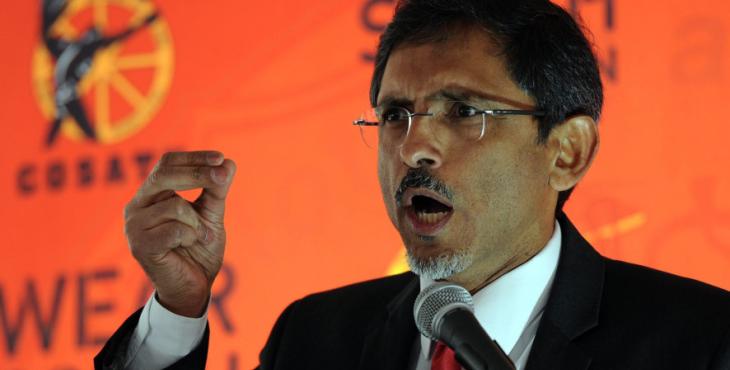
Neither the President nor Minister Patel have given any further clarity as to the proposed legislative amendments other than Patel’s remarks early in January 2017 in which he stated that:
“The review covers areas such as the efficacy of the administration of the Competition Act, procedural aspects in the investigation and prosecution of offences, matters relating to abuse of dominance, more effective investigations against cartels and the current public interest provisions of the act.“
Says John Oxenham, a competition attorney who has closely followed the legislative and policy developments, “despite the broad non-committal remarks by Minister Patel, it is clear that the Minister is zealous in having the ‘complex monopoly’ provisions brought into force to address in order to address, what the Minister perceives to be, significant abuse of dominance in certain concentrated markets.”
In terms of the provisions, as currently drafted, where five or less firms have 75% market share in the same market, a firm could be found to have engaged in prohibited conduct if any two or more of those firms collectively act in a parallel manner which has the effect of lessening competition in the market (i.e. by creating barriers to entry, charging excessive prices or exclusive dealing and “other market characteristics which indicate coordinated behavior”).
Despite having been promulgated in 2009, the ‘complex monopoly’ provisions have not yet been brought into effect largely due to the concerns raised as to how these provisions will be enforced, says Primerio Ltd.’s Andreas Stargard: “It is noteworthy that the introduction of criminal liability for directors and persons with management authority who engage in cartel conduct was also promulgated in 2009, but surprised most (including the Competition Authorities) when it was quite unexpectedly brought into force in 2016.”
Minister Patel was no doubt a key driving force behind the introduction of criminal liability and it would, therefore, not be surprising if the complex monopoly provisions are brought into force with equal swiftness in 2017.
South Africa signs cooperation agreements with Russia and Kenya
Leading government officials presented their respective countries’ accomplishments in the antitrust arena at the 10th annual Competition Law, Economics & Policy Conference in Cape Town yesterday.
The attendees ranged from the SA Minister of Economic Development, Ebrahim Patel, and the Commissioner of the Competition Commission, Tembinkosi Bonakele, to their Russian and Kenyan counterparts. Kenya Competition Authority director general Francis Kariuki emphasised the officials’ desire to remove barriers to trade. He was quoted as saying he looked forward to exchanging information on cross-border cartels, which affect both the South African and Kenyan economies: “We have regional economic communities and regional trade. There are some infractions in South Africa which are affecting Kenya and vice versa. We want to join hands to do market enquiries and do research. This will inform our governments when they come up with policies.”
On the inside-BRICS front, the SA Commission signed an MoU with Russia, adding to Russia’s “rich and diverse bilateral agreements portfolio.” The MoU is described as focussing particularly on pharmaceutical and automotive sectors, in which pending or future sectoral inquiries would see information-sharing between the Federal Antimonopoly Service (FAS) of Russia and the SACC, according to the FAS deputy chief Andrey Tsarikovskiy.
Mister Patel’s keynote address showed the glass half-full and half-empty, focussing in part on the need to “scale” the South African agency activity up to the level of the “success story” of domestic competition enforcement and its large caseload (quoting 133 new cartel cases initiated in the past year).
Never one to omit politicisation, Mr. Patel noted the perceived parallels he saw between South African history of concentrating economic power in the hands of a minority, raising indirectly the issue of public-interest concessions made in antitrust investigations, including M&A matters. Mr. Patel clearly sees the SACC’s role as including a reduction in economic inequality among the populace, rather than being a neutral competition enforcer guided solely by internationally recognised legal antitrust & economic principles. Both he and Commissioner Bonakele drew parallels between their anti-cartel enforcement and a purported reduction in the SA poverty rate of a whopping four tenths of a percent.


 Notably, Ghana’s Minister of Trade and Industry, Alan Kyeremanten, provided a written statement, noting that the country’s government was formulating its approach to competition policy with an eye toward enacting a law that would go beyond the relatively ineffectual Protection Against Unfair Competition Act, dating back to 2000 (Act 589). Goals of enacting a more effective competition legislation would be to promote private sector development, economic growth, poverty reduction and increasing Foreign Direct Investment.
 Turning to the 2017 PPPFA Regulations, in which the above-mentioned ratios have been maintained, regulation 4 provides for pre-qualification criteria for preferential procurement. Interestingly, according to regulation 4(1)(a) of the 2017 Regulations, an organ of state may stipulate a minimum B-BBEE status level for tenderers. Furthermore, regulation 4(2) deems any tender in contravention of pre-qualification criteria unacceptable. In essence, the pool of bidders can be reduced significantly by requiring all bidders to possess as a B-BBEE Contribution level 1 despite primary legislation only allowing B-BBEE to be taken into account at a maximum threshold of 80/20. Therefore, it is hard to understand why the allocation of points to special goals is capped at 20 points whereas there is no maximum level allocated to the minimum pre-qualification criteria. Arguably, pre-qualification criteria in this regard are open to abuse in oligopolistic markets with few suppliers.
 Neither the President nor Minister Patel have given any further clarity as to the proposed legislative amendments other than Patel’s remarks early in January 2017 in which he stated that:
 Despite having been promulgated in 2009, the ‘complex monopoly’ provisions have not yet been brought into effect largely due to the concerns raised as to how these provisions will be enforced, says
  The attendees ranged from the SA Minister of Economic Development, Ebrahim Patel, and the Commissioner of the Competition Commission, Tembinkosi Bonakele, to their Russian and Kenyan counterparts. Kenya Competition Authority director general Francis Kariuki emphasised the officials’ desire to remove barriers to trade. He was quoted as saying he looked forward to exchanging information on cross-border cartels, which affect both the South African and Kenyan economies:
  “We have regional economic communities and regional trade. There are some infractions in South Africa which are affecting Kenya and vice versa. We want to join hands to do market enquiries and do research. This will inform our governments when they come up with policies.”
 Mister Patel’s keynote address showed the glass half-full and half-empty, focussing in part on the need to “scale” the South African agency activity up to the level of the “success story” of domestic competition enforcement and its large caseload (quoting 133 new cartel cases initiated in the past year).
 African Antitrust & Competition Law