Safeguarding Market Integrity and Consumer Welfare: Reflections on the CCC’s 2024 Annual Report

By Megan Armstrong

The COMESA Competition Commission (“CCC”), released its 2024 Annual Report on 23 July 2025, outlining a narrative of both increased institutional maturity and a growing assertiveness in market regulation. This, against a backdrop of economic turbulence such as regional inflationary pressures, tightened global credit conditions and slowing GDP growth in Member States, the CCC pressed forward, making notable strides in their enforcement, policy advocacy and institutional development.

M&A Activity and a shift in sectoral dynamics
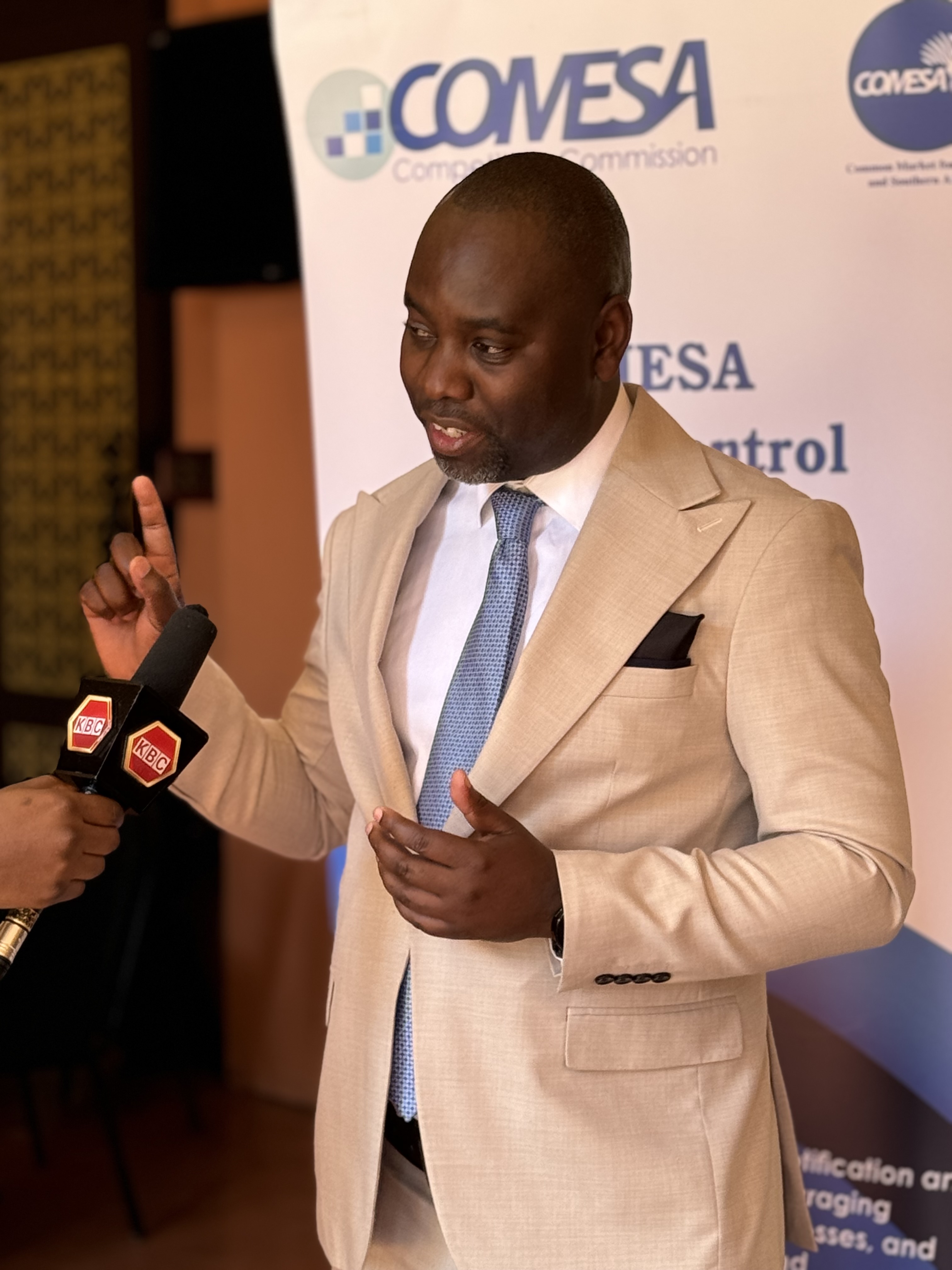
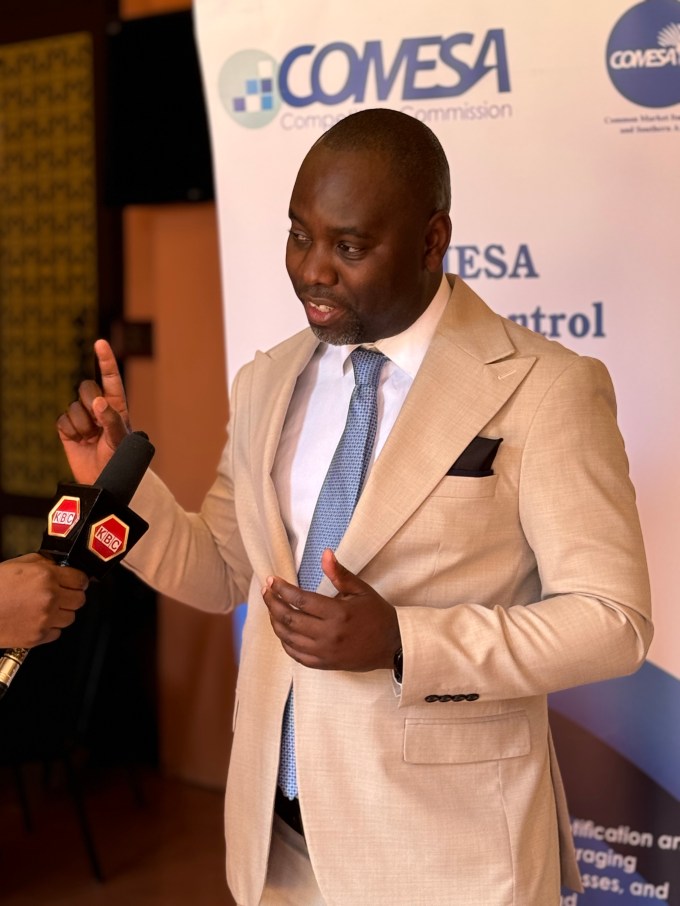
Dr. Willard Mwemba, COMESA Competition Commission Chief Executive

A notable metric from the year under review is the number of merger notifications, the CCC recorded receiving 56 transactions, a 47.4% increase from the previous year (2023). This spike may, in part, be a response to post-COVID19 economic restructurings and macroeconomic volatility prompting consolidation across various sectors. It is also likely that it points to a growing awareness among firms of their obligations to notify under the COMESA Competition Regulations, alongside the CCC’s increasing presence in regulatory enforcement within the region.

A large portion of these notified mergers in 2024 came from the banking and financial services sector, at 7 notified mergers, followed by energy and petroleum with 6 notified mergers, and ICT and agricultural sectors having 4 notified mergers each. Notably, each of these sectors can be linked to economic resilience and infrastructure development across the Member States. Countries like Kenya and Zambia showed the highest levels of enforcement with respect to mergers, affirming their roles as key economic nodes within the COMESA region.

The CCC continued to apply the subsidiarity principle in their merger assessments, deferring to national authorities where appropriate. With this, there were still 43 determinations finalised within stipulated time frames, unconditionally cleared with no mergers being blocked or subject to conditions. This contrasts with 2023, where four such interventions occurred. This unblemished record may suggest procedural compliance and benign effects, it does raise the question of whether these competitive harms are being sufficiently interrogated or whether transactions are being proactively structured to avoid scrutiny.

Restrictive Practices: Building a Hard Enforcement Reputation

Here, the CCC pursued 12 investigations in 2024, increased from 9 in 2023. These investigations touched sectors ranging from beverages, to wholesale and retail, ICT, pharmaceuticals and transport and logistics. The CCC’s increasing use of ex officio powers, particularly in the transport and non-alcoholic beverages sectors is noteworthy, reflecting a strategic pivot from a reactive enforcement regime to a more intelligence-led and proactive regime.

The CCC bolsters this enforcement strategy with an acknowledgement that behavioural change often requires more than deterrence. It maintains research and advocacy at its core focus for market engagements. The CCC’s involvement in collaboration with the African Market Observatory project in the food and agricultural sector highlights the market and policy failures that arise in these areas. This research has spurred dialogue at both national and international levels, including involvement from the OECD and International Competition Network.

Reform and Capacity Building

The CCC has initiated a long-overdue review of its legal framework, seeking to modernise its 2004 Regulations and Rules. These revised instruments, once adopted, are expected to cover emerging regulatory concerns, which includes climate change, and digital markets. These are areas where the intersection between competition and broader public policy goals are becoming more pronounced.

 The CCC has scaled up technical assistance across the region, including providing support to legal reform processes in jurisdictions such as Eswatini, Egypt and Djibouti. The CCC also presented training for competition authority officials in Member States such as Comoros, Zimbabwe and Zambia. These capacity building efforts are critical for the CCC to realise its vision of a harmonised and integrated regional competition regime.

The Year Ahead: A Cartel Crackdown and Consumer-Centric Focus

Looking ahead to 2025, the CCC has signalled a decisive focus on cartel enforcement. There has been a growing recognition that undetected and entrenched cartel operations remain one of the most damaging forms of anti-competitive conduct in the Common Market, resulting in raised priced, limitations to innovation and a stifling of regional integration. The CCC intends to ramp up their detection tools, build cross-border enforcement partnerships, and enhance leniency and whistleblower frameworks. This is a complex undertaking, but does provide the potential to yield transformative results should it be executed effectively.

Alongside this, the CCC intends to intensify its efforts on the consumer protection front, particularly in those sectors that have been flagged through its market intelligence efforts. The digital economy is one such priority sector, the CCC has received anecdotal evidence of exploitative practices in this sector and is positioned to clarify its understanding of the competitive dynamics at play in this sector. Similarly, product safety in the fast-moving consumer goods sector is expected to receive closer scrutiny. 

Conclusion

If 2024 was the year of consolidation, 2025 promises to be the year of forward momentum. The CCC has shifted its weight towards deeper enforcement, increased research and the implementation of a regulatory framework that has the ability to meet and address modern market realities. From cartel detection to digital market fairness and food sector resilience, the CCC has an ambitious agenda for the year ahead.

As regional integration efforts gather pace under the AfCFTA, the CCC’s role as a guardian of market fairness and consumer protection within Member States will only become more central. With this groundwork having been laid, it is time for the harder, but more rewarding task: “building markets that work for everyone”.
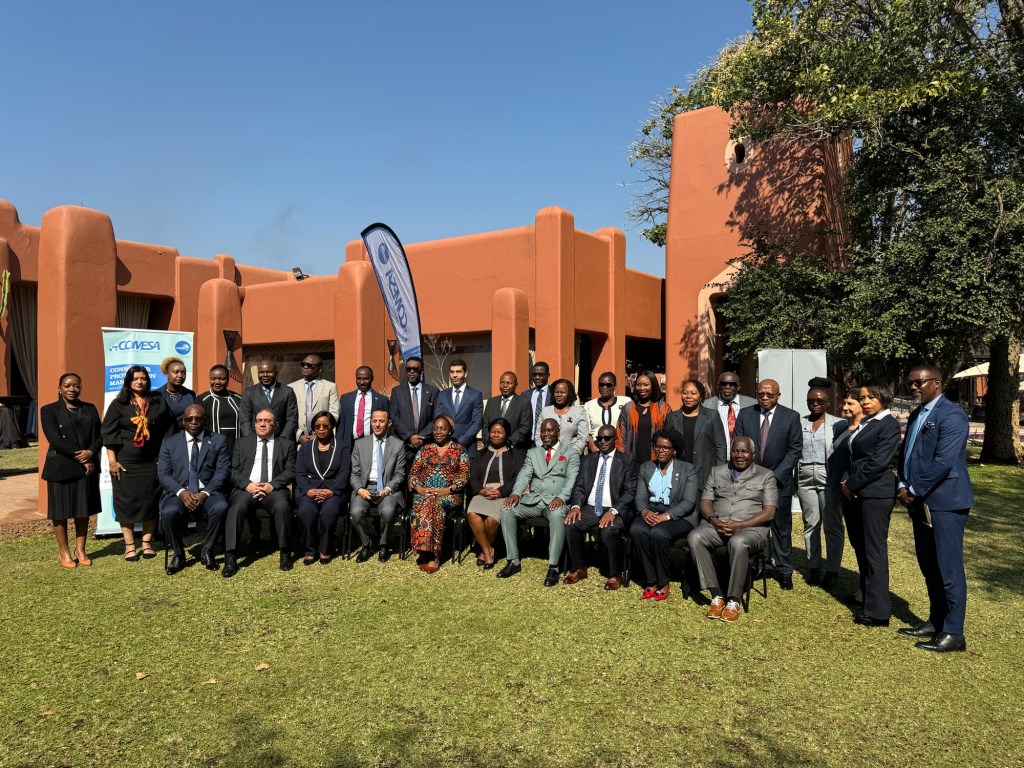

4th CCC diplomatic conference on competition law places focus on inflation, food security, and poverty eradication 

Senior diplomats from the COMESA region gathered in Livingstone, Zambia, for the fourth in a series of diplomatic antitrust-focused conferences that began in 2016 but were halted due to the coronavirus pandemic in 2019.

At today’s formal resumption of the recurring event, Dr. Willard Mwemba, CEO of the COMESA Competition Commission, introduced the conference session by calling out the importance of the agricultural sector to the people residing in the region, especially the very poorest of citizens.

He stated in unmistakable terms that his agency would prioritize this and related markets for heightened antitrust enforcement, to ensure the sector operates efficiently and competitively. “Accessibility (and affordability) of food is one of the most fundamental human rights. $2 per day are spent by the poorest people on average, and the majority of those two dollars is spent on food,” noted Mwemba.

Says Andreas Stargard, who attended the session, “it is clear that the view of the Commission is that agricultural markets in COMESA are not functioning as they should, based on studies the agency has undertaken with outside assistance.  The massive foodstuffs price inflation levels COMESA residents have suffered in recent years are not merely natural consequences of irreversible climate change but rather represent mostly economic profit to the manufacturers and traders, to the detriment of consumers, based on what Dr. Mwemba presented today.”

COMESA Secretary General, Chileshe Mpundu Kapwepwe, summarized the stark importance of the AG sector to the region, its people, and the economic zone in sobering statistical terms: “The agriculture sector is one of the key sectors for most Member States as it contributes more than 32% to the Gross Domestic Product of COMESA, provides a livelihood to about 80% of the region’s labour force, accounts for about 65% of foreign exchange earnings and contributes more than 50% of raw materials to the industrial sector.”

In light of this crucial importance of the agricultural and food markets, food security is high on the list of action items that COMESA must address practically and effectively, she concluded.  COMESA evaluates supply and demand levels across all 21 member states to assist with market assessment and planning.

The Diplomatic Conference’s guest of honour, Zambian Minister of Commerce, Trade and Industry, Hon. Chipoka Mulenga, noted in prepared remarks delivered by his deputy and permanent secretary to COMESA that, while “food production must be profitable for farmers, it must not be exploitative.”

In this regard, the famous Adam Smith quote referenced by Dr. Mwemba at a prior antitrust session comes to mind: “It is not from the benevolence of the butcher, the brewer, or the baker that we expect our dinner, but from their regard to their own self-interest. We address ourselves not to their humanity but to their self-love, and never talk to them of our own necessities, but of their advantages.”

Beyond the immutable wisdom of the Wealth of Nations from two and a half centuries ago, the (1) CCC’s increased competition law enforcement in the agricultural and food sectors, as well as (2) national member states are assisting the effort of ensuring wide and secure availability to all COMESA residents by creating and strengthening cross-border value chains in the food sectors with overlaps across member state borders, the Zambian minister observed.

COMESA stats update: 367+ M&A deals, yielding a healthy revenue stream for the CCC’s operations

A brief note from the “front lines” of the COMESA Competition Commission’s 10-year anniversary event: Isaac Tausha, chief economist for research policy and advocacy, provides the following statistics — notably for the entire duration of the CCC’s life decade so far.

In short: Gone are the meager days of fledgling notifications to the CCC.

Statistics Since Inception

369 mergers and acquisitions assessed. (Total COMESA revenues of merging parties: US$210bn)

Over 40 Restrictive Business Practices assessed

Over 44 Consumer Protection cases handled

More than 12 market screenings and studies undertaken

3 businesses fined for non-compliance with the Regulations

Doing a “back of the envelope” estimate, we at AAT are calculating the total merger filing fees resulting from those 367 notified deals to be possibly north of $75 million $65 million, so on average $6.5m “income” for the CCC per year (half of which goes to the 21 member states, of course, under the Regulations). This is notably without taking into account fines, e.g., a recent $102,000+ fine for failure to notify (as in our reporting on the Helios Towers / Malawi case).

Dr. Chris Onyango (Dir. Trade, Customs and Monetary Affairs, COMESA)
Dr. Lipimile (former CCC CEO). Mary Gurure (Head of Legal, CCC). Andreas Stargard (Editor, AAT).

COMESA sees slight uptick in merger notifications

Merger filings still dither, but YTD numbers now tentatively promise to exceed FY2015

Making sense of the COMESA Competition Commission’s merger notification site is no  easy undertaking.  The perplexing nature of its case-numbering system mirrors perhaps only the level of confusion surrounding the CCC’s original merger threshold and notification-fee guidelines (e.g., see here on that topic).

As we pointed out here, the merger statistics (as they had been released as of January 2016) for 2015 were disappointingly low.  In today’s post, please note that we are upgrading those numbers, however, to reflect additional material now made available on the official CCC web resource, reflecting 3 additional filings, bringing the year-end total for FY2015 to 18.  Three of those were “Phase 2” cases.  In addition, according to the CCC, there were 3 supplemental cases in which “Comfort Letters” were issued to the parties.

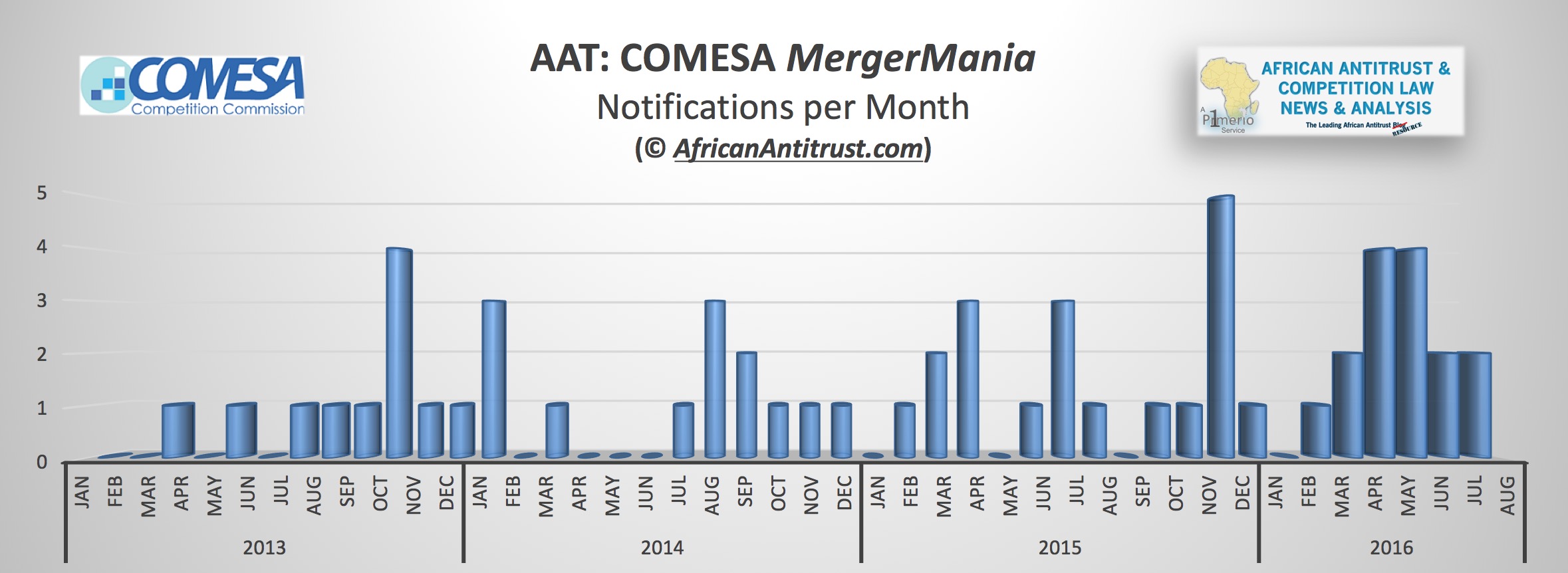
For year-to-date 2016 statistics, the numbers look analogous, albeit somewhat higher than the 2015 slump — that is to say, still diminished from the 2013-2014 height of COMESA ‘mergermania’, during which (mostly international) counsel took the confusion surrounding the CCC notification thresholds to heart and erred on the side of caution (and more fees), advising clients to notify rather than not to (65 in the 2 years), or to seek Comfort Letters, which also were issued in record numbers (19 total for the 2-year period)…   With that said, the agency is now up to 16 merger cases, with 2 Second-Phase matters on deck.

AAT 2016 September mergermania statistics
Number of merger notifications based on CCC-published notices (using educated inferences where the original CCC case numbers, dates and/or descriptions lack intelligibility; note that 2013-14 statistics only reflect actual filings made available online and not the official statistics issued by the CCC of 21 and 43, respectively)                                                                         (c) AfricanAntitrust.com

COMESA acknowledges low merger filing stats

2015 figures plummet 66% year-over-year

Going from 44 notifications in 2014 to 15 filings last year, the Competition Commission of the COMESA common-market area has seen a dramatic decline in merger filings.

Says Andreas Stargard, a competition lawyer with Africa advisory firm Pr1merio:

“These statistics are akin to the agency’s inaugural year — a slump that can only be explained by one of two likely underlying rationales:

Andreas Stargard, editor
A. Stargard

(1) Potential filers have begun to follow widespread advice from legal counsel that effectively admonishes would-be notifying parties not to do so until COMESA establishes a more robust enforcement and notification regime; or (2) — and this is the CCC’s preferred official explanation — the increased filing thresholds as of March 2015 caused fewer transactions to be caught in the mandatory filing net of the regulator.”

Of further concern, Stargard notes, is that the supporting merger documents made available by the CCC do not reflect the purported official statistics.  This fact is reflected in the MergerMania article published on AAT last August..  “For each and every one of the 15 filings identified by the Commission in its official statement, we should be able to see the underlying SOM [statement of merger] and the concomitant Decision — ideally published contemporaneously with the occurrence of each relevant event,” he says.  “Unfortunately, on the CCC merger site, two merger filings are missing entirely (numbers 9 and 10), and the others are commonly published many months after the public-comment deadline for the transactions has long expired.”

To date, a parsing of the (available) 2015 statistics shows that 3 of 15 cases actually went into Phase Two review, Stargard observes.  “This would generally imply a more serious concern raised by the authority in terms of the effect on competition post-merger.  Here, however, it is quite unclear what the potential threat to competition in, for example, a purely private-equity deal would be.  The official decision (no. 15, from November 2015) fails to even hint at a possible threat — as one would commonly expect from a PE to PE transaction, which usually raises little to no antitrust eyebrows…”

Our updated AAT COMESA MergerMania statistics are therefore as follows (again noting the fact that AAT bases its count on only the official, published and available merger documents, instead of relying on mere press release-based summaries published by the CCC).  We also note that to date, 2016 has seen one “merger inquiry notice,” namely of the Dutch Yara / Zambian Greenbelt fertiliser deal.  The public-comment period for that transaction expires on January 22, 2016.

Number of merger notifications based on CCC-published notices

The full text of the COMESA release follows below:

During the year 2015, the Commission assessed and cleared 15 merger transactions. The transactions involved sectors such as insurance, food additives, water treatment, agro-chemical, banking, telecommunication, non alcohol-ic beverage, publishing, packaging and retail. The Commission handled 12 merger notifications in the year 2013 and 44 merger notifications in the year 2014. The Pie Chart below shows the number of mergers handled by the Commission from inception to date.

COMESA merger statistics (official graphic)

As shown in the pie chart the Commission dealt with more mergers in 2014 as compared to 2013 but this trend has gone down in 2015. This trend may be attributed to the supposition that in 2013, the Commission had just commenced operations and therefore some stakeholders were not immediately aware of its existence and operations. By 2014, most stake-holders had become aware of the Commission and its operations, hence the significant increase in the number of mergers notified. The significant reduction in 2015 can be attributed to the supposition that the merger notification thresholds approved by the Council of Ministers on 26 March 2015 which has resulted in smaller mergers escaping the notification. Before 26 March 2015, the merger notification thresholds were Zero hence all mergers were notifiable regardless of size.

MergerMania update: COMESA CCC clears 5 notified mergers

COMESA old flag color

COMESA CCC clears 5 notified mergers

At their July 29, 2015 meeting, COMESA Competition Commissioners Chikankheni, Langa, and Okilangole rendered decisions in five merger cases notified earlier in the spring.  The affected sectors are: Packaging (Nampak), Retail (Steinhoff), Academic Publishing (Springer Verlag), Telecom Towers (Eaton Towers), and Non-Alcoholic Beverages (Coca-Cola).

Ethos/Nampak MER/03/01/2015 SOM/8/2015 Decision/10/2015  29/07/2015
Steinhoff/Pepkor MER/03/02/2015 SOM/7/2015 Decision/9/2015  29/07/2015
Holtzbrinck PG/ Springer Science MER/04/06/2015 SOM/6/2015 Decision/8/2015  29/07/2015
Eaton Towers/ Kenya, Malawi, Uganda Towers MER/04/05/2015 SOM/5/2015 Decision/7/2015 29/07/2015
Coca-Cola BAL/ Coca-Cola SABCO MER/04/07/2015 SOM/4/2015 Decision/6/2015 29/07/2015

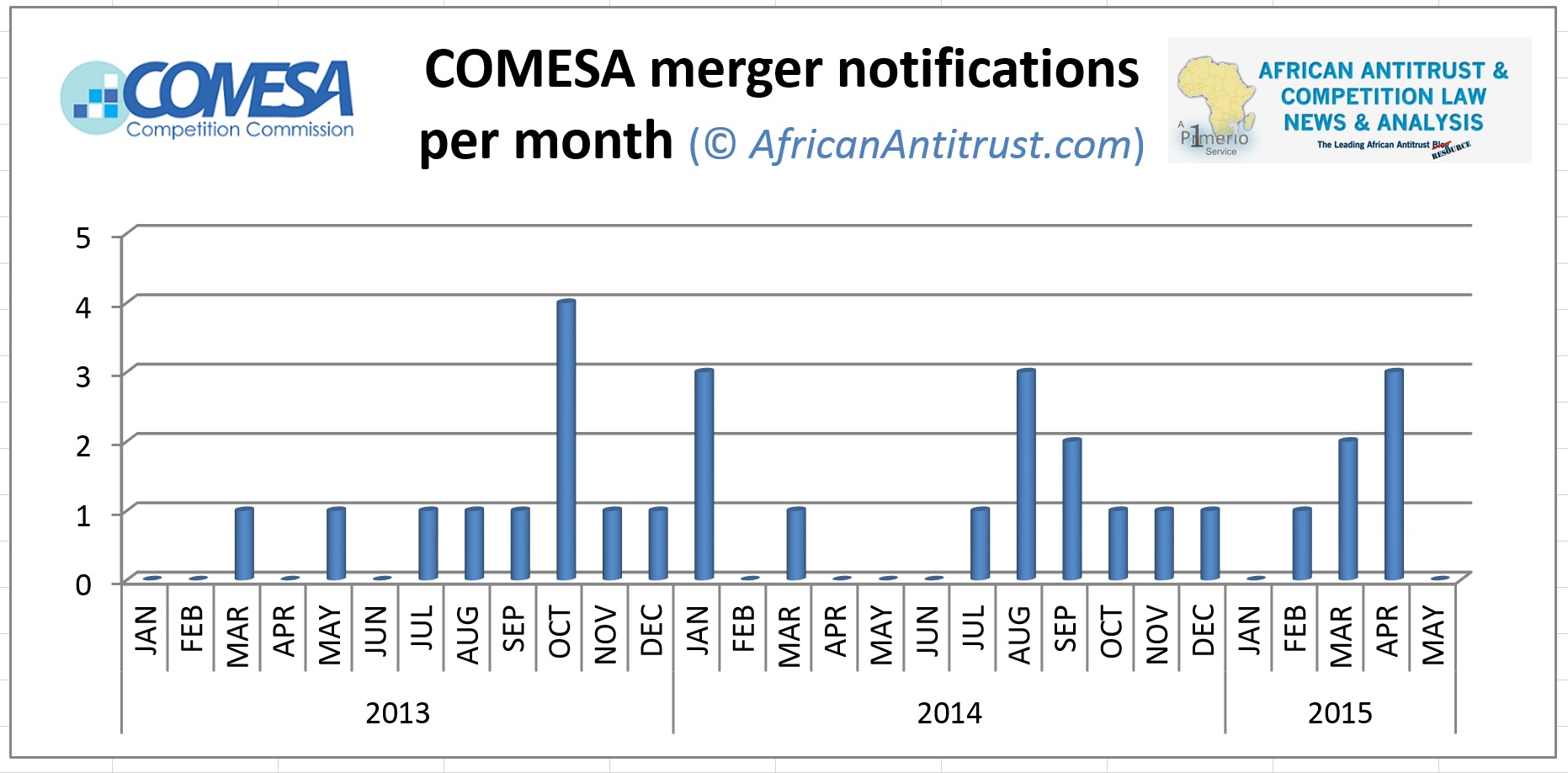
Our statistics (while discrepant with those identified by COMESA head of mergers Mr. Willard Mwemba) show the following numbers for COMESA notifications to date:

COMESA MergerMania July 2015
Number of merger notifications based on CCC-published notices

Insight into COMESA thinking: CCC executives speak

COMESA old flag color

COMESA officials’ pronouncements: merger enforcement #1, cartel ‘follow-on enforcement’, jurisdictional swamp

As other attendees of the 17 July 2015 regional sensitisation workshop have done, the Zimbabwean daily NewsDay has reported on the Livingstone, Zambia event — a session that has yielded a plethora of rather interesting pronouncements from COMESA Competition Commission (“CCC”) officials, including on non-merger enforcement by the CCC, as we have noted elsewhere.

In light of the additional comments made by CCC officials — in particular George Lipimile, the agency’s CEO, and Willard Mwemba, its head of mergers — we decided to select a few and publish the  “AAT Highlights: COMESA Officials’ Statements” that should be of interest to competition-law practitioners active in the region (in no particular order):

M&A: CCC claims approval of 72 deals since 2014

Non-Merger Enforcement by COMESA

As we noted in yesterday’s post, the CCC’s head, executive director George Lipimile, foreshadowed non-merger enforcement by the agency, including an inquiry into the “shopping mall sector,” as well as cartel enforcement.  On the latter topic, Mr. Lipimile highlighted cartels in the fertiliser, bread and construction industries as potential targets for the CCC — all of which, of course, would constitute a type of “follow-on enforcement” by the CCC, versus an actual uncovering by the agency itself of novel, collusive conduct within its jurisdictional borders, as John Oxenham, a director at Africa consultancy Pr1merio, notes.
“Here, in particular, the three examples given by Mr. Lipimile merely constitute existing cartel investigations that we know well from the South African experience — indeed, the SA Competition Commission has already launched, and in large part completed, its prosecutions of the three alleged cartels,” says Oxenham.
As AAT has reported since the 2013 inception of the CCC, antitrust practitioners have been of two minds when it comes to the CCC: on the one hand, they have criticised the COMESA merger notification regime, its unclear thresholds and exorbitant fees, in the past.  On the other hand, while perhaps belittling the CCC’s merger experience, the competition community has been anxious to see what non-merger enforcement within COMESA would look like, as this (especially cartel investigations and concomitant fines under the COMESA Regulations) has a potentially significantly larger impact on doing business within the 19-member COMESA jurisdiction than merely making a mandatory, but simple, filing with an otherwise “paper tiger” agency.  Says Andreas Stargard, also with Pr1merio:
“If the CCC steps up its enforcement game in the non-transactional arena, it could become a true force to reckon with in the West.  I can envision a scenario where the CCC becomes capable of launching its own cartel matters and oversees a full-on leniency regime, not having to rely on the ‘follow-on enforcement’ experience from other agencies abroad.  The CCC has great potential, but it must ensure that it fulfills it by showing principled deliberation and full transparency in all of its actions — otherwise it risks continued doubt from outsiders.”

COMESA Judge Proposes Judicial Enhancements

Justice Samuel Rugege, the former principal judge of the COMESA Court of Justice, is quoted as arguing against the COMESA Treaty’s requirement for exhaustion of local remedies prior to bringing a matter before the Court of Justice:
“I think that the rule ought to be removed and members should have access to the courts like the Ecowas Court of Justice. The matter has been raised by the president of the Court and the matter needs to be pursued. It is an obstacle to those who want to come and cannot especially on matters that are likely to be matters of trade and commercial interest. Commercial matters must be resolved in the shortest possible time as economies depend on trade,” Rugege said.
Justice Rugege also highlighted the potential for jurisdictional infighting in the COMESA region (see our prior reporting on this topic here), observing that said COMESA currently lacks any framework for coordinating matters involving countries that are part of both SADC and the COMESA bloc.

MergerMania: Are CCC notifications picking up pace unnoticed?

COMESA Competition Commission logo

COMESA Merger Mania

To answer our rhetorical question in the title above: We don’t believe so.  For the merger junkies among our readership, here is AAT’s latest instalment of “COMESA MergerMania” — AfricanAntitrust’s occasional look at merger matters reviewed by the young multi-jurisdictional competition enforcers in south/eastern Africa.  (To see our last post on COMESA merger statistics, click here).

COMESA publishes new Merger Filings, still fails to identify dates thereof

As nobody else seems to be doing this, let us compile the latest news in merger notifications to the COMESA Competition Commission.  Prior to doing so, however, we observe one item of utility and basic house-keeping etiquette, which we hope will be heeded in future official releases by the agency: Please note the dates of (and on the) documents being issued.  Using the date as a ‘case ID’ is insufficient in our view — the CCC’s current PDF pronouncements invariably remain un-dated, a practice which AAT deplores and which simply does not conform to international business (or government) standards.  So: please date your press releases, opinions, decisions, and notifications on the documents themselves.

We observe that the matters below have not yet been assigned final “case numbers” (at least not publicly) in the style typical of the CCC decisions in the past, namely sequential numbers per year, as they are currently under investigation and have not yet been decided.

We also note that one notification in particular appears to have been retroactively made in 2014, even though it is identified as merger no. 3 of 2015 (Gateway), a peculiarity we cannot currently explain.  Likewise, AAT wonders what the “44” stands for in its case ID (“12/44/2014”), we surmise it’s a typo and should be “14” instead.

Internal Case ID Statement of Merger
Holtzbrinck PG/ Springer Science MER/04/06/2015 SOM/6/2015
Eaton Towers/ Kenya, Malawi, Uganda Towers MER/04/05/2015 SOM/5/2015
Coca-Cola BAL/ Coca-Cola SABCO MER/04/07/2015 SOM/4/2015
Gateway/Pan Africa MER/12/44/2014 SOM/3/2015
Old Mutual/UAP MER/03/04/2015 SOM/2/2015
Zamanita /Cargill MER/03/03/2015 SOM/1//2015

Which brings us to the bi-monthly…

AAT COMESA Merger Statistics Roundup

COMESA Merger Statistics as of July 2015
COMESA Merger Statistics as of July 2015 (source: AAT)

New COMESA merger approvals: stats and details

COMESA Competition Commission logo

COMESA publishes new Merger decisions

In the past week, the COMESA Competition Commission published the following decisions in its most recent merger cases, resulting from the CCC’s 14th meeting:

  • Case 1/15: Cannon (insurance) – decision time: 176 days – 4 member states affected.
  • Case 2/15: ImproChem (water treatment) – decision time: 166 days – 12 member states affected.
  • Case 3/15: Chlor Arkali (food-grade salt) – decision time: 135 days – 3 member states affected.

…and from its 15th meeting:

  • Case 4/15: Telkom SA (information and telecom technology) – decision time: 11 days (!) – 10 member states affected
  • Case 5/15: Platform Specialty Products (fungicides, herbicides, and insecticides) – decision time: 112 days – 9 member states affected

Of note are the following:

  1. The record time11 calendar days — in which the CCC resolved the Telkom transaction in favor of the South African provider, which aquired a BBBEE entity, despite the fact that the affected geographies encompassed 10 COMESA member states.
  2. The average time it took for the CCC to clear these 5 transactions was 120 days from notification to decision.
  3. All 5 notified transactions were unconditionally approved.
  4. The voting Commission members were, in all cases, Chilufya Sampa (Zambia), Thabisile Langa (Swaziland), and Alexander Kububa (Zimbabwe).

Finally, we observe that none of these merger matters presumptively benefitted from the upward-adjusted threshold (>$5 million), as they date to a pre-Assessment Guidelines era (see also here).

AAT’s updated COMESA merger statistics are thus as follows:

 COMESA merger stats 3-2015

Has national antitrust enforcer abdicated to COMESA?

swaziland

Swaziland Competition Commission all but shuttering its doors

Since the creation of its competition-law authority in 2007, COMESA member state Swaziland has seen only 2 (two) enforcement matters, according to a report by the Observer.  Even by COMESA’s statistical standards, 2 matters in 7 years amounts to a record low.

Over in the virtual world, the SCC’s web site reflects the agency’s real-life inactivity: The last update appears to have been made in March 2012, a full two years ago; many, if not most, hyperlinks to “news” are broken or lead the viewer to blank pages; PDF document downloads often fail for no obvious reason.

As to the two discernible cases undertaken by the agency, the Observer article quotes Swaziland Competition Commission (SCC) Advocacy and Communications Officer Mancoba Mabuza as follows:

[T]he first enforcement matter the commission dealt with was The Gables (Pty) Ltd versus Pick n Pay Retailers (Pty) Ltd where the secretariat conducted an investigation into allegations made by The Gables against Pick n Pay.

[T]he second enforcement case involved Eagles Nest (Pty) Ltd and Usuthu Poultry (Pty) Ltd which was investigated by the secretariat and at the conclusion of the investigation; the report was shared with the parties to the matter as the finding was adverse to the parties.

“The matter was then taken to court where the commission successfully defended the case in the court of first instance and the parties then appealed the matter. In a judgement delivered on May 30, the parties’ appeal was dismissed and that the commission will be adjudicating on this matter soon,” he said.