How the bourgeoisie hijacks antitrust: Justice Minister’s dubitable remarks

south_africa

“Bourgeoisie” in the people’s interest?

South African justice ministry’s highest-ranking member calls for strengthened competition enforcement against “monopoly pricing” and creation of “black bourgeoisie”

In an apparently rambling discourse, covering a vast swathe of subject-matter, South Africa‘s Justice Minister Jeff Radebe has been quoted as calling not only for the dismantling of the “over-concentrated” economy “in the hands of a few large companies,” but also for the creation of a “black bourgeoisie,” purportedly to counter-act the remaining racial imbalance in the country’s economic structure, according to an article in the South African Times Live:

On promoting competition in the economy, Radebe said the Competition Act would be strengthened to prevent monopoly pricing of goods such as steel and heavy chemicals.

This would make local manufacturing more competitive, and support infrastructure investment.

“The competition authorities will be further developed to act against cartels and ensure public interests are adequately protected in mergers and acquisitions.”

… Radebe was heckled from opposition benches when he said the emphasis would be on “creating black industrialists in productive sectors of the economy, and developing a patriotic black bourgeoisie”.

He broke from his prepared speech and asked, to laughter: “Why should it only be white bourgeoisie?

Is a “bourgeoisie” reconcilable with populist politics (and competition law)?

One cannot help but wonder what the connection between the elimination of the so-called “white bourgeoisie” and the reduction of “over-concentration” in the economy may be, if any.

Moreover, AAT respectfully expresses its doubt whether creating a “bourgeoisie” — any bourgeoisie (wholly regardless of its race) — is in the general population’s interests, as the Minister seems to think (“It is a people’s plan which has been adopted by the majority of our people and stakeholders. We are therefore calling on all South Africans to rally behind the implementation of the plan, including labour, business and civil society”).  As another article on the topic points out,

In Marxist philosophy, the term bourgeoisie denotes the social class who owns the means of production and whose societal concerns are the value of property and the preservation of capital, in order to ensure the perpetuation of their economic supremacy in society.
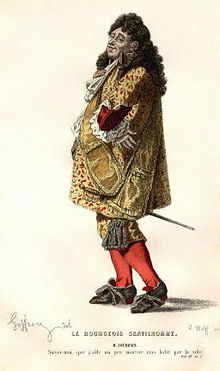
The prototypical bourgeois: Molière’s Monsieur Jourdain, the protagonist of the play Le Bourgeois gentilhomme (1670)
Radebe’s vision of a better & more competitive society? Replace Monsieur Jourdain with a new version of Sandton’s bourgeoisie?
Antitrust plan unclear

How the SA antitrust watchdogs (the Competition Commission and the Competition Tribunal) were going to be “further developed” – structurally, scope/jurisdictionally, personnel-based or otherwise – was not immediately clear.

The remarks were part of the minister’s statement in the parliamentary opening debate on the president’s state-of-the-nation address.

Justice Minister Jeff Radebe (Image via Times Live, by: SYDNEY SESHIBEDI)

Mauritian Competition Commission launches antitrust workshops for local authorities


mauritius

Mauritian Competition Commission launches advocacy program for local authorities

In an effort to foster local government awareness of competition law and “culture,” the CCM announced on June 9, 2014, that it would renew its existing antitrust advocacy program.  Its press release states:

The CCM remains devoted to its goal of enhancing a competition culture aimed at achieving a better regulatory policy in all administrative spheres. By providing the participants with an understanding of the interface between competition law and the responsibilities entrusted to Local Authorities, the upcoming advocacy programme aims to complement the Ministry of Local Government and Outer Islands’ vision towards fostering a vibrant local democracy; promoting effective, transparent and proactive delivery of services by Local Authorities.

As AAT previously reported, the CCM has also recently announced plans to introduce a formal corporate leniency policy to improve their cartel enforcement, as well as a market-division investigation in the beverage sector.

The Gambian take on the benefits of market studies

the_gambia

The Gambian Competition Authority’s commitment to investigating all prohibited practices in markets of any size

Shortly after the renaming of The Gambia Competition Commission to include consumer protection issues earlier this year, the Gambian Minister of Trade, Integration and Employment, Abdou Kolley, endorsed the ability of The Gambia Competition and Consumer Protection Commission (“GCCPC”) to continue pursuing any evidence of cartels, abuses of dominance and other illegal anti-competitive activities in any sector of the economy, as mandated by the the Competition Act 2007.


Minister Kolley

In its Strategic Plan over the next 3 years, the GCCPC indicates that it purposefully did not identify any priority sectors, to allow it to commit to investigating prohibited practices regardless of the market or its size. The Minister endorsed this approach given the need for independent agencies like the GCCPC to ensure that the competition playing field is leveled, that barriers to entry are low and that “the rules of the game” are reasonable. The Minister continued that simply having competition regime cannot produce or ensure competition in the market unless this is facilitated by government policies and enforcement.

Sectoral Market Inquiries: As in South Africa, whose Competition Commission has launched its first-ever market inquiry into the state of competition in the healthcare sector in terms of the Competition Amendment Act of 2009, the GCCPC is also empowered to launch “market studies” under section 15(k) of the Gambian Competition Act. A market study enables the GCCPC to consider both policies and enforcement simultaneously, thereby promoting competition in the economy, according to the Minister. The Minister explained that the aim of the market study was to assess competition in a particular area and recommend ways of improving it to the benefit of the economy and consumers in general.

As noted in our prior reporting, the Minister spoke at the opening of a workshop on the “Tourism Market Study” and to bring the concept of competition law closer to home, he placed emphasis on the increasing awareness about competition law within the tourism fraternity, forums such as the workshop will contribute substantially to the spread of competition culture and improving levels of compliance of the Competition Act, which would be beneficial both for the economy as well as individual businesses.

Gambian competition enforcer discusses tourism market inquiry

Gambia in the antitrust headlines twice in past week

7 days ago, it made news because of its changed name and dawn of a broader enforcement agenda, now including consumer protection matters.  Today, we are covering meeting by Gambia Competition and Consumer Protection Commission (GCCPC) with tourism industry stakeholders, as reported by AllAfrica.

Abdou Kolley, Minister of Trade and Employment, gave a Tuesday speech addressing his competition agency’s tourism market study, undertaken according to section 15(k) of the Competition Act, attempting to garner support for the benefits of free-market competition.  “Competition does not emerge on its own”, noting that the GCCPC’s enforcement and oversight activities were necessary to lower entry barriers and assure the absence of illegal price-fixing and other illicit conduct.

“The GCCPC is mandated by the competition Act 2007 to pursue any evidence of cartels, abuses of dominance and other illegal anti-competitive activities in any sector of the economy and I am confident that they will continue to do so.”

Minister Kolley

The Director General of the Gambia Tourism Board, Benjamin Robert, was quoted as agreeing with the minister, saying that the GCCPC’s report was “timely” and noted that the domestic tourism industry possessed certain characteristics of dominance in some sectors, with over 50% market share by some market players.

Namibian merger control: 1st deal of 2014 gets conditions

namibia

Namibian Competition Commission Imposes Conditions on Mining Deal

The Namibian Competition Commission has given its first conditional approval of the year in a gold-mine transaction, imposing employment conditions that require the purchaser not to lay off any employees for a minimum of two years from the date of sale.

Unemployment concerns drive antitrust ruling

The Commission stated, per reporting on AllAfrica.com, that there were no reasons to block the deal on a lessening-of-competition grounds under section 47 of the Competition Act, but that it was “concerned about the effect of the sale on employment, hence the imposition of the above condition.”

AAT reported last year on the revision of the Namibian competition law to include consumer-protection provisions, which would allegedly bar M&A deals not only on pure antitrust grounds but also on a more broadly defined “unfairness” basis.

In the current deal, buyer Guinea Fowl Investments Twenty Six will acquire the Navachab gold mine from AngloGold Ashanti Namibia, which since last year has had gold-mining competition from one other player (B2Gold) in the domestic market.

First 2014 deal with conditions

We note that no other cleared transaction has had conditions imposed since the beginning of the calendar year, as shown by the agency’s May M&A update 2014:

Namibian NaCC approved deals as of May 2014


Appellate competition body questions authority’s lenient fine

south_africa

Tribunal expresses doubts as to lenient fining level of Premier Fishing

The chairman of the South African Competition Tribunal, Takalani Madima, has asked the South African Competition Commission and Premier Fishing for ‘detailed substantial submissions’ on the settlement agreement reached between them, which lets the fishing company “off the hook” for an administrative penalty of a mere R2.1m (or 2% of its revenues).

2% fine not sufficient deterrent to anti-competitive conduct

According to a BDlive report, Mr. Madima is quoted as saying: ‘I am personally not too happy (with the agreement). I am still to be persuaded.’

The underlying conduct involves a cartel between Premier Fishing and others, in which the competitors shared information and pricing regarding the pelagic fish industry.  The Commission’s July 2008 investigation included the following companies as targets: Oceana, Foodcorp (note: the two former cartelists recently decided to merge and the competition authorities imposed conditions on the planned transaction), Premier Fishing, Gansbaai Marine, the SA Pelagic Fish Processors Association, Pioneer Fishing, Saldanha Bay Canning and others.

As the leniency applicant, Pioneer Fishing obtained full immunity from prosecution.  Others, such as Oceana, settled for approximately 5% of their fishing turnover.

Airtel Kenya requests probe of Safaricom for abuse of dominance in mobile money transfer market

kenya

Mobile payment wars heating up in Kenya

Airtel Networks Kenya Limited (“Airtel”) has joined forces with Kenya-based Equity Bank to launch a similar mobile banking product, M-KESHO in July 2014 to the established product provided by Safaricom Limited (“Safaricom”).

Safaricom offers a product named “M-Pesa” to its customers in Kenya and Tanzania.  M-Pesa is a mobile-phone based money transfer and micro-financing service, launched in 2007 for Safaricom and Vodacom, the two largest mobile network operators in Kenya and Tanzania. The service enables its users to deposit and withdraw money, transfer money to other users and non-users, pay bills, purchase airtime and transfer money between the service and, in Kenya, a bank account.  Users of M-Pesa are charged a service fee for sending and withdrawing money.

By 2010, M-Pesa became the most successful mobile-phone-based financial service in the developing world.

In light of the imminent launch of the Airtel product, Airtel has lodged a complaint with the Competition Authority of Kenya on the basis that Safaricom currently holds 78% of the voice market in Kenya, 96% of the short message service market and 74% of the mobile data market.  In addition, Airtel is of the view that these market shares make it impossible for Kenyan consumers to have a choice in operators. By 2012, 17 million M-Pesa accounts were registered in Kenya alone, which has a population of over 40 million.

There are a total of approximately 31 million mobile-phone subscriptions in Kenya in 2013, of which Safaricom accounted for 68%, Airtel 17%, Essar Group’s “yuMobile” 9% and Telkom Kenya Limited 7%.

However, Safaricom has indicated that cash transfers still account for 98% of the total transactions in Kenya and therefore it is impossible for any mobile-money entity to be a dominant player in the payments market.

The Competition Authority of Kenya has identified telecommunications as one of several markets being scrutinised by the Competition Authority for possible abuses of dominance.  This probe is expected to reach completion by July 2014.

In terms of Kenyan law, if a company controls at least half of the provision of trade of services or goods, the company will be considered to be dominant.  In Kenya, a conviction of abuse of dominance can lead to a five-year prison term and a USD 115 000 penalty

Kenya is quite clearly pushing on in relation to significant cases in sectors which affect the majority of the population, as discussed in the overview of maturing African competition regimes published last week.  However, it is noteworthy that in April 2014, Kenya’s telecommunications regulator granted approval for Safaricom and Airtel to buy Essar Group’s “yuMobile” and it is considering awarding licenses for at least three more telecommunications companies.  Orange SA has indicated that its operations may exit the Kenyan market, where it owns 70 percent of Telkom Kenya (which in turn accounts for 7% of the mobile phone subscriptions in Kenya).

“New” antitrust enforcer takes on additional task of consumer protection

The Gambian Competition Commission has changed its name and enlarged its mandate

With the passage of Consumer Protection Act 2014, the Gambia Competition Commission has changed its name to The Gambia Competition and Consumer Protection Commission (GCCPC) The rationale for inclusion of the broader task of consumer protection (in addition to antitrust enforcement of the Competition Act of 2007) was, perhaps somewhat analogous to other sister agencies worldwide (e.g., the U.S. Federal Trade Commission, which likewise has a similar dual mandate), described as follows by the the minister for
Trade and Industry, Abdou Kolley:

“Trade goes with competition, and where there is trade there is a need for consumer protection.”

In addition to the GCCPC, the Act envisages the establishment of consumer-protection tribunals throughout The Gambia’s administrative regions to hear and adjudicate consumer-protection complaints.

the_gambia

Commission details plans for private healthcare sector inquiry

south_africa

Further details revealed by inquiry panel

On Friday, subsequent to outlining the time table of the project, the South African Competition Commission Competition Commission released important frameworks for its sectoral inquiry into the competitiveness of the private healthcare sector in the RSA. The key documents are a draft “statement of issues” (which the Commission warned may further “evolve” during the course of the inquiry) and “guidelines for participation” for the market inquiry into the private healthcare sector, which is headed by retired Chief Justice Sandile Ngcobo. The public and affected stakeholders are invited to make written submissions on these before Monday, 30 June 2014 (South African Competition Commission direct e-mail address: health@compcom.co.za).

Notably, the statement of issues includes the role of the public sector in competition in the market for healthcare. This was a key sticking point for observers and stakeholders, as the initial framing of the inquiry appeared solely focused on the private players, failing to take into account the competitive restraints imposed by the strong public insurance schemes and other state-related participants in the healthcare arena.  (AAT published on this and related issues here and here.)

Other topics include, predictably from an antitrust point of view, regulation, market power and dominance, barriers to entry, as well as consumer-protection aspects. Taken together, the areas of concern have been grouped by the Commission’s inquiry panel into six possible theories of harm, which the Commission defines as follows: “A theory of harm refers simply to a hypothesis about how harm to competition might arise in a market to the detriment of consumers and to the detriment of efficient and innovative outcomes in that market.” (Statement of Issues at para. 9 and 53, as follows):

  1. Theory of harm 1: Market power and distortions in healthcare
    financing.
  2. Theory of harm 2: Market power and distortions in relation to
    healthcare facilities.
  3. Theory of harm 3: Market power and distortions in relation to
    healthcare practitioners.
  4. Theory of harm 4: Barriers to entry and expansion at various levels
    of the healthcare value chain.
  5. Theory of harm 5: Imperfect information.
  6. Theory of harm 6: Regulatory framework.

The Big Picture: AAT History – Maturing competition-law regimes in Africa

AAT the big picture

Below, AfricanAntitrust.com provides a brief overview of maturing antitrust jurisdictions in Africa

In the past two decades, 26 African countries implemented domestic competition law regimes, and that number continues to grow.

Many competition authorities who were previously deemed as being rather ineffective in their teething stages, have now begun to actively enforce their respective competition law provisions by launching market inquiries, prohibiting anti-competitive mergers, conducting dawn raids and becoming tough on cartel activity.

Below, we provide a short summary of some of the maturing jurisdictions on the continent (notably excluding matured ones (South Africa) as well as young regimes, including supra-national ones such as COMESA, as they arguably fall outside this definition.)

Botswana

The Competition Authority in Botswana was launched in 2011, and with 33 staff members, of which nearly half comprises economists, and the authority has already conducted more than 20 dawn raids and launched market inquiries launched into various “priority sectors” such as retail, poultry and cement. The competition authority has blocked mergers which impede the empowerment of Botswana’s citizens on the basis of public interest concerns in maintaining sufficient local shareholding in certain key markets such as health care.

Kenya

In 2011, Kenya implemented its Competition Act and now, given the new, and higher, merger filing fees, the budgetary constraints within the Competition Authority of Kenya (“CAK”) will be addressed and alleviated. The Competition Authority of Kenya announced its intention to launch investigations into claims of powerful cartels in the lucrative coffee industry in Kenya. The Competition Authority of Kenya plans to probe abuse of dominance by coffee firms, particularly in relation to marketing. In addition, the Competition Authority of Kenya has initiated an investigation into allegations of abuse of dominance by Lafarge in Kenya, which may result in Lafarge being forced to sell its stake in the East African Portland Cement Company.

Following the dawn raid conducted by the South African Competition Commission on Unilever and Sime Darby in April 2014 in relation to the edible oils industry, the CAK has launched an investigation into the edible oils market, in which local prices have been unresponsive to reductions in the cost of imported feedstock.

Namibia, Zambia & Mauritius

Both the Namibian and Mauritian competition authorities have announced their respective plans to introduce a formal corporate leniency policy to improve their cartel enforcement. In addition, the Mauritian Competition Commission will investigate whether Stage Beverages, of the Castle Group, and Phoenix Beverages Ltd have agreed to divide markets in Mauritius and Madagascar, given that the Mauritian Competition Commission has reason to believe that Stage Beverages and Phoenix Beverages have agreed that Stage Beverages will cease the manufacture and supply of beer in Mauritius, while Phoenix Beverages will do the same in Madagascar.

The Zambian competition authority has recently imposed significant penalties for price-fixing in the vehicle-repair industry. Furthermore, it has conducted dawn raids on two fertiliser companies.

AAT will continue its summaries (which we hope you find helpful in navigating the competition-law map of Africa) in its “Big Picture” series.