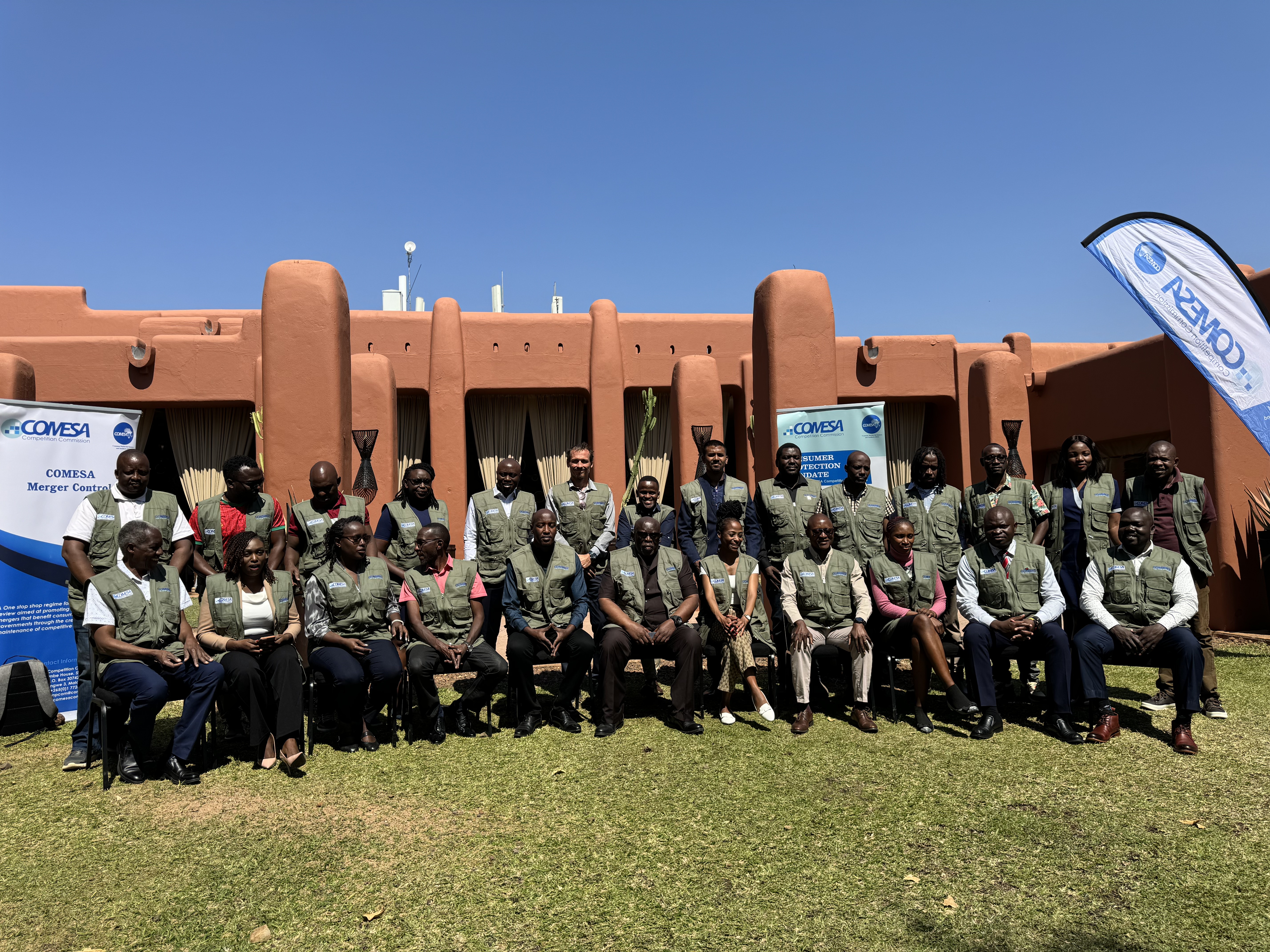
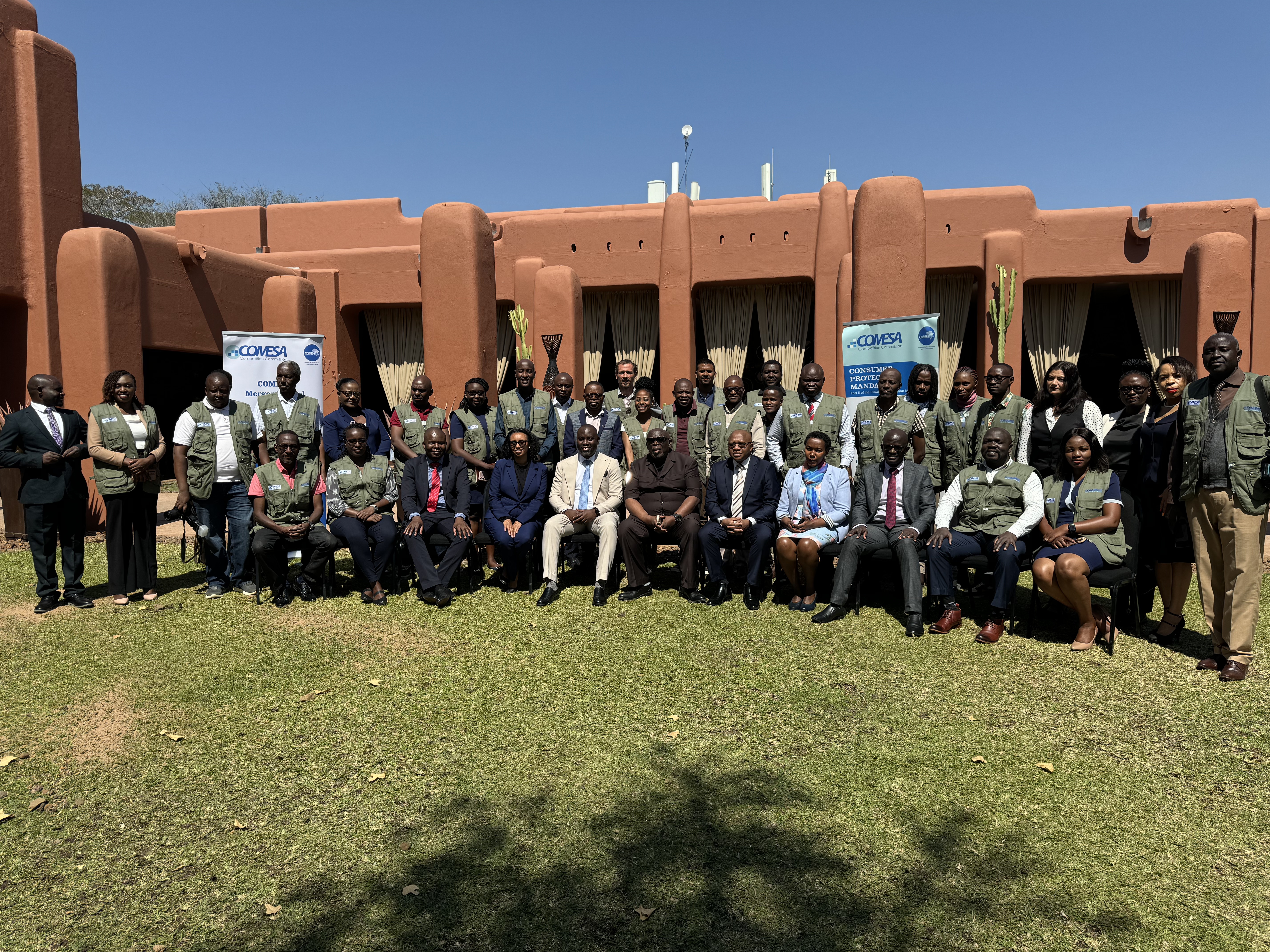
Senior diplomats from the COMESA region gathered in Livingstone, Zambia, for the fourth in a series of diplomatic antitrust-focused conferences that began in 2016 but were halted due to the coronavirus pandemic in 2019.
At today’s formal resumption of the recurring event, Dr. Willard Mwemba, CEO of the COMESA Competition Commission, introduced the conference session by calling out the importance of the agricultural sector to the people residing in the region, especially the very poorest of citizens.
He stated in unmistakable terms that his agency would prioritize this and related markets for heightened antitrust enforcement, to ensure the sector operates efficiently and competitively. “Accessibility (and affordability) of food is one of the most fundamental human rights. $2 per day are spent by the poorest people on average, and the majority of those two dollars is spent on food,” noted Mwemba.
Says Andreas Stargard, who attended the session, “it is clear that the view of the Commission is that agricultural markets in COMESA are not functioning as they should, based on studies the agency has undertaken with outside assistance. The massive foodstuffs price inflation levels COMESA residents have suffered in recent years are not merely natural consequences of irreversible climate change but rather represent mostly economic profit to the manufacturers and traders, to the detriment of consumers, based on what Dr. Mwemba presented today.”
COMESA Secretary General, Chileshe Mpundu Kapwepwe, summarized the stark importance of the AG sector to the region, its people, and the economic zone in sobering statistical terms: “The agriculture sector is one of the key sectors for most Member States as it contributes more than 32% to the Gross Domestic Product of COMESA, provides a livelihood to about 80% of the region’s labour force, accounts for about 65% of foreign exchange earnings and contributes more than 50% of raw materials to the industrial sector.”
In light of this crucial importance of the agricultural and food markets, food security is high on the list of action items that COMESA must address practically and effectively, she concluded. COMESA evaluates supply and demand levels across all 21 member states to assist with market assessment and planning.
The Diplomatic Conference’s guest of honour, Zambian Minister of Commerce, Trade and Industry, Hon. Chipoka Mulenga, noted in prepared remarks delivered by his deputy and permanent secretary to COMESA that, while “food production must be profitable for farmers, it must not be exploitative.”
In this regard, the famous Adam Smith quote referenced by Dr. Mwemba at a prior antitrust session comes to mind: “It is not from the benevolence of the butcher, the brewer, or the baker that we expect our dinner, but from their regard to their own self-interest. We address ourselves not to their humanity but to their self-love, and never talk to them of our own necessities, but of their advantages.”
Beyond the immutable wisdom of the Wealth of Nations from two and a half centuries ago, the (1) CCC’s increased competition law enforcement in the agricultural and food sectors, as well as (2) national member states are assisting the effort of ensuring wide and secure availability to all COMESA residents by creating and strengthening cross-border value chains in the food sectors with overlaps across member state borders, the Zambian minister observed.
Meet the “CCCC”: the 4th Estate Covers the 4th “C” of the COMESA Competition Commission During its Second Press Conference, and More
The second annual COMESA Competition Commission press conference, taking place in Livingstone, Zambia, revealed not only news, but also the extensive improvements to the agency being made, and information about ongoing market studies and case investigations. It was an opportunity to allow business journalists obtain a glimpse, if not indeed a full deep-dive overview, into the future of the triple-C – which is soon to be the “Quad-C”, in fact, as Dr. Mwemba, the head of the Commission, announced at today’s event. That is, the CCC will add a fourth “C” to its name, so as to include expressly the concept of Consumer protection. AAT notes that this is similar to several other national competition authorities, for example the Nigerian FCCPC or even the U.S. FTC, both of which also have an existing mandate covering consumer-protection issues, besides their jurisdiction over pure competition-law matters.
Name Change
Dr. Mwemba clarified that the now-express inclusion of this “4th C“ in the Commission’s name going forward is to highlight the fact that the Commission will enhance its focus on consumer-protection issues, and to ensure that the average consumer (as opposed to competition experts) in the COMESA region can better understand their rights and recourse to the CCC(C).
Public-Interest Factors
This renewed consumer-protection emphasis also goes hand-in-hand, AAT believes, with the increased importance of so-called “public-interest“ factors in the CCC’s merger analysis. Dr. Mwemba highlighted, by way of example, environmental factors and job creation numbers, as potential considerations to be taken into account by the Commission under the amended regulations, which will likely come into effect by December 2024.
New Competition Regulations
These newly amended COMESA Competition Regulations, which have been in the making since the May 2021 inception of the Commission’s efforts to revise the regional competition law, will culminate in the imminent clearance by the COMESA Legal Drafting committee, and ultimately (by the end of the year, we anticipate), its adoption by the regional committees of the COMEAS Attorneys General, of the Justice Ministers, and eventually the Council of Ministers of all 21 COMESA member states. Of course, as AAT has discussed before, these Regulation Amendments carry with them extensive revisions to antitrust law (e.g., the creation of a leniency programme for cartel offenders; the change-over to a suspensory merger notification regime; adding ‘transaction value’ to the concept of deal-notification thresholds, amending their definition from being purely asset- and revenue-based; and the creation of certain market-power presumptions based on share thresholds, just to name a few here).
Dr. Mwemba clarified in vivid terms that neither life nor law must be stagnant. Hence the import of the revision of the Regulations, which (in their current form) are by now two decades old. “The original 2004 COMESA law simply was no longer up to the task of helping the Commission to regulate modern markets as they stand in 2024 and beyond,” according to the CCC. Examples given by the senior staff present included the rapid rise of artificial intelligence, environmental changes to the economy, and digital platform evolution – all of which have proceeded faster than virtually all existing antitrust laws globally. The view of the executive of the Commission is that it is well-positioned to be at the forefront of adapting to these challenges of imminent change.
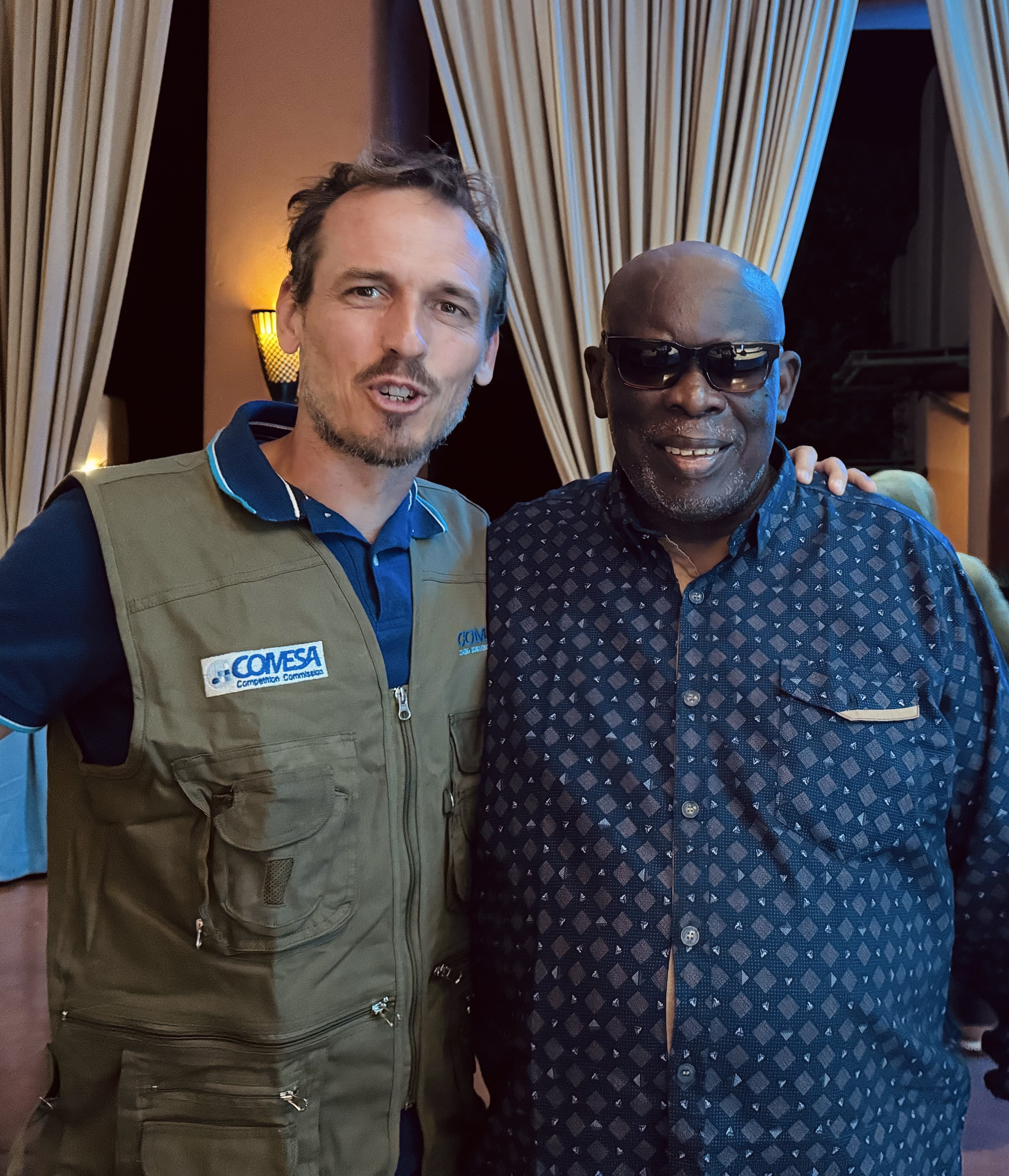
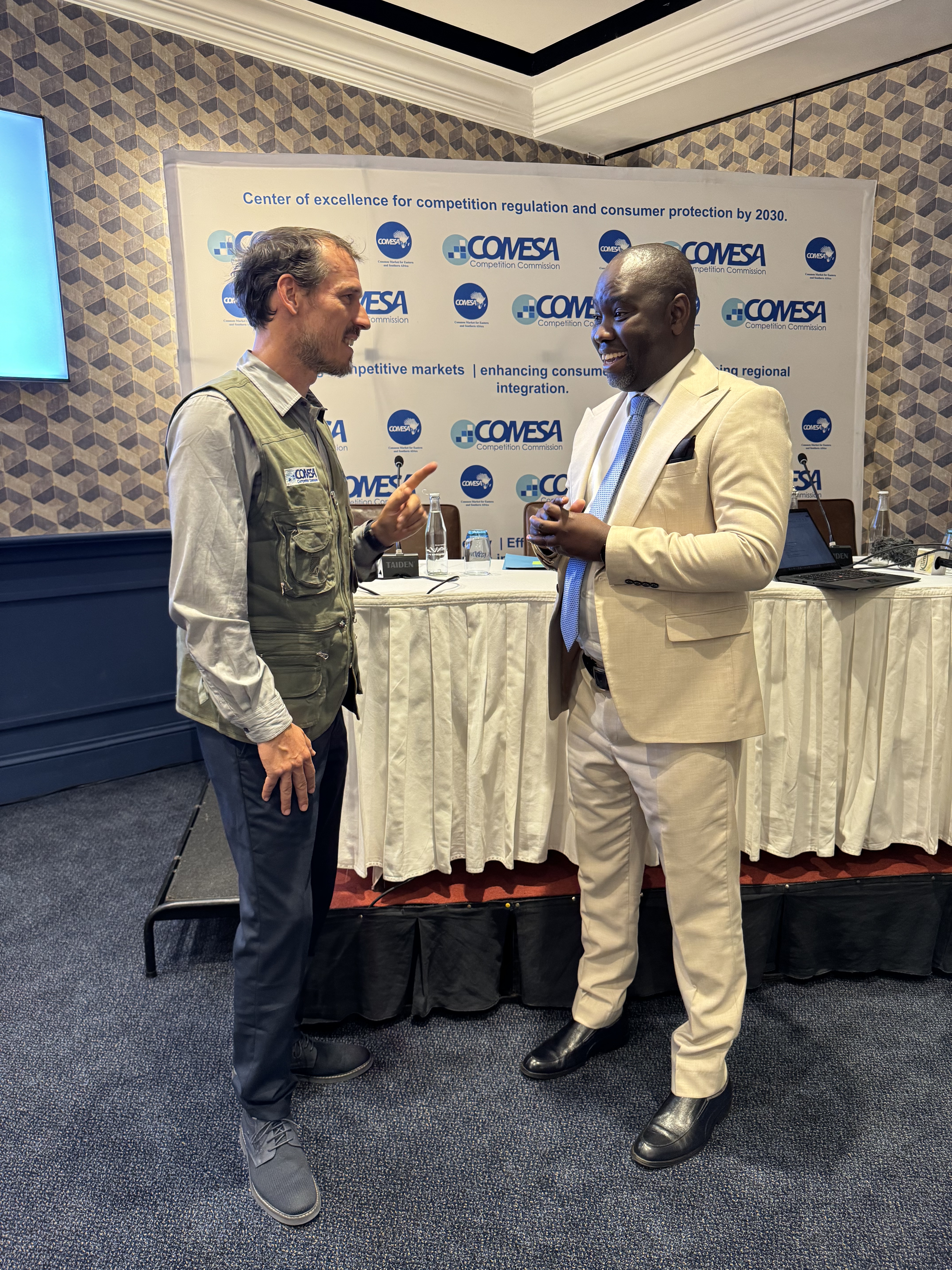
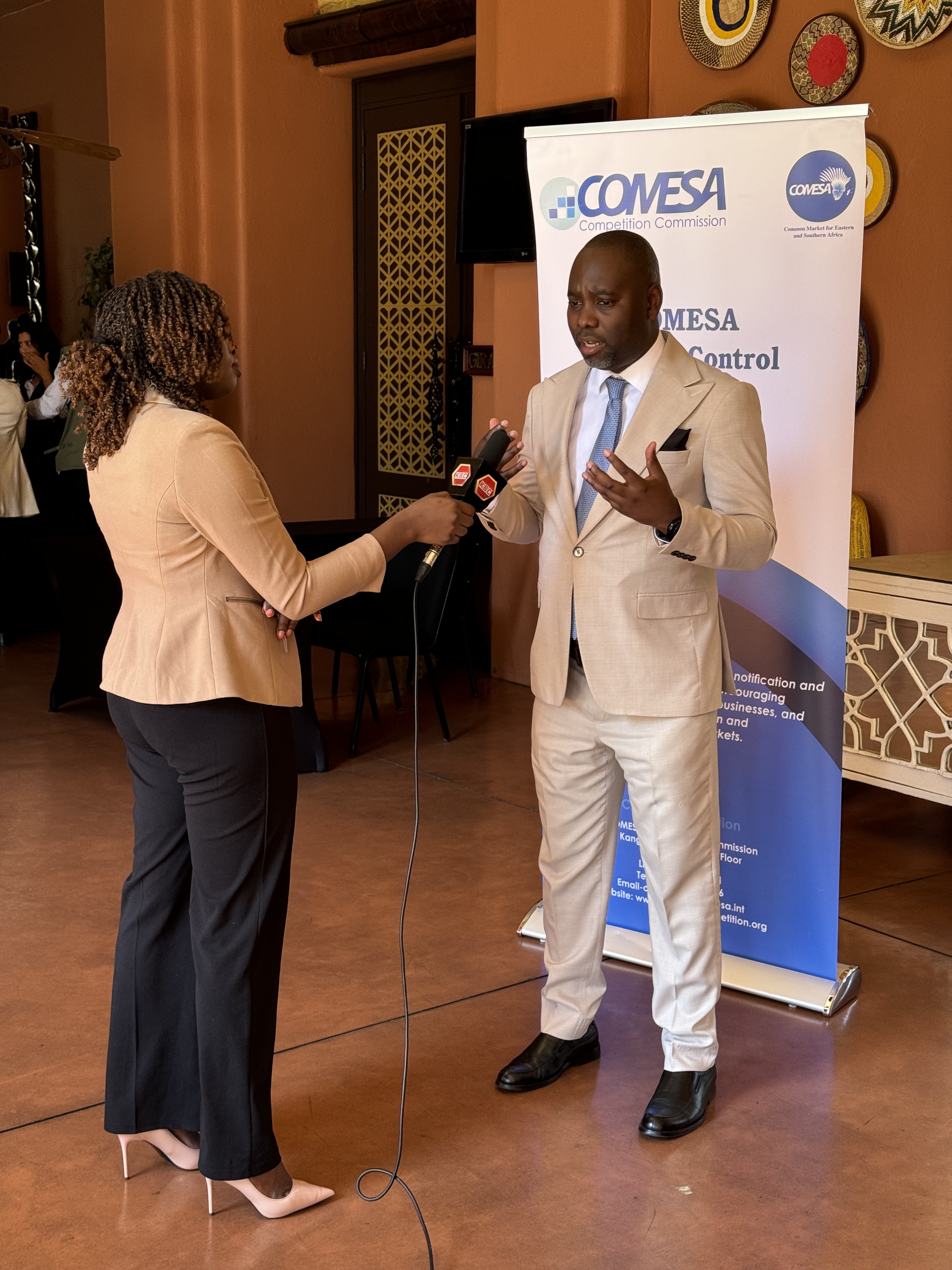
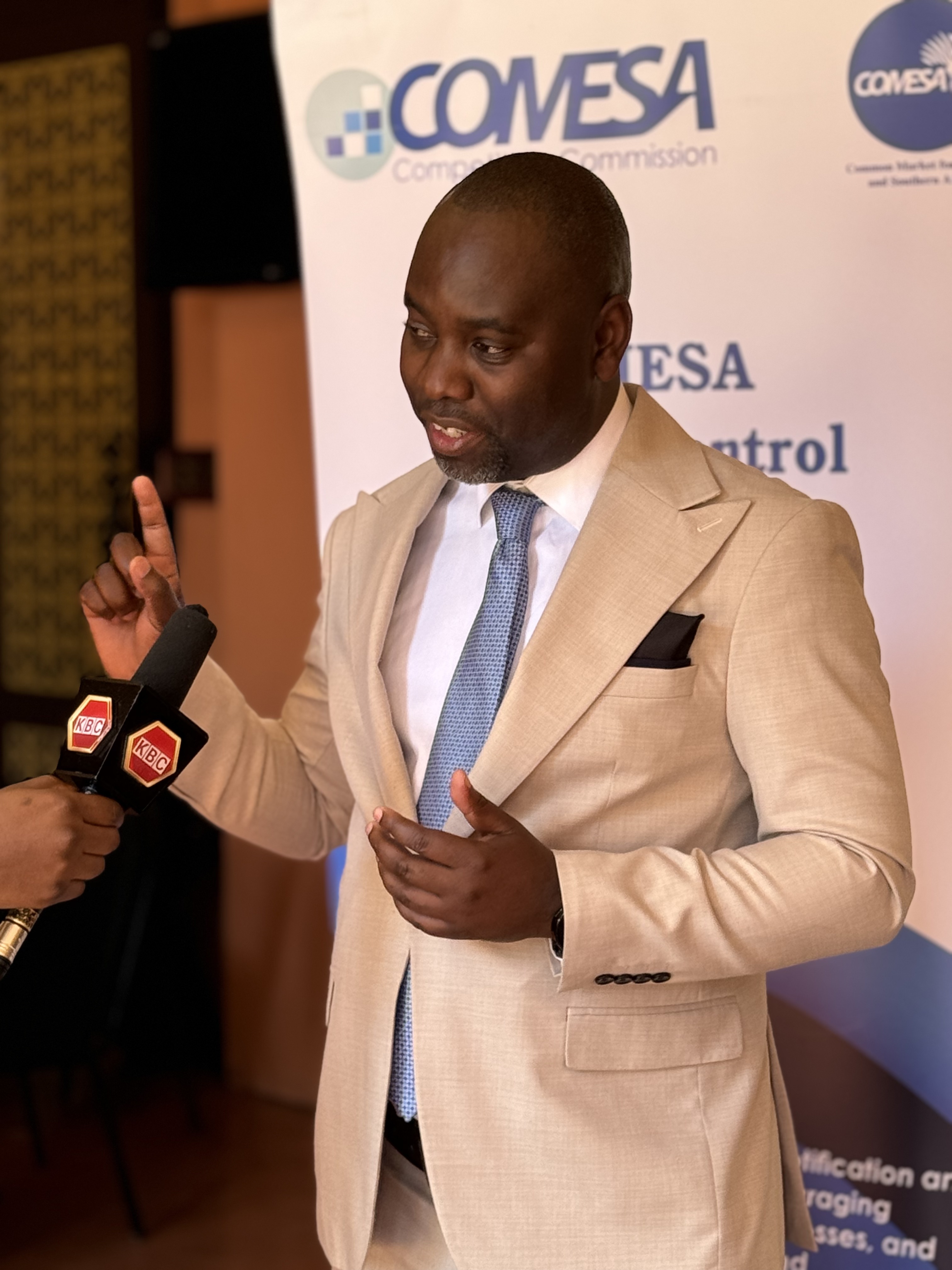
The former CEO Dr. George Lipimile and AAT Editor Andreas StargardWith the CEO of the Commission, Dr. MwembaDr. Mwemba being interviewed by KBC
Merger Regulation
As both the past Director (Dr. George Lipimile) and the current CEO (Dr. Willard Mwemba) highlighted: the Commission does not exist to prohibit mergers. Instead, its purpose, from a merger-control perspective, is to ensure that any deals that may distort competitive markets is structured in such a way that the distortion ceases to exist or risk to the functioning of effective markets.
Answering one of the questions posed by africanantitrust.com, Dr. Mwemba confirmed that the Commission is continually engaged in ex post analysis and reviews of past mergers that were approved, sometimes with conditions, by the then-triple-C. In the ATC/Eaton Towers case, for example, it observed that the parties were found not to be complying with the obligations imposed by the contingent approval decision, therefore resulting in fines imposed by the CCC post-closing of the approved deal.
Beyond Mergers: Anti-Competitive Practices
The Commission has moved on from being a pure merger regulator long ago, however. This was a key theme throughout the multi-day conference. “We have moved on from just doing mergers, and have now been covering the terrible, always-hidden, and always-nefarious, anti-competitive practices found across the region for years,” says Dr. Mwemba about the more than 45 ACP matters the agency has handled so far. Case examples he gave in this respect include the CAF licensing of football rights (a veritable trilogy of matters at all levels of the intellectual property distribution chain regarding an important pastime in Africa, soccer).
Other instances of the CCC pursuing anti-competitive practices within the region include multiple investigations into the beer and alcoholic beverage markets, and a now concluded case against Uber (resulting in significant changes to the ride-sharing company’s contract terms in the COMESA region, namely removing a denial of vicarious liability clause, changing the choice of law provision from the Netherlands to local jurisdictions in COMESA, as well as changing the pricing and termination of services provisions of the contract of adhesion that Uber utilizes in its app.). Finally, the agency is deeply engaged in ongoing agricultural and food price studies, which will likely yield further enforcement actions going forward, in the words of the CCC.
Closing Thoughts: Due Process, Procedural Rights, and Deepening Collaboration with NCAs
Even though one of the identified CAF cases remains pending on appeal, Dr. Mwemba said that the Commission welcomes the parties’ exercise of their due process rights, noting that the CID review and appellate process provide valuable insights and that everyone stands to gain by the recognition and exercise of such due process under the rules and the law. Indeed, appeals have increased from just 1 in 2023 to 3 in 2024. The Commission also provided statistics on the collaboration it engages in with national competition authorities, including capacity building in Mauritius, the Democratic Republic of Congo, Uganda, and other member states. Finally, the statistics provided for the past 11 years show the transformation of the early period (which AAT had initially covered graphically for several years with its informal merger-stats analysis, now long-abandoned due to the CCC’s improved transparency and web presence): The CCC has handled over 430 merger reviews and more than 45 anti-competitive practice investigations.
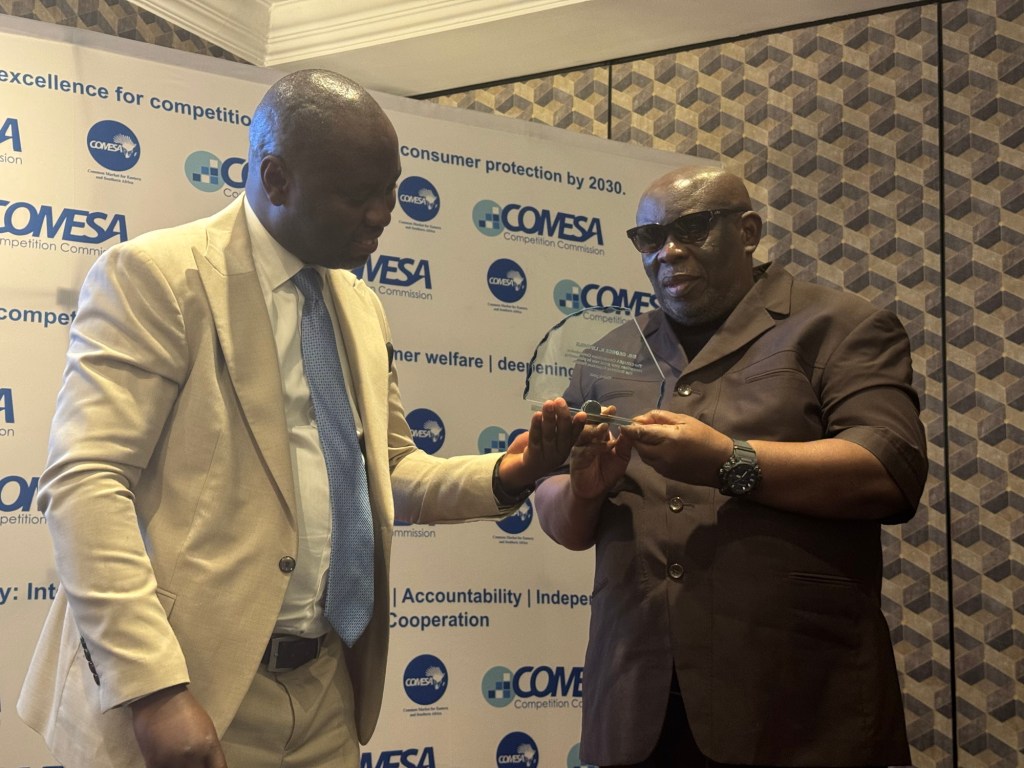
Honoring ongoing excellence and recognizing past accomplishments
A Primerio-sponsored webinar recently put the spotlight on Nigeria’s burgeoning FCCPC
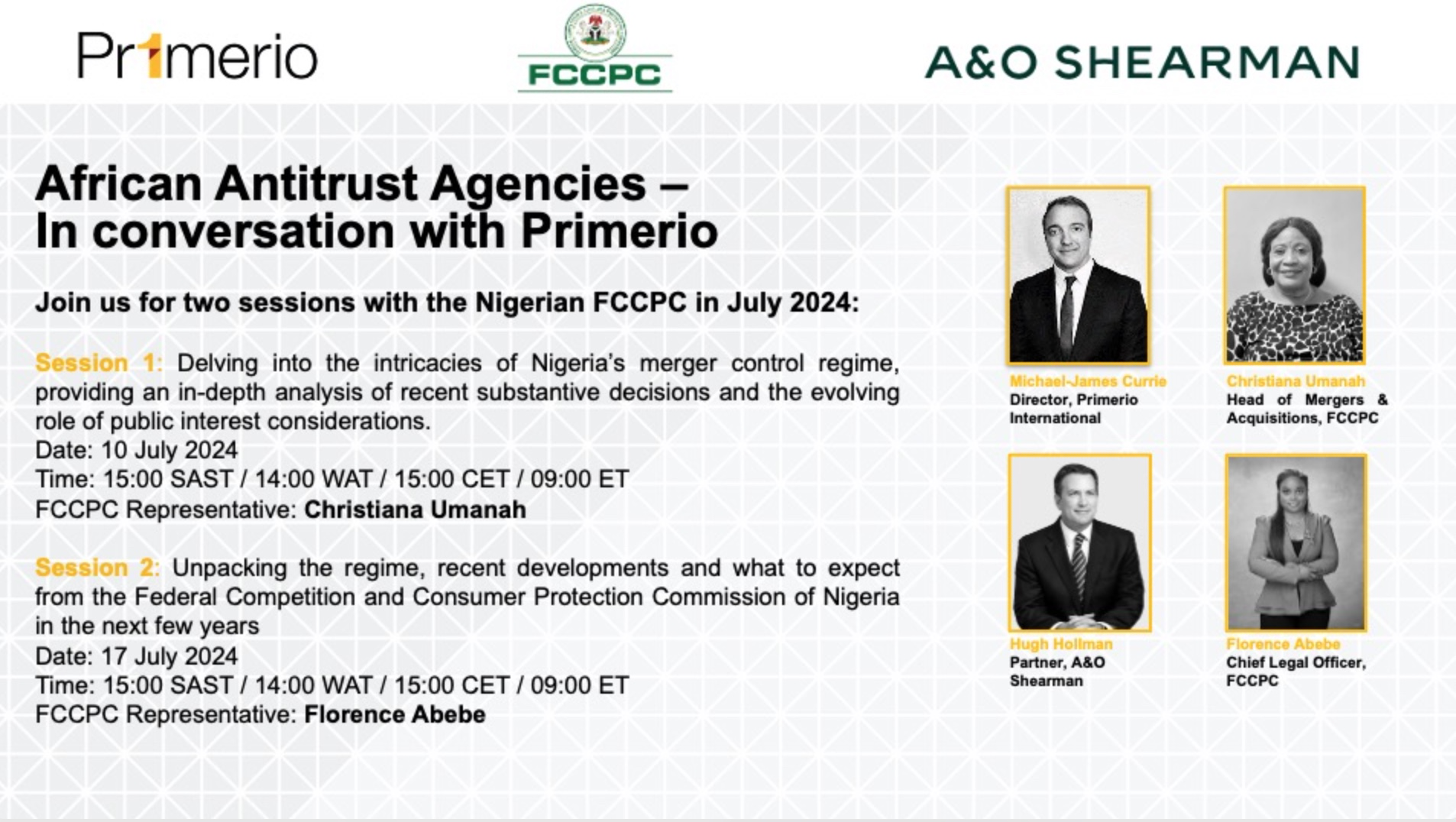
On 10 July 2024, advisors from pan-African law firm Primerio continued their “African Antitrust Agencies – in Conversation with Primerio” series with the Nigerian Federal Competition and Consumer Protection Commission (“FCCPC”) in the first of two sessions aimed at a quick snapshot of the most noteworthy enforcement, legislative, and policy developments.
This first session focused on merger control.
Primerio’s Michael-James Currie, Competition Law Partner at Primerio (Johannesburg) was joined by Hugh Hollman, Competition Law Partner at A&O Shearman (Washington & Brussels) and had the pleasure of speaking with Christiana Umanah, the Head of the FCCPC’s Merger Control Department.
This recent webinar featured insights from Hugh Hollman, an experienced international antitrust partner at A&O Shearman, and Christiana Umanah, head of FCCPC’s merger division. Christiana Umanah elaborated on the rapid development of the FCCPC since the Federal Competition and Consumer Protection Act (“FCCPA”) was enacted in 2018. She outlined the structure and growth of the FCCPC, noting its establishment in 2019 with an active team of eight in the mergers department, along with offices in all 36 states of Nigeria, and 6 regional offices. Christiana emphasized the regular training received by FCCPC staff both locally and internationally, with recent sessions in Mauritius and Barcelona. The FCCPC maintains collaborative relationships with international agencies such as the FTC, and the DOJ, especially for capacity building and training. She detailed the timelines for merger reviews in Nigeria, which usually take 60 business days, extendable to 120 business days for complex antitrust cases, while harmonizing multi-jurisdictional reviews and offering a fast-track option to reduce the timeline by 40 business days.
Addressing foreign-to-foreign mergers, Christiana explained that the FCCPC assesses these based on local turnover, focusing on the specific business presence in Nigeria. She also discussed the penalties for gun-jumping, which are commonly based on 2% turnover for the last financial year, considering factors like knowledge, cooperation, and company size. The FCCPC is open to pre-merger consultations on a no-name basis, ensuring confidentiality while guiding parties through the process. Christiana shared examples of conditions imposed on transactions, such as divestments and board member exit to prevent market concentration. Public interest considerations are also a key focus for the FCCPC, particularly regarding employment and market impact, as demonstrated in a case involving a failing firm where job preservation was prioritized. Looking ahead, the FCCPC is developing regulations for digital transactions and e-market platforms to address emerging issues in the digital market. The webinar concluded with a note on the importance of ongoing dialogues and the FCCPC’s willingness to assist with information and support.
The transcript for this session is available here, and the recording of this session is available on Primerio’s YouTube page, accessible here.
Our next session of Primerio‘s “in conversation with…” series remains focused on Nigeria, as we will discuss recent enforcement activity and legislative & policy developments. Join Hugh Hollman, the FCCPC’s senior officer, Florence Abebe and Primerio partners for another concise but very useful session as Nigeria’s FCCPC Nigeria gains prominence across the Continent.
Nigerian president, Bola Tinubu, yesterday appointed Mr. Tunji Bello to become the new Chief Executive Officer and Executive Vice-Chairman of the Federal Competition and Consumer Protection Commission (“FCCPC”), subject to review and a vote by the Senate, which is expected to pass without issue.
Observers are noting the relative lack of competition-law / antitrust experience of Mr. Bello (whose prior credentials include State Secretary and Environment Commissioner, both in Lagos State). Mr. Bello, a former journalist, is an unknown to most, if not all, competition-law practitioners. His Wikipedia entry describes him primarily in terms of his career as a journalist, which included international stints as “a Staff Writer with [the] St. Petersburg Times, Florida, US, and also [] US News & World Report, Washington DC in 1992.”
The formal press release (see below) seems to support this sentiment of a purely political appointment without any regard to prior competition-law or economics experience, as it appears to focus solely on “consumer protection” and the “safety of goods and services,” while failing to mention competition or antitrust even once.
We note that some commentators have pointed out, at the cynical end of the spectrum, that this appointment may be due to the FCCPC’s past successes in garnering massive fines (e.g., the $110 million fine imposed against BAT), under recently-dismissed predecessor Babatunde Irukera. Such financial windfalls for the government coffers have, these observers believe, turned the agency’s CEO job, into a highly coveted executive post, which had been temporarily held in an interim capacity by Dr. Adamu Abdullahi between January and Mr. Bello’s appointment yesterday.
AAT is hopeful that this is not the case, and that Mr. Bello will not turn the young and so-far highly-regarded FCCPC into a mere means to an end of generating revenue for the Nigerian government. We trust that the Commission will continue to uphold its mandate of competition-law enforcement and its high standard of excellence, thanks in large part to the leadership of Mr. Bello’s predecessor and the quality of the senior team members he had assembled to run the agency.
Press release:
President Bola Tinubu has approved the appointment of Mr. Olatunji Bello as the new Chief Executive Officer/Executive Vice-Chairman of the Federal Competition and Consumer Protection Commission (FCCPC), pending confirmation by the Senate.
Mr. Bello is a lawyer, administrator, and renowned journalist.
He is the former secretary to the Lagos State Government and holds a Master’s degree in International Law and Diplomacy from the University of Lagos. He studied Law at the same university and was called to the Nigerian Bar in 2002.
Mr. Bello began his career in journalism at the Concord Newspapers in 1985 and held the positions of Group Political Editor; Sunday Concord Editor, and Editor, National Concord.
He is a winner of the US Alfred Friendly Press Fellowship and was appointed the Chairman, Editorial Board of THISDAY Newspapers in 2001.
He also served as Commissioner for Environment under various administrations in Lagos State.
The President expects that the new Chief Executive Officer of this important agency will ensure the holistic realization of the Commission’s mandate of protecting and promoting the interest and welfare of Nigerian consumers, and ensuring the adoption of measures to guarantee the safety and quality of goods and services.
A perspective from private practice — the real cost of doing business in South Africa: Merger Control Disincentivizing Investment into the South African Economy
By Gina Lodolo, Joshua Eveleigh, and Nicola Taljaard
A Look Back:
South Africa has been trying to find the delicate balance between the promotion of public interest initiatives, attracting foreign investment and promoting the competitiveness of South Africa’s markets. In recent years, however, the South African Competition Commission (“Commission”) appears to have taken a more rigid approach towards requiring the promotion of public interest initiatives as an outcome of merger control investigations.
At the outset, it is important to note that the Competition Act 89 of 1998 (“Act”) allows the Commission to impose conditions on mergers and acquisitions that are deemed to result in a substantial lessening of competition or detrimental to the public interest.
In 2019, the Act also underwent a significant amendment regarding the public interest provisions. In accordance with the transformative values under the Act’s preamble, the amendment aimed to ensure that competition authorities have regard to public interest factors when assessing mergers and acquisitions and, in particular, section 12A(3)(e) makes provision for the promotion of a greater spread of ownership with a view to increasing the levels of ownership by historically disadvantaged persons and employees.
While the Commission was not so emphatic on the promotion of HDP and/or employee ownership immediately after the 2019 amendments, the Commission has been taking an increasingly robust approach to the imposition of these public interest criteria. Most notably, this can be seen from the widely publicised Burger King decision where a merger that raised no competition concerns was prohibited for the first time, based solely on public interest concerns (namely a decreased HDP shareholding from 68% to 0%). While the decision was ultimately settled before being heard on request for consideration before the Tribunal, it certainly indicated the trajectory of the Commission’s approach. Since the Burger King decision, the Commission has increasingly taken a hard-line regarding transactions that are benign both from a competition and public interest perspective.
While the amendments to the Act symbolize a benevolent effort toward the transformative objectives that the competition authorities are mandated to develop, a great deal of uncertainty stemmed as a result. In practice, the Commission’s interpretation of section 12A(3)(e) of the amended Act has been to place a positive obligation on the merging parties, post transaction, to increase the merging parties’ HDP and/or employee shareholding, often times utilising a benchmark of 5%. This is irrespective of whether a transaction is benign from both a competition and public interest perspective.
Merging parties, legal representatives and regulatory authorities have also substantially debated the interpretation and effect of the amended public interest provisions. The primary argument that contrasts the Commission’s interpretation of the amended public interest provisions, however, provides that section 12A(3)(e) is only one factor for consideration in determining whether a transaction that would otherwise have an adverse effect on competition or other public interest grounds, should be allowed. Premised on this interpretation, the Commission would not be authorised to refuse a transaction if it cannot show an adverse effect on competition based on a holistic assessment of the public interest grounds delineated in section 12A(3).
The Commission’s application of the public interest provision has increasingly lacked clarity and predictability, thereby creating uncertainty in the merger review process, and making it challenging for businesses to plan and execute transactions with confidence. This is particularly so when transactions are subject to long-stop dates where protracted engagements and negotiations with the Commission risk the termination of the entire agreement. To circumvent the incurrence of frictional costs and risks of breaching any long-stop dates, private practitioners are experiencing an increased amount of global mergers carving-out (or at least considering to) the South African legs of those transactions.
Firms are often concerned about the potential dilution of existing shareholders’ equity, regardless of the size of the firm. Foreign investors may be concerned about the impact of the allocation of new shares to employees on their current ownership stakes, potentially reducing their control and influence over the merged entity.
Further uncertainty surrounded how the application of what appears to be a 5% public interest divestiture approach will apply in all circumstances. For example, it is unclear whether this would apply to all merging parties even if the two merging entities are wholly owned BBBEE entities. Furthermore, how should firms divest a 5% stake in the merged entity where the underlying transaction involves land and no employees? These are some examples of the difficult questions the Commission has yet to consider if it is to continue with the outright application of its interpretation of the Act.
In addition, by insisting on ownership-related commitments from merging parties, the Commission’s policy undermines the efficacy of the BEE framework, as parties are likely to take the view that any efforts to improve their BEE profiles outside of the ambit of the transaction may, on the Commission’s approach and assessment, carry very little weight. Accordingly, firms may start to favour an approach of decreasing their BEE efforts prior to transactions in preparation of having conditions imposed on them. Firms may also start to undervalue the target to account for additional public interest spend or carve out the South African part of the transaction to circumvent this cumbersome condition.
Over an extended period, the outcome becomes evident for South Africa – increased uncertainty and an impractical application of the Act will result in decreased in investment; potential prohibition of competitively benign mergers and increased transaction costs.
While the Commission’s approach is prima facie laudable, the unintended consequences may result in a counterintuitive outcome and cause greater long-term prejudice to the public interest and growth of the South African economy. This is particularly true in light of the much-needed foreign direct investment South Africa requires following the effects of Covid-19, greylisting and economic instability.
Introduction of Public Interest Guidelines
On 28 September 2023, the Commission released their ‘Draft Amended Public Interest Guidelines relating to Merger Control’ for public comment accessible here (“Public Interest Guidelines”).
On the same day, at the Commission’s 17th Annual Conference, the Minister of Trade, Industry and Competition (“DTIC”), Minister Ebrahim Patel, lauded the amendments to the Act and stated that the increasing imposition of public interest conditions on mergers has resulted:
in a contribution of R67 billion towards the local economy;
the saving of at least 236 000 jobs over a period of five years;
the creation of at least 22 000 jobs;
and 143 000 workers now being shareholders in companies.
While there have certainly been commendable strides towards the achievement of promoting the transformation of the local economy, the above statistics do not paint a full picture. While many firms will continue to consent to the public interest commitments suggested by the Commission, for fear of an outright merger prohibition, a number of firms would rather carve-out the South African leg of multi-jurisdictional deals. This, in itself, would stifle economic growth and adversely effect the public interest in the long-term (as consumers do not stand to enjoy the benefits of pro-competitive mergers).
The Public Interest Guidelines are intended to formalise the Commission’s policy approach discussed above when evaluating public interest factors.
We outline the pertinent aspects of the Public Interest Guidelines below:
Commission’s approach to public interest factors in merger control
Section 12A of the Competition Act provides that both the competition and public interest assessments carry equal weight in merger considerations.
Regardless of whether a merger is found to result in a substantial prevention or lessening of competition (“SPLC”), the Public Interest Guidelines provide that the Commission must still determine whether the merger is “justifiable on Public Interest grounds”. In this regard, the Commission will determine the effect of the merger on each of the public interest elements arising from the merger to determine the net effect of the merger on the public interest.
General approach to assessing public interest provisions
The Commission considers that a merger assessment requires a quantitative and qualitative determination into the merger’s likely effect on:
a particular industrial sector or region;
employment;
the ability of small and medium businesses, or firms controlled or owned by historically disadvantaged persons, to effectively enter into, participate in or expand within the market;
the ability of national industries to compete in international markets; and
the promotion of a greater spread of ownership, in particular to increase the levels of ownership by historically disadvantaged persons and workers in firms in the market.
Where the Commission concludes that the merger will have a positive effect on one of the above factors, there will be no further assessment into that factor. Where, however, the Commission finds that one of the above factors is substantially negatively impacted by the merger, the Commission will consider remedies to address these adverse impacts.
Importantly, the Public Interest Guidelines provide that where a negative impact on a public interest factor cannot be remedied, the Commission may consider “equally weighty countervailing Public Interest factors that outweigh the negative impact identified” on a case-by-case basis.
Where a merger is found to positively impact a majority of the above public interest factors, these may be outweighed countervailed by a substantial negative effects from a single public interest factor.
Approach to induvial public interest factors
The Public Interest Guidelines provide guidance on how the Commission will assess each of the public interest factors. For purposes of this summary, we focus primarily on “the promotion of a greater spread of ownership…by [HDPs] and workers…” factor which has caused the greatest degree of uncertainty, transaction costs and protracted negotiations with the Commission. This factor stands out from the rest of the public interest factors as the Public Interest Guidelines make it clear that the Commission considers section 12A(3)(e) of the Competition Act to confer a “positive obligation on merging parties to promote or increase a greater spread of ownership, in particular by HDPs and/or Workers in the economy.” In this regard, the Commission regards every merger having an effect in South Africa as having to promote HDP and/or worker ownership and therefore assumes no neutral effect.
In light of the above, where a merger does not promote HDP and/or worker ownership, it will be regarded as having an adverse impact on that particular public interest factor and, if considered substantial enough, may render the merger unjustifiable on public interest grounds.
The Public Interest Guidelines go further so as to state that where a merger promotes HDP ownership, this would not preclude the Commission’s obligation to consider an increase of ownership by workers.
Where the Commission considers there to be a substantial negative effect on the promotion of HDP and/or workers, the following remedies may be imposed:
concluding alternative ownership agreements with HDPs/Workers in either the acquiring, target or merged firm; and
divestitures to HDP shareholders which would create a greater spread of ownership in another part of the business. Importantly, the Commission will generally require that these HDPs and/or workers are actively involved in the operations (ideally control should be conferred) of the divested business and are not merely passive or financial investors.
Where the Commission proposes that an ESOP be implemented, the following guidance is provided:
where a merger results in a dilution of HDP and/or workers, the ESOP should remedy the full extent of the dilution;
where the merger does not result in a dilution, the ESOP should “hold no less than 5% of the value/shares of the merged entity but may be required to hold a higher shareholding based on the facts of the case”.
Where the Commission proposed that an HDP transaction be concluded, it provided the following guidance of the principles that ought to apply:
the HDP transaction should be no less than 25% +1 share and “should ideally confer control on the HDPs”;
the merging parties will have discretion to choose the HDPs; and
the merging parties must inform the SACC of the proposed HDP transaction prior to its implementation to assess compliance with imposed conditions.
Importantly, while the Public Interest Guidelines are not binding on the Commission, the Competition Tribunal or the Competition Appeal Court, they provide clarity on how the Commission intends on assessing mergers notified to it.
Despite an increase in certainty, the Public Interest Guidelines remain a cause for concern amongst the local and international private sectors as they have merely confirmed the policy approach that the Commission has increasingly been adopting in practice. In this regard, even where a foreign-to-foreign merger is notified to the Commission, it ought to consider how it can actively promote HDP and/or worker ownership and may become susceptible to ESOPs and/or HDP transactions in achievement of the Competition Act’s transformational objectives.
The Public Interest Guidelines are open for public comment until 28 October 2023 and are likely to be subject to extensive submissions.
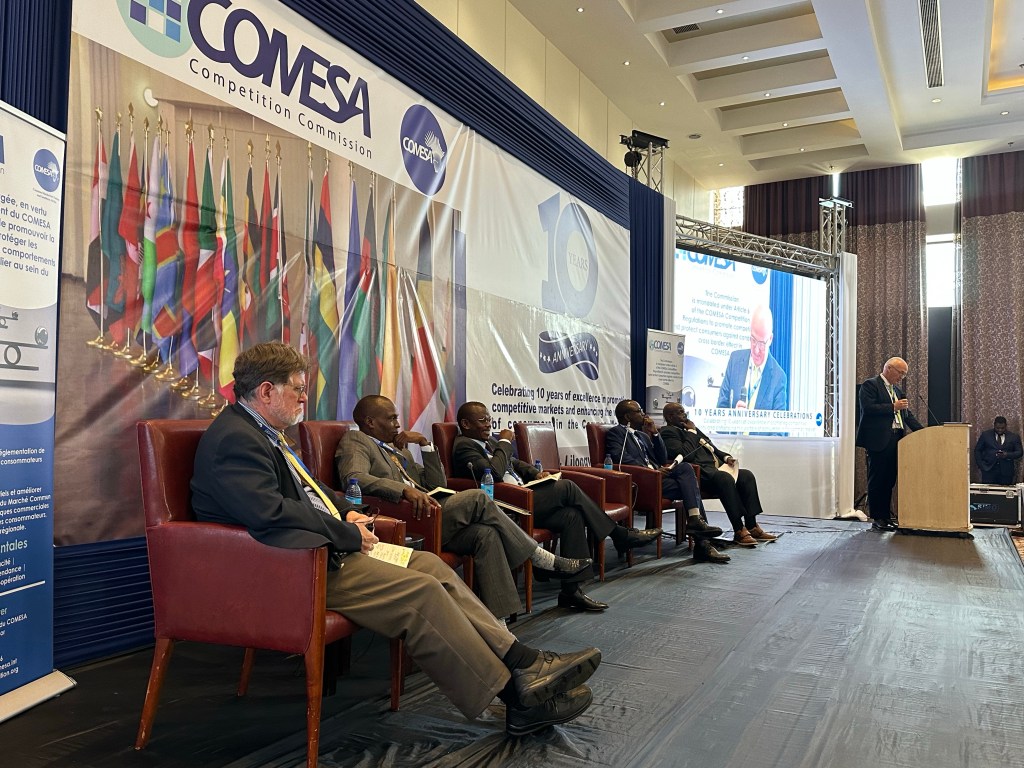
The booming voice of eminent antitrust scholar and GW Law professor Bill Kovacic easily surmounted the small technical microphone glitches at COMESA’s celebration of its Competition Commission’s first 10 years in Malawi (#CCCat10years), giving the keynote address.
His accessible speech, given in front of a diverse audience comprised of senior ministers and policy makers, lawyers, enforcers, and media representatives, focused on practical examples covering three key topics of public expenditures, subsidies, and the removal of entry barriers.
On state spending, he noted the attendant “global epidemic of collusion and corruption”, in areas as simple, but important to development, as transportation infrastructure. “We don’t always need to debate ‘digital markets’ or ‘big tech’, we can also highlight the importance of basic road-building on increasing trade and measurably growing economies” across Africa. But these areas of public expenditures are invariably hampered by corrupt or collusive tendering and similar cartel conduct — important focus areas for the COMESA CCC to enforce.
In the area of public subsidies, Kovacic proposed a future collaborative working relationship between antitrust enforcers, legislators, and those ministries that allocate state subsidies, ideally to non-incumbents (giving the NASA vs. Space-X example to make his point) so as to enhance market entry.
The CCC should enhance market access by making barriers to entry “more porous” for newer small competitors, with Kovacic using the famous 1982 Bell Telephone/AT&T U.S. antitrust precedent to highlight the practical value of competition law to society and innovation of new, better, and cheaper products and services.
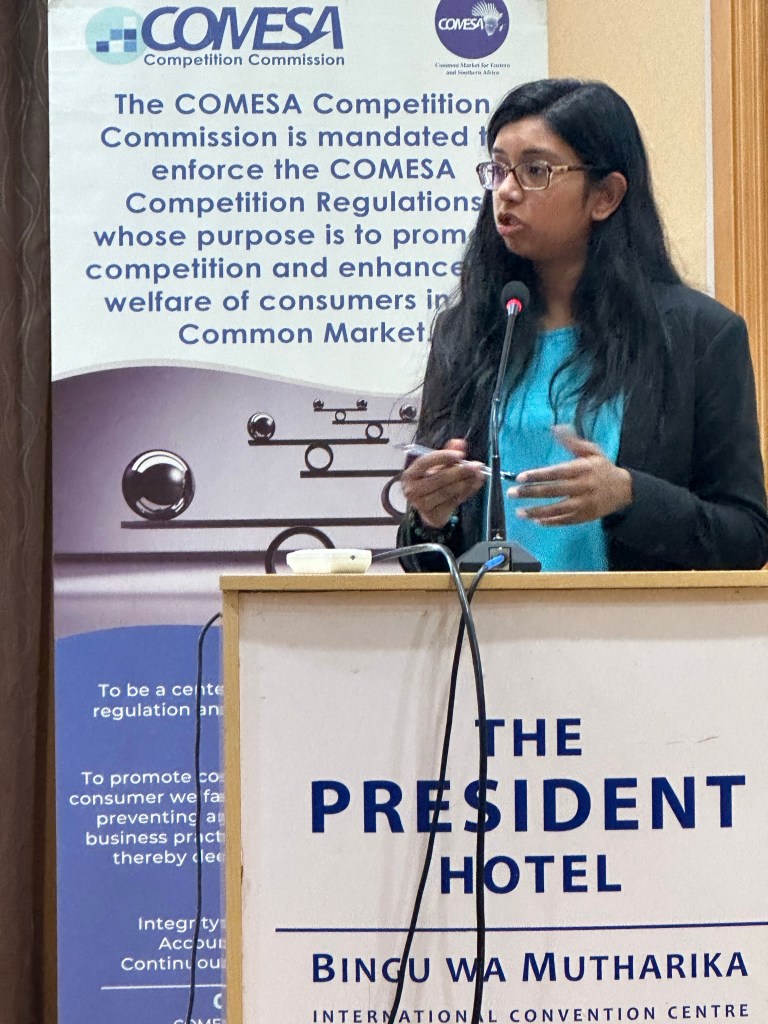
At today’s CCC Business Reporter Workshop, Senior M&A Analyst Sandya Booluck presented major plans to amend the regional trading bloc’s merger-control regime.
The most notable part of this “complete overhaul” of the CCC regime will be the likely change from the current non-suspensory to a suspensory merger notification scheme.
Says Primerio Ltd. antitrust counsel Andreas Stargard: “This change is, of course, still subject to approval by the CCC Board and the COMESA Secretariat Council of Ministers, but it is likely to pass in my personal opinion. This is especially true since, as former CCC Head Lipimile pointed out at today’s session, this change was in fact demanded by several of the NCAs of the COMESA member states, also in view of the Art. 24(8) referral procedure. It thus presumably enjoys broad support from the bloc’s leadership and will obtain a passing vote before the end of 2023!”
A brief note from the “front lines” of the COMESA Competition Commission’s 10-year anniversary event: Isaac Tausha, chief economist for research policy and advocacy, provides the following statistics — notably for the entire duration of the CCC’s life decade so far.
In short: Gone are the meager days of fledgling notifications to the CCC.
Statistics Since Inception
369 mergers and acquisitions assessed. (Total COMESA revenues of merging parties: US$210bn)
Over 40 Restrictive Business Practices assessed
Over 44 Consumer Protection cases handled
More than 12 market screenings and studies undertaken
3 businesses fined for non-compliance with the Regulations
Doing a “back of the envelope” estimate, we at AAT are calculating the total merger filing fees resulting from those 367 notified deals to be possibly north of $75 million$65 million, so on average $6.5m “income” for the CCC per year (half of which goes to the 21 member states, of course, under the Regulations). This is notably without taking into account fines, e.g., a recent $102,000+ fine for failure to notify (as in our reporting on the Helios Towers / Malawi case).
Dr. Chris Onyango (Dir. Trade, Customs and Monetary Affairs, COMESA)Dr. Lipimile (former CCC CEO). Mary Gurure (Head of Legal, CCC). Andreas Stargard (Editor, AAT).
Anniversary of CCC’s 2013 Creation to be Celebrated, Developments Discussed
Next week, African heads of state, ministers of trade and commerce, the secretary general of the 21-member state COMESA organization, Commissioners, and several heads of various competition agencies across the region, from Egypt to Eswatini & from Mauritius to Malawi, will join antitrust practitioners, legal experts, business people, and journalists in celebrating the occasion of the 10-year anniversary of the COMESA Competition Commission in Lilongwe, where the agency is headquartered.
Of course, AAT will be there to cover it.
As leaders of this august publication will know by now, our authors have followed the development of the CCC since its very beginning: from the nascent stages of having only a rudimentary staff and foundational rule documents, lacking sufficient guidance for practitioners and businesses alike, to the significant developmental stage under its first chief executive officer, Dr. Lipimile, who built out his enforcement team to coincide with the stellar growth of the CCC’s “one-stop-shop” merger notification statistics and attendant agency reviews (hiring economists and lawyers alike from across COMESA member nations) — and culminating, so far at least, in what we have come to call “CCC 2.0”: the latest iteration of the vastly successful multi-jurisdictional antitrust body, now led by its long-term member Dr. Willard Mwemba.
Under Mwemba’s aegis, the Commission has advanced well beyond a mere ‘rubber-stamping’ merger review body, as some had perceived the fledgling agency in its very early years (approx. 2013-15). The triple-C has since then begun to launch serious investigations into price-fixing, monopolization, attempted monopolization, gun-jumping, as well as market allocation schemes and secretly implemented transactions that parties had failed to notify.
While ‘antitrust is on our minds’, we note here for the record that, beyond its “competition” ambit that mostly remains in our focus at AAT, the CCC’s enforcement mission also includes a fairly large “consumer protection” brief, and the agency’s dedicated unit has investigated areas of consumer concern as broad as airline practices, imported faulty American baby powder, online ‘dark’ practices, pay-TV, and agricultural product quality disputes (milk and sugar come to mind) between Uganda and Kenya, to name only a few…
Our publication, together with several of the business journals and newspapers across the southeastern region of Africa, will report in great detail on the events, and possible news, to take place next week. Says Andreas Stargard, a competition practitioner with Primerio International:
“I look forward to hearing from these leaders themselves what they have accomplished in 10 years, and more importantly what they wish to accomplish in the near to mid-term future. In addition, I have a feeling that we may be treated to some truly newsworthy developments: I could imagine there being either confirmation or denials of the circulating rumour that the COMESA merger regime will soon become not only mandatory, but also suspensory. As most attorneys practicing in this arena know by now, the current Competition Regulations are not suspensory, which may be deemed too restrictive by the group’s Secretariat and its agency leadership in terms of its enforcement powers. After all, it is much more difficult to unscramble the egg than to never let it drop in the pan from the get-go!
Also, the CCC may reveal its plans in relation to a leniency programme for cartel conduct, which is plainly in order!”
Beyond that, Stargard surmises, participants at the almost week-long event may be treated to news about the CCC’s thoughts on digital markets, sectoral investigations, and the Commission’s upcoming “beyond-mere-merger” enforcement activities.
A true challenge to the impartiality of the South African Competition Authority: Eskom and its Criminal Supplier Cartels — Let’s wait and see what SACC does now
By Joshua Eveleigh
Will South Africa’s antitrust watchdog, under the aegies of its relatively new head Doris Tshepe, investigate and prosecute flagrant cartel conduct, when it is practically presented on a sliver platter by one of the CEOs of the (willing?) victims of said illegality…? Andre De Ruyter, former CEO of South Africa’s recently-infamous Eskom, is no stranger to the limelight – this is particularly true, following his scandalous (but not so surprising) bombshell allegations of deep-rooted and systemic corruption within the State-Owned Enterprise, together with ‘senior politicians’.
Even more recently, De Ruyter tested the antitrust waters and emphasised the existence of at least four cartels amongst coal mines in Mpumalanga (the Presidential Cartel, the Mesh-Kings Cartel, the Legendaries Cartel, and the Chief Cartel, respectively) intent on defrauding Eskom by, amongst a myriad other means, engaging in collusive tendering, so as to ensure that one of the cartel’s participants would ultimately be appointed as a lucrative vendor.
While there may not be any definitive or public available evidence, as of yet, the mere allegations of such cartels by the SOEs former CEO should at least raise enough red flags for South Africa’s Competition Commission. In this respect, section 4(1)(b)(iii) of the Competition Act expressly prohibits collusive tendering, forming part of the ‘cartel conduct’ category, the most egregious form of competition law contraventions due to their unnecessary raising of prices – of which may be passed down to end-consumers. Mr. De Ruyter noted that the mere reality that cartel chiefs had ceased posting personal jet set lifestyle photos on social media was evidence of their having been alerted to the risks attendant to flagrant antitrust violations.
Given the current state of load-shedding, Eskom’s R423 billion indebtedness (as of March 2023) and the prejudicial impact that these factors are having on both business and personal livelihoods, the South African Competition Commission – theoretically in charge of cartels in the country — must surely regard the energy sector as a priority. In this regard, one would expect a similar sense of urgency and emphasis that the Competition Commission has recently placed on the retail and grocery sectors, for the focus to be on South Africa’s energy sector. After all, says Primerio partner John Oxenham, “this sector impacts every facet of commerce and consumer welfare. If this was the case, the South African public could expect to see the prosecution and sanctioning of numerous cartels, each allowing for a maximum administrative penalty of 10% of the cartelist’s locally derived turnover as well as the potential for subsequent civil follow-on damages claims as well as criminal prosecutions.”
Oxenham’s competition-law colleague, Michael Currie, opines that, “[i]n the event that the Competition Commission does not investigate and prosecute against the coal mine cartels, such a position would largely reinforce the notion that some of the most unscrupulous of cartels are immune from prosecution, further entrenching the existence of cartels in South Africa’s most sensitive sectors.”







 African Antitrust & Competition Law