South African President Cyril Ramaphosa is expected to sign the Competition Amendment Bill into law today, February 13, 2019, continuing a busy seven-day streak for major legislative antitrust developments on the continent (see here). The new law will be amending the venerable Competition Act, one of the preëminent antitrust statutes of the continent. The amendment has been pushed for by Minister for Economic Development, Ebrahim Patel. The official Presidential commentary on today’s signing notes the novel fights against “concentration and economic exclusion as core challenges” to the country’s growth, as well as the perceived dangers of economic exclusion from major markets of small and black-owned businesses.
As a trio of competition attorneys write in a recent article in the Journal of European Competition Law & Practice, the Amendment Bill alters key provisions of the South African Competition Act focusing specifically on the redistribution of wealth and transformation of ownership in lieu of pursuing traditional antitrust goals.
The Bill provides for greater ministerial intervention at the initial stage of a merger (based on national security), during the merger investigation (based on public-interest grounds) and broadens the right of appeals to parties outside the merger control review.
The Bill lowers the standard that the South African Competition Commission must meet to prosecute cases and foreshadows a risk of increased third-party interventionism more generally.
The departure from a traditional substantial lessening of competition (SLC) test to an adverse effects-based test, which takes public interests considerations into account, is likely to result in the injection of greater subjectivity into the decision-making process and parties’ increased difficulty in self-assessment of conduct particularly in relation to dominant firms.
AAT has published further articles on the topic here, here, and here.
Nigerian President Muhammadu Buhari has signed the Federal Competition and Consumer Protection Bill into law (the “Competition Act”).
After years of deliberations, the legislative process is now complete, and with the establishment of a Competition Commission and Competition Tribunal, Nigeria is the latest African jurisdiction to establish a dedicated antitrust authority.
From a merger-control perspective, the Competition Act and the Commission’s jurisdiction will ultimately supersede the ‘placebo antitrust’ role historically played by the Securities and Exchange Commission (SEC), which has thus far received and assessed merger notifications above certain turnover thresholds, pursuant to the Investments and Securities Act. The Act repeals the Consumer Protection Act, which did not contain stand-alone antitrust provisions.
Michael-James Currie, a competition lawyer advising clients across Africa, says the new Competition Act applies broadly to all commercial activities within Nigeria, but also to conduct outside of Nigeria (if the person or company is a Nigerian resident or incorporated in Nigeria or products are sold into Nigeria). Furthermore, any acquisition or change of control of a business or asset outside of Nigeria which results in the change of control of an asset or business in Nigeria will also fall within the jurisdiction of the Competition Act.
The Commission has substantial powers, including considering and approving mergers, declaring business practices as amounting to abuse of dominance, prohibiting price discrimination or declaring unlawful any agreement which is in contravention of the Competition Act.
From an investigatory perspective, the Commission may subpoena witnesses or, upon obtaining a search warrant, conduct dawn raids, consistent with international best practices.
Any reviews or appeals in relation to a decision taken by the Commission may be made to the Competition Tribunal.
In relation to prohibited conduct, any agreement which has the effect or likely effect of preventing, restricting or distorting competition in any market is unlawful. Currie notes that the Act in particular prohibits collusive arrangements but also various forms of unilateral conduct include tying or bundling or limitations on the production or distribution of goods. John Oxenham, director at Primerio, echoes these sentiments and confirms that the Act provides for a rule-of-reason analysis. He notes further that, in addition to the above general prohibitions, the Act also prohibits minimum resale price maintenance.
Fellow Primerio Director, Andreas Stargard, notes that the “monopolisation” prohibition against abuse of dominance mirrors those typically found in most jurisdictions; the wording of the Act appears to be influenced largely by the South African Competition Act. That said, the test for dominance is essentially whether a firm is able to exert market power and, unlike South Africa, cannot be based on market-share thresholds alone. In sum, he concludes:
“This latest piece of competition legislation was first introduced in 2011 by Rt. Hon. Yakubu Dogara from Bauchi State, who perhaps not surprisingly happens to be an attorney, and co-sponsored by Sen. Ahmed Lawan (Yobe North).
Its now final — and successful — iteration that was signed into law this week brings Africa’s largest economy into the fold of modern antitrust jurisdictions. Many have called for this to happen for years [see hereand here). Our firm’s West Africa team is eager to work on matters arising under the Act.”
One of the Bill’s sponsors, Rt. Hon. Yakubu Dogara
In terms of penalties, an antitrust violation attracts both a potential administrative penalty (capped at 10% of the respondent’s annual turnover) and criminal liability for directors who commit an offence, notes Currie, pointing to a maximum of three years imprisonment as a fairly severe white-collar sentence potential. It remains unclear to-date whether the turnover calculation for purposes of the administrative penalty determination refers to local or worldwide revenues, observes Stargard.
In relation to merger control, Oxenham notes that the Competition Act provides further clarity as to the type of transactions which require mandatory notification, notably including joint ventures, which were previously not identified by name under the SEC’s legislative regime. The Act has introduced both de facto and de jure forms of control as potential triggers for merger notification. The Commission has not yet published Regulations which will prescribe turnover thresholds for “small” and “large” mergers. Both Oxenham and Currie point out that based on the wording of the Act, there seems to be a substantial amount of similarity between the Nigerian Act and the merger control process in South Africa including time frames involved and the introduction of public interest assessment in merger control.
This is not surprising, as the South African Competition Commission (SACC) has, through the African Competition Forum, been instrumental in advocating a robust competition regime. Furthermore, Oxenham suggests that there may be substantial amount of cooperation and assistance provided by the SACC to their Nigerian counterparts.
[AfricanAntitrustwill provide further updates in relation to the Nigerian Competition Act and appreciates the input from leading antitrust practitioners and the on-going support of the Primerio team. To contact a Primerio representatives, please click here ]
The Competition Authority of Botswana (CA) rejected an exemption application brought by two FMCG players. The applicants, Choppies Distribution Centre and Payless Supermarkets, sought to justify their application by demonstrating that by increasing their buyer power the applicants would be able to ensure lower prices and better quality products for consumers and that these pro-competitive outcomes outweigh any anti-competitive effects.
After evaluating the exemption application, the CA found that the agreement between Choppies and Payless would result in a substantial lessening of competition. In particular, the CA held that:
There is no competition between Choppies and Payless, the duo had monthly promotions wherein they had the same goods on promotion at identical or similar prices and the pamphlets were an exact replica of each other.
The two stores had alleged that Choppies would not benefit from the arrangement. It however emerged that Choppies was benefiting, particularly given, the quantity of Choppies in house brands found in Payless stores. Payless did not have any in house brands, but instead sold a variety of Choppies goods in large volumes.
Further, the Authority finds that the granting of an exemption to the applicants would be in effect granting the Choppies and Payless the leeway to continue with their price fixing and distortion of competition.
The CA was also not convinced that there were any other public interest benefits which would outweigh the anti-competitive effects referred to above.
This exemption application followed a similar application in 2014 which was also rejected.
Primerio Director, John Oxenham, says that this application demonstrates the importance of ensuring that objective and credible economic evidence accompanies an exemption application in order to prove the likely economic benefits to the public.
When asked to comment, Michael-James Currie, a competition lawyer practising across sub-Saharan Africa, says that buyer power in the context of FMCG retailers is a particularly topical issue not only in Botswana but also in South Africa where buyer power has specifically been included in the Competition Amendment Bill (which is soon to be brought into effect) as well as Kenya (who have also specifically included abuse of buyer power as a standalone provision). The motivation behind these legislative amendments, says Currie, follow largely as a result of concerns raised by the respective competition agencies of South Africa and Kenya regarding the buyer power which large retailers exert on small suppliers.
It is not yet clear whether Choppies-Payless proceed to appeal the CA’s decision or whether they will seek to pursue a fresh exemption application bolstered with more compelling economic evidence. To the extent that the applicants abide by the CA’s decision, they will be required to dissolve their “buying group agreement” within three months.
AAT has closely monitored the progress of the Competition Amendment Bill and provided commentary to the Bill from leading local and international competition practitioners.
This is to update our readers that the Amendment Bill was passed in the National Assembly on 23 October 2018. The Bill still requires the National Council of Provinces to approve the Bill, following that the President’s consent – both of these procedural steps are likely to be mere formalities in light of the National Assembly’s decision to approve the Bill.
AAT expects that the Bill will be brought into effect imminently and likely without any material grace period for parties to assure compliance with its onerous provisions.
The Bill passed by the National Assembly has been amend mended from the draft Bill which was placed before Parliament’s Portfolio Committee. The key contentious provisions of the Bill, however, remain largely unchanged.
To access a copy of the Bill passed by Parliament, click here.
As AAT has reported on extensively, the South African Competition Amendment Bill, currently pending in Parliament, is likely to be adopted in short order in its current draft form.
It carries with it significant, and in our view, adverse, effects that will burden companies trying to conduct business or invest in South Africa. These burdens will be particularly onerous on foreign entities wishing to enter the market by acquisitions, as well as any firm having a market share approaching the presumptive threshold of dominance, namely 35%
On Wednesday, 17 October 2018, the law firms of Primerio and Norton Incorporated held an in-depth seminar and round-table discussion on the ramifications of the Competition Amendment Bill. The setting was an intimate “fireside chat“ with business and in-house legal representatives from leading companies, active across a variety of sectors in the South African economy.
Moderated and given an international pan-African perspective by Primerio partner Andreas Stargard, the panel included colleagues John Oxenham and Michael-James Currie, who delved into the details of the proposed amendments to the existing Competition Act, covered extensively by AAT here.
As of today, 18 October 2018, the Bill appears set to be promulgated. The SA Parliament’s committee on economic development has rubber-stamped the proposed amendments after a prior committee walk-out staged by the opposition Democratic Alliance (DA), in opposition to the Bill. DA MP and economic development spokesperson Michael Cardo states:
“The ANC rammed the Competition Amendment Bill through the committee on economic development, and adopted a report agreeing to various amendments. To make sure they had the numbers for a quorum, the ANC bussed in two never-seen-before members to act as pliant yes men and women. Questions from the DA to the minister… This bill is going to have far-reaching consequences for the economy. It gives both the minister and the competition authorities a great deal of power to try and reshape the economy. It is unfortunate that the ANC, and the committee chair in particular, have suspended their critical faculties to force through this controversial bill and behaved like puppets on a string pulled by the minister of economic development.”
The Amendment Bill introduces significant powers for ministerial intervention and bestows greater powers on the Competition Commission, the investigatory body of the competition authorities in South Africa.
The panel discussion provided invaluable insights into the driving forces behind the Bill and ultimately what this means for companies in South Africa as it certainly won’t be business as usual if the Amendment Bill is brought into effect – particularly not for dominant entities.
[If you attended the panel discussion and would like to provide feedback to the panelists or would generally like to get in touch with the panelists, please send an email to editor@africanantitrust.com and we will put you in touch with the relevant individuals]
For the small but growing segment of COMESA Competition Commission observers in the world, some recent developments relating to a key member state may have gone unnoticed: the CCC held a training workshop for Ugandan officials, including over 110 ministerial District Commercial Officers, in sensitizing them to competition-law issues, spotting antitrust offences, and catalysing the enactment of robust competition legislation in the East African nation, whose GDP exceeds $25 billion and has exhibited consistent growth over the past several years.
This development of the CCC supporting domestic antitrust enforcement and legislative efforts is not only affirmatively required by the COMESA Treaty, obligating member states to enact legislation comporting with the CCC Regulations, but has long been foreshadowed by CCC officials.
For example, at this year’s region-wide sensitization workshop held by the CCC in Nairobi, Kenya, the agency’s leadership assured me personally that they would undertake these capacity-building programmes throughout COMESA member states, especially those with less-developed competition-law regimes, including Uganda.
CCC Board Chair Patrick Okilangole (Uganda)
Uganda is a key COMESA country that does not have a functioning antitrust enforcement body or underlying legislation. Mr. Stargard adds that “the CCC’s choice of Uganda as a target jurisdiction may, in addition, also have been influenced by the fact that the current CCC Board Chairman is Patrick Okilangole, a Ugandan national,” whose appointment to the Commission’s Board was recently renewed in July.
The COMESA Competition Commission (CCC) has vowed to develop a system which will allow the CCC to have better oversight (to in turn ensure effective enforcement) over anti-competitive behaviour in member states.
This follows extensive research conducted by the CCC’s which indicates that anti-competitive practices are increasingly prevalent throughout its member states and is causing consumer harm.
George Lipimile, CEO of the CCC says that while protective measures put in place by national governments (aimed at shielding their companies from competition) is a serious threat to the region as cartels are prevalent is almost all sectors of the economy.
The CCC has also singled out the banking sector, stating that: “[w]e [CCC] have seen quite a lot of abuse in terms of non-disclosure of critical information to consumers”.
Andreas Stargard, antitrust lawyer at Primerio Ltd., attributes the increase in anti-competitive behaviour in the region to a lack of awareness of consumers’ rights groups to recourse under competition laws. “Antitrust is a comparatively new and developing phenomenon in most of the COMESA member states, and it will take time for local authorities to increase public awareness around the benefits of antitrust to consumers”, he says. “One way to increase such awareness is, of course, closer engagement of private legal consultants as well as media, whether online, print, or radio and television.”
The CCC has vowed to intensify efforts to increase awareness within member states and to ensure effective and robust enforcement of competition laws in the region.
KENYA
The Competition Authority of Kenya (CAK) has rejected a study (presented at the National Assembly Committee on Communication, Information and Innovation) by the Communications Authority which aims to introduce price capping in the telecommunications sector as a means to ‘remedy’ high concentration in the market.
In dismissing the study, the CAK Director General Kariuki Wang’ombe stated that “[i]t is important to highlight that dominance is not an illegality. What is an illegality is the abuse of dominance position. The intervention of a regulator should be informed by abuse of dominance position.”
Ruth Mosoti, a leading Kenyan competition practitioner, notes that the CAK, in an effort to steer clear of being considered a pricing regulator, “proposed that the Communications Authority focus on ensuring the sharing of resources by dominant firms (so as to ease barriers to entry and reduce switching costs so as to facilitate the entry and participation of competitors in the market) as opposed to setting a price cap.”
The CAK further urged the Assembly Committee to facilitate co-operation between the CAK and the Communications Authority in order to ensure effective regulation in the sector. “I request this committee to come up with a way of compelling the regulators to work together for the betterment of this sector. It might not be easy for only one regulator to regulate this sector. This issue is more of personal relationship,” Kariuki said.
Safricom Kenya CEO, in response, expressed his concerns stating that “[t]he operators who are seeking these interventions today will have been taught not to invest but instead to rely upon the infrastructure that is built by others. They will have been taught not to innovate as innovations will be served to them on a silver platter”.
NAMIBIA
Following an announcement by the Namibia Taxi and Transport Union (NTTU) that taxi fares will increase (following approval of its members at a joint meeting), the Namibia Competition Commission (NCC) warned the taxi operators to follow due process in seeking to introduce joint price increases to avoid falling foul of the Namibia Competition Act (Competition Act).
In terms of the Namibia Road Traffic and Transport Act (Transport Act), the Transport Board may endorse a collusive price increase in the industry (of not more than 10%). The NTTU has, however, announced that despite their understanding that the Transport Act stipulates that any fare increase should not be more than 10%, they will continue to implement the 50% price increase, with or without approval.
The NCC has, therefore, warned taxi operators that any collusive price increase (which is contrary to the Transport Act) will amount to a contravention of the Competition Act. The NNC released a statement saying “[t]axi operators who collusively and intentionally impose fixed taxi fare increases without following the due process set out in the Road Transport Act will render themselves liable in terms of the Competition Act and thereby attract a formal investigation which may lead to punitive civil and/or criminal sanctions”.
The NCC has previously resolved not to investigate Bus and Taxi Associations for price fixing, provided that such conduct was authorised under the Transport Act.
John Oxenham, also a director at Primerio Ltd. notes that the passenger transport is sector is increasingly considered a priority sector in Africa with Namibia’s neighbouring country, South Africa, having commenced a market inquiry into the public passenger transport sector which, inter alia, will assess the impact of ride-hail apps such as Uber on competition in the traditional taxi sector.
In a milestone enlargement of the (now formerly) 19-member COMESA region, Tunisia and Somalia have acceded to the trade bloc at the 20th COMESA Summit on 19th July 2018, creating #COMESA21 – Africa’s largest free trade region.
Their application to join had been pending since 2016. Under the Treaty, the new members will be bound by the provisions of the Treaty and must deposit their formal instrument of acceptance of the terms of admission with the Secretary General, together with an instrument of accession pursuant to Articles 194 and 195 of the Treaty with regard to a State admitted to full membership. Says Primerio’s Andreas Stargard, “with the privilege of membership comes the obligation of agreeing to abide by the antitrust rules promulgated under the COMESA Treaty. This includes the Competition Commission’s procedural and substantive rules and notably its merger regulations. It remains to be seen how the still weakened bureaucratic structure of the Somali Republic will be able to implement the strictures of a working competition-law regime…”
Indeed, the CCC’s recent Notice No. 2/2018 provides that “the provisions of the COMESA Competition Regulations of 2004, and its accompanying rules, shall be enforceable in the territories of the Republic of Tunisia and the Federal Republic of Somalia with immediate effect.”
Personnel News 2018
In addition to gaining two new member states, COMESA also underwent personnel changes, adding an experienced antitrust practitioner, Zimbabwean Competition and Tariff Commission director, Ellen Ruparanganda, as one of the nine CCC commissioners, for a term of three years. Besides Ms. Ruparanganda, Francis Lebon (Seychelles), Ali Hamadou Ali Kako (Djibouti), Thembelihle Dube (Eswatini, formerly Swaziland), Danson Buya Mungatana (Kenya), Michael Teklu Beyene (Ethiopia), Charlotte Wezi Malonda (Malawi), Islam Tagelsir Ahmed Alhasan (Sudan), and Brian Muletambo Lingela (Zambia) were also sworn in.
On 29 June 2018, the South African Competition Tribunal (Tribunal) penalised the RTO Group R75 000 for failing to comply with the Tribunal’s conditional merger approval in respect of two companies now within the RTI stable, Warehouseit and Courierit. The Tribunal approved the large merger in August 2015.
In terms of the Tribunal’s merger approval, a moratorium on merger specific retrenchments for a two year period was imposed – now a frequently imposed public interest related condition by the competition agencies in South Africa.
RTI, however, was penalised not for retrenching any employees during this window but for failure to adhere to the monitoring obligations as set out in the Tribunal’s conditional approval certificate.
In this regard, the merging parties were obliged to notify their employees (and Courierit’s subcontractors) of the conditions to the merger approval within five days of the merger approval date. The merging parties were also obliged to provide the Competition Commission with an affidavit confirming that the obligations in terms of the conditions had been complied with.
By way of a consent order, RTI admitted that it failed to comply with its monitoring obligations and agreed to pay an administrative penalty for breaching the Tribunal’s conditional merger approval.
Although there have been a limited number of cases in respect of which an administrative penalty has been imposed for a breach of the merger conditions, this case demonstrates the importance of fully complying with the terms set out by way of a conditional merger approval.
Furthermore, although notifying the employees of the relevant conditions may not have been a particularly onus obligation, merging parties should take particular cognisance of monitoring and reporting obligations when negotiating conditions with the Competition Commission. Merging parties understandably place greater emphasis on the substantive aspects of the conditions and may underestimate the reporting obligations related thereto – particularly if conditions are being negotiated at the eleventh hour (which is not uncommon).
While there are mechanism’s available to merging parties to remedy any patently unworkable aspects contained in merger approval conditions, it is advisable to ensure that the conditions are practical and capable of being adhered to in full prior to being finalised – assuming the merging parties have that luxury.
[Michael-James Currie is a South African based competition lawyer and practices across Sub-Saharan Africa]
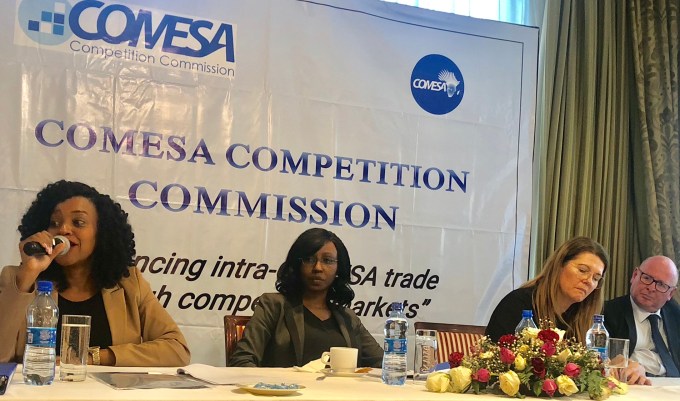
The first-ever COMESA-sponsored competition law workshop focussed solely on the business community, currently underway in Nairobi, Kenya, stretches the capacity of the Hilton conference room where it is being held.
The event’s tag line is “Benefits to Business.” Especially now, with the African continent sporting over 400 companies with over $500m in annual revenues, the topic of antitrust regulation in Africa is more pertinent than ever, according to the COMESA Competition Commission (CCC).
The head of the Zambian competition regulator (CCPC), Dr. Chilufya Sampa, introduced the first panel and guest of honour. He identified the threats of anticompetitive last behaviour as grounds for he need to understand and support the work of he CCC and its sister agencies in the member states.
With COMESA trade liberalisation, the markets at issue are much larger than kenya or other national markets. The effects of anticompetitive conduct are thus often magnified accordingly.
The one-stop shop nature of the CCC’s merger notification system simplifies and renders more cost-effective the transactional work of companies doing business in COMESA.
The Keynote speaker, Mr. Mohammed Nyaoga Muigai, highlighted the exciting future of the more and more integrated African markets, offering new challenges and opportunities. He challenged the audience to imagine a single market of over 750 million consumers. Companies will have to think creatively and “outside the box” in these enlarged common markets.
His perspective is twofold: for one, as a businessman and lawyer, but also as a regulator and board chairman and member of the Kenyan Central Bank. Effective competition policy (and access to the legal system) allows to prepare the ground for the successful carrying out of business in the common market. Yet, businesses must know what the regulatory regime actually is. Therefore, the duty of lawyers is to educate their clients about the strictures and requirements of all applicable competition law, across all COMESA member states.
After a group photo, the event continued with an informative presentation by Mr. Willard Mwemba on key facts that “companies should know” on merger control in the (soon enlarged to 21 member states, with the imminent addition of Tunisia and Somalia) COMESA region, starting with its historical roots in COMESA Treaty Article 55 and continuing through the current era since 2013 of the CCC’s regulatory oversight.
Willard Mwemba, Head of M&A at the CCC
He provided relevant merger statistics, jointly with Director of Trade affairs, Dr. Francis Mangeni, which were of great interest to the audience, followed by a discussion of substantive merger review analysis as it is undertaken by the Commission. The benefits of the “one-stop-shop” characteristic of CCC notification versus multiple individual filings were extolled and individual past M&A cases discussed.
AAT will live-update the blog as the event progresses.
Dr. Sampa, CCPC executive
Dr. Sampa, as head of the Zambian CCPC and a former CCC Board member, emphasized the importance for companies to have functioning and well-implemented antitrust compliance programmes in place.
A spirited discussion was had relating to the 30% market share threshold the Commission utilises to evaluate triggers for launching antitrust conduct investigations. Primerio’s Andreas Stargard argued for COMESA’s consideration of an increase in this trigger threshold to 40%, proposing that:
“Especially in an already concentrated market (where players possess majority shares anyway), a low initial share threshold is of little to no additional enforcement value. On the contrary, a low threshold may hamper vigorous competition by smaller to midsize competitors or newer entrants, who wish to grow their (previously innocuous) smaller share of the market but are simultaneously held back in their growth efforts by trying not to cross the 30% barrier so as not to attract the attention of the Commission.”
There was also an issue raised regarding private equity and non-profit / “impact investors” and the like having to bear the burden of notifications and ancillary fees in cases that are otherwise unobjectionable almost by definition (since the investors are not present on the market of the acquired entities in which they invest). Dr. Mangeni indicated that the CCC will investigate and consider whether a proposed change in the applicable Rules to account for this problem may be advisable in the future.
Mary Gurure, head of legal (CCC)
The CCC’s chief legal advisor, Ms. Mary Gurure, presented on conflict of laws issues within the COMESA regime, harmonisation of laws, and CCC engagements with individual member states on these issues.
Crucially, she also mentioned a novel initiative to replicate a COMESA-focused competition enforcer network, akin to the ECN and ICN groupings of international antitrust agencies.
Business panel #CCCworkshop 2018
The conference concluded with a business lawyer panel, in which outside counsel and in-house business representatives voiced their perspectives, largely focusing on the issue of merger notifications. These topics included the (1) burdens of having to submit certified copies of documents, (2) high filing fees (particularly in light of relatively low-value deals being made in the region), (3) comparatively low notification thresholds (e.g., the $10m 2-party turnover limit), (4) remaining, if minimal, confusion over multiple filing obligations, (5) questions surrounding the true nature of the “public interest” criterion in the CCC’s merger evaluation, which could benefit from further clarification via a Guideline or the like, and (6) the importance of predictability and consistency in rulings.
Panellists also commented on the positive, countervailing benefits of the one-stop-shop nature of the CCC, as well as highlighting the friendly nature of the COMESA staff, which permits consensus-building and diplomatic resolutions of potential conflicts.
Mr. Mwemba concluded the event by responding to each of the panel members’ points, noting that forum-shopping based on the costs of filing fees reflected a misguided approach, that the CCC may consider increasing filing thresholds, and that the CCC’s average time to reach merger decisions has been 72 (calendar) days.
 South African President Cyril Ramaphosa is expected to sign the Competition Amendment Bill into law today, February 13, 2019, continuing a busy seven-day streak for major legislative antitrust developments on the continent (see here). The new law will be amending the venerable Competition Act, one of the preëminent antitrust statutes of the continent. The amendment has been pushed for by Minister for Economic Development, Ebrahim Patel. The official Presidential commentary on today’s signing notes the novel fights against “concentration and economic exclusion as core challenges” to the country’s growth, as well as the perceived dangers of economic exclusion from major markets of small and black-owned businesses.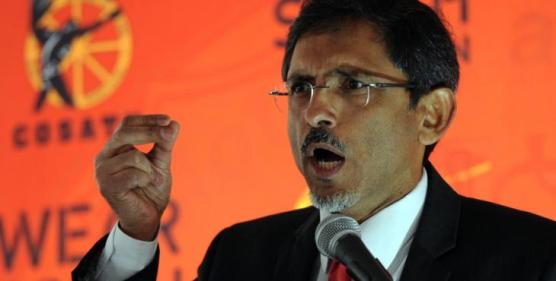
 After years of deliberations, the legislative process is now complete, and with the establishment of a Competition Commission and Competition Tribunal, Nigeria is the latest African jurisdiction to establish a dedicated antitrust authority.


 The event’s tag line is “Benefits to Business.” Especially now, with the African continent sporting over 400 companies with over $500m in annual revenues, the topic of antitrust regulation in Africa is more pertinent than ever, according to the COMESA Competition Commission (CCC).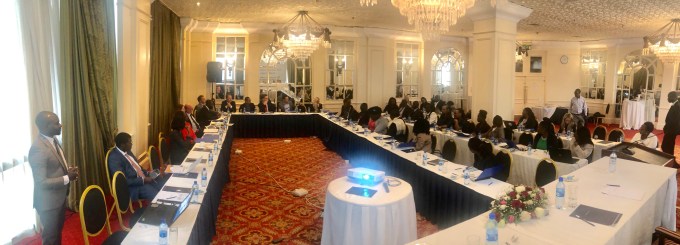



 African Antitrust & Competition Law