Kenya’s Competition Tribunal (the “Tribunal”) has upheld the Competition Authority of Kenya’s (the “CAK”) steelcartel decision, dismissing individual appeals brought by seven manufacturers and affirming the penalties and remedies imposed in 2023. The Tribunal rejected appeals by Tononoka Rolling Mills, Blue Nile Wire Products, Devki Steel Mills, Accurate Steel Mills, Nail & Steel Products, Corrugated Sheets and Jumbo Steel Mills, cementing the CAK’s finding of price-fixing, coordinated price adjustments and output/ import restrictions in the steel value chain.
This ruling was handed down in two tranches: on 9 July 2025 (Accurate, Blue Nile, Devki, Nail & Steel, Tononoka) and on 11 September 2025 (Corrugated Sheets, Jumbo Steel), each time siding with the Authority. In total, the Tribunal affirmed KES 287.9 million in penalties for the seven appellants. The Tribunal further held that the CAK had afforded the parties due administrative process under Article 47 of the Constitution, the Fair Administrative Action Act and the Competition Act.
The decision handed dawn on 15 October 2025 is a natural sequel to the CAK’s 23 August 2023 decision, when the CAK imposed record penalties of KES 338.8 million on nine steel producers for a cartel that, per the CAK, distorted construction-input pricing. Five firms reached settlements with the CAK, while the seven above pursued and have now lost their appeals.
Notably, during the appeal phase Doshi & Company (Hardware) Ltd and Brollo Kenya Ltd concluded out-of-court settlements with the CAK, illustrating the CAK’s willingness to resolve matters via settlement and compliance undertakings, even mid-litigation.
For context, the AfricanAntitrust 2023 coverage highlighted that the CAK’s original fines constituted the highest cartel penalties in the CAK’s history to that date, following a twoyear investigation that drew on search-and-seizure and market-intelligence evidence. With the Tribunal now endorsing the CAK’s analysis and process, the core liability findings stand, and the fine levels (for the seven appealing firms) are confirmed.
Why this matters:
i) The Tribunal’s decisions strengthen precedent on price-fixing/ output restrictions in Kenya’s construction-inputs sector and validate CAK’s investigative toolkit and evidence assessment.
ii) Appellants remain bound to cease collusion and implement internal competition-law compliance programmes.
iii) The CAK links steel-cartel conduct to higher housing and infrastructure costs, this outcome supports the CAK’sbroader enforcement narrative across the building materials market
The breakdown of the KES 287,934,697.83 penalties, as concurred by the Tribunal are as follows:
Corrugated Sheets (86,979,378.53); Tononoka Rolling Mills (62,715,074.03); Devki Steel Mills (KES 46,296,001.25); Jumbo Steel Mills (KES 33,140,459.40); Accurate Steel Mills (KES 26,826,344.31); Nail & Steel Products (KES22,816,546.01); Blue Nile Wire Products (KES9,160,894.30).
What’s next
Unless pursued further on points of law, the Tribunal’s decision bring this enforcement chapter close to closure. Penalties, compliance obligations remain, and CAK’s leniency and Informant Reward Schemes continue to beckon for future cartel detection.
In conclusion, and by quoting the CAK’s Director-General, Mr. David Kemei, “The Tribunal’s findings affirm the CAK’s unwavering commitment to protect Kenyan consumers and businesses from the damaging effects of cartel conduct, and the veracity and completeness of our evidence-gathering, analysis and decision-making processes.”
On 12 of November 2024, the Competition Tribunal (“the Tribunal”) granted an interim relief order in favour of Lottoland South Africa (Pty) Ltd (“Lottoland”) against Google Ireland Limited (“Google”) and Google South Africa (Pty) Ltd (“Google SA”). The Tribunal, sitting with a full panel of three members, provided substantive reasons in favour of Lottoland for their complaint lodged in December 2022, regarding the contravention of the Competition Act 89 of 1998 (“the Act”) by Google SA against Lottoland in 2020. The matter before the Tribunal involved Lottoland obtaining an interim relief order against Google SA for a period of six months or until the finalisation of the complaint, whichever occurs first, ordering Google SA to restore Lottoland’s access to Google advertisements (“Google Ads”) after Google SA terminated Lottoland’s access to Google Ads claiming that Lottoland had breached Google SA’s internal policies.[1]
Google brought a review against the decision by the Tribunal, arguing that the Order provided by the Tribunal is irregular because of its failure to adhere to Section 31(2)(a) of the Act. Section 31(2)(a) of the Act requires that the Chairperson of the Tribunal ensure that that at least one member of the panel is a person who has legal training and experience. Google argued that because the Order by the Tribunal was not signed by Adv Tembeka Ngcukaitobi SC (“the Presiding Member”), the appointed member with such legal training and experience, the Order by the Tribunal is irregular.
Google’s legal representatives addressed a letter to the Chairperson of the Competition Tribunal advising that the Presiding Member did not sign the decision and that this contravenes section 31(2)(a) of the Act. Google requested that the decision be withdrawn due to the Competition Tribunal acting beyond the powers conferred onto it by the Act.
Despite Google’s contention that the Order should be withdrawn, both the Chairperson of the Tribunal, and Lottoland, responded to Google, stating that the proceedings have been concluded and that the Order is in accordance with the Act, referencing Section 31(4) and 31(6) of the Act. This stance adopted by Lottoland, as well as the Chairperson of the Tribunal, caused Google to launch their review to the Competition Appeal Court of South Africa (“the Appeal Court”).
Does an irregular decision amount to no decision?
Lottoland argued that the decision taken by the Tribunal was in fact a valid decision, as it was in compliance with Section 31 of the Act. However, Lottoland argued that, while maintaining that there is a valid decision taken, on Google’s own version the Appeal Court would not have jurisdiction to hear the review, as there would have been no decision taken by the Tribunal.
On this version, Lottoland contested whether the Appeal Court has jurisdiction to hear the review matter, stating that the decision itself is not in fact a decision of the Competition Tribunal, as it did not carry the Presiding Member’s express endorsement. In this regard, Lottoland argued that the requirements for the Appeal Court to exercise its review powers in terms of Section 37(1)(a) were not present, as it does not have the power to decide whether a decision is in fact a decision of the Competition Tribunal, or declare a decision invalid, which is not a decision. In support of its argument, Lottoland contended that Google should have pursued its remedies in terms of the Promotion of Administrative Justice Act, 3 of 2000, to set aside the decision of the Tribunal.
Google argued that the ‘decision’ taken by the Tribunal is ultra vires, as the Tribunal’s failure to have all three members of the panel contribute to the proceedings and exercising its functions in terms of Section 27 of the Act, led to the Tribunal’s failure to comply with Section 31(2)(a) of the Act. They further contended that Lottoland’s misinterpretation of their argument is wrong, as Google did not argue that the failure by the Presiding Member to contribute and sign the Order resulted in ‘no decision’ by the Tribunal, but that such ‘decision’ does not comply with Section 31(2)(a) of the Act. Google proffered the argument that the Appeal Court has the authority to review the decision made by the Tribunal in terms of Section 37(1) of the Act.
Accordingly, Google did not request the Appeal Court to determine whether a decision was taken, or whether such decision was unlawful, Google argued that the rendering of the decision is procedurally irregular as it did not comply with section 31(2)(a) of the Act. This is because the Presiding Member did not sign it, and that such a decision should be reviewed and set aside.
It was ultimately found that the Appeal Court has the jurisdiction to hear the review matter.
Procedural Irregularities
It is agreed that the interim relief matter was heard before a properly constituted panel and was properly assigned, however the review application seeks to investigate whether the Presiding Member’s failure to sign the Order caused an irregularity in the decision.
Google argued that the Act empowers three members of the panel to deliberate a matter, acting jointly and their failure to do so results in the panel not acting in accordance with the Act. To this extent, it was argued that the Presiding Member’s failure to participate in the proceedings until the matter is finalised is detrimental, as the interpretation of the Act requires a member with legal training and experience to signal finality. This failure resulted in the two members issuing the decision, which was against the provisions of the Act, as the Tribunal making the decision is an authoritative body encompassed by three members, and the failure to adhere thereto renders their decision irregular.
Lottoland argued that the two-panel member’s decision is in accordance with Section 36(6) of the Act and constituted a lawful decision. Relying on the matter between JSC v Cape Bar[2], Lottoland contested that the authority supports the argument that the members of the panel did not have to act jointly when having regard to the statutory provisions, because when there is a decision made by two-members, this renders a majority decision made by the panel members. Lottoland adopted the approach that the Presiding Member’s failure to render a decision as being “exceedingly passive”, and that the two-member decision is sufficient.
However, the matter brought before the Tribunal was assigned to three members but when reasons for the decision were circulated, no comments were received from the Presiding Member, with no explanation. The Appeal Court answered this question by putting forth that the Presiding Member did not participate in the proceedings, therefore the panel did not act jointly with no explanation for his failure to participate. The Appeal Court held that the decision falls to be reviewed and set aside.
The Appeal Court also considered whether to remit the decision back to the Tribunal or substitute the Order. As confirmed in Glaxo Welcome (Pty) Ltd and Others v Terblanche N O and Others, [3] the Appeal Court can correct the decision of the Tribunal where the result is a foregone conclusion or when further delay would cause undue prejudice. The Appeal Court that there was not a foregone decision but there was delay that has prejudiced Lottoland that Google has not addressed. However, the Appeal Court expressed its concerns and difficulty in granting a substitution order when the skills and expertise of the Tribunal are for the purpose of making these decisions mindfully. Thus, the Appeal Court was not satisfied that a substitution order should be granted as such a solution would be impractical when considering the brief period left in which the interim order will still be in effect.
The decision of the Appeal Court reviewed and set aside the decision of the tribunal.
Implications of the Tribunal’s Decision
This matter again highlights the importance that correct procedure is followed as to avoid decisions from being set aside once handed down. The administrative error of the Tribunal has resulted in more questions than answers.
Lottoland’s complaint, lodged in December 2022, was set down for hearing on 19 July 2023, despite the procedural directives after the hearing, the Tribunal only provided its decision on 12 November 2024, approximately 16 months after the initial hearing. Despite this delay, the Tribunal and its Presiding Member failed to ensure that its Order was compliant with the Act. As a result, and while acknowledging Lottoland’s own failure to launch the interim relief proceedings earlier, Lottoland was prejudiced by severe delays and, according to the Tribunal’s now set aside decision, were being harmed in the market by Google SA’s conduct, restricting Lottoland from making use of Google Ads.
It is worth noting that no reason was given for the lack of the Presiding Member’s participation and signature, only that he failed to do so. The seemingly insignificant act of signing an Order to comply with formalities, alternatively, a member’s failure to contribute, carries substantial weight, this is seen in the setting aside of the decision all because the one panel member with legal training and experienced failed to sign it.
This, unfortunately, resulted in further resources being expended by both Lottoland, Google, the Tribunal, and the Appeal Court. Proper procedure should always be followed to benign topics from evolving into a long, lengthy and costly process.
This judgement sets precedent for the setting aside of a decision of what can be labelled as administrative errors due to an appointed Presiding Member’s lack of participation, leading to procedural irregularities. As the Appeal Court rightfully stated, the Act regulates and controls proceedings and the functions of the authoritative bodies exercising their duties. Failure to comply with the Act should not be disregarded as an exceedingly passive point to take, but a failure to extinguish your duties for which you were appointed in terms of the Act, which causes harm and prejudice to the litigating parties.
[2]Judicial Service Commission and Another v Cape Bar Council and Another (818/2011) [2012] ZASCA 115; 2012 (11) BCLR 1239 (SCA); 2013 (1) SA 170 (SCA); [2013] 1 All SA 40 (SCA) (14 September 2012)
[3]Glaxo Welcome (Pty) Ltd and Others v Terblanche N O and Others [2001-2002] CPLR 48 (CAC).
Decision of the appeals board on the appeal lodged by Confederation Africaine de Football and beIN Media Group LLC
By Olivia Sousa Höll
Introduction
In a landmark decision dated 28 March 2025, the Appeals Board of the Common Market for Eastern and Southern African Competition Commission (“CCC”) delivered its ruling on the consolidated appeal by the Confederation Africaine de Football (“CAF”) and beIN Media Group LLC (“beIN”). The appeal challenged the findings of the Committee Responsible for Initial Determinations (“CID”) concerning alleged anti-competitive practices in the award of media rights for CAF competitions.[1] The ruling marks a significant development in the regulation of sports broadcasting within the Common Market for Eastern and Southern African (“COMESA”).
Background of the dispute
The dispute arose from two Memoranda of Understanding (“MOUs”), a 2014 and a 2016 agreement, between Lagardère Sports and beIN, granting the latter exclusive media rights to broadcast CAF competitions.[2] Following an investigation by the COMESA Competition Commission, the CID found that these agreements contravened Article 16(1) of the COMESA Competition Regulations due to their long-term duration, lack of competitive tendering, and bundling of rights across platforms.[3] As a result, the CID ordered that the agreements be terminated by 31 December 2024, imposed fines of USD 300,000 on each party, and directed CAF to adopt a new framework for awarding media rights in the future.[4] CAF and beIN lodged separate appeals, which were consolidated and heard by the Appeals Board in February 2025.[5]
Legal framework
The central legal provision at issue was Article 16(1) of the COMESA Competition Regulations, which prohibits agreements that may affect trade between Member States and have as their object or effect the prevention, restriction, or distortion of competition.[6]
In their defence, CAF and beIN invoked Article 16(4), which allows an exemption where restrictive agreements can be shown to yield efficiency benefits.[7] Specifically, the exemption requires proof that:
The agreement improves the production or distribution of goods or promotes technical or economic progress;
Consumers receive a fair share of the resulting benefits;
The restrictions are indispensable to achieving those benefits; and
The agreement does not eliminate competition in a substantial part of the market.[8]
The CCC argued that these justifications are cumulative, and that each one must be satisfied for the exemption to apply.[9] It maintained that CAF and beIN failed to discharge their burden of proof, particularly by not showing that the restrictions were indispensable or that consumers benefited proportionately from the arrangement.[10] According to the CCC, the claimed efficiencies, such as increased investment and improved broadcast quality, could be achieved through less restrictive means, such as open and transparent tendering processes.[11]
This interpretation reflects COMESA’s strict approach to Article 16(4), as further explained in its Restrictive Business Practices Guidelines.[12]
The appeals process
Following the CID’s decision on 22 December 2023, the appellants filed their Notices of Appeal in April 2024, arguing that the CID’s conclusions were flawed both factually and legally.[13] Key arguments raised included:
The absence of actual evidence of foreclosure or harm to competition;
Inappropriate market definition that excluded substitutable football content;
Overreliance on stakeholder interviews lacking methodological rigour;
Failure to consider the pro-competitive benefits of the agreements; and
The CCC responded by defending the findings of the CID and highlighting that the exclusive and bundled nature of the agreements had the potential to restrict competition, even if actual foreclosure was not demonstrated.[15] The CCC also refuted the claim that the SSNIP test (Small but Significant Non-transitory Increase in Price) was a required tool for market definition, noting that qualitative and contextual factors could be equally relevant.[16]
Decision of the appeals board
Rather than deliver a ruling on the merits of each legal issue, the Appeals Board opted to confirm a Commitment Agreement negotiated between the parties.[17] The Board emphasized that the agreement allowed for an efficient and proportionate resolution and noted that its authority to confirm such commitments is provided under Article 15(1) of the Regulations and Article 3(2) of the Appeals Board Rules.[18]
The terms of the Commitment Agreement included the following:
The 2016 beIN Agreement would remain in force until 31 December 2028, to avoid disruption of broadcasts;
CAF and beIN would each pay USD 300,000 to the Commission on a non-admission of liability basis;
CAF committed to conduct future tenders for broadcasting rights through open, transparent, and competitive processes in line with recent commitments made in other cases.[19]
Importantly, the Appeals Board found that maintaining the current agreement until 2028 would not hinder competition due to the additional behavioural safeguards included in the Commitment.[20]
Implications for African Football
The outcome of this appeal will have far-reaching implications for the governance of sports media rights across Africa. By endorsing a settlement that preserves the current arrangement in the short term but introduces future-oriented competition safeguards, the Appeals Board has sent a clear message that long-term exclusive deals without competitive processes will no longer go unchallenged.
This decision aligns COMESA with global best practices, such as those adopted by the European Commission and FIFA/UEFA and provides a blueprint for other African sports bodies seeking to commercialize rights while respecting regional competition law.[21] For broadcasters, it opens new opportunities to participate in tender processes. For viewers, it promises greater access and potentially more diverse coverage of African football events.
Conclusion
The Appeals Board’s decision represents a balanced and pragmatic resolution of a complex legal and economic dispute. While avoiding a full ruling on the disputed legal questions, the confirmation of the Commitment Agreement underscores COMESA’s dual priorities: promoting competition and preserving market stability. The legacy of this case will likely be seen in a more open and competitive broadcasting landscape for African football in the years to come
On 25 April 2025, almost a year after the Federal Competition and Consumer Protection Commission (“FCCPC”) imposed a hefty $220 million fine on WhatsApp and its parent company, Meta, the Competition and Consumer Protection Tribunal (“Tribunal”) delivered its landmark decision, upholding the fine and ordering a further – almost negligible, when compared to the substantive fine – $35,000 administrative penalty against the social media giants for fact-finding costs incurred during the 38-month long investigation. This regulatory win for Nigeria’s digital rights landscape has contributed to reinforcing Nigeria’s growing resolve to regulate big tech.
The decision stemmed from findings that the companies engaged in discriminatory data practices and violated Nigerian data protection laws, affecting more than 51 million users. As Andreas Stargard, a competition-law practitioner with Primerio, notes, “not only did the FCCPC’s investigation uncover WhatsApp’s unauthorised sharing of user data and a lack of meaningful consent mechanisms, but it also revealed discriminatory practices compared to other regions – I believe this is where the differentiation in the FCCPC’s consumer-protection jurisdiction (as opposed to that of the domestic data protection authority) comes in meaningfully. It remains to be seen what an independent, judicial review of the Tribunal decision will yield in this regard, but the FCCPC has had a comparatively strong track record so far in terms of having its novel, forceful, and ‘creative’ enforcement strategies upheld, with the B.A.T. matter perhaps being the most powerful example. The recent Dangote matter, involving the shocking fact pattern of a lack of refining capabilities in oil-rich Nigeria, is an interesting counter-point, though, as the FCCPC lost an attempt to intervene in that matter in Abuja’s Federal High Court.”
So far, the appellate-level Tribunal has sided with the Commission, dismissing an appellate request for review by WhatsApp and Meta, which challenged the fine on 22 grounds, ranging from procedural errors to allegations of vagueness and technical impossibility in respect of the timeframe given by the FCCPC. Meta’s legal team relied on the grounds that the FCCPC’s orders were unclear, unsupported by Nigerian law, and financially impractical to comply with. However, the FCCPC argued that the penalties were not financially punitive but rather corrective and aimed at rectifying the tech giant’s alleged discriminatory practices.
In its decision, the Tribunal emphasised that the FCCPC acted within its lawful mandate and that WhatsApp and Meta were afforded a fair hearing. It further upheld that the reliance on foreign legal standards, while not binding, was appropriately persuasive in determining issues of data protection and consumer rights.
The Tribunal ordered WhatsApp and Meta to inter alia, reinstate Nigerian users’ rights to control their personal data, revert to their 2016 data-sharing policy, and immediately cease unauthorised data sharing with Facebook and other third parties without obtaining the necessary consent from users. In this regard, compliance letters must be submitted by July 1, 2025, and a revised data policy must be proposed and published.
This case marks a significant moment in the Nigerian Authority’s forceful use of the regulatory tools available to it — as well as overall for Africa’s evolving digital economy, highlighting the demand for global corporations to acknowledge local presence and effects and adapt to robust local compliance expectations. While Big Tech companies such as Amazon, Google and Meta have been subject to significant penalties under the European Union’s General Data Protection Regulation, as one of Africa’s digital technology pioneers, Nigeria’s move could inspire similar enforcement actions across the African continent. This decision can be seen as a “gentle” reminder for multinational digital and tech firms that compliance with local data protection laws is no longer optional, it is imperative.
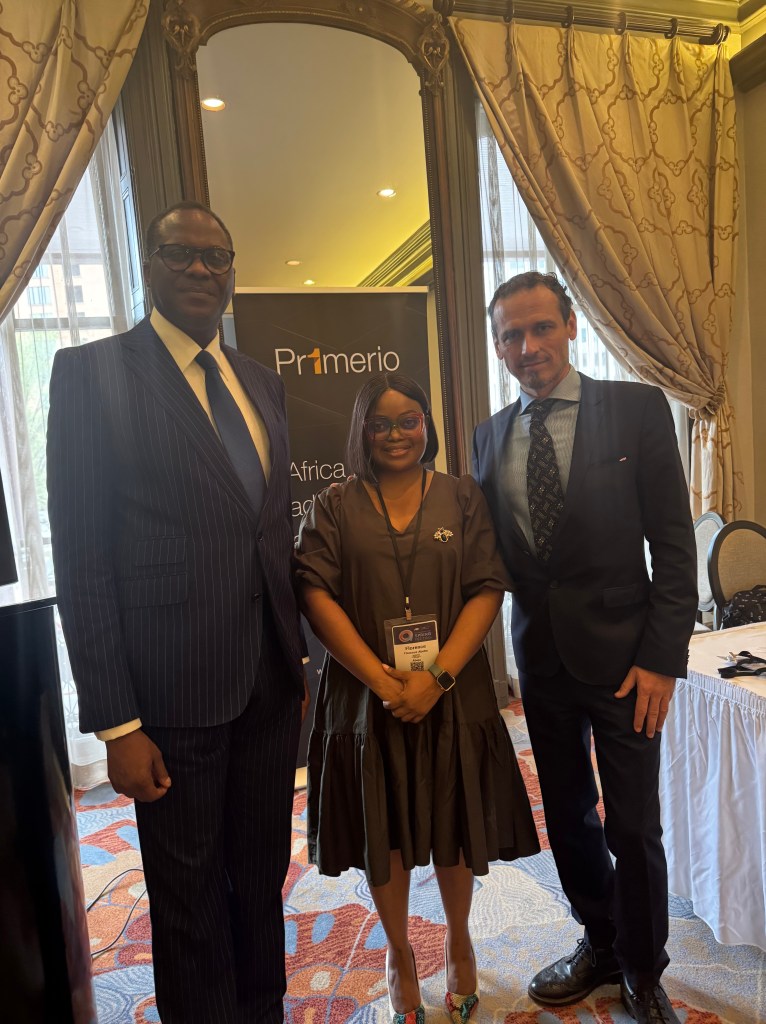
Babatunde Irukera, Florence Abebe, Andreas Stargard at the African Antitrust Salon hosted by Primerio
While more African countries are pushing back against big tech companies and are focusing on unchecked data exploitation within their borders, there is a need, however, for the continent to build towards a larger, sustainable strategy to manage the presence and power of big tech. Says Andreas Stargard, “the quarter-billion dollar Meta fine, if upheld, would firmly cement Nigeria’s antitrust global relevance in the minds of international lawyers and businesses. This comes as a surprise in some ways, as the FCCPC was first put on the map only fairly recently, by its inaugural Chief enforcer, Tunde Irukera: his vision for creative enforcement tools and encouragement of the agency’s staff to employ heretofore unused investigatory mechanisms and strategies – often seen only in U.S.-style civil litigation, and certainly not in many government agencies worldwide, much less among other African jurisdictions – show that the Commission potentially has the necessary intellectual capacity and investigatory stamina to pursue cases of equal or greater dimensions in the future. It will depend on its leadership where the FCCPC’s path is charted next…”
Of course, there needs to be a balance struck between the value of personal data and that of innovation and tech adoption, which calls for a coordinated regulation policy that will strive to balance economic and non-economic features of the continent.
As observed by Leonard Ugbajah, a competition law consultant, a balanced and pragmatic approach is essential when opting to address the regulatory landscape around big tech:
“A common approach would harness the capabilities of countries, moderate opportunism by state and non-state actors in pursuing enforcement, recognise the economic importance of big tech, properly calibrate the various pain points (economic and non-economic) and safeguard the interests of the not-so-capable African countries.”
The social media giants have 60 days, starting from 30 April 2025, to comply with the $220 million fine ordered by the Tribunal. Notably, following the decision, WhatsApp has indicated that it intends to seek a stay of the Tribunal’s decision and pursue an appeal.
Meet the “CCCC”: the 4th Estate Covers the 4th “C” of the COMESA Competition Commission During its Second Press Conference, and More
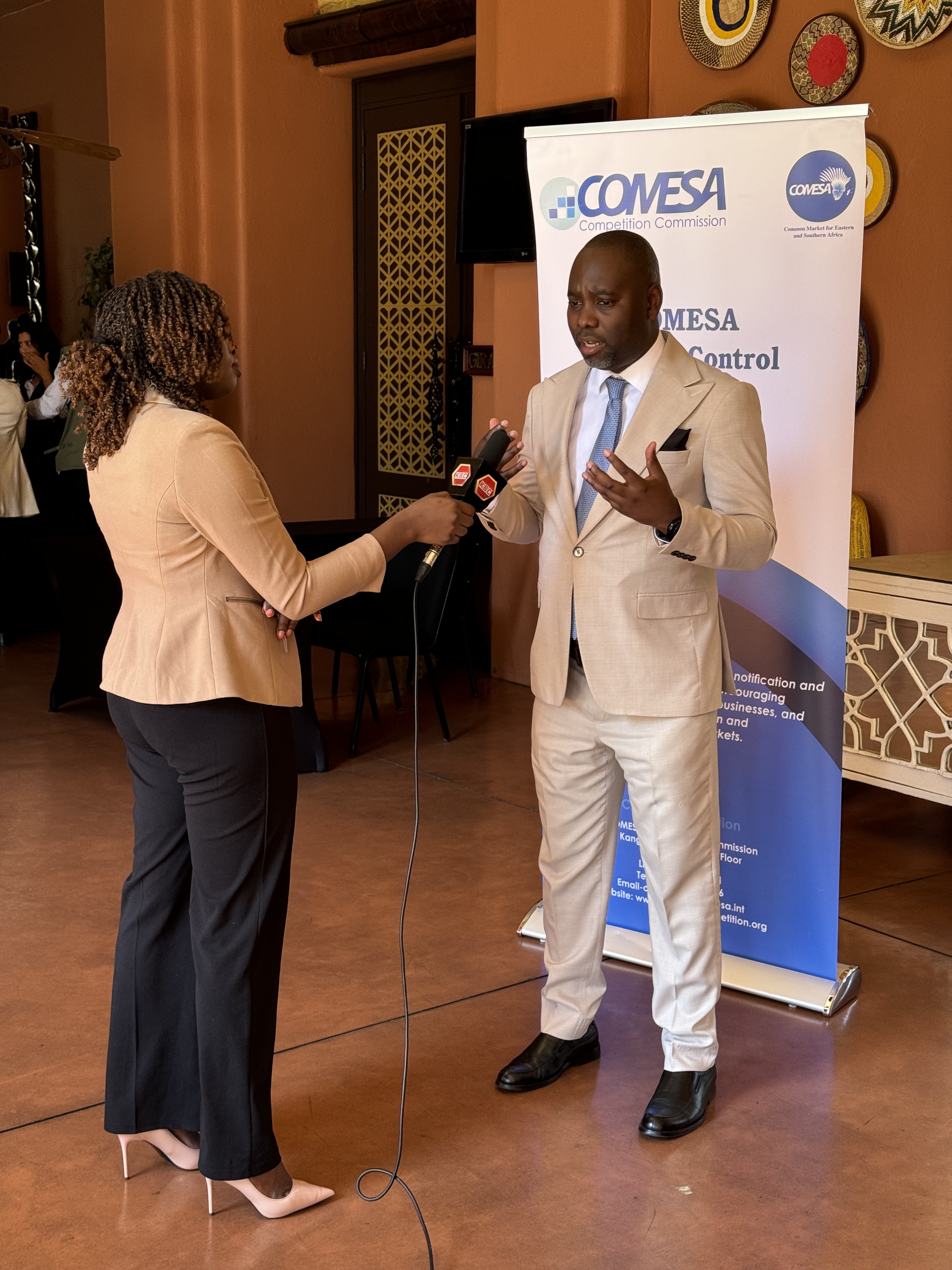
The second annual COMESA Competition Commission press conference, taking place in Livingstone, Zambia, revealed not only news, but also the extensive improvements to the agency being made, and information about ongoing market studies and case investigations. It was an opportunity to allow business journalists obtain a glimpse, if not indeed a full deep-dive overview, into the future of the triple-C – which is soon to be the “Quad-C”, in fact, as Dr. Mwemba, the head of the Commission, announced at today’s event. That is, the CCC will add a fourth “C” to its name, so as to include expressly the concept of Consumer protection. AAT notes that this is similar to several other national competition authorities, for example the Nigerian FCCPC or even the U.S. FTC, both of which also have an existing mandate covering consumer-protection issues, besides their jurisdiction over pure competition-law matters.
Name Change
Dr. Mwemba clarified that the now-express inclusion of this “4th C“ in the Commission’s name going forward is to highlight the fact that the Commission will enhance its focus on consumer-protection issues, and to ensure that the average consumer (as opposed to competition experts) in the COMESA region can better understand their rights and recourse to the CCC(C).
Public-Interest Factors
This renewed consumer-protection emphasis also goes hand-in-hand, AAT believes, with the increased importance of so-called “public-interest“ factors in the CCC’s merger analysis. Dr. Mwemba highlighted, by way of example, environmental factors and job creation numbers, as potential considerations to be taken into account by the Commission under the amended regulations, which will likely come into effect by December 2024.
New Competition Regulations
These newly amended COMESA Competition Regulations, which have been in the making since the May 2021 inception of the Commission’s efforts to revise the regional competition law, will culminate in the imminent clearance by the COMESA Legal Drafting committee, and ultimately (by the end of the year, we anticipate), its adoption by the regional committees of the COMEAS Attorneys General, of the Justice Ministers, and eventually the Council of Ministers of all 21 COMESA member states. Of course, as AAT has discussed before, these Regulation Amendments carry with them extensive revisions to antitrust law (e.g., the creation of a leniency programme for cartel offenders; the change-over to a suspensory merger notification regime; adding ‘transaction value’ to the concept of deal-notification thresholds, amending their definition from being purely asset- and revenue-based; and the creation of certain market-power presumptions based on share thresholds, just to name a few here).
Dr. Mwemba clarified in vivid terms that neither life nor law must be stagnant. Hence the import of the revision of the Regulations, which (in their current form) are by now two decades old. “The original 2004 COMESA law simply was no longer up to the task of helping the Commission to regulate modern markets as they stand in 2024 and beyond,” according to the CCC. Examples given by the senior staff present included the rapid rise of artificial intelligence, environmental changes to the economy, and digital platform evolution – all of which have proceeded faster than virtually all existing antitrust laws globally. The view of the executive of the Commission is that it is well-positioned to be at the forefront of adapting to these challenges of imminent change.
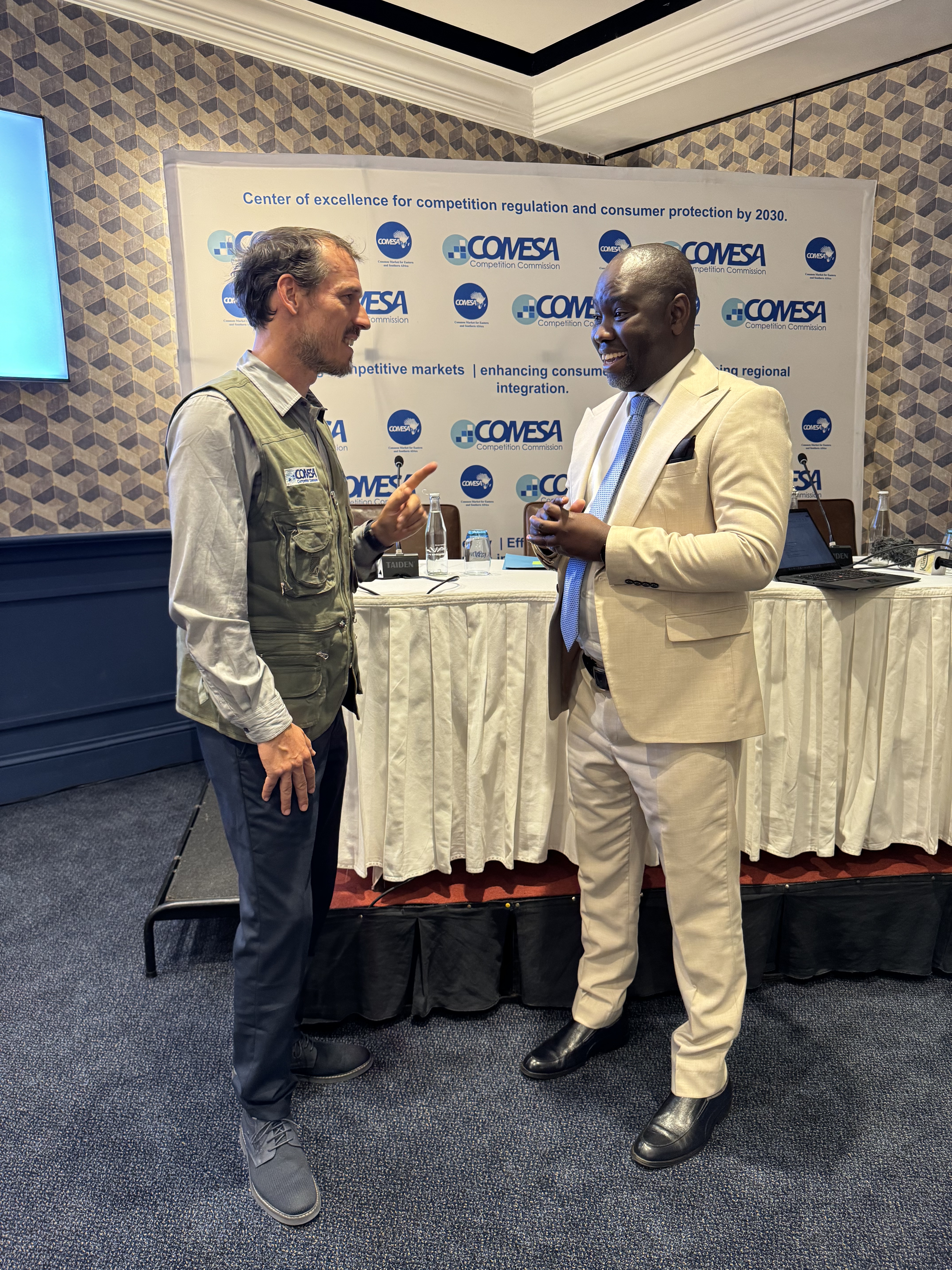
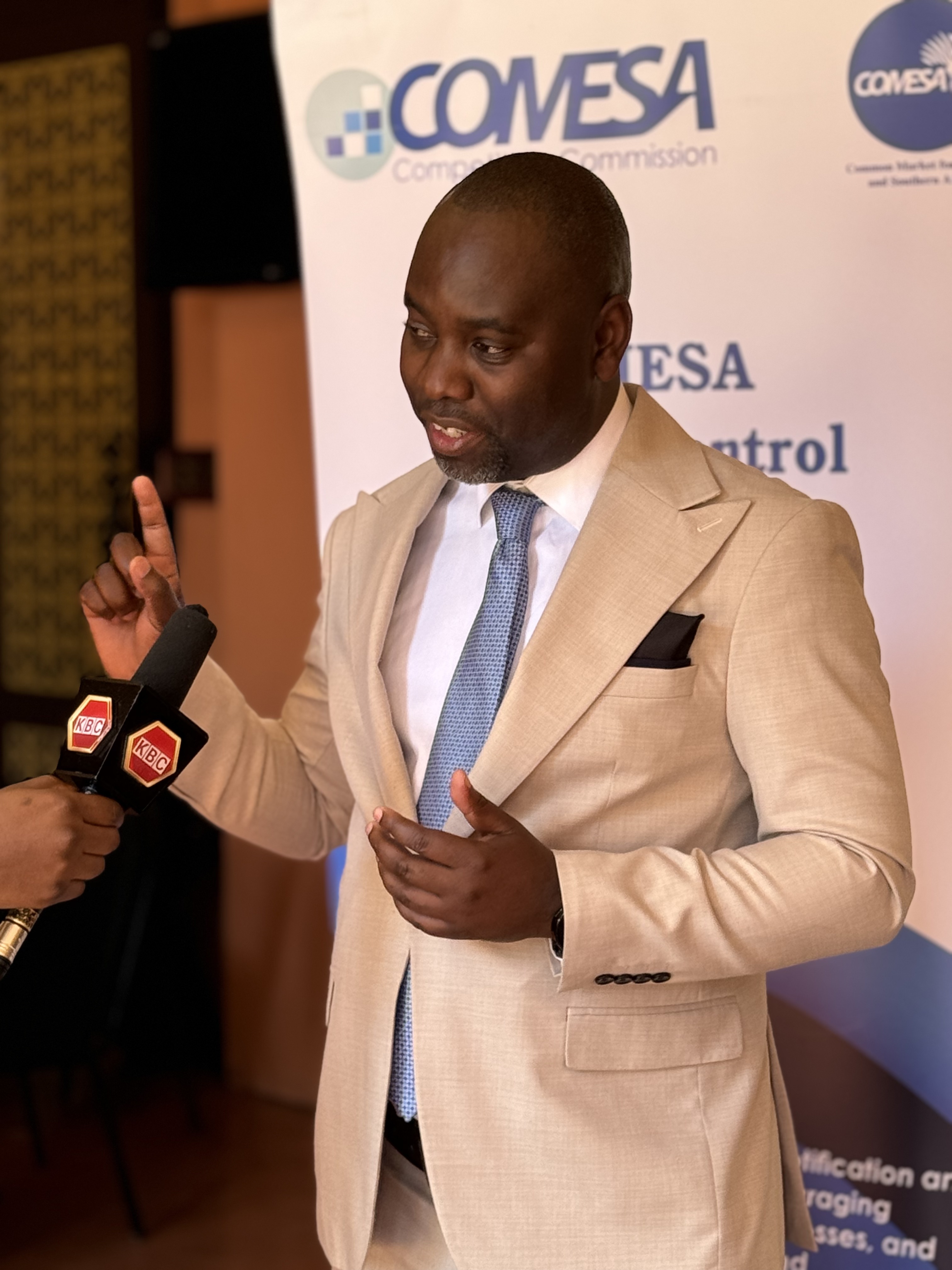
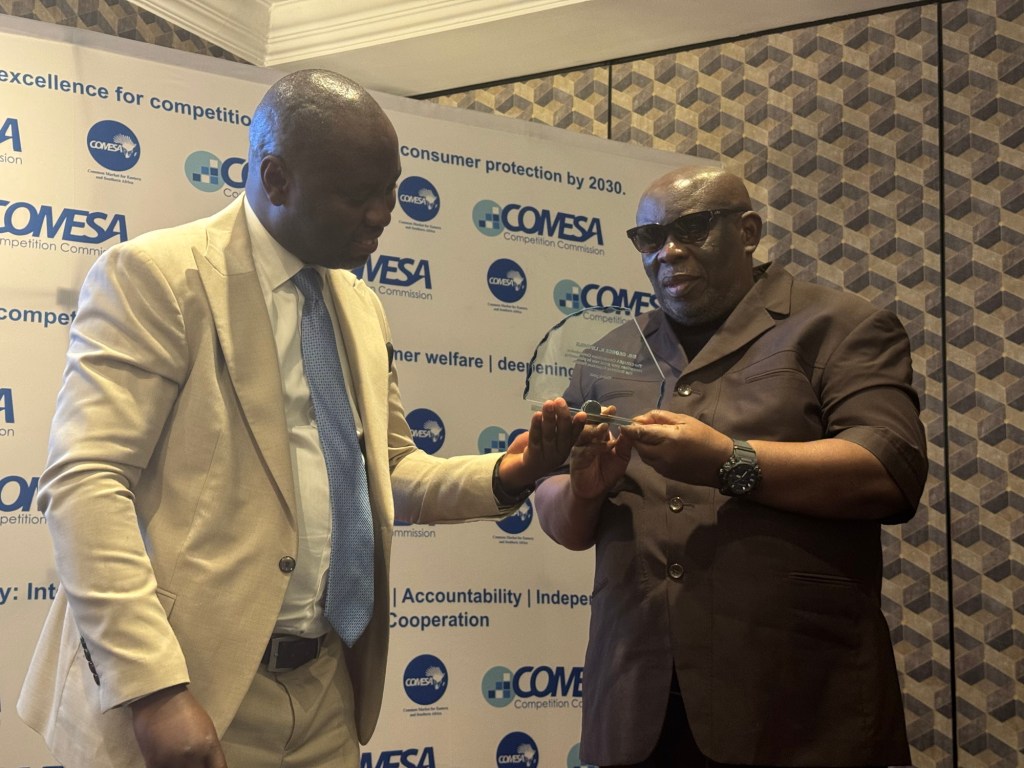
The former CEO Dr. George Lipimile and AAT Editor Andreas StargardWith the CEO of the Commission, Dr. MwembaDr. Mwemba being interviewed by KBC
Merger Regulation
As both the past Director (Dr. George Lipimile) and the current CEO (Dr. Willard Mwemba) highlighted: the Commission does not exist to prohibit mergers. Instead, its purpose, from a merger-control perspective, is to ensure that any deals that may distort competitive markets is structured in such a way that the distortion ceases to exist or risk to the functioning of effective markets.
Answering one of the questions posed by africanantitrust.com, Dr. Mwemba confirmed that the Commission is continually engaged in ex post analysis and reviews of past mergers that were approved, sometimes with conditions, by the then-triple-C. In the ATC/Eaton Towers case, for example, it observed that the parties were found not to be complying with the obligations imposed by the contingent approval decision, therefore resulting in fines imposed by the CCC post-closing of the approved deal.
Beyond Mergers: Anti-Competitive Practices
The Commission has moved on from being a pure merger regulator long ago, however. This was a key theme throughout the multi-day conference. “We have moved on from just doing mergers, and have now been covering the terrible, always-hidden, and always-nefarious, anti-competitive practices found across the region for years,” says Dr. Mwemba about the more than 45 ACP matters the agency has handled so far. Case examples he gave in this respect include the CAF licensing of football rights (a veritable trilogy of matters at all levels of the intellectual property distribution chain regarding an important pastime in Africa, soccer).
Other instances of the CCC pursuing anti-competitive practices within the region include multiple investigations into the beer and alcoholic beverage markets, and a now concluded case against Uber (resulting in significant changes to the ride-sharing company’s contract terms in the COMESA region, namely removing a denial of vicarious liability clause, changing the choice of law provision from the Netherlands to local jurisdictions in COMESA, as well as changing the pricing and termination of services provisions of the contract of adhesion that Uber utilizes in its app.). Finally, the agency is deeply engaged in ongoing agricultural and food price studies, which will likely yield further enforcement actions going forward, in the words of the CCC.
Closing Thoughts: Due Process, Procedural Rights, and Deepening Collaboration with NCAs
Even though one of the identified CAF cases remains pending on appeal, Dr. Mwemba said that the Commission welcomes the parties’ exercise of their due process rights, noting that the CID review and appellate process provide valuable insights and that everyone stands to gain by the recognition and exercise of such due process under the rules and the law. Indeed, appeals have increased from just 1 in 2023 to 3 in 2024. The Commission also provided statistics on the collaboration it engages in with national competition authorities, including capacity building in Mauritius, the Democratic Republic of Congo, Uganda, and other member states. Finally, the statistics provided for the past 11 years show the transformation of the early period (which AAT had initially covered graphically for several years with its informal merger-stats analysis, now long-abandoned due to the CCC’s improved transparency and web presence): The CCC has handled over 430 merger reviews and more than 45 anti-competitive practice investigations.
Honoring ongoing excellence and recognizing past accomplishments
Lessons drawn from the Constitutional Court in the Coca-Cola Appeal
By Brandon Cole
In a pivotal decision issued on April 17, 2024 by the Constitutional Court of South Africa, the case of Coca-Cola Beverages Africa (Pty) Ltd against the Competition Commission has reshaped our understanding and enforcement of post-merger conditions in business transactions. Stemming from a 2016 merger that led to the creation of “Coca-Cola Beverages South Africa” (out of four separate entities), the case underlines the complexity of adhering to merger conditions imposed to safeguard fair competition and operational continuity.
The merger was initially green-lit with certain conditions focused on preventing job losses (“retrenchments”) and on harmonizing employment terms across the new entity. Despite these protective measures, certain challenging economic conditions, including a sugar tax and rising input costs, compelled Coca-Cola to undertake some retrenchments. This action sparked a legal challenge from the Food and Allied Workers Union (FAWU), asserting a breach of the stipulated merger conditions that underlay the transaction’s approval by the antitrust authorities.
Central to the dispute was the interpretation of how merger conditions are enforced and reviewed under the South African Competition Act. The crux was whether Coca-Cola’s retrenchments violated the merger-specific conditions or were justified by external economic pressures. The Competition Tribunal, tasked with adjudicating the challenge, initially ruled in favour of Coca-Cola, recognizing the broader economic factors at play. However, this decision was overturned by the Competition Appeal Court, which led to Coca-Cola’s subsequent appeal to the Republic’s Constitutional Court.
The Constitutional Court’s decision clarified several crucial aspects regarding the enforcement of merger conditions:
Nature of review: The Court differentiated this review from ordinary administrative actions, focusing on whether Coca-Cola substantially complied with the merger conditions rather than strictly adhering to them without regard for external circumstances.
Causal connection: The Court criticized the narrow focus of the Appeal Court on the direct causality between the merger and retrenchments. Instead, it supported a more holistic approach that must consider all relevant factors impacting business decisions post-merger.
Implications for business strategy: The judgment emphasized the importance for businesses to thoroughly plan and document their strategies when complying with merger conditions. This is essential to demonstrate substantial compliance, especially when external economic factors might compel deviations from the expected course.
This landmark judgment highlights the dynamic nature of post-merger conditions and their enforcement, illustrating that adherence to these conditions must consider both the intended protective measures and the practical realities faced by businesses. For companies undergoing mergers, this case serves as a critical reminder of the need to balance merger obligations with agile business responses to external challenges.
The insights derived from the Coca-Cola Beverages Africa case provide valuable lessons for businesses and legal practitioners involved in mergers and acquisitions, especially in terms of planning, executing, and justifying actions taken in relation to merger conditions.
Barring an application for review to the community’s highest court, decisions by the COMESA Competition Commission and its CID (Committee for Initial Determinations) are reviewed by the COMESA Appeals Board (“CAB”). In other words, the CAB is the crucial mid-layer of appellate review in antitrust matters across the COMESA region.
The CAB recently published its important December 2022 ruling in the CAF / Confédération Africane de Football matter. The CAF case is noteworthy in at least 3 respects, says Andreas Stargard, a competition attorney with Primerio International:
“For one, it deals with one of the CCC’s very first cases involving anti-competitive business practices; heretofore, virtually all decisions by the Commission involved pure merger matters.
Second, the CAB ruling is important in that it lays the groundwork for future settlements (or commitments) between the Commission and parties accused (but not yet found guilty) of violations of the COMESA competition regulations.
Lastly, the Appeals Board highlights the importance of issuing well-reasoned, written decisions, on which the parties (and others) can rely in the future. The CAB has made clear what we at Primerio have long advocated for: a competition enforcer must articulate clearly and state fully all of the reasons for its findings and ultimate decision(s). This is necessary in order for readers of the written opinion to evaluate the factual and legal bases for each. The CAB has now expressly held so, which is a welcome move in the right direction for COMESA litigants!”
In an ironic twist in the 5-year saga of the CAF investigation by the CCC, the Commission and the parties themselves had reached an agreed settlement, according to whose terms the parties did not admit guilt, yet agreed to (and in fact anticipatorily did) cease and desist from performing under their sports-marketing contract, which was essentially torn up by the commitment decision. Yet, to the surprise of the CCC and the private parties under investigation, in the summer of 2022 the CID refused to sign off on the settlement, due to the sole (otherwise unexplained) reason that there was a lack of an admission of guilt. The parties sought reconsideration on various grounds, which the CID again refused a second time. These rulings were then appealed — successfully — to the CAB, which quashed the CID’s unsubstantiated determinations and gave effect to the parties’ previously-reached settlement agreement with the CCC.
The full decision — which deals in detail with the CAF’s distribution agreements for the commercialization of marketing and media rights in relation to sports events — can be accessed on AAT’s site, see below.
CAC ruled in favour of Tourvest nine years after allegedly collusive tender for retail space at Johannesburg airport took place
By Jemma Muller and Nicola Taljaard
In a recent judgment, the South African Competition Appeal Court (“CAC”) provided clarity on the characterization inquiry necessitated by section 4(1)(b) of the Competition Act 89 of 1998. The judgment particularly elucidated the way in which the requirement that the parties must be in an actual or potential horizontal relationship at the time that the offence in issue is committed, must be construed.
The CAC set aside and replaced the Competition Tribunal’s (“Tribunal”) decision wherein it found that Tourvest Holdings (Pty) Ltd (“Tourvest”) was guilty of collusive tendering or price fixing under section 4(1)(b) in relation to tenders issued by Airports Company South Africa (“ACSA”).
The CAC found that Tourvest and the Siyanisiza Trust (“Trust”) agreed to cooperate instead of competing on a tender issued by ACSA by concluding a Memorandum of Understanding (“MoU”) before submitting their separate bids in relation to tenders issued by ACSA. In terms of the MoU, Tourvest agreed to provide the Trust with the expertise, management infrastructure, technology and training that the Trust would require to bid.
Despite the historically vertical relationship between the parties, the Tribunal found that the parties had become actual competitors by submitting separate bids for the same tender (i.e., horizontality by bidding) and potential competitors under the MoU, and alternatively, that the parties became potential competitors by virtue of holding themselves out as competitors submitting bids against one another (i.e., by creating the illusion of competition).
Before scrutinizing the Tribunal’s specific findings in relation to horizontality, the CAC found that the Tribunal misdirected itself by embarking on a characterization inquiry which failed to recognize the character of the parties’ relationship absent the impugned agreement – which relationship was clearly vertical in nature. The CAC explained that, if absent the agreement the parties were not potential competitors, then the agreement could not have removed a potential competitor from the market and could also not have harmed competition, as there was none to start with. The CAC based its reasoning on the purpose of section 4(1)(b) of the Competition Act, which stated as being to penalize ‘conduct which is so egregious that no traditional defence is permitted’. Accordingly, its purpose is not to capture conduct which, correctly characterized, does not harm competition.
With regard to the Tribunal’s specific findings of horizontality, the CAC found that:
The submission of separate bids for the same tender could not in and of itself bring the impugned conduct within the ambit of section 4(1)(b);
The wording of section 4(1)(b) is clear in that it requires the parties to be in an actual or potential horizontal relationship. Section 4(1)(b) cannot be interpreted to infer strict liability on parties by virtue of them ‘pretending’ to be a competitor (i.e., horizontality by illusion). If parties are ‘ineligible’ to bid as competitors by virtue of their trading environment, they may not be construed as potential competitors. In casu, the Trust was not eligible to participate in the tender as it did not meet the tender criteria; and
It is illogical and contrary to the provisions of section 4(1)(b) to conclude that the parties could become competitors in the future by virtue of the tender’s enterprise development purpose. The potential to compete cannot be rationalized from the impugned agreement itself. Rather, it is the (horizontal-or-not) nature of the parties’ relationship at the time the offence in issue is committed, which must be assessed.
On 4th May 2020, the Kenyan Competition Tribunal made its first decisionafter considering the application for review of the Airtel-Telkom merger where they contested 7 out of 8 the conditions imposed. The competition Act allows the tribunal to look at the merits of the Competition Authority’s (CAK) decision therefore and has power to confirm, modify or reverse any order issued either partially or wholly. In this particular decision the Tribunal did exercise all these powers. The decision of the Tribunal was guided by whether CAK’s decision promoted or protected effective competition in the telecommunications sector, enhanced the welfare of the Kenyan people and prevented unfair and misleading conduct throughout Kenya among other things.
First, the Tribunal confirmed the condition set in relation to employment. This public interest consideration varies on a case by case basis hence the difference in its application. In some mergers CAK has limited the retention of employees to 12 months and in others it is limited to 3 years. In this particular case, it was limited to 2 years. The tribunal agreed that due to the specialized nature of the industry and the presence of only two players in that market post-merger, then the condition imposed in regard to employment was justified.
Ruth Mosoti (author)
Secondly, the 2 conditions in relation to spectrum licensing and management were varied in their entirety primarily because it was found that CAK had no basis to interfere with licensing conditions imposed by the Communications Authority. It was their view that the Communications Authority was the competent authority to govern the licensing terms and, in the event, that there are any competition concerns then, these two regulators would consult. The imposition of these two conditions were deemed to be unnecessary. It was emphasized that competition law is there to protect competition and not competitors.
Thirdly, the condition on restricting entering into any sale agreement was modified to bring clarity. As imposed by CAK any form of sale was prohibited which was found to be blanket, therefore unreasonable. The Tribunal clarified that the merged entity would be able to enter into sale agreements in the ordinary course of business however the merged undertaking cannot be sold for a period of 5 years. In addition to this, the condition of audit in case the merged undertaking became a failing firm was done away with because CAK failed to justify why it applied the “failing firm doctrine” post-merger. In any event should this happen, the Tribunal reasoned that this would require approval from CAK therefore an unnecessary condition at this point.
The conditions in relation to contracts managed by Telkom on behalf of the government were retained however the tribunal clarified that this was not to interfere with the freedom of contract between the Kenyan government and the merged entity. While it is unconceivable how the government would agree to preferential terms while entering into these contracts without offending the law (this would be to my understanding that you pay for a government service/product depending on who you are which would be outright discriminatory)
Lastly, imposing a requirement for annual reports to CAK with no time limit was not justified. The appellants asked for 2 years and the Tribunal obliged. This was based on the fact that most of the conditions imposed on the merged entity after the review would lapse after 2 years therefore the tribunal deemed two years to be a justifiable time frame to comply with the 8th condition.
The Tribunal’s take on the procedural issues raised by the appellants is quite interesting. On the issue as to what constituted a “fair administrative process”, it was of the opinion that CAK had accorded the appellants adequate notice and opportunity to respond. To contextualize this, the appellants received a notice of a proposed decision and had a meeting on 25th October 2019, the Appellants contested these conditions and on the same date after the meeting, CAK sent amended conditions. The appellants advocates asked for time to consult their clients on the amended conditions. The CAK however went ahead to issue a notice of determination on 31st October 2019 which was 6 days later. CAK’s position on this was that the board having sat, the decision issued on 31st October 2019 was final. This being the case, the only avenue available to the Appellants was to challenge it before the tribunal. The position by the tribunal that the Appellants had been given adequate time to challenge procedural fairness bearing in mind that the 30 days were to lapse on 24th November 2019 is baffling at best.
In conclusion, this decision being the first of has accorded practitioners an insight as to how CAK arrive at its decisions as well as the considerations of the tribunal in case of appeals. We now look forward to its determination of the other appeals in relation to RTPs before it.
In three recent decisions, two by the Competition Tribunal and one by the Competition Appeal Court, a number of important procedural flaws were exposed in the manner in which certain complaints were initiated against various respondents. The Competition Appeal Court even made an adverse costs order against the Competition Commission in one of the cases. We discuss these important decisions below.
Misjoinder of Parent Company
The South African Competition Commission (“SACC”) had recently alleged that Power Construction (West Cape) Pty Ltd (“West Cape”) and Haw and Inglis (Pty) Ltd (“H&I”) colluded in respect of a tender submitted to South African National Roads Agency (SANRAL). The tender was in respect of maintenance services. The SACC alleges both parties had contravened section 4(1)(b)(ii) and (iii) of the South African Competition Act (the “Act”). The parent company of West Cape, Power Construction (Pty) Ltd (“Power Construction”) was cited as a respondent on the basis that it would be liable to pay the administrative penalty. Power Construction, had engaged in “with prejudice” settlement negotiations.
The SACC refused the proffer and informed Power Construction that after having considered the settlement proceed that it was clear that Power Construction and West Cape (being the subsidiary of Power Construction) shared a majority of their respective directors which, according to the SACC, was sufficient to implicate Power Construction in the alleged collusive conduct. Accordingly, the SACC alleged that any Administrative Should be calculated using the higher annual turnover figures of Power Construction.
Power Construction disputed this, arguing that it was never alleged by the SACC that Power Construction had contravened the Act. The SACC then opted to amend its referral to include Power Construction. On application to the South African Competition Tribunal (“Tribunal”), the Tribunal dismissed the proposed amendment on the basis that the SACC had failed to provide any material evidence to establish a prime facia case in favour the relevant amendment, stating that the burden remains on the applicant to prove that it is deserving of the amendment by putting sufficient factual allegations before the Tribunal.
In conclusion, the Tribunal also confirmed that the amendment could regardless have been rendered excipiable based on prescription. In this matter, the alleged conduct ceased more than three years prior to the Commission becoming aware of the conduct.
Prescription
In a further case, namely the Competition Commission and Pickfords Removals SA, regarding the interpretation of section 67(1) of the Act (namely that dealing with prescription), the Competition Appeal Court (“CAC”) was very recently called to decide on the correct date for the running of prescription in terms of section 67(1) of the Act.
The SACC (being the appellant in the matter), brought an appeal to the CAC after the Tribunal held that the complaint initiated by the SACC was time barred in terms of section 67 of the Act.
The SACC disputed this and submitted that prescription in terms of section 67 of the Act should only commence from the date on which the Commissioner or Complainant acquired knowledge of the prohibited practice and, alternatively, that the Tribunal has a discretion to condone non-compliance with this 3-year time period. The latter issue was central to the dispute.
The question was further complicated by the fact that the SACC filed two compliant initiations against the respondents. The SACC submitted that the so called ‘second initiation’ was merely an amendment to the first initiation. So the SACC argued, even if the time period had begun running when the practice had stopped, the time period in question would still not have expired.
In this regard, the CAC held that the SACC has the power to amend a compliant initiation and that it must be taken at its word on whether a second initiation is an amendment to the first or a separate and distinct complaint initiation. This is so, particularly where both complaint initiations concern the same conduct, in the same market and where the first complaint initiation states that the conduct is ongoing.
In relation to the issue of prescription, the CAC held that section 67 cannot be equated with section 12 of the South African Prescription Act which provides for prescription to commence from the moment on which the “creditor acquires knowledge of the identity of the debtor and the relevant fact from which the debt arises”. Section 49B(1) of the Prescription Act provides for a much lower threshold, being the ‘reasonable suspicion of the existence of a prohibited practice’.
Accordingly, it must be accepted that the time bar in section 67 is intended to be a limitation of the Commissioner’s wide ranging powers (to prevent investigation into historic matters which are no longer in the public interest) and that the knowledge requirement contained in the Prescription Act cannot be read into this limitation as argued by the SACC. It follows then, based on this reasoning that there can similarly be no condonation by the Tribunal or the CAC on these matters.
For completeness sake, the CAC confirmed the general understanding that, for purposes of section 67, the alleged prohibited conduct will be deemed to have ceased on the date on which the respondent last benefited from the prohibited conduct (e.g. the date on which it last received payment under the agreement). In this regard, the Tribunal initially ordered the parties to produce evidence of the date on which the last payment was received. The CAC deemed this appropriate and opted not to interfere with this order.
Condonation and Costs
The Tribunal was also called recently upon to decide two interlocutory applications, the first being a condonation application brought by the SACC in terms of section 54 of the Act for the late filing of its revised trial bundle (containing an additional 1221 pages), which was opposed by the respondents (Much Asphalt and Roadmac Surfing) and finally a counter application for costs against the SACC.
In terms of the condonation application, the SACC sought to revise the trial bundle on the basis that the revised trial bundle contained documents which were essential to its case (which were inadvertently omitted from its initial bundle) and had been re-organized in a manner that was less burdensome for all the parties involved. In support, the SACC argued, that the respondents wouldn’t be prejudiced by the late filing as the extra documents had already been discovered.
The Tribunal confirmed that the test for condonation must be ‘good cause shown’ by the SACC which should be assessed on case by case basis. The Tribunal held that the SACC had not shown good cause in this matter as it had ample time to furnish the respondents with the revised bundle and further found that filing the revised bundle at the 11th hour was unnecessarily prejudicial to the respondents.
In terms of applications for costs, the respondents sought an order for wasted costs in relation to the postponement due to the late furnishing of the bundle as well as the cost of defending the application for condonation. Importantly it should be borne in mind that the Tribunal does not as a matter of course make cost orders against the SACC. In this regard, the Constitutional Court has previously held that the Tribunal does not have the powers to make adverse cost orders against the SACC, even where the SACC has abused its powers. The general rule is that the parties pay their own costs. The Tribunal may only make cost orders against third parties and, accordingly, dismissed the respondent’s application for costs.
John Oxenham, director of Primerio says that these cases demonstrate the objectivity and impartiality of the adjudicative bodies which is an encouraging sign for respondents who do not believe that the case brought against them is procedural or substantively fair.
Fellow competition lawyer, Michael-James Currie says it is unfortunate that only the Competition Appeal Court makes adverse costs rulings and that the Competition Tribunal is precluded from doing so. Adverse costs ruling against the SACC should be reserved for matters in which there was clear negligence in the manner in which a case was investigated, pleaded or prosecuted. Such costs orders would, however, go a long way in ensuring that parties and in particular the prosecution agency, does not refer cases to the adjudicative bodies (which have limited prospects of success) with no downside risk in losing the case.
Oxenham shares Currie‘s sentiment and suggests that adverse costs orders against the Commission will likely result in a more efficient enforcement regime as cases will be settled more expeditiously and respondents will be more reluctant to oppose the Competition Commission’s complaints with the knowledge that the SACC is confident in its case and prepared to accept the risk of an adverse costs order.
[The Editor wishes to thank Charl van der Merwe for his contribution to this article]






 The Tribunal’s take on the procedural issues raised by the appellants is quite interesting. On the issue as to what constituted a “fair administrative process”, it was of the opinion that CAK had accorded the appellants adequate notice and opportunity to respond. To contextualize this, the appellants received a notice of a proposed decision and had a meeting on 25th October 2019, the Appellants contested these conditions and on the same date after the meeting, CAK sent amended conditions. The appellants advocates asked for time to consult their clients on the amended conditions. The CAK however went ahead to issue a notice of determination on 31st October 2019 which was 6 days later. CAK’s position on this was that the board having sat, the decision issued on 31st October 2019 was final. This being the case, the only avenue available to the Appellants was to challenge it before the tribunal. The position by the tribunal that the Appellants had been given adequate time to challenge procedural fairness bearing in mind that the 30 days were to lapse on 24th November 2019 is baffling at best.
 In terms of applications for costs, the respondents sought an order for wasted costs in relation to the postponement due to the late furnishing of the bundle as well as the cost of defending the application for condonation. Importantly it should be borne in mind that the Tribunal does not as a matter of course make cost orders against the SACC. In this regard, the Constitutional Court has previously held that the Tribunal does not have the powers to make adverse cost orders against the SACC, even where the SACC has abused its powers. The general rule is that the parties pay their own costs. The Tribunal may only make cost orders against third parties and, accordingly, dismissed the respondent’s application for costs.
 African Antitrust & Competition Law