COMESA’s New Competition & Consumer Protection Regulations: Game-Changer for Regional Enforcement?

By Tyla Lee Coertzen and Joshua Eveleigh

On 4 December 2025, the COMESA Council of Ministers adopted the COMESA Competition and Consumer Protection Regulations, 2025 (the “2025 Regulations”), marking a significant overhaul of its regional regime since its inception in 2004. The 2025 Regulations, which entered into force immediately, officially repeal and replace the previous COMESA Competition Regulations (the “2004 Regulations”).

The 2025 Regulations have introduced a number of substantive developments and refinements to the COMESA competition regime. Most significantly, the 2025 Regulations have have introduced a suspensory merger control regime, expand a number of enforcement powers, formalise a leniency regime in respect of hardcore carte conduct and significantly strengthen oversight of digital markets.

The “Quad-C”: COMESA Competition Commission has also been rechristened as the COMESA Competition and Consumer Commission (“CCCC”), reflecting its enhanced consumer protection mandate.

“The 2025 Regulations have not come as a surprise,” according to competition-law practitioner Michael-James Currie. As AAT has previously reported, the COMESA Competition Commission had on 24 January 2024 issued a press release requesting comments to its proposed Draft Regulations (as amended in November 2023). “As such, the 2025 Regulations have been contemplated, revised and tightened alongside a number of stakeholders and comments over a period of at least two years, including our and our clients’ input,” says Currie. The 2025 Regulations have also been coupled with an updated set of implementing Rules. Finally, the CCCC recently introduced a Practice Note regarding the new merger control regime.

We report comprehensively on these significant developments here, as well as in a series of future COMESA updates. For an academic review of the “coming of age” of the COMESA enforcement regime, please see Dr. Liat Davis and Andreas Stargard‘s separate Concurrences article, “COMESA: Regional Rapprochement Refined“, tracing the trajectory of the Common Market for Eastern and Southern Africa (COMESA) competition regime—the first multi-national antitrust enforcement system in Africa, and the second to be created globally after the European Union, in what has since become a growing field of regional enforcement regimes.

Merger Control

COMESA’s move to a suspensory regime & expanded merger assessment powers

“One of the most significant changes is the move to a suspensory merger control regime. Under the 2004 Regulations, merging parties could implement transactions notified in COMESA prior to obtaining clearance, provided such transactions were notified within 30 days of the ‘decision to merge’,” according to Primerio partner John Oxenham. “This is no longer the case: notifiable mergers must now be approved either unconditionally or conditionally by the CCCC prior to implementation.”

The 2025 Regulations have, however, introduced a derogation in respect of the suspensory rule, which provide a level of flexibility on the suspensory rules for parties involved in public takeovers, for example.

The Regulations also revise the definition of a ‘merger’ – introducing further clarifications on ‘controlling interest’ and explicitly capturing full-function joint venture arrangements – as well as introducing updated financial thresholds.

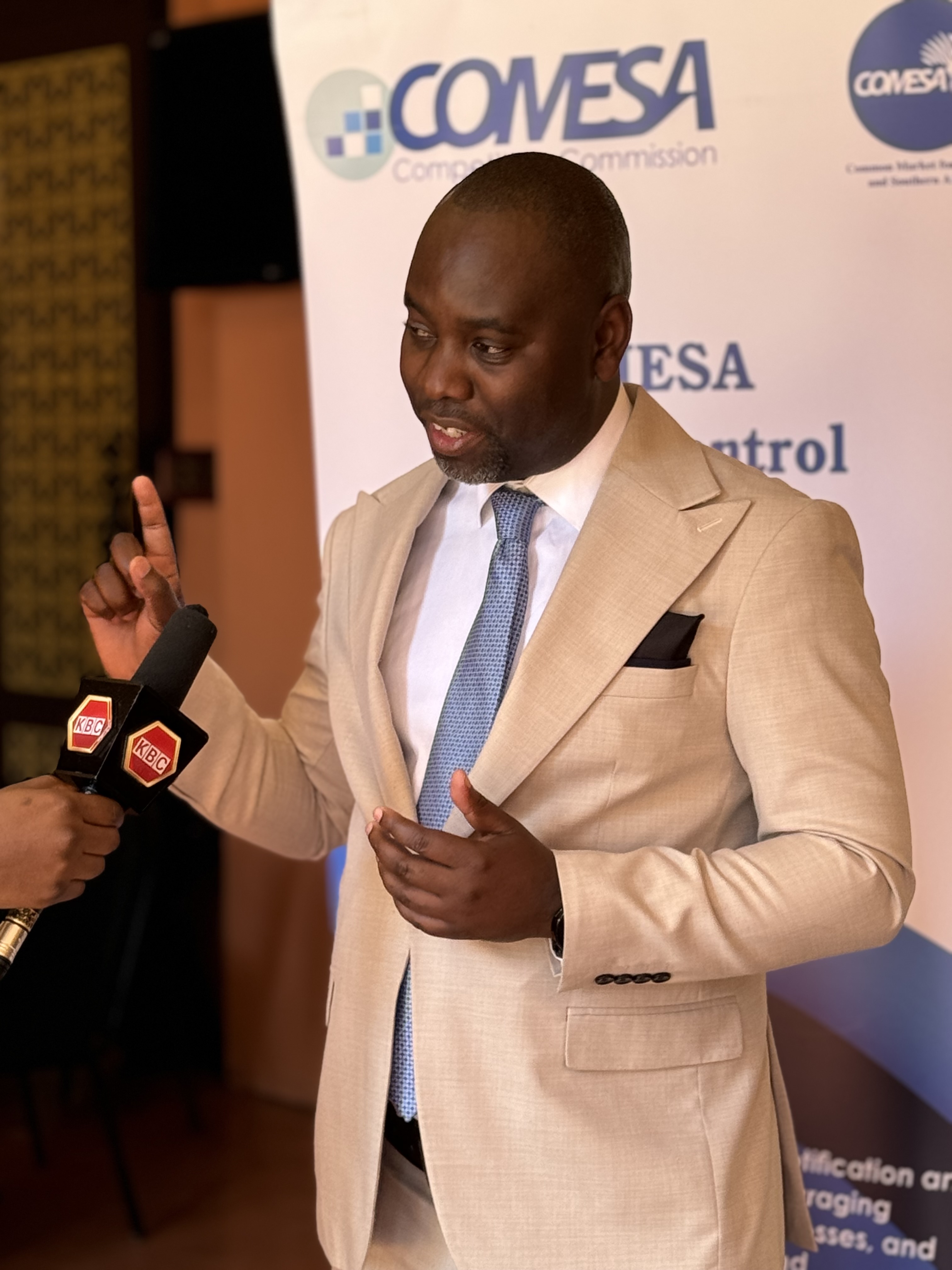
Dr. Mwemba, CEO of the CCCC

Transactions which meet the ‘merger’ definition will now be notifiable where the combined turnover or asset value of the parties in the Common Market equals or exceeds COM$60 million (US$60 million), and at least two parties each meet the COM$ (US$10 million) threshold. For certain digital market transactions, a new transaction-value threshold of COM$250 million (US$250 million) has been introduced.

In addition, the maximum merger filing fee cap has now been increased from COM$200,000 to COM$300,000.

The CCCC’s merger assessment powers have been broadened beyond the traditional lessening of competition (“SLC”) test. Borrowing from a number of African competition authorities’ precedent, the CCCC may now also consider specific public interest factors in merger control, including employment, the competitiveness of small and medium enterprises, environmental sustainability and effects on innovation in the Common Market.

Jurisdictional reach & Strengthening the COMESA one-stop shop

The 2025 Regulations reinforce COMESA’s ‘one-stop shop’ principle. COMESA Member States are now under stronger obligations not to require parallel merger notifications where a transaction falls within the jurisdiction of the CCCC. This provides greater legal certainty for merging parties operating across multiple COMESA Member States. That said, “some obstacles to a full one-stop-shop do remain,” according to Andreas Stargard. “Dr. Willard Mwemba, the CCCC’s CEO, noted at last year’s fall press conference that, in light of the newly-established EAC competition regime and its somewhat overlapping merger notification requirements, the Commission acknowledges the concern that dual notification obligations may occur in the foreseeable future due to the parallel regional body.”

For completeness, the COMESA Common Market comprises 21 Member States – Burundi, Comoros, the Democratic Republic of Congo, Djibouti, Egypt, Eritrea, Eswatini, Ethiopia, Kenya, Libya, Madagascar, Malawi, Mauritius, Rwanda, Seychelles, Somalia, Sudan, Tunisia, Uganda, Zambia, and Zimbabwe.

Anti-competitive Practices

New standards and risks in respect of per se prohibitions

The 2025 Regulations overhaul the CCCC’s approach to restrictive practices. While the 2004 Regulations’ standard was related to having an ‘appreciable effect’, the general prohibition now applies to conduct that has the object or effect of resulting in an SLC in the Common Market.

The list of per se prohibitions has also been expanded. Certain vertical restraints – including absolute territorial restrictions, restrictions on passive sales and minimum resale price maintenance – are now prohibited outright and cannot be justified by efficiency defences.

Formal introduction of a leniency regime

One of the major developments flowing from the 2025 Regulations is the introduction of a formal leniency regime for hardcore cartel conduct occurring within the Common Market.

Importantly, any leniency decisions taken by the CCCC will officially bind individual COMESA Member States, meaning that leniency applicants will not be subjected to parallel enforcement at a national level for the same conduct reported. This significantly enhances legal certainty and aligns COMESA with international best practice.

Higher penalties and greater enforcement

Administrative penalties have been substantially increased by the 2025 Regulations. Under the 2004 Regulations, fines were capped at COM$200,000, the CCCC may now impose fines of up to 10% of a firm’s turnover in the COMESA Common Market. This change, coupled with the expanded per se prohibitions, signals a clear intention of the CCCC to strengthen enforcement and deterrence of anti-competitive practices.

Abuse of dominance and economic dependence

The definition of dominance has been revised, with a stronger focus on economic independence from competitors, customers and suppliers. While no bright-line market share thresholds are introduced by the 2025 Regulations, the broader definition may give rise to increased litigation and uncertainty.

The 2025 Regulations also introduce a new prohibition on the abuse of economic dependence which targets situations where a firm exploits a superior bargaining position over a counterparty that lacks reasonable alternatives, even where the firm is not dominant.

Increased focus on digital markets and gatekeepers

In line with international trends and standards, the 2025 Regulations introduce the concept of ‘gatekeepers’ in digital markets. Gatekeepers are subject to a wide range of behavioural prohibitions, including bans on self-preferencing, data leveraging, anti-steering provisions and discriminatory treatment of small and medium enterprises.

While the criteria for identifying ‘gatekeepers’ remain vague, the scope of the obligations is broad and signals a far more interventionist approach to digital markets in the COMESA Common Market than anticipated previously.

Enhanced market inquiry powers

The CCCC’s investigative powers have been broadened to include the ability to conduct market inquiries and allow the CCCC to compel information and take action, including launching official investigations, engaging in advocacy or negotiating potential remedies.

Importantly, the CCCC cannot unilaterally impose remedies on parties following a market inquiry alone.

Conclusion

The 2025 Regulations represent a major evolution in the COMESA competition framework. As the authors conclude in their Concurrences article cited above, “[t]hese reforms expand the CCC’s toolkit—introducing suspensory merger control, cartel leniency, market inquiries, and digital-market provisions—while also placing public interest and consumer rights more explicitly into the regional framework. They are ambitious, progressive, and aligned with global trends, yet they also raise difficult questions of clarity, implementation, and institutional capacity.”

In AAT’s view, provided adequate staffing and resources exist, the CCCC has now become one of the best-equipped regional competition regulators on the African continent.

Much will depend on how the 2025 Regulations are implemented in practice. For now, companies operating in the COMESA region should consider the 2025 Regulations in line with their compliance strategies and, if in doubt, seek professional legal advice to tailor their business practices and corporate strategies accordingly.

African Merger Control Regulation: A Look At Recent Developments

Megan Armstrong and Jenna Carrazedo

Michael-James Currie, director at Primerio, hosted an insightful webinar alongside Primerio’s in-country Partners, Mweshi Bunda Mutana for Zambia, Hyacinthe Fansi for Cameroon, and Cris Mwebesa for Tanzania. The conversation provided an extensive look into recent developments in merger control across Africa’s principle regional competition authorities and can be accessed here.

This deep dive showed a significant shift towards a more prominent enforcement, lower notification thresholds and stronger coordination between national and supranational regulators. Africa’s merger landscape has vastly changed over the past four to five years which has resulted in more complexity in multi-jurisdictional merger control, increased detection risk for non-notified transactions and a widened the set of jurisdictions that must now be considered for compliance.

This webinar session contained a slightly different focus as the inspiration for the session was to feature a more pragmatic approach that stems from how merger control has changed significantly in Africa over the past few years. There has been a very clear shift in merger regulation and an increase of agencies that have adopted merger control or antitrust laws more generally. The rules and regulations surrounding merger control have become more sophisticated, and these developments are important for the agencies that make use of merger control, antitrust compliance and enforcement. As a result, it was highlighted that the CEMAC merger control has evolved from a basic framework to a more formalised and substantive merger control regime. This is evident in how the system now imposes mandatory filings when both turnover and market share thresholds are met, even for foreign deals without substantial local operations. The system does remain very paperwork-heavy, and a growing concern is the high filing fee cap that is c. USD 70 million.

COMESA was described as Africa’s most advanced and prominent regional regulator in respect of merger control and is now preparing to make substantial amendments to its merger regulators which are expected to take effect in the beginning of 2026. These changes will include mandatory notification for greenfield joint ventures, provisions on digital markets, provisions relating to public interest considerations and questions regarding how regional and national priorities will be remedied.

The East African Community Competition Authority has now operationalised its merger control system, effective as of 1 November 2025. This regime has exclusive jurisdiction over mergers with cross-border effects involving at least two partner states, stated by Cris Mwebesa, and meeting a certain asset or turnover threshold of USD 35 million. The system includes a 120-day review period and filing fees, however several Member States have not domesticated this regional law which means that filings at a national level in parallel to the regional level should be expected. This means that there will be overlaps with COMESA and there is a lack of clarity on how the public’s interest will be prioritised which creates further confusion and uncertainty. Confusion can arise when, for example, Zanzibar’s separate competition authority adds an additional filing requirement for merger control.

The ECOWAS Competition Authority has been operational for around one year and has demonstrated steady progress in handling non-contentious mergers. This authority considers transactions at certain turnover levels and individual thresholds which renders the regime broad in scope. The jurisdictional thresholds for an ECOWAS filing remain low, which may result in challenges around when a dual filing is appropriate and delaying decision making by the respective authorities.

Evidently, across many jurisdictions there are varying levels of institutional maturity that influence regional merger control. This is seen in how Zambia has strengthened its relationship with COMESA, following recent domestic legislative amendments, whilst Tanzania’s national authority co-exists with emerging EAC obligations, creating an emphasised need for coordination. These national-regional intersections will continue to influence filing strategies, especially in sectors where public interest or national sensitivities are emphasised.

These insightful discussions highlighted that merging parties now face a more complex and differentiated compliance across Africa. Although procedural clarity continues to develop, the direction of development is clear in that African merger regimes are growing more enlightened, more interrelated and more aligned with global standards.

Africa’s Merger Control Regulation: A Look At Recent Developments

Megan Armstrong and Jenna Carrazedo

Michael-James Currie, director at Primerio, hosted an insightful webinar alongside Primerio’s in-country Partners, Mweshi Bunda Mutana for Zambia, Hyacinthe Fansi for Cameroon, and Cris Mwebesa for Tanzania. The conversation provided an extensive look into recent developments in merger control across Africa’s principle regional competition authorities and can be accessed here.

This deep dive showed a significant shift towards a more prominent enforcement, lower notification thresholds and stronger coordination between national and supranational regulators. Africa’s merger landscape has vastly changed over the past four to five years which has resulted in more complexity in multi-jurisdictional merger control, increased detection risk for non-notified transactions and a widened the set of jurisdictions that must now be considered for compliance.

This webinar session contained a slightly different focus as the inspiration for the session was to feature a more pragmatic approach that stems from how merger control has changed significantly in Africa over the past few years. There has been a very clear shift in merger regulation and an increase of agencies that have adopted merger control or antitrust laws more generally. The rules and regulations surrounding merger control have become more sophisticated, and these developments are important for the agencies that make use of merger control, antitrust compliance and enforcement. As a result, it was highlighted that the CEMAC merger control has evolved from a basic framework to a more formalised and substantive merger control regime. This is evident in how the system now imposes mandatory filings when both turnover and market share thresholds are met, even for foreign deals without substantial local operations. The system does remain very paperwork-heavy, and a growing concern is the high filing fee cap that is c. USD 70 million.

COMESA was described as Africa’s most advanced and prominent regional regulator in respect of merger control and is now preparing to make substantial amendments to its merger regulators which are expected to take effect in the beginning of 2026. These changes will include mandatory notification for greenfield joint ventures, provisions on digital markets, provisions relating to public interest considerations and questions regarding how regional and national priorities will be remedied.

The East African Community Competition Authority has now operationalised its merger control system, effective as of 1 November 2025. This regime has exclusive jurisdiction over mergers with cross-border effects involving at least two partner states, stated by Cris Mwebesa, and meeting a certain asset or turnover threshold of USD 35 million. The system includes a 120-day review period and filing fees, however several Member States have not domesticated this regional law which means that filings at a national level in parallel to the regional level should be expected. This means that there will be overlaps with COMESA and there is a lack of clarity on how the public’s interest will be prioritised which creates further confusion and uncertainty. Confusion can arise when, for example, Zanzibar’s separate competition authority adds an additional filing requirement for merger control.

The ECOWAS Competition Authority has been operational for around one year and has demonstrated steady progress in handling non-contentious mergers. This authority considers transactions at certain turnover levels and individual thresholds which renders the regime broad in scope. The jurisdictional thresholds for an ECOWAS filing remain low, which may result in challenges around when a dual filing is appropriate and delaying decision making by the respective authorities.

Evidently, across many jurisdictions there are varying levels of institutional maturity that influence regional merger control. This is seen in how Zambia has strengthened its relationship with COMESA, following recent domestic legislative amendments, whilst Tanzania’s national authority co-exists with emerging EAC obligations, creating an emphasised need for coordination. These national-regional intersections will continue to influence filing strategies, especially in sectors where public interest or national sensitivities are emphasised.

These insightful discussions highlighted that merging parties now face a more complex and differentiated compliance across Africa. Although procedural clarity continues to develop, the direction of development is clear in that African merger regimes are growing more enlightened, more interrelated and more aligned with global standards.

Kenya Tribunal Upholds CAK’s Steel Cartel Sanction on Appeal

By Michael Williams

Kenya’s Competition Tribunal (the “Tribunal”) has upheld the Competition Authority of Kenya’s (the “CAK”) steelcartel decision, dismissing individual appeals brought by seven manufacturers and affirming the penalties and remedies imposed in 2023. The Tribunal rejected appeals by Tononoka Rolling Mills, Blue Nile Wire Products, Devki Steel Mills, Accurate Steel Mills, Nail & Steel Products, Corrugated Sheets and Jumbo Steel Mills, cementing the CAK’s finding of price-fixing, coordinated price adjustments and output/ import restrictions in the steel value chain. 

This ruling was handed down in two tranches: on 9 July 2025 (Accurate, Blue Nile, Devki, Nail & Steel, Tononoka) and on 11 September 2025 (Corrugated Sheets, Jumbo Steel), each time siding with the Authority. In total, the Tribunal affirmed KES 287.9 million in penalties for the seven appellants. The Tribunal further held that the CAK had afforded the parties due administrative process under Article 47 of the Constitution, the Fair Administrative Action Act and the Competition Act. 

The decision handed dawn on 15 October 2025 is a natural sequel to the CAK’s 23 August 2023 decision, when the CAK imposed record penalties of KES 338.8 million on nine steel producers for a cartel that, per the CAK, distorted construction-input pricing. Five firms reached settlements with the CAK, while the seven above pursued and have now lost their appeals. 

Notably, during the appeal phase Doshi & Company (Hardware) Ltd and Brollo Kenya Ltd concluded out-of-court settlements with the CAK, illustrating the CAK’s willingness to resolve matters via settlement and compliance undertakings, even mid-litigation. 

For context, the AfricanAntitrust 2023 coverage highlighted that the CAK’s original fines constituted the highest cartel penalties in the CAK’s history to that date, following a twoyear investigation that drew on search-and-seizure and market-intelligence evidence. With the Tribunal now endorsing the CAK’s analysis and process, the core liability findings stand, and the fine levels (for the seven appealing firms) are confirmed. 

Why this matters:

i) The Tribunal’s decisions strengthen precedent on price-fixing/ output restrictions in Kenya’s construction-inputs sector and validate CAK’s investigative toolkit and evidence assessment. 

ii) Appellants remain bound to cease collusion and implement internal competition-law compliance programmes.

iii) The CAK links steel-cartel conduct to higher housing and infrastructure costs, this outcome supports the CAK’sbroader enforcement narrative across the building materials market

The breakdown of the KES 287,934,697.83 penalties, as concurred by the Tribunal are as follows: 

Corrugated Sheets (86,979,378.53); Tononoka Rolling Mills (62,715,074.03); Devki Steel Mills (KES 46,296,001.25); Jumbo Steel Mills (KES 33,140,459.40); Accurate Steel Mills (KES 26,826,344.31); Nail & Steel Products (KES22,816,546.01); Blue Nile Wire Products (KES9,160,894.30). 

What’s next

Unless pursued further on points of law, the Tribunal’s decision bring this enforcement chapter close to closure. Penalties, compliance obligations remain, and CAK’s leniency and Informant Reward Schemes continue to beckon for future cartel detection. 

In conclusion, and by quoting the CAK’s Director-General, Mr. David Kemei, “The Tribunal’s findings affirm the CAK’s unwavering commitment to protect Kenyan consumers and businesses from the damaging effects of cartel conduct, and the veracity and completeness of our evidence-gathering, analysis and decision-making processes.”

Meet the Enforcers: Unpacking Tanzania’s merger control amendments & enforcement strategy

By Daniella de Canha and Megan Armstrong

On 18 August 2025, pan-African competition-law boutique firm Primerio continued its “African Antitrust Agencies – In Conversation” series, casting a light on the Tanzanian Fair Competition Commission (“FCC”) in a dynamic exchange which analysed merger control practices, regional competition enforcement and regulatory reform. The discussion featured Director of Research, Mergers, and Advocacy at the FCC, Zaytun Kikula, in conversation with Primerio Director, Andreas Stargard, Primerio Associate Tyla Lee Coertzen, and Advocate at Mwebesa Law Group, Monalisa Mushobozi. You can watch a recording of this session here.

Ms. Kikula highlighted that the FCC’s focus has thus far mainly been on mergers, as well as investigating the dominance of abuse and cartels. She also points out that the FCC have been very active in its merger control regime, handling  between 50 and 70 filings annually.  Most of the notified transactions are smaller, spanning across sectors from telecommunication, finance, manufacturing, mining and insurance. Ms. Kikula stated that the recent amendments made to the Fair Competition Act 2024, have created a shift in merger reviews. Before these changes, the focus was only market share, whereas now mergers are being evaluated through a broader lens.

Monalisa noted an amendment to the Act now allows for a merger to be approved even it is strengthens the position of a dominant firm, provided the transaction yields a demonstratable public interest benefit. Ms. Kikula further explained that while the FCC has not received a transaction which triggers the above-mentioned amendment, notified transactions are subject to a 14-day notice period which invites commentary in order to ensure that the concerns of the public are adequately considered.

The FCC has encountered numerous instances of unnotified mergers, some voluntarily disclosing these transactions to the FCC, after the fact and others through investigation by the FCC. The FCC engages with these firms and lets them know that if they do not notify the Commission and proceed, this will constitute an offence which is punishable by a fine of between 5% and 10% annual turnover. Ms. Kikula mentioned the FCC assumes the role of a business facilitator and encourages settlements where the firms pay a filing fee as well as an additional settlement fee for instances of non-compliance. Filing fees are determined by the structure of the transaction, for instance, when dealing with a global entity the fees are calculated based on global turnover. When the transaction is domestic fees are calculated based on local turnover. She also pointed out the fact that this fee calculation is unconditionally governed by law and that there is no room for negotiation.

Monalisa mentioned that the law stipulates that the Commission has 60 days to approve the merger and inquired whether there have been cases where this timeframe has been shortened or extended. Ms. Kikula explained that non-complex merger reviews can extend between 30 to 45 days, however, in some cases can extend to 90 days. Noting that it may go up to 135 days, the statutory maximum. With regards to remedies, the FCC typically imposes behavioural conditions which are tailored to the specific sector involved.

The regional integration of competition law across Africa was a key theme which was highlighted. Andreas brought to the listeners attention that the East African Community Competition Authority (“EACC”) will be coming online in November of this year and will be open to receiving merger notifications. She further expressed that dual filings should be avoided in order to lessen confusion, emphasising the importance of confidentiality under a Memorandum of Understanding in order to protect information. Ms. Kikula discussed the two upcoming regulatory reforms which the FCC is in the process of introducing, with the first being a leniency program and the second being specific regulation for the assessment of dominance. She further noted that the  threshold for market share has increased from 35% to 40%. This expansive discussion highlights the FCC’s ability to balance application with facilitation, making it a driving force in East African competition law.

Common Markets & the Race for Power in Africa: a Podcast Interview

Africa is a continent of 1.2 billion people.  From a consumer potential standpoint it matches China or India.  Yet historically, it has suffered from the lingering shadows of its colonial past, in addition to its current fractures, hostility, and ever-present corruption.

The continent is emerging fast, however, and is quickly accelerating into the 21st Century marketplace both from an investment and growth opportunity. From the digital revolution and increased free trade, to innovation in various industries, Africa may be the next market frontier to unfold into accelerated multinational presence.

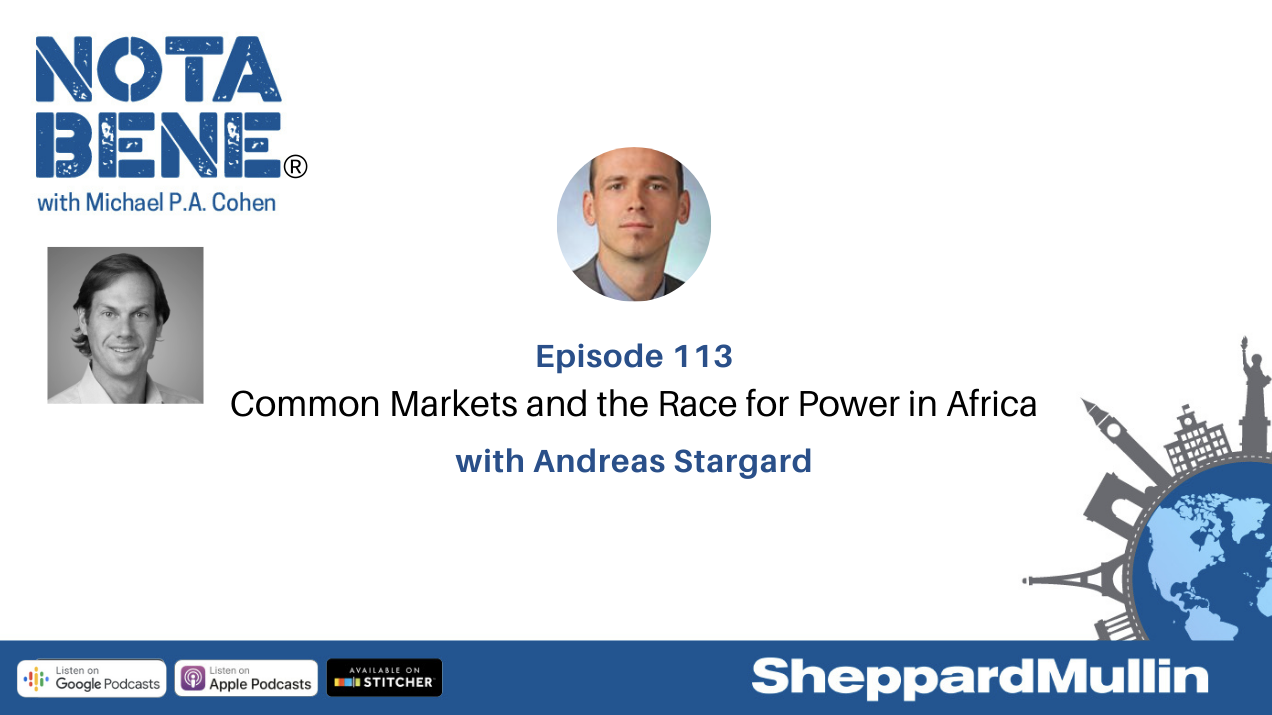
In this podcast episode (available gratis on Apple, Spotify, and Sheppard Mullin‘s web site), Michael P.A. Cohen is joined by Africa competition and markets expert, Andreas Stargard, as he shares his insight to help multinationals navigate the African landscape.

What we discuss in this Podcast episode:

  • What do the Africa markets look like from a multinational business opportunity perspective?
  • Which countries in Africa have established markets? Which ones have growth potential?
  • How and why has China’s investment and influence across Africa intensified over the last couple of decades?
  • What type of digital revolution is taking place in Africa?
  • Is there a huge opportunity for mobile money on the continent?
  • How is free trade shaping up across the African continent? How do the AfCFTA’s goals tie in?
  • What Free Trade cooperation agreements exist among the East, West and South African nations? Will they succeed?
  • Where is Africa leading innovations?
  • How will African wars and corruption impact its ability to grow a multinational marketplace?

Who’s speaking:

Michael Cohen is the creator of the Nota Bene podcast. He began his career as an Assistant Special Prosecutor, investigating and prosecuting organized crime involvement with the failure of local financial institutions in the early 1990s, and has since practiced globally at several top law firms. In 2015, Michael joined Sheppard Mullin’s storied antitrust practice with a goal of putting his 25 years experience to work to complement the firm’s longstanding antitrust litigation group, helping to bridge government antitrust enforcement in Washington, D.C. to the firm’s strengths in Brussels, San Francisco and Los Angeles.

A co-founding senior member of Primerio, a business advisory firm helping companies do business within Africa from a global perspective, Andreas Stargard is legal, strategic, and business advisor to companies and individuals across the globe.  He focuses on antitrust and competition advice, white-collar counseling, contract dispute and negotiation, and resolution of global business disputes, including cartel work, corruption allegations and internal investigations, intellectual property, and distribution matters.  He has written and spoken extensively on these topics and many others.  Andreas also advises clients on corporate compliance programmes that conform to local as well as global government standards, and has handled key strategic merger-notification questions, including evaluation of filing requirements, avoidance strategies, cross-jurisdictional cooperation, and the like.

COMESA Competition Commission: 2019 Regional Sensitization Workshop

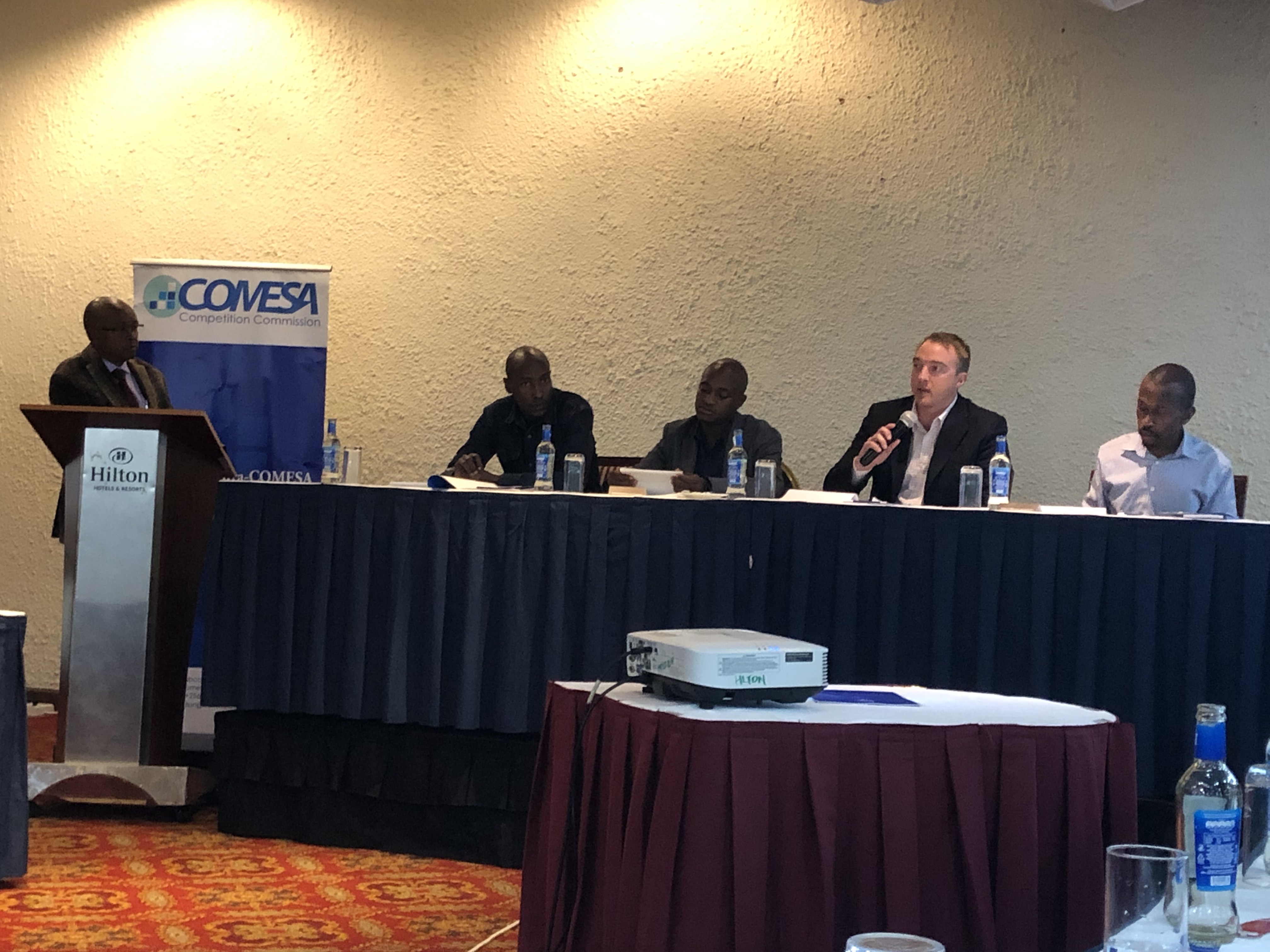
On 9-10 September 2019, the Comesa Competition Commission (CCC) hosted its 6th  “Regional Sensitization Workshop for Business Reporters on Competition Law and Trade Developments within the Common Market” workshop in Nairobi, Kenya as part of its advocacy initiative to promote competition law and enforcement activities across the COMESA region.

AfricanAntitrust, having attended last year’s event, was again invited to attend the event and senior contributor and competition lawyer, Michael-James Currie, attended the event on behalf of AAT and participated in a serious of panel discussions and informal interactive sessions with members of the CCC and Competition Authority of Kenya.

Attendees

The workshop was well attended with a year on year increase in attendees reflecting the importance and popularity of this initiative. The CCC should be congratulated on a well organized and structured workshop.

Patrick Okilangole, Board Chairperson of the CCC, opened the event by highlighting the importance of competitive domestic markets to  “realize the benefits of trade; multilateral and bilateral trade agreements recognize the need to guarantee that restrictive business practices do not hinder the positive effects of free trade”.

Protectionist policies was identified by Okilangole as one of the key impediments to effective regional growth and trade. More specifically, Okilangole highlighted the following consequences of protectionist policies:

“(i)     Ineffective competition policy frameworks. Over the past few years, competition law has been enacted in several Member States of the Common Market. However, in some countries, competition frameworks have included:

(ii)      unjustified and discretionary exemptions, for example, utilities managed by the state in key economic sectors,

(iii)     lack of sufficient investigative powers and tools in the current national and regional legislation to deter anticompetitive behaviour,

(iv)    lack of independency in decision making since competition agencies report to and their decisions may be vetoed by a ministry, and

(v)     significant government intervention in markets such as price controls in potentially competitive markets, controlling essential products, margins, and geographic areas.”

Okilangole reaffirmed the true hallmark of an effective competition law regime, namely that competition law should be focused on protecting the competitive process and not a particular competitor. “The rules are not meant to punish large companies on account of their size or commercial success. The key feature of the competition rules is to create a level playing field for all business players in the market.”

Okilangole’s remarks were echoed by the Chief Executive Officer of the CCC, George Lipimile who emphasised the need to move away from protectionist policies in order to realise the benefits that flow from increased regional trade.

Restrictive business practices, particularly abuse of dominance practices and collusion were identified by Lipimile as being particularly prevalent within COMESA and that increased enforcement activities are required, both by the CCC and regional agencies, to detect and prosecute anti-competitive behaviour.

The workshop was also used as an opportunity to present and engage on the CCC’s Guidelines on Restrictive Business Practices (which were approved in April 2019). The objective of the Guidelines is to provide greater clarity, predictability and transparency in relation to the analytical framework which will be used to evaluate alleged anti-competitive conduct. The Guidelines also provide greater guidance on the process and circumstances in which the CCC may grant exemptions.

The CCC was well represented (so to was the CAK) and senior investigators, analysts and members from the executive team provided useful insights into the enforcement activities of the CCC as well as what lay ahead in the pipeline. Attendees were invited to engage, debate and where appropriate raise concerns regarding the efficacy of competition law enforcement in COMESA. It is this willingness to be open and engage proactively with constructive criticism which is perhaps the hallmark of this CCC initiative and certainly welcomed by the attendees.

As to enforcement updates, the CCC put together comprehensive presentations both in relation to merger control and restrictive business practices more generally. We highlight some of the more noteworthy developments below.

Merger Control

Willard Mwemba, manager of mergers and acquisitions at the CCC, confirmed that over 230 transactions have been notified to the CCC between 2013 and July 2019. Of these, 17 were approved subject to conditions.

From a merger trend perspective, the CCC witnessed an increased shift in merger notifications in traditional sectors, such as agriculture and construction, to emerging sectors such as energy, banking and financial services with the most active member states including Kenya, Zambia, Mauritius, Zimbabwe and Uganda.

As to merger activity in COMESA, Mwemba confirmed that there has been a decrease in merger activity in the first half of 2019, largely as a result of a decrease in global activity and that the value of transactions that occurred within the first half of 2019 dropped from USD 527 billion to USD 319 billion for the same period in 2018. This is also consistent with the 19% decrease in the number of notifiable transactions globally.

The combined total turnover value of all mergers assessed by the CCC to date amounts to over USD 110 billion. Although 2019 figures were not presented, the CCC highlighted that total Foreign Direct Investment in COMESA grew in 2016 from USD 18.6 billion to USD 19.3 billion in 2017 representing nearly half of Africa’s total FDI inflows. Again, highlighting the significance of the COMESA market in the global space.

Enforcement Activities

Although the CCC has had an active merger control regime in place for many years, a number of commentators have raised the lack of robustly investigated and prosecuted abuse of dominance or cartel cases as a key hindrance to effective competition law enforcement in COMESA. While the CCC acknowledges that more should be done in this regard, below is a list of non-merger matters which the CCC has concluded in past three years:

Exemptions

Matter Sector Affected Member States
Assessment of the supply agreement between Eveready East Africa Limited and Supreme Imports Limited Lighting bulbs Burundi, DRC, Ethiopia, Kenya, Malawi, Rwanda, Sudan, Uganda, Zambia
Assessment of the supply agreement between Eveready East Africa Limited and Sayyed Engineers Limited Writing implements East Africa
Assessment of the supply agreement between Eveready East Africa Limited and Chloride Egypt SAE Automotive Batteries Burundi, DRC, Ethiopia, Kenya, Rwanda, Uganda
Assessment of the Distribution Agreement between John Deere (Proprietary) Limited and AFGRI Zimbabwe Private Limited Agriculture Equipment Zimbabwe
Assessment of the Distribution Agreement between the Wirtgen Group and the Motor Engineering Company of Ethiopia Agriculture and Construction Equipment Ethiopia
Assessment of the Distribution Agreement between the Wirtgen Group and UMCL Limited Agriculture and Construction Equipment Comoros, Mauritius, Seychelles
Assessment of the Distribution Agreement between the Wirtgen Group and Sodirex SA, Madagascar Road Construction Machinery Madagascar
Application for the Joint Venture Agreement between Kenya Airways PLC, Koninklijke Luchvaart Maatscahppij NV (KLM) and Societe Air France SA Aviation Kenya
Assessment of the distribution agreements between Unilever Market Development (Pty) Limited and Distributors in the Common Market  FMCGs DRC, Madagascar, Mauritius,

Determination of Anti-Competitive Conduct: Procedure of Commission on its own volition

Matter Sector Affected Member States
Investigation into the Distribution Agreements entered into between Eveready East Africa Limited and Clorox Sub Saharan Africa Bleaching agents East Africa
Investigation into the Distribution Agreements entered into between Parmalat SA (Pty) Limited and its Distributors Milk and dairy products Eswatini, Malawi, Zambia and Zimbabwe
Investigation into the Distribution Agreements between Coca-Cola Beverages Africa and Distributors in the Common Market Non-alcoholic beverages Comoros, Ethiopia, Uganda

False or Misleading Representation 

Matter Sector Affected Member States
Misleading Advertising by Fastjet Airlines Limited Aviation Kenya, Uganda, Zambia, Zimbabwe

The CCC also confirmed that they are currently conducting a number of market screening initiatives across priority sectors. Following the conclusion of these screening exercises, the CCC will decide whether to prosecute any firms engaged in restrictive business practices.

As part of the CCC’s efforts in detecting and investigating anti-competitive behavior, the CCC has increased its collaborative efforts with domestic member agencies and has established the “Restrictive Business Practices Network” to increase the efficacy of cross-border cases.

Currie Panel Discussion

[Michael-James Currie speaking on a panel discussion on “How to improve the quality of reporting on regional integration and competition law related matters” facilitated by Mr Mwangi Gakunga from the Competition Authority of Kenya]

Conclusion

In light of the tripartite negotiations between SADC-EAC-COMESA as well as the negotiation of competition policy in terms of the African Continental Free Trade Agreement, it is imperative that the CCC develops an effective competition enforcement regime which assists and incentivizes free trade across the relevant markets. To do so, the CCC must be equipped with the necessary resources to ensure that it has the capacity to effectively execute its policies.

Despite the significant challenges faced by the CCC, it is encouraging to note that the CCC is taking a more robust approach to detecting and prosecuting anti-competitive practices in the COMESA market and are endeavoring to do so in accordance with international best practices.

If the CCC is able to deliver on the objectives and action items which were discussed in detail at the workshop, then there is every reasons to look forward to a more active CCC in the months to come with interesting cases likely to be brought to the fore.


New Kenya domestic merger thresholds proposed, limiting notifications

The Competition Authority of Kenya (“the CAK”) has issued a new proposal introducing financial thresholds for merger notifications which will exempt firms with less than 1 billion Kenyan Shillings (KSh)(approximately US$10 million) domestic turnover from filing a merger notification with the CAK.

Currently, it is mandatory to notify the CAK of all mergers, irrespective of their value.  According to Stephany Torres of Primerio Limited, this may deter investments in Kenya as the merger is subject to delays and additional transaction costs for the merging parties while the CAK assesses it.

In terms of the new proposal notification of the proposed merger to the CAK is not required where the parties to the merger have a combined annual turnover and/or gross asset value in Kenya, whichever is the higher, of below KSh500 million (about US$5 million or South African R60 million).

Mergers between firms which have a combined annual turnover or gross asset value, whichever is the higher, in Kenya of between KSH 500 million and KSH 1 billion may be considered for exclusion.  In this case, the merging parties will still need to notify the CAK of the proposed merger.  The CAK will then make the decision as to whether to approve the merger or whether the merger requires a more in depth investigation.

It is mandatory to notify a merger where the target firm has an annual revenue or gross asset value of KSh 500 million, and the parties’ combined annual turnover and/or gross asset value, whichever is the higher, meets or exceeds KSh 1 billion.

Notwithstanding the above, where the acquiring firm has an annual revenue or gross asset value, whichever is the higher, of KSH 10 billion, and the merging parties operate in the same market and/or the proposed merger gives rise to vertical integration, then notification to the CAK is required regardless of the value of the target firm.  However, if the proposed merger meets the thresholds for notification in the supra-national Common Market for Eastern and South Africa (“COMESA”), then the CAK will accede to the jurisdiction of the COMESA Competition Commission (“CCC”) and the merging parties would not have to file a merger with the CAK.

COMESA is a regional competition authority having jurisdiction over competition law matters within its nineteen member states, of which Kenya is one.

It is worth mention that Kenya is also a member state of the East African Community (“the EAC”).  As AAT reported recently, the East African Community Competition Authority (“the EACCA”) became operational in April 2018 and its mandate is to investigate competition law matters within its five partner states  (Burundi, Kenya, Rwanda, Tanzania and Uganda).  There is no agreement between the CAK and EACCA similar to the one between the CAK and CCC, and it uncertain how mergers notifiable in both Kenya and the EAC will be dealt with.


EAC antitrust enforcement finally a reality: supra-national body carries out market enquiries

12 years in the making, East African regional competition-law enforcer now operational

By Stephany Torres

The East African Community Competition Authority (“the EACCA”) has finally become operational, after years of starts and spurts, having had its original Commissioners appointed (and half-million US$ budget approved) over 2 years ago.  The EACCA will focus on investigating firms and trade associations suspected of engaging in price fixing in contravention of the EAC Competition Act 2006 (the “EAC Act”), and proceed under its 2010 Competition Regulations.  The East African Community (“EAC”) is a regional intergovernmental organisation of 5 partner states, comprising Burundi, Kenya, Rwanda, Tanzania and Uganda (South Sudan will be covered at a later stage, as it is not fully integrated into the EAC).  The EACCA, therefore has jurisdiction in all the five partner states.  EAC headquarters are located in Arusha, Tanzania.

Now, as of April 2018, the EACCA is said to be undertaking its first market enquiries in selected industries, according to Lilian Mukoronia, the Authority’s deputy registrar.

As we mentioned in the fall of 2017, the success of the EACCA’s activities will also be dependent on the EAC’s member countries’ level of and commitment to domestic competition-law enforcement: “Only two out of the EAC’s six member states — namely Kenya and Tanzania — currently have working antitrust enforcement authorities,” according to competition & antitrust practitioner Andreas Stargard.  “That said — in a fashion rather similar to other supra-national enforcers, such as COMESA’s CCC or the European Commission — the EACCA will oversee competition-law matters that have a regional dimension, implying that there must be economic consequences reaching well beyond domestic borders before the regional body steps in to investigate,” he says.

There is thus no technical need for all of its partner states to have enacted competition laws and created institutions to enable the EACCA to implement its regional mandate.  Moreover, each member state gets to nominate one EACCA commissioner, the current panel of whom were approved by the group’s Council of Ministers and sworn into office in 2016.

The EAC Act, which came into force in December 2014, mandates the EACCA to promote and protect fair competition in the EAC and to provide for consumer welfare.  The EAC Act prohibits, amongst other things, anti-competitive trade practices and abuse of market dominance.  It provides for notification of mergers and acquisitions, notification of subsidies granted by partner states, and regulates public procurement.

EAC poised to pressure remaining members into antitrust enforcement

By AAT staff

On the heels of the COMESA Competition Commission launching its first-ever “failure-to-file” merger investigation, the East African Community (EAC) Competition Authority is poised to dip its toes into the waters of being operational — but it will require its member states to have active enforcement programmes of their own, says the agency head.

There are hurdles to the regional body of the African Great Lakes, as Andreas Stargard, a competition lawyer with a focus on Africa, points out: only two out of the EAC’s six member states — namely Kenya and Tanzania — currently have working antitrust enforcement authorities.  Having only one-third of a supra-national organisation’s members being versed in competition enforcement is a hindrance to the EAC Authority’s competence and pragmatic effectiveness, said chairman of the Board of Commissioners, Sam Watasa at the agency’s 2nd meeting at the organisation’s Arusha headquarters.  He is quoted as saying:

“Kenya and Tanzania have operational National Competition Agencies, Rwanda and Burundi had enacted laws but are yet to be operationalised. In Uganda there was a draft Competition Bill.”

Adverse effects of price-fixing: East Africa recognises drawbacks

It is not really news, but worth mentioning as it is literally happening simultaneously: As the most developed antitrust enforcement jurisdiction in Africa, South Africa, charges ahead with heavy-handed actions, such as denying alleged currency manipulators “access to file” in the investigative process, or accusing two livestock-feed processors of colluding in the sales and pricing of animal feed ‘peel pulp’, the East African nations lag behind.

What is news, however, is that they have begun to recognise the shortcoming and the adverse effects of collusion and other anti-competitive conduct on their economies: Andreas Stargard, an antitrust lawyer with Primerio Ltd., notes that the head of the East African Community (EAC), Mr. Liberat Mfumukeko, recently addressed ongoing antitrust violations in the EAC: “The Secretary denounced anti-competitive practices (cartels and the like) as serious obstacles to obtaining foreign direct investment in the region.  Moreover, he recognised the violations as ‘impeding effective competition’ and thereby directly hurting African consumers,” says Stargard.

Mr Mfumukeko is quoted as stating: “The EAC markets pose challenges to investors and consumers including the charging of high prices arising from anti-competitive practices such as cartels. These practices impede effective competition in the markets.”

Within the EAC, Stargard notes, the primary jurisdictions with operational antitrust regimes are Kenya and Tanzania, with others such as Uganda lagging behind even farther, having no competition legislation or only having draft bills under review.  Most other nations lag behind, although, as Mr. Stargard observes, many are part of the broader COMESA competition regime.  “The COMESA rules, however, have thus far been enforced with a primary objective of merger regulation,” he says, “effectively failing to police any collusive conduct in the close to two dozen member states at all, despite the explicit prohibition thereof in the COMESA regulations.”