
Restrictive Practices
The Competition Authority of Kenya (CAK) recently announced that it had entered into a settlement agreement with local beer producer Kenya Breweries Limited (KBL), a subsidiary of UK Diageo’s East African Breweries Ltd (EABL).
The settlement follows from an investigation by the CAK in terms of section 21 of the Competition Act (12 of 2010) wherein the CAK had found that KBL’s distribution agreements with its downstream distributors – which provides for inter alia, territorial exclusivity – is anti-competitive and may lead to the lessening of intra-brand competition.
The settlement was reached in terms of section 38 of the Competition Act and requires that KBL establish an internal compliance policy and review and amend the problematic and restrictive clauses in its agreements with distributors.
Michael-James Currie, an African focused competition lawyer, says that the decision is particularly important for companies which use third parties to execute their distribution strategies as the majority of distribution agreements contain restrictions of some kind (often transported from international distribution agreements) which will need to be assessed against the standards of the Competition Act in Kenya as the CAK is actively focusing on these types of restrictive verticals arrangements.
Abuse of Dominance
Styles Industries (Darling Kenya)
Braids supplier, Styles Industries Ltd (Styles) has been found guilty by the CAK for abuse of dominance in contravention of Section 24 of the Competition Act.
The CAK launched an investigation into Styles on the basis of a complaint received by a competitor in the market, Solpia Kenya, claiming that Styles had abused its dominance by imposing unfair selling prices and conditions on suppliers who sell its products.
The CAK’s investigation found that Styles had abused its dominance by imposing unfair trading conditions on its downstream suppliers which it sought to enforce through threatening its downstream suppliers with account closure, removal of discounts and refusal to supply products.
The CAK is currently in negotiations with the parties and have indicated that its finding could result in Styles paying the complainant an amount in damages and/or a fine Sh10 million. In terms of Section 54(3) of the Competition Act, the relevant individuals within Styles could further face imprisonment for a period of up to 5 years.
Kaluworks
The CAK dismissed an abuse of dominance case against cookware manufacturer, Kaluworks Limited (Kaluworks).
The case emanated from a complaint by rival company, Sufuria World (Sufuria) in which it was alleged that Kaluworks had refused to sell to them certain aluminum circles which it required for purposes of manufacturing its aluminum cooking ports. This, Sufuria claimed, amounted to an abuse of dominance in terms of section 23 and 24 of the Competition Act.
The CAK, however, found that the conduct did not amount to abuse of dominance under the Competition Act as Sufuria had other options available to it in that it had the ability to replicate the technologies used by Kaluworks to produce the aluminum circles (as other manufacturers have done) or it could increase its order volumes in order to make it economically feasible for Kaluworks to supply it with the aluminum circles.
This finding was based on the representations made by Kaluworks that:
- it primarily produces aluminum circles for in-house production for a variety of its own cookware products intended for local and export markets; and
- it could only manufacture the aluminum circles to third parties where such third parties placed an order which met certain minimum quantities that would guarantee optimal scale of production
In supporting its findings, the CAK stated that in assessing the conduct of a dominant firm and whether it amounts to a ‘refusal to deal’, “is necessary to prove indispensability of the facility to the operation of the complainant or other third parties as arbitrary intervention may hurt innovation.”
Market Inquiries
Transport Inquiry
The CAK has recently announced that it has initiated a ‘regional study’ in the Shipping, Trucking and Haulage industry in Kenya, Uganda, Rwanda and Burundi.
According to the announcement, the objective of the inquiry is to identify and remedy features of the market and trade practices which are anti-competitive and which impedes the national and intra-regional trade which in terms slows the potential growth of the manufacturing sector in Kenya.
Leasing Sector
The CAK has further announced a market study into the leasing sector which it will be conducting in conjunction with the Financial Sector Deepening (FSD) Kenya.
The objective of the market study is to assess the level of competition in the sector and to identify areas of concern in order to enhance competition in the market by facilitating SME entrants into the market.
John Oxenham, director at African antitrust advisory firm Primerio, says that market inquiries can be used very effectively, however, they are resource intensive and in order to achieve there objectives must be concluded expeditiously. The CAK should be cognizant of the challenges and experiences of the South African Competition Commission (SACC) where the market inquiries are not being concluded timeously.
[The editor wishes to thank Charl van der Merwe for his contribution to this update]
 The event’s tag line is “Benefits to Business.” Especially now, with the African continent sporting over 400 companies with over $500m in annual revenues, the topic of antitrust regulation in Africa is more pertinent than ever, according to the COMESA Competition Commission (CCC).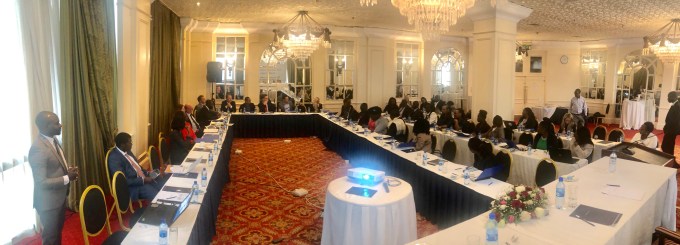




 Media
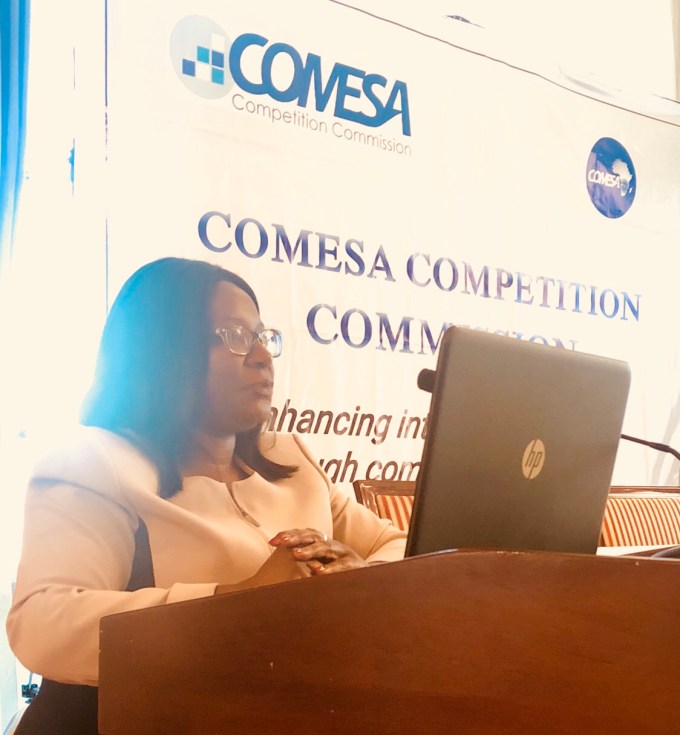
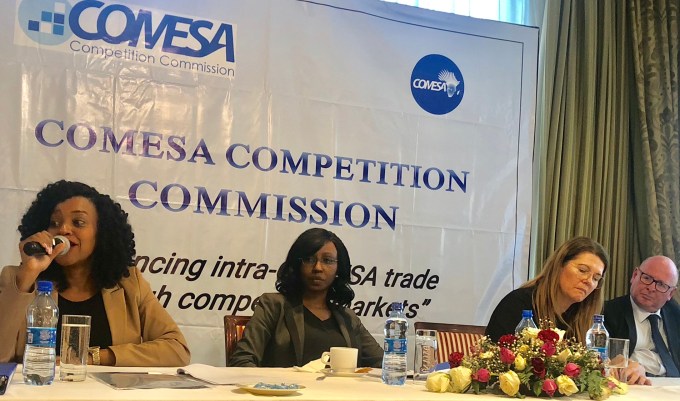
Media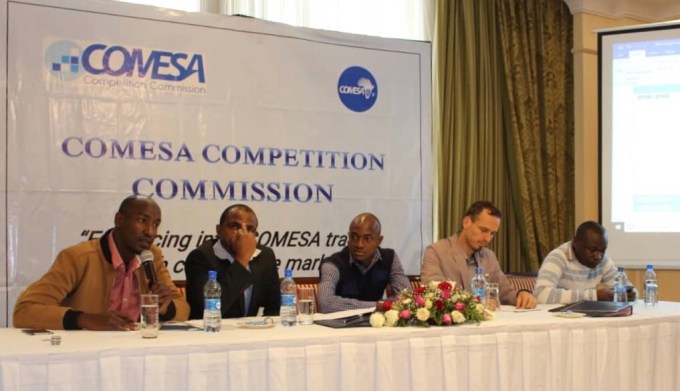 Speakers include a crème de la crème of East African government antitrust enforcement, including the CCC’s own Willard Mwemba (head of M&A), the CCC’s Director Dr. George Lipimile, and the Director and CEO of the Competition Authority of Kenya, Francis Wang’ombe Kariuki. Topics will include news on the rather well-developed area of of mergerenforcement, regional integration & competition policy, as well as the concept of antitrust enforcement by the CCC as to restrictive business practices, an area that has been thus far
 The second event, also held in Nairobi, will shift its focus both in terms of attendees and messaging: It is the CCC’s first-ever competition-law sensitization workshop for the Business Community, to take place on Wednesday. It is, arguably, even more topical than the former, given that the target audience of this workshop are the corporate actors at whom the competition legislation is aimed — invited are not only practicing attorneys, but also Managing Directors, CEOs, company secretaries, and board members of corporations. It is this audience that, in essence, conducts the type of Mergers & Acquisitions and (in some instances) restrictive, anti-competitive business conduct that falls under the jurisdiction of Messrs. Lipimile, Mwemba, and Kariuki as well as their other domestic African counterparts in the region.
 As Mr. Mwemba rightly pointed out, most transactions “do not raise competition concerns” and those that do can be and often are resolved via constructive discussions and, in some cases, undertakings by the affected companies. In addition, the CCC follows international best practices such as engaging in pre-merger notification talks with the parties, as well as follow-ups with stakeholders in the affected jurisdictions.
 With increased awareness of competition law in Kenya, more entities are applying to the CAK for exemptions primarily to ensure that they are not found to be engaging in anticompetitive conduct, where the penalty can be up to 10% of the turnover of the entity.
 Now, as of April 2018, the EACCA is said to be undertaking its first
  The EAC Act, which came into force in December 2014, mandates the EACCA to promote and protect fair competition in the EAC and to provide for consumer welfare. The EAC Act prohibits, amongst other things, anti-competitive trade practices and abuse of market dominance. It provides for notification of
  Section 21 of the Kenyan Competition Act 12 of 2010 (the Act) prohibits firms or associations from entering into any agreement that “involves a practice of minimum resale price maintenance” (‘RPM’).
 Kenyan competition lawyer
  Today’s news, reported in local Ugandan media, is that AkzoNobel’s Director for Decorative Paints in Sub-Saharan Africa, Johann Smidt, made strong comments at the “relaunch” of Sadolin Uganda, claiming that Akzo’s reassignment of the Sadolin brand name & distribution network to Crown Paints East Africa “falls outside the CCC’s purview.” This sentiment was echoed by Crown’s CEO, Rakesh Rao, saying that “[w]e do not have a merger going on; we are a fully independent plant, so COMESA does not come into the picture at all.”
 There are hurdles to the regional body of the African Great Lakes, as Andreas Stargard, a competition lawyer with a focus on Africa, points out: only two out of the EAC’s six member states — namely Kenya and Tanzania — currently have working antitrust enforcement authorities. Having only one-third of a supra-national organisation’s members being versed in competition enforcement is a hindrance to the EAC Authority’s competence and pragmatic effectiveness, said chairman of the Board of Commissioners, Sam Watasa at the agency’s 2nd meeting at the organisation’s Arusha headquarters. He is quoted as saying:
 African Antitrust & Competition Law