Media and Digital Platforms Market Inquiry Final Report Launch
By Courtney Kaplan
The South African Competition Commission’s Final Report of its Media and Digital Platforms Market Inquiry (“MDPMI Report” or simply “Report”) found that online search is dominated by Google, with news queries making up at least 5-10% of user searches, driving engagement which generates revenue through commercial enquiries. Google uses content from media sites without reimbursement, where artificial intelligence (“AI”) assists in the reduction of referral traffic, and Google’s algorithm prefers foreign media over local media.
Google and YouTube have agreed to pay a fine of approx. $42 million (R688 million) to local media producers following the conclusion of the MDPMI, as they were found to have profited from local news content with no adequate reciprocal compensation. This is done through a reproduction or summary of South African news, resulting in a direct loss of income for South African news publishers.
The payout includes content licensing, innovation grants, and capacity-building initiatives which will be used for newsroom innovation, payments to the Digital News Transformation Fund and financing for language training for the Media Development and Diversity Agency (“MDDA”).
The Final Report, published in November 2025, comes after 24 months of gathering evidence, holding in-camera and public hearings, expert evidence, discussions with industry stakeholders and an interim report procedure that allowed for opinions from media publishers, broadcasters, the platforms and academia.
The Commission believes that certain online operators restricted fair competition amongst their competitors, which practices have the potential of going against the purpose of the Competition Act 89 of 1998 (the “Competition Act”) which entails promoting and maintaining competition in South Africa.
Reduced audience, inaccurate reporting and social media
The reason for this agreement follows findings that Google takes news content from media sites without providing payment, with publishers receiving less traffic due to AI-summaries. Furthermore, the Competition Commission revealed that Google’s algorithm preferences foreign media sources over local and vernacular outlets.
Daily newspapers’ print sales have dropped by 66% between 2018 and 2023, with the overall decline being 55% when including weekend editions. Print advertising income for three major publishers fell by 38% in 2018, with broadcasters experiencing a 47% decrease since 2016.
Social media is dominated by platforms such as Meta, YouTube, X and TikTok. These platforms upload content generated and/or published by users in order to promote engagement and advertising, which results in most people viewing news through these respective social media platforms. The Commission stated that when platforms such as X and Meta prioritise engagement over providing news links, misinformation is increased as engagement is preferred over reliable news. A limited number of media platforms are recognized for monetisation in relation to content generation and engagement metrics, and many of these monetisation options are not locally available to South Africans.
Advertising revenues
The Report provides that Google holds the largest position in advertising technology by controlling the advertising servers that publishers use to handle and sell online advertising. This is accomplished by linking publishers to Google’s advertising exchange and by self-preferencing Google’s own systems through access to external bid data.
Google has committed to providing South African advertising companies with extended support Google provides in the EU. This includes greater insight into advertising expenses and remuneration to publishers. Google has also agreed to stop favouring its own platforms over others.
Artificial intelligence
AI corporations have scraped news websites to develop AI models which are used to answer news queries. AI companies now provide South African media with options to opt-out, which will assist in creating and supporting a paid market for news content. AI firms will now offer the same content controls and opt-out options as in the EU, as well as training biannually to encourage the growth of a fair and functioning market for licensed content. Media platforms can choose whether to subscribe to AI tools and/or assistants, but this is often too large an expense for smaller media companies.
Google plans to introduce new user mechanisms that favour local news sources, offer technical support to developing website operations, sharing advanced audience information and statistics, and create an African News Innovation Forum.
Government recommendations
The Commission’s report suggests that the Department of Trade, Industry and Competition (“DTIC”) provide a block exemption to allow collective bargaining by South African media instead of platform monetisation terms, AI content licensing, advertising technology pricing, and joint advertising sales for community media.
The DTIC was advised to create Regulations that would govern content-moderation in terms of the Electronic Communications and Transactions Act (the “ECTA”). This would involve the introduction of self-regulation frameworks for social media platforms and creating an independent social media ombud to oversee public complaints and moderation practices.
The Report further recommends that the Department of Communications and Digital Technologies (“DCDT”) should create regulations for content moderation of social media in South Africa by utilising the Electronic Communications and Transactions Act (“ECTA”) to provide self-regulation by industry bodies in the social media industry to quality for limited liability and for an Ombudsman regulating the moderation of social media content.
Major milestone
James Hodge, the Competition Commission’s MDPMI chair stated that the report is a landmark move in restoring a balance between digital markets, guarding fair competition, and rebuilding the long-term sustainability of South Africa’s news media.
 Media
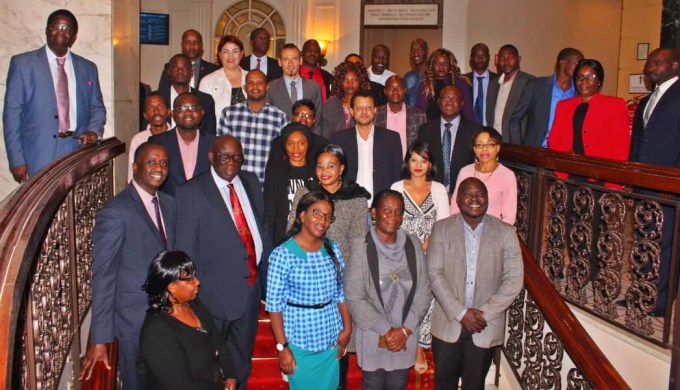
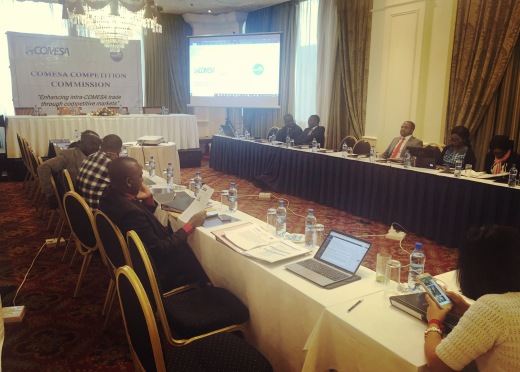
Media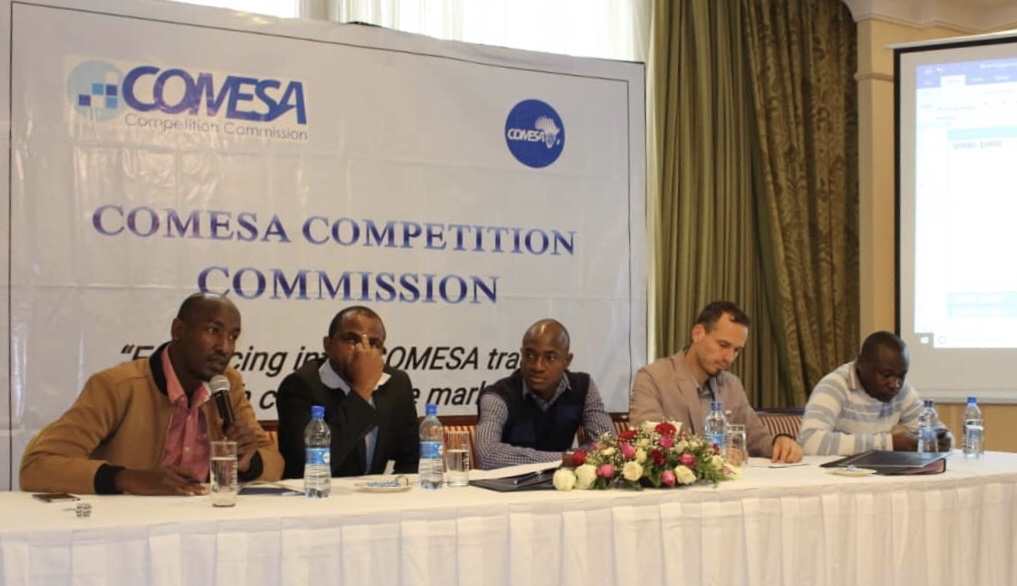 Speakers include a crème de la crème of East African government antitrust enforcement, including the CCC’s own Willard Mwemba (head of M&A), the CCC’s Director Dr. George Lipimile, and the Director and CEO of the Competition Authority of Kenya, Francis Wang’ombe Kariuki. Topics will include news on the rather well-developed area of of mergerenforcement, regional integration & competition policy, as well as the concept of antitrust enforcement by the CCC as to restrictive business practices, an area that has been thus far
 The second event, also held in Nairobi, will shift its focus both in terms of attendees and messaging: It is the CCC’s first-ever competition-law sensitization workshop for the Business Community, to take place on Wednesday. It is, arguably, even more topical than the former, given that the target audience of this workshop are the corporate actors at whom the competition legislation is aimed — invited are not only practicing attorneys, but also Managing Directors, CEOs, company secretaries, and board members of corporations. It is this audience that, in essence, conducts the type of Mergers & Acquisitions and (in some instances) restrictive, anti-competitive business conduct that falls under the jurisdiction of Messrs. Lipimile, Mwemba, and Kariuki as well as their other domestic African counterparts in the region.
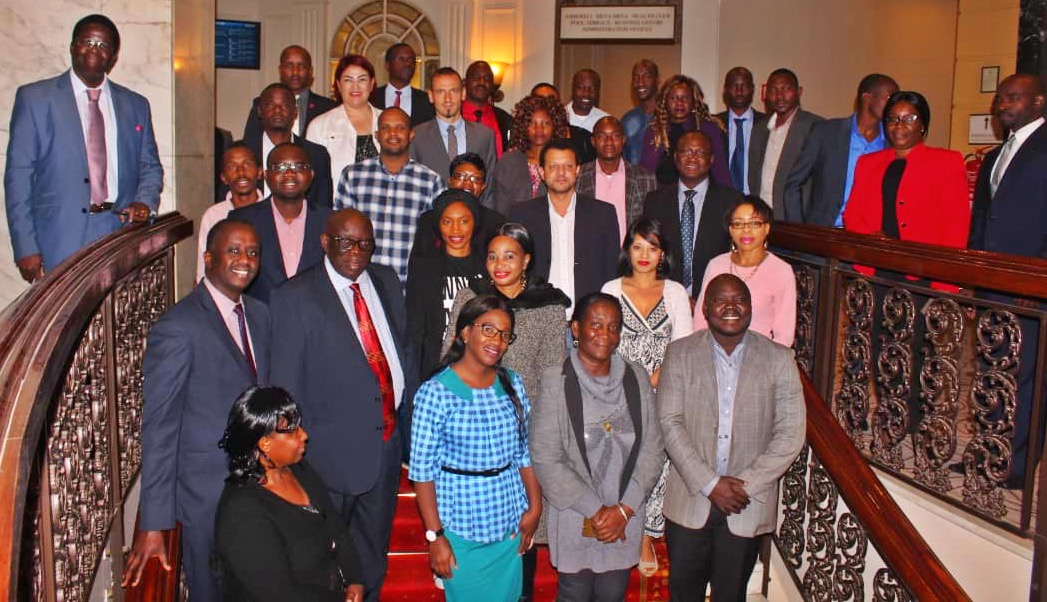
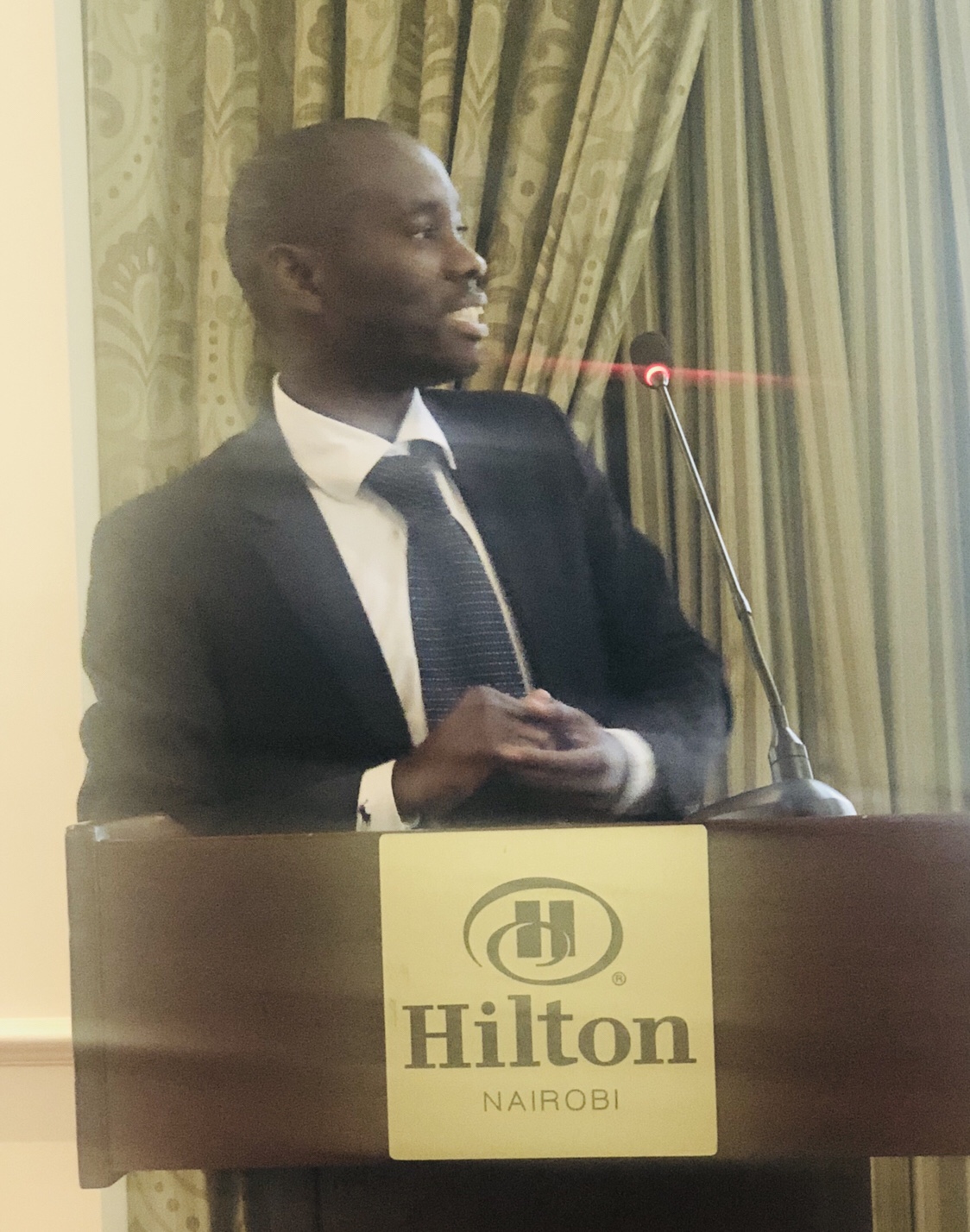 As Mr. Mwemba rightly pointed out, most transactions “do not raise competition concerns” and those that do can be and often are resolved via constructive discussions and, in some cases, undertakings by the affected companies. In addition, the CCC follows international best practices such as engaging in pre-merger notification talks with the parties, as well as follow-ups with stakeholders in the affected jurisdictions.
 Attorneys from
  In terms of the AMSA settlement agreement, AMSA admitted to contravening the cartel provisions contained in the Competition Act and agreed to pay a R1.5 billion (in instalments of no less than R300 million per annum for five years) administrative penalty. In addition to the administrative penalty, AMSA also agreed to invest approximately R4,6 Million into the South African economy for the next 5 years (provided the prevailing economic conditions render such investment feasible) by way of CAPEX obligations.
 While settlement negotiations are inherently flexible, it is important that agencies ensure an objective and a transparent methodology in the manner in which they approach the quantification of a settlement agreement. This has certainty been strived for by the Competition Commission when it elected to publish Guidelines on the Determination of the Calculation of Administrative Penalties (Guidelines). The objectives of the Guidelines, may however, be undermined in light of the broader behavioural and public interest related conditions imposed in recent cases.



 African Antitrust & Competition Law