Merger Control in Africa: Hot Topic at the 2016 ABA Spring Meeting

Key competition-law conference features dedicated panel discussion on African antitrust developments

By Michael-James Currie

The 54th annual American Bar Association Antitrust Spring Meeting was held in Washington, D.C., during the second week of April 2016 and the AAT editors were there to ensure that we provide our readers with an update on the latest developments in relation to African antitrust issues, discussed during a panel held last Friday.

ABA Africa Panelists

Given that mergers hit a global all-time high last year with the total value of transactions amounting to over USD 4.6 trillion, merger control is certainly at the forefront of many antitrust practitioners. The interest in mergers and acquisitions has perhaps gained even further attention in light of the announcement this week that the USD160 billion Pfizer/Allergan global mega-deal has been officially abandoned, despite the transaction having already been filed before all the relevant competition agencies around the world. While the Pfizer/Allergan deal was called off as a result of new tax laws and therefore not as a result of antitrust issues directly, the deal did put multinational mega-deals firmly in the spotlight.

The Pfizer/Allergan deal is not the only mega-deal that faced significant government opposition. It was announced this week that Halliburton’s takeover of Baker Hughes, in a deal valued at USD 25 billion, is going to be strongly opposed by the U.S. DOJ.

It is, however, not only the U.S. Government that is having a significant impact on multinational deals, as evidenced by the Anbang Insurance and Starwood Hotels & Resorts deal, valued at USD 14 billion, which has also been abandoned after mounting pressure by the Chinese government.

From an African perspective, the South African Competition Commission just last week extended its investigation in the USD 104 billion SABMiller and Anheuser-Busch InBev merger. It is widely suspected that the request for the extension is due to intervention by the Minister of Economic Development, in relation to public interest grounds. Although there is no suggestion at this stage that Minister Patel is opposing the deal, the proposed intervention does highlight bring into sharp focus the fact that multinational mega-deals face a number of hurdles in getting the deal done.

‘Getting multinational deals through’ is a hot topic at the moment amongst antitrust practitioners and is and the ABA thought it beneficial to have a panel discussion dedicated purely to merger control issues across African jurisdictions. In particular, the panel addressed some of the key issues which merging parties need to consider, including inter alia issues relating to harmonisation across agencies, the role of public interest considerations, prior implementation and the need for upfront substantive economic assessments.

The panel consisted of a varied mix of panellists from both private practice and government, and included Pr1merio director John Oxenham (he is also a founding partner at South African based law firm Nortons Inc.), economist and former Commissioner of the COMESA Competition Commission (COMESA CC) Rajeev Hasnah (Rajeev was also a former commissioner of the Mauritius Competition Commission and is an economist for Pr1merio), manager of the South African Competition Commission office, Wendy Ndlovu, and Kenyan based external counsel Anne Kiunuhe (Anne practices at the law firm Anjarwalla & Khanna).

The panellists were tasked with addressing a variety of topics: we summarise below some of the key issues which the panellists highlighted, which merging parties, practitioners and antitrust agencies themselves (amongst whom Tembikosi Bonakele, the South African Competition Commissioner was present in the panel audience) should be cognisant of in relation to merger control in Africa.
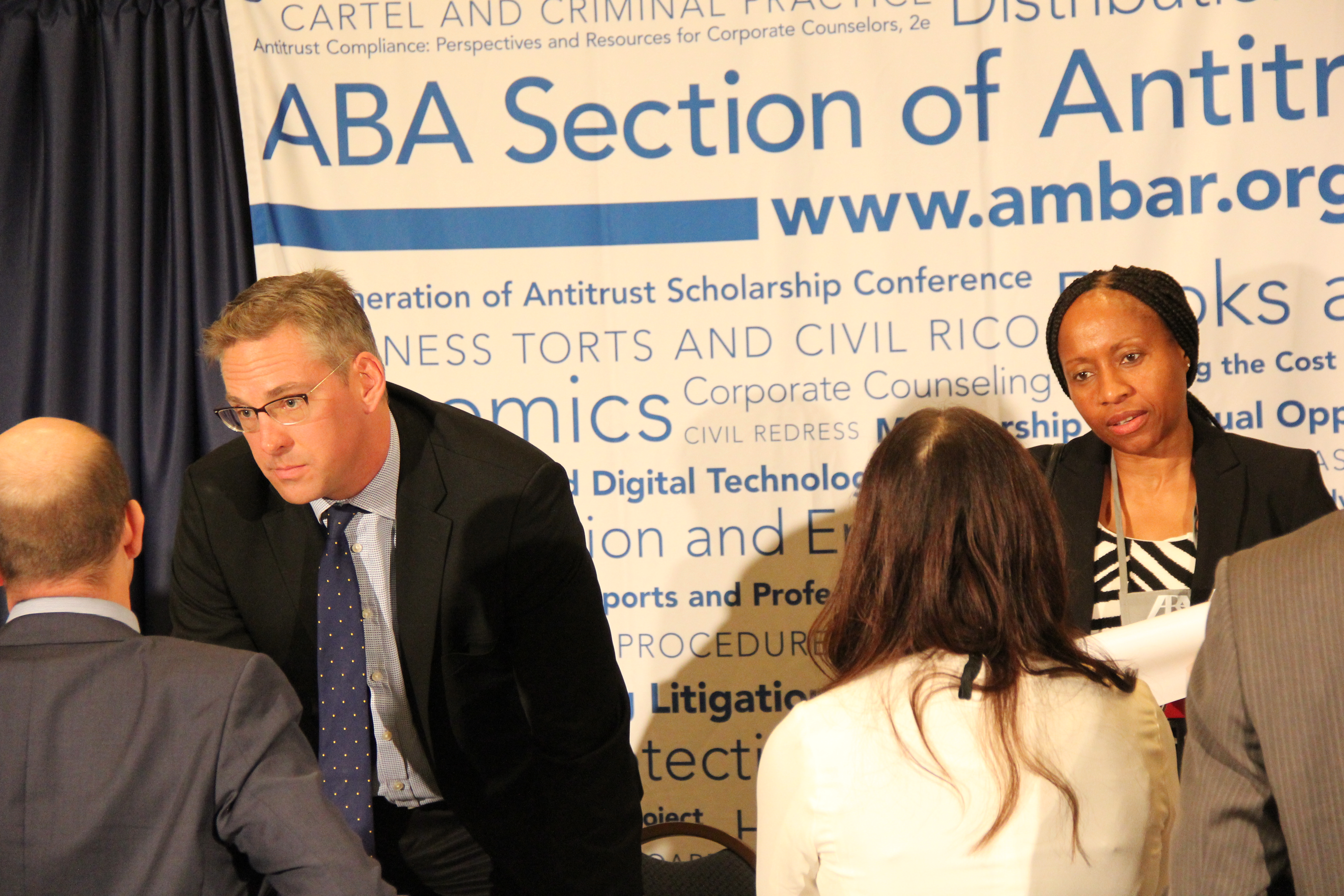
John Oxenham and Wendy
John Oxenham and Wendy Ndlovu at ABA Spring Meeting 2016 in Washington, D.C.

John Oxenham

John pointed out that from a South African perspective, mergers undergo a robust evaluation by the Competition Authorities and that although the investigation of most large mergers is completed within 60-70 days, the fact that the Commission may request the Competition Tribunal for an extension of up to 15 business days at a time, may result in the investigation of certain mergers taking considerably longer. The risk of a merger being delayed is increased significantly due to the level of third party interventionism, particularly ministerial intervention on public interest grounds.

John advised that merging parties should consider the impact that a particular merger will have on the public-interest grounds upfront to avoid delays in the investigation period as a result of further requests for information from the Commission, or may even amount to an incomplete filing.

In respect of substantive economic assessments, John pointed out that a number of jurisdictions, including South Africa, Namibia, Zambia and to a lesser extent Botswana, requires a substantive upfront economic assessment. In this regard the South African Competition Commission is perhaps the most robust in its economic evaluation of a merger in light of the resources dedicated to its own in-house economic department as well as utilising external experts when necessary. John also highlighted the fact that the South African Competition Authorities rely on oral testimony and expert witnesses are often subjected to substantial and lengthy examination and cross examination before the Competition Tribunal.

On the topic of gun-jumping or prior implementation, John mentioned that the following jurisdictions are examples of countries which do not require notification prior to implementing the transaction – in other words, they are not suspensory:

  1. Malawi
  2. Senegal
  3. Mauritius

Whereas the following countries do require notification prior to implementation (suspensory merger control jurisdictions):

  1. South Africa
  2. Swaziland
  3. Zambia
  4. Botswana

On harmonisation, John confirmed that in relation to public interest considerations in merger control, the South African competition authorities play a leading role on the African continent and pointed out that in addition to Kenya and Tanzania, Namibia also considers public interest considerations and that there is a substantial amount of collaboration and information sharing between the South African and Namibian competition authorities, as was the case in the Walmart/Massmart deal.

Despite the information sharing between agencies, John confirmed that there are rules in place to protect confidential and legally privileged information and that the South African competition authorities are cognisant and respectful of these provisions.

Rajeev Hasnah

Rajeev Hasnah, Pr1merio economist and former COMESA Competition Commissioner
Rajeev Hasnah, Pr1merio economist and former COMESA Competition Commissioner, and Anne Kiunuhe from Kenya

Rajeev noted the significant progress which the COMESA CC has made in relation to merger control by publishing financial thresholds for mandatorily notifiable transactions and specified filing fees, as well as publishing guidelines which clarify when a merger will have a sufficient regional dimension to fall within the COMESA CC’s jurisdiction.

On the topic of harmonisation, Rajeev discussed the challenges due to a lack of harmonisation between COMESA and its member states and noted that COMESA does not have exclusive jurisdiction in the cases which do fall within its jurisdiction. Parties, therefore, may find themselves being required to file a merger both before the COMESA CC as well as before the respective national authorities. A further challenge facing the COMESA CC is that there are 19 member states and consequently, the relevant geographic market is significant. Accordingly, often the national authorities are best placed to evaluate a merger and will therefore defer the evaluation of the merger to the relevant national authority.

On the role of economic assessments, Rajeev stated that an economic assessment underlies any merger evaluation and that both the Mauritius Competition Commission and the COMESA Competition Commission conducts a comprehensive economic assessment of a merger.

Wendy Ndlovu

When asked on what role public interest considerations play in merger control in terms of the South African competition regime, Wendy indicated that the framework of the Competition Act specifically requires the competition authorities to consider the impact that a merger may have on the four specified public interest provisions contained in the Act. Wendy confirmed that an evaluation of public interest considerations may both justify a merger despite the merger likely being likely to cause a substantial lessening or prevention of competition in the market, alternatively, public interest considerations may lead to a prohibition or the imposition of conditions on a merger which raises no competition law concerns and may in fact be pro-competitive.

Wendy recognised that there is a need, however, for greater certainty in respect to the manner in which the South African authorities evaluate public interest considerations and pointed out that the Competition Commission is likely to finalise and publish its guidelines on the public interest assessment in an effort to promote greater certainty.

On prior the issue of prior implementation, Wendy pointed out that merging parties need to be mindful of the consequences of gun-jumping and noted that the South African Competition Tribunal has imposed administrative penalties, as in the Netcare case, on parties for failing to notify a mandatorily notifiable transaction.

Anne Kiunuhe

Anne discussed the Competition Authority of Kenya’s (CAK) willingness to focus not only on merger control but has also identified the CAK’s increasing tendency to investigate and prosecute firms engaged in restrictive practices (as demonstrated by the recent dawn raids conducted by the CAK in the fertiliser industry). Despite the CAK’s growing confidence, Anne pointed out that in respect of merger control, the CAK is open to and in fact often relies on precedent from foreign jurisdictions when evaluating a merger. In particular, Anne noted that public interest grounds are specifically considered during the merger review procedure and that in this respect, the CAK largely takes the lead from the South African competition authorities.

From a practical perspective, Anne mentioned that the CAK usually requests a meeting with the merging parties soon after a transaction has been notified, and that usually representatives from the merging parties, along with local external legal counsel, should be present. The CAK prefers that the representatives present should be the best placed to answer or address the CAK’s queries. This often necessitates representatives from the parent company being present as opposed to representatives from the subsidiary entities only.

The direct contact between the CAK and the merging parties is quite different from the manner in which the COMESA CC evaluates mergers where the consideration of a merger is done solely on the papers and any communication between the COMESA CC and the merging parties is done through the merging parties’ local external counsel.

As to legislative developments, Anne pointed out that the merger regulations in Kenya now provide that for purposes of establishing a “change of control”, it is sufficient if the acquiring firm is able to materially influence the commercial decisions of the target firm. Accordingly, the acquisition of a minority shareholding for instance may constitute a change of control if the holders of such shares may for instance exercise veto rights.

On COMESA, Anne mentioned that the COMESA CC permits merging parties to seek a comfort letter when unsure as to whether a merger requires filing and that the use of comfort letters has been rather prevalent.

Conclusion

The role of public interest considerations in merger control was a dominant focus point throughout the panel discussion due to this unique aspect in a growing number of African jurisdictions merger control provisions.

Please click on the following link to access a an article on the role of public  interest considerations in merger control in South Africa, which addresses in particular, the impact of ministerial intervention in merger proceedings and the concomitant impact which such intervention has on the costs, timing and certainty of merger proceedings.

Coca-Cola/SAB Miller merger prompts onerous conditions

Coca-Cola/SAB Miller merger prompts onerous conditions

Written by Jenna Foley, AAT contributor

The agreement between The Coca-Cola Company, SABMiller and Gutsche Family Investments to combine their soft-drink bottling operations in Southern and East Africa has been met with the proposal of onerous merger conditions. The new bottling company, Coca-Cola Beverages Africa, will bottle 40% of Africa’s Coca-Cola beverages with operations in 12 countries. Minister of Economic Development, Ebrahim Patel has, after considering the public interest issues in mergers, expressed concern on the effect of the merger on small businesses, supplier industries, employment and investment.

Section 12A(3) of the Competition Act (89 of 1998) prescribes that, “when determining whether a merger can or cannot be justified on public interest grounds, the Competition Commission or the Competition Tribunal must consider the effect that the merger will have on –

  • a particular industrial sector or region;
  • employment;
  • the ability of small businesses, or firms controlled or owned by historically disadvantaged persons, to become competitive; and
  • the ability of national industries to compete in international markets.”

The Competition Commission (the “Commission”), on the advice of Minister Ebrahim Patel, has recommended that the merger only be approved subject to a list of onerous conditions. One of these conditions stipulate that the merging parties invest R650m to support the development of black-owned retailers, small suppliers and developing farmers. Taking into account the above-mentioned section of the Competition Act it is yet to be determined how the R650m investment was calculated or the specific justification of such an onerous condition. In addition, other recommended conditions include requirements on employment and black economic empowerment (BEE) as well as allowing retailers who are given Coca-Cola branded fridges free of charge to stock the fridges with products made by rival companies.

The Commission’s concerns have arisen despite the merging parties’ consideration for public interest issues. The proposed merger, according to the Commission, is said to have a negative impact on employment and BEE. This has been expressed even though the merging parties have undertaken not to retrench employees as a result of the merger, except for 250 identified employees. In addition the parties have made a commitment to increasing their BEE shareholding. The Commission has further expressed concern about the negative effect the merger will have on suppliers, namely the weakening of their negotiating position, despite the merging parties’ undertaking to buy certain products (tin cans, glass and plastic bottles, packaging crates and sugar) from local suppliers.

In light of the above, the Commission’s recommended conditions to the Competition Tribunal, on the advice of Patel, seem far-reaching, leaving the merging parties with a heavy burden of complying with such onerous conditions.  The recommendation to apply these burdensome conditions has caused delays and the proposed merger has not yet been finalised.

Raising merger notification thresholds

Namibia fine-tunes its M&A review

By AAT guest author Anne Brigot-Laperrousaz

Under the Namibian Competition Act (the “Act”), which came into law in April 2003, the term “merger” covers all three common types of M&A activity, as well as joint ventures; above certain thresholds, a merger becomes compulsorily notifiable.  On December 21, 2015, the Namibian Ministry of Industrialisation, Trade and SME Development, in accordance with the powers conferred upon it under s43(1) and (2) of the Act, published a notice containing remarkable changes to the thresholds triggering the application of the merger regulations under the Act and thereby a compulsory notification.

Former thresholds

The previously applicable government notice on the determination of those thresholds, dated December 24, 2012, had established the following triggering values:

  • The combined assets, or combined annual turnover in, into or from Namibia of the acquiring and target undertakings exceed N$20 million (US$1.578 million, based on the Bank of Namibia 2015 average exchange rate)

or

  • The annual turnover of one of the undertaking plus the assets of the other undertaking exceed N$20 million

or

  • The asset value or the annual turnover in, into or from Namibia of the target undertaking exceeds N$10 million (US$ 789,000)

Revised thresholds

John Oxenham, an Africa practitioner with advisory firm Pr1merio, notes that  “[t]he December 2015 Government notice raised those thresholds by 50%, i.e. N$30 million and N$15 million respectively (US$ 2.367 and 1.1835 million). Furthermore, the revised notice sets out a two-tier calculation of the triggering thresholds, with two cumulative values to be considered,” as follows:

  • First, the combined assets, on the one hand, or annual turnover, on the other hand of the involved entities;
  • or, the cumulated value of the assets of one entity, and of the annual turnover of the other.
  • Yet even if one of those values exceeds N$30 million, the operation need not be notified if either the asset value of the annual turnover of the transferred undertaking is equal to or valued below N$15 million.

In other words, M&A targeting relatively small firms will not need to be notified, no matter how large the acquiring entity may be.

Yet the new notice maintains the possibility for the enforcement agency, the Namibian Competition Commission (the “Commission”), which came into operation in December 2008, to demand notification of a merger falling below those thresholds, if it considers it necessary to deal with the merger in terms of the Act.

namibiaAlthough the rationale of this provision is relatively clear, its phrasing raises questions as to the way it should be implemented. It is reasonable to believe that this regulation simply aims at allowing the Commission to investigate in all cases it deems useful. Indeed, the purpose of the thresholds is to sort out the potentially hazardous operations, as a form of “pre-selection” so as to avoid obstructing the Commission. But those thresholds should not bear the adverse consequence of preventing the Commission to exercise its control when it has reasonable grounds to consider that a “smaller” operation may cause harm to competition.

The notice lacks explicitly stated and pre-determined factors that could lead the Commission to such a finding, a loophole that arguably leaves way for arbitrary decisions. This goes against international best practices, as reaffirmed once again in a 2005 OECD report, considering that the criteria to determine whether a merger must be notified should be clear and objective.

Furthermore, it is unclear how the Commission could determine that a “small” merger needs to be notified, prior to any investigation. If this regulation simply requires the firms to provide the Commission with the information that would be asked in case of a mandatory notification, it is regrettable to make this unnecessary detour instead of recognising the Commission’s powers to request relevant documents and information as part of its general investigatory function.

As for the modification of the thresholds themselves, recent commentaries have praised the initiative, describing it as a “positive development”.

The explanatory note accompanying the Government notice referred, in particular, to the Recommended Practices of the International Competition Network (the “ICN”), together with comparative studies and analysis of the past efficiency of the thresholds’ level, as the basis for this reform.

Indeed, one of the first recommendations of the ICN is that “merger notification thresholds should incorporate appropriate standards of materiality as to the level of ‘local nexus’ required for merger notification”. The first comment of the ICN working group on this recommendation states that “each jurisdiction should seek to screen out transactions that are unlikely to result in appreciable competitive effects within its territory”. In particular, the material sales or assets level within the territory shall be important enough to justify the additional transaction costs entailed by the obligation to notify the operation.

In the case of Namibia in particular, a UNCTAD peer review conducted in 2014, while acknowledging the “fairly good competition law as enshrined in the Competition Act”, recommended a revision of the Namibian merger control. In particular, the UNCTAD report advocated for a review upwards of merger notification thresholds. In that regards, the Commission’s initiative is much welcome. Indeed, the UNCTAD report praised the Act for taking into account special requirements of the country’s economy, characterised by small undertakings. Arguably, the revised thresholds go a step further in this positive direction.

Conclusion

The public statistics on the Commission’s achievements show that since its setting up in 2009, the Commission’s M&A division has handled over 200 mergers. In November 2015, the Commission announced that it received a total of 60 merger notifications, of which 48 were approved during the current financial year of 2015/2016. The announced total value or purchase consideration for these merger notifications was about N$23,2 billion, and N$19,2 billion for the 48 approved mergers. Yet since “about 99%” of the total purchase consideration paid during the first quarter was one transaction, the relevance of the revised thresholds appears clearly.

COMESA acknowledges low merger filing stats

2015 figures plummet 66% year-over-year

Going from 44 notifications in 2014 to 15 filings last year, the Competition Commission of the COMESA common-market area has seen a dramatic decline in merger filings.

Says Andreas Stargard, a competition lawyer with Africa advisory firm Pr1merio:

“These statistics are akin to the agency’s inaugural year — a slump that can only be explained by one of two likely underlying rationales:

Andreas Stargard, editor
A. Stargard

(1) Potential filers have begun to follow widespread advice from legal counsel that effectively admonishes would-be notifying parties not to do so until COMESA establishes a more robust enforcement and notification regime; or (2) — and this is the CCC’s preferred official explanation — the increased filing thresholds as of March 2015 caused fewer transactions to be caught in the mandatory filing net of the regulator.”

Of further concern, Stargard notes, is that the supporting merger documents made available by the CCC do not reflect the purported official statistics.  This fact is reflected in the MergerMania article published on AAT last August..  “For each and every one of the 15 filings identified by the Commission in its official statement, we should be able to see the underlying SOM [statement of merger] and the concomitant Decision — ideally published contemporaneously with the occurrence of each relevant event,” he says.  “Unfortunately, on the CCC merger site, two merger filings are missing entirely (numbers 9 and 10), and the others are commonly published many months after the public-comment deadline for the transactions has long expired.”

To date, a parsing of the (available) 2015 statistics shows that 3 of 15 cases actually went into Phase Two review, Stargard observes.  “This would generally imply a more serious concern raised by the authority in terms of the effect on competition post-merger.  Here, however, it is quite unclear what the potential threat to competition in, for example, a purely private-equity deal would be.  The official decision (no. 15, from November 2015) fails to even hint at a possible threat — as one would commonly expect from a PE to PE transaction, which usually raises little to no antitrust eyebrows…”

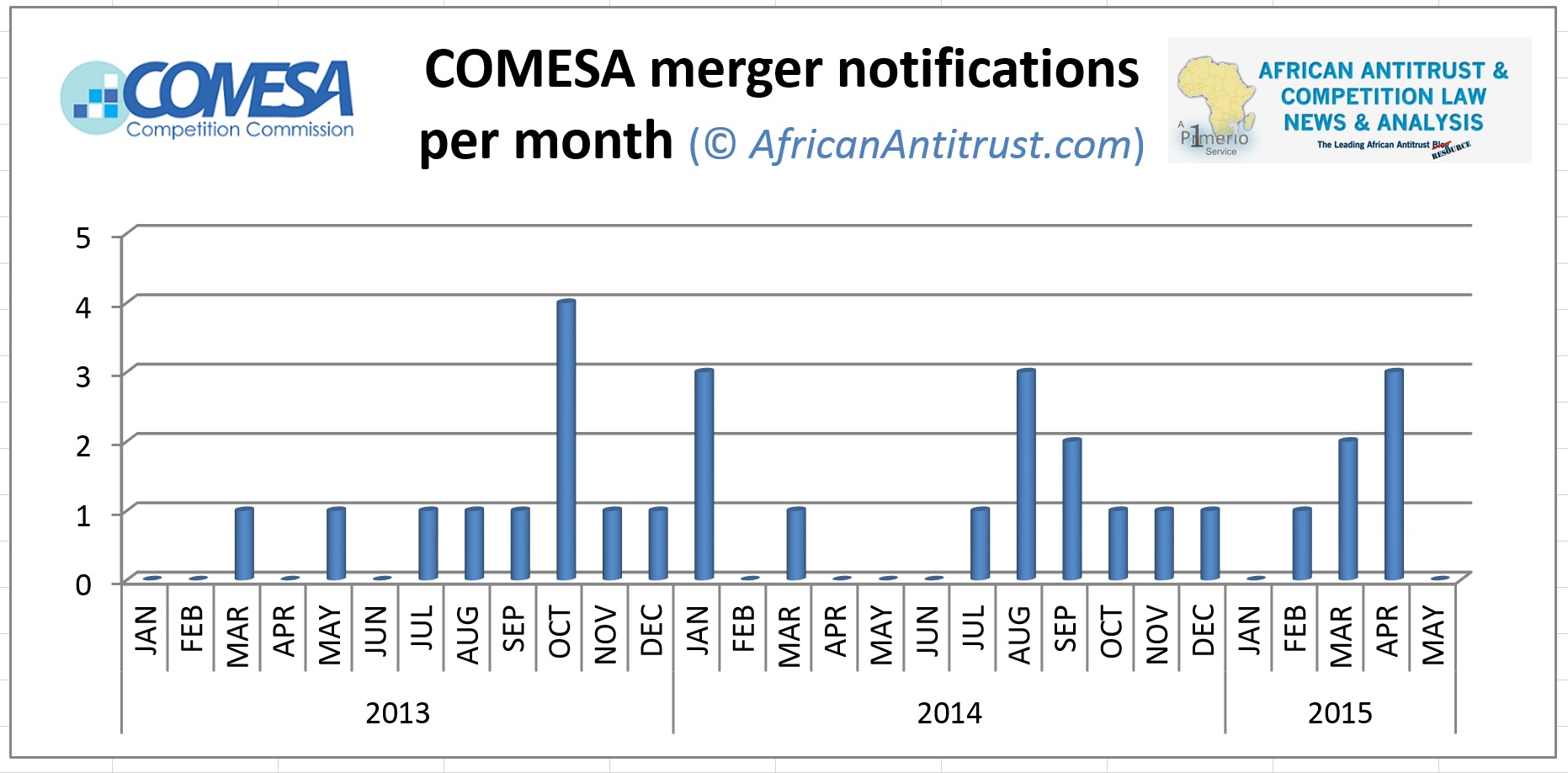
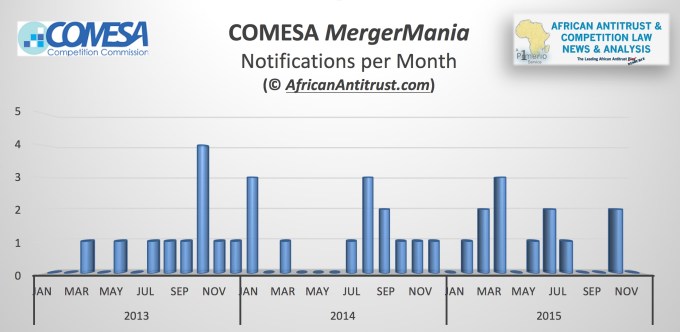
Our updated AAT COMESA MergerMania statistics are therefore as follows (again noting the fact that AAT bases its count on only the official, published and available merger documents, instead of relying on mere press release-based summaries published by the CCC).  We also note that to date, 2016 has seen one “merger inquiry notice,” namely of the Dutch Yara / Zambian Greenbelt fertiliser deal.  The public-comment period for that transaction expires on January 22, 2016.

Number of merger notifications based on CCC-published notices

The full text of the COMESA release follows below:

During the year 2015, the Commission assessed and cleared 15 merger transactions. The transactions involved sectors such as insurance, food additives, water treatment, agro-chemical, banking, telecommunication, non alcohol-ic beverage, publishing, packaging and retail. The Commission handled 12 merger notifications in the year 2013 and 44 merger notifications in the year 2014. The Pie Chart below shows the number of mergers handled by the Commission from inception to date.

COMESA merger statistics (official graphic)

As shown in the pie chart the Commission dealt with more mergers in 2014 as compared to 2013 but this trend has gone down in 2015. This trend may be attributed to the supposition that in 2013, the Commission had just commenced operations and therefore some stakeholders were not immediately aware of its existence and operations. By 2014, most stake-holders had become aware of the Commission and its operations, hence the significant increase in the number of mergers notified. The significant reduction in 2015 can be attributed to the supposition that the merger notification thresholds approved by the Council of Ministers on 26 March 2015 which has resulted in smaller mergers escaping the notification. Before 26 March 2015, the merger notification thresholds were Zero hence all mergers were notifiable regardless of size.

Two new COMESA competition commissioners seated

COMESA grows to 11-member Commission

Numerous in personnel, yet still displaying a dearth of actual case-law development even in merely the one area in which the COMESA Competition Commission has been active — mergers — the agency recently appointed two new (indeed, additional, as the number grew from 9 to 11) Commissioners for the standard term of three years.

Competition practitioner John Oxenham, a director at Africa consultancy Pr1merio, identified them as Trudon Nzembela Kalala from the Democratic Republic of the Congo, and Kowlessur Deshmuk, Executive Director of the Competition Commission of Mauritius.  Oxenham notes that neither country enjoyed representation between the April announcement of 4 new commissioners and December 8 (see also April 15 AAT story on the agency’s prior appointments).

COMESA's 18th Summit in Ethiopia

Name Member State
Ali Mohammed Afkada Djibouti
Trudon Nzembela Kalala DRC
Amira Abdel Ghaffar Egypt
Merkebu Zeleke Sime Ethiopia
Francis Kariuki Kenya
Matthews Chikankheni Malawi
Kowlessur Deshmuk Mauritius
Georges Emmanuel Jude Tirant Seychelles
Thabisile Langa Swaziland
Patrick Okilangole Uganda
Chilufya Sampa Zambia

First set of Merger Assessment Guidelines made available by CFTC

Malawi Releases 2015 ‘Merger Assessment Guidelines’

By Michael J. Currie

A number of African jurisdictions have recently published guidelines relating to merger control (which we have reported here on Africanantitrust). During 2015, Malawi’s Competition and Fair Trading Commission (“CFTC”whose web site appears to be down at the time of publication (http://www.cftc.mw), followed suit and published Merger Assessment Guidelines in 2015 (“Guidelines”) in order to provide some guidance as to how the CFTC will evaluate mergers in terms of the Competition and Fair Trading Act (“Act”).

malawi

Most significantly, the Guidelines have not catered for mandatorily notifiable merger thresholds which is unfortunate as most competition agencies as well as advocacy groups have recognised that financial thresholds is an important requirement to ensure that merger control regimes are not overly burdensome on merging parties.

Furthermore, the COMESA Competition Commission, to which Malawi is a member, published merger notification thresholds in 2015 in line with international best practice. It would be encouraged that the CFTC considers likewise publishing thresholds.

Other than the absence of any thresholds, the Guidelines contain substantively similar content to most merger control guidelines insofar as they set out the broad and general approach that the CFTC will take when evaluating a merger. We have, however, identified the following interesting aspects which emerge from the Guidelines which our readers may want to take note of:

  • The CFTC is entitled to issue a “letter of comfort” to merging parties. A letter of comfort is not formal approval, but allows the merging parties to engage conduct their activities as if approval has been obtained. Therefore, once a letter of comfort has been obtained, the parties may implement the merger. In terms of the Guidelines, a letter of comfort will only be issued once the CTFC is satisfied that any should their investigation reveal any potential competition law concerns, that those concerns will be able to be sufficiently addressed by merger related conditions. It is not clear whether a letter of comfort will be issued before the merger has been made public and therefore it is also unclear what the role of an intervening third party will be once a letter of comfort has been issued.
  • The merger filing fee is 0.05% of the combined turnover or assets of the enterprises’ turnover. The Guidelines do not specify that the turnover must be derived from, in, or into Malawi, although it is likely that this is indeed what was intended.
  • The Act and Guidelines make provision for what is becoming a common feature of developing countries competition laws, namely the introduction of so-called “public interest” provisions in merger control. The Guidelines, however, indicate that the CFTC does not consider these public interest provisions in quite as robust manner as the authorities do other countries including, inter alia, South Africa, Namibia, Zambia and Swaziland. In terms of the Guidelines, any public interest advantages or disadvantages is just one of the factors that the CFTC will consider, together with the traditional merger control factors. It is thus unlikely that a pro-competitive merger would be blocked purely on public interest grounds although this is notionally possible.
  • The Guidelines set out the following factors, combined with figures that are likely to be utilised when evaluating market concentration, which if exceeded, may increase the likelihood of the merger leading to a substantial lessening of competition:
  1. Market Shares: 40% for horizontal mergers and 30% for non-horizontal mergers;
  2. Number of firms in the market;
  3. Concentration Ratios: CR3- 65%; or
  4. The Herfindahl-Hirschman Index (“HHI”): HHI between 1000-2000 with delta 259; or HHI above 200 with delta 150. For non-horizontal mergers a merger is unlikely to raise competition concerns if the HHI is below 2000 post-merger.

MergerMania update: COMESA CCC clears 5 notified mergers

COMESA old flag color

COMESA CCC clears 5 notified mergers

At their July 29, 2015 meeting, COMESA Competition Commissioners Chikankheni, Langa, and Okilangole rendered decisions in five merger cases notified earlier in the spring.  The affected sectors are: Packaging (Nampak), Retail (Steinhoff), Academic Publishing (Springer Verlag), Telecom Towers (Eaton Towers), and Non-Alcoholic Beverages (Coca-Cola).

Ethos/Nampak MER/03/01/2015 SOM/8/2015 Decision/10/2015  29/07/2015
Steinhoff/Pepkor MER/03/02/2015 SOM/7/2015 Decision/9/2015  29/07/2015
Holtzbrinck PG/ Springer Science MER/04/06/2015 SOM/6/2015 Decision/8/2015  29/07/2015
Eaton Towers/ Kenya, Malawi, Uganda Towers MER/04/05/2015 SOM/5/2015 Decision/7/2015 29/07/2015
Coca-Cola BAL/ Coca-Cola SABCO MER/04/07/2015 SOM/4/2015 Decision/6/2015 29/07/2015

Our statistics (while discrepant with those identified by COMESA head of mergers Mr. Willard Mwemba) show the following numbers for COMESA notifications to date:

COMESA MergerMania July 2015
Number of merger notifications based on CCC-published notices

Insight into COMESA thinking: CCC executives speak

COMESA old flag color

COMESA officials’ pronouncements: merger enforcement #1, cartel ‘follow-on enforcement’, jurisdictional swamp

As other attendees of the 17 July 2015 regional sensitisation workshop have done, the Zimbabwean daily NewsDay has reported on the Livingstone, Zambia event — a session that has yielded a plethora of rather interesting pronouncements from COMESA Competition Commission (“CCC”) officials, including on non-merger enforcement by the CCC, as we have noted elsewhere.

In light of the additional comments made by CCC officials — in particular George Lipimile, the agency’s CEO, and Willard Mwemba, its head of mergers — we decided to select a few and publish the  “AAT Highlights: COMESA Officials’ Statements” that should be of interest to competition-law practitioners active in the region (in no particular order):

M&A: CCC claims approval of 72 deals since 2014

Non-Merger Enforcement by COMESA

As we noted in yesterday’s post, the CCC’s head, executive director George Lipimile, foreshadowed non-merger enforcement by the agency, including an inquiry into the “shopping mall sector,” as well as cartel enforcement.  On the latter topic, Mr. Lipimile highlighted cartels in the fertiliser, bread and construction industries as potential targets for the CCC — all of which, of course, would constitute a type of “follow-on enforcement” by the CCC, versus an actual uncovering by the agency itself of novel, collusive conduct within its jurisdictional borders, as John Oxenham, a director at Africa consultancy Pr1merio, notes.
“Here, in particular, the three examples given by Mr. Lipimile merely constitute existing cartel investigations that we know well from the South African experience — indeed, the SA Competition Commission has already launched, and in large part completed, its prosecutions of the three alleged cartels,” says Oxenham.
As AAT has reported since the 2013 inception of the CCC, antitrust practitioners have been of two minds when it comes to the CCC: on the one hand, they have criticised the COMESA merger notification regime, its unclear thresholds and exorbitant fees, in the past.  On the other hand, while perhaps belittling the CCC’s merger experience, the competition community has been anxious to see what non-merger enforcement within COMESA would look like, as this (especially cartel investigations and concomitant fines under the COMESA Regulations) has a potentially significantly larger impact on doing business within the 19-member COMESA jurisdiction than merely making a mandatory, but simple, filing with an otherwise “paper tiger” agency.  Says Andreas Stargard, also with Pr1merio:
“If the CCC steps up its enforcement game in the non-transactional arena, it could become a true force to reckon with in the West.  I can envision a scenario where the CCC becomes capable of launching its own cartel matters and oversees a full-on leniency regime, not having to rely on the ‘follow-on enforcement’ experience from other agencies abroad.  The CCC has great potential, but it must ensure that it fulfills it by showing principled deliberation and full transparency in all of its actions — otherwise it risks continued doubt from outsiders.”

COMESA Judge Proposes Judicial Enhancements

Justice Samuel Rugege, the former principal judge of the COMESA Court of Justice, is quoted as arguing against the COMESA Treaty’s requirement for exhaustion of local remedies prior to bringing a matter before the Court of Justice:
“I think that the rule ought to be removed and members should have access to the courts like the Ecowas Court of Justice. The matter has been raised by the president of the Court and the matter needs to be pursued. It is an obstacle to those who want to come and cannot especially on matters that are likely to be matters of trade and commercial interest. Commercial matters must be resolved in the shortest possible time as economies depend on trade,” Rugege said.
Justice Rugege also highlighted the potential for jurisdictional infighting in the COMESA region (see our prior reporting on this topic here), observing that said COMESA currently lacks any framework for coordinating matters involving countries that are part of both SADC and the COMESA bloc.

The Big Picture: Public-Interest Factors in Antitrust

AAT the big picture

Public-Interest Considerations in Competition Policy Take Center Stage… Once Again

By Michael Currie

An increasing trend in South Africa’s competition regulatory environment is the emphasis that the competition authorities and policy makers are placing on what is known as public-interest provisions. While we have authored a number of articles that have been published on African Antitrust highlighting our concern and disapproval of an overly-zealous reliance on public interest provisions, especially in the framework of merger control, the Competition Authorities have become increasingly bold in shaping there policies around public interest and industrial policy agendas.

In this article, we discuss the Vodacom/Neotel merger as well as COSATU’s response to the announcement that market inquiry will be conducted in the grocery retail sector, as these two developments personify the influence that Minister Patel has over the SACC’s policy and the very clear industrial policy agenda’s that Patel is using the SACC to promote.

In the past number of years in South Africa, public interest considerations have been no more prevalent than in merger control. While, to date, there has not been a merger prohibited based purely on public interest grounds, there have been a number of mergers which, despite no finding having been made that such a merger will lessen competition, have been approved subject to significantly onerous conditions, based on public-interest grounds.

south_africaThe Law

The South African Competition Act, 89 of 1998 (“Competition Act”) requires that the competition authorities consider the impact of a merger on certain public interest grounds, which are expressly listed in Section 12A of the Competition Act.

We have, on African Antitrust,[1] consistently stressed the inappropriateness of imposing burdensome conditions on mergers relating to public interest considerations, and raised the legitimate concerns that the South African Competition Authorities are increasingly being utilised as a mechanism by which to promote the government’s industrial policies.

Furthermore, conditions have been imposed on mergers without any substantial assessment done on balancing potential short term losses with long term gains.

Be that as it may, the conditions that have most commonly been imposed on mergers, based on public interest grounds, relates to employment. The impact of a merger on employment is one of the express public interest considerations that is contained in Section 12A.

What is deeply concerning, however, that as we will discuss below, the SACC has recently broadened the scope of public interest considerations to extend well past those grounds listed in Section 12A, effectively ensuring that when it comes to evaluating a merger on public interest grounds, the SACC is effectively, unrestricted.

Vodacom

Vodacom is South Africa’s largest mobile service provider and merging with Neotel would allow Vodacom to fast-track its rollout of a fixed line network.  The merger still needs to be approved by the South African Competition Tribunal (“SACT”).

On 30 June 2015, the SACC made recommendations to the SACT to approve the merger between Vodacom and Neotel, subject to stringent conditions.

The conditions recommended to be imposed on this merger will certainly ring alarm bells for all entities (especially large businesses which have a BEE shareholding) who are considering undertaking a merger in South Africa.

The SACC, who is of the view that the merger will substantially lessen competition in the market, has recommended that the following conditions to be imposed on the merger:

  • There be no retrenchments of Neotel employees;
  • That Vodacom invest R10 billion (approximately $1 billion) into data, connectivity and fixed line infrastructure; and
  • That Vodacom’s Black Economic Empowerment (“BEE”) shareholding is increased by R1.9 billion (the value of Neotel) multiplied by 19%.

The SACC’s recommendation that Vodacom’s BEE shareholding has to increase to a certain value is considerably worrisome, as it is very difficult, in our view, to justify the imposition of such a condition, in terms of the law or in terms of any social policy objective.

As noted above, the competition authorities are obliged, in terms of the Competition Act, to consider the impact that a merger may have on a number of public interest grounds. In terms of the Competition Act, the SACC and SACT, when evaluating a merger, must consider the impact that the merger will have on:

  • “A particular industry sector or region;
  • Employment;
  • The ability of small businesses, or firms controlled or owned by historically disadvantaged persons, to become competitive; and
  • The ability of national industries to compete in international markets.”[2]

Simply put, there is in our view, no justifiable legal basis, upon which to impose a condition relating to the BEE shareholding as proposed by the SACC in this merger.

A Disconcerting Trend Away from Law & Economics

Regardless of whether the merging parties accept the SACC’s recommended conditions, the competition authorities are increasingly using conditions imposed in previous mergers, as precedent to justify and become increasingly ambitious when considering conditions to be imposed on any prospective transaction. Thus, even if the conditions imposed in this particular merger are not overly-burdensome on the parties themselves, it is most likely that the conditions, should they be approved by the SACT, will set new precedent for any future transactions.

The competition authorities are inadvertently creating a ‘threshold’ of conditions. This is evident by the way in which the Commission seems to default to a recommendation of a two-to-three year moratorium on retrenchments, whenever there is a concern arising or pressure placed on the SACC relating to retrenchments.

It is well noted that timing is of critical importance when it comes to the success of a implementing a merger. The fact that the SACC has quite brazenly taken upon itself, the duty to foster and advance the government’s socio-economic and industrial policies no doubt leads to greater uncertainty as to the nature of the conditions that may be imposed on a proposed merger.

In this regard it is worth noting that the SACC has published draft guidelines (currently for public comment) on the Assessment of Public Interest Provisions on Mergers (the “Guidelines”). While the Guidelines are still in draft form, like most of the SACC’s guidelines published to date, it allow for a significant degree of discretion on the part of the SACC.

The Guidelines were an attempt to provide greater clarity and certainty when it comes to assessing the impact that a merger may have on the public interest grounds listed in Section 12A of the Competition Act, however, the Guidelines do not provide guidance with respect to assessing the impact that a merger may have on grounds not listed in Section 12A.

Hence, despite the Guidelines seeking to add clarity and certainty to the issue, the SACC’s expansion of public-interest grounds has for all practical purposes brought us back to square one.

Another Market Inquiry: Grocery/Retail

As mentioned above, public-interest considerations have now been used as the catalyst to drive other competition objectives; most notably, the recently announced market inquiry into the grocery retail sector.

It has been our suspicion from the outset that the market inquiry into the retail sector is driven by an underlying desire to promote Patel’s industrial policies, rather than address any or understand the structure of the market to ensure more competitive market is advanced.

The response by one of South Africa’s largest trade unions, COSATU, has publicly proclaimed its support for the market inquiry, and the reasons advanced in support of the inquiry, very much confirms our suspicions.

In an article published on their website, COSATU has expressed a number of reasons why they support the inquiry. Unsurprisingly, few of the reasons put forward relate to a desire to better understand the functioning of the market from a competition perspective. Much like Mr Patel, the Minister of Economic Development, COSATU has viewed the market inquiry from a socio-economic paradigm as opposed to a competition one.

While the grocery retail market share is largely attributed to the four biggest retailers in the South Africa, the broad ambit of the inquiry coupled with Patel’s comments made in Parliament in which he stated that the retail sector was a great entry point for black South Africans should leave little doubt in any objective observer’s mind that the market inquiry into the grocery sector is steeped in promoting governments industrial policies through the channels of competition regulation.

It should also come as no surprise that Patel was previously a labour activist and previously headed the Southern African Clothing and Textile Workers Union (SACTWU).

COSATU has expressed its support for the market inquiry, largely because COSATU is of the view that the market inquiry will address a number of socio-economic concerns. The following statement made by COSATU clearly illustrates as much:

“It should also be noted that the grocery retail sector is characterized by precarious and atypical employment. Most workers in the sector do not enjoy their basic labour-related socio-economic rights. Negative practices such as labour broking, outsourcing, casualisation and low-pay are prevalent in the sector. COSATU strongly believes that this inquiry is essential for addressing the above-mentioned socio-economic trends.”[3]

The preamble to the Competition Act recognises that Apartheid created a certain concentration of market shares and that South Africa needs a greater spread of ownership. In no way, however, can competition law be used as policy to address, replace and undermine legislation and institutions designed specifically to address identified concerns. In other words, the claim made by COSATU that the market inquiry will address negative labour practices, shows a fundamental flaw in understanding the purpose and nature of competition law and policy.

South Africa has extensive labour legislation and a number of institutions that have been established to deal with negative labour practices.

Placing the responsibility of protecting our labour workforce beyond the scope of the Competition Act, would undermine the efforts of the legislature as well as the institutions entrusted in promoting and enforcing fair labour practices.

Furthermore, even if the market inquiry does in one way or another lead to a greater number of smaller independent retailers, it is difficult to foresee how this will benefit labour conditions. Large retailers’ employees generally belong to trade unions who can act as a voice on their behalf. Employees of small retailers have far less bargaining power.

While it may be that COSATU, as a trade union, need not be too concerned with competition issues as such, trade unions in general have played have had an increasingly significant influence on competition law policy.

It is imperative that an institution such as the SACC remain independent and impartial, yet the SACC’s willingness to align itself with the policies Patel is championing for undoubtedly risks the independence, proper functioning and impartiality of the SACC — a risk the SACC must ensure it protects itself against.


[1] See here, here, and here.

[2] Section 12A(3) of the Competition Act, 89 of 1998.

[3] http://www.cosatu.org.za/show.php?ID=10618#sthash.XLWeNExH.dpuf

MergerMania: Are CCC notifications picking up pace unnoticed?

COMESA Competition Commission logo

COMESA Merger Mania

To answer our rhetorical question in the title above: We don’t believe so.  For the merger junkies among our readership, here is AAT’s latest instalment of “COMESA MergerMania” — AfricanAntitrust’s occasional look at merger matters reviewed by the young multi-jurisdictional competition enforcers in south/eastern Africa.  (To see our last post on COMESA merger statistics, click here).

COMESA publishes new Merger Filings, still fails to identify dates thereof

As nobody else seems to be doing this, let us compile the latest news in merger notifications to the COMESA Competition Commission.  Prior to doing so, however, we observe one item of utility and basic house-keeping etiquette, which we hope will be heeded in future official releases by the agency: Please note the dates of (and on the) documents being issued.  Using the date as a ‘case ID’ is insufficient in our view — the CCC’s current PDF pronouncements invariably remain un-dated, a practice which AAT deplores and which simply does not conform to international business (or government) standards.  So: please date your press releases, opinions, decisions, and notifications on the documents themselves.

We observe that the matters below have not yet been assigned final “case numbers” (at least not publicly) in the style typical of the CCC decisions in the past, namely sequential numbers per year, as they are currently under investigation and have not yet been decided.

We also note that one notification in particular appears to have been retroactively made in 2014, even though it is identified as merger no. 3 of 2015 (Gateway), a peculiarity we cannot currently explain.  Likewise, AAT wonders what the “44” stands for in its case ID (“12/44/2014”), we surmise it’s a typo and should be “14” instead.

Internal Case ID Statement of Merger
Holtzbrinck PG/ Springer Science MER/04/06/2015 SOM/6/2015
Eaton Towers/ Kenya, Malawi, Uganda Towers MER/04/05/2015 SOM/5/2015
Coca-Cola BAL/ Coca-Cola SABCO MER/04/07/2015 SOM/4/2015
Gateway/Pan Africa MER/12/44/2014 SOM/3/2015
Old Mutual/UAP MER/03/04/2015 SOM/2/2015
Zamanita /Cargill MER/03/03/2015 SOM/1//2015

Which brings us to the bi-monthly…

AAT COMESA Merger Statistics Roundup

COMESA Merger Statistics as of July 2015
COMESA Merger Statistics as of July 2015 (source: AAT)