
Safeguarding Market Integrity and Consumer Welfare: Reflections on the CCC’s 2024 Annual Report

By Megan Armstrong

The COMESA Competition Commission (“CCC”), released its 2024 Annual Report on 23 July 2025, outlining a narrative of both increased institutional maturity and a growing assertiveness in market regulation. This, against a backdrop of economic turbulence such as regional inflationary pressures, tightened global credit conditions and slowing GDP growth in Member States, the CCC pressed forward, making notable strides in their enforcement, policy advocacy and institutional development.

M&A Activity and a shift in sectoral dynamics

Dr. Willard Mwemba, COMESA Competition Commission Chief Executive

A notable metric from the year under review is the number of merger notifications, the CCC recorded receiving 56 transactions, a 47.4% increase from the previous year (2023). This spike may, in part, be a response to post-COVID19 economic restructurings and macroeconomic volatility prompting consolidation across various sectors. It is also likely that it points to a growing awareness among firms of their obligations to notify under the COMESA Competition Regulations, alongside the CCC’s increasing presence in regulatory enforcement within the region.

A large portion of these notified mergers in 2024 came from the banking and financial services sector, at 7 notified mergers, followed by energy and petroleum with 6 notified mergers, and ICT and agricultural sectors having 4 notified mergers each. Notably, each of these sectors can be linked to economic resilience and infrastructure development across the Member States. Countries like Kenya and Zambia showed the highest levels of enforcement with respect to mergers, affirming their roles as key economic nodes within the COMESA region.

The CCC continued to apply the subsidiarity principle in their merger assessments, deferring to national authorities where appropriate. With this, there were still 43 determinations finalised within stipulated time frames, unconditionally cleared with no mergers being blocked or subject to conditions. This contrasts with 2023, where four such interventions occurred. This unblemished record may suggest procedural compliance and benign effects, it does raise the question of whether these competitive harms are being sufficiently interrogated or whether transactions are being proactively structured to avoid scrutiny.

Restrictive Practices: Building a Hard Enforcement Reputation

Here, the CCC pursued 12 investigations in 2024, increased from 9 in 2023. These investigations touched sectors ranging from beverages, to wholesale and retail, ICT, pharmaceuticals and transport and logistics. The CCC’s increasing use of ex officio powers, particularly in the transport and non-alcoholic beverages sectors is noteworthy, reflecting a strategic pivot from a reactive enforcement regime to a more intelligence-led and proactive regime.

The CCC bolsters this enforcement strategy with an acknowledgement that behavioural change often requires more than deterrence. It maintains research and advocacy at its core focus for market engagements. The CCC’s involvement in collaboration with the African Market Observatory project in the food and agricultural sector highlights the market and policy failures that arise in these areas. This research has spurred dialogue at both national and international levels, including involvement from the OECD and International Competition Network.

Reform and Capacity Building

The CCC has initiated a long-overdue review of its legal framework, seeking to modernise its 2004 Regulations and Rules. These revised instruments, once adopted, are expected to cover emerging regulatory concerns, which includes climate change, and digital markets. These are areas where the intersection between competition and broader public policy goals are becoming more pronounced.

 The CCC has scaled up technical assistance across the region, including providing support to legal reform processes in jurisdictions such as Eswatini, Egypt and Djibouti. The CCC also presented training for competition authority officials in Member States such as Comoros, Zimbabwe and Zambia. These capacity building efforts are critical for the CCC to realise its vision of a harmonised and integrated regional competition regime.

The Year Ahead: A Cartel Crackdown and Consumer-Centric Focus

Looking ahead to 2025, the CCC has signalled a decisive focus on cartel enforcement. There has been a growing recognition that undetected and entrenched cartel operations remain one of the most damaging forms of anti-competitive conduct in the Common Market, resulting in raised priced, limitations to innovation and a stifling of regional integration. The CCC intends to ramp up their detection tools, build cross-border enforcement partnerships, and enhance leniency and whistleblower frameworks. This is a complex undertaking, but does provide the potential to yield transformative results should it be executed effectively.

Alongside this, the CCC intends to intensify its efforts on the consumer protection front, particularly in those sectors that have been flagged through its market intelligence efforts. The digital economy is one such priority sector, the CCC has received anecdotal evidence of exploitative practices in this sector and is positioned to clarify its understanding of the competitive dynamics at play in this sector. Similarly, product safety in the fast-moving consumer goods sector is expected to receive closer scrutiny. 

Conclusion

If 2024 was the year of consolidation, 2025 promises to be the year of forward momentum. The CCC has shifted its weight towards deeper enforcement, increased research and the implementation of a regulatory framework that has the ability to meet and address modern market realities. From cartel detection to digital market fairness and food sector resilience, the CCC has an ambitious agenda for the year ahead.

As regional integration efforts gather pace under the AfCFTA, the CCC’s role as a guardian of market fairness and consumer protection within Member States will only become more central. With this groundwork having been laid, it is time for the harder, but more rewarding task: “building markets that work for everyone”.

Malawi: More than CCCC HQ. A short Retrospective on Mergers in Malawi.

Updated Malawi Merger Control Thresholds

By Michael Williams

Malawi’s new Competition and Fair Trading Act came into effect in 2024 (“2024 Act”).[1]  While this lags behind one of the best-known competition authorities in Malawi, namely COMESA’s Competition and Consumer Protection Commission (“CCCC”) headquartered in Lilongwe to the tune of over a decade, the domestic antitrust regime is being reinforced, as this legislative update shows. And with this latest edition, it is firmly in place when it comes to those national merger-control matters that escape the one-stop-shop of the CCCC. The Competition and Fair Trading Commission of Malawi (“CFTC”) stated that the goal of the 2024 Act is to:

  1. supplement certain areas that the previous Act lacked; and
  2. improving effective enforcement.

Several notable changes were included in the 2024 Act, particularly in respect of the introduction of a suspensory merger control regime. 

The 2024 Act also introduces a public interest test that the CFTC must apply when evaluating whether a proposed merger can or cannot be justified. This public interest test includes several factors including the effect of the potential transaction on:

  • specific industrial sectors or regions; 
  • employment levels; and 
  • the saving of a failing firm.

The CFTC has also been granted the power to impose administrative orders on parties who violate the 2024 Act, which include administrative penalties of up to 10% of a firm’s annual turnover or 5% of an individual’s income. 

The CFTC can also levy orders to redress wrongdoing, such as instructing refunds, exchange or return of defective products, and termination of unfair and exploitative contracts.

These increased powers come after the High Court of Malawi Civil Division ruled in the 2023 case of CFTC v Airtel Malawi that the CFTC lacked the authority to impose fines under the 1998 Act.[2]

To supplement the 2024 Act, the Minister recently published a Government Notice[3] that provides for the financial thresholds for mandatory merger notifications as well as an overview of other fees payable to the CFTC.

THE FINANCIAL THRESHOLDS FOR MANDATORY MERGER NOTIFICATIONS

Any transaction exceeding the following financial threshold will require prior approval from the CFTC before implementing:

  1. The combined annual turnover or combined value of assets whichever is higher, in, into, or from Malawi, equals to or exceeds MWK 10 billion (approximately USD 5 800 000); or
  2. The annual turnover of a target undertaking, in, into, or from Malawi, equals to or exceeds MWK 5 billion (approximately USD 3 000 000).

FEES PAYABLE TO CFTC FOR COMPETITION FILINGS 

The Government Notice sets the merger application fee payable at 0.5% of the combined annual turnover or total assets whichever is higher of the merging parties derived from Malawi. It is important to note that the Government Notice does not specify a maximum fee payable.

OTHER FEES PAYABLE TO THE CFTC

  1. Application for an Authorization of an Agreement at MWK 10 million (approximately USD 5 800) an agreement, a class of agreements under section 24(1) of the 2024 Act or an agreement which, any person who proposes to enter into, or carry out an agreement which, in that person’s opinion, is an agreement affected or prohibited by the 2024 Act. Importantly, an ‘agreement’ is defined in the 2024 Act, being: “any agreement, arrangement or understanding, whether oral or in writing, or whether or not the agreement is legally enforceable or is intended to be legally enforceable”
  2. Application for Negative Clearance at MWK 10 million (approximately USD 5 749,49) for any party to a merger transaction seeking clarification as to whether the proposed merger requires the formal approval of the CFTC or whose proposed merger is subject to review by the CFTC.
  3. Training on Competition & Consumer Protection at MWK 5 million per training package (approximately USD 3 000);
  4. Non-Binding Advisory Opinions for SMEs: MWK 200 000,00 (approximately USD 115); Micro-enterprises: MWK 100 000,00 (approximately USD 58); Other businesses: MWK 500 000,00 (approximately USD 300).

CONCLUSION

This supplementation by the Government Notice to the 2024 Act is of utmost importance for businesses and competition law practitioners operating within the jurisdiction of Malawi to ensure smooth transactions and to avoid statutory sanctions.


[1] Competition and Fair Trading Act No. 20 of 2024

[2] Competition and Fair Trading Commission v Airtel Malawi Ltd. & Anor. (MSCA Civil Appeal 23 of 2014) [2018] MWSC 3

[3] Government Notices No. 76 and No. 77 of 2024

COMESA Settlement Procedure Alive & Well: a Football Retrospective

Decision of the appeals board on the appeal lodged by Confederation Africaine de Football and beIN Media Group LLC

By Olivia Sousa Höll

Introduction

In a landmark decision dated 28 March 2025, the Appeals Board of the Common Market for Eastern and Southern African Competition Commission (“CCC”) delivered its ruling on the consolidated appeal by the Confederation Africaine de Football (“CAF”) and beIN Media Group LLC (“beIN”). The appeal challenged the findings of the Committee Responsible for Initial Determinations (“CID”) concerning alleged anti-competitive practices in the award of media rights for CAF competitions.[1] The ruling marks a significant development in the regulation of sports broadcasting within the Common Market for Eastern and Southern African (“COMESA”).

Background of the dispute

The dispute arose from two Memoranda of Understanding (“MOUs”), a 2014 and a 2016 agreement, between Lagardère Sports and beIN, granting the latter exclusive media rights to broadcast CAF competitions.[2] Following an investigation by the COMESA Competition Commission, the CID found that these agreements contravened Article 16(1) of the COMESA Competition Regulations due to their long-term duration, lack of competitive tendering, and bundling of rights across platforms.[3] As a result, the CID ordered that the agreements be terminated by 31 December 2024, imposed fines of USD 300,000 on each party, and directed CAF to adopt a new framework for awarding media rights in the future.[4] CAF and beIN lodged separate appeals, which were consolidated and heard by the Appeals Board in February 2025.[5]

Legal framework

The central legal provision at issue was Article 16(1) of the COMESA Competition Regulations, which prohibits agreements that may affect trade between Member States and have as their object or effect the prevention, restriction, or distortion of competition.[6]

In their defence, CAF and beIN invoked Article 16(4), which allows an exemption where restrictive agreements can be shown to yield efficiency benefits.[7] Specifically, the exemption requires proof that:

  1. The agreement improves the production or distribution of goods or promotes technical or economic progress;
  2. Consumers receive a fair share of the resulting benefits;
  3. The restrictions are indispensable to achieving those benefits; and
  4. The agreement does not eliminate competition in a substantial part of the market.[8]

The CCC argued that these justifications are cumulative, and that each one must be satisfied for the exemption to apply.[9] It maintained that CAF and beIN failed to discharge their burden of proof, particularly by not showing that the restrictions were indispensable or that consumers benefited proportionately from the arrangement.[10] According to the CCC, the claimed efficiencies, such as increased investment and improved broadcast quality, could be achieved through less restrictive means, such as open and transparent tendering processes.[11]

This interpretation reflects COMESA’s strict approach to Article 16(4), as further explained in its Restrictive Business Practices Guidelines.[12]

The appeals process 

Following the CID’s decision on 22 December 2023, the appellants filed their Notices of Appeal in April 2024, arguing that the CID’s conclusions were flawed both factually and legally.[13] Key arguments raised included:

  1. The absence of actual evidence of foreclosure or harm to competition;
  2. Inappropriate market definition that excluded substitutable football content;
  3. Overreliance on stakeholder interviews lacking methodological rigour;
  4. Failure to consider the pro-competitive benefits of the agreements; and
  5. Imposition of fines without due process.[14]

The CCC responded by defending the findings of the CID and highlighting that the exclusive and bundled nature of the agreements had the potential to restrict competition, even if actual foreclosure was not demonstrated.[15] The CCC also refuted the claim that the SSNIP test (Small but Significant Non-transitory Increase in Price) was a required tool for market definition, noting that qualitative and contextual factors could be equally relevant.[16]

Decision of the appeals board

Rather than deliver a ruling on the merits of each legal issue, the Appeals Board opted to confirm a Commitment Agreement negotiated between the parties.[17] The Board emphasized that the agreement allowed for an efficient and proportionate resolution and noted that its authority to confirm such commitments is provided under Article 15(1) of the Regulations and Article 3(2) of the Appeals Board Rules.[18]

The terms of the Commitment Agreement included the following:

  1. The 2016 beIN Agreement would remain in force until 31 December 2028, to avoid disruption of broadcasts;
  2. CAF and beIN would each pay USD 300,000 to the Commission on a non-admission of liability basis;
  3. CAF committed to conduct future tenders for broadcasting rights through open, transparent, and competitive processes in line with recent commitments made in other cases.[19]

Importantly, the Appeals Board found that maintaining the current agreement until 2028 would not hinder competition due to the additional behavioural safeguards included in the Commitment.[20]

Implications for African Football

The outcome of this appeal will have far-reaching implications for the governance of sports media rights across Africa. By endorsing a settlement that preserves the current arrangement in the short term but introduces future-oriented competition safeguards, the Appeals Board has sent a clear message that long-term exclusive deals without competitive processes will no longer go unchallenged.

This decision aligns COMESA with global best practices, such as those adopted by the European Commission and FIFA/UEFA and provides a blueprint for other African sports bodies seeking to commercialize rights while respecting regional competition law.[21] For broadcasters, it opens new opportunities to participate in tender processes. For viewers, it promises greater access and potentially more diverse coverage of African football events.

Conclusion

The Appeals Board’s decision represents a balanced and pragmatic resolution of a complex legal and economic dispute. While avoiding a full ruling on the disputed legal questions, the confirmation of the Commitment Agreement underscores COMESA’s dual priorities: promoting competition and preserving market stability. The legacy of this case will likely be seen in a more open and competitive broadcasting landscape for African football in the years to come


[1] Appeals Board Decision, COMESA Competition Commission, 28 March 2025, p.2.

[2] (n 1 above) paras 4-5.

[3] (n 1 above) para 6.

[4] (n 1 above) para 8.

[5] (n 1 above) para 3. 

[6] COMESA Competition Regulations, Art. 16(1)

[7] (n 6 above) Art. 16(4)

[8] (n 6 above) Art. 16(4).

[9] (n 1 above) para 51.

[10] (n 1 above) para 51.

[11] (n 1 above) para 51. 

[12] COMESA Restrictive Business Practices Guidelines (2019), para 52.

[13]  (n 1 above) paras 1-2.

[14] (n 1 above) paras 10-11, 34-36.

[15] (n 1 above) paras 13-16, 34-36.

[16] (n 1 above) paras 20-21.

[17] (n 1 above) para 59.

[18] (n 6 above) Art. 15(1); Appeals Board Rules, Art. 3(2).

[19] (n 1 above) paras 64-65.

[20] (n 1 above) para 65. 

[21] (n 1 above) paras 45-46.

4th CCC diplomatic conference on competition law places focus on inflation, food security, and poverty eradication 

Senior diplomats from the COMESA region gathered in Livingstone, Zambia, for the fourth in a series of diplomatic antitrust-focused conferences that began in 2016 but were halted due to the coronavirus pandemic in 2019.

At today’s formal resumption of the recurring event, Dr. Willard Mwemba, CEO of the COMESA Competition Commission, introduced the conference session by calling out the importance of the agricultural sector to the people residing in the region, especially the very poorest of citizens.

He stated in unmistakable terms that his agency would prioritize this and related markets for heightened antitrust enforcement, to ensure the sector operates efficiently and competitively. “Accessibility (and affordability) of food is one of the most fundamental human rights. $2 per day are spent by the poorest people on average, and the majority of those two dollars is spent on food,” noted Mwemba.

Says Andreas Stargard, who attended the session, “it is clear that the view of the Commission is that agricultural markets in COMESA are not functioning as they should, based on studies the agency has undertaken with outside assistance.  The massive foodstuffs price inflation levels COMESA residents have suffered in recent years are not merely natural consequences of irreversible climate change but rather represent mostly economic profit to the manufacturers and traders, to the detriment of consumers, based on what Dr. Mwemba presented today.”

COMESA Secretary General, Chileshe Mpundu Kapwepwe, summarized the stark importance of the AG sector to the region, its people, and the economic zone in sobering statistical terms: “The agriculture sector is one of the key sectors for most Member States as it contributes more than 32% to the Gross Domestic Product of COMESA, provides a livelihood to about 80% of the region’s labour force, accounts for about 65% of foreign exchange earnings and contributes more than 50% of raw materials to the industrial sector.”

In light of this crucial importance of the agricultural and food markets, food security is high on the list of action items that COMESA must address practically and effectively, she concluded.  COMESA evaluates supply and demand levels across all 21 member states to assist with market assessment and planning.

The Diplomatic Conference’s guest of honour, Zambian Minister of Commerce, Trade and Industry, Hon. Chipoka Mulenga, noted in prepared remarks delivered by his deputy and permanent secretary to COMESA that, while “food production must be profitable for farmers, it must not be exploitative.”

In this regard, the famous Adam Smith quote referenced by Dr. Mwemba at a prior antitrust session comes to mind: “It is not from the benevolence of the butcher, the brewer, or the baker that we expect our dinner, but from their regard to their own self-interest. We address ourselves not to their humanity but to their self-love, and never talk to them of our own necessities, but of their advantages.”

Beyond the immutable wisdom of the Wealth of Nations from two and a half centuries ago, the (1) CCC’s increased competition law enforcement in the agricultural and food sectors, as well as (2) national member states are assisting the effort of ensuring wide and secure availability to all COMESA residents by creating and strengthening cross-border value chains in the food sectors with overlaps across member state borders, the Zambian minister observed.

COMESA Snapshot: How have the COMESA Draft Regulations changed its competition regime?

By Gina Lodolo & Tyla Lee Coertzen

On 24 January 2024, the COMESA Competition Commission (the “CCC”) issued a press release requesting comments to its proposed Draft Regulations (as amended in November 2023) (“Draft Regulations”).

The Draft Regulations contemplate an over hall of many key features of the CCC’s current competition regime, which has been in place since 2014. The Draft Regulations, importantly, make provision for the CCC to act as a consumer protection agency as well as an antitrust enforcer. While the consumer protection provisions have also been significantly bolstered, this article provides an overview of the salient aspects that the Draft Regulations seek to change vis-à-vis the competition regime. We highlight the key proposed amendments in this article.

Merger Control Regime:

  • One of the most salient amendments to the regime is contained in Article 37, which proposes to change the CCC’s merger control regime from non-suspensory to suspensory. In this regard, when the amendment comes into effect, notifiable mergers cannot be implemented by parties before approval is obtained from the CCC.

Previously, a party to a merger was required to notify such a merger within 30 days from the date of the ‘decision to merge’ (which date has generally been considered by the CCC to be the date any agreements underlying a merger were signed by parties). With the introduction of a suspensory regime, the 30-day rule is expected to fall away, thereby alleviating the pressure off of merging parties to ensure timeous notification of a merger with the CCC.

However, under the current regime, the CCC has a review period of 120 calendar days, with the ability to extend the review period for a maximum of 90 days. Importantly, the Draft Regulations do not envisage a shorter review period, and given that the regime is to be amended to a suspensory one, such a review period could result in significant delays in global transactions, particularly as the old regime was non-suspensory. In its Draft Regulations, the CCC has, however, contemplated a simplified procedure where a merger does not give rise to significant competition or public interest concerns.

  • In the Draft Regulations, the threshold for the definition of a merger has been heightened through the introduction of a change of control of a firm being on “a lasting basis”. 

The definition of a ‘merger’ also now expressly includes joint ventures, that perform on a long-lasting basis all the functions of an autonomous economic entity. In this regard, the Draft Regulations bring the notifiability of joint ventures largely in line with European case precedent. Thresholds have also been introduced for joint ventures whereby a joint venture will be notifiable if it intends to operate in two or more member states, at least one parent of the joint venture operates in one or more member states and the thresholds are met.

  • Interestingly, the Draft Regulations introduce separate thresholds for firms operating in digital markets. In this regard, the Draft Regulations contemplate that a prescribed transaction value be met, as opposed to the more traditional asset/turnover value thresholds.
  • The CCC has also introduced broad powers under Article 38(3) to conduct an investigation where it believes that a merger has been implemented without approval and where the CCC finds that a merger has been implemented prior to approval, a penalty of up to 10% of the merging parties’ annual turnover in the Common Market may be imposed.
  • Another important contemplated amendment is found in Article 40, which provides COMESA Member States with an opportunity to request that a merger be considered under its national competition law within 21 days of receiving notice of the merger from the CCC. The relevant Member State must, however, demonstrate that the merger is likely to disproportionality reduce competition to a material extent in the Member State before the CCC determines whether it will allow the referral in whole or part. Similarly, the CCC may refer a merger for independent consideration to any Member State.
  • The CCC has introduced significant consideration for public interest factors when considering mergers. These include, inter alia, the effect on employment, ability of small and medium sized businesses to be competitive, ability to compete in international markets, environment protection / sustainability considerations and innovation. The latter two considerations are a rather novel concept that the CCC is seeking to introduce, and which has been introduced more prominently in the European Union. The consideration of public interest factors could, however, lead to unintended consequences such as introducing uncertainty and subjectivity / favouring short term public interest considerations at the behest of long-term growth for the greater public interest benefit. Following finalisation of the Draft Regulations, the CCC will publish Public Interest Guidelines which may give guidance in relation to the CCC’s extent of its public interest considerations.
  • The Draft Regulations apply to mergers that meet the relevant threshold, and additionally, where a merger is non-notifiable, the Regulations will still apply to mergers that are likely to restrict competition in the Common Market or any substantial part of it- this may introduce some uncertainty over when the CCC will exercise jurisdiction over mergers that do not meet the statutory thresholds. This seems to be an indication that the CCC is trying to avoid situations of ‘merger creep’ in the digital platform markets.

Market Inquiry powers:

  • The Draft Regulations introduce the powers of the CCC to conduct ‘market inquiries’, in order to inquire into issues affecting consumers or the general state of competition without necessarily referring to the conduct or activity of any particular undertaking.
  • On the basis of the CCC’s findings following the conclusion of a market inquiry, the CCC may initiate a formal investigation, enter into agreements with or order undertakings to implement remedies aimed at addressing the CCC’s concerns, make policy recommendations, conduct advocacy initiatives or take further actions within its powers.  
  • The Draft Guidelines further obligate COMESA Member States to assist the CCC with its investigations, market inquiries or studies within their territory when requested, which investigations, market inquiries or studies may be conducted jointly or under the CCC’s guidance.

Settlement:

  • The Draft Regulations introduce the ability of the CCC to develop procedures to negotiate settlements, however, salient features of a (binding) settlement provided for in the Draft Regulations are as follows:
    • there must be an acknowledgment for engagement or participation in conduct that violated the Regulations;
    • liability in respect of conduct is acknowledged; and
    • agreement with the CCC’s findings to avoid lengthy standard procedures.

Anti-competitive agreements:

  • The Draft Regulations provide that anti-competitive agreements can attract a fine of up to 10% of annual turnover in the Common Market for each of the participating undertakings (previously penalties were determined by the Rules).
  • Public interest factors will be taken into account when assessing potentially anti-competitive agreements, including the novel consideration of the effect on environmental protection and sustainability (it is not clear whether these will be considered for purposes of aggravating or mitigating circumstances).
  • Public interest factors will also be considered when considering whether the CCC will grant an application for authorization for a firm to enter into an agreement even if the agreement is anti-competitive, if the benefits from the agreement outweighs the anti-competitive effects.
  • Minimum resale price maintenance has been introduced as a per se contravention. The Draft Regulations do not delineate whether a minimum price may be recommended as long as it is not enforced (such is the case in the South African Competition Act).

Abuse of dominance:

  • Article 31 of the Draft Regulations introduces a presumption of dominance threshold of 30%. This is a low market share threshold in circumstances where market power does not also need to be established. The CCC will also give consideration to firms operating in digital markets wherein data quantity, accessibility, control and network effects will be relevant considerations.
  • An additional violation for an abuse of dominance has been added for applying dissimilar conditions to equivalent transactions with other trading parties, thereby placing them at a competitive disadvantage.
  • Article 33 of the Draft Regulations introduces a separate violation for an abuse of ‘economic dependance’. The reference to ‘gatekeepers’ infers that this Article could be targeted towards digital platforms /markets.

Cartel conduct:

  • A leniency policy has been introduced by the CCC. This is particularly welcomed as it will assist in avoiding applying for leniency across multiple jurisdictions, which usually results in firms being disincentivized to apply for leniency where results are uncertain. The CCC will develop Guidelines for the implementation of the leniency programme.

General other proposed amendments include:

  • Obligations of Member States will become more extensive under Article 7 of the Draft Regulations and the Draft Regulations clearly provide that decisions of the CCC will bind Governments of Member States as well as State Courts.
  • The CCC is set to be renamed as the COMESA Competition and Consumer Commission and will thus increase its focus in relation to consumer protection related matters.
  • Stringent appointment requirements and procedures for members of the Board of the CCC have been introduced.
  • Article 17 introduces the appointment of an Executive Director to act as the chief executive officer of the CCC. The Executive Director will not be subject to the direction or control of any other person or authority.
  • The Executive Director is provided with various new powers, including:
    • the powers to conduct market inquiries into matters affecting competition and consumer welfare.
    • The ability to negotiate and conclude settlement and commitment agreements through the Executive Director, largely solidifying negotiations that already take place in practice.
    • The power to make interim orders, conduct dawn raids, issue comfort letters and issue advisory opinions.
  • The Draft Regulations provide the Board with the power to issue block exemptions (subject to approval of the Council, through the Bureau), exempting any category of agreements, decisions, and concerted practices from the application of Article 29 of the Regulations.
  • The CCC now has the power to enter into, search and inspect any premises, including a private dwelling where the CCC reasonably suspects that information or documents that may be relevant to an investigation are kept.
  • Interim orders can be made in matters of urgency, pending the conclusion of an ongoing investigation where there is a risk of serious irreparable damage to competition or consumer welfare or to protect the public interest.

Asked to comment on the proposed Regulations, Primerio director, Michael-James Currie says “the proposed amendments go a long way to bringing the COMESA antitrust regime in keeping with most jurisdictions with well established competition law enforcement. The removal of finite penalty caps in favour of a common “10% of local turnover” threshold, the (eventual) introduction of a leniency policy and introduction of a suspensory merger regime are welcomed. The ambiguity created by the current regime (which requires a merger to be notified within 30 days after a decision to merge has been taken) can be impractical and served little benefit. Companies operating within the Common Market will need to re-evaluate their commecrial operations from a compliance perspective as the risk matrix will change considerably”. Currie went on to say that these proposed Regulations are a continuation of the strong leadership shown at the CCC under CEO Willard Mwemba, and that he expects to see more enforcement activity by the CCC over the next two years.

The time to provide comment to the Draft Regulations has been extended to 14 March 2024.  The Draft Regulations can be accessed here.

M&A Breaking News: Regional Antitrust Enforcer Aligns Merger Rule with European Union Principles

BREAKING NEWS: The COMESA Competition Commission (“CCC”) issued new guidance today in relation to its application of previously ambiguous and potentially self-contradictory merger-notification rules under the supra-national COMESA regime. As Andreas Stargard, a competition practitioner with Primerio notes:

“This new Practice Note issued by Dr. Mwemba is an extremely welcome step in clarifying when to notify M&A deals to the COMESA authorities. Specifically, it clears up the confusion as to the meaning of the term ‘to operate’ within the Common Market.

Prior conflicts between the 3 operative documents (the ‘Rules’, ‘Guidelines’, and the ‘Regulations’) had become untenable for practitioners to continue without clear guidance from the CCC, which we have now received. I applaud the Commission for taking this important step in the right direction, aligning its merger procedure with the principles of established best-practice jurisdictions such as the European Union.”

The full text of the new Guidance is as follows:

PRACTICE NOTE ON THE COMMISSION’S APPLICATION OF THE TERM “OPERATE” UNDER THE COMESA COMPETITION REGULATIONS AND THE “APPLICATION OF RULE 4 OF THE RULES ON THE DETERMINATION OF MERGER NOTIFICATION THRESHOLDS AND METHOD OF CALCULATION”

February 11, 2021

CCC – MER – Practice Note 1 of 2021

The COMESA Competition Commission (the “Commission”), having received several queries from merging parties and their legal representatives in relation to the application of certain merger control rules, hereby issues this practice note on its application of the term “operate” under the COMESA Competition Regulations, 2004 (the “Regulations”) and the COMESA Competition Rules, 2004 (the “Rules”) and its approach to the application of Rule 4 of the Rules on the Determination of Merger Notification Thresholds and Method of Calculation (the “Rules on the Determination of Merger Notification Thresholds”).

  1. Application of the Term “Operate”

Article 23 of the Regulations establishes the jurisdiction of the Commission to assess cross-border mergers where the term “operate” is central to the application of Article 23 of the Regulations which, inter alia, applies where “…both the acquiring firm and target firm or either the acquiring firm or target firm operate in two or more Member States…”.

The Regulations have not defined the term operate. However, paragraph 3.9 of the COMESA Merger Assessment Guidelines of 2014 (the “Merger Guidelines”) states that an undertaking is considered to operate in a Member State for purposes of Article 23 (3)(a) of the Regulations if its operations in that Member State are substantial enough that a merger can contribute to an appreciable effect on trade between Member States and restrict competition in COMESAFurther, the Merger Guidelines state that “…an undertaking operates in a Member State if its annual turnover or value of assets in that Member State exceeds US$ 5 million…”.

It should be noted that at the time the Merger Guidelines became applicable, the prescribed merger notification thresholds envisaged under Article 23(3)(b) of the Regulation, were set at US$ 0. This effectively meant that all merger transactions satisfying the regional dimension requirement of Article 23 (3)(a) of the Regulations were required to be notified to the Commission, irrespective of the magnitude of the merging parties’ operations in the Common Market. In line with the Regulations’ objectives, the Commission sought to only capture those mergers likely to affect trade between Member States and restrict competition in the Common Market. As a result, the Merger Guidelines attached a quantitative definition to the term ‘operate’, as meaning the turnover or value of asset in a Member State to be at least US$ 5 million.

All stakeholders are hereby informed that following the enactment of the Rules on the Determination of Merger Notification Thresholds, the definition of ‘operate’ under paragraph 3.9 of the Merger Guidelines in no longer applicable as the Rules take precedence over the Guidelines. In view of this, paragraph 3.9 of the Guidelines has been rendered ineffective with the coming into force of Rule 4 of the Rules on the Determination of Merger Notification Thresholds. Therefore, for purposes of merger notification in line with Article 23 of the Regulations, all stakeholders should be referring to Rule 4 of the Rules on the Determination of Merger Notification Thresholds which stipulates that:

 “Any merger where both the acquiring firm and target firm, or either the acquiring or the target firm, operate in two or more Member States, shall be notifiable if:

  1. the combined annual turnover or combined value of assets, whichever is higher in the Common Market of all parties to a merger equals to or exceeds US$50 million; and
  2. the annual turnover or value of assets, whichever is higher, in the Common Market of each of at least two of the parties to a merger equals or exceeds US$10 million, unless each of the parties to a merger achieves at least two-thirds of its aggregate turnover or assets in the Common Market within one and the same Member State.”

 2.  Application of Rule 4 of the Rules on the Determination of Merger Notification Thresholds

Rule 4 applies to merger transactions that satisfy both the “Regional Dimension” and “Notification Thresholds” requirements under Article 23 of the Regulations. Rule 4 is cumulative and must be satisfied entirely before a merger is notified to the Commission. Rule 4 is therefore applied as follows:

Firstly, Regional Dimension must be satisfied. This is contained in the chapeau of Rule 4 which requires the merging parties to operate in at least two COMESA Member States. Further, it gives three alternative scenarios under which merging parties can operate in Member States namely:

  1. Both the acquiring firm and target firm can operate in at least two Member States;
  2. The acquiring firm can operate in at least two Member States, while the target firm can operate only in one Member State; or
  3. The target firm can operate in at least two Member States, while the acquiring firm can operate only in one Member State.

Regional Dimension will therefore be met once any of the three scenarios is satisfied and if they are, the next step is to confirm whether Rule 4(a) is satisfied. Rule 4(a) must be satisfied by confirming that either the combined annual turnover or combined annual assets in the Common Market of all the parties to the merger equals to at least US$ 50 million. The option to use combined annual turnover or combined annual asset shall depend on the higher amount of the two total values.

Assuming the Regional Dimension and Rule 4(a) is satisfied, the next step is to confirm whether the merging parties satisfy Rule 4(b). To satisfy Rule 4(b), it should be demonstrated that the annual turnover or annual asset, whichever is higher, of each of at least two of the parties in the Common Market is at least US$ 10 million. Whether to use annual turnover or annual asset depends on the higher of the two. It should also depend on the measure (turnover or asset) used in Rule 4(a).

As an illustration, assume annual combined turnover is higher than annual combined asset under Rule 4(a). This shall mean annual combined turnover will be adopted under Rule 4(a). Therefore, proceeding to Rule 4(b) shall mean confirming whether the annual turnover of each of at least two of the parties in the Common Market is at least US$ 10 million.

The final step in applying Rule 4 is to confirm if the 2/3 exemption rule holds. Given that Rule 4 must be applied in its entirety, the 2/3 exemption rule must also be read in conjunction with the preceding limbs in establishing the thresholds i.e. Rule 4(a) and Rule 4(b). For both the collective and individual thresholds requirements under Rule 4(a) and 4(b), it is the higher value of the turnover derived or asset value held which must be considered. In this regard, the 2/3 rule is meant to apply once the higher value has been established. It would be contrary to the principles and spirit of the 2/3 rule to rely on a different financial criterion to exempt a notification than the criterion used to establish a notification requirement under first two limbs of Rule 4.

Competition Enforcement Update – Eastern & Southern Region

COMESA

The COMESA Competition Commission (CCC) has vowed to develop a system which will allow the CCC to have better oversight (to in turn ensure effective enforcement) over anti-competitive behaviour in member states.

This follows extensive research conducted by the CCC’s which indicates that anti-competitive practices are increasingly prevalent throughout its member states and is causing consumer harm.

George Lipimile, CEO of the CCC says that while protective measures put in place by national governments (aimed at shielding their companies from competition) is a serious threat to the region as cartels are prevalent is almost all sectors of the economy.

The CCC has also singled out the banking sector, stating that: “[w]e [CCC] have seen quite a lot of abuse in terms of non-disclosure of critical information to consumers”.

Andreas Stargard, antitrust lawyer at Primerio Ltd., attributes the increase in anti-competitive behaviour in the region to a lack of awareness of consumers’ rights groups to recourse under competition laws. “Antitrust is a comparatively new and developing phenomenon in most of the COMESA member states, and it will take time for local authorities to increase public awareness around the benefits of antitrust to consumers”, he says. “One way to increase such awareness is, of course, closer engagement of private legal consultants as well as media, whether online, print, or radio and television.”

The CCC has vowed to intensify efforts to increase awareness within member states and to ensure effective and robust enforcement of competition laws in the region.

KENYA
The Competition Authority of Kenya (CAK) has rejected a study (presented at the National Assembly Committee on Communication, Information and Innovation) by the Communications Authority which aims to introduce price capping in the telecommunications sector as a means to ‘remedy’ high concentration in the market.

In dismissing the study, the CAK Director General Kariuki Wang’ombe stated that “[i]t is important to highlight that dominance is not an illegality. What is an illegality is the abuse of dominance position. The intervention of a regulator should be informed by abuse of dominance position.”

Ruth Mosoti, a leading Kenyan competition practitioner, notes that the CAK, in an effort to steer clear of being considered a pricing regulator, “proposed that the Communications Authority focus on ensuring the sharing of resources by dominant firms (so as to ease barriers to entry and reduce switching costs so as to facilitate the entry and participation of competitors in the market) as opposed to setting a price cap.”

The CAK further urged the Assembly Committee to facilitate co-operation between the CAK and the Communications Authority in order to ensure effective regulation in the sector. “I request this committee to come up with a way of compelling the regulators to work together for the betterment of this sector. It might not be easy for only one regulator to regulate this sector. This issue is more of personal relationship,” Kariuki said.

Safricom Kenya CEO, in response, expressed his concerns stating that “[t]he operators who are seeking these interventions today will have been taught not to invest but instead to rely upon the infrastructure that is built by others. They will have been taught not to innovate as innovations will be served to them on a silver platter”.

NAMIBIA

Following an announcement by the Namibia Taxi and Transport Union (NTTU) that taxi fares will increase (following approval of its members at a joint meeting), the Namibia Competition Commission (NCC) warned the taxi operators to follow due process in seeking to introduce joint price increases to avoid falling foul of the Namibia Competition Act (Competition Act).

In terms of the Namibia Road Traffic and Transport Act (Transport Act), the Transport Board may endorse a collusive price increase in the industry (of not more than 10%). The NTTU has, however, announced that despite their understanding that the Transport Act stipulates that any fare increase should not be more than 10%, they will continue to implement the 50% price increase, with or without approval.

The NCC has, therefore, warned taxi operators that any collusive price increase (which is contrary to the Transport Act) will amount to a contravention of the Competition Act. The NNC released a statement saying “[t]axi operators who collusively and intentionally impose fixed taxi fare increases without following the due process set out in the Road Transport Act will render themselves liable in terms of the Competition Act and thereby attract a formal investigation which may lead to punitive civil and/or criminal sanctions”.

The NCC has previously resolved not to investigate Bus and Taxi Associations for price fixing, provided that such conduct was authorised under the Transport Act.

John Oxenham, also a director at Primerio Ltd. notes that the passenger transport is sector is increasingly considered a priority sector in Africa with Namibia’s neighbouring country, South Africa, having commenced a market inquiry into the public passenger transport sector which, inter alia, will assess the impact of ride-hail apps such as Uber on competition in the traditional taxi sector.

Business community embraces COMESA competition law: First-ever #CCCworkshop at full capacity

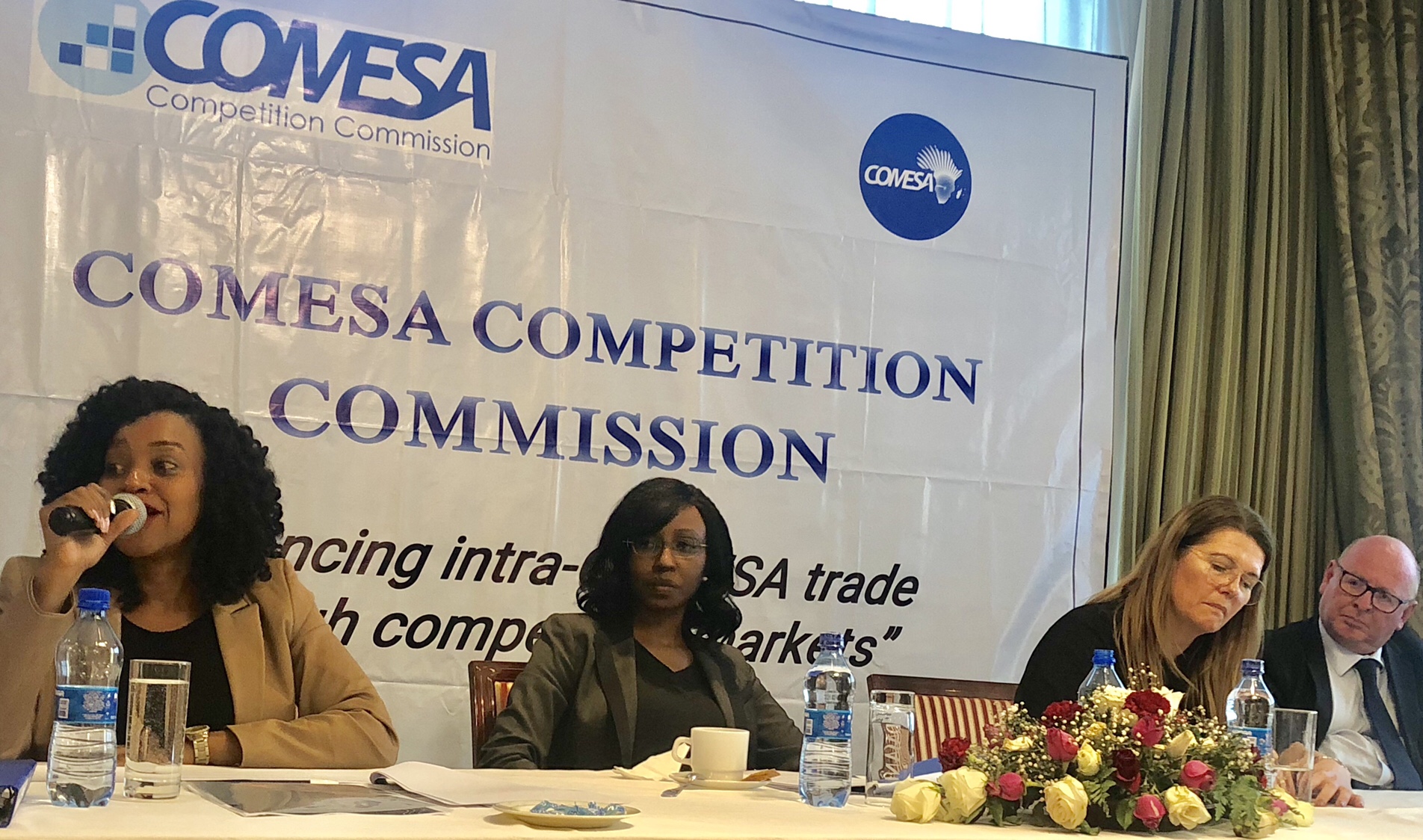
The first-ever COMESA-sponsored competition law workshop focussed solely on the business community, currently underway in Nairobi, Kenya, stretches the capacity of the Hilton conference room where it is being held.

The event’s tag line is “Benefits to Business.” Especially now, with the African continent sporting over 400 companies with over $500m in annual revenues, the topic of antitrust regulation in Africa is more pertinent than ever, according to the COMESA Competition Commission (CCC).
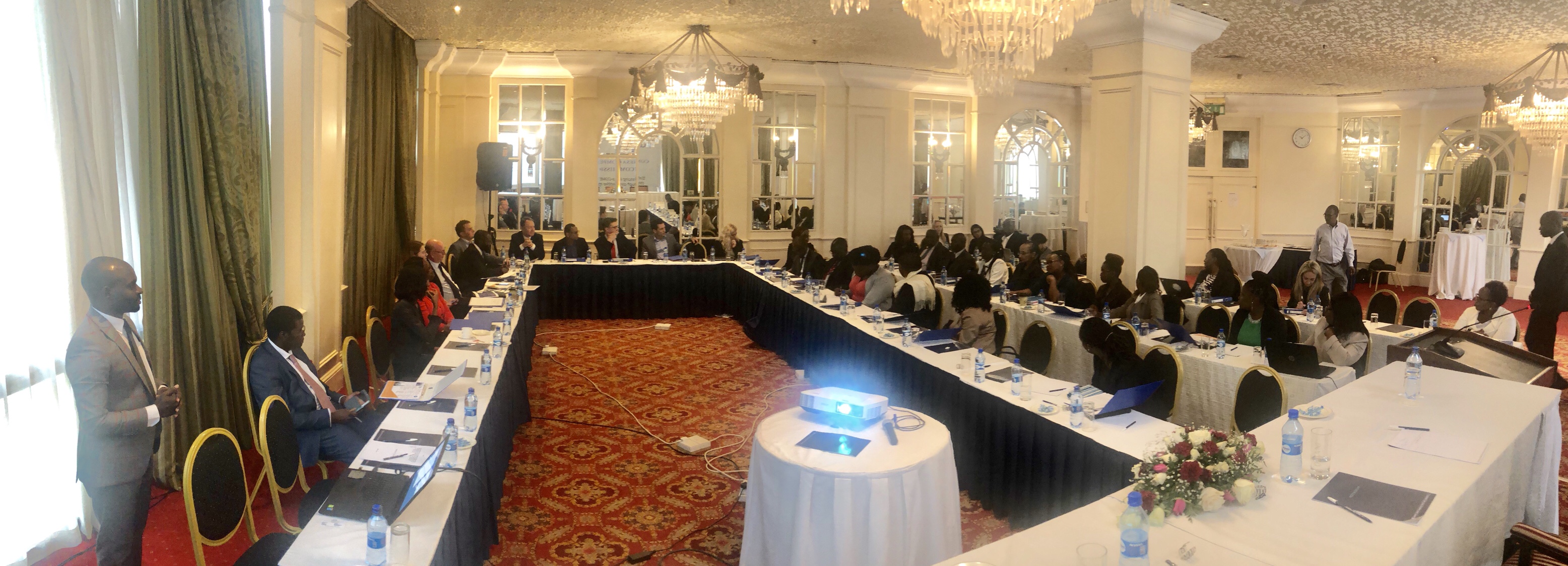

The head of the Zambian competition regulator (CCPC), Dr. Chilufya Sampa, introduced the first panel and guest of honour. He identified the threats of anticompetitive last behaviour as grounds for he need to understand and support the work of he CCC and its sister agencies in the member states.

With COMESA trade liberalisation, the markets at issue are much larger than kenya or other national markets. The effects of anticompetitive conduct are thus often magnified accordingly.

The one-stop shop nature of the CCC’s merger notification system simplifies and renders more cost-effective the transactional work of companies doing business in COMESA.

The Keynote speaker, Mr. Mohammed Nyaoga Muigai, highlighted the exciting future of the more and more integrated African markets, offering new challenges and opportunities. He challenged the audience to imagine a single market of over 750 million consumers. Companies will have to think creatively and “outside the box” in these enlarged common markets.

His perspective is twofold: for one, as a businessman and lawyer, but also as a regulator and board chairman and member of the Kenyan Central Bank. Effective competition policy (and access to the legal system) allows to prepare the ground for the successful carrying out of business in the common market. Yet, businesses must know what the regulatory regime actually is. Therefore, the duty of lawyers is to educate their clients about the strictures and requirements of all applicable competition law, across all COMESA member states.

After a group photo, the event continued with an informative presentation by Mr. Willard Mwemba on key facts that “companies should know” on merger control in the (soon enlarged to 21 member states, with the imminent addition of Tunisia and Somalia) COMESA region, starting with its historical roots in COMESA Treaty Article 55 and continuing through the current era since 2013 of the CCC’s regulatory oversight.

Willard Mwemba, Head of M&A at the CCC

He provided relevant merger statistics, jointly with Director of Trade affairs, Dr. Francis Mangeni, which were of great interest to the audience, followed by a discussion of substantive merger review analysis as it is undertaken by the Commission. The benefits of the “one-stop-shop” characteristic of CCC notification versus multiple individual filings were extolled and individual past M&A cases discussed.

AAT will live-update the blog as the event progresses.

Dr. Sampa, CCPC executive

Dr. Sampa, as head of the Zambian CCPC and a former CCC Board member, emphasized the importance for companies to have functioning and well-implemented antitrust compliance programmes in place.

A spirited discussion was had relating to the 30% market share threshold the Commission utilises to evaluate triggers for launching antitrust conduct investigations. Primerio’s Andreas Stargard argued for COMESA’s consideration of an increase in this trigger threshold to 40%, proposing that:

“Especially in an already concentrated market (where players possess majority shares anyway), a low initial share threshold is of little to no additional enforcement value. On the contrary, a low threshold may hamper vigorous competition by smaller to midsize competitors or newer entrants, who wish to grow their (previously innocuous) smaller share of the market but are simultaneously held back in their growth efforts by trying not to cross the 30% barrier so as not to attract the attention of the Commission.”

There was also an issue raised regarding private equity and non-profit / “impact investors” and the like having to bear the burden of notifications and ancillary fees in cases that are otherwise unobjectionable almost by definition (since the investors are not present on the market of the acquired entities in which they invest). Dr. Mangeni indicated that the CCC will investigate and consider whether a proposed change in the applicable Rules to account for this problem may be advisable in the future.

Mary Gurure, head of legal (CCC)

The CCC’s chief legal advisor, Ms. Mary Gurure, presented on conflict of laws issues within the COMESA regime, harmonisation of laws, and CCC engagements with individual member states on these issues.

Crucially, she also mentioned a novel initiative to replicate a COMESA-focused competition enforcer network, akin to the ECN and ICN groupings of international antitrust agencies.

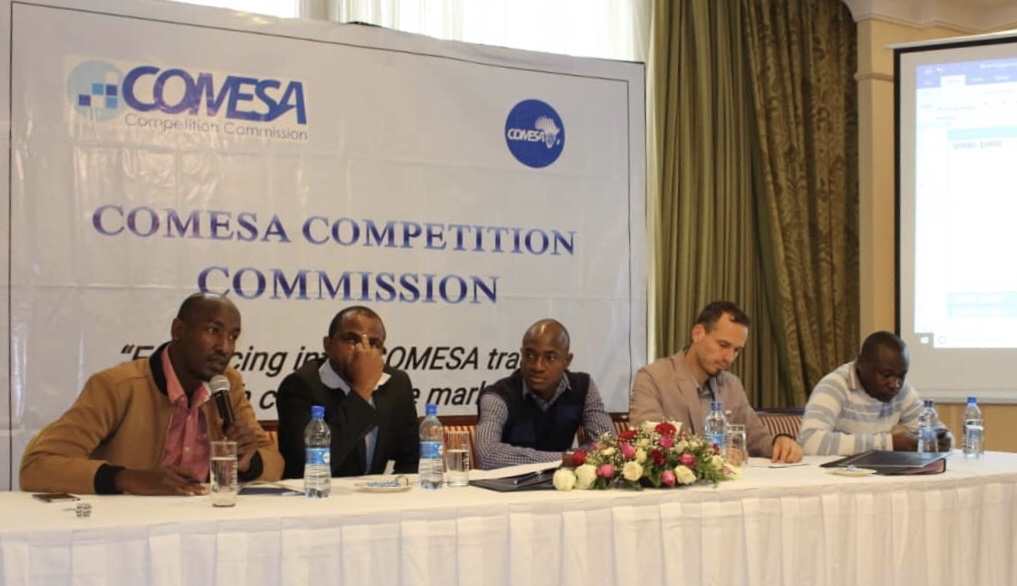
Business panel #CCCworkshop 2018

The conference concluded with a business lawyer panel, in which outside counsel and in-house business representatives voiced their perspectives, largely focusing on the issue of merger notifications. These topics included the (1) burdens of having to submit certified copies of documents, (2) high filing fees (particularly in light of relatively low-value deals being made in the region), (3) comparatively low notification thresholds (e.g., the $10m 2-party turnover limit), (4) remaining, if minimal, confusion over multiple filing obligations, (5) questions surrounding the true nature of the “public interest” criterion in the CCC’s merger evaluation, which could benefit from further clarification via a Guideline or the like, and (6) the importance of predictability and consistency in rulings.

Panellists also commented on the positive, countervailing benefits of the one-stop-shop nature of the CCC, as well as highlighting the friendly nature of the COMESA staff, which permits consensus-building and diplomatic resolutions of potential conflicts.

Mr. Mwemba concluded the event by responding to each of the panel members’ points, noting that forum-shopping based on the costs of filing fees reflected a misguided approach, that the CCC may consider increasing filing thresholds, and that the CCC’s average time to reach merger decisions has been 72 (calendar) days.

CCC workshop participants

COMESA competition workshops underway (#CCCworkshop)

Events focus on media & business community’s understanding of competition rules and practical workload of CCC

Media

For two days this week, COMESA will hold its 5th annual “Regional Sensitization Workshop for Business Reporters“, focussed on provisions and application of the COMESA competition regulations and trade developments within the 19-country common market.

Over 30 journalists from close to a dozen countries are expected to participate in the event, held in Narobi, Kenya, from Monday – Tuesday.

AfricanAntitrust.com will cover all pertinent news emerging from the conference.  We will update this post as the conference progresses.

Speakers include a crème de la crème of East African government antitrust enforcement, including the CCC’s own Willard Mwemba (head of M&A), the CCC’s Director Dr. George Lipimile, and the Director and CEO of the Competition Authority of Kenya, Francis Wang’ombe Kariuki.  Topics will include news on the rather well-developed area of of mergerenforcement, regional integration & competition policy, as well as the concept of antitrust enforcement by the CCC as to restrictive business practices, an area that has been thus far less developed by the Commission in terms of visibility and actual enforcement, especially when compared to M&A.  We previously quoted Director Lipimile’s statement at a 2014 conference that, since the CCC’s commencement of operations “in January, 2013, the most active provisions of the Regulations have been the merger control provisions.”

Andreas Stargard, a competition practitioner, notes:

“We have been impressed with the Commission’s progress to-date, but remain surprised that no cartel cases have emerged from the CCC’s activities.  We believe that the CCC has sufficient capacity and experience now, in its sixth year of existence, to pursue both collusion and unilateral-conduct competition cases.

Personally, I remain cautiously optimistic that the CCC will, going forward, take up the full spectrum of antitrust enforcement activities — beyond pure merger review — including monopolisation/abuse of dominance cases, as well as the inevitable cartel investigations and prosecutions that must follow.”

The media conference will conclude tomorrow evening, June 26th.

Business Community

COMESA Competition Commission logoThe second event, also held in Nairobi, will shift its focus both in terms of attendees and messaging: It is the CCC’s first-ever competition-law sensitization workshop for the Business Community, to take place on Wednesday.  It is, arguably, even more topical than the former, given that the target audience of this workshop are the corporate actors at whom the competition legislation is aimed — invited are not only practicing attorneys, but also Managing Directors, CEOs, company secretaries, and board members of corporations.  It is this audience that, in essence, conducts the type of Mergers & Acquisitions and (in some instances) restrictive, anti-competitive business conduct that falls under the jurisdiction of Messrs. Lipimile, Mwemba, and Kariuki as well as their other domestic African counterparts in the region.



The inter-regional trade component will also be emphasized; as the CCC’s materials note, “we are at a historical moment in time where the Tripartite and Continental Free Trade Area agreements are underway. The objective of these agreements is to realize a single market. Competition law plays a vital role in the realization of this objective, therefore its imperative that journalists have an understanding of how competition law contributes to the Agenda.”

#LiveUpdates from the #CCCworkshop

Kenya perspective

Boniface Kamiti, the CAK representative replacing Mr. Kariuki at the event, noted that Africa in general and including the COMESA region “has a weak competition culture amongst businesses — which is why cartels are continuing in Africa, and the level of M&A is not at the level one would expect.”  This is why media “reporting on competition advocacy is very important, to articulate the benefits of competition policy and how enforcement activities further its goals, so the COMESA countries may be able to compete with other countries, including even the EU members, at a high level.”

He also highlighted — although without further explanation — the “interplay between the COMESA competition laws and those of the member countries; most people are not aware of that!”  This comment is of particular interest in light of the prior jurisdictional tension that had existed between national agencies and the CCC in the past regarding where and when to file M&A deals.  These “teething issues are now fully resolved”, according to Dr. Lipimile, and there are neither de iure nor any de facto merger notification requirements in individual COMESA member states other than the “one-stop shop” CCC filing (which has, according to Mr. Mwemba, reduced parties’ M&A transaction costs by 66%).

On the issue of restrictive trade practices (RTP), the CAK reminded participants that trade associations often serve to facilitate RTP such as price-fixing cartels, which are subject to (historically not yet imposed, nor likely to be) criminal sanctions in Kenya. It also observed that (1) manufacturers’ resale price maintenance (RPM) would almost always be prosecuted under the Kenyan Competition Act, and that (2) since a 2016 legislative amendment, monopsony conduct (abuse of buyer power) is also subject to the Act’s prohibitions.

Concluding, the CAK’s Barnabas Andiva spoke of its “fruitful” collaboration with the CCC on ongoing RTP matters, noting the existing inter-agency Cooperation Agreement. Added Mr. Mwemba, “we have approximately 19 pending RTP cases.”

CCC leadership perspective:  Nudging Uganda and Nigeria towards competition enforcement

CCC_Director
George Lipimile, CEO, COMESA Competition Commission

Dr. Lipimile took up Mr. Kamiti’s “weak African competition culture” point, noting the peculiar regional issue that “between poverty and development lies competition” to enhance consumer welfare.

He took the audience through a brief history of antitrust laws globally, and encouraged journalists to explain the practical benefits of “creating competitive markets” for the population of the COMESA region at large.

He called on Uganda and Nigeria to — finally — enact a competition law.  (AAT has independently reported on Uganda and also the EAC’s emphasis on its member nations having operational antitrust regimes.  We observe that Uganda does have a draft Competition Bill pending for review; a fellow Ugandan journalist at the conference mentioned that there has been some, undefined, progress made on advancing it in the Ugandan legislature.)  Dangote — the vast Nigerian cement conglomerate (see our prior article here) — and Lafarge played exemplary roles in Lipimile’s discourse, in which he commented that “they do not need protecting, they are large”, instead “we need more players” to compete.

Importantly, Dr. Lipimile emphasized that protectionism is anti-competitive, that “competition law must not discriminate,” and that its goal of ensuring competitive market behaviour must not be confused with the objectives of other laws that are more specifically geared to developing certain societal groups or bestow benefits on disadvantaged populations, as these are not the objectives of competition legislation.

The CCC also called on the press to play a more active role in the actual investigation of anti-competitive behaviour, by reporting on bid rigging, unreported M&A activity, suspected cartels (e.g., based on unexplained, joint price hikes in an industry), and the like.  These types of media reports may indeed prompt CCC investigations, Lipimile said.  Current “market partitioning” investigations mentioned by him include Coca Cola, SABMiller, and Unilever.

He concluded with the — intriguing, yet extremely challenging, in our view — idea of expanding and replicating the COMESA competition model on a full-fledged African scale, possibly involving the African Union as a vehicle.

CCC workshop participants
2018 CCC workshop participants

COMESA Trade perspective

The organisation’s Director of Trade & Commerce, Francis Mangeni, presented the ‘competition-counterpart’ perspective on trade, using the timely example of Kenyan sugar imports, the cartel-like structure supporting them, and the resulting artificially high prices, noting the politically-influenced protectionist importation limitations imposed in Kenya.

Dr. Mangeni opined that the CCC “can and should scale up its operations vigorously” to address all competition-related impediments to free trade in the area.

CCC Mergers

Director of M&A, Mr. Mwemba, updated the conference on the agency’s merger-review developments. He pointed to the agency’s best-of-breed electronic merger filing mechanism (reducing party costs), and the importance of the CCC’s staying abreast of all new antitrust economics tools as well as commercial technologies in order to be able to evaluate new markets and their competitiveness (e.g., online payments).

As Mr. Mwemba rightly pointed out, most transactions “do not raise competition concerns” and those that do can be and often are resolved via constructive discussions and, in some cases, undertakings by the affected companies. In addition, the CCC follows international best practices such as engaging in pre-merger notification talks with the parties, as well as follow-ups with stakeholders in the affected jurisdictions.

Key Statistics

Year-to-date (2018), the 24 notified mergers account for approximately $18 billion in COMESA turnover alone. Leading M&A sectors are banking, finance, energy, construction, and agriculture.

In terms of geographic origination, Kenya, Zambia, and Mauritius are the leading source nations of deal-making parties, with Zimbabwe and Uganda closely following and rounding out the Top-5 country list.

The total number of deals reviewed by the CCC since 2013 amounts to 175 with a total transaction value of US $92 billion, accounting for approximately $73.7 billion in COMESA market revenues alone. (The filing fees derived by the Commission have totaled $27.9 million, of which half is shared with the affected member states.)

All notified deals have received approval thus far. Over 90% of transactions were approved unconditionally. In 15 merger cases, the CCC decided to impose conditions on the approval.

CCC Begins Conduct Enforcement & Activates Its Exemption Regime for Potentially Anti-Competitive Agreements

Parties Start Discussing Business Practices with COMESA’s CCC

As AAT reported recently — see “Growing Pains: From One-Trick Pony to Full-Fledged Enforcer?” — the COMESA Competition Commission (CCC) has begun to move from being a pure merger-control administrator to becoming a full-fledged antitrust enforcer.  The CCC issued a Notice calling on firms to notify the CCC of any agreements (both historic and forward-looking) that may be anti-competitive, for the purpose of having such agreements ‘authorised’ or ‘exempted’ under Article 20 of the COMESA Competition Regulations.  (More details on that regime are in our June article, referenced above.)

Eveready products (sample)

AAT has now learned that several companies have taken the agency up on its Exemption proposal: Andreas Stargard, a competition practitioner with Primerio Ltd. observes that the CCC’s announced “leniency ‘window’ to incentivise firms to come forward and obtain an exemption” has closed at this point in time, although he expressed doubt that the relatively short one-month period was sufficient and will likely be extended.  Says Stargard: “We are seeing several parties, both global & local companies, who are beginning to take the CCC’s non-merger enforcement seriously.  These undertakings are considering to obtain advance clearance of their business practices under the Commission’s Notice procedure.”  One such example, he adds, is Kenya’s financially embattled Eveready East Africa: it has reportedly sought CCC approval of its agreements with international manufacturers for the importation and distribution within the COMESA common market of their diverse products, ranging from batteries to fountain pens to CloroCOMESA old flag colorx-brand chemicals.  The Commission has invited “general public and stakeholders” for comments according to its formal statement.

In light of these developments, Stargard advises that:
“multi-national firms operating within COMESA or jointly with a COMESA-based importer or other domestic business partner should consider engaging counsel to evaluate their practices, and if they may fall within Article 16 of the Regulations, consider approaching the CCC for an authorisation letter.”