Meet the Enforcers: Unpacking Tanzania’s merger control amendments & enforcement strategy

By Daniella de Canha and Megan Armstrong

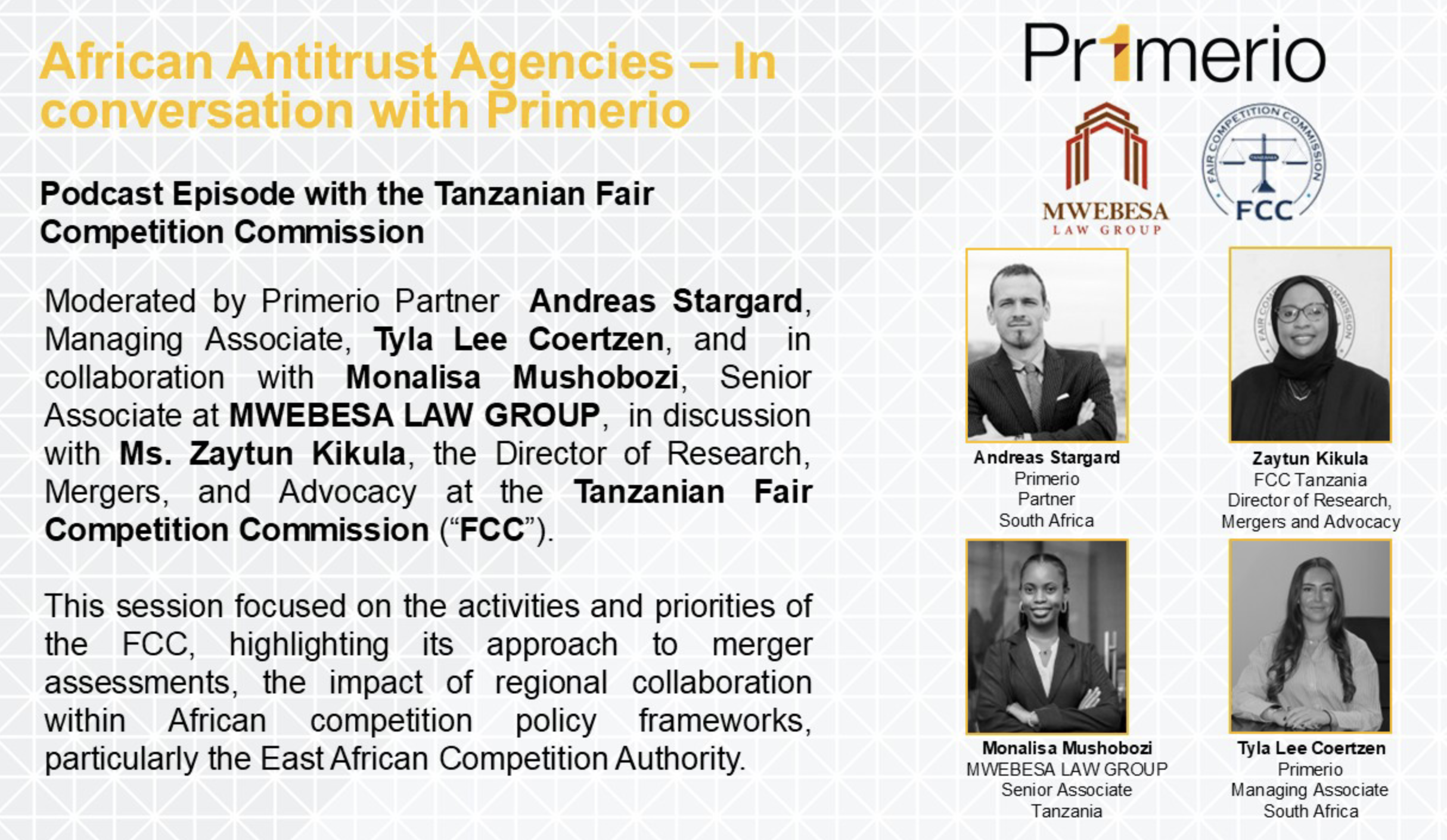
On 18 August 2025, pan-African competition-law boutique firm Primerio continued its “African Antitrust Agencies – In Conversation” series, casting a light on the Tanzanian Fair Competition Commission (“FCC”) in a dynamic exchange which analysed merger control practices, regional competition enforcement and regulatory reform. The discussion featured Director of Research, Mergers, and Advocacy at the FCC, Zaytun Kikula, in conversation with Primerio Director, Andreas Stargard, Primerio Associate Tyla Lee Coertzen, and Advocate at Mwebesa Law Group, Monalisa Mushobozi. You can watch a recording of this session here.

Ms. Kikula highlighted that the FCC’s focus has thus far mainly been on mergers, as well as investigating the dominance of abuse and cartels. She also points out that the FCC have been very active in its merger control regime, handling  between 50 and 70 filings annually.  Most of the notified transactions are smaller, spanning across sectors from telecommunication, finance, manufacturing, mining and insurance. Ms. Kikula stated that the recent amendments made to the Fair Competition Act 2024, have created a shift in merger reviews. Before these changes, the focus was only market share, whereas now mergers are being evaluated through a broader lens.
Monalisa noted an amendment to the Act now allows for a merger to be approved even it is strengthens the position of a dominant firm, provided the transaction yields a demonstratable public interest benefit. Ms. Kikula further explained that while the FCC has not received a transaction which triggers the above-mentioned amendment, notified transactions are subject to a 14-day notice period which invites commentary in order to ensure that the concerns of the public are adequately considered.

The FCC has encountered numerous instances of unnotified mergers, some voluntarily disclosing these transactions to the FCC, after the fact and others through investigation by the FCC. The FCC engages with these firms and lets them know that if they do not notify the Commission and proceed, this will constitute an offence which is punishable by a fine of between 5% and 10% annual turnover. Ms. Kikula mentioned the FCC assumes the role of a business facilitator and encourages settlements where the firms pay a filing fee as well as an additional settlement fee for instances of non-compliance. Filing fees are determined by the structure of the transaction, for instance, when dealing with a global entity the fees are calculated based on global turnover. When the transaction is domestic fees are calculated based on local turnover. She also pointed out the fact that this fee calculation is unconditionally governed by law and that there is no room for negotiation.

Monalisa mentioned that the law stipulates that the Commission has 60 days to approve the merger and inquired whether there have been cases where this timeframe has been shortened or extended. Ms. Kikula explained that non-complex merger reviews can extend between 30 to 45 days, however, in some cases can extend to 90 days. Noting that it may go up to 135 days, the statutory maximum. With regards to remedies, the FCC typically imposes behavioural conditions which are tailored to the specific sector involved.

The regional integration of competition law across Africa was a key theme which was highlighted. Andreas brought to the listeners attention that the East African Community Competition Authority (“EACC”) will be coming online in November of this year and will be open to receiving merger notifications. She further expressed that dual filings should be avoided in order to lessen confusion, emphasising the importance of confidentiality under a Memorandum of Understanding in order to protect information. Ms. Kikula discussed the two upcoming regulatory reforms which the FCC is in the process of introducing, with the first being a leniency program and the second being specific regulation for the assessment of dominance. She further noted that the  threshold for market share has increased from 35% to 40%. This expansive discussion highlights the FCC’s ability to balance application with facilitation, making it a driving force in East African competition law.

Nigeria Flexes Regulatory Muscle: Tribunal Upholds $220 million fine against WhatsApp and Meta over data discrimination practices  

By Nicole Araujo

On 25 April 2025, almost a year after the Federal Competition and Consumer Protection Commission (“FCCPC”) imposed a hefty $220 million fine on WhatsApp and its parent company, Meta, the Competition and Consumer Protection Tribunal (“Tribunal”) delivered its landmark decision, upholding the fine and ordering a further – almost negligible, when compared to the substantive fine – $35,000 administrative penalty against the social media giants for fact-finding costs incurred during the 38-month long investigation. This regulatory win for Nigeria’s digital rights landscape has contributed to reinforcing Nigeria’s growing resolve to regulate big tech.

The decision stemmed from findings that the companies engaged in discriminatory data practices and violated Nigerian data protection laws, affecting more than 51 million users.  As Andreas Stargard, a competition-law practitioner with Primerio, notes, “not only did the FCCPC’s investigation uncover WhatsApp’s unauthorised sharing of user data and a lack of meaningful consent mechanisms, but it also revealed discriminatory practices compared to other regions – I believe this is where the differentiation in the FCCPC’s consumer-protection jurisdiction (as opposed to that of the domestic data protection authority) comes in meaningfully.  It remains to be seen what an independent, judicial review of the Tribunal decision will yield in this regard, but the FCCPC has had a comparatively strong track record so far in terms of having its novel, forceful, and ‘creative’ enforcement strategies upheld, with the B.A.T. matter perhaps being the most powerful example.  The recent Dangote matter, involving the shocking fact pattern of a lack of refining capabilities in oil-rich Nigeria, is an interesting counter-point, though, as the FCCPC lost an attempt to intervene in that matter in Abuja’s Federal High Court.”

So far, the appellate-level Tribunal has sided with the Commission, dismissing an appellate request for review by WhatsApp and Meta, which challenged the fine on 22 grounds, ranging from procedural errors to allegations of vagueness and technical impossibility in respect of the timeframe given by the FCCPC. Meta’s legal team relied on the grounds that the FCCPC’s orders were unclear, unsupported by Nigerian law, and financially impractical to comply with. However, the FCCPC argued that the penalties were not financially punitive but rather corrective and aimed at rectifying the tech giant’s alleged discriminatory practices.

In its decision, the Tribunal emphasised that the FCCPC acted within its lawful mandate and that WhatsApp and Meta were afforded a fair hearing. It further upheld that the reliance on foreign legal standards, while not binding, was appropriately persuasive in determining issues of data protection and consumer rights.

The Tribunal ordered WhatsApp and Meta to inter alia, reinstate Nigerian users’ rights to control their personal data, revert to their 2016 data-sharing policy, and immediately cease unauthorised data sharing with Facebook and other third parties without obtaining the necessary consent from users. In this regard, compliance letters must be submitted by July 1, 2025, and a revised data policy must be proposed and published. 

This case marks a significant moment in the Nigerian Authority’s forceful use of the regulatory tools available to it — as well as overall for Africa’s evolving digital economy, highlighting the demand for global corporations to acknowledge local presence and effects and adapt to robust local compliance expectations. While Big Tech companies such as Amazon, Google and Meta have been subject to significant penalties under the European Union’s General Data Protection Regulation, as one of Africa’s digital technology pioneers, Nigeria’s move could inspire similar enforcement actions across the African continent. This decision can be seen as a “gentle” reminder for multinational digital and tech firms that compliance with local data protection laws is no longer optional, it is imperative.

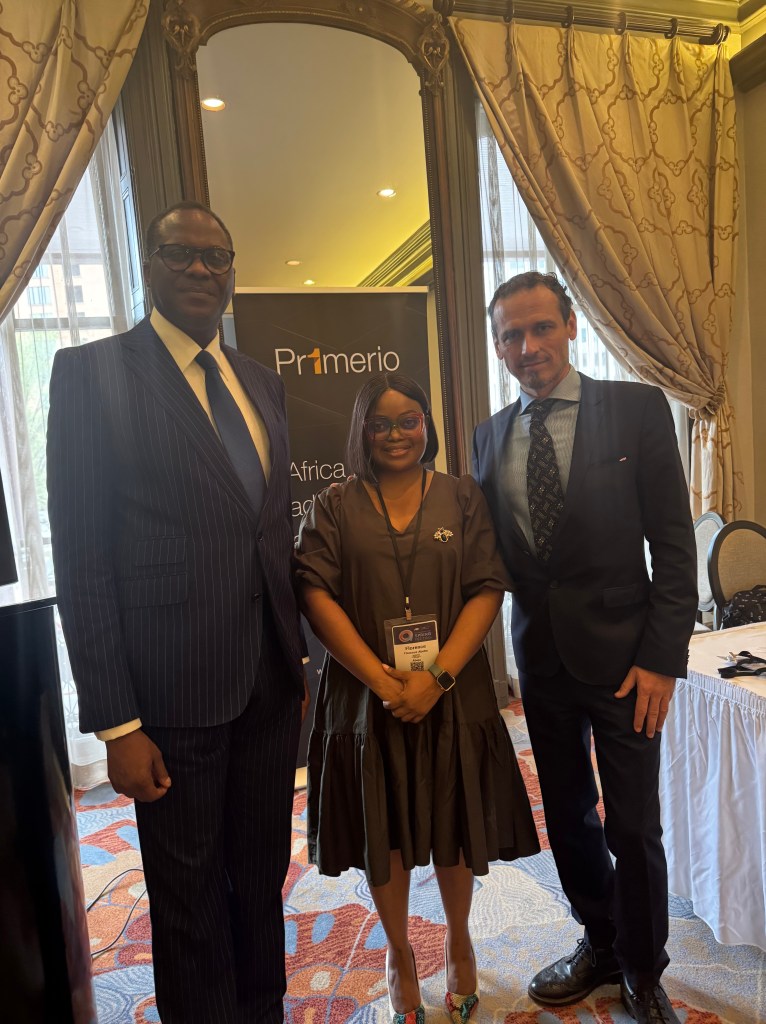
Babatunde Irukera, Florence Abebe, Andreas Stargard at the African Antitrust Salon hosted by Primerio

While more African countries are pushing back against big tech companies and are focusing on unchecked data exploitation within their borders, there is a need, however, for the continent to build towards a larger, sustainable strategy to manage the presence and power of big tech.  Says Andreas Stargard, “the quarter-billion dollar Meta fine, if upheld, would firmly cement Nigeria’s antitrust global relevance in the minds of international lawyers and businesses.  This comes as a surprise in some ways, as the FCCPC was first put on the map only fairly recently, by its inaugural Chief enforcer, Tunde Irukera: his vision for creative enforcement tools and encouragement of the agency’s staff to employ heretofore unused investigatory mechanisms and strategies – often seen only in U.S.-style civil litigation, and certainly not in many government agencies worldwide, much less among other African jurisdictions – show that the Commission potentially has the necessary intellectual capacity and investigatory stamina to pursue cases of equal or greater dimensions in the future.  It will depend on its leadership where the FCCPC’s path is charted next…”

Of course, there needs to be a balance struck between the value of personal data and that of innovation and tech adoption, which calls for a coordinated regulation policy that will strive to balance economic and non-economic features of the continent. 

As observed by Leonard Ugbajah, a competition law consultant, a balanced and pragmatic approach is essential when opting to address the regulatory landscape around big tech: 

“A common approach would harness the capabilities of countries, moderate opportunism by state and non-state actors in pursuing enforcement, recognise the economic importance of big tech, properly calibrate the various pain points (economic and non-economic) and safeguard the interests of the not-so-capable African countries.” 

The social media giants have 60 days, starting from 30 April 2025, to comply with the $220 million fine ordered by the Tribunal. Notably, following the decision, WhatsApp has indicated that it intends to seek a stay of the Tribunal’s decision and pursue an appeal. 

More Regional Antitrust: Competition law in West Africa at the hands of ECOWAS

After the successful launch (and by now, first decade) of its Eastern regional counterpart, the COMESA Competition Commission, as of today, West Africa’s ECOWAS body likewise boasts a supra-national antitrust enforcement regime. AAT will be following its path closely.

By Jannes van der Merwe

The Economic Community of West Africa States (“ECOWAS”) was established by fifteen West Africa countries (“member states”) in 1975 when the member states signed the ECOWAS Treaty, with the aim and objectives to maintain and enhance economic stability and development in Africa.[1] The member states signed the revised treaty in 1975, currently governing the member states.

The current member states are Benin, Burkhina Faso, Cabo Verde, Côte d’Ivoire, The Gambia, Ghana, Guinea, Guinea Bissau, Liberia, Mali, Niger, Nigeria, Senegal, Sieera Leone and Togo.

Authority Established in 2008

In 2008 ECOWAS implemented two pieces of legislation through the authority of the treaty to steer the competition framework within the member states. The first was the Supplementary Act A/SA.1/12/08, and the second Supplementary Act A/SA.2/12/ 08.

Supplementary Act A/SA.1/12/08:

The purpose of this piece of legislation (known as the Community Competition Rules) nutshell is to promote competition, enhance economic efficiency, prohibit anti-competitive conduct that restricts or distorts competition, ensure consumer welfare and to expand opportunities for domestic enterprises of the member states. [2]

Supplementary Act A/SA.2/12/ 08:

The purpose of this piece of legislation was to establish a regional body to be known as the ‘ECOWAS Regional Competition Authority’ (“the Commission”) to govern, oversee and implement the Community Competition Rules.

The Commission

The formal launching of the Commission took place in May 2019. In December 2021, together with further enactment of legislation, the Council of Ministers of ECOWAS amended Supplementary Act A/SA.2/12/ 08 to, inter alia, enhance article 2, governing the bodies of the ERCA[3].

The amendment established two formal bodies of the ERCA, being the Council and the Executive Board of the ERCA, together with the Executive Directorate who is the administrative, investigative and implementing body of the Council’s decisions[4].

On 2 October 2024 the newly elected Council of the Commission will be sworn in at Banjul, the capital of the Republic of Gambia. See photo below.

This event will mark the dawn of a new day for competition in West Africa, whereby the Commission, through the Council, will become fully functional in order to administrate and give effect to the Competition Rules to member states.

Legal Framework

The Commission, through the Council, will be able to give effect to the preamble of the Treaty and align a vitally important piece that was missing from the practical application of the treaty.

The Community Competition Rules will be the governing legislation providing the umbrella under which the Commission will operate.

During December 2021, the Council of Ministers for ECOWAS further enacted regulations to govern the rules and procedures to give effect to the articles of the Community Competition Rules established in 2008.

A brief description of all the relevant legal framework will be discussed below.

 The Competition Community Rules

The Competition Community Rules will regulate, inter alia, Agreements and Concerted Practices in Restraint of Trade; Abuse of Dominant Position; Mergers and Acquisitions; State Aid; Public Enterprises; Compensation for Victims of Anti-Competitive Practices; Authorisation and Exemptions; Agreements Concluded by Member States and the Application and Implementation of the Community Competition Rules[5].

ERCA’s Rules of Procedure in Competition Matters

Regulation C/REG.24/12/21[6] was established to set out the rules and procedures of the ECRA in competition matters and by doing so, harmonising competition laws, procedures, cooperations, investigations, exchange of information, decision making, enforcement, sanctions and compensation[7].

Supplementary Act A/SA.3/12/21

The amended act’s new article 3 provides a positive duty on the Commission to represent ECOWAS wherever necessary in matters of competition and consumer protection[8].

Mergers and Acquisitions in ECOWAS

Regulation C/Reg. 23/12/21[9] was established to set out the rules and procedures for mergers and acquisitions.

This regulation requires that merging parties of member states that meets the threshold will have to obtain prior approval before implementing. The merger threshold is governed by enabling Rule PC/REX.1/01/2024[10]

Leniency and Immunity Proceedings in Competition within ECOWAS

Regulation C/REG.22/12/21[11] was established to set out the rules, conditions and procedures of leniency and immunity applications to the Commission. Simultaneously, this regulation is a guide to the Commission in the exercise of its investigative and prosecutorial discretion in illegal cartels who, through their cooperation, help to reveal Cartel conduct[12].

Regulation C/REG.22/12/21 is accompanied with enabling Rule PC/REX.1/01/24[13] containing the manual for leniency and immunity applications and what leniency and immunity the Commission may grant for enterprises of member states which are engaged in anti-competitive behavior and who voluntarily disclose information to facilitate the Community Competition Rules.

Final Word

The operational ECOWAS Regional Competition Authority and the implementation of a functioning Council for the ECOWAS Regional Competition Authority is a leap forward in the West Africa competition sphere and will protect enterprises and enhance competition within the West Africa markets, providing benefits for entrepreneurs, enterprises and consumers.


[1] Article 3, ECOWAS Revise Treaty, 24 July 1993 (‘the treaty;’).

[2] Supplementary Act A/SA.1/12/08, Article 3.

[3] Supplementary Act A/SA.3/12/21 Relating to the Amendments of Supplementary Act A/SA.2/12/08.

[4] Article 2(new), Supplementary Act A/SA.3/12/21 Relating to the Amendments of Supplementary Act A/SA.2/12/08.

[5] Article 5-13, Supplementary Act A/SA.1/12/08.

[6] Regulation C/REG.24/12/21 on the ERCA’s Rules and Procedures in Competition Matters.

[7] Article 3, Regulation C/REG.24/12/21 on the ERCA’s Rules and Procedures in Competition Matters.

[8] Article 3(new), Supplementary Act A/SA.3/12/21 Relating to the Amendments of Supplementary Act A/SA.2/12/08.

[9] Regulation C/Reg.23/12/21 on the Rules of Procedure for Mergers and Acquisitions in ECOWAS.

[10] Enabling Rule PC/REX.1/01/24 on Manuals of the Procedures of the ECOWAS Regional Competition Authority.

[11] C/REG.22/12/21 on the Rules on Leniency and Immunity Procedures in Competition within ECOWAS.

[12] Article 1, C/REG.22/12/21 on the Rules on Leniency and Immunity Procedures in Competition within ECOWAS.

[13]  Enabling Rule PC/REX.1/01/24 on Manuals of the Procedures of the ECOWAS Regional Competition Authority.

Insular Africa: Mauritius provides Antitrust Updates

The Mauritius Competition Commission published the 6th issue of its newsletter, dealing with the latest activities of the Commission over the past year (June 2023 – July 2024)

By Jannes van der Merwe

The Commission has undertaken a significant number of developments in the past few months, in order to increase its activity and enforcement as well as advocacy work. Most notably, the Commission has contributed to the Protocol on Competition Policy under the African Continental Free Trade Area; hosted Professor Alan Fels for three days helping the Commission with capacity building where he shared his experiences and discussed how to better enforce the law and challenges faced by the Commission; hosted Professor Pierre Régibeau to lecture, contribute and advise the Commission on various topics such as merger control, abuse of dominance, IP and competition law; the commission has been elected as the Chair of the African Competition Forum; and the Commission has been appointed as the Co-Chair of the International Competition Network Merger. Working Group, attending to educational outreaches, all while managing the competition activities within Mauritius. [1]

The Commission has made headway on several critical investigations within the Mauritian economy.

  • The Executive Director has completed its investigation in the merger of two major suppliers of snacks and drink through automated vending machines and has submitted the report for the Commission’s decision.[2]
  • The Commission completed its ports market study, led by John Davies.[3]
  • The Commission is continuing its investigation into possible cartel conduct with Third-Party Liability on Contractor’s All Risk Insurance.[4]
  • The Commission is continuing its investigation into a possible cartel, price-fixing the wholesale markup of pharmaceutical products.[5]
  • The Commission is investigating possible anti-competitive behaviour by TNS Tobacco, an importer and distributor of British American Tobacco’s brands.[6]

Completed Market Investigations

Acquisition of Engen Ltd by Vivo Group:

After the acquisition by Vivo Energy of the shares held by Engen Holding in different Engen entities in several countries, including Zimbabwe, Zambia, Gabon, Rwanda, Mozambique and other African countries in recent times, Vivo Energy turned its eyes to South Africa.

This in turn, caused the Commission to commence an investigation into the possible competition concerns the transaction between Vivo Energy and Engen Limited (South Africa) in South Africa could raise in the Mauritius’ fuel market. The Commission’s investigation found that the transaction in South Africa raises competition concerns as Engen Limited owns and operates Engen Petroleum Limited in Mauritius, while Vivo Energy competes in the Mauritius Fuel Market through its vertical integration.

The transaction that the commission then had to consider entailed the acquisition of Engen Limited (“Engen Mauritius”) by Vitol Emerald Bidco (PTY) Ltd, who is controlled by Vitol Holdings through Vitol Africa B.V. Vitol Holding proposed to transfer Vitol Emerald Bidco to Vivo Energy Emerald Holding B.V, who is part of Vivo Energy Limited.

Vivo Energy Limited has stakes in Vivo Energy Mauritius who trades under the name of Shell, a competitor to Engen Mauritius.  The commission’s concern with all of the above was that effectively, the Mauritian fuel market will be transformed from 4 dominant players to 3.

This resulted in the parties’ providing undertakings to the Commission to ensure that the fuel market in Mauritius remains competitive, which the Commission accepted as the conditions to the agreement. [7]

The parties agreed that a separate divestment business will acquire Engen Mauritius, subject to the terms as per the merging parties’ undertakings which include the majority of Engen Mauritius’ business, excluding 7 filing stations and various contracts related to the commercial operation between Engen and Vivo Group.[8]

Read more of the Mauritius Competition Commission’s news here.


[1]The Competition Commission, Competition News, Issue 6, August 2024.  https://media.licdn.com/dms/document/media/D4D1FAQFYxpZFjAS5JQ/feedshare-document-pdf-analyzed/0/1725357604620?e=1726704000&v=beta&t=f-zCi3QZ4siJdvpTtzgoGSlgFvXwUeCovjxQYtfO0Ks

[2] News letter, page 12.

[3] News letter, page 13.

[4] News letter, page 13.

[5] News letter, page 14.

[6] News letter, page 14.

[7] The Government Gazette of Mauritius, General Notice No. 668 of 2024, 1 June 2024.

[8] The Competition Commission, Competition News, Issue 6, August 2024. page 12.

New antitrust MoU between COMESA & EEC

No, that’s not the European Economic Community, but rather the slightly less well-known Eurasian Economic Commission (EEC), thank you for asking…

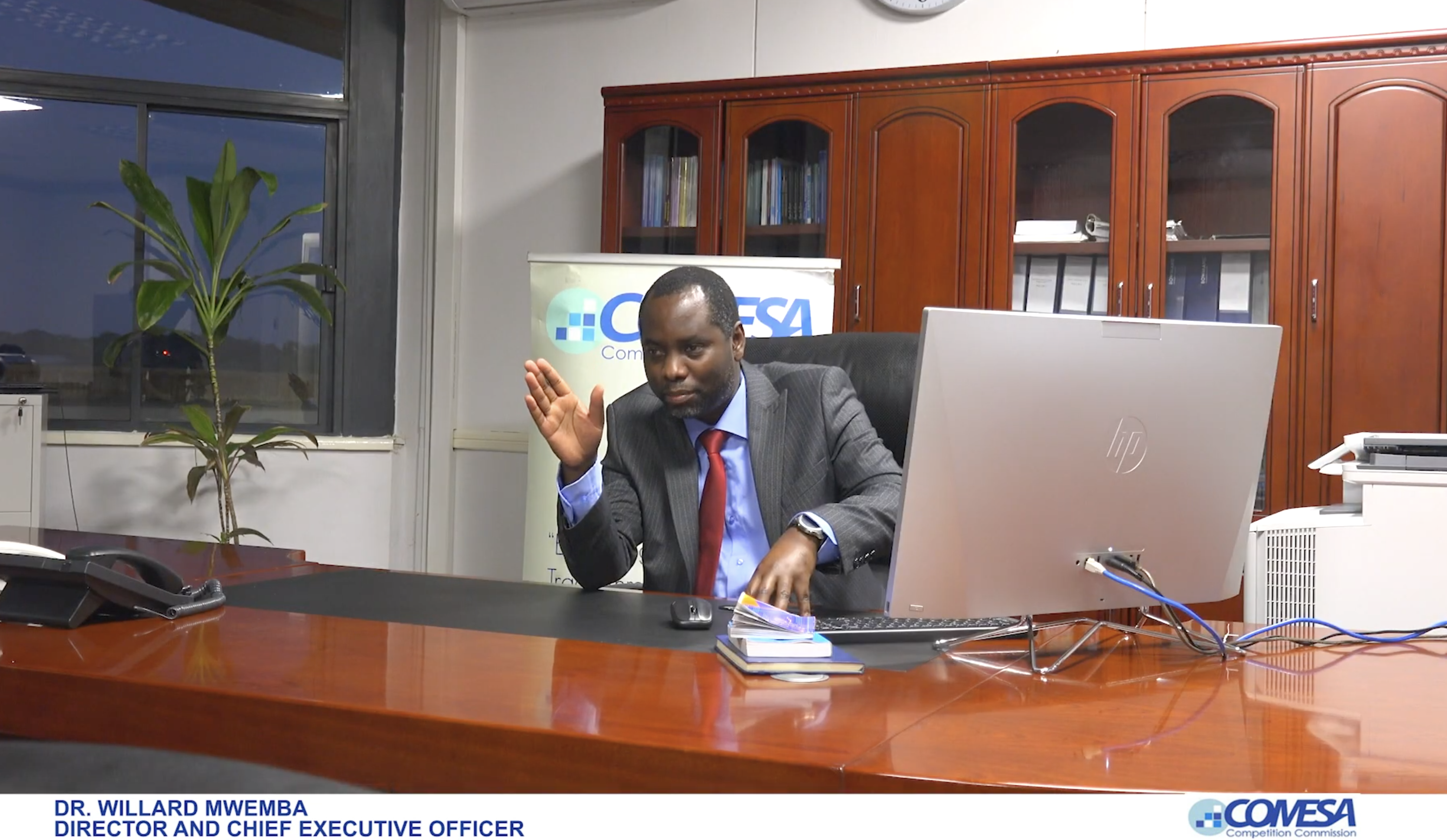
The Memorandum of Understanding, signed in late July in Geneva, is designed to allow the two agencies to “cooperate in addressing anti-competitive conduct in their respective regions, capacity building and research,” according to AAT’s old friend and CCC 2.0 executive, Dr. Willard Mwemba.

His EEC counterpart, Mr. Arman Shakkaliyev, Minister in charge of Competition & Antitrust Regulation, said that the future collaboration “opened up new opportunities” for closer interaction and the sharing of experiences and knowledge as to specific investigations, most notably, in addition to the two agencies planning more standard cooperative ventures such as joint conferences or training seminars.

Says Andreas Stargard, a competition lawyer at Primerio Ltd.:

“This latest MoU represents yet a further step in the clear and unmistakable direction of ever-closer cooperation between enforcement agencies on the African continent that we have seen for a few years now. The advice to be taken from this is fairly simple: Companies operating in more than one country in Africa should take note of this development, as their local ‘competition reputation‘ from one jurisdiction will doubtless precede them in the other, given the information-sharing between African watchdogs, which catches many corporates seemingly unawares…”

Doris Tshepe to lead Africa’s major antitrust enforcer as of September 2022

On 9th June 2022, the Minister of Trade, Industry and Competition, Mr Ebrahim Patel, announced his decision to appoint Ms. Doris Tshepe as the new Commissioner of the South African Competition Commission (“SACC”). Ms Tshepe will succeed outgoing Commissioner Tembinkosi Bonakele.

Minister Patel’s announcement comes as somewhat of a surprise to observers, given Commissioner Bonakele’s nine-year tenure and instrumentality in increasing merger and cartel enforcement within South Africa, whilst also advocating and advancing the role of the ‘public interest’ in both of these aspects. Under the leadership of Commissioner Bonakele, the SACC has been considered widely as an agency of international importance.

Andreas Stargard and Outgoing Commissioner Tembinkosi Bonakele (South Africa)

Commissioner Bonakele’s successor, Ms Doris Tshepe, is a well-regarded attorney with extensive experience. Her legal practice spans over 20 years, during which she specialised in constitutional and administrative law, legislative drafting, media and communication law, commercial law, competition law and employment law.  Additionally, Ms Tshepe has significant investigatory experience, having been involved in the SACC’s previous market inquiries into the Liquid Petroleum Gas and Grocery Retail sectors as well as being a panel member for the recent Online Markets Inquiry. In addition to her investigative experience, Ms Tshepe also has legislative chops, having sat on a 2019 panel considering the recent amendments to the South African Competition Act.  Says John Oxenham, a South African antitrust attorney: “Future Commissioner Tshepe’s long history of working with the SACC and others to shape the current enforcement approach of the agency (as well as its trajectory for the future) indicates that the Commission’s focus will remain steady and sharp. I do not foresee any wavering in the course of the SACC’s currently robust operations, due to the transition in its leadership.”

Bearing Ms Tshepe’s investigative history in mind, we can generally expect her to continue Commissioner Bonakele’s strong enforcement initiatives. Having been appointed to the panel on the amendment of the Competition Act, there is also a reasonable likelihood that we will see the SACC continue implementing, if not increasing, its long-standing public-interest agenda – particularly given the transformative socio-economic objects of South African legislation, say the competition practitioners at Primerio Ltd.

Lastly, we note that not all is over at the SACC for “Tembi” — Minister Patel has stated that there are discussions with outgoing Commissioner Bonakele regarding the delegation of an appropriate set of responsibilities that would allow him to utilize his skills and experience in competition and public policy after his departure. Again, although the details of these responsibilities are unknown, Minister Patel’s statement emphasizes the increased shift towards a public-policy centric competition regime. 

Ms Tshepe is expected to assume her position as Commissioner of the Competition Commission during the course of September 2022.

Incoming Commissioner Doris Tshepe

New CCC Chief addresses World Competition Day, lays out future of COMESA antitrust policy

As we previously reported, long-time COMESA Competition Commission executive, Dr. Willard Mwemba, was recently promoted to his new role of permanent CEO of the CCC, after having been appointed Acting Director in February of this year. In this new capacity, he recently gave a thus-far unreported speech on the occasion of “World Competition Day” on December 5th, 2021.

In his short address, Dr. Mwemba lays out the mid-term future he envisions for the antitrust policy under his aegis in the Common Market, as follows.

Highlighting the importance of competition law for efficient and fair markets, with the goal of benefiting businesses (as opposed to being perceived as an impediment to business interests), Mwemba mentions key building blocks of the CCC’s enforcement going forward. These include resale-price maintenance and exclusive-dealing enforcement (around 1-1:30 in the little-known video, which has thus far only garnered two dozen views on the YouTube platform and is not yet published on the CCC’s own web site). He then moves on to merger regulation (2:45 onward), and further discusses the importance of the effectiveness of the actual competition law itself — noting that the CCC plans to amend its Regulations and Guidelines within the next year (3:40). Noting that the CCC cannot undertake this process very well alone, Mwemba highlights the cooperative approach of the Commission, partnering with and relying on other groups and stakeholders (such as the COMESA Women in Business group, OECD, and others).

Mwemba notes that the CCC’s “focus for the year 2022 will be on strict enforcement, especially against blatant anti-competitive conduct and blatant violations of the COMESA Competition Regulations, and in this case I mean cartels.  It is said that cartels are the supreme evil of antitrust … because it robs consumers, government, and businesses of huge sums…  So in line with this theme, our focus for 2022 shall be on cartels, and we shall make sure that we weed out all possible or potential cartels operating in the Common Market.”

The CCC chief concludes his address by saying that competition authorities “are not there to frustrate businesses, we are not the enemy of business”; instead, he sees the CCC’s role to ensure that markets operate fairly for all — a welcome reminder to the southern and eastern African business community to understand and embrace the precepts of antitrust law as an efficiency-enhancing mechanism for trading in the Common Market.

Dr. Willard Mwemba confirmed as CEO

APPOINTMENT OF DR WILLARD MWEMBA AS THE DIRECTOR AND CHIEF EXECUTIVE OFFICER OF THE COMESA COMPETITION COMMISSION

 November 15th, 2021  Competition CommissionFacebookTwitterShare

PRESS RELEASE

 APPOINTMENT OF DR WILLARD MWEMBA AS THE DIRECTOR AND CHIEF EXECUTIVE OFFICER OF THE COMESA COMPETITION COMMISSION

 The COMESA Competition Commission (the “CCC”) wishes to inform the general public that the COMESA Council of Ministers at its 42nd Meeting held on 9th November 2021 appointed Dr Willard Mwemba as its Director and Chief Executive Officer.

The Commission’s Board, Management and Staff members wishes to congratulate Dr Mwemba on his well-deserved appointment. Dr Mwemba has been with the CCC since January 2013 being its first Head of the Mergers and Acquisitions Department until his appointment as the Acting Director and Chief Executive Officer on 1 February 2021. He has acted in this capacity until 9 November 2021 when his appointment was confirmed. Prior to joining the CCC, Dr Mwemba was the Director of Mergers and Monopolies at the Competition and Consumer Protection Commission (CCPC), Zambia.

Dr Mwemba has been instrumental in the enforcement of competition and consumer laws both at national and regional level. At national level, he has assisted a number of national competition authorities in developing and operationalising their mergers and restrictive business practices divisions. At regional level, he has been instrumental in implementing and reforming the COMESA Competition Law regime.  He has written extensively on competition law and is widely consulted on the subject at global level.

Dr Mwemba holds several qualifications among them Bachelor’s degrees in Economics and Law from the University of Zambia. He also holds a Master’s degree in Competition Law from Kings College London. He further holds a PhD from the University of Cape Town specializing in competition law.

The Board of Commissioners, Management and Staff members of the CCC have great confidence in Dr Mwemba’s capabilities and wishes him well as he executes the mandate of enhancing intra-COMESA trade through the creation of competitive markets.

COMESA antitrust enforcer holds COVID seminar


Willard Mwemba
Dr. Mwemba of the CCC

The COMESA Competition Commission (“CCC”) hosted a live webinar today on the impact of COVID-19 on merger regulation and enforcement within the common market in the COMESA region.  The seminar was aptly sub-titled “Challenges and Way Forward,” and the CCC representatives, in particular Dr. Willard Mwemba, did indeed lay out the problems faced by them and the measures proposed and taken to alleviate them.

COVID-related business and national competition agency closures have led to “significant delays in information gathering” from NCAs, third parties, and merger parties themselves.

CCC has relaxed the hard-copy filing requirements for merger notifications.

The concept of non-competition factors (i.e., the public-interest element) was also raised, as there is a “growing debate on whether the pandemic may necessitate changes in [the] substantive assessment of mergers, e.g., towards more lenient consideration of failing firms.”

That said, the CCC emphasized that its adjustment to enforcement actions should not be construed as any weakening of competition principles taking place.  The harmonization and coordination among the COMESA member countries’ agencies and the CCC remain a critical element of the operation of the single market.

Beyond Pure Competition Law – Is Africa Leading the Way Forward in Antitrust Enforcement?

To all our Africanantitrust followers, please take note of the upcoming American Bar Association webinar on 2 July 2019 (11amET/4pmUK/5pm CET) titled:

“Beyond Pure Competition Law – Is Africa Leading the Way Forward in Antitrust Enforcement?”

In what promises to be a highly topical (telecon) panel discussion, Eleanor Fox, Andreas Stargard, John Oxenham, Amira Abdel Ghaffar and Anthony Idigbe will:

  • provide critical commentary of the most recent developments in antitrust policy across the African continent;
  • highlight the most significant legislative amendments and enforcement activities in Africa; and
  • analyze some of the key enforcement decisions.

South Africa, Nigeria, Egypt, COMESA and Kenya are among the key jurisdictions under the microscope.

Practitioners, agency representatives, academics and anyone who is an antitrust enthusiast will find this webinar to be of great interest. Not to mention companies actually active or looking to enter the African market place.

For details on how to participate, please follow this Link