Nigeria Flexes Regulatory Muscle: Tribunal Upholds $220 million fine against WhatsApp and Meta over data discrimination practices  

By Nicole Araujo

On 25 April 2025, almost a year after the Federal Competition and Consumer Protection Commission (“FCCPC”) imposed a hefty $220 million fine on WhatsApp and its parent company, Meta, the Competition and Consumer Protection Tribunal (“Tribunal”) delivered its landmark decision, upholding the fine and ordering a further – almost negligible, when compared to the substantive fine – $35,000 administrative penalty against the social media giants for fact-finding costs incurred during the 38-month long investigation. This regulatory win for Nigeria’s digital rights landscape has contributed to reinforcing Nigeria’s growing resolve to regulate big tech.

The decision stemmed from findings that the companies engaged in discriminatory data practices and violated Nigerian data protection laws, affecting more than 51 million users.  As Andreas Stargard, a competition-law practitioner with Primerio, notes, “not only did the FCCPC’s investigation uncover WhatsApp’s unauthorised sharing of user data and a lack of meaningful consent mechanisms, but it also revealed discriminatory practices compared to other regions – I believe this is where the differentiation in the FCCPC’s consumer-protection jurisdiction (as opposed to that of the domestic data protection authority) comes in meaningfully.  It remains to be seen what an independent, judicial review of the Tribunal decision will yield in this regard, but the FCCPC has had a comparatively strong track record so far in terms of having its novel, forceful, and ‘creative’ enforcement strategies upheld, with the B.A.T. matter perhaps being the most powerful example.  The recent Dangote matter, involving the shocking fact pattern of a lack of refining capabilities in oil-rich Nigeria, is an interesting counter-point, though, as the FCCPC lost an attempt to intervene in that matter in Abuja’s Federal High Court.”

So far, the appellate-level Tribunal has sided with the Commission, dismissing an appellate request for review by WhatsApp and Meta, which challenged the fine on 22 grounds, ranging from procedural errors to allegations of vagueness and technical impossibility in respect of the timeframe given by the FCCPC. Meta’s legal team relied on the grounds that the FCCPC’s orders were unclear, unsupported by Nigerian law, and financially impractical to comply with. However, the FCCPC argued that the penalties were not financially punitive but rather corrective and aimed at rectifying the tech giant’s alleged discriminatory practices.

In its decision, the Tribunal emphasised that the FCCPC acted within its lawful mandate and that WhatsApp and Meta were afforded a fair hearing. It further upheld that the reliance on foreign legal standards, while not binding, was appropriately persuasive in determining issues of data protection and consumer rights.

The Tribunal ordered WhatsApp and Meta to inter alia, reinstate Nigerian users’ rights to control their personal data, revert to their 2016 data-sharing policy, and immediately cease unauthorised data sharing with Facebook and other third parties without obtaining the necessary consent from users. In this regard, compliance letters must be submitted by July 1, 2025, and a revised data policy must be proposed and published. 

This case marks a significant moment in the Nigerian Authority’s forceful use of the regulatory tools available to it — as well as overall for Africa’s evolving digital economy, highlighting the demand for global corporations to acknowledge local presence and effects and adapt to robust local compliance expectations. While Big Tech companies such as Amazon, Google and Meta have been subject to significant penalties under the European Union’s General Data Protection Regulation, as one of Africa’s digital technology pioneers, Nigeria’s move could inspire similar enforcement actions across the African continent. This decision can be seen as a “gentle” reminder for multinational digital and tech firms that compliance with local data protection laws is no longer optional, it is imperative.
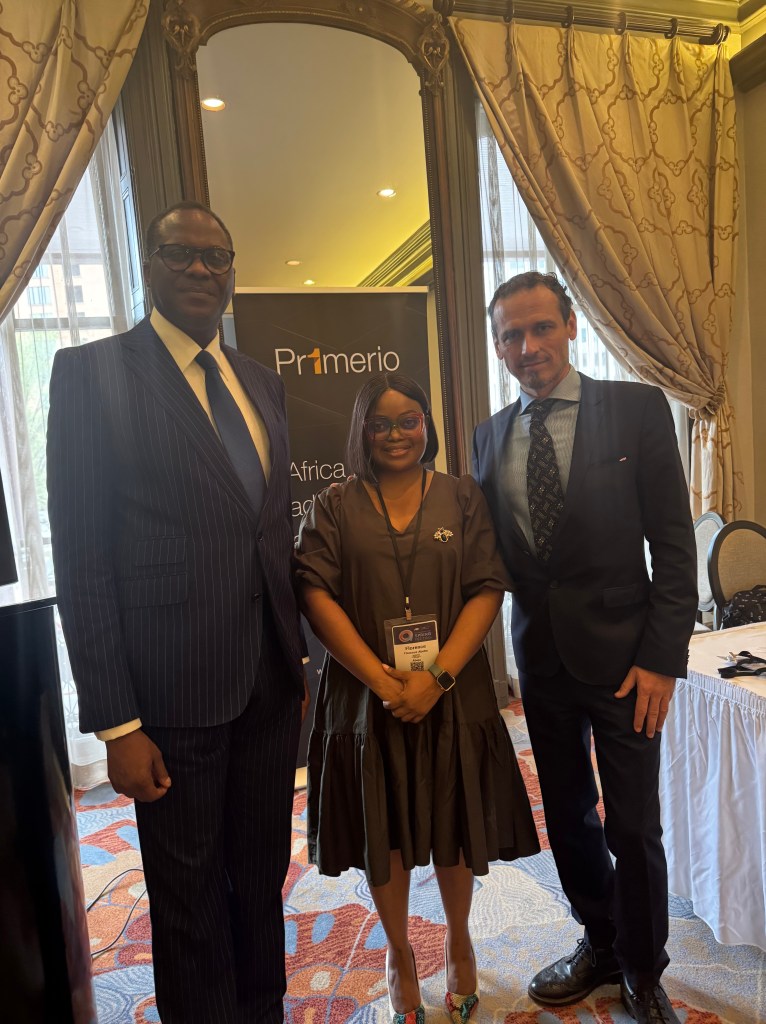
Babatunde Irukera, Florence Abebe, Andreas Stargard at the African Antitrust Salon hosted by Primerio

While more African countries are pushing back against big tech companies and are focusing on unchecked data exploitation within their borders, there is a need, however, for the continent to build towards a larger, sustainable strategy to manage the presence and power of big tech.  Says Andreas Stargard, “the quarter-billion dollar Meta fine, if upheld, would firmly cement Nigeria’s antitrust global relevance in the minds of international lawyers and businesses.  This comes as a surprise in some ways, as the FCCPC was first put on the map only fairly recently, by its inaugural Chief enforcer, Tunde Irukera: his vision for creative enforcement tools and encouragement of the agency’s staff to employ heretofore unused investigatory mechanisms and strategies – often seen only in U.S.-style civil litigation, and certainly not in many government agencies worldwide, much less among other African jurisdictions – show that the Commission potentially has the necessary intellectual capacity and investigatory stamina to pursue cases of equal or greater dimensions in the future.  It will depend on its leadership where the FCCPC’s path is charted next…”

Of course, there needs to be a balance struck between the value of personal data and that of innovation and tech adoption, which calls for a coordinated regulation policy that will strive to balance economic and non-economic features of the continent. 

As observed by Leonard Ugbajah, a competition law consultant, a balanced and pragmatic approach is essential when opting to address the regulatory landscape around big tech: 

“A common approach would harness the capabilities of countries, moderate opportunism by state and non-state actors in pursuing enforcement, recognise the economic importance of big tech, properly calibrate the various pain points (economic and non-economic) and safeguard the interests of the not-so-capable African countries.” 

The social media giants have 60 days, starting from 30 April 2025, to comply with the $220 million fine ordered by the Tribunal. Notably, following the decision, WhatsApp has indicated that it intends to seek a stay of the Tribunal’s decision and pursue an appeal. 
“We won’t compete on price!” — Telco CEO makes blatant antitrust admission

Today, the East African reported on a stunning admission by the Chief Executive Officer of Kenyan mobile telco heavyweight Safaricom (itself no stranger to AAT telco competition reporting and proprietor of the massive M-Pesa mobile money network across East Africa). In the article, fittingly entitled “Safaricom rules out price war in Ethiopian market“, the business report quotes Mr. Peter Ndegwa as saying:

“From a pricing perspective, our pricing strategy is generally to be either in line or just slightly at a premium, but not to go for any price competition. The intention is actually generally to be closer to what the main operator is offering, especially on voice.”

Safaricom’s senior exec made his curious confession on a recent investor call. Says Andreas Stargard, a competition attorney with Primerio: “On these investor conference calls, there are usually several analysts and reporters on the line, listening in, and they commonly are also recorded. This would mean there exist clear prima facie evidence and several witnesses to these statements, as reported by the East African source.” He adds: “It remains to be seen whether any of the several competent authorities will investigate Safaricom’s express statement of a de facto ‘non-compete’ between the Ethiopian incumbent and the Kenyan upstart,” with the former (Ethiotel) boasting 54m subscribers, as opposed to the latter’s mere 1m users in-country.

POSSIBLE INVESTIGATIONS

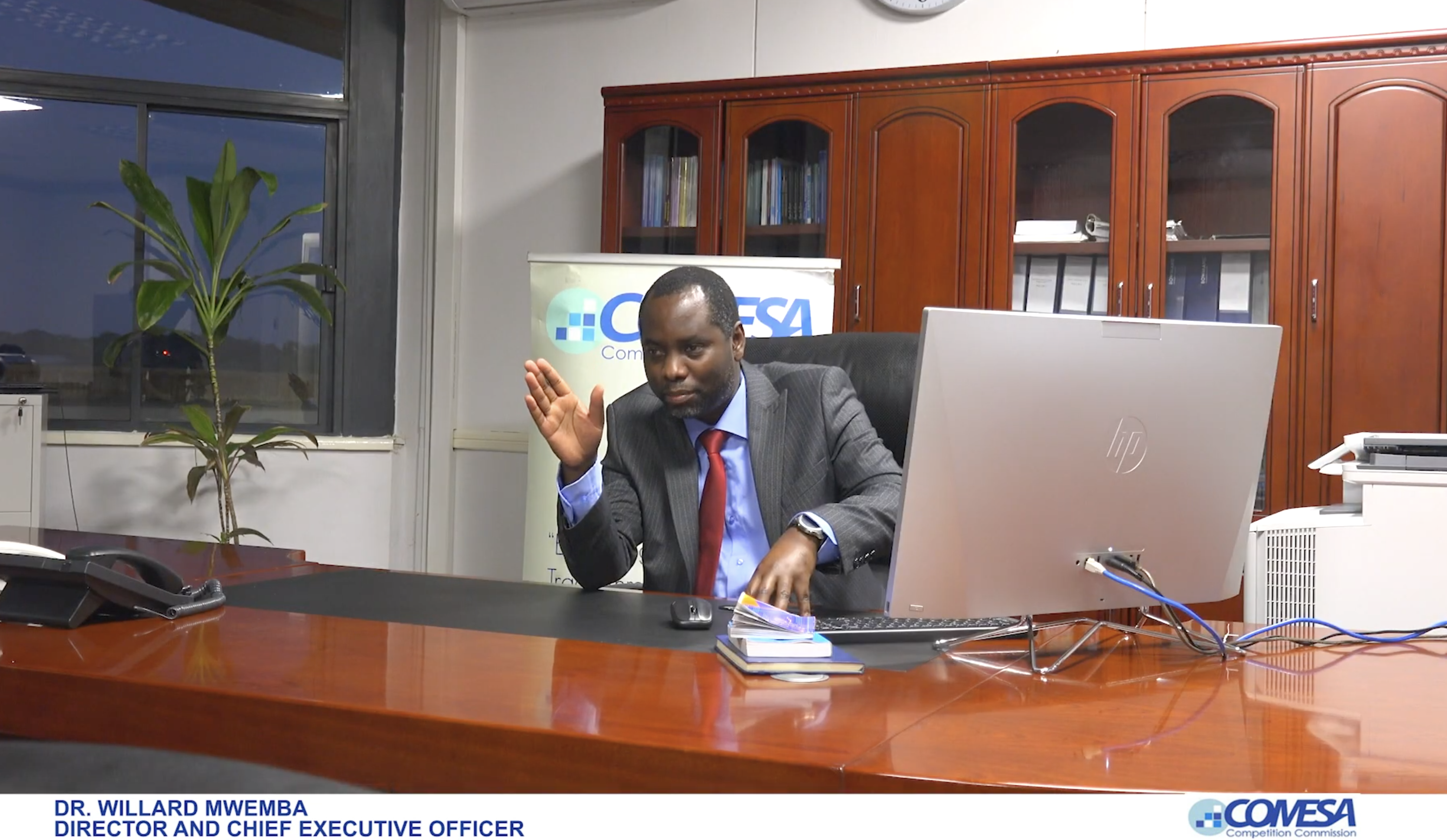
When asked which government authorities would be authorized to investigate Safaricom’s “no price war” policy expressed by Mr. Ndegwa, according to the newspaper, Mr. Stargard noted that, beyond the domestic Ethiopian telecoms regulator, there existed at least two (2) competent antitrust bodies with jurisdictional authority: “For any potentially anti-competitive conduct occurring in Ethiopia that may have a cross-border effect (as mobile telephony usually does — especially with a foreign, here Kenyan, operator involved as well), I could see either the Ethiopian Trade Competition and Consumer Protection Authority (“TCCPA”) or the supra-national COMESA Competition Commission (“CCC“) under Dr. Mwemba’s reinvigorated leadership stepping in.”

As the latter has made clear in several public pronouncements recently, the CCC is poised to continue its non-merger enforcement streak, that is: investigating and prosecuting restrictive business practices, such as cartels and cartel-like behaviour. “We call it, CCC 2.0,” Stargard adds half-jokingly. He notes that both the TCCPA and CCC have all the necessary legislative instruments in hand to proceed with a preliminary investigation on the basis of the above quotes published by the East African:

In Ethiopia, the TCCPA could argue that “expressly avoiding a price war” is possibly in violation of Article 7(1) of the Ethiopian Trade Competition and Consumer Protection Proclamation (“Article 7(1)”), which provides that “(1) An agreement between or concerted practice by, business persons or a decision by association of business persons in a horizontal relationship shall be prohibited if:…(b) it involves, directly or indirectly, fixing a purchase or selling price or any other trading condition, collusive tendering or dividing markets by allocating customers, suppliers territories or specific types of goods or services”.

For COMESA, the CCC has conceivably two legislative tools at its disposal: First, Art. 16 of the Regulations (“Restrictive Business Practices”) prohibits all agreements between undertakings, decisions by associations of undertakings and concerted practices which (i) may affect trade between member states, and (ii) have as their object or effect the prevention, restriction or distortion of competition. Provision is then made (in Art. 19(4)) for the Article to be “declared inapplicable” if the agreement, decision or concerted practice gives rise to efficiencies and the like. Importantly, even though Art. 16 also applies to by-object practices, provision is made for an efficiency defence. Second, the CCC could resort to Art. 19 (“Prohibited Practices”), which focusses on “hard-core” cartel-like practices. Art. 19(2) provides that Art. 19 applies to agreements, arrangements and understandings, while sub-sections (1) and (3) provide that it is an offence for (actual or potential competitors) to fix prices, to big-rig or tender collusively, to allocate markets or customers, and the like. 

DEFENCES

Safaricom and its domestic competitor (the government-owned, former absolute monopolist, Ethiotel) may of course offer — preemptively or otherwise — a pro-competitive explanation for their alleged “non-compete” agreement. However, in attorney Stargard’s view, such defences must be well-founded, non-pretextual, and they would be well-advised to have contemporaneous business records supporting any such defences at the ready, should an antitrust investigation indeed ensue.

“Indeed, it may appear to the authorities that Mr. Ndegwa’s quoted concession of ‘We won’t compete on price’ may be a sign of capitulation or at least a ‘truce’ between Safaricom and Ethiotel,” he surmises, “because as recently as mid-December [2022], the incumbent monopolist [Ethiotel] had threatened legal action against the Kenyan newcomer, claiming that Safaricom had ‘harrassed’ the incumbent’s customers and caused loss of service due to its actions.” An incoming competitor’s attempt at avoiding a civil lawsuit between it and would-be competitors would, of course, not constitute a legal defence to forming a (formal or informal) non-compete agreement on pricing, he adds.

“We have extensive experience counseling clients on how to successfully — and aggressively — defend against accusations of price-fixing, whether the allegations involve tacit collusion or express price or market-allocation cartel behaviour. While the parties here would likely not have a formalistic statute-of-limitations argument at their disposal, given the recent nature of the conduct at issue, I could imagine there being eminently reasonable ways of showing the harmless nature of the conduct underlying the, perhaps misleading, investor-call statements made by the executive,” he concludes.

Moroccan telecom regulator fines dominant telco USD 1/4 billion

Morocco’s national telco regulator (the Agence Nationale de Réglementation des Télécommunications or ANRT) has concluded, after a years-long investigation started in 2017 and a prior fining decision was taken in 2020, that Maroc Telecom Group had abused its dominant market position in violation of Article 7 of Law No. 104-12.

Says Andreas Stargard, a competition-law attorney at Primerio Ltd., “it is somewhat rare to see non-specialist regulator investigate competition-law violations and impose antitrust fines — particularly, as here, 5-year-long investigations and such enormous fine amounts as those imposed on Maroc Télécom, which is said to have committed various acts in furtherance of its dominance,” including conduct aimed at delaying competitors’ access to local-loop unbundling and entry into broadband. Stargard notes that the total fine of MAD2.45 billion (approx. US$238 million, which includes the prior 2020 fine amount) is now due to be paid, barring a successful appeal by the operator within 30 days.

Mergers: 1st failure-to-notify penalty — Helios now gets what Akzo avoided in 2017

The COMESA Competition Commission (“CCC”) is stepping up to the plate in 2021, and nobody can deny it. The days of ignoring the CCC’s jurisdiction over M&A deals, joint ventures, and even anti-competitive agreements in the Common Market for Eastern and Southern Africa are decidedly over, as the antitrust enforcer has significantly increased its presence and visibility in the legal and business communities over the past 6 months.

In its latest bid to be considered by the antitrust community to rank among the leading African competition-law agencies, the CCC has issued its first-ever failure-to-notify fine on mobile-phone infrastructure providers Helios Towers Limited (“Helios Towers”), Madagascar Towers S.A (“Madagascar Towers”) and Malawi Towers Limited (“Malawi Towers”) for failure to notify the transaction within the prescribed 30-day time period under Article 24(1) of the COMESA Competition Regulations of 2004. Helios Towers is a UK-based telecommunications company, listed on the LSE and a constituent of the FTSE 250 stock index; it operates in the Democratic Republic of Congo within the COMESA region.

COMESA Competition Commission logo

As we previously reported in 2017 (here and here), to AAT’s knowledge the only other reported transaction that came close to being fined for a failure to be notified by the merging parties was the paints deal between Akzo Nobel and Sadolin / Crown Paints: “In that transaction, the parties boldly proclaimed that the CCC simply did not have any statutory jurisdiction at all,” says attorney Andreas Stargard, an expert in African competition law. Indeed, four years ago, Akzo’s spokespeople flatly claimed that their deal fell “outside the CCC’s purview,” as “[w]e do not have a merger going on; we are a fully independent plant, so COMESA does not come into the picture at all.”

The COMESA’s CID observed that the Parties should have filed their merger notification on 22nd April 2021 in accordance with Article 24 (1) of the Regulations, but breached it.

Interestingly, as to the comparatively low amount of the fine, the CCC took into account significant mitigating aspects pursuant to Article 26(6), including these five considerations:

  • The breach was unintentional;
  • The delay in filing did not yield any “discernible advantage” to the Parties;
  • The breach did not result in any loss or harm in the market;
  • The Parties cooperated with the Commission from the time they were engaged leading to the merger being notified on 2nd July 2021 following their initial engagement; and
  • The Parties have no record of contravention with the Regulations.

Therefore, the CCC merely imposed a 0.05% fine (instead of the statutory maximum under Art. 24(5) of 10% of the parties’ turnover in the preceding calendar year in the common market). AfricanAntitrust.com confirmed this 0.05% figure with a CCC executive, clarifying that this percentage amounted to a fine of U.S. $102,101. Mr. Stargard noted his understanding that the CCC’s positioning of this fine at the extremely low end of the permissible spectrum denotes not only the parties’ significant cooperation and other mitigating factors, outlined above, but also represents a nod by the Commission to the fact that this is the first-ever enforcement action of its kind, and therefore “should not set a precedent in both substance and amount.”

The Parties may appeal the decision (available to AAT readers here) to the full Board of Commissioners in accordance with Article 15(1)(d) of the Regulations as read together with Rule 24 (e) of the COMESA Competition Rules of 2004.

The Commission’s Registrar, Ms. Meti Disasa, stated that “the fine was the first of a kind for breach of the Regulations. The Commission therefore wishes to remind Undertakings in the Common Market to be cautious of the prescribed timeline for notifying mergers in under Article 24 (1) of the Regulations.” Ms. Disasa warned undertakings operating in the Common Market “to comply with all other parts of the Regulations especially with respect to anti-competitive conduct as the Commission shall henceforth not take lightly any breaches of the regional competition law,” according to the CCC’s press release, also noting that “the decision to fine has no impact on the Commission’s assessment of any competitive effects of the merger, which is still ongoing.”

Interdict Granted in Favour of GovChat, Preventing Removal from the Whatsapp Platform

By Gina Lodolo

The South African Competition Tribunal (the “Tribunal”) has been called to consider a complaint of abuse of dominance against Whatsapp, arising out of its notice to terminate its contract with “GovChat” and off-board GovChat from the Whatsapp platform. GovChat is a chatbot service that allows the government to engage with citizens and provide government services such as health and education.

GovChat approached the Tribunal, alleging that due to the high market shares of Whatsapp in South Africa, competing platforms do not have sufficient scale (consumer numbers and reach) to provide alternatives on their own separate platform (such as WeChat in China). Smaller platforms are forced to make use of the Whatsapp network where Whatsapp’s terms of service do not allow for the expansion of the GovChat business model to become a competitor to Whatsapp. GovChat stated that its “entire existence will be materially prejudiced” if removed from the platform. It was alleged that the decision to off-board GovChat would put GovChat out of business and affect millions of citizens who benefit from the platform. CEO of GovChat, Eldrid Jordaan stated that “GovChat’s case is that Whatsapp/Facebook have abused their dominance because off-boarding GovChat has an exclusionary effect, preventing GovChat from operating in the relevant market.”Exclusionary acts are prohibited by Section 8(1)(c) of the Competition Act 89 of 1998 (“Act”) which states that a firm is prohibited from engaging in an exclusionary act if the “anti-competitive effect of that act outweighs its technological, efficiency or other pro-competitive gain”.  In this matter, Whatsapp/Facebook would have to prove that the exclusionary act has a pro-competitive gain.  The respondent has to discharge the allegation that refusing consumers access to an essential facility or a scarce service is an abuse of dominance according to sections 8(1)(b) and/or 8(1)(d)(ii) of the Act.

The alleged breach of the terms of service lies in the use of GovChat as a de facto communications platform for the government, when it is in fact not a government owned entity and WhatsApp stated of concern that “GovChat seeks to intermediate itself between government and citizens as a profit-making entity. It seems to aspire to become the official communication channel for the South African Government and effectively be the gateway through which citizens access government through Whatsapp”, where GovChat monetises confidential information of citizens through the use of the Whatsapp platform. Accordingly, citizens share confidential information which is monetized by a private entity, of which practice Whatsapp believes to be prejudicial to its platform and its terms of use, and therefore in breach of its terms of service.

GovChat logo

The competitive harm towards GovChat lies in the manner in which Whatsapp made use of its dominance through the unilateral off-board of GovChat. Whatsapp argues that its conduct cannot be anti-competitive as Whatsapp and GovChat do not provide the same facilities and are therefore not direct competitors. To this end, representing GovChat, Advocate Paul Farlam stated that “Facebook founder and CEO Mark Zuckerberg intends to introduce a payment system, as such, locking GovChat out of Whatsapp would give Whatsapp an advantage as being locked out of the market for an indefinite period would stop GovChat from entering the market first, allowing Whatsapp to keep customers away from GovChat while Whatsapp enters that market”. If this is the case,  Facebook is hiding under the guise that the offboard is due to a breach in its terms of service, in order to remove the potential competition from GovChat in the same market.

On the 25th of March 2021, the Tribunal issued an interim interdict to restrain Whatsapp from removing GovChat from its platform, pending the outcome of the complaint that GovChat has lodged against Facebook with the Competition Commission. The interim interdict has been granted in favour of GovChat as it established a prima facie case demonstrating the alleged exclusionary conduct and anticompetitive effects that the off-board would have on GovChat. Facebook failed to rebut the prima facie case by providing pro-competitive gains that outweigh the alleged anti-competitive effects of the off-board. Due to the nature of the GovChat platform being in the public interest during the COVID-19 pandemic, the Tribunal held that “the balance of convenience favours the granting of interim relief to the applicants who provide an invaluable service.”

Importantly, the relief is only interim in nature. Accordingly, the Competition Commission has not yet made a finding that Facebook has indeed contravened the Competition Act 89 of 1998  through an abuse of dominance.

Common Markets & the Race for Power in Africa: a Podcast Interview

Africa is a continent of 1.2 billion people.  From a consumer potential standpoint it matches China or India.  Yet historically, it has suffered from the lingering shadows of its colonial past, in addition to its current fractures, hostility, and ever-present corruption.

The continent is emerging fast, however, and is quickly accelerating into the 21st Century marketplace both from an investment and growth opportunity. From the digital revolution and increased free trade, to innovation in various industries, Africa may be the next market frontier to unfold into accelerated multinational presence.

In this podcast episode (available gratis on Apple, Spotify, and Sheppard Mullin‘s web site), Michael P.A. Cohen is joined by Africa competition and markets expert, Andreas Stargard, as he shares his insight to help multinationals navigate the African landscape.

What we discuss in this Podcast episode:

  • What do the Africa markets look like from a multinational business opportunity perspective?
  • Which countries in Africa have established markets? Which ones have growth potential?
  • How and why has China’s investment and influence across Africa intensified over the last couple of decades?
  • What type of digital revolution is taking place in Africa?
  • Is there a huge opportunity for mobile money on the continent?
  • How is free trade shaping up across the African continent? How do the AfCFTA’s goals tie in?
  • What Free Trade cooperation agreements exist among the East, West and South African nations? Will they succeed?
  • Where is Africa leading innovations?
  • How will African wars and corruption impact its ability to grow a multinational marketplace?

Who’s speaking:

Michael Cohen is the creator of the Nota Bene podcast. He began his career as an Assistant Special Prosecutor, investigating and prosecuting organized crime involvement with the failure of local financial institutions in the early 1990s, and has since practiced globally at several top law firms. In 2015, Michael joined Sheppard Mullin’s storied antitrust practice with a goal of putting his 25 years experience to work to complement the firm’s longstanding antitrust litigation group, helping to bridge government antitrust enforcement in Washington, D.C. to the firm’s strengths in Brussels, San Francisco and Los Angeles.

A co-founding senior member of Primerio, a business advisory firm helping companies do business within Africa from a global perspective, Andreas Stargard is legal, strategic, and business advisor to companies and individuals across the globe.  He focuses on antitrust and competition advice, white-collar counseling, contract dispute and negotiation, and resolution of global business disputes, including cartel work, corruption allegations and internal investigations, intellectual property, and distribution matters.  He has written and spoken extensively on these topics and many others.  Andreas also advises clients on corporate compliance programmes that conform to local as well as global government standards, and has handled key strategic merger-notification questions, including evaluation of filing requirements, avoidance strategies, cross-jurisdictional cooperation, and the like.

Kenya’s Competition Tribunal: Airtel/Telkom merger generates first decision

By Ruth Mosoti, Esq. (Primerio Ltd. Kenya practice head)

On 4th May 2020, the Kenyan Competition Tribunal made its first decision after considering the application for review of the Airtel-Telkom merger where they contested 7 out of 8 the conditions imposed. The competition Act allows the tribunal to look at the merits of the Competition Authority’s (CAK) decision therefore and has power to confirm, modify or reverse any order issued either partially or wholly. In this particular decision the Tribunal did exercise all these powers.  The decision of the Tribunal was guided by whether CAK’s decision promoted or protected effective competition in the telecommunications sector, enhanced the welfare of the Kenyan people and prevented unfair and misleading conduct throughout Kenya among other things.

First, the Tribunal confirmed the condition set in relation to employment. This public interest consideration varies on a case by case basis hence the difference in its application. In some mergers CAK has limited the retention of employees to 12 months and in others it is limited to 3 years. In this particular case, it was limited to 2 years. The tribunal agreed that due to the specialized nature of the industry and the presence of only two players in that market post-merger, then the condition imposed in regard to employment was justified.

Ruth Mosoti (author)

Secondly, the 2 conditions in relation to spectrum licensing and management were varied in their entirety primarily because it was found that CAK had no basis to interfere with licensing conditions imposed by the Communications Authority. It was their view that the Communications Authority was the competent authority to govern the licensing terms and, in the event, that there are any competition concerns then, these two regulators would consult. The imposition of these two conditions were deemed to be unnecessary. It was emphasized that competition law is there to protect competition and not competitors.

Thirdly, the condition on restricting entering into any sale agreement was modified to bring clarity. As imposed by CAK any form of sale was prohibited which was found to be blanket, therefore unreasonable. The Tribunal clarified that the merged entity would be able to enter into sale agreements in the ordinary course of business however the merged undertaking cannot be sold for a period of 5 years. In addition to this, the condition of audit in case the merged undertaking became a failing firm was done away with because CAK failed to justify why it applied the “failing firm doctrine” post-merger. In any event should this happen, the Tribunal reasoned that this would require approval from CAK therefore an unnecessary condition at this point.

The conditions in relation to contracts managed by Telkom on behalf of the government were retained however the tribunal clarified that this was not to interfere with the freedom of contract between the Kenyan government and the merged entity. While it is unconceivable how the government would agree to preferential terms while entering into these contracts without offending the law (this would be to my understanding that you pay for a government service/product depending on who you are which would be outright discriminatory)

Lastly, imposing a requirement for annual reports to CAK with no time limit was not justified. The appellants asked for 2 years and the Tribunal obliged. This was based on the fact that most of the conditions imposed on the merged entity after the review would lapse after 2 years therefore the tribunal deemed two years to be a justifiable time frame to comply with the 8th condition.

The Tribunal’s take on the procedural issues raised by the appellants is quite interesting. On the issue as to what constituted a “fair administrative process”, it was of the opinion that CAK had accorded the appellants adequate notice and opportunity to respond. To contextualize this, the appellants received a notice of a proposed decision and had a meeting on 25th October 2019, the Appellants contested these conditions and on the same date after the meeting, CAK sent amended conditions. The appellants advocates asked for time to consult their clients on the amended conditions.  The CAK however went ahead to issue a notice of determination on 31st October 2019 which was 6 days later. CAK’s position on this was that the board having sat, the decision issued on 31st October 2019 was final. This being the case, the only avenue available to the Appellants was to challenge it before the tribunal. The position by the tribunal that the Appellants had been given adequate time to challenge procedural fairness bearing in mind that the 30 days were to lapse on 24th November 2019 is baffling at best.

In conclusion, this decision being the first of has accorded practitioners an insight as to how CAK arrive at its decisions as well as the considerations of the tribunal in case of appeals. We now look forward to its determination of the other appeals in relation to RTPs before it.

Kenyan Competition Watchdog suspends Telkom Kenya / Airtel deal

Multiple regulatory agencies, competitor complaints and public interest concerns has posed a significant impediment to the proposed merger between Telkom Kenya and Airtel.

The Competition Authority of Kenya (CAK) recently announced that the Kenyan Ethics and Anti-Corruption Commission (EACC) is investigating Telkom Kenya amidst allegations of corruption in relation to historic transactions which gave rise to the current shareholding in Telkom Kenya.

The CAK’s decision to suspend the assessment of the merger was announced approximately a week after the Communications Authority of Kenya also suspended its assessment of the transaction pending the outcome of the EACC’s investigation.

The Communications Authority’s investigation will likely include an assessment of a complaint filed with the agency by Safaricom, a competitor to the merging parties.

Furthermore, the deal was also opposed by certain Telkom employees, ostensibly on the basis that their jobs were at risk should the deal go ahead.

Accordingly, the parties appear to have a long road ahead of them before clearance to implement the deal is granted.

The proposed transaction has no doubt attracted an additional degree of scrutiny as the telecom sector in Kenya is a significant market and there have been a number of disputes regarding the CAK’s jurisdiction to assess anti-competitive conduct, particularly abuse of dominance conduct, in this sector. A study into the telecom sector prepared by the Communications Authority was presented to Parliament in 2018. The CAK objected to the findings and remedial actions contained in the report which the CAK argued would amount to “price regulating” by the Communications Authority. Instead, the CAK urged the Communications Authority to focus rather on features of the market which raise barriers to entry or preclude effective competition between competitors.

While Parliament has, as far back as 2015, urged the Communications Authority to consult the CAK before making any determination regarding a telecom service providers’ “dominance”, subsequent litigation led to a High Court ruling in 2017 which confirmed that the Communications Authority’s powers vis-à-vis competition related matters remain vested exclusively with the Communications Authority.

The concurrent jurisdiction between the CAK and the Communication’s Authority has created somewhat of an enforcement discord – at least in so far as assessing abuse of dominance cases are concerned.

The fact that both the CAK and the Communications Authority have decided to suspend their assessments of the proposed merger following the outcome of the EACC’s investigation suggests that the outcome of the EACC’s investigation is relevant to both the CAK and Communication Authority analysis of the proposed transaction. This in turn, seemingly appears that there is at least an overlap in relation to the key issues under assessment by the respective agencies. Assuming there is indeed an overlap between the CAK and the Communication Authority’s assessment of the proposed transaction that naturally raises the risk of having two agencies come to different conclusions based on the same facts.

Telkom Kenya, however, remain confident that the merger will ultimately be cleared by all regulators.

Telkom Kenya have indicated that the merger will have significant pro-competitive and pro-public interest benefits which will have a positive impact on employees (and the market more generally). Whether the CAK conducts a comprehensive assessment between the short term negative impact on employment versus long term positive impact remains to be seen.

Assuming the proposed deal does not raise any traditional competition issues, it cannot therefore be ruled out that the transaction will be approved subject to public interest related conditions regarding retrenchments and/or re-employment obligations.

Whatever decision is ultimately reached, one hopes that the authorities will publish detailed reasons based on a robust assessment of the evidence in order to provide greater objectivity and transparency as to the analysis which is undertaken by the CAK when analyzing a merger – both from a competition and public interest perspective.

The CAK has in the past number of years have made significant positive strides forward in this regard and is deserved of the recognition it receives as one of the most active and robust competition authorities in Africa.

[Michael-James Currie is senior contributor to AAT and a practicing competition lawyer who has assisted clients with competition law related matters in multiple jurisdictions across Africa]


Africa: Increased growth rates, innovative banking sector, investment vs. development aid

The above topics were among those discussed at this year’s #AfricaFinanceForum, hosted by the Corporate Council on Africa.  The annual event featured high-level speakers, such as Rhoda Weeks-Brown, IMF General Counsel, who pointed to increased expected economic growth rates of 3.5% in 2019 (half a point higher than in 2018) and a faster per-capita income rise in Africa  than in rest of the world.  “Also up for debate was the dichotomy of investment vs. development assistance as the key driver of economic development on the continent,” notes Andreas Stargard, who attended on behalf of Primerio Ltd.

Ms. Weeks-Brown noted the rise of pan-African (vs. purely domestic) banks, observing the added benefit of improved competition, as well as the steady rise of fintech on the continent. The latter is especially important as the continent is still under-banked and relies heavily on the informal sector (less than 20% of sub-Saharan Africa’s population has a bank account).  Yet Africa leads the world in mobile money.  Mr. Stargard noted that “[s]he and many other speakers on subsequent panels agreed that there was a delicate balance to be struck by regulators and legislators of weighing innovation against the proper level of FinTech regulation and its integration benefits against anti-competitive effects thereof.  The IMF attorney was careful to point out that banking & financial integration must grow in conjunction with, and to support, economic and trade integration, as financial stability is a public good.  Africa requires strong sector regulators that must remain free from undue political or industry interference.”
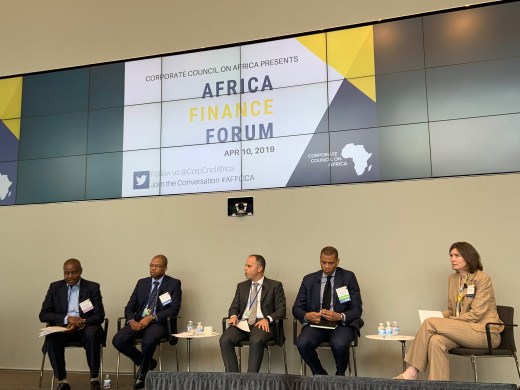
Kalidou Gadio, a lawyer at Manatt, provided a sanguine assessment of the state of banking in Africa, noting that it is not up to par globally, but better than it was a decade ago, before and during the financial crisis. He also pointed to the net positive effect of banks facing increasing competition from newcomers to the space, such as Orange, M-Pesa and other telecom firms.

Dr. Maxwell Opoku-Afari, First Deputy Governor of the national Bank of Ghana observed the difficulties in setting proper licensing rules for fintech companies by central banks, and commented on the concentration risk in banking.

Phumzile Langeni, special investment envoy of the RSA, gave an objective speech on the investment opportunities in South Africa, including the President’s FDI incentive programme.  She answered difficult questions with aplomb — for example those about the country’s land reforms, infrastructure troubles, and unemployment — and spoke of the enormous growth potential and the “youth dividend” in South Africa and the continent in general.

The half-day event was rounded out by a panel focussed on central banks’ handling of the unique foreign-exchange problems faced by certain African nations, notably Mozambique and Angola, whose central banks had representatives on the panel, including the issues of ForEx reserve allocation and pegged rates.

Moroccan telecom sector gets competition regulation

AAT has learned that the fledgling Moroccan antitrust regime, which has never quite come off the ground, is now being supplemented in a sector-specific regulation, namely the recently gazetted Droit [Law] no. 121.12.

The new law supplements the competition guidance specifically for telecommunications carriers, including high-speed internet and fibre-optic cable service providers, without repealing the main piece of antitrust legislation (Law no. 104.12 on the Freedom of Prices and Competition), whose key regulatory body — the Competition Council (Conseil de la Concurrence) — only recently became active in December 2018.  Law 121.12 now confers full investigative authority to the National Telecommunications Regulatory Agency (ANRT), which it enables to review complaints of anti-competitive behaviour, roaming agreements between competitors, and the like.

Andreas Stargard, a competition practitioner with Primerio, notes that “the law is primarily focussed on conduct issues and does not cater for any transactional / merger regulation, which remains the province of Law 104.12 and its crucial (and much debated) ‘40% domestic market share’ hurdle for notifications in the Kingdom.”  Stargard notes that the Competition Council’s web site is still — despite the agency’s recent personnel appointments — merely an “empty store-front of a site, without any substantive content.”

The new telecom-specific regulation is likely to have an impact on, and was influenced by, the limited state of play in the sector, which has been dominated for decades by state monopoly Maroc Telecom, whose would-be competitors such as Orange and Inwi have recently filed complaints against the dominant firm, mostly for refusals to deal, being denied access to indispensable networks, roaming agreements, and the like.

Says Stargard: “The new law will take such disputes out of the lengthy judicial process in court and allow the ANRT to investigate and render decisions on its own, including the power to fine up to 5% of a company’s turnover.

We will update AAT once further details become available.