Appellate competition body questions authority’s lenient fine

south_africa

Tribunal expresses doubts as to lenient fining level of Premier Fishing

The chairman of the South African Competition Tribunal, Takalani Madima, has asked the South African Competition Commission and Premier Fishing for ‘detailed substantial submissions’ on the settlement agreement reached between them, which lets the fishing company “off the hook” for an administrative penalty of a mere R2.1m (or 2% of its revenues).

2% fine not sufficient deterrent to anti-competitive conduct

According to a BDlive report, Mr. Madima is quoted as saying: ‘I am personally not too happy (with the agreement). I am still to be persuaded.’

The underlying conduct involves a cartel between Premier Fishing and others, in which the competitors shared information and pricing regarding the pelagic fish industry.  The Commission’s July 2008 investigation included the following companies as targets: Oceana, Foodcorp (note: the two former cartelists recently decided to merge and the competition authorities imposed conditions on the planned transaction), Premier Fishing, Gansbaai Marine, the SA Pelagic Fish Processors Association, Pioneer Fishing, Saldanha Bay Canning and others.

As the leniency applicant, Pioneer Fishing obtained full immunity from prosecution.  Others, such as Oceana, settled for approximately 5% of their fishing turnover.

Commission details plans for private healthcare sector inquiry

south_africa

Further details revealed by inquiry panel

On Friday, subsequent to outlining the time table of the project, the South African Competition Commission Competition Commission released important frameworks for its sectoral inquiry into the competitiveness of the private healthcare sector in the RSA. The key documents are a draft “statement of issues” (which the Commission warned may further “evolve” during the course of the inquiry) and “guidelines for participation” for the market inquiry into the private healthcare sector, which is headed by retired Chief Justice Sandile Ngcobo. The public and affected stakeholders are invited to make written submissions on these before Monday, 30 June 2014 (South African Competition Commission direct e-mail address: health@compcom.co.za).

Notably, the statement of issues includes the role of the public sector in competition in the market for healthcare. This was a key sticking point for observers and stakeholders, as the initial framing of the inquiry appeared solely focused on the private players, failing to take into account the competitive restraints imposed by the strong public insurance schemes and other state-related participants in the healthcare arena.  (AAT published on this and related issues here and here.)

Other topics include, predictably from an antitrust point of view, regulation, market power and dominance, barriers to entry, as well as consumer-protection aspects. Taken together, the areas of concern have been grouped by the Commission’s inquiry panel into six possible theories of harm, which the Commission defines as follows: “A theory of harm refers simply to a hypothesis about how harm to competition might arise in a market to the detriment of consumers and to the detriment of efficient and innovative outcomes in that market.” (Statement of Issues at para. 9 and 53, as follows):

  1. Theory of harm 1: Market power and distortions in healthcare
    financing.
  2. Theory of harm 2: Market power and distortions in relation to
    healthcare facilities.
  3. Theory of harm 3: Market power and distortions in relation to
    healthcare practitioners.
  4. Theory of harm 4: Barriers to entry and expansion at various levels
    of the healthcare value chain.
  5. Theory of harm 5: Imperfect information.
  6. Theory of harm 6: Regulatory framework.

The Big Picture: AAT History – Maturing competition-law regimes in Africa

AAT the big picture

Below, AfricanAntitrust.com provides a brief overview of maturing antitrust jurisdictions in Africa

In the past two decades, 26 African countries implemented domestic competition law regimes, and that number continues to grow.

Many competition authorities who were previously deemed as being rather ineffective in their teething stages, have now begun to actively enforce their respective competition law provisions by launching market inquiries, prohibiting anti-competitive mergers, conducting dawn raids and becoming tough on cartel activity.

Below, we provide a short summary of some of the maturing jurisdictions on the continent (notably excluding matured ones (South Africa) as well as young regimes, including supra-national ones such as COMESA, as they arguably fall outside this definition.)

Botswana

The Competition Authority in Botswana was launched in 2011, and with 33 staff members, of which nearly half comprises economists, and the authority has already conducted more than 20 dawn raids and launched market inquiries launched into various “priority sectors” such as retail, poultry and cement. The competition authority has blocked mergers which impede the empowerment of Botswana’s citizens on the basis of public interest concerns in maintaining sufficient local shareholding in certain key markets such as health care.

Kenya

In 2011, Kenya implemented its Competition Act and now, given the new, and higher, merger filing fees, the budgetary constraints within the Competition Authority of Kenya (“CAK”) will be addressed and alleviated. The Competition Authority of Kenya announced its intention to launch investigations into claims of powerful cartels in the lucrative coffee industry in Kenya. The Competition Authority of Kenya plans to probe abuse of dominance by coffee firms, particularly in relation to marketing. In addition, the Competition Authority of Kenya has initiated an investigation into allegations of abuse of dominance by Lafarge in Kenya, which may result in Lafarge being forced to sell its stake in the East African Portland Cement Company.

Following the dawn raid conducted by the South African Competition Commission on Unilever and Sime Darby in April 2014 in relation to the edible oils industry, the CAK has launched an investigation into the edible oils market, in which local prices have been unresponsive to reductions in the cost of imported feedstock.

Namibia, Zambia & Mauritius

Both the Namibian and Mauritian competition authorities have announced their respective plans to introduce a formal corporate leniency policy to improve their cartel enforcement. In addition, the Mauritian Competition Commission will investigate whether Stage Beverages, of the Castle Group, and Phoenix Beverages Ltd have agreed to divide markets in Mauritius and Madagascar, given that the Mauritian Competition Commission has reason to believe that Stage Beverages and Phoenix Beverages have agreed that Stage Beverages will cease the manufacture and supply of beer in Mauritius, while Phoenix Beverages will do the same in Madagascar.

The Zambian competition authority has recently imposed significant penalties for price-fixing in the vehicle-repair industry. Furthermore, it has conducted dawn raids on two fertiliser companies.

AAT will continue its summaries (which we hope you find helpful in navigating the competition-law map of Africa) in its “Big Picture” series.

Private Health-Care Sector Inquiry: Time Table & Details

south_africa

Inquiry panel’s head details logistics

On 16 April 2014, the South African Competition Commission held a media briefing, in which the administrative guidelines, the administrative timetable and statement of issues for the inquiry were announced.  AAT previously reported on the health-care sector investigation here.

Addressing the media and other stakeholders at the briefing, the chairperson of the inquiry, former Chief Justice Sandile Ngcobo, provided a brief explanation of what a market inquiry is, provided an overview of its possible outcomes, the Competition Commission and panel’s approach, the use of information during the inquiry and the management of confidential information.

Furthermore, the former Chief Justice elaborated on the important dates and timelines of the inquiry, the statement of issues, theories of harm and that stakeholders ought to provide accurate information in order to assist the panel.

The important dates are:

Date Event
31 May Statement of Issues and Administrative Guidelines issues for public comment
30 June Deadline for submission of public comment on Statement of Issues and Administrative Guidelines
1 July – 31 July Incorporation of comments on Statement of Issues and Administrative Guidelines
01 August Publication of final Statement of Issues and Administrative Guidelines
01 August Call for submissions on subject matter of the inquiry
March and April 2015 Public hearings
November 2015 Forecasted completion of the inquiry

Criminalisation of antitrust offences: not on short-term horizon

south_africa

Competition Commission not ready to pursue antitrust cases criminally – plus: AAT‘s recommendations

The newly (permanently) appointed Competition Commissioner, Tembinkosi Bonakele, has referred to a “phased” implementation of the 2009 Competition Amendment Act.  The legislation technically criminalised hard-core antitrust offences such as bid-rigging or price-fixing cartels.  However, it has not yet been implemented or effectively signed into law.

According to a MoneyWeb/ZA report, both he and his boss, Economic Development Minister Ebrahim Patel, had discussions on how and when to implement “to ensure that the necessary institutional capacity is available to apply the amendments.”  The initially effective provisions (relating to the SACC’s market-inquiry powers) went into effect last year, while the criminalisation provisions remain unimplemented.

In a somewhat remarkable and prudent self-assessment, the minister and SACC have now admitted that the Commission currently lacks “the institutional capacity needed to comply with the higher burden of proof in criminal cases,” according to the report.

One notable aspect of potential discord lies in not only in the different standard of proof in civil vs. criminal matters (“more probable than not” vs. “beyond a reasonable doubt”), but perhaps more importantly can be found on the procedural side, preventing rapid implementation of the law: There has been historic friction between various elements of the RSA’s police forces and (special) prosecutorial services, and the power to prosecute crimes notably remains within the hands of the National Prosecuting Authority, supported in its investigations by the South African Police Service.

Historical and Legislative Background – and a bit of Advice

Starting in the spring and summer of 2008, the rumoured legislative clamp-down on corrupt & anti-competitive business practices by the government made the RSA business papers’ headlines.

During a presentation I gave at a Johannesburg conference in September that year (“Criminalising Competition Law: A New Era of ‘Antitrust with Teeth’ in South Africa? Lessons Learned from the U.S. Perspective“), I quoted a few highlights among them, asking somewhat rhetorically whether these were the words of fearmongers or oracles?

  • “Competition Bill to Pave Way for Criminal Liability”
  • “Tough on directors”
  • “Criminalisation of directors by far most controversial”
  • “Bosses Must Pay Fines Themselves”
  • “New leniency regime to turn up heat on cartels”
  • “New era in the application of competition policy in SA”
  • “Likely to give rise to constitutional challenges”
  • “New Bill On Cartels is a Step Too Far”
  • “Fork out huge sums or face jail time if found guilty”
  • “Disqualification from directorships … very career limiting”

I also quoted international precedent-setting institutions and enforcers’ recommendations, all of which tended towards the positive effect of criminal antitrust penalties:

OECD, 3rd Hard-Core Cartel Report (2005):

  • Recommends that governments consider the introduction and imposition of criminal antitrust sanctions against individuals to enhance deterrence and incentives to cooperate through leniency programmes.

U.S. Department of Justice, Tom Barnett (2008):

  • “Jail time creates the most effective, necessary deterrent.”
  • “[N]othing in our enforcement arsenal has as great a deterrent as the threat of substantial jail time in a United States prison, either as a result of a criminal trial or a guilty plea.”

While the presentation contained a lot more detail, the key recommendations that I summarised would seem to continue to hold true today, and may serve as guide-posts for Commissioner Bonakele and the EDD ministry:

Cornerstones of a successful criminal antitrust regime
  • Crystal-clear demarcation of criminal vs. civil conduct
  • Highly effective leniency policy also applies to individuals
  • Standard of proof must be met beyond a reasonable doubt
  • No blanket liability for negligent directors – only actors liable
  • Plea bargaining to be used as an effective tool to reduce sentence
  • Clear pronouncements by enforcement agency to help counsel predict outcomes
Demarcation of criminal vs civil antitrust conduct in U.S.

Internet & mobile operators at war: merge, acquire, complain

Deals and accusations rock ZA’s Vodacom

The South African mobile operator landscape can be described as a microcosmic reflection of the larger African experience: Mobile technology is exponentially more developed than what an outside observer would otherwise predict, based on distinct economic predictors.  One of the key reasons for this highly-developed sub-Saharan mobile world is the concomitant lack of hard-wired infrastructure, necessitating that mobile make up for the copper-wire slack.  Other reasons include the hot topic of mobile banking (again: lack of brick-and-mortar banks necessitates mobile banking alternatives, such as M-Pesa’s services, on which AAT has reported extensively).

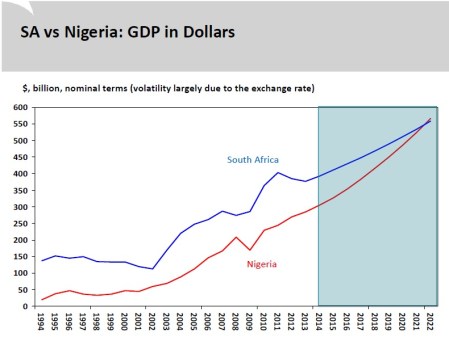
South Africa, as the continent’s largest (or second-largest, depending on whether you trust the revised Nigerian GDP numbers) economy, is of course at the forefront of the African mobile/internet frontier.

Now, the large South African operator Vodacom has rejoined the antitrust headlines simultaneously in two ways:

First, Vodacom ZA plans to acquire Neotel, a large S.A. internet provider, for 7 billion Rand (circa $650m).  This transaction will, of course, be subject to merger review by the South African Competition Commission (“SACC”).

Second, Vodacom has confirmed the prior reports of its competitor Cell-C’s October 2013 complaint, accusing Vodacom of discriminatory pricing, which is now being taken rather seriously by the SACC, according to TechCentral’s reporting.  On that front, Vodacom’s spokesman Richard Boorman is quoted as using classic competition-law argumentation as a clever shield:

“Cell C is apparently arguing for an increase in the price that Vodacom customers pay to call other Vodacom customers. It’s hard to argue that increasing prices would be a benefit to consumers.”

Vodacom’s official press statement on the Neotel deal follows below:

Vodacom reaches agreement to acquire Neotel

Monday, 19 May 2014

Further to the SENS announcement on 30 September 2013, Vodacom has reached an agreement with the shareholders of Neotel Proprietary Limited (“Neotel” or the “Company”) to acquire 100% of the issued share capital in, and shareholder loans against, Neotel for a total cash consideration equivalent to an enterprise value of R7.0bn.

Principal benefits of the transaction

Leading fixed telecommunications network

Neotel, which started operations in 2007, is the second largest provider of fixed telecommunications services for both businesses (commonly referred to as enterprise services) and consumers in South Africa. The company has access to over 15,000 km of fibre-optic cable, including 8,000 km of metro fibre in Johannesburg, Cape Town and Durban. Neotel also has access to 2 x 12 MHz of 1800 MHz spectrum, 2 x 5 MHz of 800 MHz spectrum and 2 x 28 MHz of 3.5 GHz spectrum.

Acceleration of Vodacom’s unified communications strategy

Neotel will become a subsidiary of Vodacom South Africa and the combination with Vodacom’s South African fixed enterprise business will create a national service provider with annual revenues of more than R5bn.

Vodacom sees a significant opportunity to accelerate growth in unified communications products and services by integrating its extensive distribution and marketing capabilities with Neotel’s fixed network and product capabilities. The combined entity will be able to offer an expanded and enhanced range of converged services (e.g. hosted PBX, OneNet) to enterprise customers. Vodacom estimates revenue synergies with a total net present value of approximately R0.9bn after integration costs.

Enhancement of next generation network capabilities in South Africa

The combination of Neotel’s and Vodacom’s networks will improve overall network availability and reduce the cost to serve customers. The combined business will also be ideally positioned to accelerate broadband connectivity in line with the South African Government’s broadband targets, enabling Vodacom to take a leading position in the fibre to the home and fibre to the enterprise segments of the market.

The combined entity will also be able to use the radio spectrum currently assigned to Neotel more effectively. This spectrum will enable Vodacom to accelerate the roll-out of LTE (commonly referred to as 4G) services, providing high speed, high quality wireless connectivity to a greater proportion of the South African population.

In-market consolidation with substantial cost and capex savings

Vodacom expects to achieve substantial cost and capex synergies with an annual run-rate of approximately R300m before integration costs in the full fifth year post completion, equivalent to a net present value of approximately R1.5bn after integration costs. These savings will primarily be derived from the joint utilisation of Neotel’s extensive fibre network and the elimination of overlapping elements, joint procurement and the combination of overlapping administrative functions. The transaction values Neotel at a multiple of 8.8x annualised 1H2014 OpFCF, adjusted for cost and capex synergies.

Neotel management and employees

Vodacom looks forward to welcoming Neotel’s employees. Their fixed and enterprise skills will enable the combined entity to deliver enhanced and extended service offers.

Additional information on the transaction

Vodacom will fund the acquisition through available cash resources and existing credit facilities.

The transaction remains subject to the fulfilment of a number of conditions precedent including applicable regulatory approvals and is expected to close before the end of the financial year.

Speaking about the transaction, Vodacom Group CEO Shameel Joosub said:

“Through the combination of these two businesses, the provision of a wider range of business services and much needed consumer services like fibre-to-the-business and fibre-to-the-home becomes a concrete reality – it will be good for the consumer, good for business and good for the country.  And for our investors, the transaction fits perfectly within the priorities of Vodacom’s growth strategy focused on continuing our investment in data and our Enterprise business.”
 

New Competition Commissioner not so new: Bonakele retains top job

south_africa

Interim South African Acting Competition Commissioner Tembinkosi Bonakele confirmed in permanent post by minister who unceremoniously fired predecessor Ramburuth

Plus ça change, plus c’est la même chose…

This morning, economic-development minister Ebrahim Patel announced the retention of the 38 year-old Mr. Bonakele as the top antitrust enforcer in the South African republic, making permanent for a five-year term the interim appointment of the man who said the following in an interview regarding the independence of the competition authorities in South Africa:

While competition authorities should not be beholden to the government neither can they be loose cannons who claim independence without accountability.”

In prolonging Mr. Bonakele’s interim appointment for another five years, Minister Patel thus assured that the important position of Competition Commissioner did not go to a “loose cannon”…

Legislative basis

The appointment is made pursuant to Part A, Art. 22 of the South African Competition Act of 1999, as amended, which also provides (in sub section 4) for the flexible salary and benefits determination to be made by the minister himself: “The Minister must, in consultation with the Minister of Finance, determine the Commissioner’s remuneration, allowances, benefits, and other terms and conditions of employment

Minister Patel
Commissioner Bonakele
Public announcement and emphasis on enforcement

In the duo’s official tweets announcing the decision (see graphic extract below), Patel congratulated Mr. Bonakele, reaffirming his and the SA cabinet’s support of the “eminently suitable” candidate, and emphasizing the importance of (1) the Competition Commission‘s ongoing and hotly debated private health-care inquiry as well as (2) the “social-justice” elements of merger conditions imposed by the SACC on mergers in the past 5 years, purportedly “protecting” 4,900 jobs.

The agency had come under considerable flak in the past year due to its high staff and executive-level turnover and a work environment that has been described as “toxic” by insiders.

The official release by the Ministry of Economic Development quotes Patel as follows:

“I am pleased to have someone of Bonakele’s calibre at the helm of the Competition Commission. He is taking leadership of the Commission at a time when the South African economy needs to become more competitive and create many more decent work opportunities by combatting market abuse such as cartels and pervasive monopolies and ensure competitive pricing of products. In particular, the key jobs drivers identified in our policy frameworks require coordinated and concerted efforts improve economic performance and development outcomes.
“The Competition Commission has been one of a number of successful economic agencies and regulators that are together beginning to transform the South African economy. Mr Bonakele possesses the skills and experience to build on the successes of the Competition Commission.”

The agency’s official “Structure” page had not yet been updated as of the day of the announcement, listing Mr. Bonakele as “Acting” head and still showing the long-departed Ms. Makhaya as a Commission official.

Official S.A. government tweets announcing SACC personnel decision of permanent Bonakele appointment

Language barrier persists in Tribunal proceedings

south_africa

A report by the South African Citizen discusses the language barriers still present in the Republic today.

The piece, entitled “Tribunal struggles with Afrikaans” by Antoinette Slabbert, notes that the RSA Competition Tribunal has decided to have testimony given in Afrikaans transcribed, together with its English translation, “to ensure the court properly captures what a witness was trying to say.”

The underlying case is the Competition Commission’s case against Media24, alleging an abuse of dominance by squeezing its competitor, Gold-Net News, out of the market for advertising in community newspapers in the Free State Gold Fields between 2004 and 2009.

The Citizen reports:

Tribunal chairperson Norman Manoim asked whether Van Eck would mind testifying in English, since he was concerned about the quality of the translation of her responses the previous day. Media24′s legal team objected, saying Van Eck was already assisting the tribunal by taking questions in English.

The legal representative of the commission pointed out that Van Eck’s English was good. Both legal teams shared Manoim’s concern about the English interpretations. Van Eck said she prefered testifying in her home language to better express herself.

Earlier, Wian Bonthuyzen, Van Eck’s former manager and a key witness, switched from Afrikaans to broken English during his testimony, after another interpreter failed to properly convey his responses to the tribunal.

Investment in Africa: Changing landscape, new hurdles

Questioning African antitrust growth prospects: Slowdown in economic investment (both organic and outside investment) may affect functioning of competition law on the continent

Recent developments in Africa have many scratching their heads and wondering whether the formerly wondrous economic-growth engine of the vastly resource-rich and otherwise economically still undervalued continent will soon experience a slowdown, if not come to a halt altogether.

For one, in April 2014, Nigeria surpassed South Africa as the continent’s largest economy (see Economist Apr. 12, 2014: “Africa’s New Number One“).  This is a significant milestone for the former, and a setback for the latter — an economy that was 8 times the size of the Nigerian economy only 20 years ago, yet is now suffering from stagnating GDP, reeling from corruption allegations amongst its current leadership, undergoing a closely-watched presidential election process, and whose ruling ANC party is facing a heretofore unprecedented backlash and torrent of criticism.

Source: The Economist

Not only South Africa has weakened, politically and economically, however.  Events such as the Northern Nigerian wave of violence – with sectarian Boko Haram forcefully displaying the impotence of the central Nigerian government of a weakened president Goodluck Jonathan – fuel the fire of outside investors’ mistrust of African stability and their concomitant reluctance to make good on prior investment promises.  As The Economist notes in the article quoted above: “it is not a place for the faint-hearted” to invest, even though it highlights the successful Nigerian business ventures of outsiders such as Shoprite, SABMiller, and Nestlé.  Bloomberg BusinessWeek quotes Thabo Dloti, chief executive officer of South Africa’s fourth-largest insurer Liberty Holdings Ltd. (LBH), as saying: “It does slow down the plans that we have, it does put out the projections that we have by a year or two.”

http://www.stanlib.com/EconomicFocus/Pages/InterestingChart112SouthAfricaneconomyvsNigerianeconomy.aspx
Nigerian vs. RSA GDP
Source: http://www.stanlib.com

Likewise, multi-national organisations such as COMESA and its competition enforcement body, are undergoing significant changes (such as, currently, an opaque process of raising the heretofore insufficient merger-filing thresholds), shockingly successful web attacks on their data, and a resulting dearth of transactions being notified.  Elsewhere in developing economies, recent political turmoil has likewise led observes to comment on the negative spillover effect from political & social spheres into the economy (e.g., Financial Times, May 8, 2014: “Political crisis further dents prospects for Thai economy“).

Impact on antitrust practice

The upshot for competition-law practitioners and enforcers alike is rather straightforward, AAT predicts: more hesitation around African deals being done means fewer notifications, less enforcement, and overall lower billings for firms.

The flip side of the coin – as is usually the case in the economic sine curve of growth and slowdowns – is the commonly-observed inverse relationship of M&A and criminal antitrust: while we may see fewer transactions in the short term, the incidence of cartel behaviour and commercial bribery & government-contract fraud cases will likely increase.

Commission’s fisheries merger conditions upheld on review by Tribunal

south_africa

Competition Tribunal confirms Commission’s ruling on Oceana and Foodcorp merger

Johannesburg-listed Ocean Group Limited is the largest fishing company in South Africa, whose fishing activities include inter alia the catching, processing, marketing and distribution of canned fish, fishmeal and fish oil and mid-water and deep-sea fishing.

Foodcorp Limited is a food producer and manufacturer with eight production divisions, one of which is a fishing division. Foodcorp’s fishing business comprises a pelagic division, a hake division and a lobster division.

The Competition Commission said its investigation into the proposed transaction showed that the proposed transaction would substantially affect competition in the market for canned pilchards to the detriment of competition and customers. Following implementation of the transaction, Oceana will hold 80% of the market, while its closest competitor would hold less than 10%. Furthermore, the Commission was concerned that the transaction, without the conditions, would remove an efficient competitor to Oceana’s Lucky Star brand from the market, as Glenryck would not be able to provide competition to Lucky Star without its own fishing quota.

Both Oceana and Foodcorp contended that the Department of Agriculture, Forestry and Fisheries had approved the transfer of Foodcorp’s small pelagic fishing rights to Oceana, which includes the consideration of public interest issues regarding black economic empowerment.

The merging parties had taken the conditional approval of the intermediate merger on review before the Competition Tribunal. The conditions which the Competition Commission had imposed entailed that the merging parties are to sell the Glenryck canned-pilchards brand to an independent third party, as well as the small pelagic fish quota allocated to it by the Department of Agriculture, Forestry and Fisheries. The condition was imposed as a means that would deprive Oceana of Foodcorp’s fishing quota, thereby preventing market dominance.

The Competition Tribunal approved the transaction on the same conditions initially imposed by the Competition Commission. The Tribunal will issue its reasons for the decision in due course.