Malawi: More than CCCC HQ. A short Retrospective on Mergers in Malawi.

Updated Malawi Merger Control Thresholds

By Michael Williams

Malawi’s new Competition and Fair Trading Act came into effect in 2024 (“2024 Act”).[1]  While this lags behind one of the best-known competition authorities in Malawi, namely COMESA’s Competition and Consumer Protection Commission (“CCCC”) headquartered in Lilongwe to the tune of over a decade, the domestic antitrust regime is being reinforced, as this legislative update shows. And with this latest edition, it is firmly in place when it comes to those national merger-control matters that escape the one-stop-shop of the CCCC. The Competition and Fair Trading Commission of Malawi (“CFTC”) stated that the goal of the 2024 Act is to:

  1. supplement certain areas that the previous Act lacked; and
  2. improving effective enforcement.

Several notable changes were included in the 2024 Act, particularly in respect of the introduction of a suspensory merger control regime. 

The 2024 Act also introduces a public interest test that the CFTC must apply when evaluating whether a proposed merger can or cannot be justified. This public interest test includes several factors including the effect of the potential transaction on:

  • specific industrial sectors or regions; 
  • employment levels; and 
  • the saving of a failing firm.

The CFTC has also been granted the power to impose administrative orders on parties who violate the 2024 Act, which include administrative penalties of up to 10% of a firm’s annual turnover or 5% of an individual’s income. 

The CFTC can also levy orders to redress wrongdoing, such as instructing refunds, exchange or return of defective products, and termination of unfair and exploitative contracts.

These increased powers come after the High Court of Malawi Civil Division ruled in the 2023 case of CFTC v Airtel Malawi that the CFTC lacked the authority to impose fines under the 1998 Act.[2]

To supplement the 2024 Act, the Minister recently published a Government Notice[3] that provides for the financial thresholds for mandatory merger notifications as well as an overview of other fees payable to the CFTC.

THE FINANCIAL THRESHOLDS FOR MANDATORY MERGER NOTIFICATIONS

Any transaction exceeding the following financial threshold will require prior approval from the CFTC before implementing:

  1. The combined annual turnover or combined value of assets whichever is higher, in, into, or from Malawi, equals to or exceeds MWK 10 billion (approximately USD 5 800 000); or
  2. The annual turnover of a target undertaking, in, into, or from Malawi, equals to or exceeds MWK 5 billion (approximately USD 3 000 000).

FEES PAYABLE TO CFTC FOR COMPETITION FILINGS 

The Government Notice sets the merger application fee payable at 0.5% of the combined annual turnover or total assets whichever is higher of the merging parties derived from Malawi. It is important to note that the Government Notice does not specify a maximum fee payable.

OTHER FEES PAYABLE TO THE CFTC

  1. Application for an Authorization of an Agreement at MWK 10 million (approximately USD 5 800) an agreement, a class of agreements under section 24(1) of the 2024 Act or an agreement which, any person who proposes to enter into, or carry out an agreement which, in that person’s opinion, is an agreement affected or prohibited by the 2024 Act. Importantly, an ‘agreement’ is defined in the 2024 Act, being: “any agreement, arrangement or understanding, whether oral or in writing, or whether or not the agreement is legally enforceable or is intended to be legally enforceable”
  2. Application for Negative Clearance at MWK 10 million (approximately USD 5 749,49) for any party to a merger transaction seeking clarification as to whether the proposed merger requires the formal approval of the CFTC or whose proposed merger is subject to review by the CFTC.
  3. Training on Competition & Consumer Protection at MWK 5 million per training package (approximately USD 3 000);
  4. Non-Binding Advisory Opinions for SMEs: MWK 200 000,00 (approximately USD 115); Micro-enterprises: MWK 100 000,00 (approximately USD 58); Other businesses: MWK 500 000,00 (approximately USD 300).

CONCLUSION

This supplementation by the Government Notice to the 2024 Act is of utmost importance for businesses and competition law practitioners operating within the jurisdiction of Malawi to ensure smooth transactions and to avoid statutory sanctions.


[1] Competition and Fair Trading Act No. 20 of 2024

[2] Competition and Fair Trading Commission v Airtel Malawi Ltd. & Anor. (MSCA Civil Appeal 23 of 2014) [2018] MWSC 3

[3] Government Notices No. 76 and No. 77 of 2024
Malawi Revamps its Antitrust Laws: Suspensory Merger Control and More

Not only did the Malawian government revise its 26 year-old competition law, but it effectively repealed the old statutory regime under the “Competition and Fair Trading Act”, and it has now enacted its replacement, the so-called “Competition and Fair Trading Act of 2024.”

Says Andreas Stargard, who practices competition law with Primerio Intl., “the new regime had been in the works for several years, with input from the broader international and pan-African competition communities, both private and academic, as well as from fellow antitrust enforcers across the globe. We are pleased to see this revision effort come to fruition in the form of the CFTA 2024, which notably introduces a suspensory merger-control provision — meaning companies that meet the Malawian thresholds for notifying their M&A activity must put on hold the closing of their deal until it is cleared by the authority, the CFTC.”

Parties considering entering into transactions affecting the Malawian market should note, Stargard observes, that Malawi is part of the COMESA competition-law area, “which would require firms to consider whether or not there is a COMESA community dimension to their transaction, thereby possibly negating one or more domestic filings with [National Competition Authorities], and instead making a ‘one-stop-shop’ notification to the CCC.” Coincidentally, the COMESA Competition Commission is also headquartered in the Malawian capital, Lilongwe, so “parties can expect there to be extensive collaboration between the supra-national CCC enforcement teams and the CFTC’s domestic-focussed antitrust lawyers,” Mr. Stargard surmises.

The in-depth text of the Malawian press release is as follows:

 ENTERING INTO FORCE OF THE NEW COMPETITION AND FAIR TRADING ACT 

You will recall that the Competition and Fair Trading Commission (CFTC) has been reviewing the Competition and Fair Trading Act (CFTA) of 1998 in order to fill the existing gaps and enhance its effective enforcement. The CFTC is pleased to announce that the process of repealing the CFTA of 1998 was completed and it has been replaced with a new legislation, the Competition and Fair Trading Act of 2024. 

The new legislation was passed by Parliament on 5th April, 2024, and was assented to by the State President, His Excellency, Dr Lazarus Chakwera on 19th May 2024. In accordance to Section 1 of CFTA of 2024, The new Act shall come into force on a date to be appointed by the Minister, by notice published in the Gazette. The Competition and Fair Trading Act of 2024, therefore, comes into force today, 1st July, 2024, following the gazetting of the notice, signed by the Minister of Trade and Industry, Hon. Sosten Gwengwe, MP, which appoints this date. 

CFTC is extremely pleased with this development as it signals an end to some of the enforcement challenges the institution was facing with regard to the enforcement of the old Act due to the gaps in some of the key provisions in the law. In addition, the CFTA needed to be aligned with the recent developments in the enforcement of competition 

and consumer protection law, reflective of the current market dynamics in the economy. Furthermore, the CFTA required to be aligned with international best practices in the enforcement of competition and consumer protection. 

In order to address these gaps, there are several changes that have been made to the CFTA of 2024. Below is a highlight of some of the key changes: 

i. Competition Regulation 

The major change that has been brought in is on Suspensory Merger Notification. The 1998 CFTA provided for voluntary notification of mergers and acquisitions; which meant that mergers having potential harm to competition process and consumer welfare could be effected without seeking authorisation from the CFTC. The new CFTA has made notification of mergers and acquisitions mandatory, based on determined thresholds. 

The new Act has also expanded on the provisions on anticompetitive business practices, to make it very encompassing but also effective to regulate and enforce. These areas include: restrictive business practices; collusive conducts (cartels); abuse of market power; but also mergers and acquisitions. 

ii. Consumer Protection 

The CFTA of 1998 narrowly defined the term “Consumer”. The definition under the old Act left out some stakeholders that are equally affected by unfair trading practices, which include: consumers of technology, consumers of digital products, beneficiary consumers, but also other users of goods or services for purposes of production of other goods or services. For this reason, various vulnerable groups that did not fall within that narrow definition were not effectively protected from unfair trading practices 

The CFTA of 2024 has also brought in several types of unfair trading practices that were not included in the CFTA of 1998. Among others, these include the following: 

 failure to give warranty or guarantee on goods for long term use; 

 improper or insufficient labelling of products; 

 failure to disclose material information about the products supplied; 

 engaging in excessive or exploitative pricing of the products. 

 imposition and implementation of unfair terms in consumer contracts. 

iii. Abuse of Buyer Power 

The CFTC of 1998 focused on abuse of supplier (seller) power and not the abuse that may arise from powerful or dominant buyers. This made it difficult to deal with malpractices by buyers, including those involved in buying farm produce from farmers. 

The CFTA of 2024 has included various provisions to redress malpractices resulting from abuse of buyer power. The Act has expressly prohibited the powerful and dominant companies that purchase agriculture produce from the farmers not to engage in any anticompetitive and exploitative conducts. For example, the Act prohibits, among others, the following conducts: 

 delays in payment of suppliers, without justifiable reason, in breach of agreed terms of payment; 

 unilateral termination or threats of termination of a commercial relationship, without notice or on an unreasonably short notice period, and without an objectively justifiable reason; 

 refusal to receive or return any goods or part thereof without justifiable reason, in breach of the agreed contractual terms; 

 transfer of commercial risks meant to be borne by the buyer to the suppliers; 

 demands for preferential terms unfavourable to the suppliers; 

 demanding limitations on supplies to other buyers; 

 reducing prices by a small, but significant, amount where there is difficulty in substitutability of alternative buyers or reducing prices below competitive levels; or 

 bidding up prices of inputs by a buyer enterprise with the aim of excluding competitors from the market. 

iv. Penalties for Violations 

Under the CFTA of 1998, when the Commission found a business enterprise in breach, it had been imposing fines, which were provided for under Section 51. However, in 2023, in the matter of CFTC v Airtel Malawi Plc, the Court ruled that the said provision does not empower the CFTC to impose fines, on the grounds that the violations were designated as being criminal in nature. Specifically, under section 51 of the CFTA of 1998, the provision for imposing the fines was combined with sanctioning of an imprisonment sentence of up to 5 years. The ruling in the CFTC v Airtel Malawi Plc case, thus weakened the regulatory mandate of the CFTC. In addition, the 1998 CFTA did not provide for aggravating and mitigation factors for the Commission to consider in coming up with fines and/or orders. 

The CFTA of 2024 gives express powers to the CFTC to issue Administrative Orders, which include imposing fines on errant enterprises. Under the new Act, the fines to be imposed will be (i) up to 5% of annual turnover if it is an individual; or (ii) up to 10% of annual turnover if it is a company. The determination of the fines will depend on the applicable aggravating and mitigating factors. There are also various Orders that the CFTC can impose which are meant to redress the malpractices. These include orders to: give refunds, return or exchange defective products, withdraw false advertisements, supply the advertised/promised goods and services, and cancel unfair and exploitative contracts. 

v. Suitability and Independence of Commissioners for the CFTC 

As adjudicators of cases, the Commissioners of the CFTC are required to be sufficiently scrutinized for their qualification and suitability for their functions, but also guarantee utmost independence. Under the provisions of the CFTA of 1998, the Commissioners were not thoroughly subjected to scrutiny of Parliament once appointed, to determine their qualification and suitability for their office. Similarly, the Commissioners independence as adjudicators was not guaranteed under the old law. The CFTA of 2024 has provided that, as a way of ascertaining the Commissioners’ suitability and ensuring independence, their appointment and removal from office will be subjected to the scrutiny of the Public Appointments Committee of Parliament. 

In view of the foregoing, the CFTC would like to call upon business enterprises, consumers and the general public to take notice of the new legislation, and particularly take consideration of the provisions that have been brought into the CFTA of 2024. Furthermore, the CFTC would like to advise the business enterprises to adopt voluntary compliance with competition and fair trading laws at all times, so as not to be found in breach of the law. 

For media enquiries on this statement, contact Innocent Helema on 0880725075 or email innocent.helema@cftc.mw. 

LLOYDS VINCENT NKHOMA 

CHIEF EXECUTIVE OFFICER 

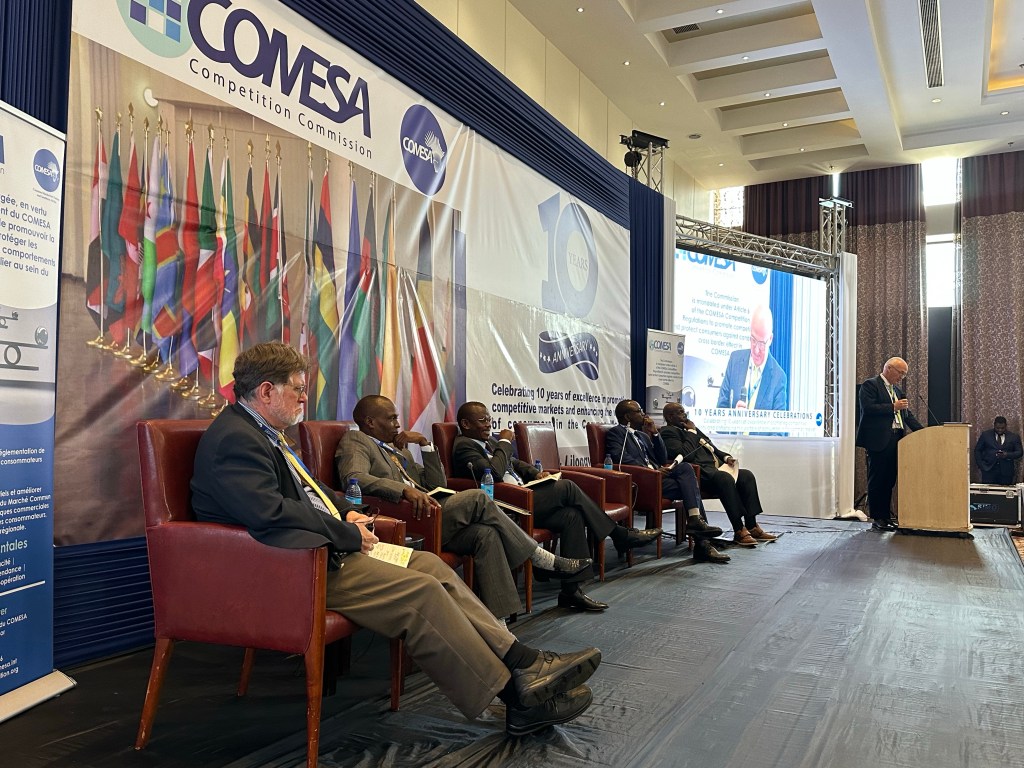
COMESA @ 10: CCC Keynote address by Bill Kovacic

The booming voice of eminent antitrust scholar and GW Law professor Bill Kovacic easily surmounted the small technical microphone glitches at COMESA’s celebration of its Competition Commission’s first 10 years in Malawi (#CCCat10years), giving the keynote address.

His accessible speech, given in front of a diverse audience comprised of senior ministers and policy makers, lawyers, enforcers, and media representatives, focused on practical examples covering three key topics of public expenditures, subsidies, and the removal of entry barriers.

On state spending, he noted the attendant “global epidemic of collusion and corruption”, in areas as simple, but important to development, as transportation infrastructure. “We don’t always need to debate ‘digital markets’ or ‘big tech’, we can also highlight the importance of basic road-building on increasing trade and measurably growing economies” across Africa. But these areas of public expenditures are invariably hampered by corrupt or collusive tendering and similar cartel conduct — important focus areas for the COMESA CCC to enforce.

In the area of public subsidies, Kovacic proposed a future collaborative working relationship between antitrust enforcers, legislators, and those ministries that allocate state subsidies, ideally to non-incumbents (giving the NASA vs. Space-X example to make his point) so as to enhance market entry.

The CCC should enhance market access by making barriers to entry “more porous” for newer small competitors, with Kovacic using the famous 1982 Bell Telephone/AT&T U.S. antitrust precedent to highlight the practical value of competition law to society and innovation of new, better, and cheaper products and services.

CCC Celebrates ’10’ — a Decade of COMESA Competition Law

Anniversary of CCC’s 2013 Creation to be Celebrated, Developments Discussed

Next week, African heads of state, ministers of trade and commerce, the secretary general of the 21-member state COMESA organization, Commissioners, and several heads of various competition agencies across the region, from Egypt to Eswatini & from Mauritius to Malawi, will join antitrust practitioners, legal experts, business people, and journalists in celebrating the occasion of the 10-year anniversary of the COMESA Competition Commission in Lilongwe, where the agency is headquartered.

Of course, AAT will be there to cover it.

As leaders of this august publication will know by now, our authors have followed the development of the CCC since its very beginning: from the nascent stages of having only a rudimentary staff and foundational rule documents, lacking sufficient guidance for practitioners and businesses alike, to the significant developmental stage under its first chief executive officer, Dr. Lipimile, who built out his enforcement team to coincide with the stellar growth of the CCC’s “one-stop-shop” merger notification statistics and attendant agency reviews (hiring economists and lawyers alike from across COMESA member nations) — and culminating, so far at least, in what we have come to call “CCC 2.0”: the latest iteration of the vastly successful multi-jurisdictional antitrust body, now led by its long-term member Dr. Willard Mwemba.

Under Mwemba’s aegis, the Commission has advanced well beyond a mere ‘rubber-stamping’ merger review body, as some had perceived the fledgling agency in its very early years (approx. 2013-15). The triple-C has since then begun to launch serious investigations into price-fixing, monopolization, attempted monopolization, gun-jumping, as well as market allocation schemes and secretly implemented transactions that parties had failed to notify.

While ‘antitrust is on our minds’, we note here for the record that, beyond its “competition” ambit that mostly remains in our focus at AAT, the CCC’s enforcement mission also includes a fairly large “consumer protection” brief, and the agency’s dedicated unit has investigated areas of consumer concern as broad as airline practices, imported faulty American baby powder, online ‘dark’ practices, pay-TV, and agricultural product quality disputes (milk and sugar come to mind) between Uganda and Kenya, to name only a few…

Our publication, together with several of the business journals and newspapers across the southeastern region of Africa, will report in great detail on the events, and possible news, to take place next week. Says Andreas Stargard, a competition practitioner with Primerio International:

“I look forward to hearing from these leaders themselves what they have accomplished in 10 years, and more importantly what they wish to accomplish in the near to mid-term future. In addition, I have a feeling that we may be treated to some truly newsworthy developments: I could imagine there being either confirmation or denials of the circulating rumour that the COMESA merger regime will soon become not only mandatory, but also suspensory. As most attorneys practicing in this arena know by now, the current Competition Regulations are not suspensory, which may be deemed too restrictive by the group’s Secretariat and its agency leadership in terms of its enforcement powers. After all, it is much more difficult to unscramble the egg than to never let it drop in the pan from the get-go!

Also, the CCC may reveal its plans in relation to a leniency programme for cartel conduct, which is plainly in order!”

Beyond that, Stargard surmises, participants at the almost week-long event may be treated to news about the CCC’s thoughts on digital markets, sectoral investigations, and the Commission’s upcoming “beyond-mere-merger” enforcement activities.

Mergers: 1st failure-to-notify penalty — Helios now gets what Akzo avoided in 2017

The COMESA Competition Commission (“CCC”) is stepping up to the plate in 2021, and nobody can deny it. The days of ignoring the CCC’s jurisdiction over M&A deals, joint ventures, and even anti-competitive agreements in the Common Market for Eastern and Southern Africa are decidedly over, as the antitrust enforcer has significantly increased its presence and visibility in the legal and business communities over the past 6 months.

In its latest bid to be considered by the antitrust community to rank among the leading African competition-law agencies, the CCC has issued its first-ever failure-to-notify fine on mobile-phone infrastructure providers Helios Towers Limited (“Helios Towers”), Madagascar Towers S.A (“Madagascar Towers”) and Malawi Towers Limited (“Malawi Towers”) for failure to notify the transaction within the prescribed 30-day time period under Article 24(1) of the COMESA Competition Regulations of 2004. Helios Towers is a UK-based telecommunications company, listed on the LSE and a constituent of the FTSE 250 stock index; it operates in the Democratic Republic of Congo within the COMESA region.

COMESA Competition Commission logo

As we previously reported in 2017 (here and here), to AAT’s knowledge the only other reported transaction that came close to being fined for a failure to be notified by the merging parties was the paints deal between Akzo Nobel and Sadolin / Crown Paints: “In that transaction, the parties boldly proclaimed that the CCC simply did not have any statutory jurisdiction at all,” says attorney Andreas Stargard, an expert in African competition law. Indeed, four years ago, Akzo’s spokespeople flatly claimed that their deal fell “outside the CCC’s purview,” as “[w]e do not have a merger going on; we are a fully independent plant, so COMESA does not come into the picture at all.”

The COMESA’s CID observed that the Parties should have filed their merger notification on 22nd April 2021 in accordance with Article 24 (1) of the Regulations, but breached it.

Interestingly, as to the comparatively low amount of the fine, the CCC took into account significant mitigating aspects pursuant to Article 26(6), including these five considerations:

  • The breach was unintentional;
  • The delay in filing did not yield any “discernible advantage” to the Parties;
  • The breach did not result in any loss or harm in the market;
  • The Parties cooperated with the Commission from the time they were engaged leading to the merger being notified on 2nd July 2021 following their initial engagement; and
  • The Parties have no record of contravention with the Regulations.

Therefore, the CCC merely imposed a 0.05% fine (instead of the statutory maximum under Art. 24(5) of 10% of the parties’ turnover in the preceding calendar year in the common market). AfricanAntitrust.com confirmed this 0.05% figure with a CCC executive, clarifying that this percentage amounted to a fine of U.S. $102,101. Mr. Stargard noted his understanding that the CCC’s positioning of this fine at the extremely low end of the permissible spectrum denotes not only the parties’ significant cooperation and other mitigating factors, outlined above, but also represents a nod by the Commission to the fact that this is the first-ever enforcement action of its kind, and therefore “should not set a precedent in both substance and amount.”

The Parties may appeal the decision (available to AAT readers here) to the full Board of Commissioners in accordance with Article 15(1)(d) of the Regulations as read together with Rule 24 (e) of the COMESA Competition Rules of 2004.

The Commission’s Registrar, Ms. Meti Disasa, stated that “the fine was the first of a kind for breach of the Regulations. The Commission therefore wishes to remind Undertakings in the Common Market to be cautious of the prescribed timeline for notifying mergers in under Article 24 (1) of the Regulations.” Ms. Disasa warned undertakings operating in the Common Market “to comply with all other parts of the Regulations especially with respect to anti-competitive conduct as the Commission shall henceforth not take lightly any breaches of the regional competition law,” according to the CCC’s press release, also noting that “the decision to fine has no impact on the Commission’s assessment of any competitive effects of the merger, which is still ongoing.”

Abusing antitrust enforcement for personal gain? Malawi’s Competition Agency Misled by Textbook Competitor

textbooks

As it turns out, some savvy ‘entrepeneurs’ have been able to use competition-law enforcement on the African continent to their personal gain, namely by making misleading — if not outright false — accusations against their competitors, thereby triggering an antitrust investigation, and even causing this venerable publication to report on such.  We have been made aware by the initial “target” company (now, as it turns out, the actual “victim”) of the Malawi investigation that one of its competitors in the textbook market had essentially weaponized the CFTC’s investigative powers by launching direct and indirect accusations against Mallory International that triggered the probe.  In the end, the CFTC concluded that none of the purported cartel conduct actually occurred.

To be clear and to avoid any doubt: Mallory International was cleared of any misconduct allegation.  The Editor has reviewed conclusive evidence of the CFTC’s closure of this investigation in August of 2018.  “What remains to be seen is whether or not the agency might use its powers to pursue the perpetrators of this inherently anti-competitive attack of false accusations (which coincidentally also wasted government resources) any further,” says AAT Editor Andreas Stargard, pointing to the underlying nature of such false claims as “quintessential unfair competition that should neither enjoy immunity from prosecution nor escape government scrutiny.”

For background, in our original reporting on this case (entitled “CFTC Investigates Foreign Textbook Supplier in Cartel Probe“), we had written as follows:

In a potential first, Malawi’s Competition and Fair Trade Commission’s (CFTC) Chief Executive Officer, Ms Charlotte Malonda, recently announced that the CFTC is investigating a UK-based supplier of textbooks, Mallory International, for alleged cartel conduct.  Mallory had partnered up with a local company, Maneno Books Investments, as part of a joint venture, called “Mallory International JV Maneno Enterprise”.  In addition, other companies also being investigated include Jhango Publishers, South African based Pearson Education Africa, Dzuka Publishing Company and UK based Trade Wings International.  
The investigation follows complaints received by the Human Rights Consultative Committee as well as a number of its constituent civil society organisations and NGOs.  The allegations include price fixing and collusive tendering vis-à-vis tenders issued by the Malawian government for the supply of pupils’ text books.  [Editor’s Note: “Contrary to the statements in our original article, the actual complaint by HRCC and FND alleged neither price fixing nor collusive bidding. Its main allegation was that unjustified objections were made to contract awards in Malawi, and that attempts were made to dissuade publishers from issuing authorisation letters to particular bidders. Neither of these allegations was true, and no evidence to support either of them was ever produced. The complaint was dismissed by CFTC in August 2018.”]
The Nyasa Times quoted the CFTC head as confirming that the agency had “received a few complaints about allegations of a cartel and other procurement malpractices, hence our commencement of the investigations to get the bottom of the matter.”
Based on the language of Section 50 of the Act suggests that the sanctions for committing an offence in terms of the Act requires the imposition of both a penalty and a five year prison sentence. Although not aware of any case law which has previously interpreted this provision, the wording of the Act is particularly onerous, particularly in light of the per se nature of cartel conduct.
Section 33 of the Competition and Fair Trade Act prohibits collusive tendering and bid rigging per se. Furthermore, a contravention of section 33 is an offence in terms of the Act carries with it not only the imposition of an administrative penalty, which is the greater of the financial gain generated from the collusive conduct or K500 000, but also criminal sanctions, the maximum being a prison sentence of five years, notes Andreas Stargard, a competition attorney:
“The Malawian competition enforcer, under Ms. Malonda’s leadership, has shown significant growth both in terms of bench strength and actual enforcement activity since her involvement began in 2012.”
The Act is not clear what “financial gain” means in this instance and whether the penalty is based on the entire revenue generated by the firm for the specific tender (allegedly tainted by collusion) or whether it applies only to the profit generated from the project. Furthermore, it is unclear how this would apply to a co-cartelist who did not win the tender. The Act may be interpreted that the “losing bidder” is fined the minimum amount of K500 000 which equates to appox. USD 700 (a nominal amount) while the “winner” is penalised the value of the entire tender value (which would be overly prejudicial, particularly if turnover and not profit is used as the basis for financial gain).
Although the investigation has only recently commenced and no respondent has admitted to wrong doing nor has there been a finding of wrongdoing, this will be an important case to monitor to the extent that there is an adverse finding made by the CFTC. Unless the Malawian authorities adopt a pragmatic approach to sentencing offending parties, section 50 of the Act may significantly undermine foreign investment as a literal interpretation of the Act would render Malawi one of the most high risk jurisdictions in terms of potential sanctions from a competition law perspective.
It may also result in fewer firms wishing to partner up with local firms by way of joint ventures as JV’s are a particularly high risk form of collaboration between competitors if there is no clear guidance form the authorities as to how JV’s are likely to be treated from a competition law perspective.


#COMESA21: New member states, new commissioners

#COMESA21

In a milestone enlargement of the (now formerly) 19-member COMESA region, Tunisia and Somalia have acceded to the trade bloc at the 20th COMESA Summit on 19th July 2018, creating #COMESA21 – Africa’s largest free trade region.

Their application to join had been pending since 2016.  Under the Treaty, the new members will be bound by the provisions of the Treaty and must deposit their formal instrument of acceptance of the terms of admission with the Secretary General, together with an instrument of accession pursuant to Articles 194 and 195 of the Treaty with regard to a State admitted to full membership.  Says Primerio’s Andreas Stargard, “with the privilege of membership comes the obligation of agreeing to abide by the antitrust rules promulgated under the COMESA Treaty.  This includes the Competition Commission’s procedural and substantive rules and notably its merger regulations.  It remains to be seen how the still weakened bureaucratic structure of the Somali Republic will be able to implement the strictures of a working competition-law regime…

Indeed, the CCC’s recent Notice No. 2/2018 provides that “the provisions of the COMESA Competition Regulations of 2004, and its accompanying rules, shall be enforceable in the territories of the Republic of Tunisia and the Federal Republic of Somalia with immediate effect.”

Personnel News 2018

In addition to gaining two new member states, COMESA also underwent personnel changes, adding an experienced antitrust practitioner, Zimbabwean Competition and Tariff Commission director, Ellen Ruparanganda, as one of the nine CCC commissioners, for a term of three years.  Besides Ms. Ruparanganda, Francis Lebon (Seychelles), Ali Hamadou Ali Kako (Djibouti), Thembelihle Dube (Eswatini, formerly Swaziland), Danson Buya Mungatana (Kenya), Michael Teklu Beyene (Ethiopia), Charlotte Wezi Malonda (Malawi), Islam Tagelsir Ahmed Alhasan (Sudan), and Brian Muletambo Lingela (Zambia) were also sworn in.

“The WRAP” — our monthly summary of antitrust developments across the continent

AAT Header square

Competition-Law Developments: a WRAP from the Comp-Corner

Issue 2 – August 2016

The editors and authors at AAT welcome you to the second edition of “The WRAP.”

We look at the most recent developments and updates in respect of competition law and enforcement which has taken place across the African continent in recent months.

As always, thank you for reading the WRAP, and remember to visit us at AAT for up-to-date competition-law news from the African continent.

         –Ed. (we wish to thank our contributors, especially Michael James Currie, for their support)

Cooperation, handshakes & MoUs: all the rage in African antitrust?

AAT the big picture

Significant Strides made to Promote Harmonisation across African Competition Agencies

By AAT Senior Contributor, Michael-James Currie.

In the past 12 months there has been a steady drive by competition law agencies in Africa to promote harmonisation between the respective jurisdictions.

The African regional competition authority, the COMESA Competition Commission (CCC), has entered into memorandum of understandings with a number of its nineteen member states. On 5 June 2016, it was announced that the CCC has further concluded MoU’s with the Swaziland Competition Commission as well as the Fair Trade Commission of the Seychelles.

On 7 May 2016, it was announced that nine members of the Southern African Development Community (SADC) have also entered into and MoU. These member states include South Africa, Malawi, Botswana, Swaziland, Seychelles, Mozambique, Namibia, Tanzania and Zambia.

The SADC MoU was based on the 2009 SADC Declaration on Regional Cooperation and Consumer Policies.

SADC MoUAccording to the South African Competition Commissioner, Mr Tembinkosi Bonakele, the MoU creates a framework for cooperation enforcement within the SADC region.  “The MoU provides a framework for cooperation in competition enforcement within the SADC region and we are delighted to be part of this historic initiative,” said Bonakele.

Interestingly, although a number of the signatories to SADC MoU are not member states of COMESA (that is, South Africa and Namibia, who in turn, have a MoU between their respective competition authorities), Swaziland, Malawi and the Seychelles have existing MoU’s with the COMESA Competition Commission. Says Andreas Stargard, a competition practitioner with Primerio Ltd., “it will be interesting to see, first, whether there may be conflicts that arise out of the divergent patchwork of cooperation MoUs, and second, to what extent the South African Competition Authorities, for example, could indirectly benefit from the broader cooperation amongst the various jurisdiction and regional authorities.”

Part of the objectives of the MoUs to date has largely been to facilitate an advocacy role. However, from a practical perspective, the SADC MoU envisages broader information exchanges and coordination of investigations.

While the MoU’s are a positive stride in achieving cross-border harmonisation, it remains to be seen to what extent the collaboration will assist the respective antitrust agencies in detecting and prosecuting cross border anticompetitive conduct.

There may be a number of practical and legal hurdles which may provide challenges to the effective collaboration envisaged. The introduction of criminal liability for cartel conduct in South Africa, for example, may provide challenges as to how various agencies obtain and share evidence.

First set of Merger Assessment Guidelines made available by CFTC

Malawi Releases 2015 ‘Merger Assessment Guidelines’

By Michael J. Currie

A number of African jurisdictions have recently published guidelines relating to merger control (which we have reported here on Africanantitrust). During 2015, Malawi’s Competition and Fair Trading Commission (“CFTC”whose web site appears to be down at the time of publication (http://www.cftc.mw), followed suit and published Merger Assessment Guidelines in 2015 (“Guidelines”) in order to provide some guidance as to how the CFTC will evaluate mergers in terms of the Competition and Fair Trading Act (“Act”).

malawi

Most significantly, the Guidelines have not catered for mandatorily notifiable merger thresholds which is unfortunate as most competition agencies as well as advocacy groups have recognised that financial thresholds is an important requirement to ensure that merger control regimes are not overly burdensome on merging parties.

Furthermore, the COMESA Competition Commission, to which Malawi is a member, published merger notification thresholds in 2015 in line with international best practice. It would be encouraged that the CFTC considers likewise publishing thresholds.

Other than the absence of any thresholds, the Guidelines contain substantively similar content to most merger control guidelines insofar as they set out the broad and general approach that the CFTC will take when evaluating a merger. We have, however, identified the following interesting aspects which emerge from the Guidelines which our readers may want to take note of:

  • The CFTC is entitled to issue a “letter of comfort” to merging parties. A letter of comfort is not formal approval, but allows the merging parties to engage conduct their activities as if approval has been obtained. Therefore, once a letter of comfort has been obtained, the parties may implement the merger. In terms of the Guidelines, a letter of comfort will only be issued once the CTFC is satisfied that any should their investigation reveal any potential competition law concerns, that those concerns will be able to be sufficiently addressed by merger related conditions. It is not clear whether a letter of comfort will be issued before the merger has been made public and therefore it is also unclear what the role of an intervening third party will be once a letter of comfort has been issued.
  • The merger filing fee is 0.05% of the combined turnover or assets of the enterprises’ turnover. The Guidelines do not specify that the turnover must be derived from, in, or into Malawi, although it is likely that this is indeed what was intended.
  • The Act and Guidelines make provision for what is becoming a common feature of developing countries competition laws, namely the introduction of so-called “public interest” provisions in merger control. The Guidelines, however, indicate that the CFTC does not consider these public interest provisions in quite as robust manner as the authorities do other countries including, inter alia, South Africa, Namibia, Zambia and Swaziland. In terms of the Guidelines, any public interest advantages or disadvantages is just one of the factors that the CFTC will consider, together with the traditional merger control factors. It is thus unlikely that a pro-competitive merger would be blocked purely on public interest grounds although this is notionally possible.
  • The Guidelines set out the following factors, combined with figures that are likely to be utilised when evaluating market concentration, which if exceeded, may increase the likelihood of the merger leading to a substantial lessening of competition:
  1. Market Shares: 40% for horizontal mergers and 30% for non-horizontal mergers;
  2. Number of firms in the market;
  3. Concentration Ratios: CR3- 65%; or
  4. The Herfindahl-Hirschman Index (“HHI”): HHI between 1000-2000 with delta 259; or HHI above 200 with delta 150. For non-horizontal mergers a merger is unlikely to raise competition concerns if the HHI is below 2000 post-merger.