Intervention by economic ministry outside proper competition channels yields R1 billion employment fund
As reported yesterday, AB InBev has agreed to a R1bn ($69m) fund to buoy the South African beer industry and to “protect” domestic jobs. It is widely seen as a direct payment in exchange for the blessing of the U.S. $105 billion takeover of SABMiller by InBev — notably occurring outside the usual channels of the Competition Authorities, instead taking place as behind-closed-door meetings held between the parties and the Minister for Economic Development, Ibrahim Patel, and his staff.
As we reported earlier this week, the previously granted extension of the competition authorities’ review was “widely suspected that the request for the extension is due to intervention by the Minister of Economic Development, in relation to public interest grounds. Although there is no suggestion at this stage that Minister Patel is opposing the deal, the proposed intervention does highlight bring into sharp focus the fact that multinational mega-deals face a number of hurdles in getting the deal done.”
AAT has reported previously on “extra-judicial factors,” as well as the interventionism by the current ministry. This latest deal struck by Mr. Patel and the parent of famed Budweiser beer includes a promise by the parties to preserve full-time employment levels in the country for five years after closing, according to AB InBev. Moreover, the companies pledged to provide financial help for new farms to increase raw materials production of beer inputs like hops and barley.
The minister is quoted as saying: “This transaction is by far the largest yet to be considered by the competition authorities and it’s important that South Africans know that the takeover of a local iconic company will bring tangible benefits. Jobs and inclusive growth are the central concerns in our economy.”
The holy trinity of InBev’s beers
Our editors and contributing authors have reported (and warned) on multiple occasions that the extra-procedural behaviour of the economic minister effectively side-lines the competition agencies, thereby eroding the perceived or real authority of the Competition Commission and the Tribunal. Says Andreas Stargard, a competition law practitioner with a focus on Africa:
“This ‘unscripted’ process risks future merger parties not taking the Authorities seriously and side-stepping them ex ante by a short visit to the Minister instead, cutting a deal that may be in the interest of South Africans according to his ministry’s current political view, but certainly not according to well-founded and legislatively prescribed antitrust principles. The Commission and the Tribunal take the latter into account, whereas the Minister is not bound by them, by principled legal analysis, nor by competition economics.”
This is especially true as the current deal involves the takeover of SABMiller, an entity that controls 90% of South Africa’s beer market. From a pure antitrust perspective, this transaction would certainly raise an agency’s interest in an in-depth investigation on the competition merits — not merely on the basis of job maintenance and other protectionist goals that may serve a political purpose but do not protect or assure future competition in an otherwise concentrated market.
Says one African antitrust attorney familiar with the matter, “What may be a short-term populist achievement, racking up political points for Mr. Patel and the ANC, may well turn out to be a less-than-optimal antitrust outcome in the long run.”
S.A. Competition Tribunal imposes record fine for missed merger filing in healthcare
By AAT guest author Meghan Eurelle
On 7 April 2016, the South African Competition Tribunal (“Tribunal”) confirmed that merger parties Life Healthcare Group Proprietary Limited and Joint Medical Holdings Limited had entered into a consent agreement with record-breaking consequences. The two hospital groups admitted to not complying with the Competition Act, 1998 (“the Act”) by failing to notify the competition authorities of their merger and to obtain the required approval prior to the merger being implemented; and subsequently agreed to jointly pay an administrative penalty of 10 million Rand, or approximately U.S. $690,000. (Interestingly, the parties also conceded that they were guilty of fixing the price of services back in 2004 but the Tribunal dropped these charges.)
The R10-million administrative penalty is a record amount for gun-jumping, or the failure to notify the competition authorities of a merger. Previously, the highest penalty for a failure to notify was just over R1-million. The new record penalty follows numerous warnings by the Competition Commission (“Commission”) that it intended to materially increase penalties for failure to notify mergers — says Andreas Stargard, an antitrust practitioner with Pr1merio advisors, “South Africa has a suspensory merger-notification system, like most international antitrust regimes do. And unlike other African countries, such as Senegal or Mauritius, the domestic S.A. competition legislation prohibits transacting parties from effecting the transfer of control or beneficial ownership prior to obtaining clearance from the authorities.”
In terms of the Act, transactions that are defined as “intermediate mergers” and “large mergers” must be notified to the Commission and may only be lawfully implemented if it has been approved, with or without conditions, by the relevant competition authorities. Small mergers do not have to be notified in the ordinary course and may be implemented without approval unless required by the Commission.
Merger notification thresholds in South Africa remain as follows:
Acquiring and Target firm (merger group)
Target firm
Large Merger
Combined assets and/or turnover of at least R6.6-billion.
AND
Assets and/or turnover of at least R190-million.
Intermediate Merger
Combined assets and/or turnover equals or exceeds R560-million but is less than R6.6-billion.
AND
Assets and/or turnover equals or exceeds R80-million but is less than R190-million.
Small Merger
Combined assets and/or turnover of less than R560-million.
OR
Assets and/or turnover of less than R80-million.
In light of the above, it serves as an important reminder to parties that they ensure compliance with the competition authorities and the Act so as to avoid costly consequences.
Key competition-law conference features dedicated panel discussion on African antitrust developments
By Michael-James Currie
The 54th annual American Bar Association Antitrust Spring Meeting was held in Washington, D.C., during the second week of April 2016 and the AAT editors were there to ensure that we provide our readers with an update on the latest developments in relation to African antitrust issues, discussed during a panel held last Friday.
ABA Africa Panelists
Given that mergers hit a global all-time high last year with the total value of transactions amounting to over USD 4.6 trillion, merger control is certainly at the forefront of many antitrust practitioners. The interest in mergers and acquisitions has perhaps gained even further attention in light of the announcement this week that the USD160 billion Pfizer/Allergan global mega-deal has been officially abandoned, despite the transaction having already been filed before all the relevant competition agencies around the world. While the Pfizer/Allergan deal was called off as a result of new tax laws and therefore not as a result of antitrust issues directly, the deal did put multinational mega-deals firmly in the spotlight.
The Pfizer/Allergan deal is not the only mega-deal that faced significant government opposition. It was announced this week that Halliburton’s takeover of Baker Hughes, in a deal valued at USD 25 billion, is going to be strongly opposed by the U.S. DOJ.
It is, however, not only the U.S. Government that is having a significant impact on multinational deals, as evidenced by the Anbang Insurance and Starwood Hotels & Resorts deal, valued at USD 14 billion, which has also been abandoned after mounting pressure by the Chinese government.
From an African perspective, the South African Competition Commission just last week extended its investigation in the USD 104 billion SABMiller and Anheuser-Busch InBev merger. It is widely suspected that the request for the extension is due to intervention by the Minister of Economic Development, in relation to public interest grounds. Although there is no suggestion at this stage that Minister Patel is opposing the deal, the proposed intervention does highlight bring into sharp focus the fact that multinational mega-deals face a number of hurdles in getting the deal done.
‘Getting multinational deals through’ is a hot topic at the moment amongst antitrust practitioners and is and the ABA thought it beneficial to have a panel discussion dedicated purely to merger control issues across African jurisdictions. In particular, the panel addressed some of the key issues which merging parties need to consider, including inter alia issues relating to harmonisation across agencies, the role of public interest considerations, prior implementation and the need for upfront substantive economic assessments.
The panel consisted of a varied mix of panellists from both private practice and government, and included Pr1merio director John Oxenham (he is also a founding partner at South African based law firm Nortons Inc.), economist and former Commissioner of the COMESA Competition Commission (COMESA CC) Rajeev Hasnah (Rajeev was also a former commissioner of the Mauritius Competition Commission and is an economist for Pr1merio), manager of the South African Competition Commission office, Wendy Ndlovu, and Kenyan based external counsel Anne Kiunuhe (Anne practices at the law firm Anjarwalla & Khanna).
The panellists were tasked with addressing a variety of topics: we summarise below some of the key issues which the panellists highlighted, which merging parties, practitioners and antitrust agencies themselves (amongst whom Tembikosi Bonakele, the South African Competition Commissioner was present in the panel audience) should be cognisant of in relation to merger control in Africa.
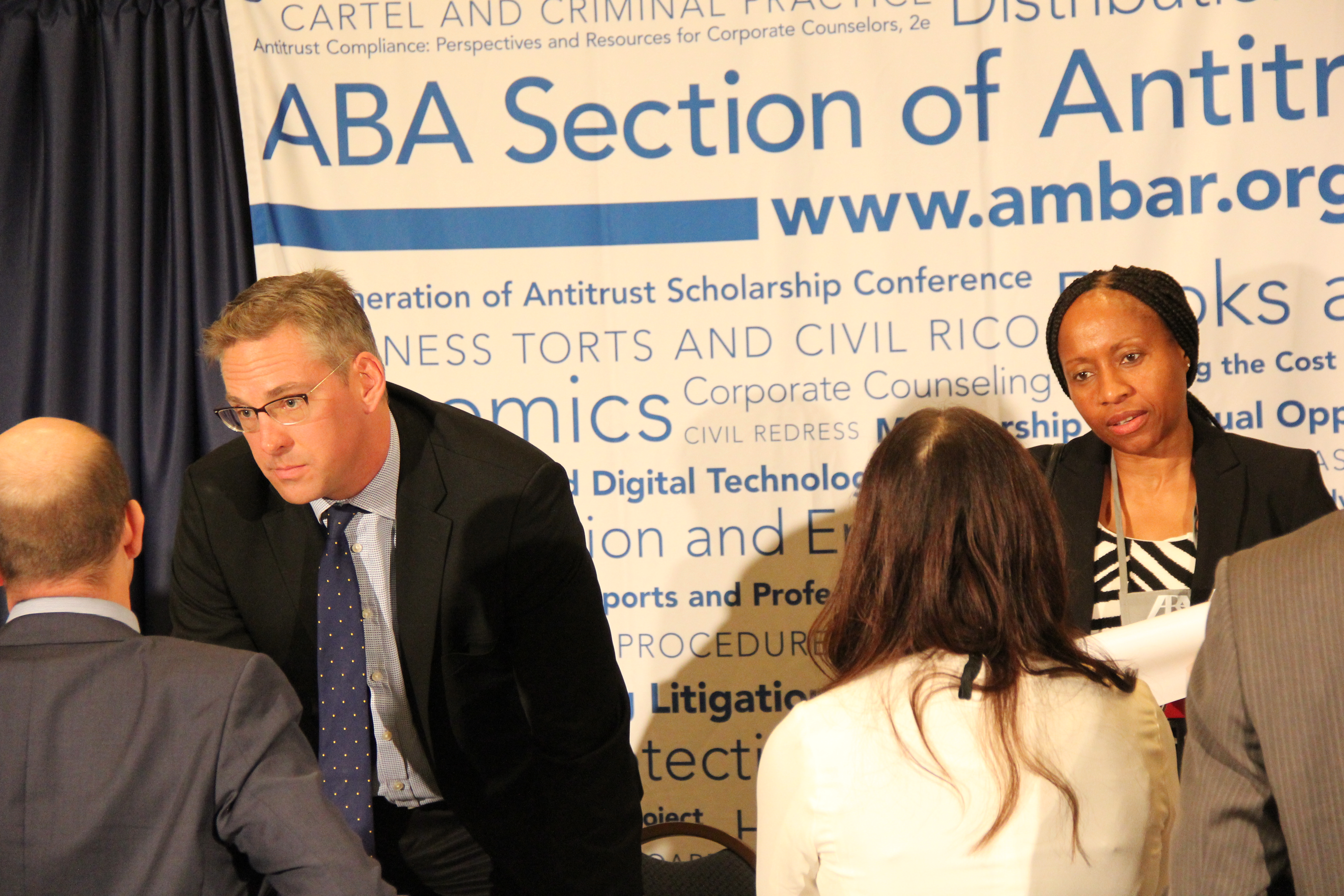
John Oxenham and Wendy Ndlovu at ABA Spring Meeting 2016 in Washington, D.C.
John Oxenham
John pointed out that from a South African perspective, mergers undergo a robust evaluation by the Competition Authorities and that although the investigation of most large mergers is completed within 60-70 days, the fact that the Commission may request the Competition Tribunal for an extension of up to 15 business days at a time, may result in the investigation of certain mergers taking considerably longer. The risk of a merger being delayed is increased significantly due to the level of third party interventionism, particularly ministerial intervention on public interest grounds.
John advised that merging parties should consider the impact that a particular merger will have on the public-interest grounds upfront to avoid delays in the investigation period as a result of further requests for information from the Commission, or may even amount to an incomplete filing.
In respect of substantive economic assessments, John pointed out that a number of jurisdictions, including South Africa, Namibia, Zambia and to a lesser extent Botswana, requires a substantive upfront economic assessment. In this regard the South African Competition Commission is perhaps the most robust in its economic evaluation of a merger in light of the resources dedicated to its own in-house economic department as well as utilising external experts when necessary. John also highlighted the fact that the South African Competition Authorities rely on oral testimony and expert witnesses are often subjected to substantial and lengthy examination and cross examination before the Competition Tribunal.
On the topic of gun-jumping or prior implementation, John mentioned that the following jurisdictions are examples of countries which do not require notification prior to implementing the transaction – in other words, they are not suspensory:
Malawi
Senegal
Mauritius
Whereas the following countries do require notification prior to implementation (suspensory merger control jurisdictions):
South Africa
Swaziland
Zambia
Botswana
On harmonisation, John confirmed that in relation to public interest considerations in merger control, the South African competition authorities play a leading role on the African continent and pointed out that in addition to Kenya and Tanzania, Namibia also considers public interest considerations and that there is a substantial amount of collaboration and information sharing between the South African and Namibian competition authorities, as was the case in the Walmart/Massmart deal.
Despite the information sharing between agencies, John confirmed that there are rules in place to protect confidential and legally privileged information and that the South African competition authorities are cognisant and respectful of these provisions.
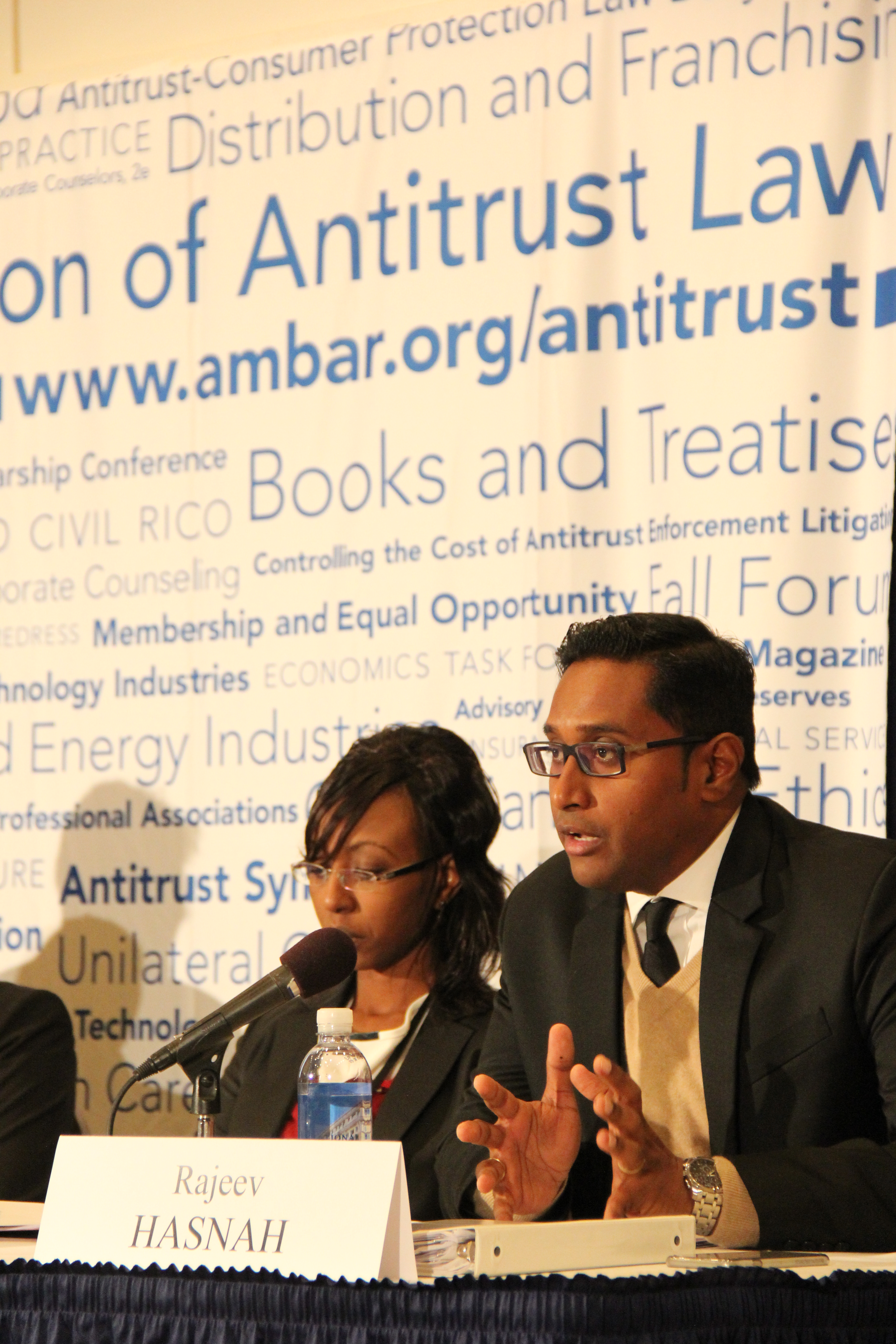
Rajeev Hasnah
Rajeev Hasnah, Pr1merio economist and former COMESA Competition Commissioner, and Anne Kiunuhe from Kenya
Rajeev noted the significant progress which the COMESA CC has made in relation to merger control by publishing financial thresholds for mandatorily notifiable transactions and specified filing fees, as well as publishing guidelines which clarify when a merger will have a sufficient regional dimension to fall within the COMESA CC’s jurisdiction.
On the topic of harmonisation, Rajeev discussed the challenges due to a lack of harmonisation between COMESA and its member states and noted that COMESA does not have exclusive jurisdiction in the cases which do fall within its jurisdiction. Parties, therefore, may find themselves being required to file a merger both before the COMESA CC as well as before the respective national authorities. A further challenge facing the COMESA CC is that there are 19 member states and consequently, the relevant geographic market is significant. Accordingly, often the national authorities are best placed to evaluate a merger and will therefore defer the evaluation of the merger to the relevant national authority.
On the role of economic assessments, Rajeev stated that an economic assessment underlies any merger evaluation and that both the Mauritius Competition Commission and the COMESA Competition Commission conducts a comprehensive economic assessment of a merger.
Wendy Ndlovu
When asked on what role public interest considerations play in merger control in terms of the South African competition regime, Wendy indicated that the framework of the Competition Act specifically requires the competition authorities to consider the impact that a merger may have on the four specified public interest provisions contained in the Act. Wendy confirmed that an evaluation of public interest considerations may both justify a merger despite the merger likely being likely to cause a substantial lessening or prevention of competition in the market, alternatively, public interest considerations may lead to a prohibition or the imposition of conditions on a merger which raises no competition law concerns and may in fact be pro-competitive.
Wendy recognised that there is a need, however, for greater certainty in respect to the manner in which the South African authorities evaluate public interest considerations and pointed out that the Competition Commission is likely to finalise and publish its guidelines on the public interest assessment in an effort to promote greater certainty.
On prior the issue of prior implementation, Wendy pointed out that merging parties need to be mindful of the consequences of gun-jumping and noted that the South African Competition Tribunal has imposed administrative penalties, as in the Netcare case, on parties for failing to notify a mandatorily notifiable transaction.
Anne Kiunuhe
Anne discussed the Competition Authority of Kenya’s (CAK) willingness to focus not only on merger control but has also identified the CAK’s increasing tendency to investigate and prosecute firms engaged in restrictive practices (as demonstrated by the recent dawn raids conducted by the CAK in the fertiliser industry). Despite the CAK’s growing confidence, Anne pointed out that in respect of merger control, the CAK is open to and in fact often relies on precedent from foreign jurisdictions when evaluating a merger. In particular, Anne noted that public interest grounds are specifically considered during the merger review procedure and that in this respect, the CAK largely takes the lead from the South African competition authorities.
From a practical perspective, Anne mentioned that the CAK usually requests a meeting with the merging parties soon after a transaction has been notified, and that usually representatives from the merging parties, along with local external legal counsel, should be present. The CAK prefers that the representatives present should be the best placed to answer or address the CAK’s queries. This often necessitates representatives from the parent company being present as opposed to representatives from the subsidiary entities only.
The direct contact between the CAK and the merging parties is quite different from the manner in which the COMESA CC evaluates mergers where the consideration of a merger is done solely on the papers and any communication between the COMESA CC and the merging parties is done through the merging parties’ local external counsel.
As to legislative developments, Anne pointed out that the merger regulations in Kenya now provide that for purposes of establishing a “change of control”, it is sufficient if the acquiring firm is able to materially influence the commercial decisions of the target firm. Accordingly, the acquisition of a minority shareholding for instance may constitute a change of control if the holders of such shares may for instance exercise veto rights.
On COMESA, Anne mentioned that the COMESA CC permits merging parties to seek a comfort letter when unsure as to whether a merger requires filing and that the use of comfort letters has been rather prevalent.
Conclusion
The role of public interest considerations in merger control was a dominant focus point throughout the panel discussion due to this unique aspect in a growing number of African jurisdictions merger control provisions.
Please click on the following link to access a an article on the role of public interest considerations in merger control in South Africa, which addresses in particular, the impact of ministerial intervention in merger proceedings and the concomitant impact which such intervention has on the costs, timing and certainty of merger proceedings.
March 2016 has been a busy month for the competition agencies of South Africa and Kenya respectively. Both agencies carried out search and seizure operations as a result of alleged collusion within various sectors of the economy. While the March dawn raids are not connected, the South African Competition Authority, as part of its advocacy outreach, provided training to the Competition Authority of Kenya relating to inter alia, search and seizure operations.
South Africa
On 23 March 2016, the South African Competition Commission carried out search and seizure operations in the automotive glass fitment industry, as part of its continued investigation into alleged collusion within this sector.
Accordingy to the SACC, the raid was carried out “at the Gauteng premises of PG Glass, Glasfit, Shatterprufe and Digicall as part of its investigation of alleged collusion. PG Glass and Glasfit are automotive glass fitment and repair service providers; Shatterprufe supplies PG Glass and Glasfit with automotive glass while Digicall processes and administers automotive glass related insurance claims on behalf of PG Glass and Glasfit.”
John Oxenham, founding director of Pr1merio, notes that “[t]his most recent dawn raid follows on from those carried out towards the latter part of 2014 and 2015 and confirms that the SACC has adopted a more robust approach to investigating alleged anti-competitive practices.” In this regard, Commissioner, Tembinkosi Bonakele, confirmed at the 9th Annual Competition, Law, Economics and Policy Conference in November last year that the Competition Commission has in the past two years, “conducted more dawn raids than those conducted in preceding years since the Competition Commission came into existence” (nearly 16 years ago).
For an overview of dawn raids and cartel investigations in South Africa, please see the following GCR Article.
Kenya
This month the Competition Authority of Kenya (“CAK”) conducted its first dawn raid. The search and seizure operations were carried out in respect of two fertiliser firms, Mea Limited and the Yara East Africa, based on the CAK’s suspicion of price fixing occurring between these two firms, who together control approximately 60% of the fertiliser market. The CAK conducted the raid in accordance with Section 32 of the Competition Act, 2011 which provides for the Authority to enter any premises in which persons are believed to be in possession of relevant information and documents and inspect the premises and any goods, documents and records situated thereon. This follows an inquiry which was launched last year by Kenyan competition authorities into what the CAK termed “powerful trade associations exhibiting cartel-like behaviour specifically targeting banks, microfinance institutions, forex bureaus, capital markets as well as the agricultural and insurance lobbies”. The fact that the CAK has carried out its first dawn raid demonstrates its growing stature.
The fertiliser industry appears to be a priority sector for a number of African jurisdictions as the CAK’s investigation into this sector follows the South African Competition Commission’s investigation into the fertiliser industry (which resulted in a referral before to the South African Competition Tribunal for adjudication some years back). In this regard,the South African Competition Commission’s spokesperson stated that the “fertiliser sector is viewed as a priority sector, due to the its importance as an input in the agricultural sector” (as reported here on African antitrust)
Zambia
Interestingly, the Zambian Competition and Consumer Protection Commission (“CCPC”) had, in 2012, conducted dawn raids at the premises of two fertiliser companies, as a result of alleged collusion within the industry.
On a Path to Harmonisation?
While there are a number of practical and legislative hurdles to effectively carrying out cross border search and seizure operations, it appears that cross border investigations may not be too far off. This is particularly so as the various agencies within the Southern African Region have identified similar priority sectors (as evidenced by both the investigations into the fertiliser sectors as well as the various market inquiries into the grocery retail sector).
Most African jurisdictions with competition laws have included provisions in their respective legislations that allow the competition authorities to conduct market inquiries.
Market inquiries have proved to be useful tools for competition agencies in numerous jurisdictions, particularly in Europe, and is becoming a common and increasingly popular tool amongst an number of African agencies as well.
Despite the benefits that may flow from a market inquiry, it is important that competition agencies appreciate and have due regard to the costs associated with such inquiries. Market inquiries are very time consuming and onerous for market participants and should be used sparingly. Having said that, the focus of market inquiries in most African jurisdictions tend to be on markets which the relevant authorities have identified as having a large impact on consumers.
In other words, socio-economic considerations appear to be a significant factor during the screening process used in deciding whether to institute a market inquiry. Sectors such as food, healthcare and banking (at an individual consumer level) are some of the common industries which have been ‘prioritised’ or identified as important sectors.
While the number of market inquiries which have been concluded on the African continent is limited, as competition agencies gain more expertise and confidence in their mandates, there is likely to be a significant increase in the number of market inquiries instituted and firms conducting business in Africa, particularly within ‘priority’ sectors, should be cognisant of this.
We set out below a brief overview of the market inquiries which are currently being conducted in the various African jurisdictions.
South Africa
There are currently three market inquiries which are underway, one into the private healthcare sector and the other into the grocery retail market. The third market inquiry is in the liquefied petroleum gas sector.
The private healthcare inquiry was launched on the basis that cost of private health carein South Africa is a concern to the competition authorities. A revised statement of Issues for public comment was announced on 11 February 2016 and comments are to be submitted by 11 March 2016.
The grocery retail inquiry is focussed largely on the stricture of the market and the ability of smaller or informal retailers to compete, but will also address issues such as “long term lease” clauses (which has already been adjudicated upon by the Competition Tribunal).
The third market inquiry is into the LPG which was launched in August 2014 is expected to conclude in March 2016.
The only previous market inquiry concluded in South Africa was into the banking sector. This inquiry was conducted on an informal basis as there were no formal legislative powers bestowed on the competition authorities to conduct market inquiries.
Swaziland
The Swaziland Competition Commission (SCC) announced in January 2016 that a market inquiry has been launched into the retail banking sector. The SCC stated that retail banking service offered to consumers, micro and medium enterprises remained the most important sub-sector of banking. It is, however, the ‘current account’ which is the central product to be used as the starting point for the inquiry.
Zambia
On 1 February 2016, the Zambian Competition Authority (CCPC) announced that it will be conducting a market inquiry into the vehicle towing industry. While the CCPC indicated that it wishes to understand the “conditions of competition in the market”, although the inquiry came about as the CCPC had received numerous complaints from consumers that emergency towing operators were charging high prices. It remains to be seen whether this inquiry is focused predominantly on competition-law issues, or rather consumer-protection laws.
Botswana
The Competition Authority in Botswana (CA) is currently underway with a market inquiry into the grocery retail sector, focusing on shopping malls and in particular, the impact of long term exclusivity leases on competition in the market.
COMESA
Consistent with the competition authorities of South Africa and Botswana, the COMESA Competition Commission (“CCC”) has also launched an investigation into the impact that shopping malls have on competition. The CCC announced that it will carry out their inquiry by taking samples from the member states.
Coca-Cola/SAB Miller merger prompts onerous conditions
Written by Jenna Foley, AAT contributor
The agreement between The Coca-Cola Company, SABMiller and Gutsche Family Investments to combine their soft-drink bottling operations in Southern and East Africa has been met with the proposal of onerous merger conditions. The new bottling company, Coca-Cola Beverages Africa, will bottle 40% of Africa’s Coca-Cola beverages with operations in 12 countries. Minister of Economic Development, Ebrahim Patel has, after considering the public interest issues in mergers, expressed concern on the effect of the merger on small businesses, supplier industries, employment and investment.
Section 12A(3) of the Competition Act (89 of 1998) prescribes that, “when determining whether a merger can or cannot be justified on public interest grounds, the Competition Commission or the Competition Tribunal must consider the effect that the merger will have on –
a particular industrial sector or region;
employment;
the ability of small businesses, or firms controlled or owned by historically disadvantaged persons, to become competitive; and
the ability of national industries to compete in international markets.”
The Competition Commission (the “Commission”), on the advice of Minister Ebrahim Patel, has recommended that the merger only be approved subject to a list of onerous conditions. One of these conditions stipulate that the merging parties invest R650m to support the development of black-owned retailers, small suppliers and developing farmers. Taking into account the above-mentioned section of the Competition Act it is yet to be determined how the R650m investment was calculated or the specific justification of such an onerous condition. In addition, other recommended conditions include requirements on employment and black economic empowerment (BEE) as well as allowing retailers who are given Coca-Cola branded fridges free of charge to stock the fridges with products made by rival companies.
The Commission’s concerns have arisen despite the merging parties’ consideration for public interest issues. The proposed merger, according to the Commission, is said to have a negative impact on employment and BEE. This has been expressed even though the merging parties have undertaken not to retrench employees as a result of the merger, except for 250 identified employees. In addition the parties have made a commitment to increasing their BEE shareholding. The Commission has further expressed concern about the negative effect the merger will have on suppliers, namely the weakening of their negotiating position, despite the merging parties’ undertaking to buy certain products (tin cans, glass and plastic bottles, packaging crates and sugar) from local suppliers.
In light of the above, the Commission’s recommended conditions to the Competition Tribunal, on the advice of Patel, seem far-reaching, leaving the merging parties with a heavy burden of complying with such onerous conditions. The recommendation to apply these burdensome conditions has caused delays and the proposed merger has not yet been finalised.
South Africa is in the midst of one of the worst droughts in decades. The droughts impact stretches far broader than simply grass roots levels. Maize prices have recently reached a record high due to shortage of supply over the past 12 months, which, being a staple food source for the majority of the population..
It comes as no surprise that the drought has sparked interest of the competition authorities or those wanting to use competition law as a means to promote and protect socio-economic goals.
The recent matter involving alleged price-fixing and collusion between a number of fertiliser companies (including the H Pistorius and Co. company which has strong family ties to convicted former Para-Olympian champion, Oscar Pistorius – previously reported by AAT) will be heard before the Tribunal in a month’s time. Despite the matter laying dormant for some time, the Commission appears intent on prosecuting the respondents. The Commission’s spokesperson stated that the fertiliser sector is viewed as a priority sector, due to the its importance as an input in the agricultural sector. The case will undoubtedly receive additional media attention due to the heightened focus on the agricultural industry brought about by the drought, as well of course from an atmospheric perspective given the Oscar Pistorius link.
Unrelated to the fertiliser case, the Congress of South African Trade Unions (COSATU) has recently called on the Commission to investigate the maize sector for collusion. This call follows an investigation which was already carried out during 2006-2007 which saw a number of maize milling companies referred to the Tribunal for adjudication. A date for these complaint hearings has not yet been set. The complaint brought by COSATU, which must be investigated by the Commission, relates to traders who are allegedly “buying and selling maize unlawfully and manipulating the price of maize taking advantage of the shortage of supply of maize as a result of the drought”. The allegations have, however, been denied by AgriSA who insists that the price of maize has consistently being increasing from 2015 to over 50%.
The public-interest saga continues: South African antitrust & inclusiveness
More on the revised Guidelines for the public-interest assessment in southern African’s largest economy… By AAT guest author Anne Brigot-Laperrousaz.
In December 2015, the South African Competition Commission (the “Commission”) issued revised guidelines for the assessment of public interest provisions in mergers (the “Guidelines”). This document is a further step in a long process aiming at ensuring better efficiency in the Commission’s evaluation of mergers. One of the main rationale is that informed parties will be able to anticipate the documentation and data to be transmitted to the Commission in view of obtaining its approval. Transparency, predictability and clarity, all of them fundamental aspects of legal certainty, shall result in reduction of delays and enhancement of legitimacy of the Commission’s decisions.
In January 2015, the Commission issued a first draft of those Guidelines, open to comment by stakeholders. Several bodies answered positively to this initiative, including law firms (Bowman Gilfilan, Baker & McKenzie, …), companies (Vodacom, Tabacks), international associations (International Bar Association) and policy research centers (UK Center for Competition Policy). The December 2015 Guidelines are the result of this broad enquiry, and the final version open to comments until the 29th January 2016.
Public-interest considerations abroad
Firstly, the international perspective on public interest considerations in the assessment of mergers might offer an interesting insight to the question.
In Europe, at Community level, the EU Merger Regulation (the “EUMR”) prevents the European Commission to assess non-competition considerations in its analysis of the proposed transaction. Indeed, Article 2 EUMR sets out a test based exclusively on the potential “significant impediment to effective competition”, and the available remedies when the merger might result in such an impediment.
Yet Article 21(4) EUMR allows interventions of Member States to protect three determined types of public interests, namely, public security, plurality of the media and prudential rules. Exceptionally, the European Commission may allow a national measure aimed at protecting a different legitimate interest, although this procedure is rarely used. In any case, the measures taken shall be compatible with the general principles and provisions of European Union law.
A major difference between EU and US competition laws is that the former was meant to serve as a tool to achieve a State union, whereas the latter intervened in an already federated region. This feature arguably plays a significant role in the importance attached to further political aims in the elaboration of the competition framework, although this feature did appear at the first stages of the US.
Two US institutions are today in charge of reviewing the competitive effects of mergers: the Antitrust Division of the US Department of Justice, and the Federal Trade Commission. Those two institutions act as competition regulators, focusing exclusively on the competition aspects of targeted operations. Other public policy interests, related to specific sectors, might be analysed and taken into account under the responsibility of other US agencies, such as the Federal Communication Commission or the Federal Reserve and the Federal Deposit Insurance Corporation. Such agencies therefore act as sector or industry regulators.
To the extent that the South African Competition Act (1998) (the “Act”) gives a particularly important role to public interest criteria in merger controls, the need for transparency and clarity in the Commission’s assessment mergers is all the more crucial.
ZA: The integration of stakeholders’ comments by the Competition Commission
As for the general observations on the January 2015 guidelines, some constants remain in most of the stakeholders’ commentaries.
This is so in particular as regards evidential requirements, that is, the type and nature of information that would generally be required from the merging parties. Although the Guidelines do provide a relatively detailed and insightful perspective on the Commission’s methodology in assessing mergers, it does not appear that they answer this recurrent request, even in the form of non-exhaustive references to specific documents.
Tembinkosi Bonakele, the South African Competition Commissioner, had the following to say on the topic, when interviewed for AAT’s Meet the Enforcers:
It is important that BRICS countries weigh-in on this important debate. There is a divergence of views amongst many antitrust practitioners on the compatibility of antitrust issues with public interest issues, but everyone accepts that there are public interest issues. The conference will deepen and broaden perspectives on the matter. …
The South African competition authorities were established as a package of reforms to transform the unequal South African economy to make it economy inclusive and ensuring that those who participate in it are competitive.
Through engagements such as the BRICS conference we’re able to discuss with our BRICS counterparts how to make our economies, which are similar, more efficient, competitive and inclusive.
A second concern regards the issue of “balancing” competition and other public policy interests. The different nature of those matters, implying various qualitative and quantitative methods of assessment, arguably makes this task “inherently arbitrary”. This is even more so in presence of the broad and general principles addressed by the Act, and that the Guidelines arguably ought to determine and circumscribe. In their revised version, although some further precisions on the process and the determining factors of the Commission’s assessment have been added, some grey areas remain. For instance, some commentators have highlighted the fact that as regards the effect of the merger on a particular industrial sector or region, the Commission “may consider any public interest argument in justification of the substantial negative effect arising as a result of the merger on an industrial sector or region” (Guidelines, §7.2.4.2). It is our view that this wording is all too broad and undetermined to provide useful guidance to practitioners, and ensure a transparent and consistent analysis by the Commission. Not to mention that, as noted by the International Bar Association, the Act limits the Commission’s jurisdiction in evaluating public interest matters in merger reviews. This reference to “any public interest” arguably overlooks the Commission’s limited jurisdiction. Unfortunately, this comment does not seem to have been taken into account in the drafting of the revised version.
The same analysis can be made of the use of such concepts as causality, for example, which is not clearly defined. Furthermore, the Guidelines often provide for the possibility to prove that the effect “results or arises from” the merger, together with the requirement of a causal link, undermining the precise and strict legal requirements that are entailed by the notion of causality (see §7.2.2.1). In other instances, the Commission will merely “consider whether the employment effects are in any way linked to the intentions […] of the acquiring group”, which broadens unreasonably the scope of analysis.
Overall, when considering the clarifications that were called for in various submissions from stakeholders, it appears that in most cases, where the comments have been echoed in the revised Guidelines, the drafting committee has hidden the difficulties rather than going further in its analysis.
For instance, several commentators have expressed their surprise at the principle stated in the January 2015 version of the Guidelines, in the section dedicated to the general approach to assessing public interest provisions, that when the Commission found that the public interest effects were neutral, it would balance the negative and positive effects (§6.6). Indeed, the concept lacked clarity, and does not appear in the revised Guidelines.
Yet, some more substantial comments, in that they pointed to more potentially noxious loopholes, have apparently been disregarded. This is the case of the consequences of the finding of negative competition and public policy effects, a situation where the Commission does not seem to consider the possibility to justify and find remedies. It appears that the result would be a forthright prohibition of the transaction, even if other ways could have existed.
More generally, the perspective on the matters at stake seems to be rather hostile. For instance, in cases where negative public interest effects have been identified, the Commission “may consider imposing remedies or prohibiting the merger depending on the substantiality of the public interest effects”. It may be considered that a more relevant criterion might have been the existence and efficiency of potential remedies, rather than the substantiality of the negative effects at stake. Indeed, although the substantial character of the adverse effects might be a suitable criterion to set the standard of analysis, it does not easily justify to disregard possible remedies, which seems to be the result of the present wording.
Similarly, the Guidelines seem to set the existence of a positive competition finding as a threshold to its analysis. It has been advocated that a more suitable logic would be that the starting point is the absence of any prevention or lessening of competition, which would be more in line with both the Act and the role it affords to public policy concerns, and international best practice.
Conclusion
As noted by the International Competition Network, “the legal framework for competition law merger review should focus exclusively on identifying and preventing or remedying anticompetitive mergers. A merger review law should not be used to pursue other goals”.
Since the introduction of public policy issues in merger control is broadly considered to require cautiousness and measure, it is questionable if the revised Guidelines abide by this general principle of predictability and transparency as regards those matters. Although clear efforts have been made, the public policies at stake do not appear to have been sufficiently identified and articulated with what should remain the fundamental purpose of merger control, that is, the competitive effects of the transaction at stake.
That is particularly so in view of the nature of the Commission, which has no particular expertise in the public policy matters that it his charged to assess. As it is the case in other jurisdictions, such as the UK, it may be useful to create the possibility for the Commission to obtain input from other specialised government agencies or department, although through a transparent and public process which would prevent any diversion of the Act and the Commission’s purposes.
Flying somewhat under the radar during the Christmas and year-end holiday season (but not under AAT’s radar), the South African Petroleum Industry Association (made up of BP, Shell, Chevron and other oil heavyweights) have sought a five-year renewal of their currently temporary holdover exemption from certain competition laws, which will expire in June 2016. The application was made on Christmas Eve 2015 under section 10(6)(a) of the Competition Act. SAPIA has not posted any news item or press release about its application on its web site to date.
SAPIA is seeking permission to allow its members to “cooperate and co-ordinate” on common industry logistics issues, as Andreas Stargard, a director with African competition-law and anti-corruption advisors Pr1merio notes.
“These include areas such as Single Buoy Mooring, port facilities, shipping, mooring, and interestingly also distribution as well as less well-defined ‘production and manufacturing plant shutdowns.'”
As Stargard observes, from an antitrust perspective, this could be of significant interest: production limitations would necessarily decrease available supply and thereby have the potential to drive up price, he notes. Under the terms of SAPIA’s application, the plant shutdowns are both scheduled and unscheduled and supposedly relate to upgrades and safety measures only, according to the application. In practice, however, such an exemption could give possibly provide the oil industry with carte blanche on competition issues and market manipulation.
In order to assuage concerns, the SAPIA members agree, in return for the exemption, that:
Competing participants in exempt agreements and practices may not share competitively sensitive information, except for the purposes described in the exemption application.
SAPIA and its members may not share information relating to setting of margins, imposition of levies and or approval of tariffs, unless required to do so by the DOE or NERSA.
The employees of any operating party who receive such information shall ensure that the information is held, maintained and used separately, confidentially and on need- to-know basis only.
The full text of the request for exemption is located here. Interested parties and the public have 20 business days to comment on the application.
We have previously, on African Antitrust, reported on South Africa’s first predatory pricing case in the Media 24 matter. In light, however, of the recent cases on exclusionary conduct — particularly predatory pricing, which has received significant attention from competition law agencies across a number of jurisdictions of late (see, for instance, the Paris Court of Appeals’ dismissal of the predatory pricing and exclusionary conduct allegations made against Google by an online maps rival. The Indian Competition Commission has also launched an investigation into alleged predatory pricing in the taxi industry, and the European Commission has launched investigations into predatory pricing in the potato-chips / crisps industry) — a more substantive evaluation of predatory pricing in South Africa is called for. The following article on predatory pricing, in light of the Media 24 case, neatly sets out and evaluates the landscape of predatory pricing in South Africa.
Predatory Pricing & the South African Competition Act: a False-Positive?
By Michael J. Currie
Intro & Summary
“From an antitrust perspective, predatory pricing is a particularly difficult problem with which to deal. If we are to prevent anticompetitive monopolization, it is a strategy that must not be permitted. The paradox, however, is that such a pricing strategy is virtually indistinguishable from the very sort of aggressive competitive pricing we wish to encourage.”
D L Kaserman and J W Mayo, ‘Government and Business: The Economics of Antitrust and Regulation’ (1995) Fort Worth, TX: Dryden Press at 128
In September 2015, the Competition Tribunal (“Tribunal”), for the first time in South Africa’s sixteen-year history of competition-law enforcement found, in the Media 24 case that the respondent had engaged in predatory pricing in contravention of the South African Competition Act, 89 of 1998 (“Act”).
The Media 24 case, despite being dragged out for nearly six years, was set to be the leading jurisprudence on the laws pertain to predatory pricing, and in particular, how Section 8(d)(iv) of the Act would be interpreted and applied by the Tribunal. The finding by the Tribunal was, however, based on Section 8(c) of the Act, which is a broader ‘catch-all’ provision, and left some important questions as to the interpretation of Section 8(d)(iv) unanswered. Most notably, whether or not Section 8(d)(iv) permits complainants to utilise cost measurement standards other than Average Variable Costs (“AVC”) or Marginal Costs (“MC”) to prove that a dominant firm has engaged in predatory pricing in contravention of the provision.
Having said that, however, the Media 24 case provides some insight as to the precise relationship between Sections 8(d)(iv) and 8(c) of the Act as they relate to predatory pricing, and may have offered, by way of certain obiter remarks, an indication as to how the Tribunal may interpret and apply Section 8(d)(iv) of the Act in the future.
Continue reading the full article, an AAT exclusive, in PDF format:
 As we reported earlier this week, the previously granted extension of the competition authorities’ review was “widely suspected that the request for the extension is due to intervention by the Minister of Economic Development, in relation to public interest grounds. Although there is no suggestion at this stage that Minister Patel is opposing the deal, the proposed intervention does highlight bring into sharp focus the fact that multinational mega-deals face a number of hurdles in getting the deal done.”

 The R10-million administrative penalty is a record amount for gun-jumping, or the failure to notify the competition authorities of a merger. Previously, the highest penalty for a failure to notify was just over R1-million. The new record penalty follows numerous warnings by the Competition Commission (“Commission”) that it intended to materially increase penalties for failure to notify mergers — says Andreas Stargard, an antitrust practitioner with

 ZA: The integration of stakeholders’ comments by the Competition Commission
 The South African competition authorities were established as a package of reforms to transform the unequal South African economy to make it economy inclusive and ensuring that those who participate in it are competitive.
 Strategic Timing of Exemption Application?


