New York Concurrences conference: Focus on emerging economies, “coping with nationalism and building inclusive growth”
AAT invites its readers to sign up for what promises to be a timely and topical conference in NYC this October 26, 2018, at NYU Law School. Program below, sign-up with Eventbrite here. The event features the SACC’s Commissioner Tembinkosi Bonakele as well as professor Simon Roberts from the Univ. of Johannesburg.
08.15 am
Registration & Breakfast
8:45am
Opening Keynote Speech
Joseph STIGLITZ
Nobel Prize-Winning Economist | Professor, Columbia University, New York
9:30am
Competition, Industrial Policy and Developing Countries
Noah BRUMFIELD| Partner, White & Case, Washington DC
Dennis DAVIS | President, Competition Appeal Court of South Africa, Cape Town
Kirti GUPTA | Senior Director, Economic Strategy Qualcomm, San Diego
Frédéric JENNY | Chairman, OECD Competition Committee, Paris
Simon ROBERTS | Professor, University of Johannesburg, Johannesburg
Moderator: Eleanor FOX | Professor, NYU School of Law, New York
11:00am
Coffee Break
11:15am
Mega Mergers and Developing Countries
Tembinkosi BONAKELE | Commissioner, South Africa Competition Commission, Pretoria
Marcio DE OLIVEIRA JR | Senior Consultant, Charles River Associates, São Paulo
Gönenç GÜRKAYNAK | Partner, ELIG Gürkaynak Attorneys-at-Law, Istanbul
Nicholas LEVY | Partner, Cleary Gottlieb Steen & Hamilton, London
Ioannis LIANOS | Professor, University College London
Moderator: Harry FIRST | Professor, NYU School of Law, New York
12:45pm
Lunch
1:45pm
BRICS: A Competition Agenda?
Alexey IVANOV | Director, HSE-Skolkovo Institute for Law and Development, Moscow
Ruchit PATEL | Partner, Ropes & Gray, London
Cristiane SCHMIDT| Commissioner, CADE, Brasília
Xianlin WANG | Professor, Shanghai Jiao Tong University, Shanghai
Moderator: Daniel RUBINFELD | Professor, NYU School of Law
3:15pm
Coffee Break
3:30pm
Enforcer’s Roundtable: What’s Under the Radar?
Roger ALFORD|Deputy Assistant Attorney General, US DOJ, Washington DC
Tembinkosi BONAKELE | Commissioner, South Africa Competition Commission, Pretoria
Randolph TRITELL | Director, Office of International Affairs, US FTC, Washington DC
Joseph WILSON | Adjunct Professor, McGill University, Montreal | Former Chairman, Competition Commission of Pakistan
Moderator: Frédéric JENNY| Chairman, OECD Competition Committee, Paris
5:00pm
Closing Wrap-up: New York Minute
Eleanor M. FOX| Professor, New York University School of Law
Harry FIRST| Professor, New York University School of Law
The COMESA Competition Commission (CCC) has vowed to develop a system which will allow the CCC to have better oversight (to in turn ensure effective enforcement) over anti-competitive behaviour in member states.
This follows extensive research conducted by the CCC’s which indicates that anti-competitive practices are increasingly prevalent throughout its member states and is causing consumer harm.
George Lipimile, CEO of the CCC says that while protective measures put in place by national governments (aimed at shielding their companies from competition) is a serious threat to the region as cartels are prevalent is almost all sectors of the economy.
The CCC has also singled out the banking sector, stating that: “[w]e [CCC] have seen quite a lot of abuse in terms of non-disclosure of critical information to consumers”.
Andreas Stargard, antitrust lawyer at Primerio Ltd., attributes the increase in anti-competitive behaviour in the region to a lack of awareness of consumers’ rights groups to recourse under competition laws. “Antitrust is a comparatively new and developing phenomenon in most of the COMESA member states, and it will take time for local authorities to increase public awareness around the benefits of antitrust to consumers”, he says. “One way to increase such awareness is, of course, closer engagement of private legal consultants as well as media, whether online, print, or radio and television.”
The CCC has vowed to intensify efforts to increase awareness within member states and to ensure effective and robust enforcement of competition laws in the region.
KENYA
The Competition Authority of Kenya (CAK) has rejected a study (presented at the National Assembly Committee on Communication, Information and Innovation) by the Communications Authority which aims to introduce price capping in the telecommunications sector as a means to ‘remedy’ high concentration in the market.
In dismissing the study, the CAK Director General Kariuki Wang’ombe stated that “[i]t is important to highlight that dominance is not an illegality. What is an illegality is the abuse of dominance position. The intervention of a regulator should be informed by abuse of dominance position.”
Ruth Mosoti, a leading Kenyan competition practitioner, notes that the CAK, in an effort to steer clear of being considered a pricing regulator, “proposed that the Communications Authority focus on ensuring the sharing of resources by dominant firms (so as to ease barriers to entry and reduce switching costs so as to facilitate the entry and participation of competitors in the market) as opposed to setting a price cap.”
The CAK further urged the Assembly Committee to facilitate co-operation between the CAK and the Communications Authority in order to ensure effective regulation in the sector. “I request this committee to come up with a way of compelling the regulators to work together for the betterment of this sector. It might not be easy for only one regulator to regulate this sector. This issue is more of personal relationship,” Kariuki said.
Safricom Kenya CEO, in response, expressed his concerns stating that “[t]he operators who are seeking these interventions today will have been taught not to invest but instead to rely upon the infrastructure that is built by others. They will have been taught not to innovate as innovations will be served to them on a silver platter”.
NAMIBIA
Following an announcement by the Namibia Taxi and Transport Union (NTTU) that taxi fares will increase (following approval of its members at a joint meeting), the Namibia Competition Commission (NCC) warned the taxi operators to follow due process in seeking to introduce joint price increases to avoid falling foul of the Namibia Competition Act (Competition Act).
In terms of the Namibia Road Traffic and Transport Act (Transport Act), the Transport Board may endorse a collusive price increase in the industry (of not more than 10%). The NTTU has, however, announced that despite their understanding that the Transport Act stipulates that any fare increase should not be more than 10%, they will continue to implement the 50% price increase, with or without approval.
The NCC has, therefore, warned taxi operators that any collusive price increase (which is contrary to the Transport Act) will amount to a contravention of the Competition Act. The NNC released a statement saying “[t]axi operators who collusively and intentionally impose fixed taxi fare increases without following the due process set out in the Road Transport Act will render themselves liable in terms of the Competition Act and thereby attract a formal investigation which may lead to punitive civil and/or criminal sanctions”.
The NCC has previously resolved not to investigate Bus and Taxi Associations for price fixing, provided that such conduct was authorised under the Transport Act.
John Oxenham, also a director at Primerio Ltd. notes that the passenger transport is sector is increasingly considered a priority sector in Africa with Namibia’s neighbouring country, South Africa, having commenced a market inquiry into the public passenger transport sector which, inter alia, will assess the impact of ride-hail apps such as Uber on competition in the traditional taxi sector.
In a milestone enlargement of the (now formerly) 19-member COMESA region, Tunisia and Somalia have acceded to the trade bloc at the 20th COMESA Summit on 19th July 2018, creating #COMESA21 – Africa’s largest free trade region.
Their application to join had been pending since 2016. Under the Treaty, the new members will be bound by the provisions of the Treaty and must deposit their formal instrument of acceptance of the terms of admission with the Secretary General, together with an instrument of accession pursuant to Articles 194 and 195 of the Treaty with regard to a State admitted to full membership. Says Primerio’s Andreas Stargard, “with the privilege of membership comes the obligation of agreeing to abide by the antitrust rules promulgated under the COMESA Treaty. This includes the Competition Commission’s procedural and substantive rules and notably its merger regulations. It remains to be seen how the still weakened bureaucratic structure of the Somali Republic will be able to implement the strictures of a working competition-law regime…”
Indeed, the CCC’s recent Notice No. 2/2018 provides that “the provisions of the COMESA Competition Regulations of 2004, and its accompanying rules, shall be enforceable in the territories of the Republic of Tunisia and the Federal Republic of Somalia with immediate effect.”
Personnel News 2018
In addition to gaining two new member states, COMESA also underwent personnel changes, adding an experienced antitrust practitioner, Zimbabwean Competition and Tariff Commission director, Ellen Ruparanganda, as one of the nine CCC commissioners, for a term of three years. Besides Ms. Ruparanganda, Francis Lebon (Seychelles), Ali Hamadou Ali Kako (Djibouti), Thembelihle Dube (Eswatini, formerly Swaziland), Danson Buya Mungatana (Kenya), Michael Teklu Beyene (Ethiopia), Charlotte Wezi Malonda (Malawi), Islam Tagelsir Ahmed Alhasan (Sudan), and Brian Muletambo Lingela (Zambia) were also sworn in.
On 29 June 2018, the South African Competition Tribunal (Tribunal) penalised the RTO Group R75 000 for failing to comply with the Tribunal’s conditional merger approval in respect of two companies now within the RTI stable, Warehouseit and Courierit. The Tribunal approved the large merger in August 2015.
In terms of the Tribunal’s merger approval, a moratorium on merger specific retrenchments for a two year period was imposed – now a frequently imposed public interest related condition by the competition agencies in South Africa.
RTI, however, was penalised not for retrenching any employees during this window but for failure to adhere to the monitoring obligations as set out in the Tribunal’s conditional approval certificate.
In this regard, the merging parties were obliged to notify their employees (and Courierit’s subcontractors) of the conditions to the merger approval within five days of the merger approval date. The merging parties were also obliged to provide the Competition Commission with an affidavit confirming that the obligations in terms of the conditions had been complied with.
By way of a consent order, RTI admitted that it failed to comply with its monitoring obligations and agreed to pay an administrative penalty for breaching the Tribunal’s conditional merger approval.
Although there have been a limited number of cases in respect of which an administrative penalty has been imposed for a breach of the merger conditions, this case demonstrates the importance of fully complying with the terms set out by way of a conditional merger approval.
Furthermore, although notifying the employees of the relevant conditions may not have been a particularly onus obligation, merging parties should take particular cognisance of monitoring and reporting obligations when negotiating conditions with the Competition Commission. Merging parties understandably place greater emphasis on the substantive aspects of the conditions and may underestimate the reporting obligations related thereto – particularly if conditions are being negotiated at the eleventh hour (which is not uncommon).
While there are mechanism’s available to merging parties to remedy any patently unworkable aspects contained in merger approval conditions, it is advisable to ensure that the conditions are practical and capable of being adhered to in full prior to being finalised – assuming the merging parties have that luxury.
[Michael-James Currie is a South African based competition lawyer and practices across Sub-Saharan Africa]
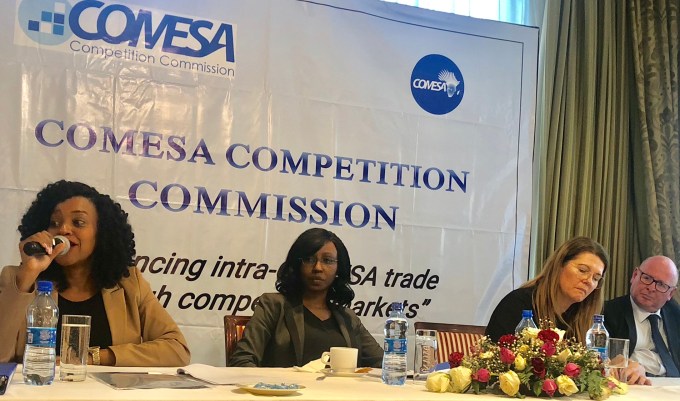
The first-ever COMESA-sponsored competition law workshop focussed solely on the business community, currently underway in Nairobi, Kenya, stretches the capacity of the Hilton conference room where it is being held.
The event’s tag line is “Benefits to Business.” Especially now, with the African continent sporting over 400 companies with over $500m in annual revenues, the topic of antitrust regulation in Africa is more pertinent than ever, according to the COMESA Competition Commission (CCC).
The head of the Zambian competition regulator (CCPC), Dr. Chilufya Sampa, introduced the first panel and guest of honour. He identified the threats of anticompetitive last behaviour as grounds for he need to understand and support the work of he CCC and its sister agencies in the member states.
With COMESA trade liberalisation, the markets at issue are much larger than kenya or other national markets. The effects of anticompetitive conduct are thus often magnified accordingly.
The one-stop shop nature of the CCC’s merger notification system simplifies and renders more cost-effective the transactional work of companies doing business in COMESA.
The Keynote speaker, Mr. Mohammed Nyaoga Muigai, highlighted the exciting future of the more and more integrated African markets, offering new challenges and opportunities. He challenged the audience to imagine a single market of over 750 million consumers. Companies will have to think creatively and “outside the box” in these enlarged common markets.
His perspective is twofold: for one, as a businessman and lawyer, but also as a regulator and board chairman and member of the Kenyan Central Bank. Effective competition policy (and access to the legal system) allows to prepare the ground for the successful carrying out of business in the common market. Yet, businesses must know what the regulatory regime actually is. Therefore, the duty of lawyers is to educate their clients about the strictures and requirements of all applicable competition law, across all COMESA member states.
After a group photo, the event continued with an informative presentation by Mr. Willard Mwemba on key facts that “companies should know” on merger control in the (soon enlarged to 21 member states, with the imminent addition of Tunisia and Somalia) COMESA region, starting with its historical roots in COMESA Treaty Article 55 and continuing through the current era since 2013 of the CCC’s regulatory oversight.
Willard Mwemba, Head of M&A at the CCC
He provided relevant merger statistics, jointly with Director of Trade affairs, Dr. Francis Mangeni, which were of great interest to the audience, followed by a discussion of substantive merger review analysis as it is undertaken by the Commission. The benefits of the “one-stop-shop” characteristic of CCC notification versus multiple individual filings were extolled and individual past M&A cases discussed.
AAT will live-update the blog as the event progresses.
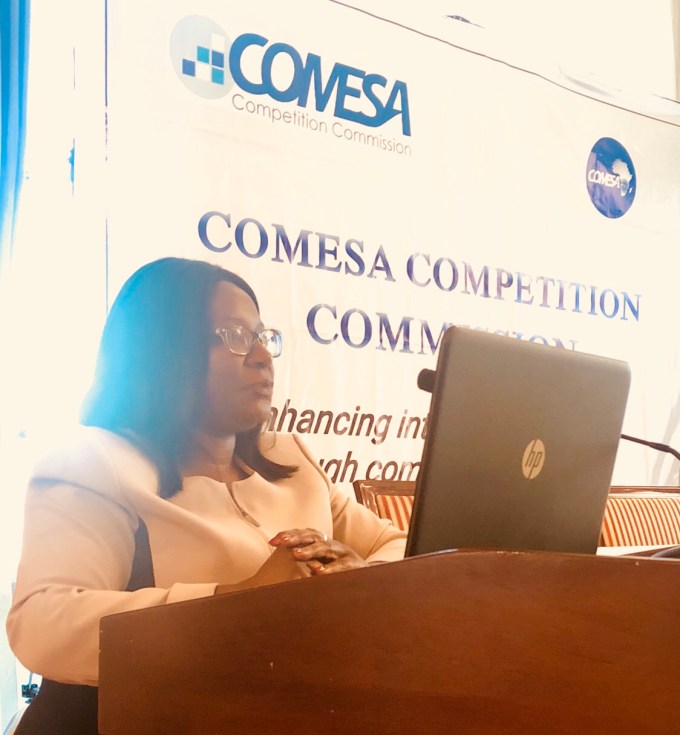
Dr. Sampa, CCPC executive
Dr. Sampa, as head of the Zambian CCPC and a former CCC Board member, emphasized the importance for companies to have functioning and well-implemented antitrust compliance programmes in place.
A spirited discussion was had relating to the 30% market share threshold the Commission utilises to evaluate triggers for launching antitrust conduct investigations. Primerio’s Andreas Stargard argued for COMESA’s consideration of an increase in this trigger threshold to 40%, proposing that:
“Especially in an already concentrated market (where players possess majority shares anyway), a low initial share threshold is of little to no additional enforcement value. On the contrary, a low threshold may hamper vigorous competition by smaller to midsize competitors or newer entrants, who wish to grow their (previously innocuous) smaller share of the market but are simultaneously held back in their growth efforts by trying not to cross the 30% barrier so as not to attract the attention of the Commission.”
There was also an issue raised regarding private equity and non-profit / “impact investors” and the like having to bear the burden of notifications and ancillary fees in cases that are otherwise unobjectionable almost by definition (since the investors are not present on the market of the acquired entities in which they invest). Dr. Mangeni indicated that the CCC will investigate and consider whether a proposed change in the applicable Rules to account for this problem may be advisable in the future.
Mary Gurure, head of legal (CCC)
The CCC’s chief legal advisor, Ms. Mary Gurure, presented on conflict of laws issues within the COMESA regime, harmonisation of laws, and CCC engagements with individual member states on these issues.
Crucially, she also mentioned a novel initiative to replicate a COMESA-focused competition enforcer network, akin to the ECN and ICN groupings of international antitrust agencies.
Business panel #CCCworkshop 2018
The conference concluded with a business lawyer panel, in which outside counsel and in-house business representatives voiced their perspectives, largely focusing on the issue of merger notifications. These topics included the (1) burdens of having to submit certified copies of documents, (2) high filing fees (particularly in light of relatively low-value deals being made in the region), (3) comparatively low notification thresholds (e.g., the $10m 2-party turnover limit), (4) remaining, if minimal, confusion over multiple filing obligations, (5) questions surrounding the true nature of the “public interest” criterion in the CCC’s merger evaluation, which could benefit from further clarification via a Guideline or the like, and (6) the importance of predictability and consistency in rulings.
Panellists also commented on the positive, countervailing benefits of the one-stop-shop nature of the CCC, as well as highlighting the friendly nature of the COMESA staff, which permits consensus-building and diplomatic resolutions of potential conflicts.
Mr. Mwemba concluded the event by responding to each of the panel members’ points, noting that forum-shopping based on the costs of filing fees reflected a misguided approach, that the CCC may consider increasing filing thresholds, and that the CCC’s average time to reach merger decisions has been 72 (calendar) days.
Events focus on media & business community’s understanding of competition rules and practical workload of CCC
Media
For two days this week, COMESA will hold its 5th annual “Regional Sensitization Workshop for Business Reporters“, focussed on provisions and application of the COMESA competition regulations and trade developments within the 19-country common market.
Over 30 journalists from close to a dozen countries are expected to participate in the event, held in Narobi, Kenya, from Monday – Tuesday.
AfricanAntitrust.com will cover all pertinent news emerging from the conference. We will update this post as the conference progresses.
Speakers include a crème de la crème of East African government antitrust enforcement, including the CCC’s own Willard Mwemba (head of M&A), the CCC’s Director Dr. George Lipimile, and the Director and CEO of the Competition Authority of Kenya, Francis Wang’ombe Kariuki. Topics will include news on the rather well-developed area of of mergerenforcement, regional integration & competition policy, as well as the concept of antitrust enforcement by the CCC as to restrictive business practices, an area that has been thus far less developed by the Commission in terms of visibility and actual enforcement, especially when compared to M&A. We previously quoted Director Lipimile’s statement at a 2014 conference that, since the CCC’s commencement of operations “in January, 2013, the most active provisions of the Regulations have been the merger control provisions.”
“We have been impressed with the Commission’s progress to-date, but remain surprised that no cartel cases have emerged from the CCC’s activities. We believe that the CCC has sufficient capacity and experience now, in its sixth year of existence, to pursue both collusion and unilateral-conduct competition cases.
Personally, I remain cautiously optimistic that the CCC will, going forward, take up the full spectrum of antitrust enforcement activities — beyond pure merger review — including monopolisation/abuse of dominance cases, as well as the inevitable cartel investigations and prosecutions that must follow.”
The media conference will conclude tomorrow evening, June 26th.
Business Community
The second event, also held in Nairobi, will shift its focus both in terms of attendees and messaging: It is the CCC’s first-ever competition-law sensitization workshop for the Business Community, to take place on Wednesday. It is, arguably, even more topical than the former, given that the target audience of this workshop are the corporate actors at whom the competition legislation is aimed — invited are not only practicing attorneys, but also Managing Directors, CEOs, company secretaries, and board members of corporations. It is this audience that, in essence, conducts the type of Mergers & Acquisitions and (in some instances) restrictive, anti-competitive business conduct that falls under the jurisdiction of Messrs. Lipimile, Mwemba, and Kariuki as well as their other domestic African counterparts in the region.
The inter-regional trade component will also be emphasized; as the CCC’s materials note, “we are at a historical moment in time where the Tripartite and Continental Free Trade Area agreements are underway. The objective of these agreements is to realize a single market. Competition law plays a vital role in the realization of this objective, therefore its imperative that journalists have an understanding of how competition law contributes to the Agenda.”
Boniface Kamiti, the CAK representative replacing Mr. Kariuki at the event, noted that Africa in general and including the COMESA region “has a weak competition culture amongst businesses — which is why cartels are continuing in Africa, and the level of M&A is not at the level one would expect.” This is why media “reporting on competition advocacy is very important, to articulate the benefits of competition policy and how enforcement activities further its goals, so the COMESA countries may be able to compete with other countries, including even the EU members, at a high level.”
He also highlighted — although without further explanation — the “interplay between the COMESA competition laws and those of the member countries; most people are not aware of that!” This comment is of particular interest in light of the prior jurisdictional tension that had existed between national agencies and the CCC in the past regarding where and when to file M&A deals. These “teething issues are now fully resolved”, according to Dr. Lipimile, and there are neither de iure nor any de facto merger notification requirements in individual COMESA member states other than the “one-stop shop” CCC filing (which has, according to Mr. Mwemba, reduced parties’ M&A transaction costs by 66%).
On the issue of restrictive trade practices (RTP), the CAK reminded participants that trade associations often serve to facilitate RTP such as price-fixing cartels, which are subject to (historically not yet imposed, nor likely to be) criminal sanctions in Kenya. It also observed that (1) manufacturers’ resale price maintenance (RPM) would almost always be prosecuted under the Kenyan Competition Act, and that (2) since a 2016 legislative amendment, monopsony conduct (abuse of buyer power) is also subject to the Act’s prohibitions.
Concluding, the CAK’s Barnabas Andiva spoke of its “fruitful” collaboration with the CCC on ongoing RTP matters, noting the existing inter-agency Cooperation Agreement. Added Mr. Mwemba, “we have approximately 19 pending RTP cases.”
CCC leadership perspective: Nudging Uganda and Nigeria towards competition enforcement
George Lipimile, CEO, COMESA Competition Commission
Dr. Lipimile took up Mr. Kamiti’s “weak African competition culture” point, noting the peculiar regional issue that “between poverty and development lies competition” to enhance consumer welfare.
He took the audience through a brief history of antitrust laws globally, and encouraged journalists to explain the practical benefits of “creating competitive markets” for the population of the COMESA region at large.
He called on Uganda and Nigeria to — finally — enact a competition law. (AAT has independently reported on Uganda and also the EAC’s emphasis on its member nations having operational antitrust regimes. We observe that Uganda does have a draft Competition Bill pending for review; a fellow Ugandan journalist at the conference mentioned that there has been some, undefined, progress made on advancing it in the Ugandan legislature.) Dangote — the vast Nigerian cement conglomerate (see our prior article here) — and Lafarge played exemplary roles in Lipimile’s discourse, in which he commented that “they do not need protecting, they are large”, instead “we need more players” to compete.
Importantly, Dr. Lipimile emphasized that protectionism is anti-competitive, that “competition law must not discriminate,” and that its goal of ensuring competitive market behaviour must not be confused with the objectives of other laws that are more specifically geared to developing certain societal groups or bestow benefits on disadvantaged populations, as these are not the objectives of competition legislation.
The CCC also called on the press to play a more active role in the actual investigation of anti-competitive behaviour, by reporting on bid rigging, unreported M&A activity, suspected cartels (e.g., based on unexplained, joint price hikes in an industry), and the like. These types of media reports may indeed prompt CCC investigations, Lipimile said. Current “market partitioning” investigations mentioned by him include Coca Cola, SABMiller, and Unilever.
He concluded with the — intriguing, yet extremely challenging, in our view — idea of expanding and replicating the COMESA competition model on a full-fledged African scale, possibly involving the African Union as a vehicle.
2018 CCC workshop participants
COMESA Trade perspective
The organisation’s Director of Trade & Commerce, Francis Mangeni, presented the ‘competition-counterpart’ perspective on trade, using the timely example of Kenyan sugar imports, the cartel-like structure supporting them, and the resulting artificially high prices, noting the politically-influenced protectionist importation limitations imposed in Kenya.
Dr. Mangeni opined that the CCC “can and should scale up its operations vigorously” to address all competition-related impediments to free trade in the area.
CCC Mergers
Director of M&A, Mr. Mwemba, updated the conference on the agency’s merger-review developments. He pointed to the agency’s best-of-breed electronic merger filing mechanism (reducing party costs), and the importance of the CCC’s staying abreast of all new antitrust economics tools as well as commercial technologies in order to be able to evaluate new markets and their competitiveness (e.g., online payments).
As Mr. Mwemba rightly pointed out, most transactions “do not raise competition concerns” and those that do can be and often are resolved via constructive discussions and, in some cases, undertakings by the affected companies. In addition, the CCC follows international best practices such as engaging in pre-merger notification talks with the parties, as well as follow-ups with stakeholders in the affected jurisdictions.
Key Statistics
Year-to-date (2018), the 24 notified mergers account for approximately $18 billion in COMESA turnover alone. Leading M&A sectors are banking, finance, energy, construction, and agriculture.
In terms of geographic origination, Kenya, Zambia, and Mauritius are the leading source nations of deal-making parties, with Zimbabwe and Uganda closely following and rounding out the Top-5 country list.
The total number of deals reviewed by the CCC since 2013 amounts to 175 with a total transaction value of US $92 billion, accounting for approximately $73.7 billion in COMESA market revenues alone. (The filing fees derived by the Commission have totaled $27.9 million, of which half is shared with the affected member states.)
All notified deals have received approval thus far. Over 90% of transactions were approved unconditionally. In 15 merger cases, the CCC decided to impose conditions on the approval.
The Competition Authority of Kenya (“CAK”) recently issued a press release on its two decisions to reject exemptions applications under sections 25 and 26 of the Kenyan Competition Act 12 of 2010. The CAK rejected applications by WOW beverages (a leading distributor in the alcoholic beverages industry) and the Institute of Certified Public Secretaries (a professional body, hereafter “ICPS”).
WOW beverages filed an exemption application to the CAK, which would have allowed it to secure contracts with seven international suppliers to import and distribute exclusively 214 premium wine and spirit brands in Kenya. WOW beverages argued that the proposed exclusive contracts were necessary to protect its investment and would protect consumers from defective products, and guarantee accountability in the event that such products enter the Kenyan market. The CAK rejected this argument stating: “The Authority [CAK] is of the opinion that parallel imports, through legal channels, are likely to bring more benefits to Kenyan consumers, including the enhancement of intra-brand competition which often leads to lower prices.”
The CAK’s decision on the application brought by ICPS (which was one of the first professional bodies to attempt to obtain an exemption to set fee guidelines) made it clear that there was no evidence to suggest that fixing prices for auditing services will improve the profession or prevent its decline and, instead, it is likely to eliminate the incentive to offer quality services. Interestingly, the CAK went a step further to state that “price fixing by professional associations extinguish[es] competition with no plausible public benefits” and went on to warn other professions that “the decision to reject the institute’s exemption application sends a strong message to professional bodies that fee guidelines decrease competition, reduce innovation and efficiencies, and limit customer choices”. This likely follows from the recent increase in exemption applications brought by other professional bodies in Kenya such as the Institute of Certified Public Accountants of Kenya and the Law Society of Kenya (which has a remuneration order). The CAK’s decisions on these applications are likely to be published in short order.
With increased awareness of competition law in Kenya, more entities are applying to the CAK for exemptions primarily to ensure that they are not found to be engaging in anticompetitive conduct, where the penalty can be up to 10% of the turnover of the entity.
According to practicing Kenyan antitrust lawyer, Ruth Mosoti, the CAK has powers to allow an entity to engage in what would ordinarily be considered anticompetitive conduct. The Act provides a framework on how such applications are to be determined “but, most importantly, the benefits must outweigh the competition concerns and meet the public-interest requirement. The competition authority also appears to put great emphasis on espousing international best practices. It is therefore important when one is making such an application to ensure that the same is backed by international best practices.”
Andreas Stargard, Ms. Mosoti’s colleague at Primerio Ltd., echoes her sentiments. He notes that the CAK follows in the well-tread footsteps of other international competition enforcers, which have dealt with antitrust exemption applications for decades: “Similar to the European Commission in its past rulings on meritless Article 101(3) exemption requests, the CAK has diligently applied common-sense competition principles in these two recent cases.” Stargard advises that other companies or trade groups wishing to seek reprieve from the Kenyan Act should consider certain key factors first before approaching the CAK:
First, ask yourself whether the proposed conduct for which you seek an exemption contributes to improving something other than your own bottom line (such as innovation that benefits others, or efficiency or a reduction in emissions, etc.), and consider whether consumers at large receive share of the resulting benefits.
In addition, just as with traditional joint-venture analysis, be prepared to articulate how the proposed agreement or restriction is absolutely indispensable to obtaining these benefits and accomplishing the stated economic goal.
Finally, seek competent legal advice from experts, who will be able to provide a professional evaluation whether or not the agreement you seek to exempt is likely to qualify under the criteria of sections 25 and 26 of the Act — or whether the CAK will rule against it, finding that an exclusivity clause or or restriction you seek will more likely than not eliminate competition.
Threat of Referral no Longer an Arrow in the Commission’s Quiver?
By AAT Senior Contributor Michael-James Currie
In the first week of June 2018, the South African Competition Appeal Court (CAC) upheld Standard Bank’s appeal and ordered that the Competition Commission (Commission) make available its investigation record to Standard Bank. Standard Bank is a respondent in the Commission’s ForEx investigation.
Standard Bank had requested that the Commission make available its record in terms of Rule 15 of the Competition Commission Rules. Rule 15 permits any member of the public to request access to the Commission’s non-confidential record. Standard Bank therefore brought its application in terms of Rule 15 not on the basis of it being a respondent to the Commission’s investigation but as an ordinary member of the public.
Although the CAC had in an earlier case, Group 5, set out the correct interpretation and application of Rule 15 and stated that:
the Commission is obliged in terms of Rule 15 to make available its record of investigation;
that the Commission must do so within a “reasonable time”; and
that the Commission must disregard the applicants status as a litigant when determining what a reasonable time is.
The Tribunal in the Standard Bank case, however, deviated from the CAC’s binding decision in Group 5 and held that the Commission would only need to make its record available to Standard Bank at the time of discovery.
Accordingly, the CAC in the Standard Bank case found that the Tribunal took Standard Bank’s status as a litigant into account when assessing what a reasonable time would be by which the Commission was obliged to make available its record to Standard Bank. The CAC in Standard Bank confirmed that although the Tribunal is not bound by the stare decisis principle in relation to its own decisions, the Tribunal is bound by the CAC’s decisions. The Tribunal’s decision in Standard Bank was inconsistent with the CAC’s earlier decision in the Group 5 case – where the CAC expressly stated that there is no rational basis for linking the production of the Commission’s record with discovery proceedings. The Tribunal’s departure from the CAC’s earlier precedent was noted with concern by the CAC in Standard Bank.
The Commission argued – as justification for not producing its record – that Standard Bank was abusing its position as a litigant. In this regard, the CAC expressly rejected this argument and held that simply because a plaintiff would be better placed to plead its case after receiving the Commission’s record that, in of itself, does not amount to an abuse of process. The CAC held that it would only amount to an abuse of process if an applicant sought to rely on Rule 15 in order to avoid or delay having to plead within the prescribed time periods.
Furthermore, the CAC reaffirmed that a member of the public’s right to access the Commission’s record should not be prejudiced by the fact that such a member is also a litigant.
The Court’s Standard Bank decision is important as respondents will invariably be inclined to seek access to the Commission’s record prior to pleading their case. This may have a material impact on the Commission’s settlement strategy as respondents in settlement negotiations with the Commission are likely to request the Commission’s record in order to assess the strength of the Commission’s case against it before deciding whether to settle the case or not – thereby compelling the Commission to ensure that a robust investigation is conducted prior to entering into settlement negotiations with respondents.
Says John Oxenham, ‘the “threat of a referral” is unlikely to present the Commission with the same negotiating leverage as it may otherwise have enjoyed when respondents were kept in the dark as to the evidence which the Commission may have against them.’
Whether this all plays out in practice remains to be seen although any decision which promotes transparency and legal certainty can only be positive. It is for this reason that the CAC’s express criticism of the Tribunal’s decision to depart from established case precedent is particularly noteworthy as it is a stark reminder to all adjudicative bodies of the importance of adhering to the rule of law.
Kenya Airways (“KQ”) has applied to the Competition Authority of Kenya (“the Competition Authority”) for an exemption from competition rules in relation to its joint venture agreement with Tanzania’s national carrier, Precision Air (“the Joint Venture”) until April 2022. The exemption would allow KQ and Precision Air to discuss revenue sharing, price setting, route schedules, sales and marketing on the two airline’s joint venture routes in Kenya and Tanzania. The routes in discussion are Nairobi, Mombasa, and Kisumu, Dar-es-salaam, Kilimanjaro and Zanzibar.
Most importantly, the exemption, if granted, would allow for the setting of prices between the two companies, which can be considered “price fixing” but without violating the Kenyan Competition Act, which defines restrictive trade practices as “any agreement, decision or concerted practice which directly or indirectly fixes purchase or selling prices or any other trading conditions”.
The two carriers already have a code-sharing agreement that allows airlines to sell seats on each other’s planes on the Nairobi-Dar es Salaam route.
According to the director-general of the Competition Authority the parties intend to align and coordinate network management activities with respect to the Joint Venture including terms of routes, schedules, capacity and designation and pricing of ticket fares on the joint venture routes.
The two airlines are also seeking exemption of competition rules in the management of any and all revenues attributable to the performance of the joint venture by any party, “…including without limit, setting up joint venues management systems and joint venue analysis systems; and joint marketing and sales activities with respect to joint venture”.
John Oxenham, a competition attorney with Primerio Ltd., notes that “[t]here is certainly a growing number of exemption applications filed before the Competition Authority of Kenya. This is attributed largely to an increase in awareness of competition enforcement in Kenya and also due to an increase in the number of ‘tie-ups’ between competitors or potential competitors entering into the Kenya market.”
His fellow Kenyan antitrust colleague, Ruth Mosoti, who previously worked as legal advisor to the CAK, confirms: “The CAK conducts a robust assessment in respect of any exemption application and does not grant these as a matter of course. The CAK has rejected a number of exemption applications in the past and therefore any such application should be supported with credible and quantifiable evidence in support of the exemption application. The most recent exemption applications which have been rejected by the CAK have invariably been brought by Trade Associations or Professional Bodies and the exemption would therefore apply across the entire industry as opposed to only specific firms within a given sector.”
“Exemptions may only be granted on the basis of certain narrow grounds as set out in the Act. In summary, exemptions may be granted on the basis that it will promote (or maintain) exports, benefit a declining industry or promote technical or economic progress in a particular industry. Accordingly, an exemption which would generally lead to ‘pro-competitive’ effects must be based or fit into one of these grounds. An exemption may also be granted if the public interest benefit in granting the exemption outweighs any potential anticompetitive effect,” says Oxenham.
Ms. Mosoti notes that the Competition Authority has given the public 30 days to submit opinions on the proposal, as is common and required under the rules. The pro-competitive benefits to the public may ultimately outweigh the CAK’s concerns here: “It is not uncommon for Airlines to apply for exemptions particularly if the parties are considering or embarking on flight or code sharing arrangements. By increasing the passenger numbers, Airlines may be able to offer additional routes, decrease costs of tickets and/or offer a more convenient travel experience.”
The Competition Authority of Kenya (“the CAK”) has issued a new proposal introducing financial thresholds for merger notifications which will exempt firms with less than 1 billion Kenyan Shillings (KSh)(approximately US$10 million) domestic turnover from filing a merger notification with the CAK.
Currently, it is mandatory to notify the CAK of all mergers, irrespective of their value. According to Stephany Torres of Primerio Limited, this may deter investments in Kenya as the merger is subject to delays and additional transaction costs for the merging parties while the CAK assesses it.
In terms of the new proposal notification of the proposed merger to the CAK is not required where the parties to the merger have a combined annual turnover and/or gross asset value in Kenya, whichever is the higher, of below KSh500 million (about US$5 million or South African R60 million).
Mergers between firms which have a combined annual turnover or gross asset value, whichever is the higher, in Kenya of between KSH 500 million and KSH 1 billion may be considered for exclusion. In this case, the merging parties will still need to notify the CAK of the proposed merger. The CAK will then make the decision as to whether to approve the merger or whether the merger requires a more in depth investigation.
It is mandatory to notify a merger where the target firm has an annual revenue or gross asset value of KSh 500 million, and the parties’ combined annual turnover and/or gross asset value, whichever is the higher, meets or exceeds KSh 1 billion.
Notwithstanding the above, where the acquiring firm has an annual revenue or gross asset value, whichever is the higher, of KSH 10 billion, and the merging parties operate in the same market and/or the proposed merger gives rise to vertical integration, then notification to the CAK is required regardless of the value of the target firm. However, if the proposed merger meets the thresholds for notification in the supra-national Common Market for Eastern and South Africa (“COMESA”), then the CAK will accede to the jurisdiction of the COMESA Competition Commission (“CCC”) and the merging parties would not have to file a merger with the CAK.
COMESA is a regional competition authority having jurisdiction over competition law matters within its nineteen member states, of which Kenya is one.
It is worth mention that Kenya is also a member state of the East African Community (“the EAC”). As AAT reported recently, the East African Community Competition Authority (“the EACCA”) became operational in April 2018 and its mandate is to investigate competition law matters within its five partner states (Burundi, Kenya, Rwanda, Tanzania and Uganda). There is no agreement between the CAK and EACCA similar to the one between the CAK and CCC, and it uncertain how mergers notifiable in both Kenya and the EAC will be dealt with.


 The event’s tag line is “Benefits to Business.” Especially now, with the African continent sporting over 400 companies with over $500m in annual revenues, the topic of antitrust regulation in Africa is more pertinent than ever, according to the COMESA Competition Commission (CCC).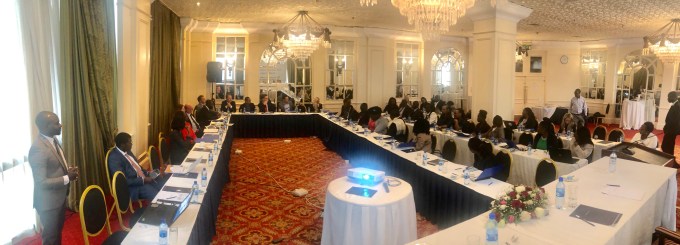




 Media
Media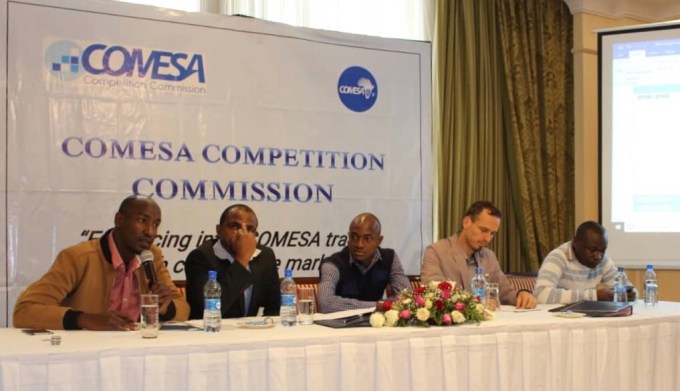 Speakers include a crème de la crème of East African government antitrust enforcement, including the CCC’s own Willard Mwemba (head of M&A), the CCC’s Director Dr. George Lipimile, and the Director and CEO of the Competition Authority of Kenya, Francis Wang’ombe Kariuki. Topics will include news on the rather well-developed area of of mergerenforcement, regional integration & competition policy, as well as the concept of antitrust enforcement by the CCC as to restrictive business practices, an area that has been thus far
 The second event, also held in Nairobi, will shift its focus both in terms of attendees and messaging: It is the CCC’s first-ever competition-law sensitization workshop for the Business Community, to take place on Wednesday. It is, arguably, even more topical than the former, given that the target audience of this workshop are the corporate actors at whom the competition legislation is aimed — invited are not only practicing attorneys, but also Managing Directors, CEOs, company secretaries, and board members of corporations. It is this audience that, in essence, conducts the type of Mergers & Acquisitions and (in some instances) restrictive, anti-competitive business conduct that falls under the jurisdiction of Messrs. Lipimile, Mwemba, and Kariuki as well as their other domestic African counterparts in the region.
 As Mr. Mwemba rightly pointed out, most transactions “do not raise competition concerns” and those that do can be and often are resolved via constructive discussions and, in some cases, undertakings by the affected companies. In addition, the CCC follows international best practices such as engaging in pre-merger notification talks with the parties, as well as follow-ups with stakeholders in the affected jurisdictions.
 With increased awareness of competition law in Kenya, more entities are applying to the CAK for exemptions primarily to ensure that they are not found to be engaging in anticompetitive conduct, where the penalty can be up to 10% of the turnover of the entity.
 The Commission argued – as justification for not producing its record – that Standard Bank was abusing its position as a litigant. In this regard, the CAC expressly rejected this argument and held that simply because a plaintiff would be better placed to plead its case after receiving the Commission’s record that, in of itself, does not amount to an abuse of process. The CAC held that it would only amount to an abuse of process if an applicant sought to rely on Rule 15 in order to avoid or delay having to plead within the prescribed time periods.
 Most importantly, the exemption, if granted, would allow for the setting of prices between the two companies, which can be considered “price fixing” but without violating the
 African Antitrust & Competition Law