Borrowed Blueprints, Unintended Consequences: South Africa and the EU’s Digital Markets Act

By Matthias Bauer and Dyuti Pandya*

South Africa risks adopting the essence of the EU’s Digital Markets Act (DMA), if not its exact form, with the aim of reshaping the business models of online intermediation platforms. This marks a significant shift away from the principles of traditional competition regulation. 

In 2020, the Competition Commission of South Africa (CCSA) concluded that traditional enforcement tools might be inadequate to tackle structural barriers in digital markets particularly those that prevent new entrants or smaller players from expanding. This realisation led to the launch of the Online Intermediation Platforms Market Inquiry (OIPMI). By borrowing a regulatory blueprint designed for the EU, South Africa could undermine its own digital ecosystem, stifle investment, and entrench local inefficiencies. The country’s growing interest in ex ante competition regulation via the Competition Commission’s market inquiries reflects an accelerating trend of policy mimicry without consideration of domestic realities. While there is broad agreement on the need for digital competition regulation, there is little consensus on how these rules should be structured, and approaches to implementation remain highly varied across jurisdictions. 

The OIPMI’s final report identified platforms such as Google, Apple, Takealot, Uber Eats, and Booking.com as dominant players distorting competition. It is claimed that, due to the significant online leads and sales these platforms generate and the high level of dependency business users have on them these scaled platforms can influence competition among businesses on the platform or exploit them through fees, ranking algorithms, or restrictive terms and conditions. However, this conclusion raises concerns about the underlying methodology. A central concern with the market inquiry approach is that it allows certain platforms to be identified as market leaders or sources of competitive distortion without requiring a formal finding of dominance, since such inquiries do not mandate that dominance be established. 

The designation has been based on characteristics typically associated with globally leading technology firms. Amazon, which currently maintains only a minimal presence in South Africa, was nevertheless singled out as a potential threat to competition. It is claimed that Amazon faces similar complaints in other jurisdictions, and it is argued that fair treatment of marketplace sellers is unlikely to become a competitive differentiator capable of overcoming barriers to seller competition. Moreover, the CCSA has indicated that it would enforce the same provisions against Amazon if it were to enter the market in a way that breaches the proposed remedial measures.

Regulating for hypothetical risks while ignoring tangible consumer benefits risks becoming a self-fulfilling prophecy: global platforms may decide not to enter the market at all, leaving consumers, including small businesses and public services organisations with fewer options and slower innovation.

The OIPMI focuses on structural features that restrict competition both between platforms and among business users, facilitate the exploitation of business users, and hinder the inclusion of small enterprises and historically disadvantaged firms in the digital economy. Despite the absence of formal dominance findings, the OIPMI proposes a range of heavy-handed interventions, including the removal of price parity clauses, the introduction of transparent advertising standards, a ban on platform self-preferencing, and limitations on the use of seller data, many directly inspired by the EU DMA. 

In both of CCSA’s  2022 and 2023 findings, Google Search was explicitly accused of preferential placement and distorting platform competition in South Africa. More concerning still are the CCSA’s proposed remedies in its final report- requiring targeted companies to offer free advertising space to rivals, artificially boost local competitors in search rankings, and redesign their platforms to favour smaller firms. The SACC has recommended that Google introduce identifiers, filters, and direct payment options to support local platforms, SMEs, and Black-owned businesses, and contribute ZAR150 million (around EUR 7 million) to offset its competitive advantage. For search results, Google is required to introduce a new platform sites unit (or carousel) that prominently showcases smaller South African platforms relevant to the user’s query such as local travel platforms in travel-related searches entirely free of charge. This goes beyond competition enforcement and crosses into market engineering, compelling global firms not just to compete by government decree, but to subsidise rivals and actively shape market outcomes.

In 2025, South Africa’s Competition Commission also doubled down with its provisional Media and Digital Platforms Market Inquiry (MDPMI), calling for additional remedies targeting online advertising, content distribution, and the visibility of news media. These recommendations are again influenced by EU-style regulations, particularly the EU Copyright Directive, which harms the diversity and sustainability of small news publishers. However, the report downplays South Africa’s unique institutional constraints and specific market dynamics. If adopted, the proposals would compel digital platforms to subsidise select publishers based on arbitrary and hard-to-measure assessments of news content’s value to Google’s business. This could limit access to information, hinder innovation, and monetisation efforts, ultimately narrowing consumer choice and weakening the vibrancy of the content ecosystem.

More broadly, through these market inquiries South Africa risks undermining its evolving digital economy by pursuing an approach that will deter foreign investment due to ambiguous and discretionary enforcement. At the same time, the proposed regulatory burdens could disproportionately affect domestic firms that simply lack the resources to comply. This regulatory uncertainty threatens to stifle innovation and hinder progress toward regional digital integration. In a country where corruption remains a persistent challenge, granting regulators wide discretionary powers over digital market outcomes also raises serious governance concerns. Moreover, by enforcing a narrow and politicised notion of “fairness”, South Africa risks sacrificing consumer choice and strangling the diversity of digital services that a competitive market would otherwise deliver.

Notably, coming back to the EU’s DMA, it was crafted for specific European conditions, particularly in markets where technologically-leading global platforms held relatively high market shares in many EU Member States. Yet even within the EU, the DMA remains hotly disputed – not least because it targets large non-European companies that have long been politically embraced for injecting digitisation into traditional industries and, through competition, helped European businesses and consumers benefit from technology innovation. 

EU digital policies, developed from the perspective of wealthy, mature (Western) European markets, should not be assumed to be readily applicable elsewhere. South Africa’s digital markets are still in their infancy, ICT infrastructure remains unevenly developed, and regulatory institutions face significant resource constraints. Emulating the DMA – even informally – risks premature intervention, regulatory overreach, and the distortion of competitive dynamics before they have had a proper chance to emerge and mature.

Competition policy undoubtedly has a role in promoting competition. But poorly tailored rules may end up punishing the very firms that South Africa needs to scale and empower its own digital economy. Instead of replicating the EU’s Digital Markets Act, South Africa should focus on evidence-based case-by-case enforcement – grounded in its own market realities and institutional capabilities. Otherwise, South Africa risks becoming the casualty of a regulatory experiment designed for a different continent – with consequences its digital economy can ill afford.

*The authors are affiliated with ECIPE, the European Centre for International Political Economy

Nigeria Flexes Regulatory Muscle: Tribunal Upholds $220 million fine against WhatsApp and Meta over data discrimination practices  

By Nicole Araujo

On 25 April 2025, almost a year after the Federal Competition and Consumer Protection Commission (“FCCPC”) imposed a hefty $220 million fine on WhatsApp and its parent company, Meta, the Competition and Consumer Protection Tribunal (“Tribunal”) delivered its landmark decision, upholding the fine and ordering a further – almost negligible, when compared to the substantive fine – $35,000 administrative penalty against the social media giants for fact-finding costs incurred during the 38-month long investigation. This regulatory win for Nigeria’s digital rights landscape has contributed to reinforcing Nigeria’s growing resolve to regulate big tech.

The decision stemmed from findings that the companies engaged in discriminatory data practices and violated Nigerian data protection laws, affecting more than 51 million users.  As Andreas Stargard, a competition-law practitioner with Primerio, notes, “not only did the FCCPC’s investigation uncover WhatsApp’s unauthorised sharing of user data and a lack of meaningful consent mechanisms, but it also revealed discriminatory practices compared to other regions – I believe this is where the differentiation in the FCCPC’s consumer-protection jurisdiction (as opposed to that of the domestic data protection authority) comes in meaningfully.  It remains to be seen what an independent, judicial review of the Tribunal decision will yield in this regard, but the FCCPC has had a comparatively strong track record so far in terms of having its novel, forceful, and ‘creative’ enforcement strategies upheld, with the B.A.T. matter perhaps being the most powerful example.  The recent Dangote matter, involving the shocking fact pattern of a lack of refining capabilities in oil-rich Nigeria, is an interesting counter-point, though, as the FCCPC lost an attempt to intervene in that matter in Abuja’s Federal High Court.”

So far, the appellate-level Tribunal has sided with the Commission, dismissing an appellate request for review by WhatsApp and Meta, which challenged the fine on 22 grounds, ranging from procedural errors to allegations of vagueness and technical impossibility in respect of the timeframe given by the FCCPC. Meta’s legal team relied on the grounds that the FCCPC’s orders were unclear, unsupported by Nigerian law, and financially impractical to comply with. However, the FCCPC argued that the penalties were not financially punitive but rather corrective and aimed at rectifying the tech giant’s alleged discriminatory practices.

In its decision, the Tribunal emphasised that the FCCPC acted within its lawful mandate and that WhatsApp and Meta were afforded a fair hearing. It further upheld that the reliance on foreign legal standards, while not binding, was appropriately persuasive in determining issues of data protection and consumer rights.

The Tribunal ordered WhatsApp and Meta to inter alia, reinstate Nigerian users’ rights to control their personal data, revert to their 2016 data-sharing policy, and immediately cease unauthorised data sharing with Facebook and other third parties without obtaining the necessary consent from users. In this regard, compliance letters must be submitted by July 1, 2025, and a revised data policy must be proposed and published. 

This case marks a significant moment in the Nigerian Authority’s forceful use of the regulatory tools available to it — as well as overall for Africa’s evolving digital economy, highlighting the demand for global corporations to acknowledge local presence and effects and adapt to robust local compliance expectations. While Big Tech companies such as Amazon, Google and Meta have been subject to significant penalties under the European Union’s General Data Protection Regulation, as one of Africa’s digital technology pioneers, Nigeria’s move could inspire similar enforcement actions across the African continent. This decision can be seen as a “gentle” reminder for multinational digital and tech firms that compliance with local data protection laws is no longer optional, it is imperative.

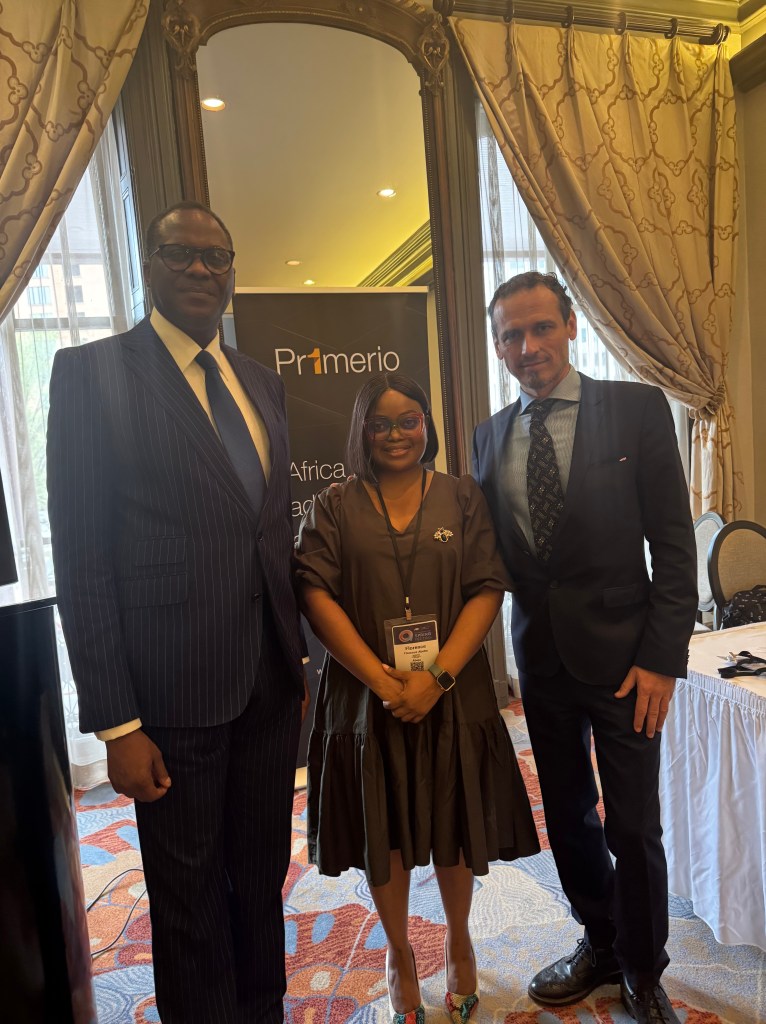
Babatunde Irukera, Florence Abebe, Andreas Stargard at the African Antitrust Salon hosted by Primerio

While more African countries are pushing back against big tech companies and are focusing on unchecked data exploitation within their borders, there is a need, however, for the continent to build towards a larger, sustainable strategy to manage the presence and power of big tech.  Says Andreas Stargard, “the quarter-billion dollar Meta fine, if upheld, would firmly cement Nigeria’s antitrust global relevance in the minds of international lawyers and businesses.  This comes as a surprise in some ways, as the FCCPC was first put on the map only fairly recently, by its inaugural Chief enforcer, Tunde Irukera: his vision for creative enforcement tools and encouragement of the agency’s staff to employ heretofore unused investigatory mechanisms and strategies – often seen only in U.S.-style civil litigation, and certainly not in many government agencies worldwide, much less among other African jurisdictions – show that the Commission potentially has the necessary intellectual capacity and investigatory stamina to pursue cases of equal or greater dimensions in the future.  It will depend on its leadership where the FCCPC’s path is charted next…”

Of course, there needs to be a balance struck between the value of personal data and that of innovation and tech adoption, which calls for a coordinated regulation policy that will strive to balance economic and non-economic features of the continent. 

As observed by Leonard Ugbajah, a competition law consultant, a balanced and pragmatic approach is essential when opting to address the regulatory landscape around big tech: 

“A common approach would harness the capabilities of countries, moderate opportunism by state and non-state actors in pursuing enforcement, recognise the economic importance of big tech, properly calibrate the various pain points (economic and non-economic) and safeguard the interests of the not-so-capable African countries.” 

The social media giants have 60 days, starting from 30 April 2025, to comply with the $220 million fine ordered by the Tribunal. Notably, following the decision, WhatsApp has indicated that it intends to seek a stay of the Tribunal’s decision and pursue an appeal. 

New antitrust MoU between COMESA & EEC

No, that’s not the European Economic Community, but rather the slightly less well-known Eurasian Economic Commission (EEC), thank you for asking…

The Memorandum of Understanding, signed in late July in Geneva, is designed to allow the two agencies to “cooperate in addressing anti-competitive conduct in their respective regions, capacity building and research,” according to AAT’s old friend and CCC 2.0 executive, Dr. Willard Mwemba.

His EEC counterpart, Mr. Arman Shakkaliyev, Minister in charge of Competition & Antitrust Regulation, said that the future collaboration “opened up new opportunities” for closer interaction and the sharing of experiences and knowledge as to specific investigations, most notably, in addition to the two agencies planning more standard cooperative ventures such as joint conferences or training seminars.

Says Andreas Stargard, a competition lawyer at Primerio Ltd.:

“This latest MoU represents yet a further step in the clear and unmistakable direction of ever-closer cooperation between enforcement agencies on the African continent that we have seen for a few years now. The advice to be taken from this is fairly simple: Companies operating in more than one country in Africa should take note of this development, as their local ‘competition reputation‘ from one jurisdiction will doubtless precede them in the other, given the information-sharing between African watchdogs, which catches many corporates seemingly unawares…”

Kenyan Competition Watchdog suspends Telkom Kenya / Airtel deal

Multiple regulatory agencies, competitor complaints and public interest concerns has posed a significant impediment to the proposed merger between Telkom Kenya and Airtel.

The Competition Authority of Kenya (CAK) recently announced that the Kenyan Ethics and Anti-Corruption Commission (EACC) is investigating Telkom Kenya amidst allegations of corruption in relation to historic transactions which gave rise to the current shareholding in Telkom Kenya.

The CAK’s decision to suspend the assessment of the merger was announced approximately a week after the Communications Authority of Kenya also suspended its assessment of the transaction pending the outcome of the EACC’s investigation.

The Communications Authority’s investigation will likely include an assessment of a complaint filed with the agency by Safaricom, a competitor to the merging parties.

Furthermore, the deal was also opposed by certain Telkom employees, ostensibly on the basis that their jobs were at risk should the deal go ahead.

Accordingly, the parties appear to have a long road ahead of them before clearance to implement the deal is granted.

The proposed transaction has no doubt attracted an additional degree of scrutiny as the telecom sector in Kenya is a significant market and there have been a number of disputes regarding the CAK’s jurisdiction to assess anti-competitive conduct, particularly abuse of dominance conduct, in this sector. A study into the telecom sector prepared by the Communications Authority was presented to Parliament in 2018. The CAK objected to the findings and remedial actions contained in the report which the CAK argued would amount to “price regulating” by the Communications Authority. Instead, the CAK urged the Communications Authority to focus rather on features of the market which raise barriers to entry or preclude effective competition between competitors.

While Parliament has, as far back as 2015, urged the Communications Authority to consult the CAK before making any determination regarding a telecom service providers’ “dominance”, subsequent litigation led to a High Court ruling in 2017 which confirmed that the Communications Authority’s powers vis-à-vis competition related matters remain vested exclusively with the Communications Authority.

The concurrent jurisdiction between the CAK and the Communication’s Authority has created somewhat of an enforcement discord – at least in so far as assessing abuse of dominance cases are concerned.

The fact that both the CAK and the Communications Authority have decided to suspend their assessments of the proposed merger following the outcome of the EACC’s investigation suggests that the outcome of the EACC’s investigation is relevant to both the CAK and Communication Authority analysis of the proposed transaction. This in turn, seemingly appears that there is at least an overlap in relation to the key issues under assessment by the respective agencies. Assuming there is indeed an overlap between the CAK and the Communication Authority’s assessment of the proposed transaction that naturally raises the risk of having two agencies come to different conclusions based on the same facts.

Telkom Kenya, however, remain confident that the merger will ultimately be cleared by all regulators.

Telkom Kenya have indicated that the merger will have significant pro-competitive and pro-public interest benefits which will have a positive impact on employees (and the market more generally). Whether the CAK conducts a comprehensive assessment between the short term negative impact on employment versus long term positive impact remains to be seen.

Assuming the proposed deal does not raise any traditional competition issues, it cannot therefore be ruled out that the transaction will be approved subject to public interest related conditions regarding retrenchments and/or re-employment obligations.

Whatever decision is ultimately reached, one hopes that the authorities will publish detailed reasons based on a robust assessment of the evidence in order to provide greater objectivity and transparency as to the analysis which is undertaken by the CAK when analyzing a merger – both from a competition and public interest perspective.

The CAK has in the past number of years have made significant positive strides forward in this regard and is deserved of the recognition it receives as one of the most active and robust competition authorities in Africa.

[Michael-James Currie is senior contributor to AAT and a practicing competition lawyer who has assisted clients with competition law related matters in multiple jurisdictions across Africa]


Beyond Pure Competition Law – Is Africa Leading the Way Forward in Antitrust Enforcement?

To all our Africanantitrust followers, please take note of the upcoming American Bar Association webinar on 2 July 2019 (11amET/4pmUK/5pm CET) titled:

“Beyond Pure Competition Law – Is Africa Leading the Way Forward in Antitrust Enforcement?”

In what promises to be a highly topical (telecon) panel discussion, Eleanor Fox, Andreas Stargard, John Oxenham, Amira Abdel Ghaffar and Anthony Idigbe will:

  • provide critical commentary of the most recent developments in antitrust policy across the African continent;
  • highlight the most significant legislative amendments and enforcement activities in Africa; and
  • analyze some of the key enforcement decisions.

South Africa, Nigeria, Egypt, COMESA and Kenya are among the key jurisdictions under the microscope.

Practitioners, agency representatives, academics and anyone who is an antitrust enthusiast will find this webinar to be of great interest. Not to mention companies actually active or looking to enter the African market place.

For details on how to participate, please follow this Link


New Kenya domestic merger thresholds proposed, limiting notifications

The Competition Authority of Kenya (“the CAK”) has issued a new proposal introducing financial thresholds for merger notifications which will exempt firms with less than 1 billion Kenyan Shillings (KSh)(approximately US$10 million) domestic turnover from filing a merger notification with the CAK.

Currently, it is mandatory to notify the CAK of all mergers, irrespective of their value.  According to Stephany Torres of Primerio Limited, this may deter investments in Kenya as the merger is subject to delays and additional transaction costs for the merging parties while the CAK assesses it.

In terms of the new proposal notification of the proposed merger to the CAK is not required where the parties to the merger have a combined annual turnover and/or gross asset value in Kenya, whichever is the higher, of below KSh500 million (about US$5 million or South African R60 million).

Mergers between firms which have a combined annual turnover or gross asset value, whichever is the higher, in Kenya of between KSH 500 million and KSH 1 billion may be considered for exclusion.  In this case, the merging parties will still need to notify the CAK of the proposed merger.  The CAK will then make the decision as to whether to approve the merger or whether the merger requires a more in depth investigation.

It is mandatory to notify a merger where the target firm has an annual revenue or gross asset value of KSh 500 million, and the parties’ combined annual turnover and/or gross asset value, whichever is the higher, meets or exceeds KSh 1 billion.

Notwithstanding the above, where the acquiring firm has an annual revenue or gross asset value, whichever is the higher, of KSH 10 billion, and the merging parties operate in the same market and/or the proposed merger gives rise to vertical integration, then notification to the CAK is required regardless of the value of the target firm.  However, if the proposed merger meets the thresholds for notification in the supra-national Common Market for Eastern and South Africa (“COMESA”), then the CAK will accede to the jurisdiction of the COMESA Competition Commission (“CCC”) and the merging parties would not have to file a merger with the CAK.

COMESA is a regional competition authority having jurisdiction over competition law matters within its nineteen member states, of which Kenya is one.

It is worth mention that Kenya is also a member state of the East African Community (“the EAC”).  As AAT reported recently, the East African Community Competition Authority (“the EACCA”) became operational in April 2018 and its mandate is to investigate competition law matters within its five partner states  (Burundi, Kenya, Rwanda, Tanzania and Uganda).  There is no agreement between the CAK and EACCA similar to the one between the CAK and CCC, and it uncertain how mergers notifiable in both Kenya and the EAC will be dealt with.


COMESA Competition Chief Approves of FDI, M&A Transactions

Lipimile Advocates for Foreign Direct Investment, Encouraging Acquisition-Hungry Multi-Nationals in Recent COMESA Trade Remarks

In a comment on the COMESA Simplified Trade Regime (STR) regional programme, recently being implemented locally in the border region between Rwanda and the DRC, George Lipimilie, the Chief Executive Officer of the COMESA Competition Commission, stated that the regional body’s “focus on free movement of goods has generally paid dividends resulting in [] a lot of cross-border mergers and acquisitions,” according to an article in the Rwanda New Times.

George Lipimile of the COMESA Competition Commission

It appears that the CCC chief is expressly favouring foreign direct investment into the region by way of mergers (or perhaps more accurately, acquisitions).  “This is particularly so where the ‘foreign’ (presumably implying non-COMESA) multi-national entity brings with it novel technologies or R&D to improve the market position of the local competitor,” according to Andreas Stargard, a Pr1merio Ltd. competition-law practitioner.

Of interest to M&A practitioners, Mr. Lipimile is quoted as saying: “There are situations when foreign companies use acquisitions to enter the market where you find a multinational company buying a local company which is good because it comes with a lot of technology.” (Emphasis added).

Mr. Lipimile was also rather specific about encouraging FDI in the region’s raw-materials sector from nation states other than the PRC: said Lipimile, “[w]e have seen China taking advantage of our raw materials and we hope more countries can follow suit.”

We note that the domain of international trade — specifically tariffs as barriers to trade — has historically not been within the jurisdictional purview of the COMESA Competition Commission, which was designed to be a competition-law enforcement body.  Technically, there exists the post of COMESA Director for Trade, Customs & Monetary Affairs, held by Dr. Francis Mang’eni and not by Mr. Lipimile.  The CCC, however, “has recently emerged to take a more active role within the COMESA architecture of regional enforcement institutions,” Mr. Stargard says.  He notes that Article 4 of the COMESA Treaty expressly provides that “[i]n the field of trade liberalisation and customs co-operation [the Member States shall] (a) establish a customs union, abolish all non-tariff barriers to trade among themselves”, and that the regional Competition Regulations expressly bestow the CCC with the authority to investigate and abolish all “anti-competitive practices affecting COMESA regional and international trade.”

Namibian Supreme Court rules Competition Commission has no Jurisdiction Over Medical Aid Fund Members

By AAT contributors Charl van der Merwe and Aurelie Cassagnes

On 19 July 2017, the Namibian Supreme Court, was tasked with settling a long standing dispute (not the first of its kind) as to whether or not the Respondents fell within the jurisdiction of the Namibian Competition Commission (NCC) in terms of the Namibian Competition Act of 2003 (Namibian Act). The case was brought on appeal by the Namibian Medical Aid Funds (NAMAF) and its members (collectively referred to as the Respondents).

After an investigation lasting a couple of years, the NCC announced in November 2015 that it had considered the behaviour of the Respondents in setting a “benchmark tariff” and found that the practice amounted to Price Fixing in contravention of section 23 of the Namibian Act. The Respondents, in pre-empting the commission’s planned litigation, disputed the NCC’s jurisdiction. The High Court found in favour of the NCC which led to the appeal by the Respondents to the Namibian Supreme Court.

Benchmark tariffs, in short, is a recommended fee, payable to doctors, at which medical aid expenses and consultations are covered. The issues surrounding benchmark tariffs has sparked debate across Africa with ‘those for’ arguing that without them, the medical profession would be “nothing short of economic lawlessness” whilst critics argue that it is “quietly killing off the health-care profession”.

The Namibian High Court, in finding against the Respondents, confirmed the NCC’s jurisdiction over the matter and ruled that determining and recommending a benchmark tariff for medical services was unlawful because it amounted to fixing a selling price. The court, in making its decision, held that “The funds’ activities in formulating a benchmark tariff were not ‘designed to achieve a non-commercial socioeconomic objective’. Rather, it was to produce and distribute wealth.” (Own emphasis)

The main issue to be decided on appeal by the Namibian Supreme Court, however, was not whether the benchmark tariff amounted to a contravention of the Namibian Act, but rather, whether the NCC had jurisdiction over the matter. In other words, whether the Respondents were included under the definition of ‘undertakings’ in terms of the Namibian Act.  Chapter 1 of the Namibian Act provides that:

An “’undertaking’ means any business carried on for gain or reward by an individual, a body corporate, an unincorporated body of persons or a trust in the production supply or distribution of goods or the provision of any service”

The Namibian Supreme Court found that the Respondents were not a “business carried on for gain or reward” and, therefore, were not subject to the provisions of the Namibian Act. As such, the Namibian Supreme Court overruled the High Court’s decision, leaving NAMAF and its members to continue the use of benchmark tariffs.

The South African Competition Tribunal (SACT) had similarly dealt with this issue in a series of Orders during the course of 2004 and 2005 (see the Hospital Association of South Africa and the Board of Healthcare Funders of Southern Africa). In this regard, the SACT found that the relevant medical schemes (the Respondents) fell within the ambit of the South African Competition Act 89 of 1998 (South African Act) and, accordingly, imposed an administrative penalty on the Respondents for “benchmarking tariffs”.

In its consent orders, the South African Competition Commission (SACC), despite mentioning that the Respondents were “an association incorporated not for gain in terms of the company laws in South Africa”, held that the Respondents are an association of firms that “determines, recommends and published tariffs to and/or for its members; and which recommendations has the effect of fixing a purchase price

Furthermore, the SACC, condemned the ‘benchmarking tariffs system’ put in place by the Respondents and argued, despite the fact that the health care professionals were still largely free to determine their own fees, publishing these recommendations amounted to price-fixing which is a per se contravention in terms of section 4(1)(b) of the South African Competition Act.

Accordingly, the differing approaches in Namibia and South Africa come down to the interpretation of what entities fall within the umbrella of the respective Competition Acts.

Cooperation, handshakes & MoUs: all the rage in African antitrust?

AAT the big picture

Significant Strides made to Promote Harmonisation across African Competition Agencies

By AAT Senior Contributor, Michael-James Currie.

In the past 12 months there has been a steady drive by competition law agencies in Africa to promote harmonisation between the respective jurisdictions.

The African regional competition authority, the COMESA Competition Commission (CCC), has entered into memorandum of understandings with a number of its nineteen member states. On 5 June 2016, it was announced that the CCC has further concluded MoU’s with the Swaziland Competition Commission as well as the Fair Trade Commission of the Seychelles.

On 7 May 2016, it was announced that nine members of the Southern African Development Community (SADC) have also entered into and MoU. These member states include South Africa, Malawi, Botswana, Swaziland, Seychelles, Mozambique, Namibia, Tanzania and Zambia.

The SADC MoU was based on the 2009 SADC Declaration on Regional Cooperation and Consumer Policies.

SADC MoUAccording to the South African Competition Commissioner, Mr Tembinkosi Bonakele, the MoU creates a framework for cooperation enforcement within the SADC region.  “The MoU provides a framework for cooperation in competition enforcement within the SADC region and we are delighted to be part of this historic initiative,” said Bonakele.

Interestingly, although a number of the signatories to SADC MoU are not member states of COMESA (that is, South Africa and Namibia, who in turn, have a MoU between their respective competition authorities), Swaziland, Malawi and the Seychelles have existing MoU’s with the COMESA Competition Commission. Says Andreas Stargard, a competition practitioner with Primerio Ltd., “it will be interesting to see, first, whether there may be conflicts that arise out of the divergent patchwork of cooperation MoUs, and second, to what extent the South African Competition Authorities, for example, could indirectly benefit from the broader cooperation amongst the various jurisdiction and regional authorities.”

Part of the objectives of the MoUs to date has largely been to facilitate an advocacy role. However, from a practical perspective, the SADC MoU envisages broader information exchanges and coordination of investigations.

While the MoU’s are a positive stride in achieving cross-border harmonisation, it remains to be seen to what extent the collaboration will assist the respective antitrust agencies in detecting and prosecuting cross border anticompetitive conduct.

There may be a number of practical and legal hurdles which may provide challenges to the effective collaboration envisaged. The introduction of criminal liability for cartel conduct in South Africa, for example, may provide challenges as to how various agencies obtain and share evidence.

Meet the Enforcers: COMESA’s Rajeev Hasnah, 1st in exclusive AAT interview series

meet the enforcers

New AAT interview series highlights individual African competition enforcers

In the first instalment of our new Meet the Enforcers series, we speak with Rajeev Hasnah, CFA, who is a sitting Commissioner of the COMESA Competition Commission.  In our exclusive interview, we discuss the CCC’s merger review practice, its revised Guidelines, young history and achievements, and seek practitioner guidance.


Rajeev Hasnah, CFA
You are an economist by training and currently a sitting COMESA Competition Commissioner.  As the young agency is about to celebrate its 2nd anniversary, what do you consider to be the CCC’s biggest achievement to date?
According to me, it is the fact that the CCC is effectively enforcing the COMESA Competition Regulations since it started operating in January 2013.  It is indeed a commendable achievement given that the current Board of Commissioners sworn-in in October 2011.  In 2012, the CCC worked on the drafting of the guidelines, in consultation with various stakeholders, and under the advice of other competition experts.
The institution also established a good working relationship with national authorities across COMESA and beyond, and proved its credibility and effectiveness as a regional competition authority within the business and legal communities globally.  The rather high number of merger notifications with a COMESA dimension already adjudicated to-date (around 50) is testimony to the success of the CCC being an effective competition law enforcer in its still early days.
Comparing the CCC merger review in practice with that of other competition enforcement agencies worldwide, where do you see the key differences?
Nowadays it is getting harder to talk about differences in any field of economic activity in this increasingly globalised world.  In my view, the key principles and the application of the Competition Law in the COMESA region do not differ significantly either from that of the national authorities or other major jurisdictions across the globe.  The assessment of “substantial lessening of competition” as the underlying fundamental test in merger reviews is at the core of the evaluation conducted by the CCC as well.
Does the multi-national nature of the CCC (akin to the European Commission) make the substantive work more difficult?
It is definitely not an easy feat to enforce the COMESA Competition Regulations across 19 different countries, each with its own economic, legal and cultural environments.  Yet, under the leadership of the current Chairman, Alex Kububa and Director/CEO of the CCC, George Lipimile, a good working relationship and collaboration has been established with the different national authorities across the COMESA region, which facilitates an effective enforcement of the Competition Regulations.   This also ensures that the CCC has a good perspective of the individual local realities, which is no doubt a key element to assess the impact on competition at the regional level.
What prompted the re-drafting of the CCC Merger Guidelines, and why was the indirect path of an administrative guidelines interpretation of the verb “to operate” chosen to elevate the review thresholds, as opposed to increasing the thresholds in the underlying Rules themselves?
It is not uncommon that an authority reviews its guidelines as it gains experience in enforcing the law.  Any changes or further clarifications are geared toward ensuring that the business and legal communities as well as competition economics experts have a good understanding of how the Regulations are enforced by the CCC.  This indeed shows that the CCC stands ready to ensure an improved clarity of its enforcement of the Competition Regulations among its key stakeholders.
The relevant paragraphs defining the verb “to operate” in the Merger Guidelines, should not be construed as a review of the merger notification thresholds per se.  The latter has its own procedures regarding any likely review.  The definition in the Merger Guidelines is rather to ascertain whether the said undertaking is construed to be effectively operating in a Member State or not.
Do you have advice for African practitioners counselling their clients on whether or not to notify a merger to the CCC?
Taking into consideration the rise in the enactment and enforcement of a competition policy regime across various jurisdictions and at the level of regional trading blocs as well, one can safely say that a competition authority is here to stay and to enforce the law as prescribed.
One of the key considerations in doing business is a proper assessment of the risks the undertaking faces or could potentially face and the implementation of a suitable actionplan to deal with these risks.  I believe that non-notification of a notifiable COMESA dimension merger to the CCC should not be construed as carrying a low probability of being detected by the CCC and certainly not a low impact one for the undertaking.
What is your view about the elevation of non-competition assessments above those of pure competition tests in merger review?  Is it good for the adjudication of competition matters generally?
Some jurisdictions consider public interests as important, while some don’t.  This is normally provided for or not in the respective laws, and whichever is the case, as adjudicators, we need to follow what is prescribed in the Regulations.
It is also important to note that in practice, the enforcement of competition law can be defined as being the conduct of economic analysis within a legal framework.  Both the economic analysis and legal framework evolve accordingly in line with the development of the jurisdiction’s economy.  We can take the examples of more mature competition policy regimes which started with the consideration of non-competition issues in merger review, to then afterwards moving to assessing only competition matters.  As such, each jurisdiction has its own specificities that it needs to take into consideration, though these are bound to evolve with time.
By way of background, how did you get into antitrust/competition law & economics?
I am an economist and a Chartered Financial Analyst (CFA) by training, and prior to joining the antitrust world I was an investment professional.  Four years ago I had the choice between acquiring experience in private equity or joining the nascent competition law enforcement team of the Competition Commission of Mauritius as its Chief Economist/Deputy Executive Director, working with the then Executive Director, John Davies.  I chose the latter for its excellent combination of applied microeconomics and law.
What was the path that took you to working for competition enforcement agencies?
I started as a macroeconomist working in London for an economic consultancy firm in the city, where I was advising traders and asset managers.  I then moved on to financial investing in an investment management firm and to corporate finance in one of the largest conglomerates in Mauritius.  So I came to the antitrust world as a business/investment practitioner with a strong background and experience in applied economic and financial analysis.
Having seen the world from the private sector side, I acquired an edge in the application of competition economics in my previous role as a Chief Economist/Deputy Executive Director and as a current Commissioner at the COMESA Competition Commission.
What skills would you encourage regional African practitioners focus on for purposes of developing antitrust advocacy in the COMESA region?
Having previously led the Competition Culture project for the International Competition Network (ICN) Advocacy Working Group (AWG), I am now one of the strong proponents of the importance of advocacy to develop and maintain a strong competition culture within society.
Ensuring that advocacy activities are properly designed and tailored to meet the requirements of the target group is crucial.  Equally important is to ability to communicate in a very simple and easy to understand language, adapted to meeting the target audience’s expectations.
Thank you, Mr. Hasnah.