SOUTH AFRICA: ZUMA’S STATE OF THE NATION ADDRESS MAY BE HINT AT INTRODUCTION OF COMPLEX MONOPOLY PROVISIONS

While the media headlines are largely filled with the disruptions that took place at the State of the Nation Address (SONA) by President Jacob Zuma on 9 February 2017, the President made an important remark which, if true, may have a significant impact on competition law in South Africa, particular in relation to abuse of dominance cases.

In this regard, the President stated that:

During this year, the Department of Economic Development will bring legislation to Cabinet that will seek to amend the Competition Act. It will among others address the need to have a more inclusive economy and to de-concentrate the high levels of ownership and control we see in many sectors. We will then table the legislation for consideration by parliament.

In this way, we seek to open up the economy to new players, give black South Africans opportunities in the economy and indeed help to make the economy more dynamic, competitive and inclusive. This is our vision of radical economic transformation.”

Patel talksNeither the President nor Minister Patel have given any further clarity as to the proposed legislative amendments other than Patel’s remarks early in January 2017 in which he stated that:

The review covers areas such as the efficacy of the administration of the Competition Act, procedural aspects in the investigation and prosecution of offences, matters relating to abuse of dominance, more effective investigations against cartels and the current public interest provisions of the act.

Says John Oxenham, a competition attorney who has closely followed the legislative and policy developments, “despite the broad non-committal remarks by Minister Patel, it is clear that the Minister is zealous in having the ‘complex monopoly’ provisions brought into force to address in order to address, what the Minister perceives to be, significant abuse of dominance in certain concentrated markets.”

In terms of the provisions, as currently drafted, where five or less firms have 75% market share in the same market, a firm could be found to have engaged in prohibited conduct if any two or more of those firms collectively act in a parallel manner which has the effect of lessening competition in the market (i.e. by creating barriers to entry, charging excessive prices or exclusive dealing and “other market characteristics which indicate coordinated behavior”).

white-collar-crimeDespite having been promulgated in 2009, the ‘complex monopoly’ provisions have not yet been brought into effect largely due to the concerns raised as to how these provisions will be enforced, says Primerio Ltd.’s Andreas Stargard: “It is noteworthy that the introduction of criminal liability for directors and persons with management authority who engage in cartel conduct was also promulgated in 2009, but surprised most (including the Competition Authorities) when it was quite unexpectedly brought into force in 2016.”

Minister Patel was no doubt a key driving force behind the introduction of criminal liability and it would, therefore, not be surprising if the complex monopoly provisions are brought into force with equal swiftness in 2017.

Kenya: Recent Amendments to the Act adds an Interesting Dimension to the Abuse of Dominance Provisions

Introduction of Abuse of ‘Buyer Power’ Provisions Muddies the Water

Ruth Mosoti

By Michael-James Currie and Ruth Mosoti

currie2

In November last year, the editors of Africanantitrust indicated that a number of amendments to the Kenya Competition Act of 2010 were being proposed by way of the Competition Amendment Bill (Amendment Bill) in the article Competition Amendment Bill to bring about Radical changes to the Act

The Amendment Bill was assented to by the President in December 2016 and the amendments are, therefore, effective.

Although most of the amendments which are particularly noteworthy were addressed in the above article, a particularly noteworthy amendment, and very much the focus of this article, is the newly introduced prohibition of an abuse of “buyer power”. In this regard, Section 24 of the Act, which deals with abuse of dominance generally, has been amended to also cater for an abuse of “buyer power.”

Section 24 of the Act was, even prior to the introduction of “buyer power” a particularly challenging provision to interpret and it has not been clear how the provisions relating to an abuse of dominance would ultimately be assessed.

By way of background, the definition of “dominance” in the Act, effectively states that a firm will be considered dominant if that firm has greater than 50% market share

The Act goes on to list, without being exhaustive, a number of practices which would typically constitute an abuse of dominance including:

  • imposing unfair purchasing or selling prices;
  • limiting or restricting output, market access or technological advancements;
  • tying and/or bundling as part of contractual terms; or
  • abusing intellectual property rights.

The Act does not provide further guidance as to what would precisely constitute an “abuse” of dominance and under what circumstances a purchasing or selling price would be deemed to be “unfair”.

The abuse of dominance provisions do not necessarily, therefore, appear to be directly linked to the promotion or maintenance of competition in the market. Once it is shown that a firm has more than 50% market share, firms are in treacherous terrain as the threshold for engaging in “abuse” of dominance is relatively low when compared to many other comparable jurisdictions which generally cater for a rule of reason defence or at least provide greater guidance as to what conduct would constitute a per se violation.

By way of an example, in terms of the South Africa Competition Act, a dominant firm is per se prohibited from charging an “excessive price”. The South African Competition Act does, however, define an “excessive price” as one which “bears no reasonable relation to the economic value thereof”. Despite this definition, further guidance has been sought but the competition authorities as to what, in turn, constitutes a “reasonable” and “economic value.”

Over and above certain identified acts of abuse of dominance, the South African Competition Act also includes for a “catch-all” abuse of dominance provision. However, the conduct will only amount to an “abuse” if there is an anti-competitive effect which cannot be justified by a rule of reason analysis.

The comparison with the South African Competition Act is useful as the Kenyan Competition Act does not provide for a similar assessment as does its South African counter-part. For instance, it is not clear how predatory pricing or excessive pricing would be evaluated under the Kenyan Act. Presumably this would fall under the preclusion of charging an “unfair” selling price, which leads one back to the question as to what constitutes an “unfair” price.

In addition to the above, the recent addition of “buyer power” to the abuse of dominance provisions has added to the complexity and risk to firms on the procurement side.

“Buyer power” is defined as the “the influence exerted by an undertaking in the position or group of undertakings in the position of a purchaser of a product or service to obtain from a supplier more favourable terms, or to impose long term opportunity costs including harm or withheld benefit which, if carried out, would be significantly disproportionate to any resulting long term cost to the undertaking or group of undertakings.

Furthermore, in considering whether a firm has “buyer power” the following factors will be considered:

  • the nature of the contractual terms;
  • the payment requested for access infrastructure; and
  • the price paid to suppliers.

Accordingly, the crux of the rather cumbersome definition is that an undertaking will only be considered to have “buying power” if that undertaking(s) has simultaneously actually abused its’ buying power. In other words, there is no distinction between what constitutes “buying power” and what constitutes an “abuse” of buying power. The Act’s definition of “buying power” is, therefore, all encompassing.

Although the above definition is somewhat unclear, it should be noted that the Competition Authority of Kenya, together with Parliament and other stakeholders intend developing rules which would hopefully clarify how these provisions will ultimately be evaluated.

A further important point to note is that it is not a requirement that a firm be ‘dominant’ in order to be considered to have “buying power”. Whether it was the intention of the legislator to require a firm to first be ‘dominant’ before it could be prosecuted for “abuse of buyer power” is not entirely clear. The definition of “buying power” is remarkably silent on this issue.

The fact that the preclusion of an abuse of buyer power necessitates that a firm be dominant could be inferred by the fact that provision is inserted under Section 24 (the abuse of dominance provisions).

However, the definition of “buyer power” caters for a situation where a group of undertakings, such as when a buying group, is formed, exert buyer power, the group commits an offence. Accordingly, it may have been that the legislator was contemplating a situation in which a group of undertakings, such as a buying group collectively meets the ‘dominance’ threshold (i.e. a greater than 50% market share).

Alternatively, it could have been the intention of the legislator that the abuse of buyer power has no direct link to dominance as such and that once a firm or group of firms satisfy the definition of “buyer power”, irrespective of their market shares, the provision is triggered.

In a number of developing countries such as Turkey, South Africa and Botswana have conducted market inquiries into the grocery retail sector. Although the focus of these inquiries are relatively broad, a common focus of all the market inquiries in this sector relates to the role that the large retailers play in the market. In particular, suppliers and competition agencies are often concerned with the buying power which large retailers could exert on suppliers and that the trading terms are unfair, particularly for smaller retailers who are not always in a position to pay for shelf space, access fees or offer the discounts demanded by the retailers.

In many instances, however, the large retailers are not ‘dominant’ and a complainant would need to demonstrate that the buying power exerted by the large retailer is in fact anti-competitive.

The Kenyan Competition Authority may have thought to pre-empt this challenge and therefore included the “abuse of dominance” provisions without requiring a firm to actually be dominant for the provision to be triggered. Furthermore, the definition of “buying power” and the absence of any requirement that the conduct must in fact be anti-competitive may have been an attempt by the legislator to lower the threshold in an effort to assist a complainant in cases where a purchaser, such as a large retailer, exerts “buyer power”, but is not “dominant” in the market.

The absence of any objective qualification to assess when a firm has exerted “buyer power” in an “unfair” manner may open the litigation floodgates. A further reason why it is important that the authorities publish rules to assist with the interpretation and implementation of the “abuse of buyer” power provisions.

In terms of enforcement, the Act was previously silent on the role of the Authority upon the conclusion of an abuse of dominance investigation and the only option lay on criminal prosecution of the offending undertaking. The recent amendments to the Act now allows the Authority to impose fines of up to 10% of the annual turnover of the offending undertaking(s).

New Zambian Settlement Guidelines: A Risky Reprieve

By AAT Senior Contributor, Michael-James Currie & Mweshi Mutuna, Pr1merio competition advocate (Zambia)

The Zambian Competition and Consumer Protection Commission (‘CCPC’) has recently published draft settlement guidelines (‘Draft Guidelines’) for respondents who have allegedly engaged in conduct in contravention of the domestic Competition and Consumer Protection Act (‘Act’).

zambiaThe Draft Guidelines have been published in addition to the ‘Leniency Programme’ as well as the ‘Fines Guidelines’ published earlier this year (as well as the 2015 Merger Guidelines), and essentially sets out a framework within which respondent parties may engage the CCPC for purposes of reaching a settlement agreement for alleged contraventions of the Act.

Notably, the Draft Guidelines will be binding on the CCPC which is an important aspect of ensuring a transparent and objective approach to settlement negotiations. Furthermore, the Draft Guidelines emphasise that respondents should be fully informed of the case against them prior to settling. In this regard, the Draft Guidelines provide for an initial stage of the settlement negotiations (essentially an expression of interest) which follows from a formal request by a firm expressing an interest to settle.

Should the CCPC decide to proceed with settlement negotiations, the CCPC must, within 21 days, provide the respondent party with information as to the nature of the case against the respondent. This includes disclosing the alleged facts and the classification of those facts, the gravity and duration of the alleged conduct, the attribution of liability (which we discuss further below) and the evidence relied on by the CCPC to support the complaint.

currie2
The authors, Mr. Currie & Ms. Mutuna

The purpose of disclosing these facts to a respondent is to afford a respondent the opportunity to meaningfully consider and evaluate the case against it in order to make an informed decision whether to settle or not.

Assuming that an expression of interest in settling the matter is established by both parties, the CCPC will then proceed by requesting that the respondent provide a formal “settlement submission” within 15 days of the CCPC’s request. Included in the settlement submission, must be a clear and unequivocal acknowledgement of liability (which includes a summary of the pertinent facts, duration and the respondent’s participation in the anticompetitive conduct) and the maximum settlement quantum which the respondent is prepared to pay by way of an administrative penalty.

Should the CCPC accept the settlement submission, the CCPC will then commence with drafting and ultimately publishing a statement of objections (‘SO’) which essentially captures the material terms of the settlement submission. This is largely a necessary procedural step although the respondent party may object to the SO should it not correctly record the terms of the settlement agreement.

Following the publication of the SO, the CCPC will, subject to any challenges to the SO, proceed formally to make the settlement agreement a final decision as required by the Act.

Risky Business?

The above framework appears to be relatively straightforward and balanced, assuming that the parties in fact do reach a settlement agreement. The position is somewhat different in the event that settlement negotiations breakdown, particularly if the negotiations are already at a relatively advanced stage.

Most notably, settlement negotiations in terms of the Draft Guidelines are not conduced on a “without prejudice” basis. To the contrary, the Draft Guidelines states that the CCPC has the right to adopt a SO which does not reflect the parties’ settlement submission. In this event, the normal procedures for investigating and prosecuting a complaint as set out in the Act will apply.

In the event that the CCPC elects not to accept a settlement submission submitted by a respondent, the Draft Guidelines specifically state that “the acknowledgements provided by the parties in the settlement submission shall not be withdrawn and the Commission reserves the right to use the information submitted for its investigation”.

This paragraph is controversial as it places a substantial risk on a party making a settlement submission with no guarantee that the settlement proffer will be accepted by the CCPC, while at the same time, the respondent party exposes itself by making admissions which may be used against it in the course of a normal complaint investigation and determination by the CCPC.

Whether or not the financial incentive to respondents would entice a respondent to, nonetheless, engage in settlement discussions in terms of the Draft Guidelines is sufficient, only time will tell. In this regard, however, the Draft Guidelines state that a firm who settles with the CCPC prior to the matter being referred to the Board will be limited to a maximum penalty of up to 4% of the firm’s annual turnover. Should the firm settle after the matter has been referred to the Board, the maximum penalty will be capped at 7% of the firm’s annual turnover.

Multi-Party Settlements: the More the Better?

A further interesting and rather novel aspect to the Draft Guidelines is the provision made for tripartite settlement negotiations. In this regard, the Draft Guidelines cater for a rather unusual mechanism by which multiple respondents in relation to the same investigation may approach the CCPC for purposes of reaching a settlement agreement.

Although referred to as “tripartite” negotiations, the Draft Guidelines state that when the CCPC initiates proceedings against two or more respondents, the CCPC will inform a respondent of the other respondents to the complaint. Should the respondent parties collectively wish to enter into settlement negotiations, the respondents should jointly appoint a duly authorised representative to act on their behalf. In the event that the respondent parties do settle with the CCPC, the fact that the respondents were represented by a jointly appointed representative will not prejudice them insofar as the CCPC making any finding as to the attribution of liability between the respondents is concerned.

While joint representation may be suitable in the case of merger-related offences (which may have been what was envisaged by the drafters hence the reference to “tripartite” negotiations), we believe that it is hard to imagine that the drafters anticipated that, should respondents to a cartel be invited to settle the complaint against them, the cartelists would then be required to embark on further collaborative efforts: this time to engage collectively in formulating a settlement strategy and decide how they are ultimately going to ‘split the bill’ should a settlement agreement be reached.

The issue of a multi-party settlement submission is further complicated in the event that a settlement proffer is not accepted by the CCPC following a multiparty settlement submission. As mentioned above, the settlement submission must contain an admission of liability which, in the case of cartel conduct, would invariably amount to the parties to the settlement proposal admitting to engaging in cartel conduct by fixing prices or allocating markets, by way of example, between each other.

Although, the Draft Guidelines is a welcome endeavour to provide respondents with a transparent and objective framework to utilise when engaging with the CCPC for purposes of reaching a settlement, the uncertainty and risk which flows from a rejection of the settlement proffer may prove to be an impediment in achieving the very objectives of the Draft Guidelines.

In this regard, we understand that the CCPC is currently considering revised guidelines which hopefully address the concerns raised above.


Kenya: Competition Amendment Bill to bring about Radical changes to the Act

kenyaThe Competition Authority of Kenya (CAK) has recently announced that a number of proposed amendments to the Competition Act are currently pending before the National Assembly for consideration and approval.

The proposed amendments are generally aimed at increasing sanctions and CAK’s authority to detect and prosecute anti-competitive behaviour as well as to ensure that parties provide the CAK with adequate and correct information to properly assess merger notifications.

  • Anti-competitive conduct

Importantly, the amendments seek to introduce a financial threshold for respondents who are found to have engaged in abuse of dominance practices. Currently, there is no administrative penalty for a abuse of dominance.

The amendments further include an administrative cap of 10% for engaging in cartel conduct.

Interestingly, the amendments also seek to introduce measures to protect suppliers from buying groups. Unlike the South African Competition Act which specifically precludes competitors from entering into an agreement or concerted practice which amounts to the fixing of a purchase price or trading condition, Kenya’s Competition Act does not have a similar express prohibition.

It is also not clear, at this stage, what the anti competitive effect of buying groups is having in Kenya. The CAK has, however, indicated that suppliers are often left short-changed as a result of buying groups not paying the suppliers. Whether this has or may have a foreclosure effect on suppliers is noy yet apparent.

In any event, the proposed solution is likely to be resolved through the development of guidelines rather than an amendment to the Act.

  • Mergers

A clear indication that the CAK is increasing its efforts to ensure that they are not merely a regulatory body which rubber stamps merger approvals is the proposed introduction of penalties for merging parties who submit incorrect information to the CAK during a merger filing.

In addition, in terms of Section 47 of the Competition Act, the CAK may revoke their decision to approve or conditionally approve a merger if the merger approval was granted based on materially incorrect or false information provided during the notification and/or the merger is implemented in contravention of any merger approval related conditions.  In terms of the amendments, the CAK is proposing the introduction of criminal liability for merging parties who implement a merger despite the CAK having revoked the merger.

Merging parties will, therefore, need to ensure that they adequately prepare and submit comprehensive merger filings.

As to the definition of what constitutes a “merger” for purposes of the Competition Act, the proposed amendments seek to clarify that a change of control can take place by the acquisition of assets.

  • Market inquiries

Section 18 of the Act is also to be amended to place an obligation on parties to provide the CAK with information during market inquiries.

We have not yet seen the CAK conduct a full blown market inquiry as has been the case in South Africa. In light, however, of the CAK and the South African Competition Commission’s (SACC) advocacy initiatives (readers wlll recall that the CAK and the SACC recently concluded a Memorandum of Understanding), the CAK may soon launch a market inquiry into priority sectors such as grocery retail and agro-processing.


Namibia: NaCC issues Guidelines on Restrictive Practices

By Michael-James Currie

In April 2016, the Namibian Competition Commission (NaCC) finalised its guidelines on restrictive practices (Guidelines) in terms of chapter three of the Namibian Competition Act. The Guidelines focus in particular on the investigatory powers and procedures to be utilised by the NaCC during its investigations into restrictive practices.

The Namibian Competition Act contains most of the traditional antitrust prohibitions in relation to restrictive conduct. These include ‘agreements’ or ‘concerted practices’ between firms in a horizontal or vertical relationship which have the “object” or “effect” of substantially lessening competition in the market.

The Competition Act does not, from a plain reading of the language, impose a per se prohibition for ‘hardcore’ cartel conduct. The Guidelines, however, confirm that certain practices such as ‘hardcore cartel conduct’ and ‘minimum resale price maintenance’ will be considered per se to be anticompetitive. It is unclear, however, whether this per se contravention should rather serve as a presumption that the conduct is anti-competitive which may affect the onus of proof, rather, as in the South African context where the Act makes it clear that the effect of hardcore cartel conduct is irrelevant.

Furthermore, there is no express provision which deals with ‘rule of reason’ defences, however, the Guidelines confirm that efficiency or pro-competitive features of the alleged anti-competitive conduct, may outweigh any anti-competitive effect. It should be noted, however, that even if there was no anti-competitive effect, if the objective of the conduct was to engage in an anti-competitive agreement or concerted practice, a respondent may still be liable. Accordingly, conduct must not only be shown not to have an anti-competitive effect, but must also be properly ‘characterised’ as not being anti-competitive, in order to avoid liability.

The Namibian Competition Act also prohibits abuse of dominance conduct. The Act does not contain thresholds or criteria for deterring when a firm would be considered ‘dominant’, however, in term of the Competition Commission’s Rules, a firm:

  • will be considered dominant if it has above a 45% market share;
  • will be presumed dominant if it has between 35-45% market share (unless it can show it does not have market power); or
  • has a market share of less than 35%, but has market power.

Although the abuse of dominant provision is intended to prohibit a broad range of potential anti-competitive conduct, the Act in particular, notes the following conduct which, if a firm is dominant, is restricted:

  • directly or indirectly imposing unfair purchase or selling prices or other unfair trading conditions;
  • limiting or restricting production, market outlets or market access, investment, technical development or technological progress;
  • applying dissimilar conditions to equivalent transactions with other trading parties; and
  • making the conclusion of contracts subject to acceptance by other parties of supplementary conditions which by their nature or according to commercial usage have no connection with the subject-matter of the contracts.”

Importantly, the Namibian Competition Act does not state that the conduct identified above must lead to a substantial-lessening of competition in the market. Furthermore, in terms of the Guidelines, the NaCC not only considers the conduct of and individual firm, but also considers the conduct of a “number of connected undertakings acting collectively” for purposes of considering whether there has been an “abuse of dominance”.

It should be noted that the Namibian Competition Act does cater for exemptions from the application of Chapter 3 (i.e. restrictive practices) and sets out in some detail the requirements and terms upon which an exemption may be granted.

As noted above, however, the most elements contained in the Guidelines relate to the NaCC’s investigatory powers.

In terms of the Namibian Competition Act, the NaCC may initiate a complaint or may elect to investigate a third party complaint.

The NaCC‘s investigatory powers include the power to conduct search and seizure operations. Importantly, the NaCC may take into possession any evidence which, in its opinion, will assist in the investigation. This is so even if such evidence would not be admissible as evidence in a court of law. For purposes of obtaining witness statements, however, a witness has the same rights and privileges as a witness before a court of law.

The Guidelines also confirm that the NaCC is not entitled to peruse or seize “legally privileged” documents unless privilege is waived. Interestingly, the Guidelines do not appear to protect communication between in-house legal and the firm and refers to legally privileged communication as that between “lawyer and client” only.

Search and seizure operations must be conducted in terms of a valid search warrant.

The Guidelines also contains further guidance on various topics and caters for a number of procedural aspects which must be adhered to (as well as the prescribed forms which should be utilised in certain circumstances) in relation to, inter alia the following:

  • initiating complaint;
  • applying for an exemption;
  • requesting an advisory opinion;
  • handling and the use of ‘confidential information’;

The Guidelines is no doubt a stern indication that the NaCC is preparing to heighten its intensity in terms of investigating and prosecuting restrictive practices. Since inception, the NaCC has dealt with over 450 merger cases, but has only handled approximately 40 restrictive practice complaints.

Furthermore, and in line with the NaCC’s newly adopted 5 year ‘Strategic Plan (2015-2020), the NaCC is growing in confidence and competence and firms should be aware that the NaCC will look to utilise the dawn raids provisions when necessary.

More Criminal Anti-Cartel Enforcement in Africa? Some Thoughts on Nigeria

By AAT guest author, Osayomwanbor Bob Enofe, Sutherland School of Law Doctoral Scholar, UCD.

We recently wrote about the landmark enactment of the new South African competition legislation that makes hard-core price-fixing a criminal offence, subjecting cartelists to up to 10 years imprisonment.  Nigeria is usually not on the radar of antitrust practitioners, however, and certainly not in the criminal sense, either.  As regular readers of AAT know, the Republic of Nigeria has featured occasionally in our posts despite not having a functioning antitrust regime, yet.  As editor and Pr1merio director Andreas Stargard wrote in an article entitled “Nigerian antitrust?“, scholars and political activists alike have promoted the idea of establishing an antitrust regime in West Africa’s dominant economy: ‘Today, AfricanAntitrust adds its voice to the steady, though infrequent, discussion surrounding the possibility of a Nigerian competition-law regime.  In our opinion, it is not a question of “if” but “when”, and perhaps more importantly, “how“?’

Today, contributing author Bob Enofe adds his voice to the mix, and we are publishing one of his articles that originally appeared on Robert Connolly’s cartel capers blog.

Criminal Antitrust in Nigeria?

nigeriaThe Federal Republic of Nigeria is currently in the process of enacting a competition law, including to criminalise cartel activity amongst competitors. While such is in line with moves made by various other jurisdictions and theories of ‘rational actor’, sanction and deterrence, on ground realities suggest that criminalisation where transplanted might be seriously flawed.

From the late 1990s, and particularly in the year 2000, the Federal Government of Nigeria commenced moves to enact a Competition Law. Under such law, business cartel activity defined as agreements between competitors, aimed at distorting the process of competition and generating monopolistic rents, would be criminalised. The ‘Federal Competition Bill, 2002’, an executive bill drafted by the Nigerian Bureau of Public Enterprises (BPE), was titled: “a Bill for an Act to provide necessary conditions for market competition and to stimulate creative business activities, protect consumers, and promote the balanced development of the natural economy, by prohibiting restrictive contracts and business practices that substantially lessened competition”. It was also to be a Bill to regulate “possible abuses of dominant positions by businesses, and anti-competitive combines, and to establish the Federal Competition Commission, for effective implementation and enforcement of all the provisions of the bill”.  According to relevant sections of the bill, cartel agreements amongst competitors, including price fixing, bid rigging and market division, were also to be expressly criminalised. Clearly a robust and comprehensive bill, 16 years after introduction to the Nigerian National Assembly, the bill remains to be passed into law. Several amendments have since been presented, together with other bills presented by lawmakers. In every case, such bills have either stalled at first reading stage, or in certain cases disappeared from the legislative process. In one of such instances, an amendment of the above bill (The Federal Trade and Competition Commission Bill, 2006) was “vehemently” objected to by distinguished Senators, prompting governmental withdrawal. Amongst reasons advanced for the reception accorded the bill included that there was no need for a distinct ‘competition commission’, in the face of an already existent consumer protection council in Nigeria; other legislators simply complained about a proliferation of “too many commissions” in the country. Commentators have alluded to overt ignorance and lack of particular inclination for the subject, on the part of Nigerian Senators, as in reality underlining the reception accorded the bill.

In a paper recently presented at the #SLSA2016, ‘Developing Countries, Nigeria, and Cartel Criminalisation: of Transplantation and Desirability’ I had outlined how Nigeria’s attempt to introduce a competition law, and in particular criminalise cartel activity, reveals a (marked) lack of societal inclination towards competition law and prior poor advocacy on the part of government. Social norms are crucial to the effectiveness of law reform. Desirable social norms ensures amongst other things that prohibited conduct will be reported and discovered, even without direct enforcement or investigativeBob Enofe intervention, thereby complementing stretched law enforcement efforts.[1] Such also imply that prosecutors will be willing to enforce and vigorously police provisions of the law where passed, and in the case of the judiciary, stringent sentences will also be applied—or at least not deliberately avoided—so as to facilitate the deterrence potential of the applicable law. Perhaps most crucially for Nigeria, existence of such norms also mean that law makers are incentivised to support reform efforts, while the chances of ‘hijack’ by private interests will be slim. Absent such norms the chances of Nigeria’s competition and cartel criminalisation law, even when passed, could be (remarkably) marginal.

Heightened advocacy, together with a careful selection of test cases once the law is enacted is advanced as capable of remedying the above situation. In the face of sub-par institutions characteristic of the Nigerian context however (including severe limitations in the operation of the rule of law), abilities to so ‘guide’ social norms will be in reality seriously limited. An online petition regarding corruption amongst Nigerian senators, for example, reflect in part difficulties that could frustrate transplantation of cartel criminalisation, absent independent, effective, anti-corruption reforms in the country.

Neoliberal theories of rational actors, sanction and deterrence, imply to large extents a similar existence of contexts as have underlined effectiveness in western societies. In many cases, on the ground realities suggest that theories where transplanted, could be seriously flawed.

As I have argued in another paper currently under review (details to be communicated soon, hopefully!), one size cannot fit all- with developing countries and cartel criminalisation, the point gains extra force. To the extent that fines and other administrative means of enforcement are limited in ability to effectively curtail cartel practices, suggests a need for continuation of relevant research. Criminalisation hardly represents the ‘Golden Fleece’.

Footnote:

[1] See Stephan, Andreas, ‘Cartel laws undermined: Corruption, social norms, and collectivist business cultures’ (2010) Journal of Law and Society 345-367, See Maher, Imelda, The Institutional Structure of Competition Law, in Dowdle, Gillespie and Maher (eds) Asian Capitalism and the Regulation of Competition: Towards a Regulatory Geography of Global Competition Law (Cambridge University Press, 2013) 55, See Gal, Michal  ‘The Ecology of Antitrust: Preconditions for Competition Law Enforcement in Developing Countries.’ (2004) Competition, Competitiveness and Development 20-38.

Criminal Antitrust: South Africa begins to enforce felony provisions

Price-fixers face up to 10 years prison time, starting May 1st

Prison time for executives is now firmly on the not-so-distant horizon in South Africa: As reported in some media outlets, the criminalisation of certain hard-core (and possibly lesser) antitrust offences is finally being implemented in the Republic — notably after more than 8 years of the relevant legislation technically being on the books.

white collar crimeWe are referring to the “phased” implementation of the 2009 Competition Amendment Act.  The legislation technically criminalised hard-core antitrust offences such as bid-rigging or price-fixing cartels.  However, President Zuma has, until now, not yet implemented or effectively signed the criminal provision of the Act (section 73A) into law.

Enter his Economic Development Minister, Ebrahim Patel:

Patel signature on 73AAccording to news reports, Mr. Patel announced today (Thursday), that the criminalisation of the price-fixing cartel offence would henceforth be enforced.  Section 73A will be gazetted tomorrow, 22 April 2016, and hold the force of law from 1 May 2016.  BDLive also reports that even the lesser “abuse of dominance” (or more commonly “monopolisation”) offence would be subject to the criminal penalties, but AAT is awaiting independent confirmation on this subject.  As Andreas Stargard, a U.S.-based Pr1merio antitrust practitioner with a focus on Africa and experience counseling clients in criminal competition matters, explains:

“If Mr. Patel indeed made this statement, and I doubt this, it would signal a departure from the rest of the world’s antitrust regimes: It is highly uncommon to have the monopolisation offence constitute a criminal act — indeed I am aware of no jurisdiction where this is the case.

In the United States, the only conduct constituting a Sherman Act offence pursued by the DOJ as a potential felony involve so-called ‘hard-core’ violations.  This would include horizontal price-fixing among competitors; territorial allocations; output allocations; and bid-rigging.  The same holds true in the UK.  That said, monopolisation or abuse of dominance is simply not among the criminalised antitrust violations elsewhere, and I’d be surprised if South Africa took this unusual path.

We have since been able to confirm that the BDLive report incorrectly refers to abuse of dominance as being criminalised.  AAT has obtained a copy of Mr Patel’s speech which provides clearly only for cartel conduct to be subjected to imprisonment:

“We are confident that because our work on cartels over the past five years has given clarity in the market on what collusion entails and what kind of acts falls within prohibited practices, we can now step up our efforts to the next level in our endeavor to combat corruption, cartels and anti-competitive conduct that raise prices and keep businesses and new entrants out of local markets.

Accordingly, government will tomorrow gazette a Presidential Proclamation that brings into effect certain sections of the Competition Amendment Act, with effect from 1 May 2016, which make it a criminal offence for directors or managers of a firm to collude with their competitors to fix prices, divide markets among themselves or collude in tenders or to acquiesce in collusion and they expose themselves to time in jail if convicted.”

The Patel announcements come ahead of his upcoming budget vote speech, and as he has shown in recent months, Mr. Patel is a proud advocate for tougher competition enforcement in the country.  “We want to make sure that it just does not make sense to collude,” he is reported as saying today.  This follows the Minister’s speech during the Parliament debate in February, where he announced that, “we will now introduce measures shortly to make it a criminal offence in any industry to collude and fix-prices. It will send a message to everyone that we mean business on stamping out corruption and collusion. We must build competitive strengths through innovation, not through sitting in rooms somewhere fixing tenders, prices and contracts.”

White-collar crime: it pays, but is getting riskier

white collar crime 2We live in the era of the Panama Papers, where the notion of white-collar business people going to jail is not an entirely unlikely outcome for some.  Antitrust offences, however, have historically not been enforced worldwide as stringently as public corruption or tax-evasion matters, for instance.  Key jurisdictions with criminalisation of competition offences remain few, notably the U.S. and the UK.

In South Africa, since at least 2014, both Competition Commissioner Tembinkosi Bonakele and Minister Patel have been engaging in discussions on how and when to implement the Act “to ensure that the necessary institutional capacity is available to apply the [criminal] amendments.”  While some provisions (relating to the agency’s market-inquiry powers) went into effect in 2013, the criminalisation provisions remain unimplemented to date — but this is about to change.

During these negotiations, as reported on AAT, the minister and SACC admitted in a remarkable self-assessment that the Commission then lacked “the institutional capacity needed to comply with the higher burden of proof in criminal cases.”  One notable aspect of potential discord lies in not only in the different standard of proof in civil vs. criminal matters (“more probable than not” vs. “beyond a reasonable doubt”), but perhaps more importantly can be found on the procedural side, preventing rapid implementation of the law: There has been historic friction between various elements of the RSA’s police forces and (special) prosecutorial services, and the power to prosecute crimes notably remains within the hands of the National Prosecuting Authority, supported in its investigations by the South African Police Service.

History & Legislative Background – and a bit of Advice from the U.S.

Starting in the spring and summer of 2008, the rumoured legislative clamp-down on corrupt & anti-competitive business practices by the government made the RSA business papers’ headlines.

During a presentation Mr. Stargard gave at a Johannesburg conference in September that year (“Criminalising Competition Law: A New Era of ‘Antitrust with Teeth’ in South Africa? Lessons Learned from the U.S. Perspective“), he quoted a few highlights among them, such as “Competition Bill to Pave Way for Criminal Liability”, “Tough on directors”, “Criminalisation of directors by far most controversial”, “Bosses Must Pay Fines Themselves”, “Likely to give rise to constitutional challenges”, and “Disqualification from directorships … very career limiting”.

Stargard, whose practice includes criminal and civil antitrust work, having represented South African Airways in the global “Air Cargo Cartel” investigations, also notes that  international best-practice recommendations all highlight the positive effect of criminal antitrust penalties. For example, the OECD’s Hard-Core Cartel Report recommended that governments consider the introduction and imposition of criminal antitrust sanctions against individuals to enhance deterrence and incentives to cooperate through leniency programmes.  Then-DOJ antitrust chief  Tom Barnett said in 2008, the year South Africa introduced its legislation: “Jail time creates the most effective, necessary deterrent. … [N]othing in our enforcement arsenal has as great a deterrent as the threat of substantial jail time in a United States prison, either as a result of a criminal trial or a guilty plea.”

Mr. Stargard points out the following recommendations to serve as guide-posts for the Commission going forward in its “new era” of criminal enforcement:

Cornerstones of a successful criminal antitrust regime

  • Crystal-clear demarcation of criminal vs. civil conduct
  • Highly effective leniency policy also applies to individuals
  • Standard of proof must be met beyond a reasonable doubt
  • No blanket liability for negligent directors – only actors liable
  • Plea bargaining to be used as an effective tool to reduce sentence
  • Clear pronouncements by enforcement agency to help counsel predict outcomes

Demarcation of criminal vs civil antitrust conduct in U.S.

What lies ahead?

After 1 May, the penalties for violating Section 73A of the Competition Amendment Act will range from a period of up to 10 years in prison and/or a fine of up to R500 000.00.  It appears that the introduction of criminal provisions will not have a retrospective effect, but will only apply prospectively from 1 May 2016 onward.

robber barons
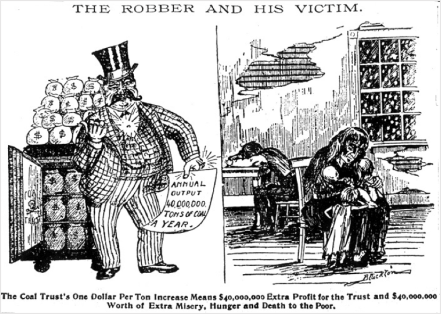
Robber barons…

The introduction of criminal sanctions for cartel conduct raise several constitutional concerns. It is likely that, in the event of the imposition of criminal sanctions, the constitutional validity of the relevant Competition Amendment Act provisions will be challenged. In particular, section 73A(5) of the Amendment Act, introduces a reverse onus on the accused, in that the onus for rebutting the Competition Tribunal of Competition Appeal Court’s conclusion rests with the accused in criminal proceedings. The reverse onus’ constitutional validity is questionable given the constitutional right to a fair trial and the right to be presumed innocent.

John Oxenham, also with Pr1merio, notes that the “criminalisation of cartel conduct is a development which needs to be carefully considered and well planned before its official introduction due to the imminent effects it will have on current South African competition law.” The successful prosecution of cartel conduct rests heavily on the efficiency of corporate leniency policies. The introduction of criminal sanctions and in turn the National Prosecuting Authority will undoubtedly have an effect on the current corporate leniency policies. It is important to consider granting the staff of a company applying for corporate leniency in relation to cartel activity ‘full immunity’ from criminal prosecution in order to encourage companies to come forward and not debilitate the very purpose of corporate leniency policies. The careful integration of criminal sanctions is therefore vital in ensuring that the very purpose of its introduction, namely to deter corruption and anti-competitive conduct, is achieved.

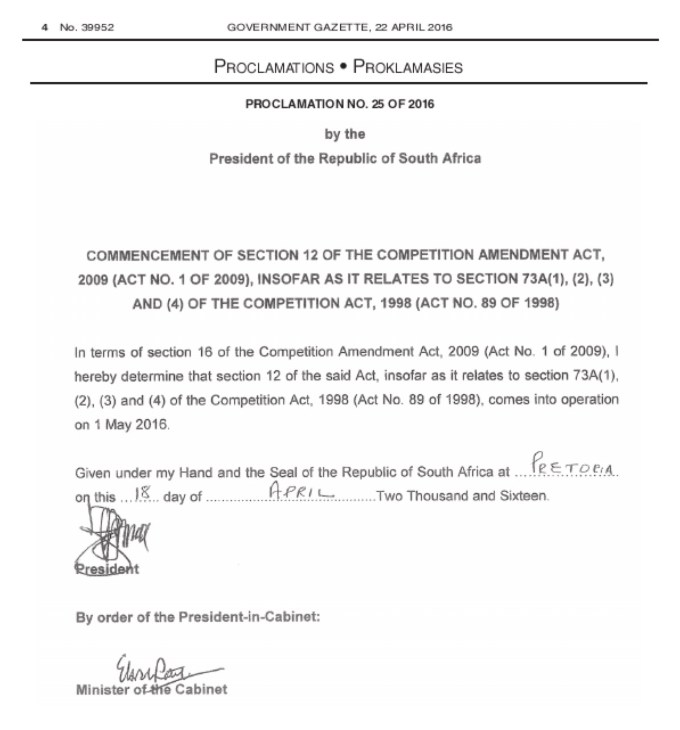
Update [22 April 2016]: As anticipated, the South African government gazetted [published] the official document starting the era of criminal antitrust enforcement under section 73A as of today, signed 18 April 2016:

gazette 73A.jpg

Namibian Competition Act to be Amended

By Michael-James Currie

The Namibian Competition Commission (“NaCC”) has recently confirmed that the NaCC has submitted proposals to the Ministry of Industrialisation, Trade and SME Development (“Ministry”) relating to possible amendments to the Namibian Competition Act.

namibiaAAT does not yet know exactly what the nature and scope of the proposed amendments are, although the NaCC has indicated that the current Act, which was promulgated in 2003, is out of date and does not sufficiently cater for Namibia’s context (relating both to Namibia’s economic and socio-economic environment).

Furthermore, the NaCC has indicated that the amendments are aimed at increasing the NaCC’s enforcement capabilities and address ‘loopholes’ in the current Act.

In this regard, Minister Calle Schlettwein under whose portfolio the NaCC falls, stated that: “I am made to understand that in the years ahead, the Commission will focus on moving forward as a highly competent and equipped market regulator, especially in addressing market distortions on monopolistic and collusive behaviour and inefficiencies on price formation processes in the country that impact on the consumer welfare and the broader structure of the economy.  To this end, its activities are to be driven by the adoption of a National Competition Policy as well as revisions to the Competition Act.

As Andreas Stargard notes, ‘[i]t would not be surprising if the proposed amendments related to “complex monopolies” and the introduction of criminal sanctions for cartel conduct,’ as this would be in line with the amendments made to the South African Competition Act (although not yet in force).  “Moreover, the Namibian commission will also likely cater for so-called ‘public interest’ elements in its enforcement strategy, as we have seen in several African jurisdictions.”  Stargard’s law partner at Pr1merio, John Oxenham, likewise emphasises “the strong ties between the two respective competition authorities” in southern Africa:

“The NaCC has often taken the lead from the South African competition authorities in respect of the interpretation and enforcement of competition law matters. The Namibian Competition Act is also largely moulded around the South African Competition Act.”

The strong links between the two respective authorities culminated in the signing of a Memorandum of Understanding under the heading, “In the field of competition law, enforcement and policy”MOU-COMPETITION-COMMISSION-SOUTH-AFRICA-and-NAMIBIAN-COMPETITION-COMMISSION

The spokesperson for the NaCC has said that “the aim of the review is to strengthen the enforcement capabilities and machinery of the commission and to close loopholes that exist within the current law.  Our Competition Act is similar, in many ways, to that of South Africa and the amendment thereof will only raise our standards to international best practices but within the context of Namibia.”

Schlettwein is on record as saying: “I am made to understand that in the years ahead, the Commission will focus on moving forward as a highly competent and equipped market regulator, especially in addressing market distortions on monopolistic and collusive behaviour and inefficiencies on price formation processes in the country that impact on the consumer welfare and the broader structure of the economy.

“To this end, its activities are to be driven by the adoption of a National Competition Policy as well as revisions to the Competition Act.”

In sum, given that the proposed introduction of a “complex monopolies” offence and criminal sanctions in South Africa has led a number of practioners in that country questioning the constitutionality or the practicality of the these amendments, it will be interesting to see whether the NaCC takes these concerns into consideration assuming we at AAT are indeed correct that these are the amendments which the NaCC is also proposing to introduce.

Competition & the Public Interest

The public-interest saga continues: South African antitrust & inclusiveness

More on the revised Guidelines for the public-interest assessment in southern African’s largest economy… By AAT guest author Anne Brigot-Laperrousaz.

In December 2015, the South African Competition Commission (the “Commission”) issued revised guidelines for the assessment of public interest provisions in mergers (the “Guidelines”). This document is a further step in a long process aiming at ensuring better efficiency in the Commission’s evaluation of mergers. One of the main rationale is that informed parties will be able to anticipate the documentation and data to be transmitted to the Commission in view of obtaining its approval. Transparency, predictability and clarity, all of them fundamental aspects of legal certainty, shall result in reduction of delays and enhancement of legitimacy of the Commission’s decisions.

In January 2015, the Commission issued a first draft of those Guidelines, open to comment by stakeholders. Several bodies answered positively to this initiative, including law firms (Bowman Gilfilan, Baker & McKenzie, …), companies (Vodacom, Tabacks), international associations (International Bar Association) and policy research centers (UK Center for Competition Policy). The December 2015 Guidelines are the result of this broad enquiry, and the final version open to comments until the 29th January 2016.

Public-interest considerations abroad

Firstly, the international perspective on public interest considerations in the assessment of mergers might offer an interesting insight to the question.

In Europe, at Community level, the EU Merger Regulation (the “EUMR”) prevents the European Commission to assess non-competition considerations in its analysis of the proposed transaction. Indeed, Article 2 EUMR sets out a test based exclusively on the potential “significant impediment to effective competition”, and the available remedies when the merger might result in such an impediment.

Yet Article 21(4) EUMR allows interventions of Member States to protect three determined types of public interests, namely, public security, plurality of the media and prudential rules. Exceptionally, the European Commission may allow a national measure aimed at protecting a different legitimate interest, although this procedure is rarely used. In any case, the measures taken shall be compatible with the general principles and provisions of European Union law.

A major difference between EU and US competition laws is that the former was meant to serve as a tool to achieve a State union, whereas the latter intervened in an already federated region. This feature arguably plays a significant role in the importance attached to further political aims in the elaboration of the competition framework, although this feature did appear at the first stages of the US.

Two US institutions are today in charge of reviewing the competitive effects of mergers: the Antitrust Division of the US Department of Justice, and the Federal Trade Commission. Those two institutions act as competition regulators, focusing exclusively on the competition aspects of targeted operations. Other public policy interests, related to specific sectors, might be analysed and taken into account under the responsibility of other US agencies, such as the Federal Communication Commission or the Federal Reserve and the Federal Deposit Insurance Corporation. Such agencies therefore act as sector or industry regulators.

To the extent that the South African Competition Act (1998) (the “Act”) gives a particularly important role to public interest criteria in merger controls, the need for transparency and clarity in the Commission’s assessment mergers is all the more crucial.

south_africaZA: The integration of stakeholders’ comments by the Competition Commission

As for the general observations on the January 2015 guidelines, some constants remain in most of the stakeholders’ commentaries.

This is so in particular as regards evidential requirements, that is, the type and nature of information that would generally be required from the merging parties. Although the Guidelines do provide a relatively detailed and insightful perspective on the Commission’s methodology in assessing mergers, it does not appear that they answer this recurrent request, even in the form of non-exhaustive references to specific documents.

Tembinkosi Bonakele, the South African Competition Commissioner, had the following to say on the topic, when interviewed for AAT’s Meet the Enforcers:

It is important that BRICS countries weigh-in on this important debate. There is a divergence of views amongst many antitrust practitioners on the compatibility of antitrust issues with public interest issues, but everyone accepts that there are public interest issues. The conference will deepen and broaden perspectives on the matter. …


Tembinkosi-Bonakele-Profile-PicThe South African competition authorities were established as a package of reforms to transform the unequal South African economy to make it economy inclusive and ensuring that those who participate in it are competitive.

Through engagements such as the BRICS conference we’re able to discuss with our BRICS counterparts how to make our economies, which are similar, more efficient, competitive and inclusive.

A second concern regards the issue of “balancing” competition and other public policy interests. The different nature of those matters, implying various qualitative and quantitative methods of assessment, arguably makes this task “inherently arbitrary”. This is even more so in presence of the broad and general principles addressed by the Act, and that the Guidelines arguably ought to determine and circumscribe. In their revised version, although some further precisions on the process and the determining factors of the Commission’s assessment have been added, some grey areas remain. For instance, some commentators have highlighted the fact that as regards the effect of the merger on a particular industrial sector or region, the Commission “may consider any public interest argument in justification of the substantial negative effect arising as a result of the merger on an industrial sector or region” (Guidelines, §7.2.4.2). It is our view that this wording is all too broad and undetermined to provide useful guidance to practitioners, and ensure a transparent and consistent analysis by the Commission. Not to mention that, as noted by the International Bar Association, the Act limits the Commission’s jurisdiction in evaluating public interest matters in merger reviews. This reference to “any public interest” arguably overlooks the Commission’s limited jurisdiction. Unfortunately, this comment does not seem to have been taken into account in the drafting of the revised version.

The same analysis can be made of the use of such concepts as causality, for example, which is not clearly defined. Furthermore, the Guidelines often provide for the possibility to prove that the effect “results or arises from” the merger, together with the requirement of a causal link, undermining the precise and strict legal requirements that are entailed by the notion of causality (see §7.2.2.1). In other instances, the Commission will merely “consider whether the employment effects are in any way linked to the intentions […] of the acquiring group”, which broadens unreasonably the scope of analysis.

Overall, when considering the clarifications that were called for in various submissions from stakeholders, it appears that in most cases, where the comments have been echoed in the revised Guidelines, the drafting committee has hidden the difficulties rather than going further in its analysis.

For instance, several commentators have expressed their surprise at the principle stated in the January 2015 version of the Guidelines, in the section dedicated to the general approach to assessing public interest provisions, that when the Commission found that the public interest effects were neutral, it would balance the negative and positive effects (§6.6). Indeed, the concept lacked clarity, and does not appear in the revised Guidelines.

Yet, some more substantial comments, in that they pointed to more potentially noxious loopholes, have apparently been disregarded. This is the case of the consequences of the finding of negative competition and public policy effects, a situation where the Commission does not seem to consider the possibility to justify and find remedies. It appears that the result would be a forthright prohibition of the transaction, even if other ways could have existed.

More generally, the perspective on the matters at stake seems to be rather hostile. For instance, in cases where negative public interest effects have been identified, the Commission “may consider imposing remedies or prohibiting the merger depending on the substantiality of the public interest effects”. It may be considered that a more relevant criterion might have been the existence and efficiency of potential remedies, rather than the substantiality of the negative effects at stake. Indeed, although the substantial character of the adverse effects might be a suitable criterion to set the standard of analysis, it does not easily justify to disregard possible remedies, which seems to be the result of the present wording.

Similarly, the Guidelines seem to set the existence of a positive competition finding as a threshold to its analysis. It has been advocated that a more suitable logic would be that the starting point is the absence of any prevention or lessening of competition, which would be more in line with both the Act and the role it affords to public policy concerns, and international best practice.

Conclusion

As noted by the International Competition Network, “the legal framework for competition law merger review should focus exclusively on identifying and preventing or remedying anticompetitive mergers. A merger review law should not be used to pursue other goals”.

Since the introduction of public policy issues in merger control is broadly considered to require cautiousness and measure, it is questionable if the revised Guidelines abide by this general principle of predictability and transparency as regards those matters. Although clear efforts have been made, the public policies at stake do not appear to have been sufficiently identified and articulated with what should remain the fundamental purpose of merger control, that is, the competitive effects of the transaction at stake.

That is particularly so in view of the nature of the Commission, which has no particular expertise in the public policy matters that it his charged to assess. As it is the case in other jurisdictions, such as the UK, it may be useful to create the possibility for the Commission to obtain input from other specialised government agencies or department, although through a transparent and public process which would prevent any diversion of the Act and the Commission’s purposes.

Regs & Exemptions: more on the EAC

The Exemption Regime under the East African Community’s competition regulations

Continuing in our series about the burgeoning East African Community and its nascent antitrust regime, AAT contributing author Elizabeth Sisenda is highlighting the exemption regime of the populous (146 million inhabitants) and increasingly wealthy ($150 billion GDP) region.  (For more background on the EAC regime, start here.)

Elizabeth Sisenda, LL.M (London) LL.B (CUEA) PGD Law (KSL)

Emerging markets or developing economies only recently adopted competition law and policy as an exclusive legal and economic tool for regulating markets. In previous years, restrictive trade practices were mostly handled under government price control departments or monopolies commissions. Most of the competition legislation and regulations in developing economies were promulgated within the last decade.

EAC: regulations & market conditions

The EAC, in particular, enacted its competition legislation in 2006 and has been setting up the mechanisms for its enforcement to-date through capacity building and mobilizing resources. In 2010, the EAC subsequently enacted competition regulations to assist in implementing the Act. One of the main challenges that has been encountered in the EAC with regards to the implementation of competition law and policy has been the unique economic and market structure of the member states.

The majority of the EAC member states are economies that are transitioning from state-regulation to liberalization. Consequently, several key sectors of these economies are still under quasi-governmental regulation by independent agencies established by the legislature, or explicitly protected by executive policy or subsidiary legislation.

As a result of the progressive liberalization of EAC economies, private entities have been building capacity to supply sectors of the economy where the government once had a monopolistic stake. These private firms, both local and multinational, have faced several challenges in meeting market requirements in terms of capacity. Consequently, the governments of these economies have sometimes adopted a protectionist approach for key sectors of their economies in the public interest. As much as this has often contributed to the substantial lessening of competition in the affected sectors to the detriment of consumers, these regulatory measures have been upheld by the respective governments on the grounds of national interest. The EAC, however, has been very cautious in its provisions for exemptions within the common market that could contribute to the substantial lessening of competition.

The EAC exemptions

Section 6 (3) of the EAC Competition Act provides that the Competition Authority may exempt a category of concerted practices by firms or parties, provided the concerted practice is limited to objectives which lead to an improvement of production or distribution, and whose beneficial effects, in the opinion of the Authority, outweigh its negative effects on competition. However, any exemptions granted by the Authority under this sub-section shall be applicable only if the combined market share of the parties involved in the concerted practice does not exceed 20% of the relevant market, and the agreement relating to the concerted practice does not contain any restrictive trade practice expressly prohibited under the Act. Thus, it may be contended that this exemption does not contribute to the substantial lessening of competition because it only applies to small or medium firms without any hint of market power, having a maximum market share of 10% each. Furthermore, the net effect of the concerted practice is beneficial to consumer welfare by improving access to goods or services. It also gives leeway for small producers to produce more efficiently, thus improving market conditions.

Low shares = more permissible conduct

The Authority under section 6 (1) further allows competitors whose combined market share does not exceed 10% of the relevant market to apply quantitative restraints on investment or input, output or sales, and engage in concerted practices that restrict the movement of goods within the common market. However, such conduct is expressly forbidden by the Act in the case of firms with larger market share. It may be contended that this particular provision is aimed at enabling small and medium enterprises to have a strategic opportunity to operate in an otherwise large and well-exploited market. It also does not limit competition because the firms in question have very little market share. Instead this exemption aims at protecting the competitiveness of the market by ensuring that smaller firms are not driven out of the market by larger, more efficient firms.

R&D and so on

Under section 6 (2) of the Act, the Authority also exempts 3 categories of conduct, namely: joint research and development, specialization of production or distribution and standardization of products or services, by firms whose combined market share does not exceed 20% of the relevant market. This exemption requires that the agreement relating to these categories of concerted practices should not contain any of the expressly prohibited anti-competitive practices under the Act. The Authority may contend that this exemption promotes consumer welfare by enabling smaller firms to collaborate in improving the quality of products or services in the relevant market through standardization and specialization efforts. It also enables smaller firms to participate in innovation through a collaborative effort. Most firms with this extent of combined market share would lack the resources or capacity on their own to engage in these activities that promote consumer welfare and efficiency in the relevant market.

Get permission first!

According to section 7 of the Act, any firm or person must first apply to the Authority, in accordance with the Regulations, for clearance to engage in any concerted practice. The Authority shall thereafter communicate its decision to the applicant within 45 days of receipt of the application. However, if the Authority does not communicate its decision in the specified duration, then the permission for the concerted practice shall be deemed to have been granted. Under the same section, it is an offence, punishable by a fine of not more than $10 000, to omit to seek the permission of the Authority to engage in a concerted practice. The Regulations under section 16 further provide that the undertaking seeking an exemption must pay the prescribed fees, and provide a detailed statement setting out the reasons why the concerted practice should be permitted for consideration to the Authority.

Conclusion

The EAC exemptions are therefore permitted in the common market to exercise a form of economic regulation for the purpose of ensuring that small and medium enterprises can effectively compete in a liberalized market without being driven out by firms with larger market share. In this way, the public interest is promoted to ensure that national or regional interests such as employment, allocative efficiency, specialization agreements and international competitiveness of domestic firms are taken into account. Applying exemptions does not necessarily imply the weakening of competition law enforcement. National economic policy considerations such as the maintenance and promotion of exports, changing productive capacity to stop decline in a particular industry, or maintaining stability in a particular industry are some of the policy considerations that motivate the application of exemptions. However, exemptions must be applied with caution because their application in one sector can perpetuate or induce distortions that can affect economic efficiency.