Competition forum highlights antitrust enforcement, international cooperation

South Africa signs cooperation agreements with Russia and Kenya

Leading government officials presented their respective countries’ accomplishments in the antitrust arena at the 10th annual Competition Law, Economics & Policy Conference in Cape Town yesterday.

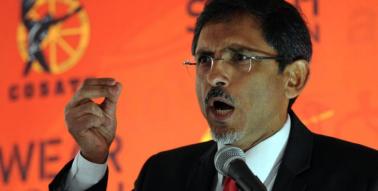
south_africaThe attendees ranged from the SA Minister of Economic Development, Ebrahim Patel, and the Commissioner of the Competition Commission, Tembinkosi Bonakele, to their Russian and Kenyan counterparts.  Kenya Competition Authority director general Francis Kariuki emphasised the officials’ desire to remove barriers to trade.  He was quoted as saying he looked forward to exchanging information on cross-border cartels, which affect both the South African and Kenyan economies: tsar_200“We have regional economic communities and regional trade. There are some infractions in South Africa which are affecting Kenya and vice versa. We want to join hands to do market enquiries and do research. This will inform our governments when they come up with policies.”

On the inside-BRICS front, the SA Commission signed an MoU with Russia, adding to Russia’s “rich and diverse bilateral agreements portfolio.”  The MoU is described as focussing particularly on pharmaceutical and automotive sectors, in which pending or future sectoral inquiries would see information-sharing between the Federal Antimonopoly Service (FAS) of Russia and the SACC, according to the FAS deputy chief Andrey Tsarikovskiy.

Patel talksMister Patel’s keynote address showed the glass half-full and half-empty, focussing in part on the need to “scale” the South African agency activity up to the level of the “success story” of domestic competition enforcement and its large caseload (quoting 133 new cartel cases initiated in the past year).

Never one to omit politicisation, Mr. Patel noted the perceived parallels he saw between South African history of concentrating economic power in the hands of a minority, raising indirectly the issue of public-interest concessions made in antitrust investigations, including M&A matters.  Mr. Patel clearly sees the SACC’s role as including a reduction in economic inequality among the populace, rather than being a neutral competition enforcer guided solely by internationally recognised legal antitrust & economic principles.  Both he and Commissioner Bonakele drew parallels between their anti-cartel enforcement and a purported reduction in the SA poverty rate of a whopping four tenths of a percent.


South African Competition Commission… More Dawn Raids!

By AAT Senior Contributor, Michael-James Currie.

On 28 September 2016, the South African Competition Commission (SACC) conducted a further set of dawn raids. This time, on various cargo shipping liners based in the provinces of Kwa-Zulu Natal and the Western Cape.

The SACC indicated that “Hamburg Sud South Africa (Pty) Ltd, Maersk South Africa (Pty) Ltd, Safmarine (Pty) Ltd, Mediterranean Shipping Company (Pty) Ltd, Pacific International Line South Africa (Pty) Ltd and CMA CGM Shipping Agencies South Africa (Pty) Ltd have engaged in collusive practices to, inter alia, fix the incremental rates for the shipment of cargo from Asia to South Africa in contravention of the Competition Act”.

The investigation is allegedly a result of a complaint received from a member of public.

south_africaThe SACC has not provided an indication of the period over which conduct took place and whether this investigation relates to historical or on-going conduct. This is an important consideration in light of the introduction of criminalisation of cartel conduct, which came into effect as of 1 May 2016. In terms of the Section 73A of the Competition Amendment Act, any director or person with management authority may be held criminally liable for ‘causing’ or ‘knowingly acquiescing’ in cartel conduct.

Since the notion of criminal liability was put raised as far back as 2008, there have been substantial concerns raised about the effectiveness of the SACC’s corporate leniency policy which in effect, offers immunity to a company who whistle blows, from an administrative penalty only. The CLP does not offer immunity to any individual from criminal prosecution, as the discretion to prosecute an individual under Section 73A, rests solely with the National Prosecuting Authority.

The interplay between the introduction of criminal liability and dawn raids will, in our view, be quite significant as there have been a number of respondents who have thought to approach the SACC for leniency, off the back of a dawn raid. A decision which a company may think twice about if its directors may potentially be held criminally liable.

Regardless of the impact which the criminalisation of cartel conduct may have on the whistleblowing regime, the SACC remains committed to utilising dawn raids as one of its most powerful investigative tools.

The SACC has been strong proponent of dawn raids and despite having conducted its first dawn raids in the early 2000’s, the past 18 months has seen a marked spike in the number of dawn raids conducted across a broad range of sectors.

The shipping industry in particular has been the subject of significant attention from the South African Competition Authorities and last year saw substantial administrative penalties, of over R95 million, levied by way of a settlement agreement on WWL and NYK Shipping Liners respectively for having engaged cartel conduct in relation to certain shipping routes. This investigation, however, remains on-going.

Namibian Competition Commission Conducts Dawn Raid in the Oil & Gas sector

namibiaBy AAT Senior Contributor, Michael-James Currie.

Dawn raids are gaining significant traction throughout the African agencies following the Namibian Competition Commission (NaCC) very recent (16 September 2016), raid conducted at the operations at Puma Energy in Windhoek. The raid follows the NaCC having received numerous third party complaints alleging that Puma Energy was abusing its dominance by engaging in excessive pricing practices in the aviation fuel supply market.

The NaCC had recently published Guidelines in relation to Restrictive Practices. The Guidelines focus primarily on the NaCC’s investigative powers and in particular, search and seizure operations. Africanantitrust suspected that the Guidelines would result in a move by the agency to be more proactive in its efforts to detect, prosecute and ultimately combat anti-competitive practices.

Africanantitrust had noted that search and seizure operations by competition law agencies across Africa were on the rise. The South African Competition Commission has drastically increased its utilisation of dawn raids as an investigative tool in its arsenal. The SACC has, furthermore, provided guidance and training to a number of other African jurisdictions respective agencies on search and seizure operations and how to conduct effective dawn raids under the auspices of the African Competition Forum.  Says John Oxenham, competition practitioner with Pr1merio: “2016 saw Kenya conduct its first dawn raid in the fertiliser sector as well as Zambia increasing the number of dawn raids conducted.”

The South African Competition Commission’s advocacy efforts should be considered in light of the number of recently concluded Memoranda of Understanding which the SACC has entered into with other regional agencies as well, including the NaCC.

In terms of the MoU with Namibia, it is envisaged that there will be greater cooperation in relation to information exchanges and assistance with common investigations between the NaCC and the SACC.

The NaCC is yet to prosecute an abuse of dominance case and we will ensure that Africanantrust continues to monitor this case and provide our followers with timeous updates should any significant further developments take place.

Administrative Penalties & Behavioural Remedies – Two Sides of the Same Coin?

By AAT Senior Contributor, Michael-James Currie.

In the wake of the dust settling around the recent settlement agreement reached between ArcelorMittal (AMSA) and the South African Competition Commission (SACC), it may be an opportune time to consider the appropriateness of behavioural penalties levied in respect of firms engaging in cartel conduct or abuse of dominance practices.

AAT Header squareIn terms of the AMSA settlement agreement, AMSA admitted to contravening the cartel provisions contained in the Competition Act and agreed to pay a R1.5 billion (in instalments of no less than R300 million per annum for five years) administrative penalty. In addition to the administrative penalty, AMSA also agreed to invest approximately R4,6 Million into the South African economy for the next 5 years (provided the prevailing economic conditions render such investment feasible) by way of CAPEX obligations.

Furthermore, a pricing remedy was imposed on AMSA in terms of which AMSA undertook not to generate earnings before interest and tax of more than 10% for the next five years (which could be amended on good cause shown, but was capped, in any event, at 15%).

The nature of the settlement terms as agreed to by AMSA is not, however, a novel feature in settlements before the South African Competition Authorities. In 2010, the Competition Commission settled its investigation in relation to Pioneer Foods’ activities in the maize and wheat milling, baking, poultry and eggs industries (the settlement came after the Competition Tribunal had already imposed a R197 million administrative penalty against Pioneer in respect of its participation in a bread cartel).

In terms of the settlement agreement, Pioneer undertook to:

  • pay R250 million as an administrative penalty to National Revenue Fund;
  • pay R250 million to create an Agro-processing Competitiveness Fund to be administered by the Industrial Development Corporation (IDC);
  • increase its capital expenditure by R150 million over and above its currently approved capital expenditure (capex) budget; and
  • cooperate with the Competition Commission in the ongoing investigations and prosecutions of the cases that are the subject of this settlement; and stopping anti-competitive conduct and implementing a competition compliance programme.

Furthermore, and more recently, the consent agreement with edible fats producer Sime Darby Hudson Knight (“Sime Darby”), is a further example of a consent order which included financial undertakings in addition to paying an administrative penalty.

In terms of this consent agreement, Sime Darby undertook to invest and establish a warehouse for the distribution of its products into territories which it had previously not distributed its products into, due to the market allocation agreement which formed the basis of the complaint. Sime Darby also committed to contributing to funding the entry of a BEE distributor.

What is evident from the above three examples is that over and above the administrative penalty which may be imposed on a respondent, the financial impact of the additional behavioural and public interest related conditions may substantially exceed the administrative penalty itself.

It is, therefore, an important factor for respondents who find themselves in settlement negotiations with the Competition Commission to consider alternative terms of settling a matter as opposed to merely focussing on the administrative penalty itself.

From an agency’s perspective, the costs associated with behavioural conditions must be carefully weighed up as they also tend to require ongoing, and occasionally extensive oversight by the authorities. Furthermore, it is important to ensure that behavioural remedies are not abused, both by the authorities and by respondents.

south_africaWhile settlement negotiations are inherently flexible, it is important that agencies ensure an objective and a transparent methodology in the manner in which they approach the quantification of a settlement agreement. This has certainty been strived for by the Competition Commission when it elected to publish Guidelines on the Determination of the Calculation of Administrative Penalties (Guidelines). The objectives of the Guidelines, may however, be undermined in light of the broader behavioural and public interest related conditions imposed in recent cases.

A clear and objective point of departure would be favourable for both the agency itself and the relevant respondent in being able to conclude settlement negotiation expeditiously.

A further important consideration, which is particularly highlighted in the AMSA settlement agreement, is whether the remedies provide for an adequate deterrent factor and/or address the relevant harm.

Importantly, in the AMSA matter, AMSA’s R4.6 million CAPEX expenditure investment was as a result of a complaint into alleged abuse of dominance. In terms of the settlement agreement, AMSA did not admit liability for having engaged in abuse of dominance practices.

In light of the fact that the Competition Commission generally requires an admission of liability before concluding a consent order, it is not clear to us, at this stage, why the Commission elected not to demand an admission of liability in relation to the abuse of dominance complaint.

It may be that the Commission did not wish to spend the significant resources in prosecuting an abuse of dominance case, or that the Commission took the view that any abuse of dominance finding would likely only be in respect of the general prohibition against exclusionary conduct, as per Section 8(c) of the Competition Act, which carries no administrative liability for a first time offence.

Accordingly, it may have been a strategic weighing up of the ‘costs versus likely penalty’ which shaped the Commission’s strategic decision.

Whether or not such a strategic decision is justified is not a particular focus of this article. What we do wish to highlight, however, is that absent an admission of liability, a third party who seeks to pursue follow-on damages will be precluded from bringing a civil damages claim against AMSA. This was confirmed by the Supreme Court of Appeal in the Premier Foods matter in 2015.

The Media 24 Case

Shifting our train of thought to another issue, although not unrelated, is the question as to what exactly constitutes an administrative penalty?

The question was raised, although ultimately not decided by the Competition Tribunal in the recent Media 24 predatory pricing case.

After having been found guilty by the Competition Tribunal, in 2015, for contravening section 8(c) of the Competition Act (for engaging in ‘predatory pricing’), a separate hearing was held to determine the appropriate sanction. As mentioned above, an administrative penalty is not permissible for a first time offence of section 8(c) of the Act.

At the hearing the Competition Commission had proposed, as one of its remedies that Media 24 undertake to establish a R10 million development fund to fund a new entrant into the market.

Media 24 objected to the proposed remedy and raised the argument that the remedy proposed by the Commission would effectively be an administrative penalty, which is not a permissible sanction in terms of the Competition Act.

The Competition Tribunal elected to evaluate the remedy from a practical perspective, finding that the proposed remedy would not be suitable or effective, but deliberately kept open the legal question as to whether or not a remedy which requires any financial commitment from the respondent would effectively amount to an administrative penalty.

The question is rather vexing and may require clarification in due course.

Assuming that the proposed remedy in the Media 24 case would indeed amount to an administrative penalty, the question would naturally arise whether a CAPEX undertaking, as was the case in the AMSA matter discussed above, would also be considered a form of an administrative penalty. If so, then due consideration should be had as to whether the aggregation of the ‘stated administrative penalty’ (i.e. the R1.5 billion in AMSA’s case) together with the behavioural remedies imposed in AMSA (a minimum of R4.6 billion), should be calculated for purposes of determining whether the statutory cap of 10% of a firm’s turnover has been exceeded.

Alternatively, if the Competition tribunal ultimately decides that the proposed remedy in Media 24 is not an administrative penalty as contemplated in terms of the Competition Act, then effectively, we may see an entire new paradigm in the manner in which firms are sanctioned for contravening the Competition Act. For instance, those provisions of the Competition Act which do not cater for an administrative penalty for a first time offence (i.e., certain vertical, horizontal and abuse of dominance practices), may in any event result in respondents paying substantial ‘penalties’ for contravening these provisions.

Furthermore, respondents may not be afforded the protection which the statutory cap places on administrative penalties. As noted above, a firm may be subjected to an administrative penalty which does not exceed 10% of its annual turnover, but the net effect of the respondent’s financial liability may indeed exceed the cap.

While we do not pronounce our views on this issue, suffice it to say that firms engaging with the Competition Authorities with a view of concluding a settlement agreement are entering into a ‘new world’ and there are a number of options, avenues and risks associated in ultimately negotiating a settlement.

Accordingly, the issues raised above may be particularly useful in the manner in which firms embark on their settlement strategies.


CCC Begins Conduct Enforcement & Activates Its Exemption Regime for Potentially Anti-Competitive Agreements

Parties Start Discussing Business Practices with COMESA’s CCC

As AAT reported recently — see “Growing Pains: From One-Trick Pony to Full-Fledged Enforcer?” — the COMESA Competition Commission (CCC) has begun to move from being a pure merger-control administrator to becoming a full-fledged antitrust enforcer.  The CCC issued a Notice calling on firms to notify the CCC of any agreements (both historic and forward-looking) that may be anti-competitive, for the purpose of having such agreements ‘authorised’ or ‘exempted’ under Article 20 of the COMESA Competition Regulations.  (More details on that regime are in our June article, referenced above.)

Eveready products (sample)

AAT has now learned that several companies have taken the agency up on its Exemption proposal: Andreas Stargard, a competition practitioner with Primerio Ltd. observes that the CCC’s announced “leniency ‘window’ to incentivise firms to come forward and obtain an exemption” has closed at this point in time, although he expressed doubt that the relatively short one-month period was sufficient and will likely be extended.  Says Stargard: “We are seeing several parties, both global & local companies, who are beginning to take the CCC’s non-merger enforcement seriously.  These undertakings are considering to obtain advance clearance of their business practices under the Commission’s Notice procedure.”  One such example, he adds, is Kenya’s financially embattled Eveready East Africa: it has reportedly sought CCC approval of its agreements with international manufacturers for the importation and distribution within the COMESA common market of their diverse products, ranging from batteries to fountain pens to CloroCOMESA old flag colorx-brand chemicals.  The Commission has invited “general public and stakeholders” for comments according to its formal statement.

In light of these developments, Stargard advises that:
“multi-national firms operating within COMESA or jointly with a COMESA-based importer or other domestic business partner should consider engaging counsel to evaluate their practices, and if they may fall within Article 16 of the Regulations, consider approaching the CCC for an authorisation letter.”


Drastic price increase could be sign of collusion or dominance: Dangote in Nigeria

Close-knit trade group and dominant cement manufacturer prove to be (price-)explosive combination

 Our friends at Songhai Advisory, a business intelligence firm covering key parts of Africa, have released a brief market-intel note addressing the 44% price hike of cement in Nigeria, led by the country’s (and indeed soon also the continent’s) dominant manufacturer, the Dangote group.

Any discussion of Nigeria — still Africa’s largest economy measured by GDP — in the competition-law context must begin with the surprising fact that the country’s political leadership still has failed to institute any antitrust regime.  Says Andreas Stargard, an attorney with Africa-focused Pr1merio law group:

“As the continent’s economic leader, Nigeria is a lone beacon of failure to police anti-competitive practices, whereas a multitude of significantly smaller African jurisdictions have had competition laws for years or even decades.  The recent price developments of Nigerian concrete are merely one example of the negative impact on consumers where there are no antitrust rules in effect.  Notably, an industry trade association also appears to be involved here, so from the competition point of view, we are dealing not only with one dominant entity (Dangote) but also an efficient and time-tested mechanism of information-sharing among direct competitors (trade groups).


The price increase covered the entire Nigerian cement market, according to Songhai and other media reports: cement prices of the members of the Cement Manufacturers Association of Nigeria (CMAN) rose over the course of a month by 44% from US$5 to $7 per 50kg.  Adds Stargard, “any competent antitrust enforcer would look into such a price hike.  Given the absence of competition law enforcement in Nigeria, it is likely that no investigation will take place, and civil suits are highly unlikely, in light of the lack of antitrust laws and the political connections at play here.”  In the words of Songhai’s reporting: “When Dangote decides to push its price up or down, others tend to follow.”  Yet, the researchers also quote a source at Sokoto Cement, one of Dangote’s main rivals, as describing power generation costs and foreign-exchange fluctuations as the actual drivers behind the drastic recent cement price increases.


COMESA sees slight uptick in merger notifications

Merger filings still dither, but YTD numbers now tentatively promise to exceed FY2015

Making sense of the COMESA Competition Commission’s merger notification site is no  easy undertaking.  The perplexing nature of its case-numbering system mirrors perhaps only the level of confusion surrounding the CCC’s original merger threshold and notification-fee guidelines (e.g., see here on that topic).

As we pointed out here, the merger statistics (as they had been released as of January 2016) for 2015 were disappointingly low.  In today’s post, please note that we are upgrading those numbers, however, to reflect additional material now made available on the official CCC web resource, reflecting 3 additional filings, bringing the year-end total for FY2015 to 18.  Three of those were “Phase 2” cases.  In addition, according to the CCC, there were 3 supplemental cases in which “Comfort Letters” were issued to the parties.

For year-to-date 2016 statistics, the numbers look analogous, albeit somewhat higher than the 2015 slump — that is to say, still diminished from the 2013-2014 height of COMESA ‘mergermania’, during which (mostly international) counsel took the confusion surrounding the CCC notification thresholds to heart and erred on the side of caution (and more fees), advising clients to notify rather than not to (65 in the 2 years), or to seek Comfort Letters, which also were issued in record numbers (19 total for the 2-year period)…   With that said, the agency is now up to 16 merger cases, with 2 Second-Phase matters on deck.

AAT 2016 September mergermania statistics
Number of merger notifications based on CCC-published notices (using educated inferences where the original CCC case numbers, dates and/or descriptions lack intelligibility; note that 2013-14 statistics only reflect actual filings made available online and not the official statistics issued by the CCC of 21 and 43, respectively)                                                                         (c) AfricanAntitrust.com

SOUTH AFRICA: RECORD-BREAKING FINE IMPOSED ON ARCELORMITTAL SOUTH AFRICA LIMITED

By AAT Senior Contributor, Michael-James Currie.

The Competition Commission and South African steel producer, ArcelorMittal South Africa Limited (ArcelorMittal), have agreed to settle six complaints against ArcelorMittal for R1.5 billion (approximately US$ 112 million), in what is the largest (agreed) administrative penalty imposed in South Africa.

The penalty (by consent order) represents just under 5% of ArcelorMittal total turnover (including chemicals) for 2015.

The allegations which were brought against ArcelorMittal included allegations of price fixing and market allocation in what was termed by the Competition Commission the “steel cartel”.

In terms of the settlement agreement, ArcelorMittal admitted to contravening section 4(1)(b) of the Competition Act and will pay not less than R300 million per annum for five years from 2017. Furthermore, ArcelorMittal has undertaken to invest approximately R4.6 million into the South African economy for the next 5 years (provided the prevailing economic conditions render such investment feasible). Interest will be charged on the outstanding amount, interest starting to run 17 months after the finalisation of the settlement agreement.

In addition to the cartel conduct, the Commission had also instituted a complaint alleging the dominant steel manufacturer had engaged in excessive pricing. Although ArcelorMittal did not admit to wrongdoing in relation to the abuse of dominance allegation, the parties nevertheless agree that ArcelorMittal would not generate earnings before interest and tax of over 10% for the next 5 years (subject to certain exceptions).

The Competition Commission’s press release states the following:

ArcelorMittal admits that it engaged in collusion with CISCO, Scaw and Cape Gate by fixing prices and discounts, allocating customers and sharing commercially sensitive information in the market for the manufacture of long steel products, in contravention of the Competition Act. ArcelorMittal also admits that it fixed the purchased price of scrap metal with Columbus Steel, Cape Gate and Scaw. In respect of the flat steel complaint and the Barnes Fencing complaints, ArcelorMittal admits the conduct as alleged by the Commission but does not admit that this conduct constituted a contravention of the Competition Act. In relation to the pricing complaint, ArcelorMittal does not admit that it acted in contravention of the Competition Act.

The investigation and settlement agreement follows a leniency application brought by another respondent, Scaw Metals.  There is little doubt that the Competition Commission’s corporate leniency policy has permitted the Commission to uncover and successfully prosecute a number of cartels.   As previously reported on AAT, the risk remains that the recent introduction of criminal liability (on directors or persons having management authority)  for engaging in cartel conduct, may dampen the use of the whistle-blower regime (absent any formal immunity from criminal prosecutions).

The settlement agreement does, however, bring finality to all six cases against ArcelorMittal.

In light of the very recent civil damages awarded in favour of Nationwide Airlines against South African Airways for abuse of dominance which led to loss of profits, it will be interesting to see whether any civil party elects to prosecute ArcelorMittal for the excessive pricing complaint. In terms of the South African Competition Act and a recent judgment by the Supreme Court of Appeal, it appears as if the door is closed on a civil litigant brining a civil damages claim against a respondent, based on a breach of the competition Act, if there has been no adverse finding made against such a respondent by the Competition Tribunal (or Competition Appeal Court) as per section 65 of the Competition Act.

The admission to having engaged in cartel conduct, may, however, expose ArcelorMittal to civil liability over and above the settlement agreement.

“The WRAP” — our monthly summary of antitrust developments across the continent

AAT Header square

Competition-Law Developments: a WRAP from the Comp-Corner

Issue 2 – August 2016

The editors and authors at AAT welcome you to the second edition of “The WRAP.”

We look at the most recent developments and updates in respect of competition law and enforcement which has taken place across the African continent in recent months.

As always, thank you for reading the WRAP, and remember to visit us at AAT for up-to-date competition-law news from the African continent.

         –Ed. (we wish to thank our contributors, especially Michael James Currie, for their support)

Billing the Billboard Bosses: Advertising trade association fixes prices, members pay fines

The Kenyan antitrust authority, CAK, recently closed its investigation into a classic price-fixing cartel involving the Outdoor Advertisers Association, resulting in a fine of Sh11.64 million (approx. $120,000) imposed on domestic advertising firms for fixing minimum prices of billboard space, reports the Kenya Gazette.  The affected companies include Magnate Ventures Limited (Sh5 million), A1 Outdoor Limited (Sh114,000), Live Ad Limited (Sh2.5 million) and Adsite Limited (Sh2.39 million), while four others had already settled with CAK previously (Consumer Link (Sh1.2 million), Look Media (Sh136,000), Firm Bridge Limited (Sh246,400) and Spellman Walkers Limited (Sh45,180)).  The remaining four trade association members will be fined forthwith.

kenyaNotes Andreas Stargard, a competition practitioner with Primerio Ltd., “[i]n this case — which really represents a classic minimum-price fixing arrangement among trade association members — the billboard owners agreed during a period of less than one year to set a minimum monthly price of Sh160,000 in large Kenyan markets, such as Nairobi.  Interestingly, they price-discriminated geographically within their cartel arrangement and fixed the corresponding fees in smaller markets at a slightly lower amount.”

The head of the CAK, Director-GeneralWang’ombe Kariuki, lamented that a trade group was being used to manipulate an otherwise competitive process of market forces yielding market prices, which he believed are approximately 20 to 25% lower than the fixed rates, based on post-investigation pricing.  Says Stargard:
“It is interesting to see that the CAK has  already followed up on this matter and has noticed an arguably direct empirical result, yielding a beneficial effect of a not insignificant price reduction in advertising costs in Nairobi.”